Entity · Person
Ziusudra
A reference page linking a name, group, or concept to the materials that discuss it.
- Names
- Zi-ud-sura · Ziusudra
Ziusudra is king and priest in the fragmentary Sumerian Flood Story, on an Old Babylonian tablet from Nippur, ca. 1650 BCE. Saved by boat, he gains divine life in Dilmun; no independent evidence attests his historicity.
Estimated reading time: 6 min Published Last reviewed:
Share article

Video
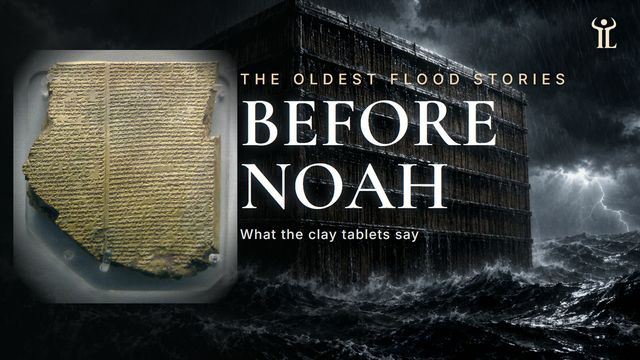
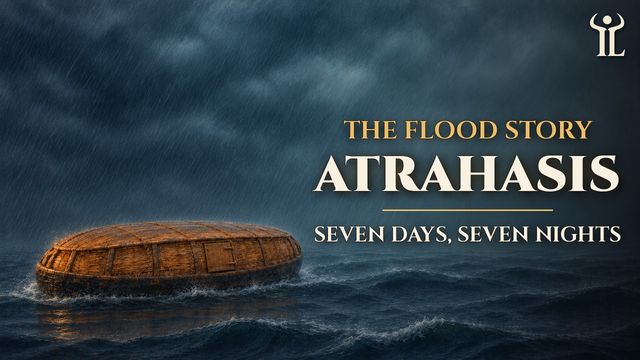
The Flood Before Noah: What the Clay Tablets Say
Our third documentary reads the oldest flood stories on clay: Ziusudra, Atrahasis and Gilgamesh, then sets them beside Noah in the Abrahamic scriptures. Some scenes are AI-generated illustrations.
The YouTube player loads only when you press play. Watch on YouTube
Text
Introduction
Who is Ziusudra, the figure saved by a boat in a Sumerian flood narrative, and what can the surviving tablet actually tell us? This entry examines the literary character in a deeply fragmentary composition and compares two other Sumerian witnesses and later Babylonian traditions. It distinguishes extant lines from scholarly restoration, and the date of a clay copy from the date when the story was composed.[1]
Name and literary identity
Ziusudra, transliterated Zi-ud-sura, is described in the story as a king and a gudug priest: the text associates royal status with a ritualRitualAn organised or distinguished practice meaningful to a community; it may leave traces, but its form alone does not reveal an associated doctrine.Glossary · Click to read the explanation office without providing a full description of that office. His name is sometimes interpreted as “Life of Distant Days,” a reading of its meaning, not a biographical statement. No independent contemporary evidence establishes him as an actual historical ruler, even though more than one literary tradition names him.[1][8]
His central appearance is in the Sumerian composition now called The Flood Story (ETCSL 1.7.4), also termed The EriduEriduEridu (Abu Shahrain), a multi-mound site in southern Iraq occupied since the Ubaid, later home to a religious precinct associated with Enki. Its eighteen sounding levels are not proof that every early building was a temple.Glossary · Click to read the explanation Genesis by scholars. These are modern scholarly titles, not headings preserved at the top of the tablet. This entry studies its protagonist and witnesses; it does not purport to reproduce a complete translation of the poem.[9]
The Nippur witness and the chronology of the copy
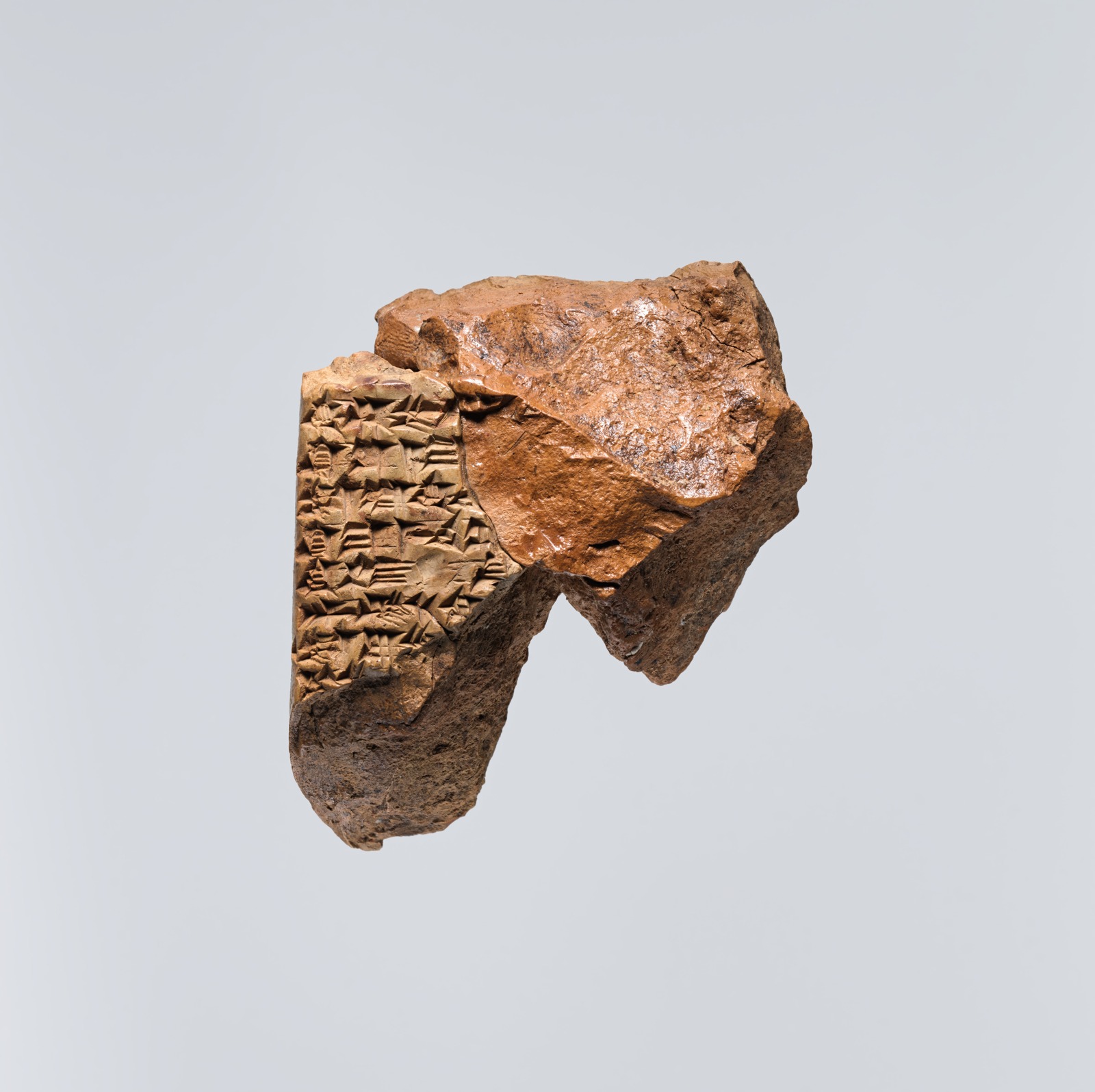
The main physical witness is CBS 10673, kept by the Penn Museum, with the associated fragment CBS 10867. The CuneiformCuneiformWriting with wedge-shaped signs, developed from Mesopotamian recording traditions and used for several languages from the third millennium BCE.Glossary · Click to read the explanation Digital Library Initiative (CDLI) identifies the joined witness as P265876. It was excavated at NippurNippur / NuffarAncient Nippur (modern Nuffar, Iraq), major cult centre of Enlil and Ekur; excavations revealed sanctuaries, houses and thousands of cuneiform tablets across many periods.Glossary · Click to read the explanation, in what is now IraqIraqIraq is a modern country encompassing much of ancient MesopotamiaGlossary · Click to read the explanation. The museum dates it palaeographically to the Old Babylonian period, approximately 1650 BCE. Only about the lower third of a six-column clay tablet survives, with three columns originally on each face.[3][4]
Oxford’s Electronic Text Corpus of Sumerian Literature (ETCSL) supplies a scholarly composite text and an English translation, marking extensive losses across segments A–E. A composite edition is neither a photograph of one column nor proof that every printed word is legible on a single object. Dating the copy to around 1650 BCE does not securely date the composition; its Sumerian language alone does not establish priority over every AkkadianAkkadianAn ancient East Semitic language written in cuneiform from the third millennium BCE; its varieties include Babylonian and Assyrian, and it served in international diplomacy.Glossary · Click to read the explanation telling.[1][5]
Before the flood: people, cities and the decree
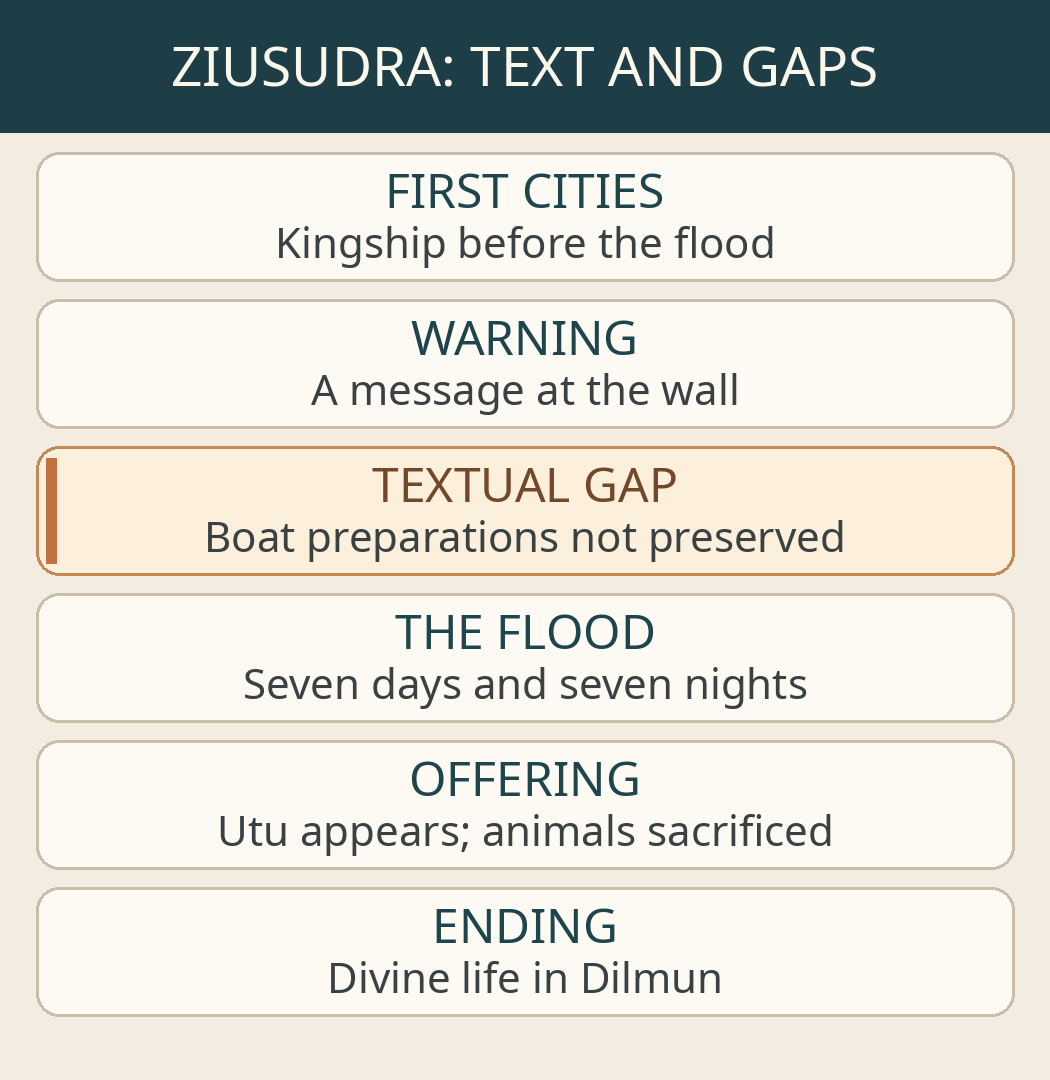
The surviving beginning mentions the creation of people and animals, the establishment of royal and ritual order, and the founding of cities. Segment B distributes five cities among their divine patrons: EriduEriduEridu (Abu Shahrain), a multi-mound site in southern Iraq occupied since the Ubaid, later home to a religious precinct associated with Enki. Its eighteen sounding levels are not proof that every early building was a temple.Glossary · Click to read the explanation, Bad-tibira, Larak, Zimbir (Sippar) and Shuruppak. The flood is thus framed within a sacred story of urban beginnings and kingship rather than being an isolated adventure at sea.[1]
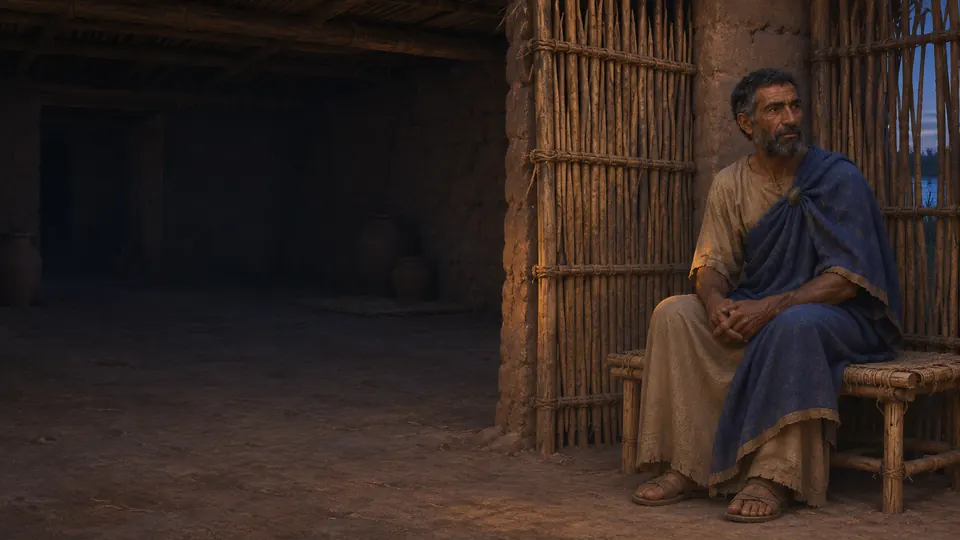
In segment C, Nintur appears in a damaged line, while InanaInanna / IshtarA prominent Mesopotamian goddess whose Sumerian name Inanna became associated with Akkadian Ishtar across diverse traditions. She was associated with desire, war, royal authority and Venus, while local forms and genealogies varied among texts.Glossary · Click to read the explanation mourns for her people; EnkiEnkiMesopotamian deity also known as Ea, linked with Eridu and the Abzu (deep fresh waters), wisdom, incantations, and narratives of creation and cosmic order. Later written attestations do not identify the deity of Eridu’s earliest layers.Glossary · Click to read the explanation deliberates, and an oath involving AnAn / AnuAn is the Sumerian sky god, called Anu in Akkadian. The sign AN by itself does not identify him: it also denotes sky or divinity.Glossary · Click to read the explanation and EnlilEnlilEnlil/Ellil: a major Mesopotamian god associated with destinies, kingship, and Ekur at Nippur, already prominent in third-millennium god lists. His name’s origin and cult beginnings remain debated.Glossary · Click to read the explanation accompanies the divine assembly’s decision. Ziusudra, the king-priest, stands by a wall and hears words foretelling a flood and an irrevocable decree against the seed of humankind. Crucially, the speaker’s name in the wall scene is not explicitly preserved in Oxford’s extant lines. A familiar reconstruction identifies Enki on contextual grounds and by analogy with Akkadian accounts; that identification should not be presented as a verbatim, secure statement of the damaged passage. The reason for the destructive decree is likewise unclear in the surviving lines.[1][5][9]
The lacuna and the boat
A substantial gap separates the warning from the storm. No complete boat-building instructions, measurements, reliable passenger list or bird-release episode survives there. A researcher may conjecture what the lost lines contained by considering other versions, but inserting details from AtrahasisAtrahasis: Epic and HeroAkkadian narrative on human creation, relations with the gods and the flood, named for its survivor warned by Enki. Its surviving manuscripts differ in date and preservation; its hero must not be equated uncritically with every Utnapishtim version.Glossary · Click to read the explanation or UtnapishtimUtnapishtimThe flood hero of Standard Babylonian Gilgamesh, granted exceptional life with his wife by the gods. He tells Gilgamesh how he survived; his name overlaps with Atrahasis and Ziusudra traditions without making their narratives identical.Glossary · Click to read the explanation directly into Ziusudra’s text would confuse reconstruction with evidence.[1][2]
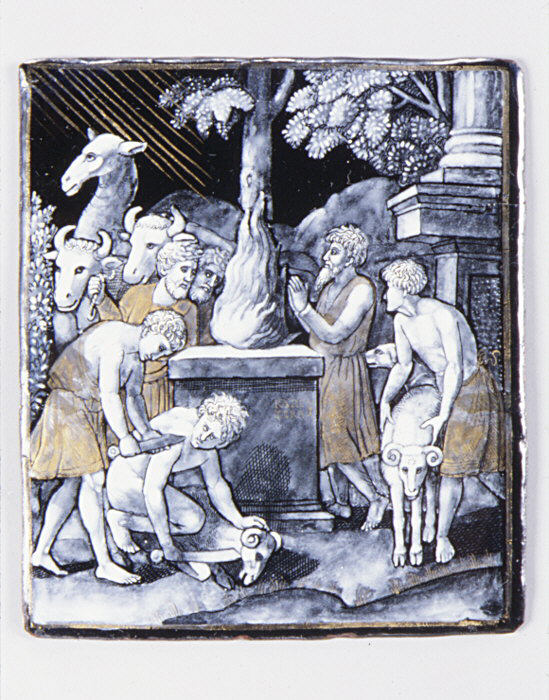
Segment D, by contrast, explicitly reports a great boat battered by wind and water for seven days and seven nights. Utu, the Sumerian sun god, then appears; an opening is made in the vessel and sunlight enters. Ziusudra bows to Utu and sacrifices oxen and numerous sheep. The offering belongs to the surviving story; instructions given before embarkation do not.[1][5]
Divine life and Dilmun
After another loss, segment E refers to animals disembarking and to Ziusudra appearing before An and Enlil. They grant him life like a god and enduring life, in acknowledgement of the preservation of animals and the “seed of humankind.” The extant ending places him in DilmunDilmun: Ancient Gulf Land and Literary SettingDilmun was an ancient Gulf trading land with a major archaeological centre in Bahrain and connections to eastern Arabia and Failaka. This entry separates boats, burials and kings from the literary purity and fresh water of Enki and Ninhursaga, and tests the limits of comparison with Eden.Glossary · Click to read the explanation, a land described in the narrative as lying overseas, where the sun rises.[1]
Dilmun is also the name of a historically documented Gulf trading region particularly associated with Bahrain. Yet this archaeological geography does not establish an actual location for the mythical award of divine life, still less prove the hero’s existence or journey. The Sumerian ending singles out the survivor for extraordinary life; it does not say that all humanity becomes immortal.[8]
Two other Sumerian witnesses
A separate SumerianSumerian languageAncient language of southern Mesopotamia, clearly attested in third-millennium BCE texts and maintained in learning and ritual after its spoken use declined.Glossary · Click to read the explanation wisdom composition, The Instructions of Shuruppak (ETCSL 5.6.1), frames its advice as Shuruppak, son of Ubara-Tutu, addressing his son Ziusudra. This formula recurs at several section openings. It is a literary genealogy, not a contemporary family register. Shuruppak is both a personal name within this wisdom text and the name of a city in the wider Mesopotamian tradition.[6]
In the edited Sumerian King List (ETCSL 2.1.1), Ubara-Tutu is the final ruler named for Shuruppak before the flood; Ziusudra does not appear as a separately listed king at that point in that edition. The list also assigns fantastic reign lengths extending into the thousands of years. These different literary purposes do not combine into a verifiable historical biography.[7]
Other flood heroes and the limits of comparison
The Akkadian AtrahasisAtrahasis: Epic and HeroAkkadian narrative on human creation, relations with the gods and the flood, named for its survivor warned by Enki. Its surviving manuscripts differ in date and preservation; its hero must not be equated uncritically with every Utnapishtim version.Glossary · Click to read the explanation epic and UtnapishtimUtnapishtimThe flood hero of Standard Babylonian Gilgamesh, granted exceptional life with his wife by the gods. He tells Gilgamesh how he survived; his name overlaps with Atrahasis and Ziusudra traditions without making their narratives identical.Glossary · Click to read the explanation’s account in Tablet XI of the Epic of GilgameshEpic of GilgameshA Babylonian literary work with multiple recensions, preceded by separate Sumerian poems on Uruk’s king and Enkidu. Its standard form explores friendship, death, the flood and the limits of seeking eternal life.Glossary · Click to read the explanation share motifs of divine decision, warning, survival by boat and sacrifice. A later Greek-language tradition preserved through BerossusBerossusBerossus was a Babylonian priest and author of the Hellenistic period who wrote a history of Babylonia in Greek in the third century BCE. His Babyloniaca survives through quotations and fragments preserved by later writers.Glossary · Click to read the explanation names the survivor XisuthrusXisuthrusXisuthrus is the flood survivor in Greek fragments attributed to Berossus.Glossary · Click to read the explanation, a name associated with Ziusudra. These relationships help scholars trace a connected or overlapping narrative tradition; they do not establish that every preserved detail or every manuscript is identical.[2][8]
The story of NoahNoahNoah is the flood-story figure in Genesis and a prophet in the Qur’anGlossary · Click to read the explanation in the Book of GenesisBook of GenesisHebrew book of the Torah containing Noah’s flood, survival offering and covenant with living creatures.Glossary · Click to read the explanation raises a further comparative question. Serious comparison examines the sequence of scenes, differing theological frameworks, outcomes, manuscript dates and possible intermediaries, not just the appearance of a boat. John Day evaluates direct and indirect dependence as distinct hypotheses. The boats’ dimensions and episodes with birds found in other flood narratives are not attested in the surviving Sumerian lines.[8][11]
What remains uncertain
We can identify Ziusudra as a literary king-priest who hears a warning, survives in a boat, makes an offering and receives divine life in Dilmun. We cannot securely identify the warning speaker, recover the gods’ motivation or the vessel’s design, or attach this story to a demonstrable flood in a particular historical year. Samuel Noah Kramer discussed regional inundations as possible historical stimuli and noted the difficulties of relating archaeological deposits to a particular narrative. Such an argument remains historical interpretation, not direct proof of Ziusudra’s reign.[9][10]
Respecting the tablet’s missing lines reveals the distinctive structure that does survive: the foundation of urban and royal order, the saving of living beings, and a survivor elevated beyond ordinary human existence. That is the evidence from which further questions must begin.
References and notes (11)
- University of Oxford, Electronic Text Corpus of Sumerian Literature (ETCSL), “The Flood Story”, 1.7.4, scholarly translation. Entire online translation, segments A–E; especially C (warning), D (seven days and offerings), E (Dilmun). Return to the text ↑
- Mehmet-Ali Ataç, “The Flood Myth as Paradigm,” chap. 3 in Art and Immortality in the Ancient Near East (Cambridge University Press, 2018). Chapter pp. 81–101; HTML opening on Old Babylonian narratives and the standard epic read; not every page or the complete image analysis. Return to the text ↑
- Penn Museum, Collections, “Flood Tablet / Deluge Tablet,” object CBS 10673; catalogue record. Object description, provenance, date, size and CBS 10867 association, complete catalogue entry. Return to the text ↑
- Cuneiform Digital Library Initiative (CDLI), artifact P265876, witness to Flood Story composite Q000357. Artifact metadata: location, period, language, museum, composite status; not a licensed image. Return to the text ↑
- University of Oxford, ETCSL, “The Flood Story,” edited Sumerian transliteration, 1.7.4. Segments C 8–27, D 1–11, E 3–11; gaps and sign sequences checked against project translation, not a new independent Sumerian translation. Return to the text ↑
- University of Oxford, ETCSL, “The Instructions of Šuruppag,” 5.6.1. Translation lines 1–13, 73–82, 143–152, the Shuruppak–Ziusudra address. Return to the text ↑
- University of Oxford, ETCSL, “The Sumerian King List,” 2.1.1. Translation lines 1–39: last named ruler of Shuruppak and flood formula; manuscript editorial note checked. Return to the text ↑
- Ira Spar, “Flood Stories,” Heilbrunn Timeline of Art History, Metropolitan Museum of Art, April 2009. Entire online essay, especially Ziusudra and Dilmun and the Atrahasis–Gilgamesh–Berossus comparisons; synthesis, not a tablet itself. Return to the text ↑
- Samuel Noah Kramer, “The Sumerian Deluge Myth,” Anatolian Studies 33 (1983): 115–121, publisher page. Publisher extract only, on Poebel’s 1914 edition and competing interpretations; full article not accessed. Return to the text ↑
- Samuel Noah Kramer, “Reflections on the Mesopotamian Flood: The Cuneiform Data New and Old,” Expedition 9, no. 4 (1967), Penn Museum. Entire online article, sections on the Nippur tablet, wisdom text, and flood deposits at Ur, Kish and Shuruppak; historical scholarship, not current proof. Return to the text ↑
- John Day, “Comparative Ancient Near Eastern Study: The Genesis Flood Narrative in Relation to Ancient Near Eastern Flood Accounts,” in Biblical Interpretation and Method (Oxford University Press, 2013). Publisher abstract only; chapter pp. 74–88 not read in full; no unsupported claims about its detailed argument. Return to the text ↑
Suggest a correction · Suggest a source for this record
Cite this record
IL Archive, «Ziusudra», https://ilarchive.com/en/entities/ziusudra
Continue reading
Related readings