The Sumerian Flood Story Chapter 1
Ziusudra and the Flood
Five cities receive their names, and a warning addressed to a wall reaches Ziusudra, a king and priest. After seven days and nights on the water, daylight returns. An and Enlil grant Ziusudra lasting life and settle him in Dilmun.
SourcesTurn the pages with the arrows, the arrow keys or a swipe.
FLOOD
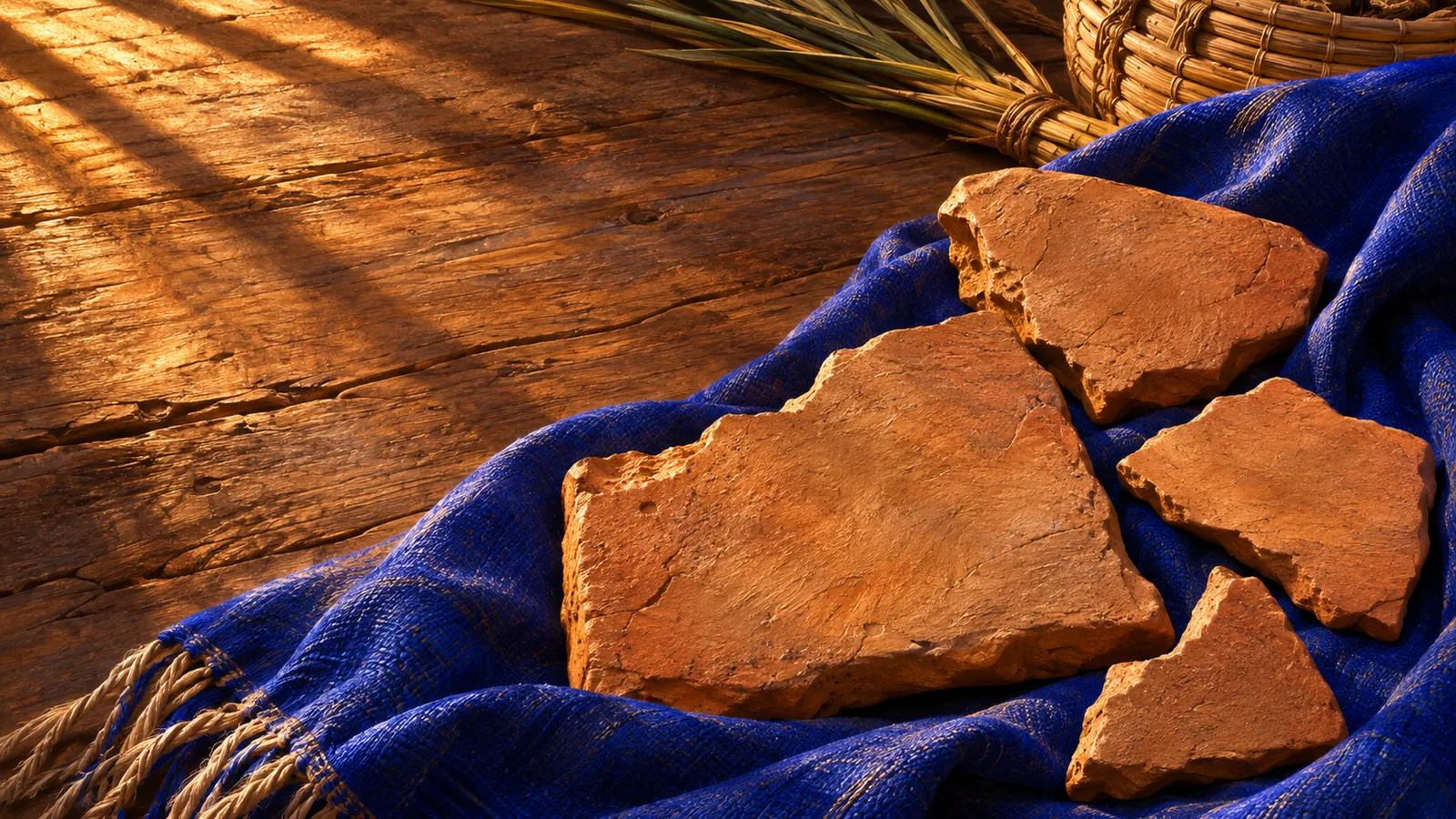
The first part of this Sumerian tale is lost. When the words return, a voice is already speaking about the people.
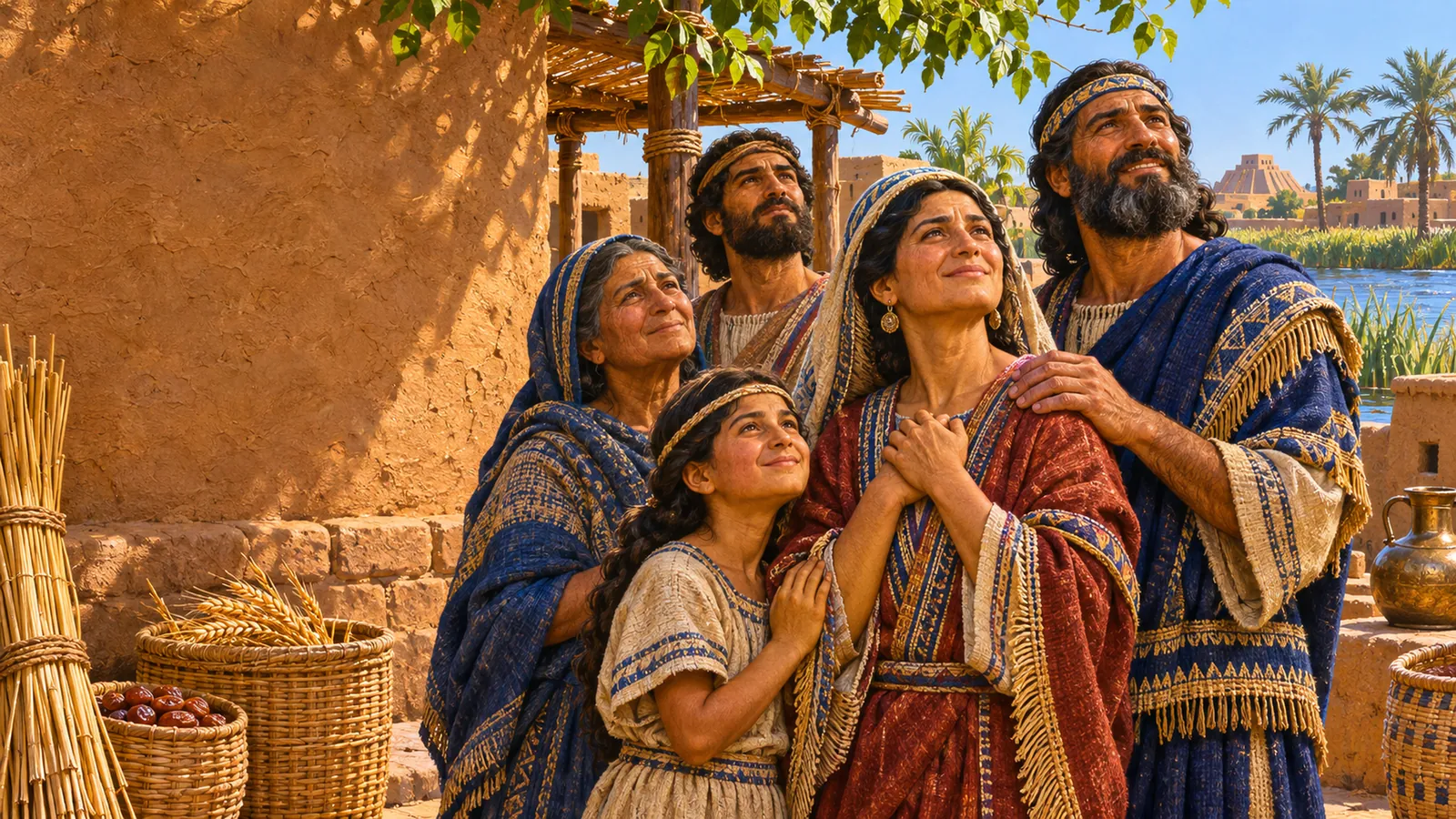
Speaking of Nintud, an unnamed voice promises to stop the destruction of its creatures. The surviving words also speak of bringing the people back.
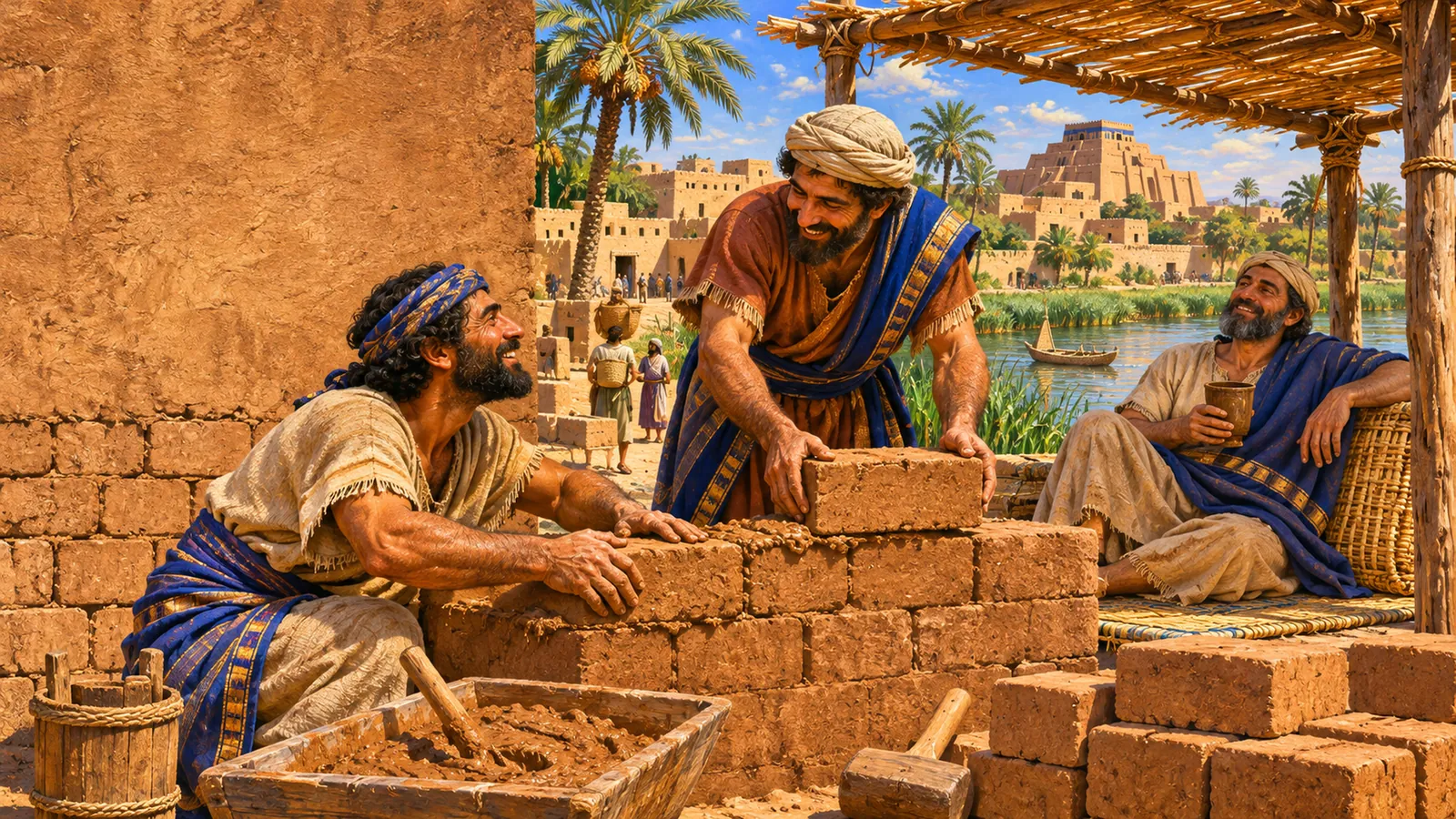
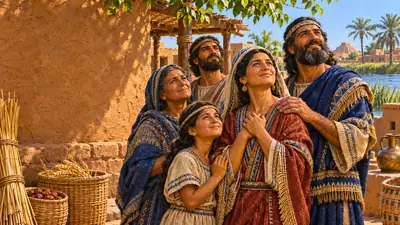
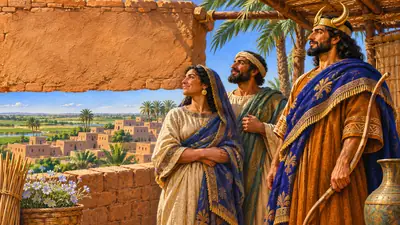
The voice calls for many cities to be built. It speaks of resting in the shade those cities will give.
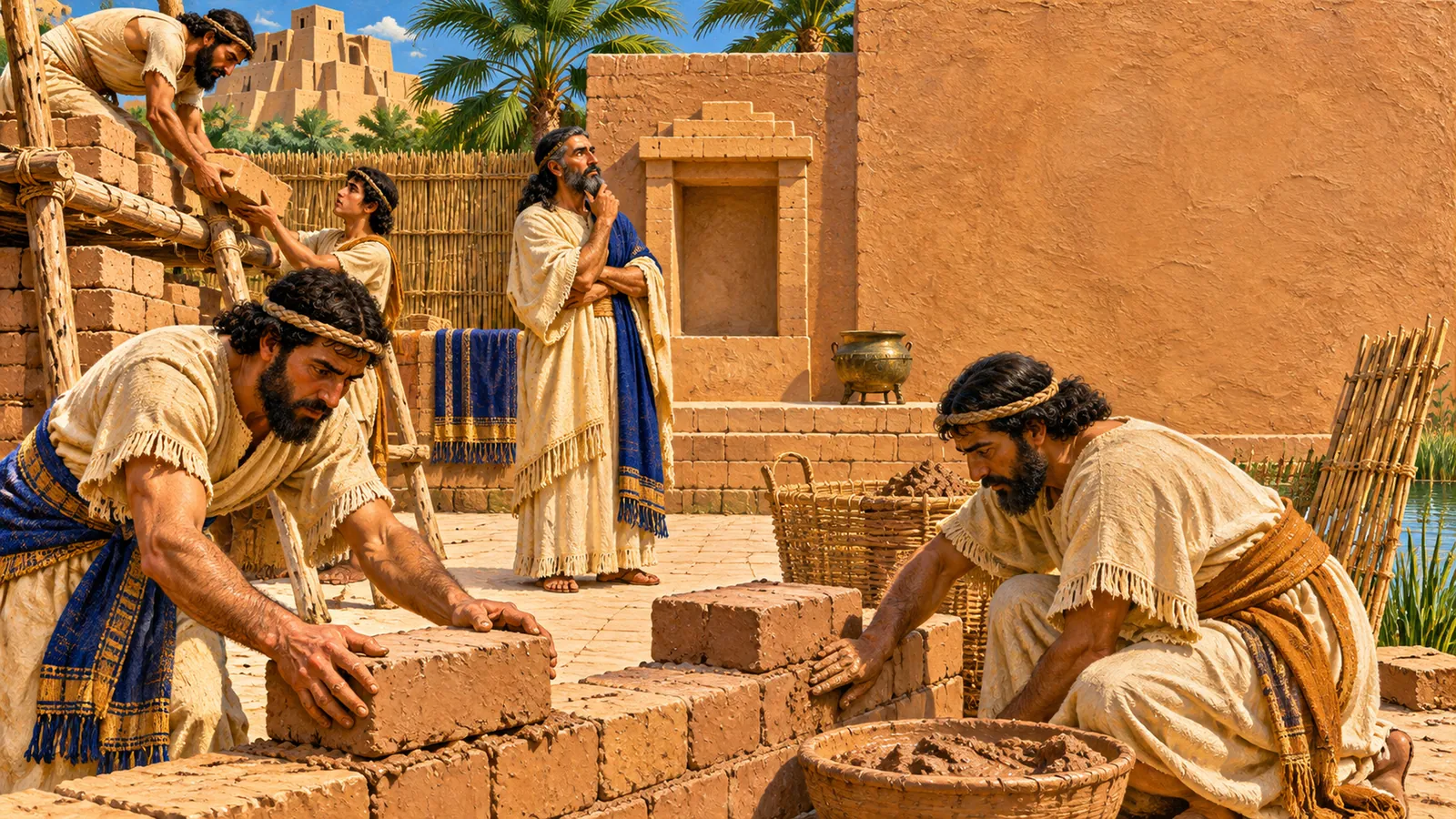
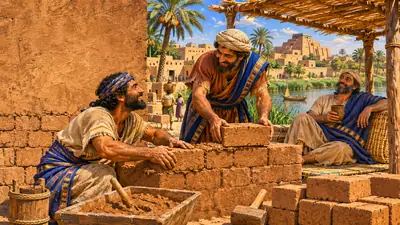
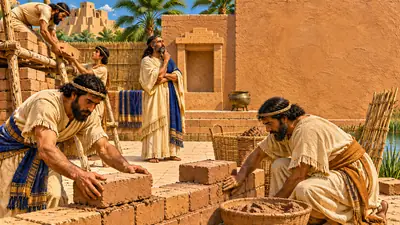
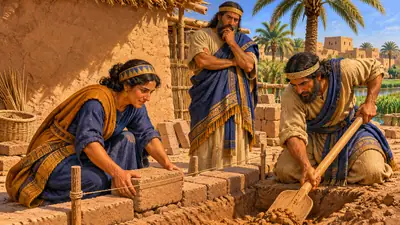
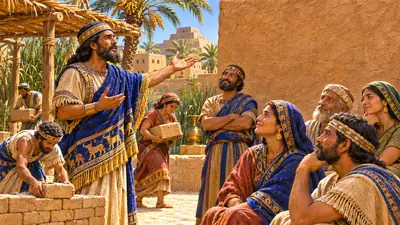
The cities are to be built of brick in places kept pure. The voice also calls for places set aside for divination.
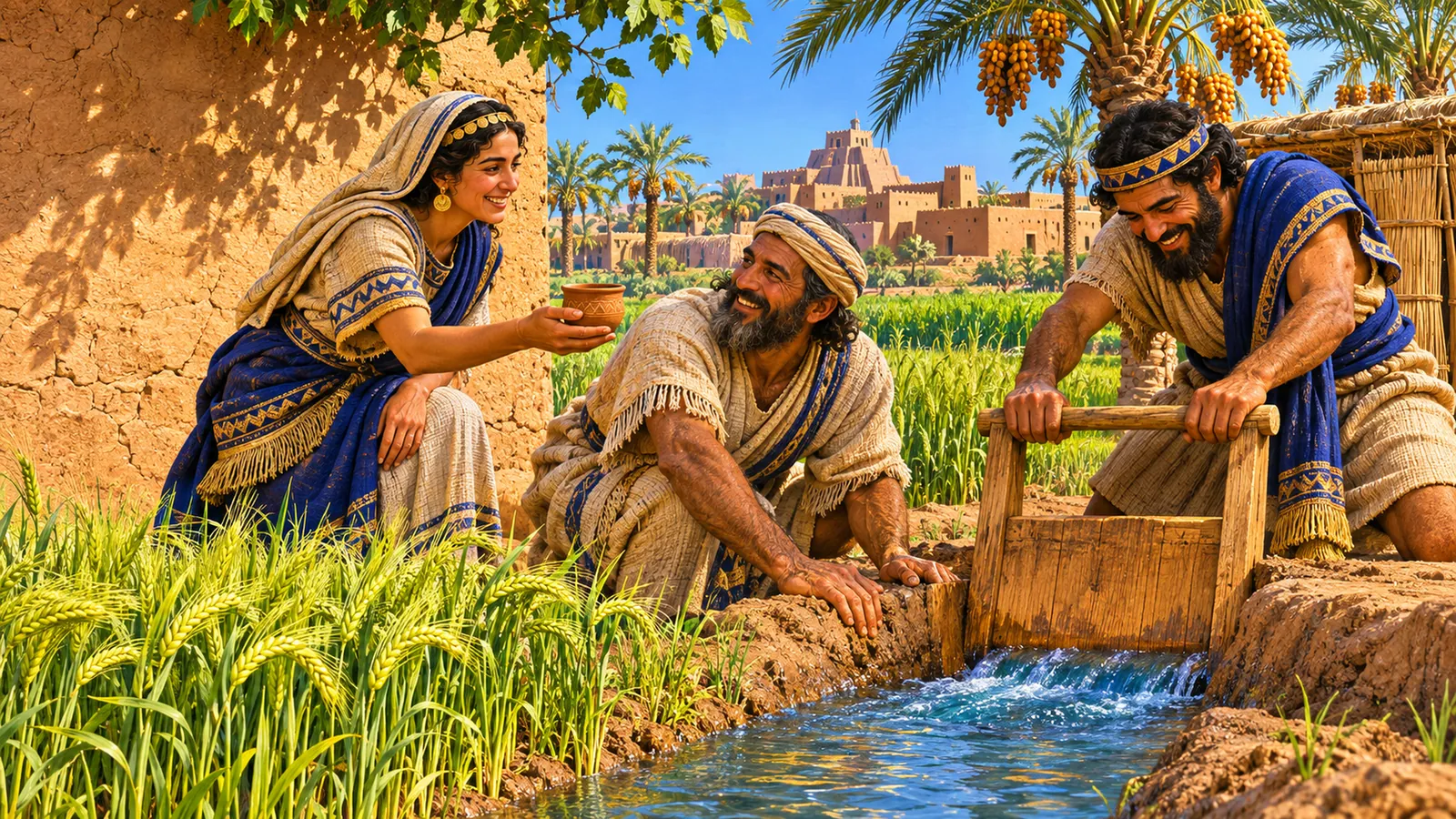
The voice speaks of rites and powers put in order and of water reaching the earth. Then it promises well-being in the land.
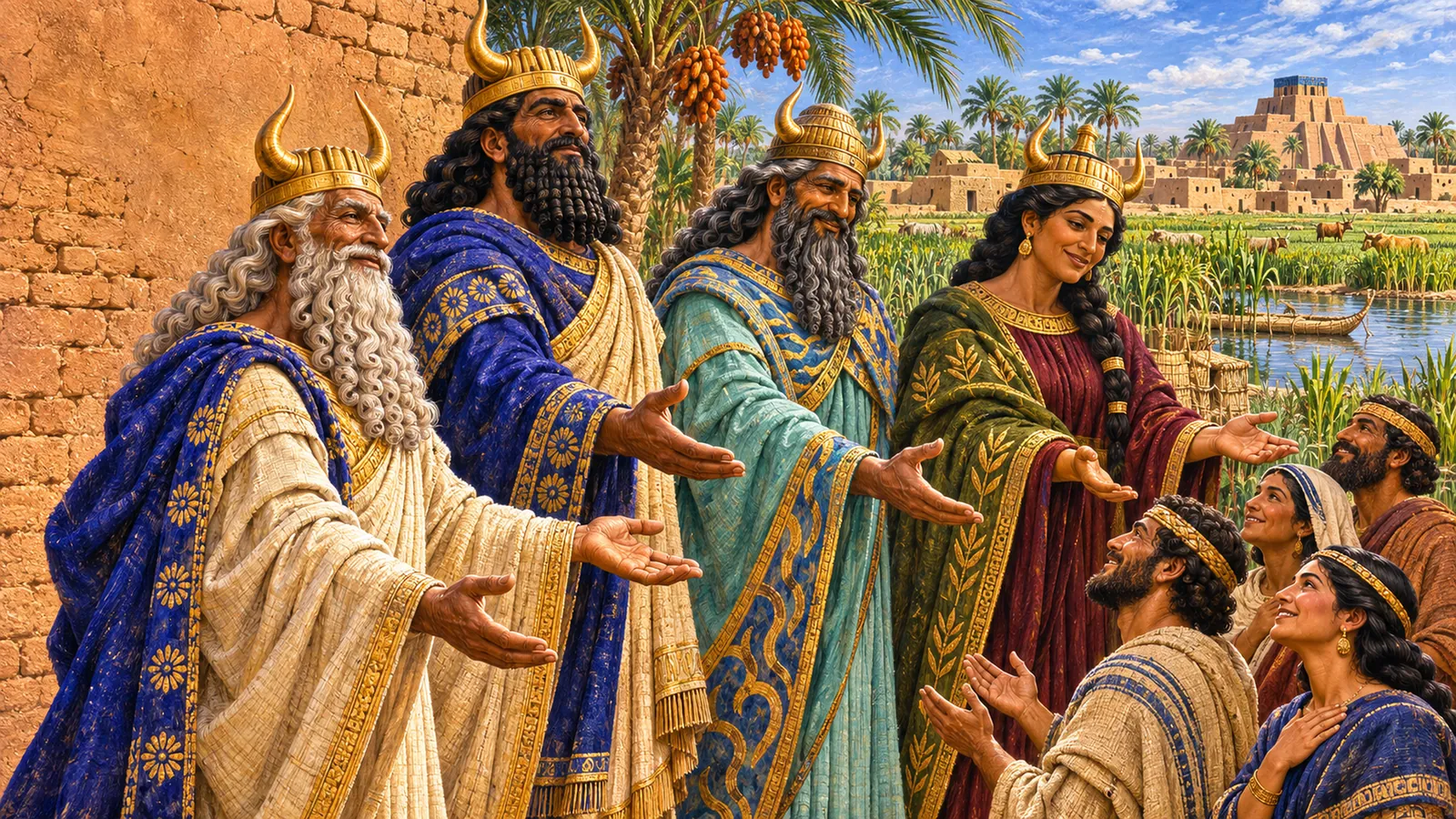
At the beginning of human life, the poem says, the gods An, Enlil, Enki and Ninhursag fashioned the people.
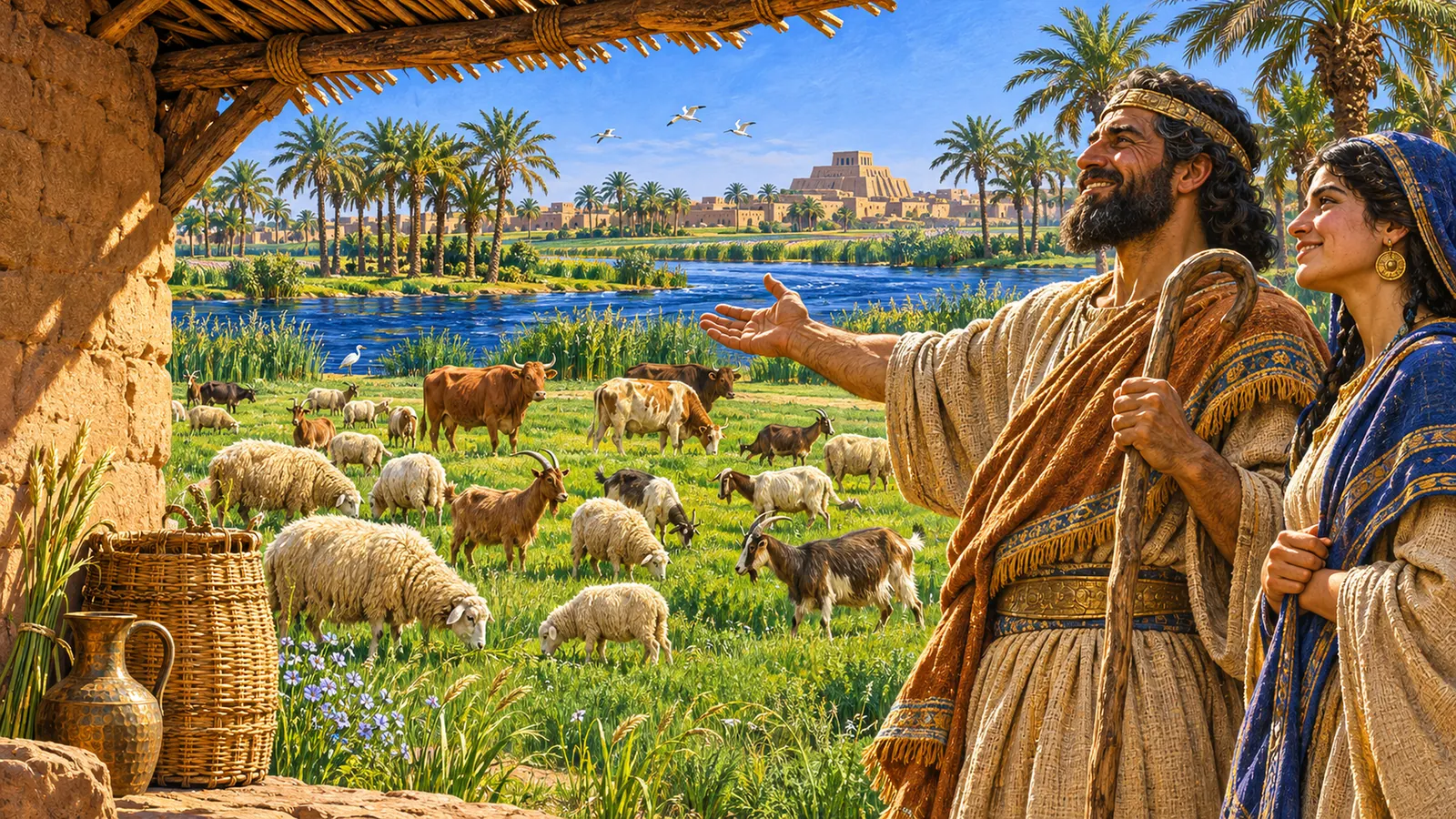
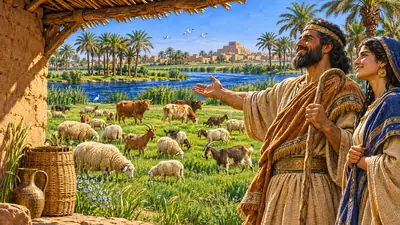
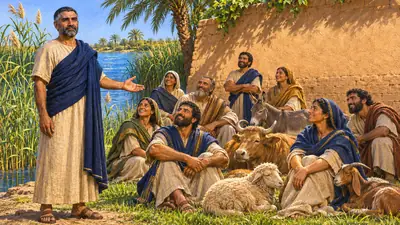
The gods also make the animals multiply. Across the plains, the poem says, there are herds of four-legged creatures.

About thirty-two lines are missing here. A few more are too fragmentary to translate, and then a voice speaks again.
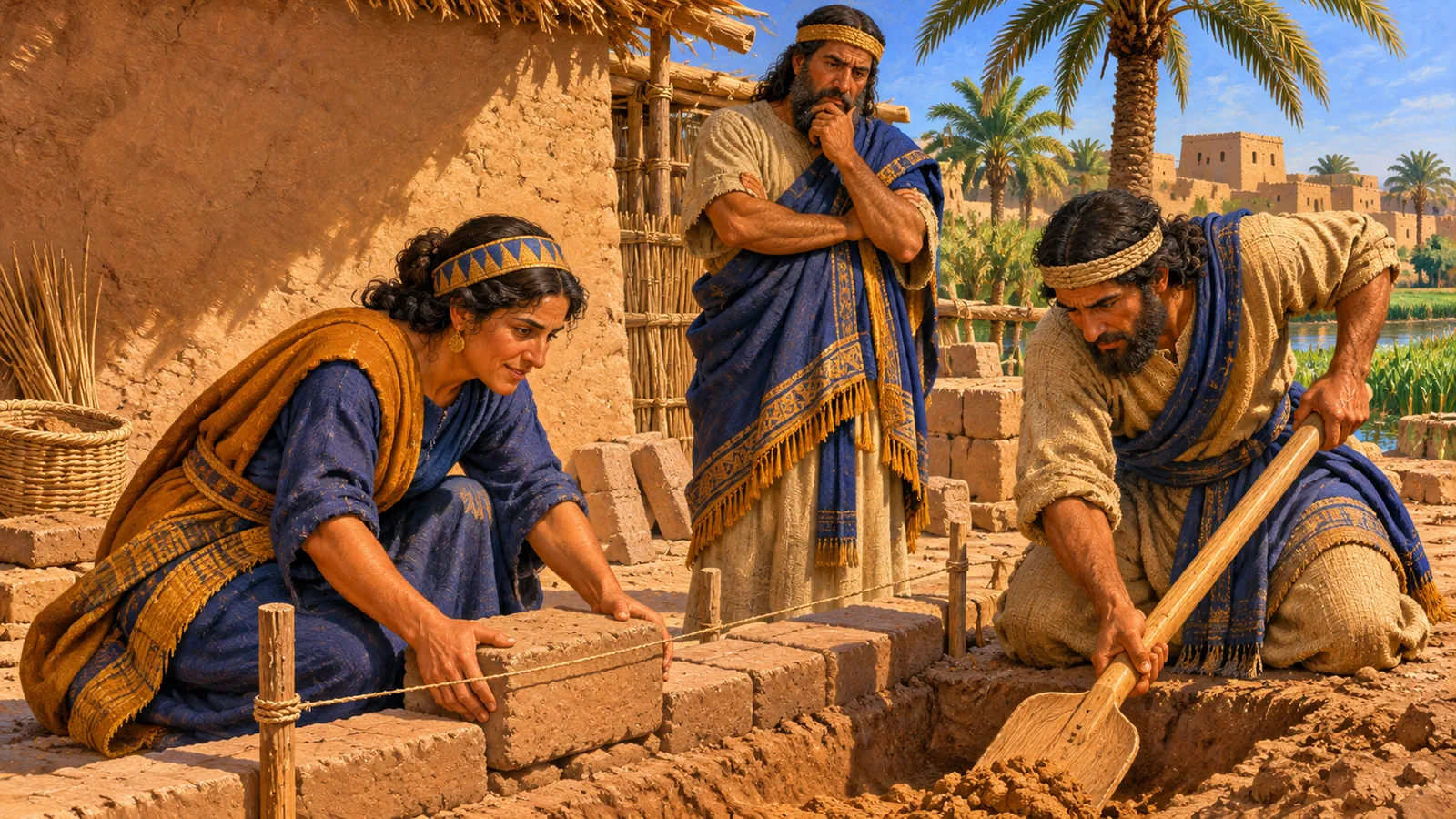
The voice says it will oversee the work. It calls on the builder of the land to dig a firm foundation.
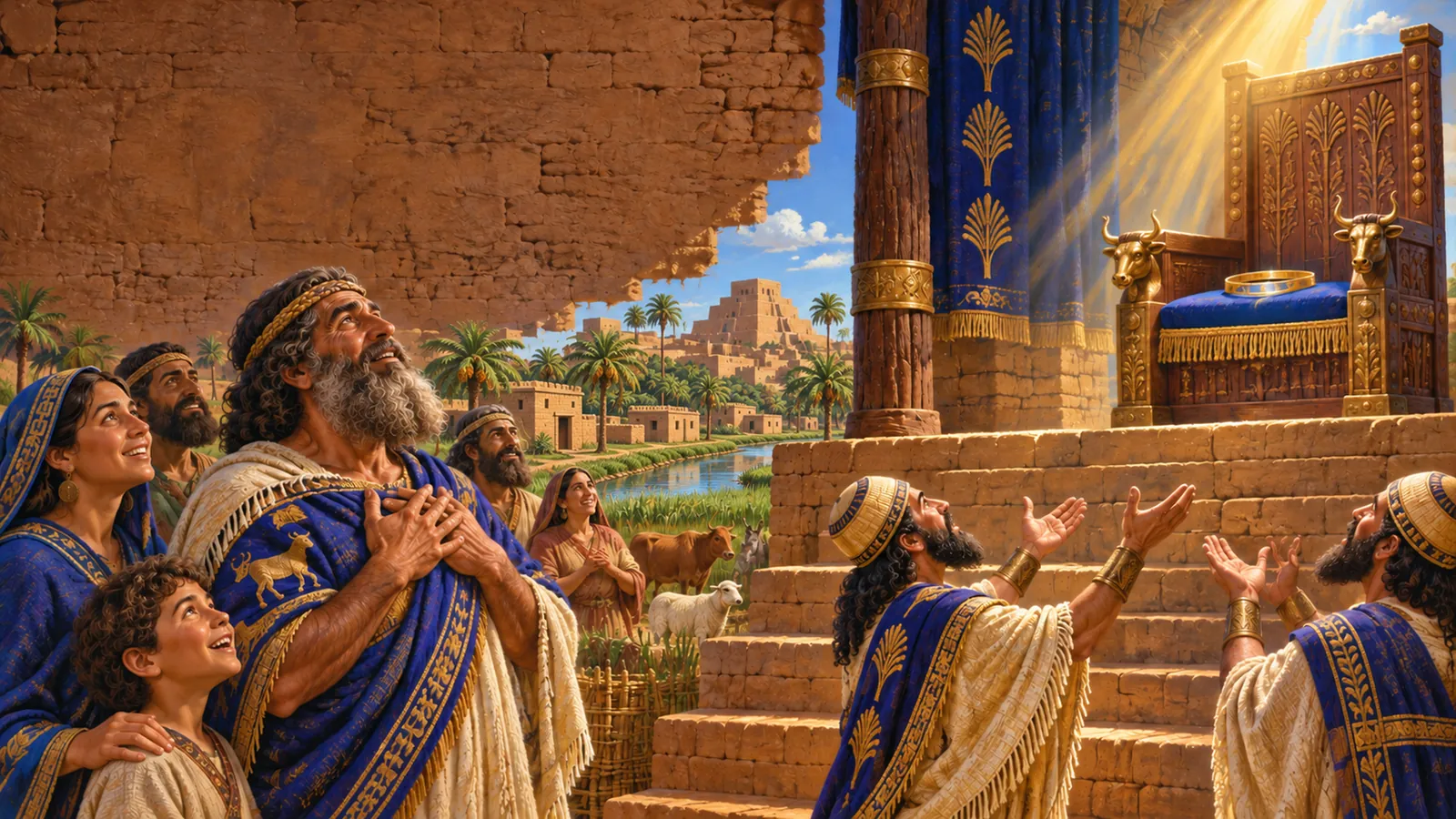
KINGSHIP
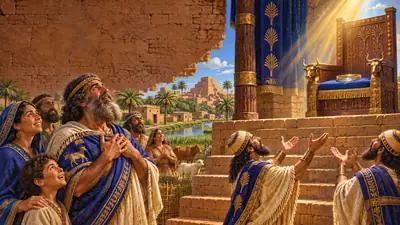
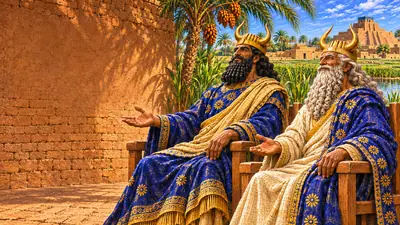
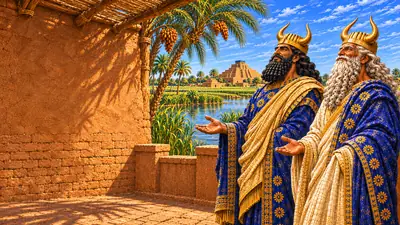
The crown and throne of kingship come down from heaven as the tale turns to the cities.
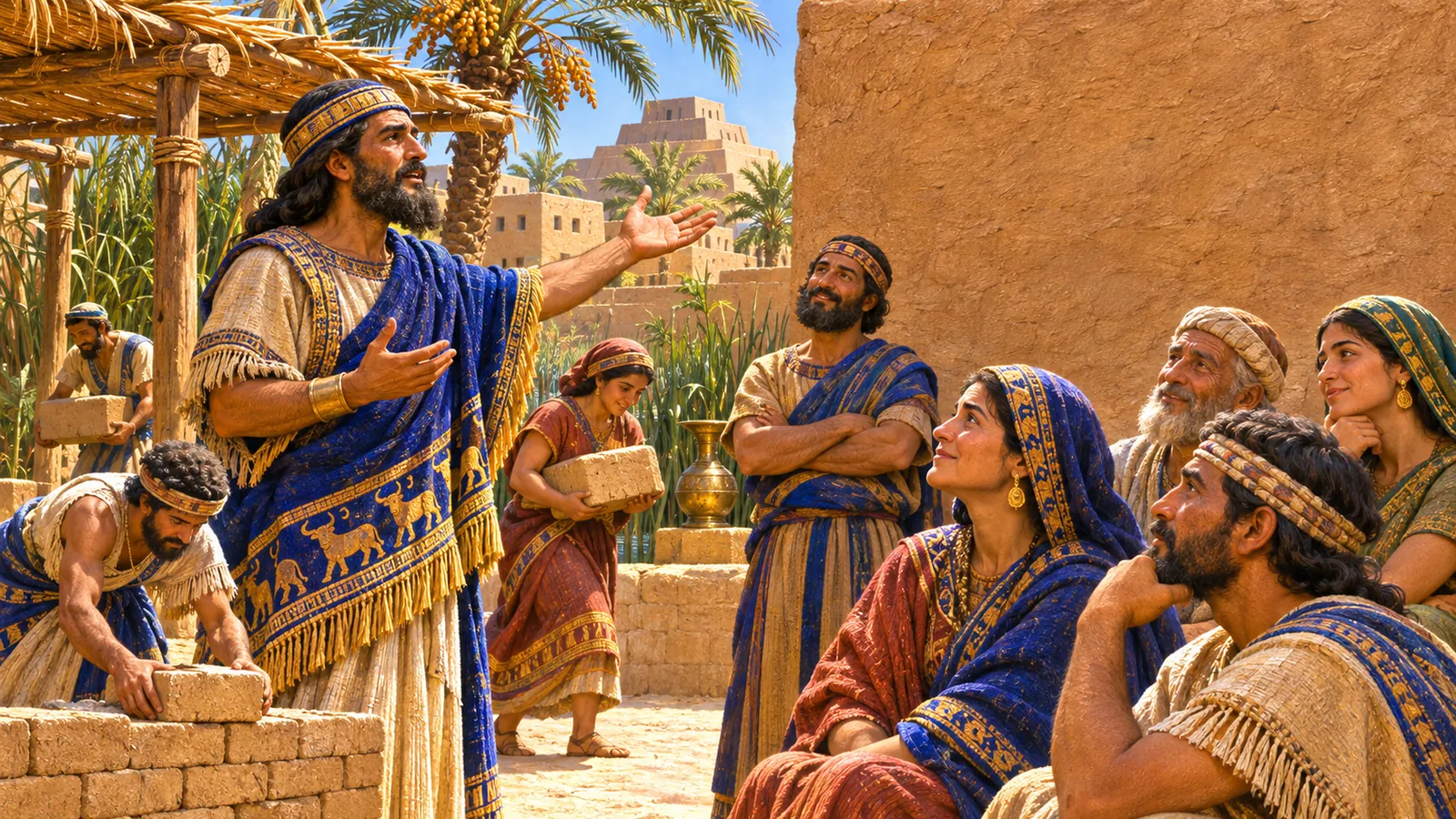
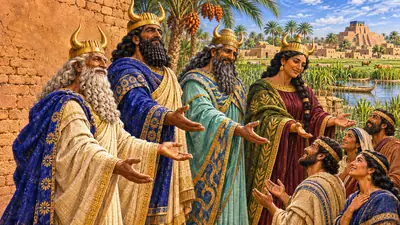
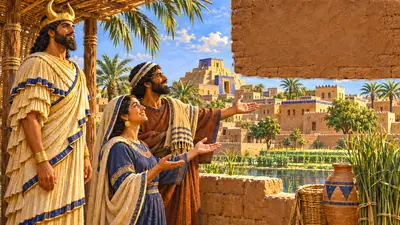
The rites and powers are set in order. Bricks are laid in holy places, and the names of the cities are spoken.
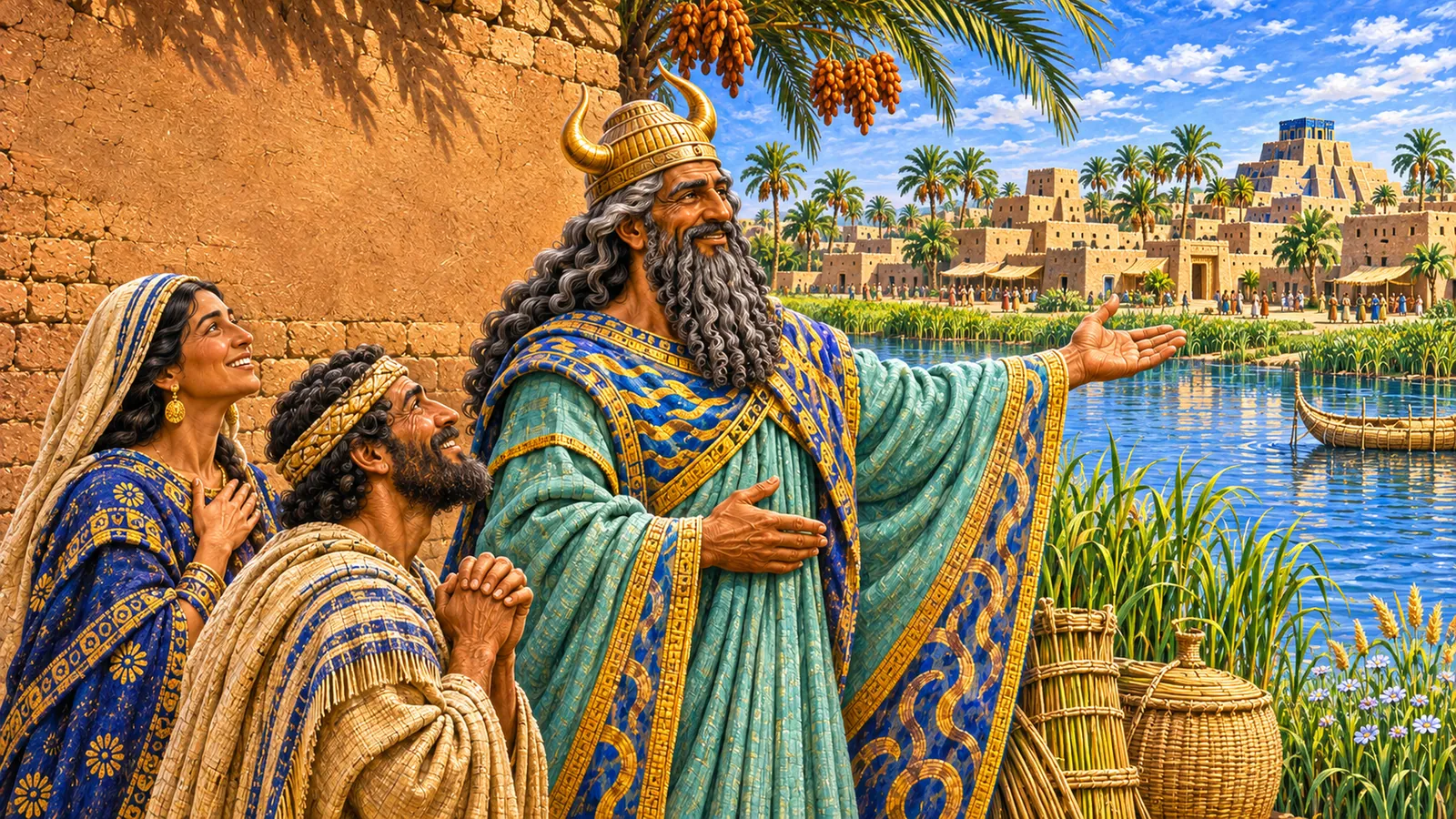
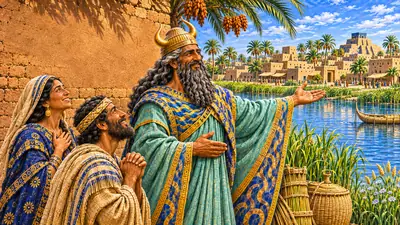
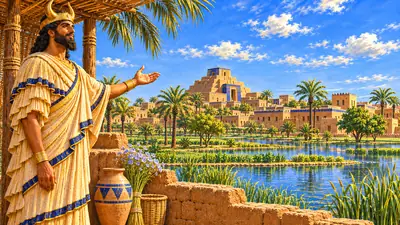
The first city the poem names is Eridu. It is given to Nudimmud, one of the names of Enki.
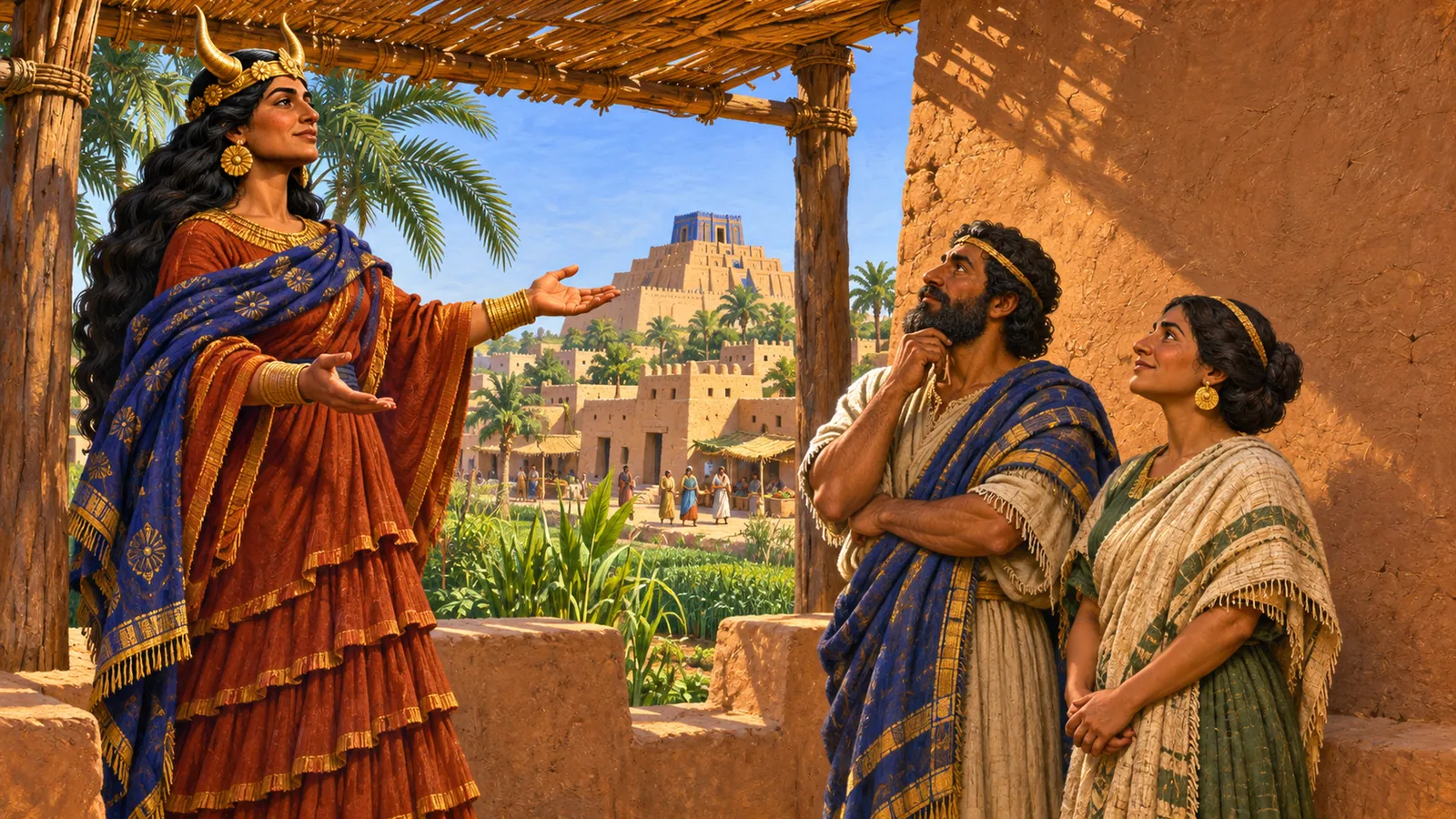
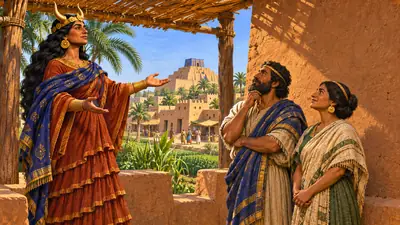
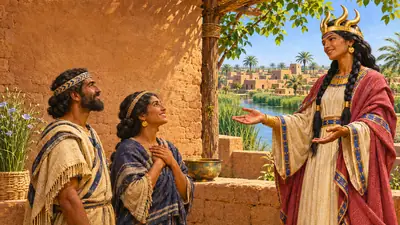
The poem moves to Bad-tibira, the second city. It is given to the one the poem calls the Mistress.
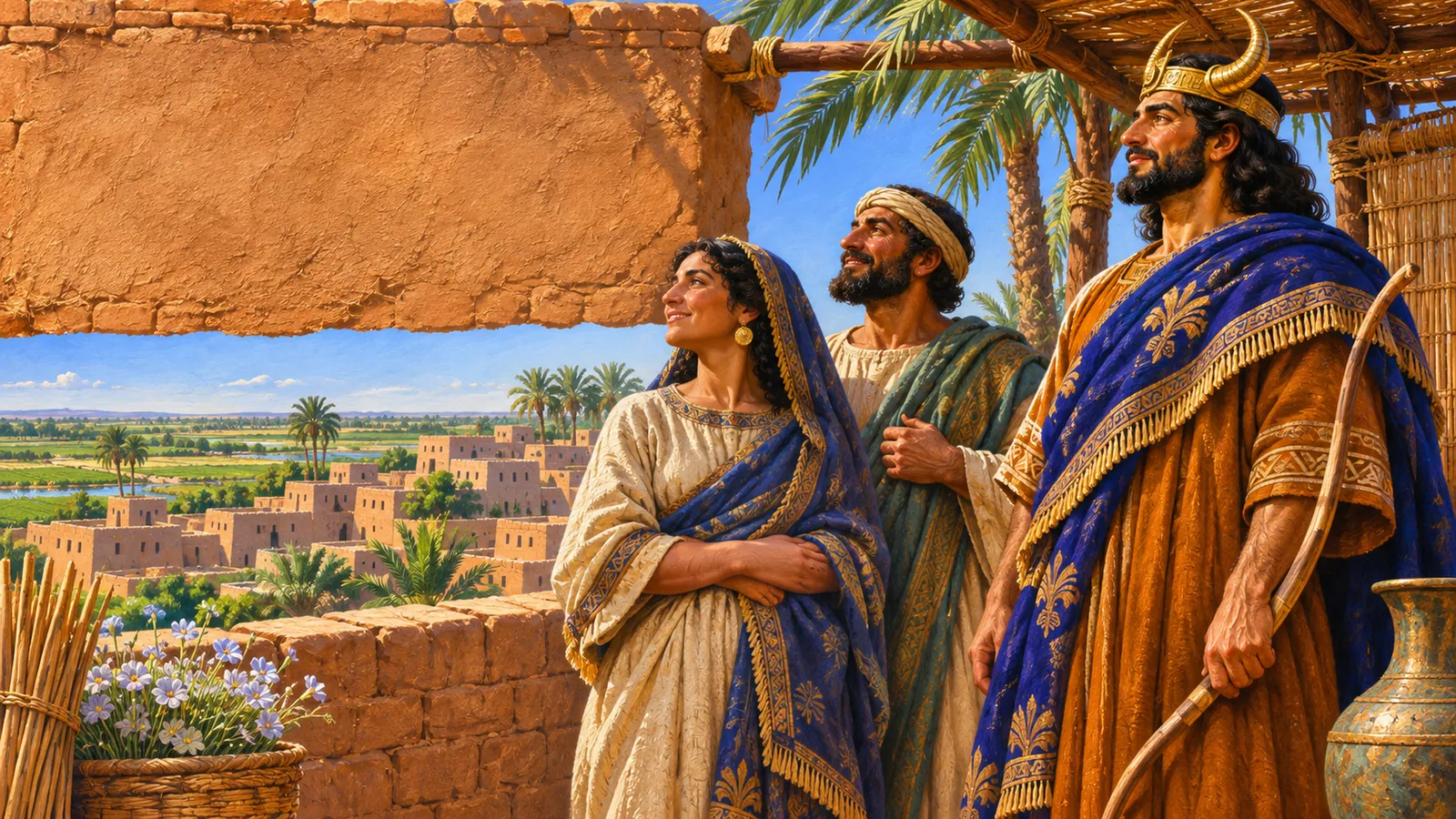
The third city in the sequence is Larag. Here the tale names Pabilsaj as the one who receives it.
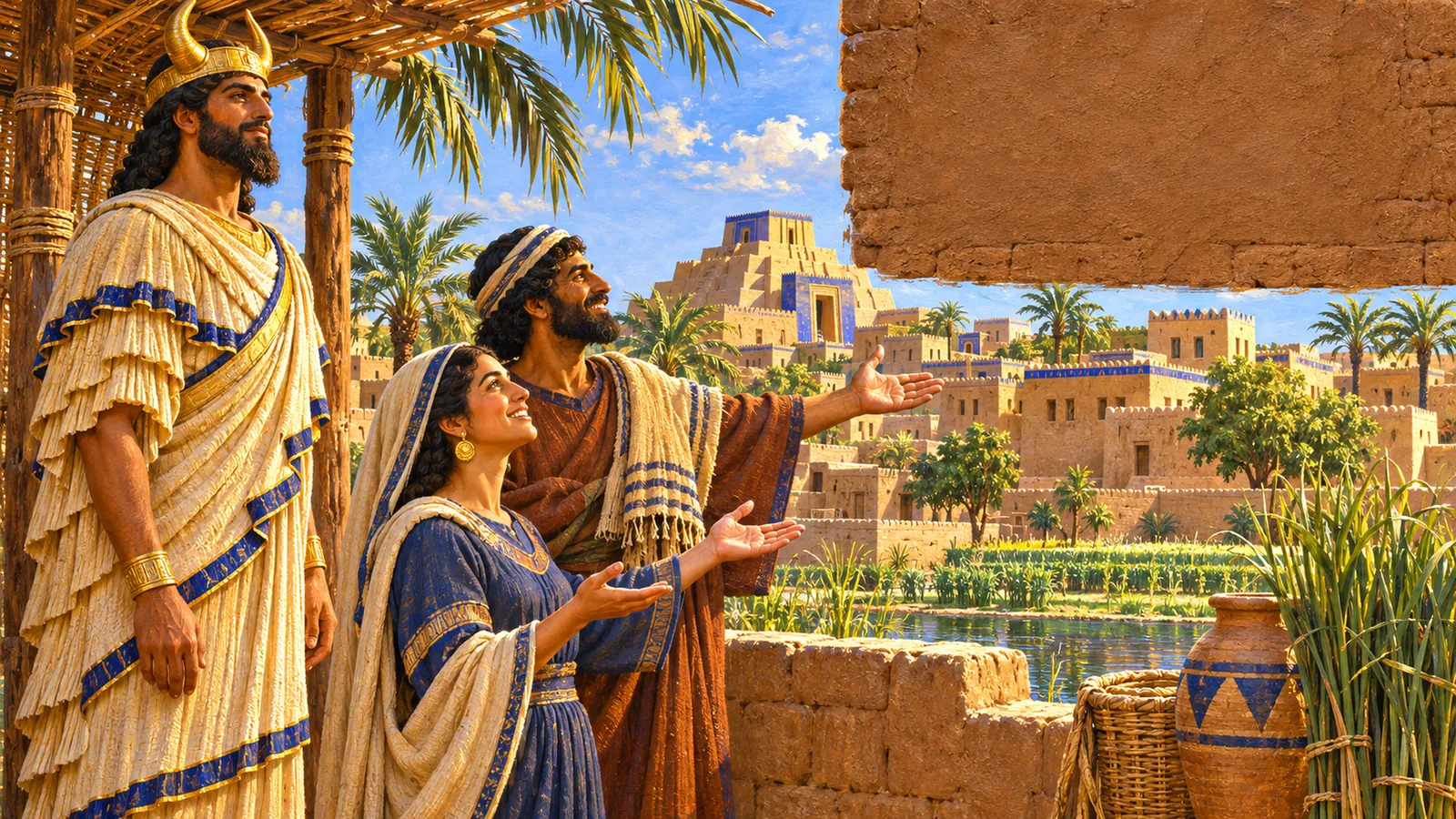
The list turns next to Sippar, its fourth city. It is given to Utu, whom the poem calls a hero.
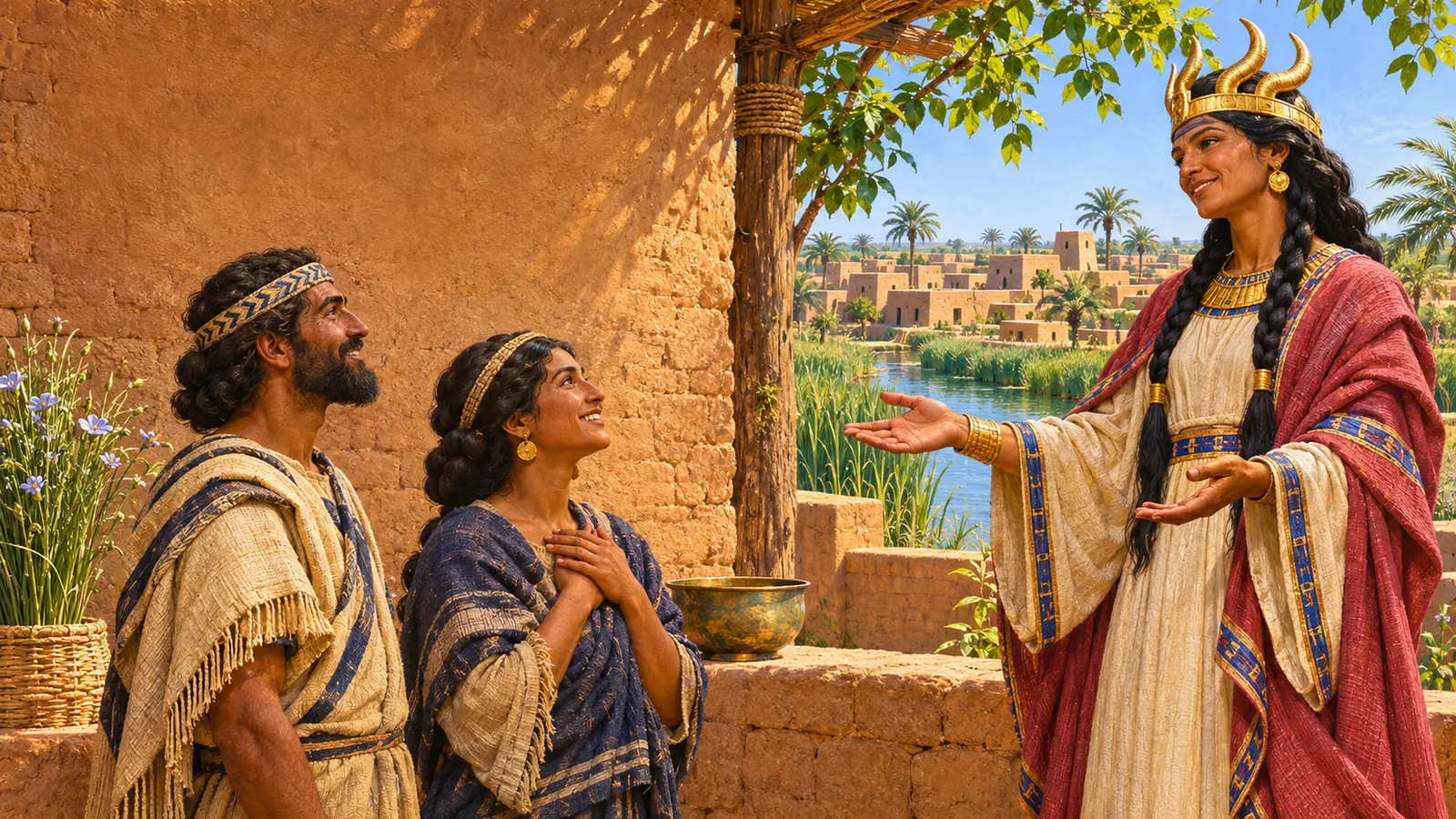
Fifth comes Shuruppak, which is given to Sud. With that name, the passage finishes the list of five cities.
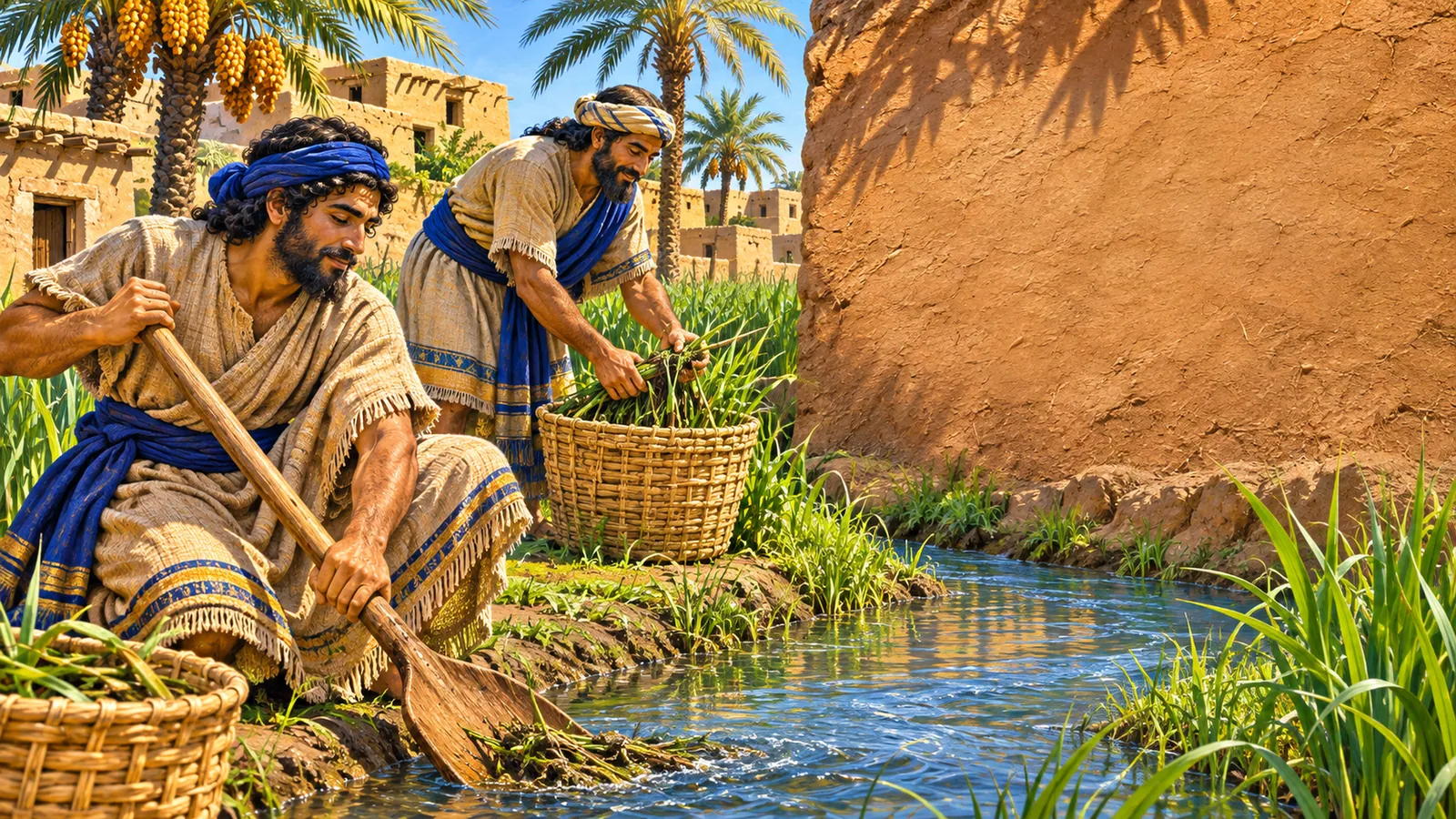
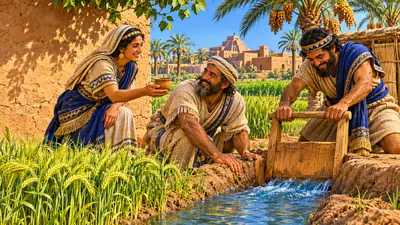
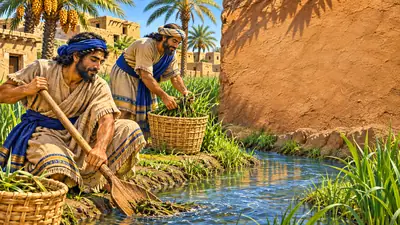
The words turn to water. The river passage is damaged, but the cleansing of the small canals can still be read.
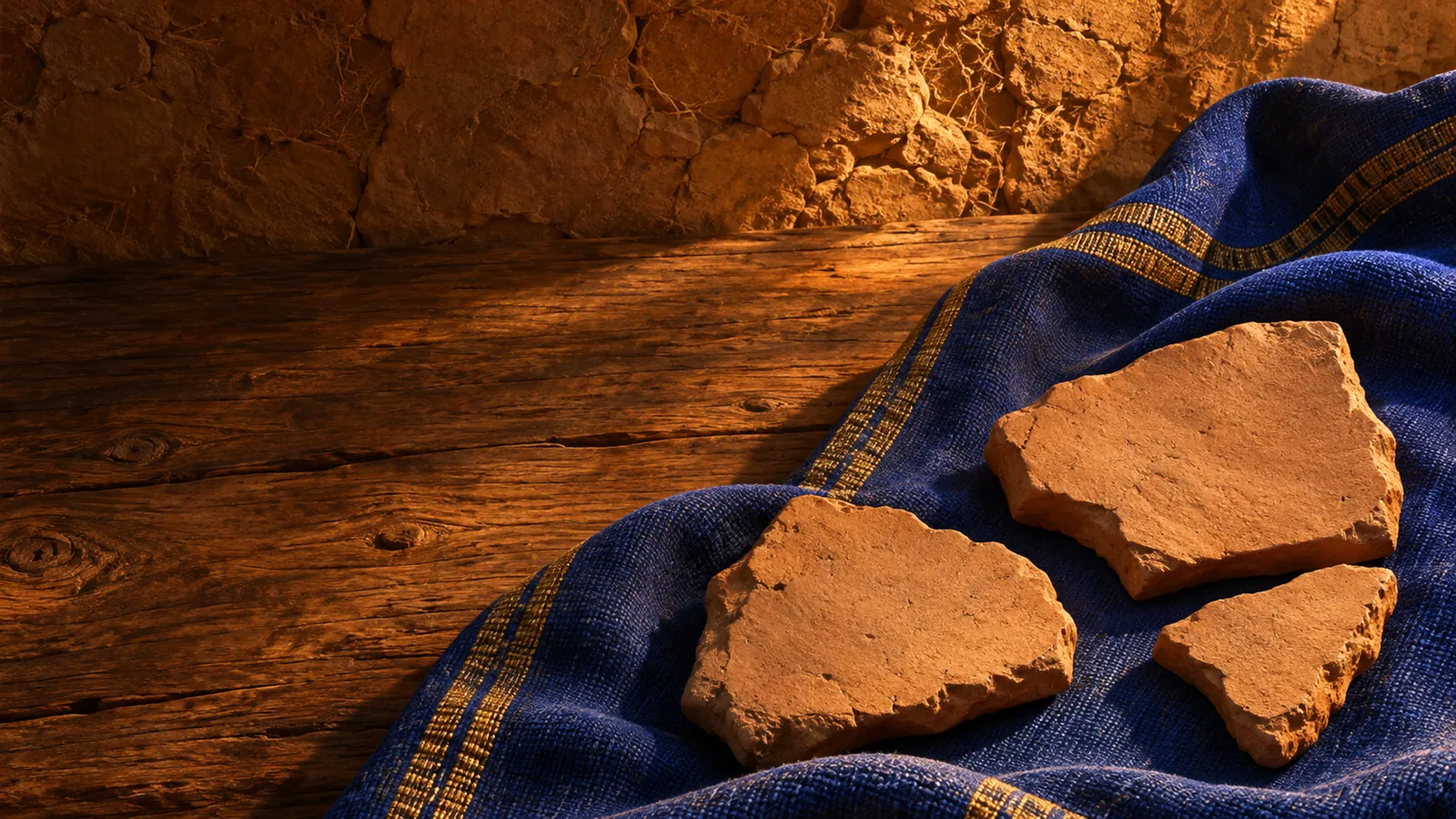
About thirty-four lines are missing here. Where the words return, only broken phrases speak of heaven, the flood and humankind.
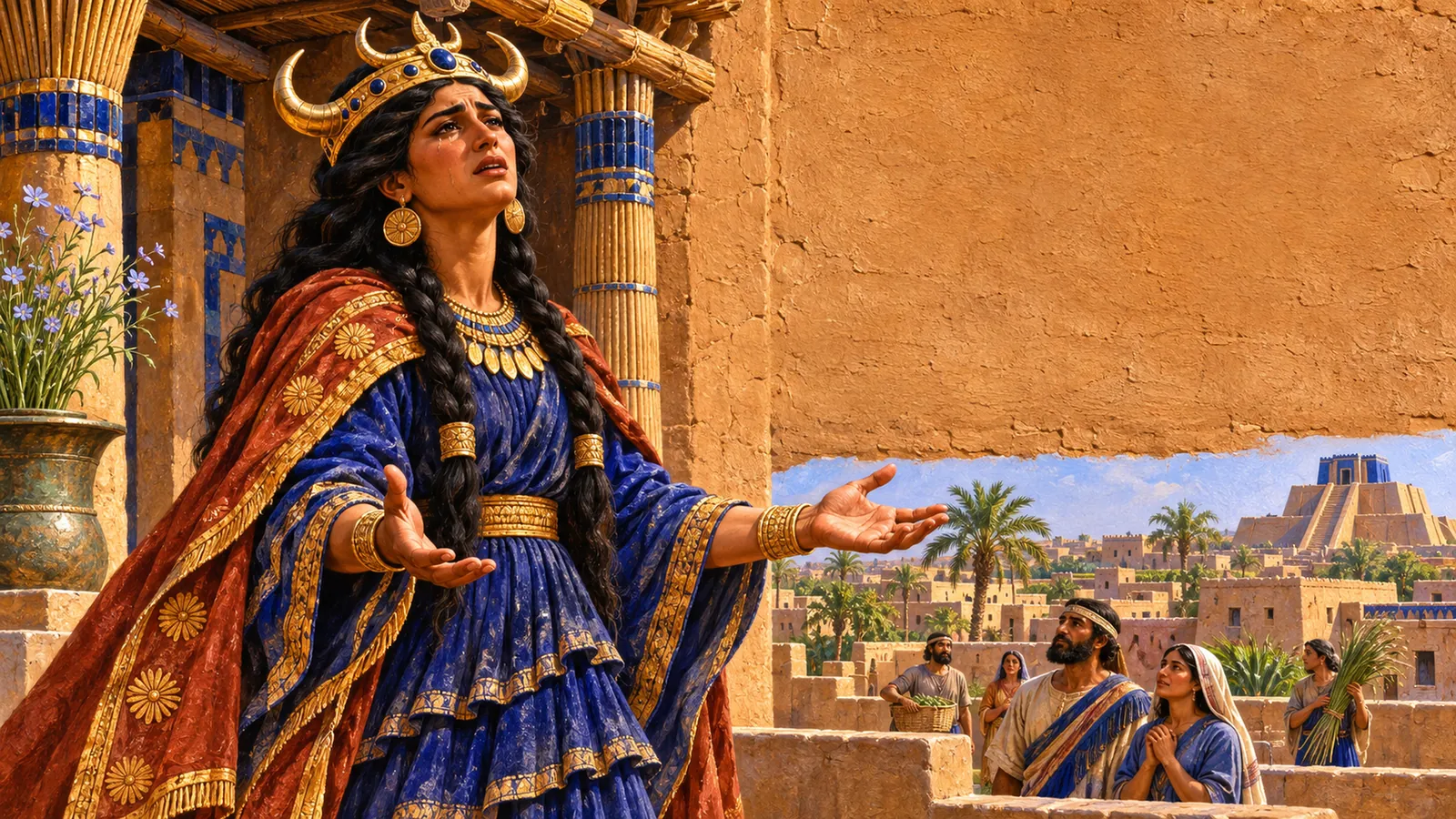
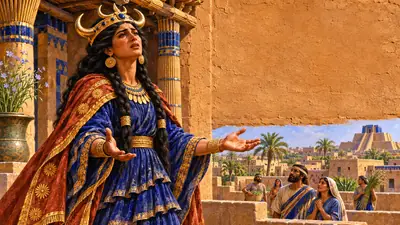
Inanna raises a lament for the people. Her voice is one of the first things we can hear clearly again after the break.
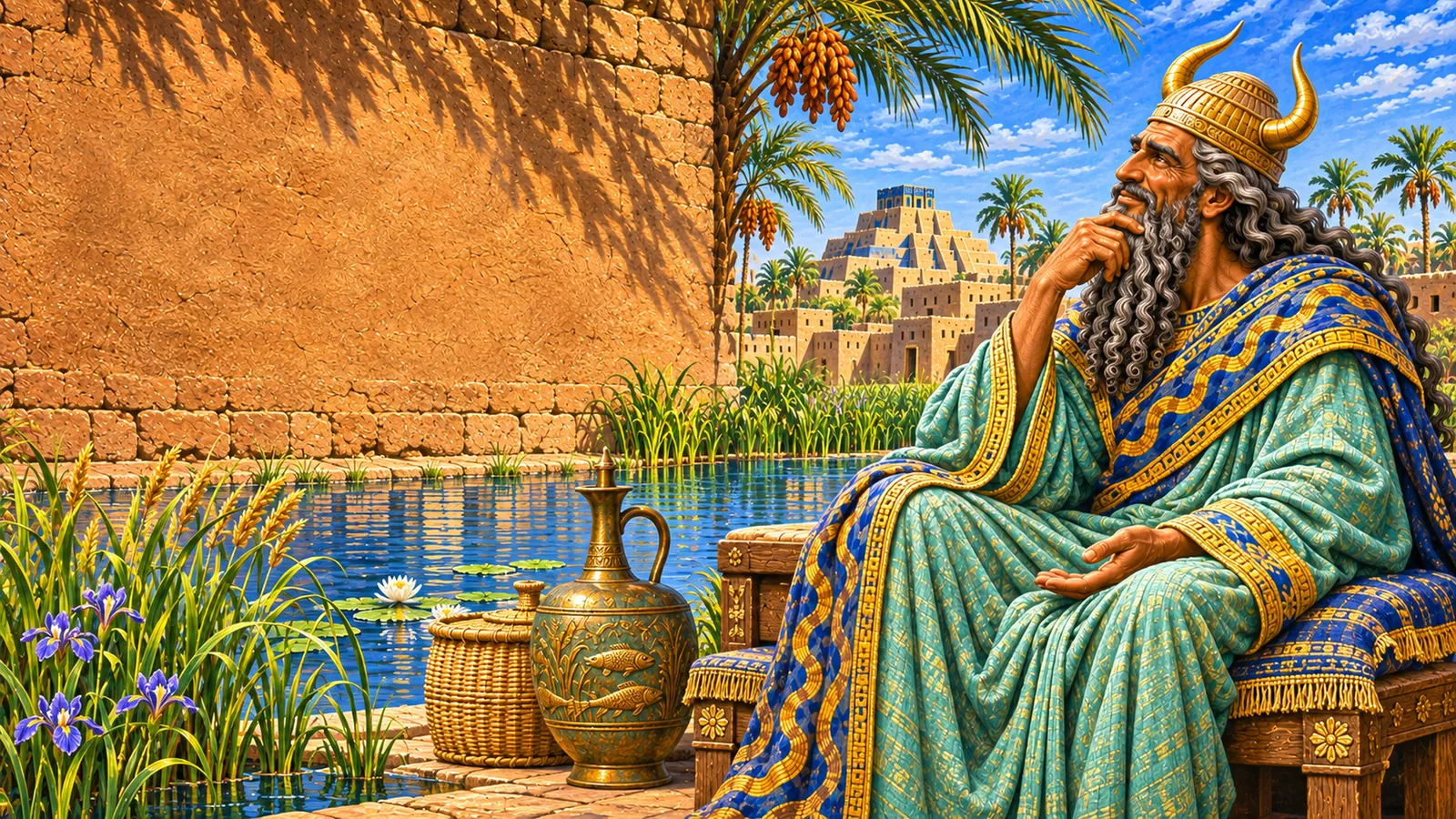
Enki takes counsel with himself. The tablet tells us this in one short phrase amid the broken lines.
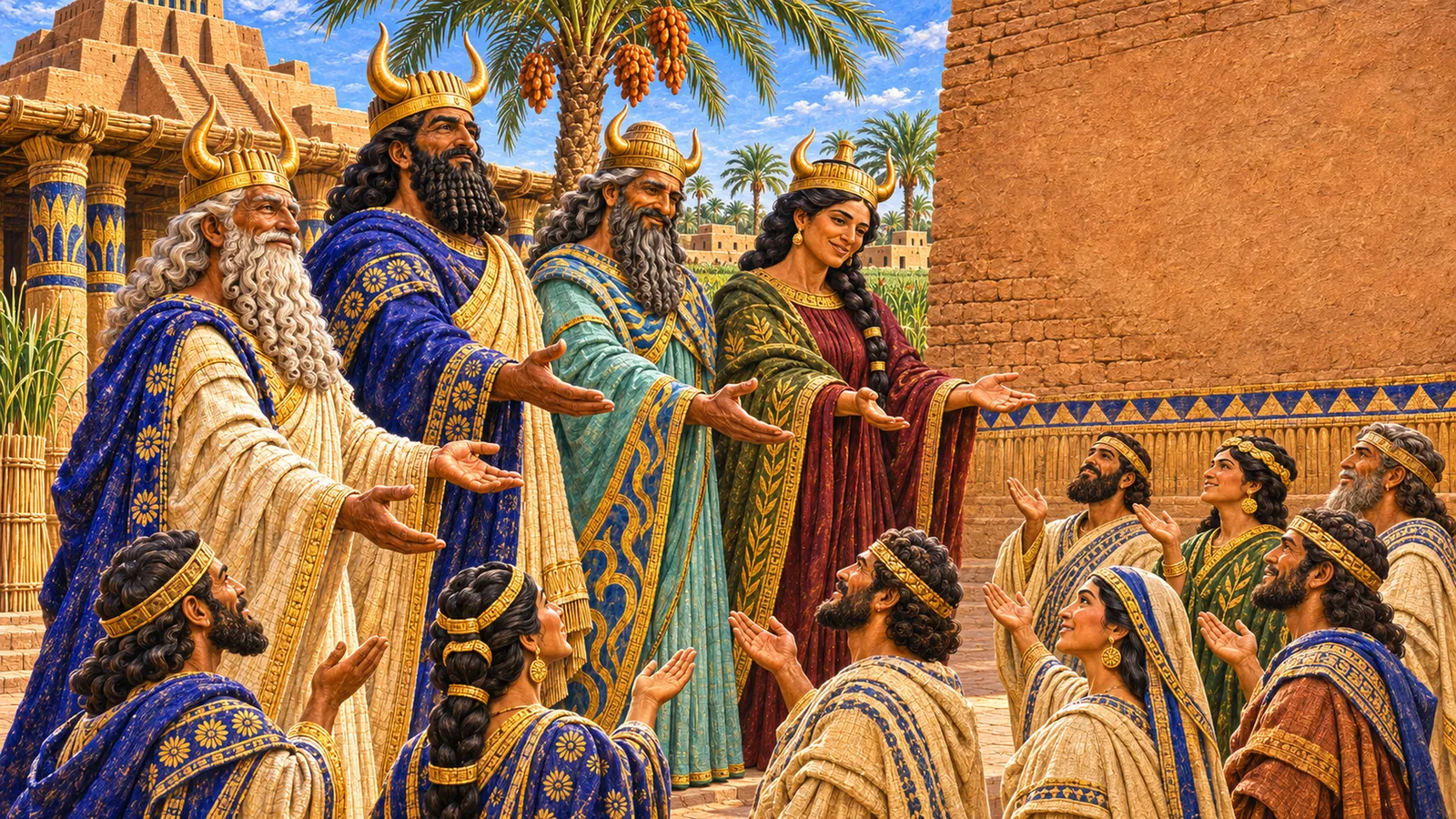
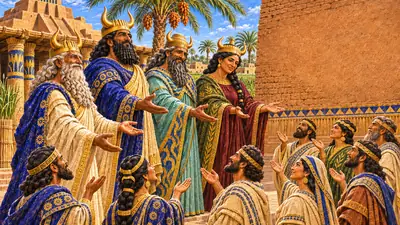
An, Enlil, Enki and Ninhursag make the gods of heaven and earth swear an oath. The gods invoke An and Enlil as they swear.
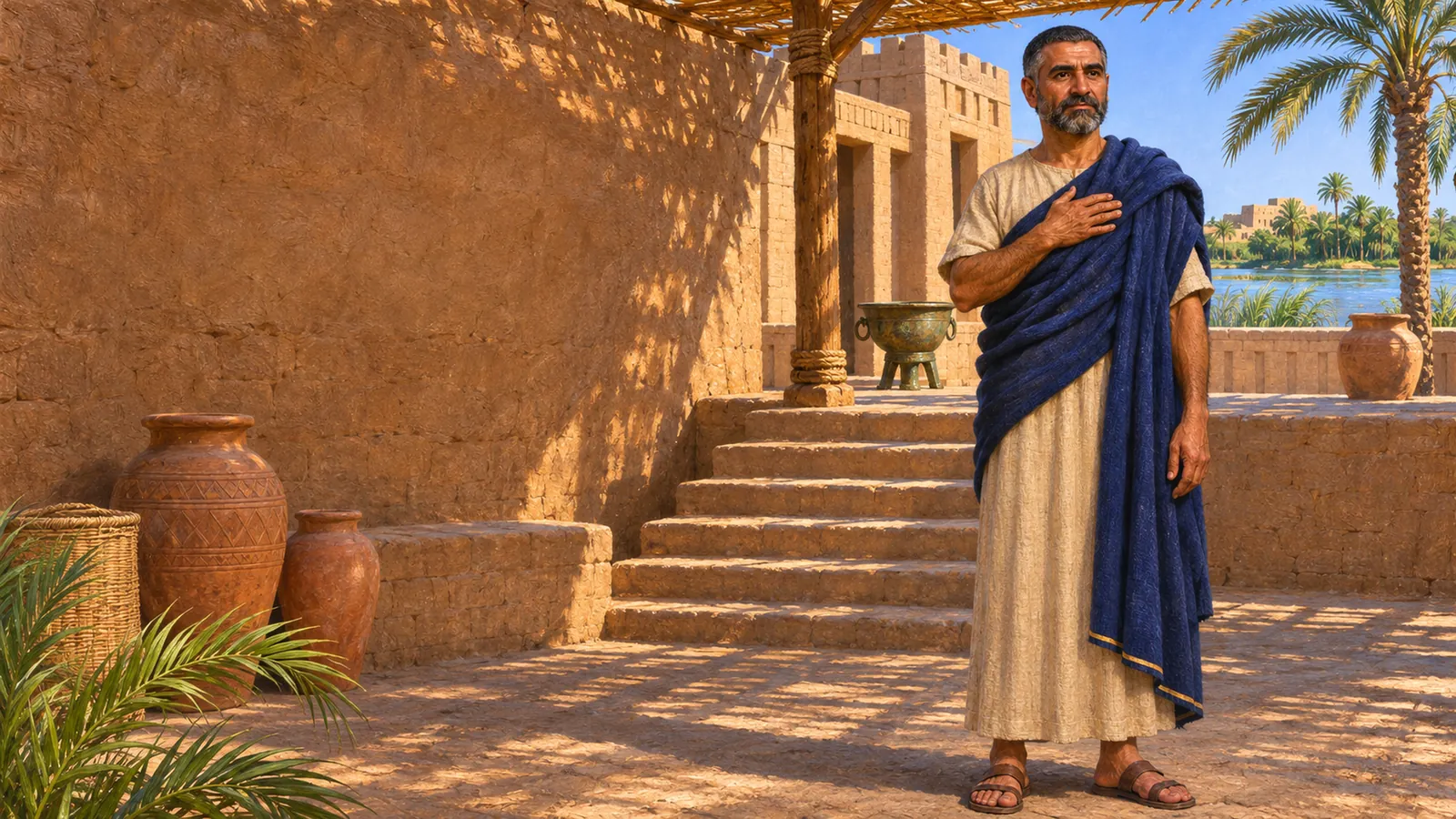
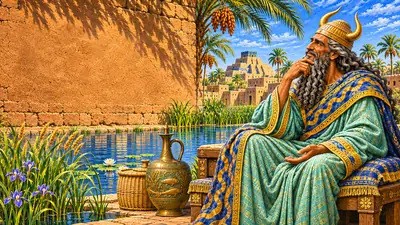
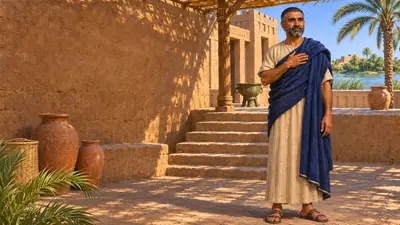
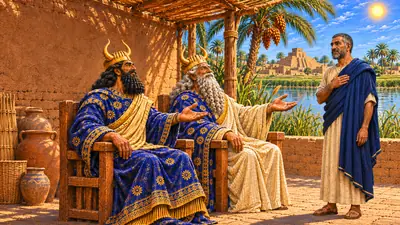
Here the tablet names Ziusudra, the king and a gudu priest. The words around what he was doing have come down to us in fragments.
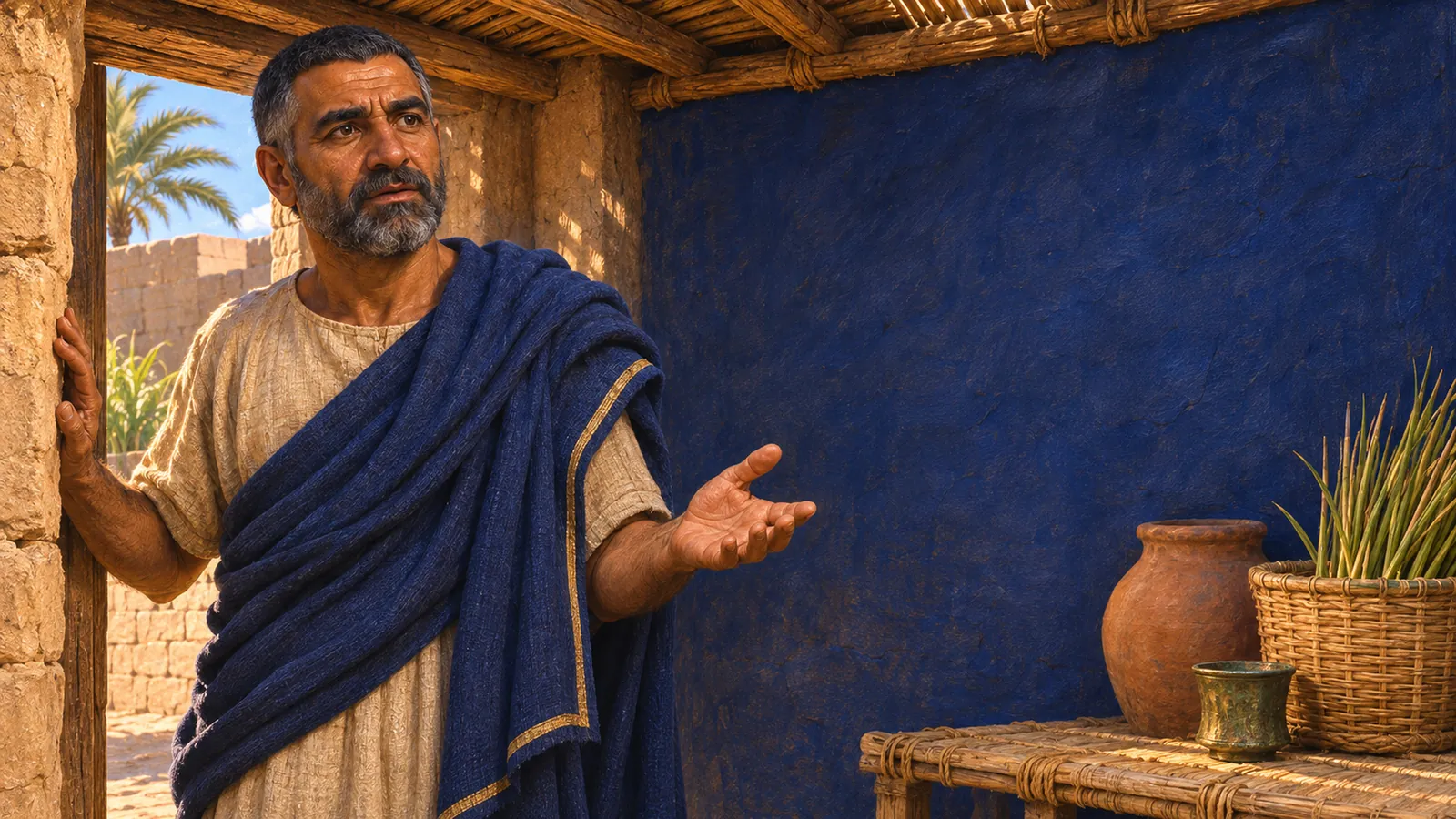
Something appears that the text says was other than a dream. The surrounding lines break up before we learn what appeared.
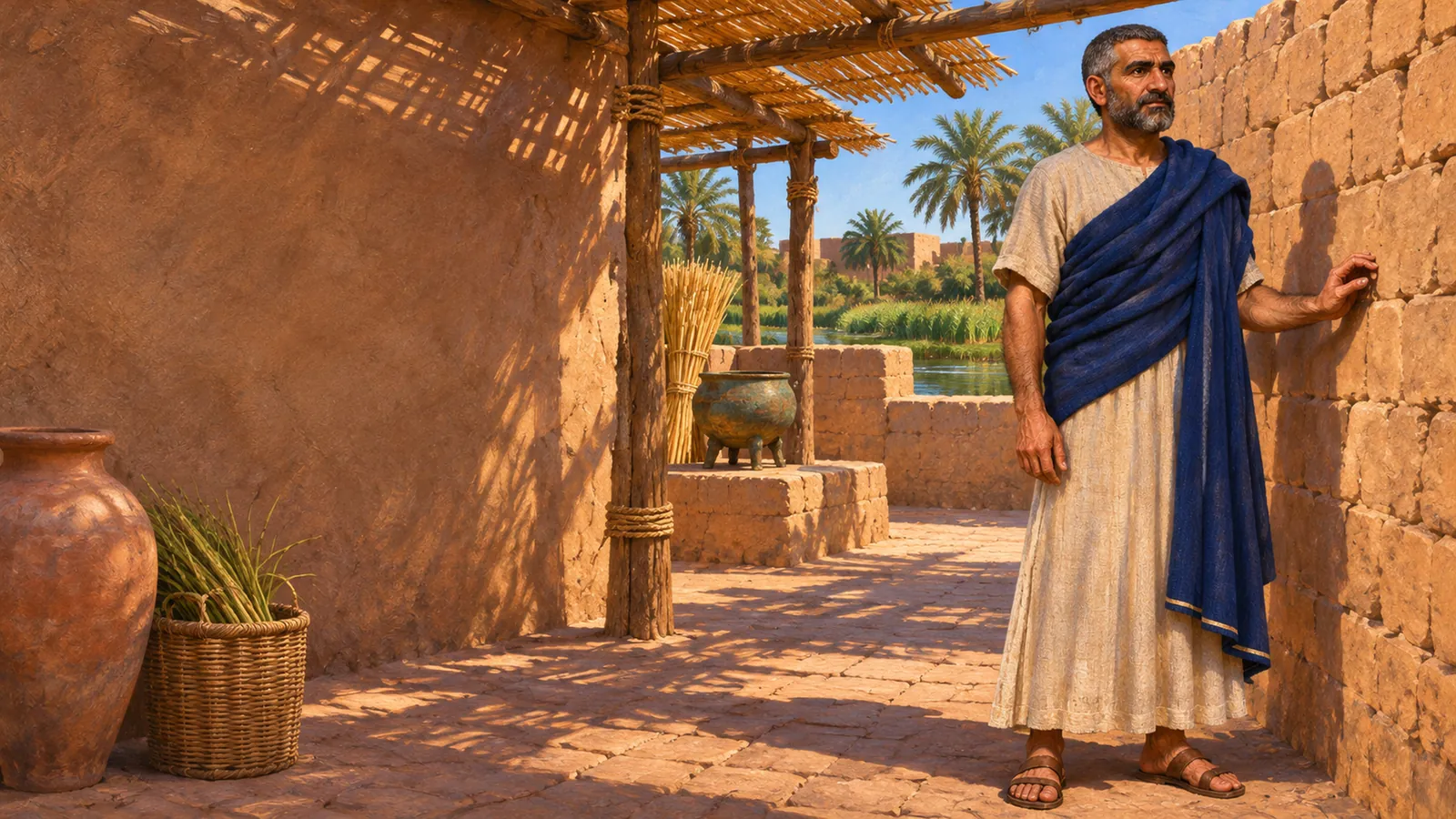
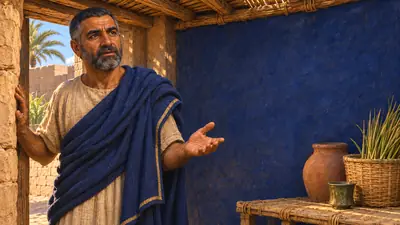
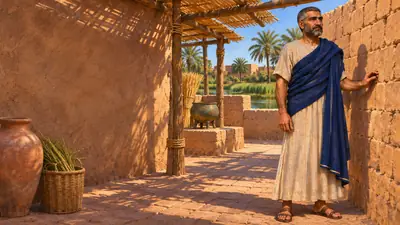
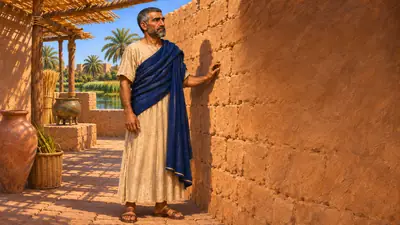
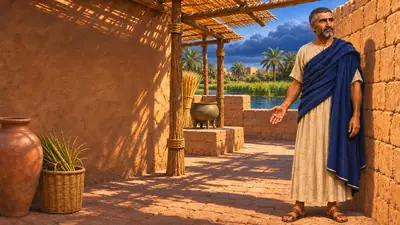
The surviving lines name the Ki-ur. Ziusudra stands beside a wall there, at the place where he will hear the warning.
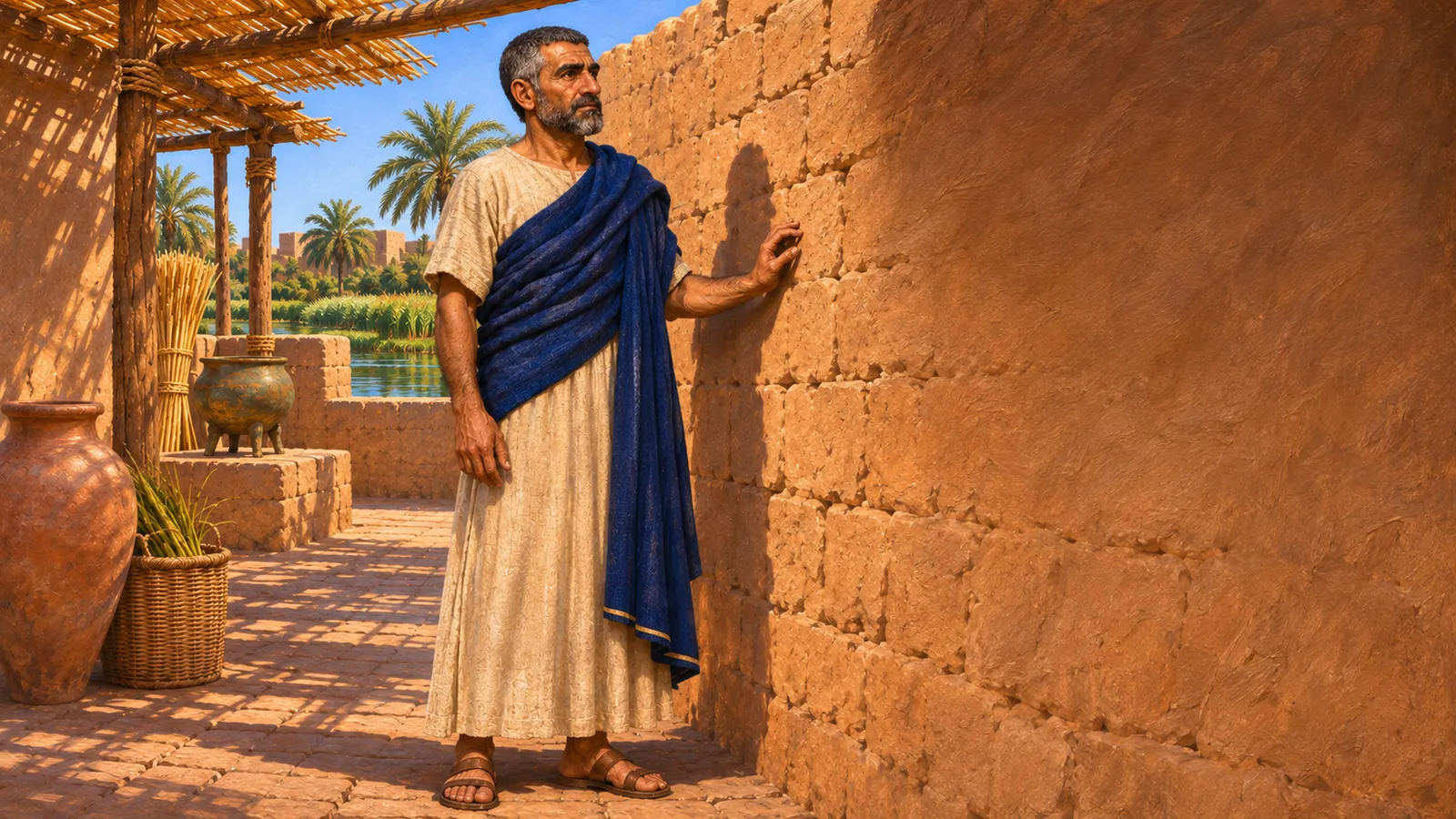
Ziusudra hears a voice at the wall. It addresses the wall itself, asking it to listen carefully and pay attention to what it is told.
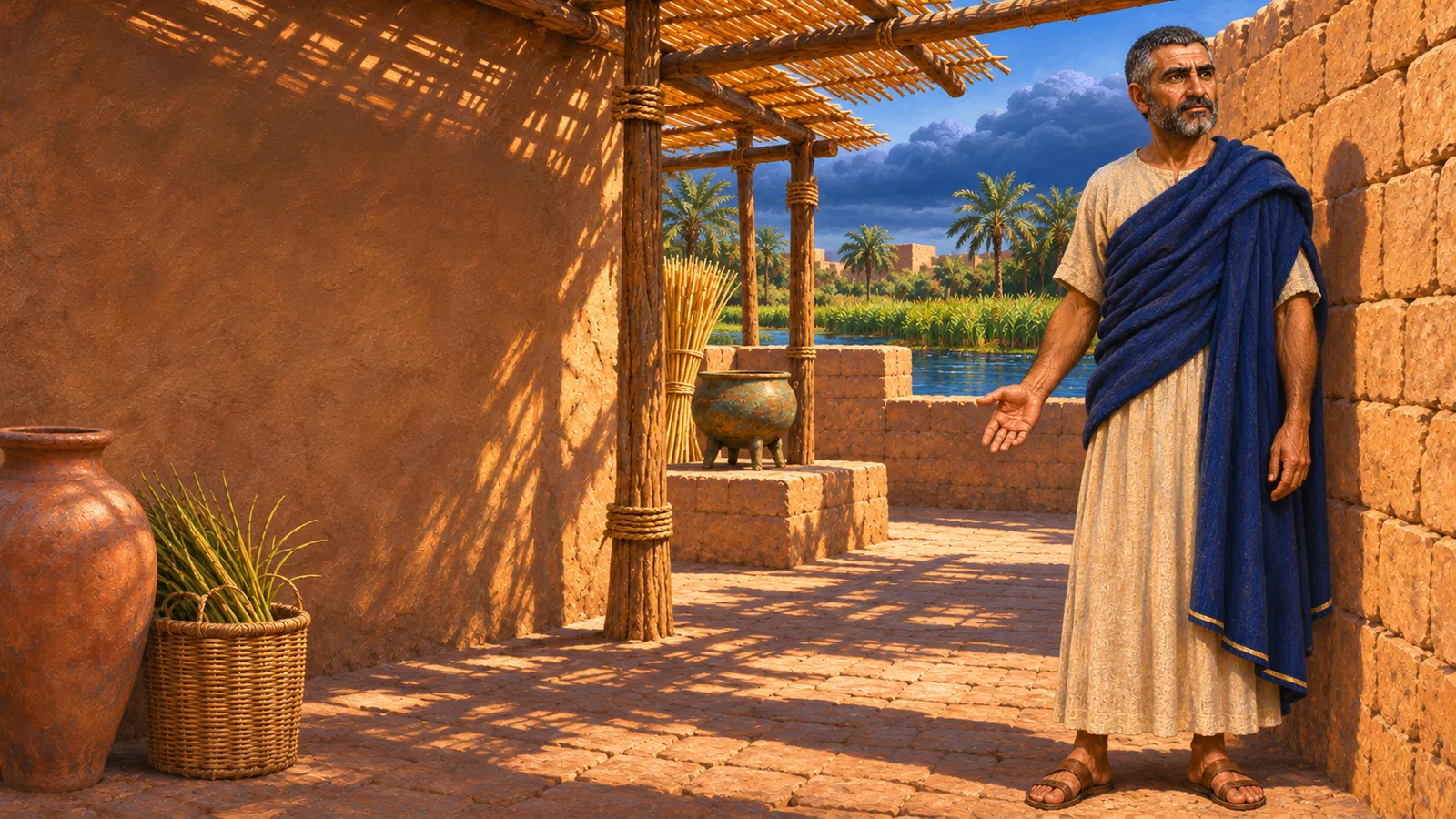
THE FLOOD
The voice foretells a flood and says that the divine assembly has decided to destroy humankind.
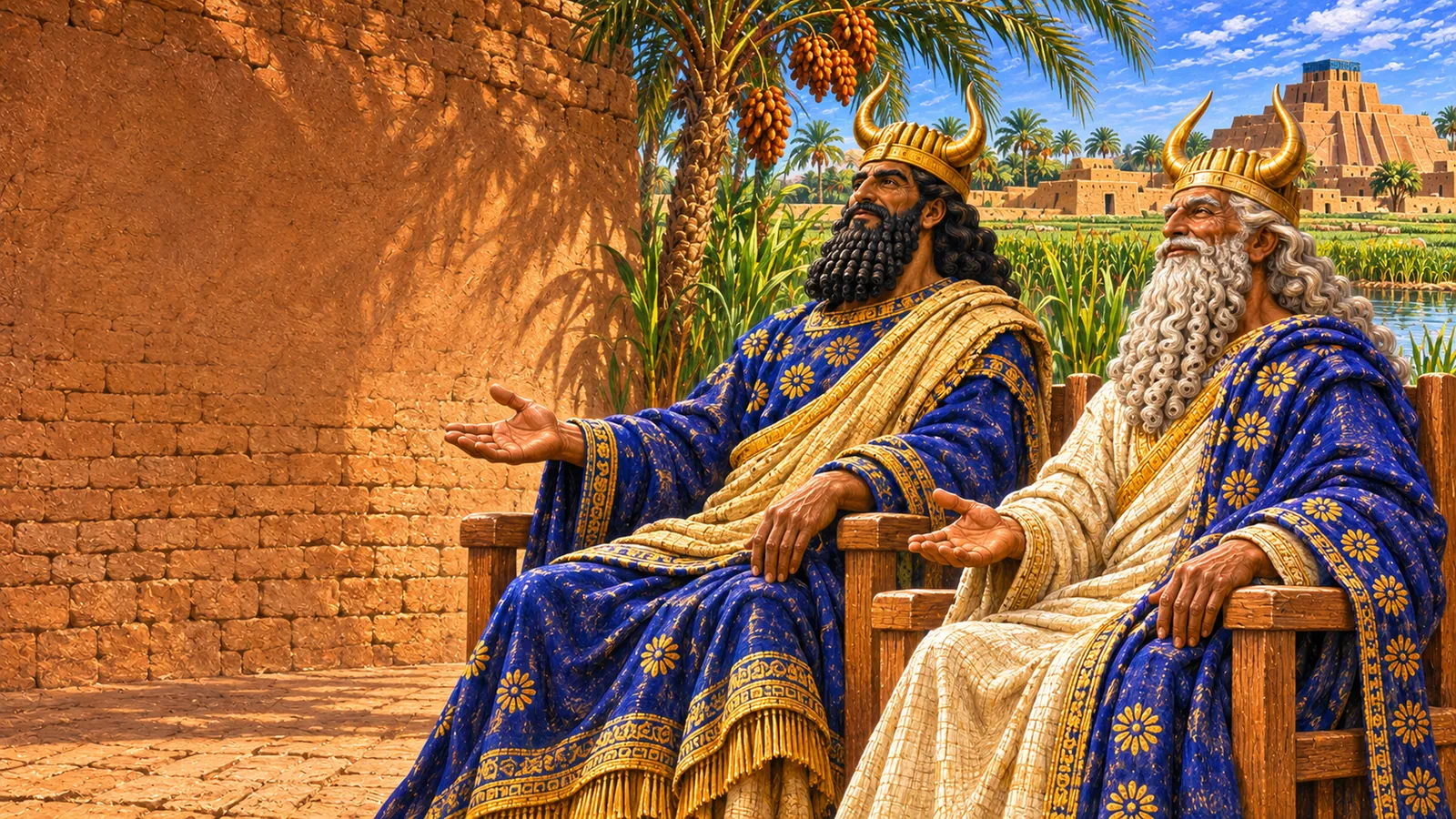
The order announced by An and Enlil cannot be overturned. The voice speaks of the end of a reign, but the passage is damaged around those words.
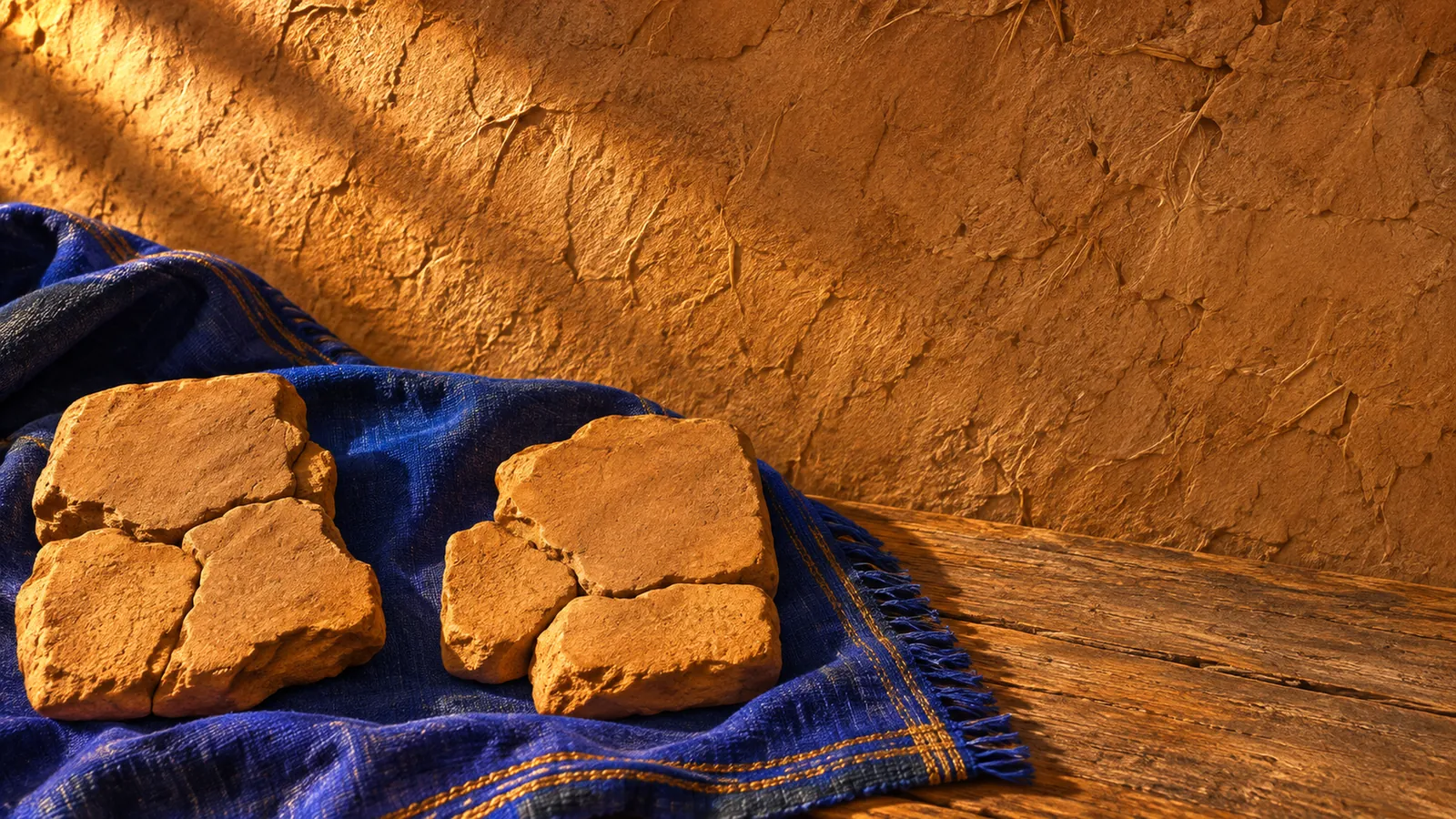
About thirty-eight lines are missing here. When the tablet becomes readable again, the flood has begun and a large boat is already there.

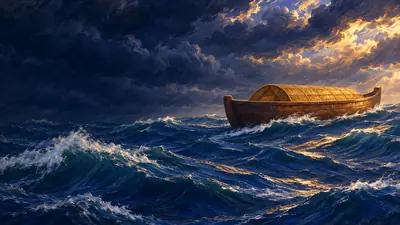
Windstorms and gales rise together, and floodwater sweeps over the land. The next surviving lines turn to a large boat amid wind and waves.
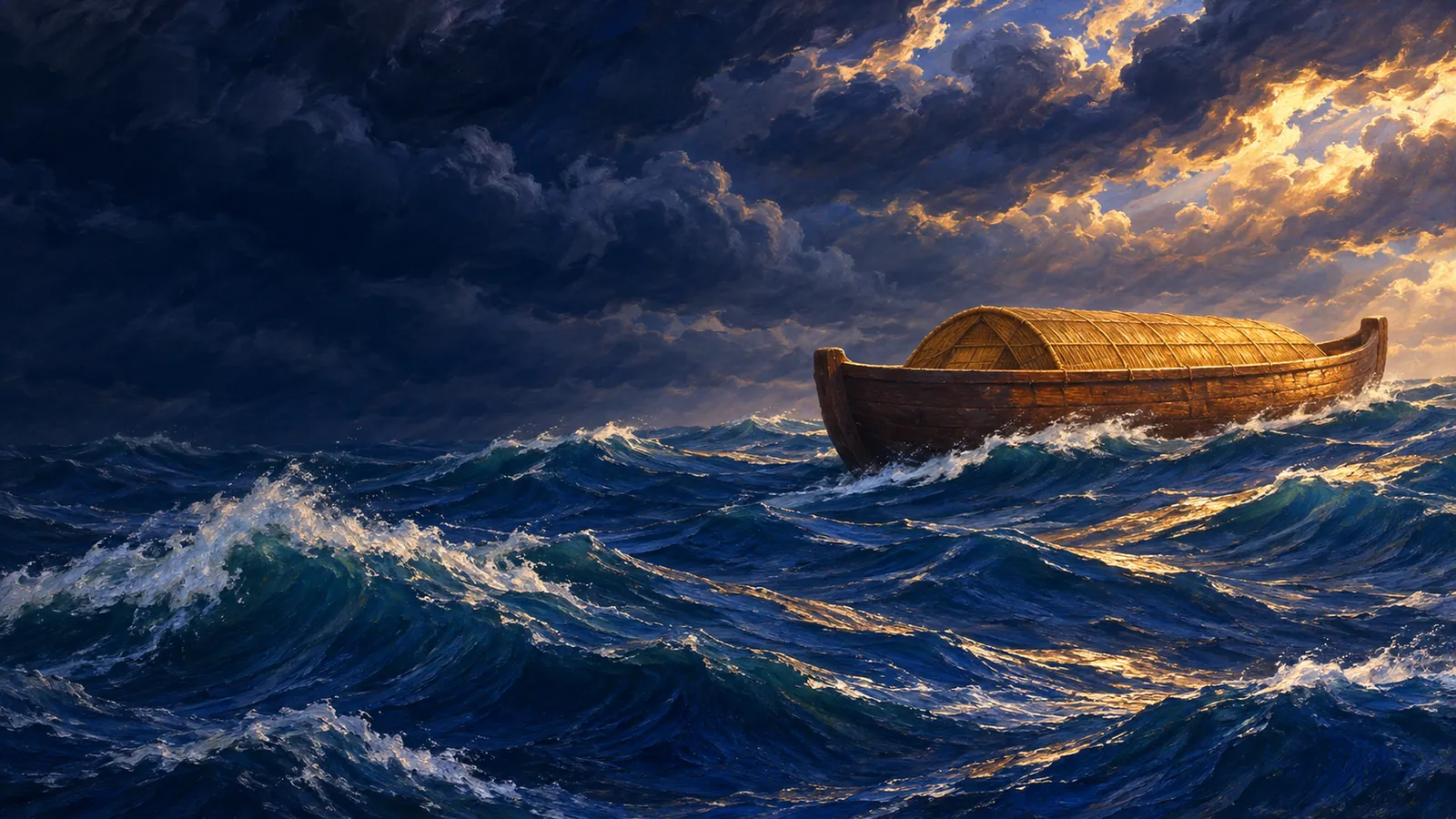
For seven days and seven nights, the wind and the waves rock the large boat. The tablet gives us that measure of the storm.
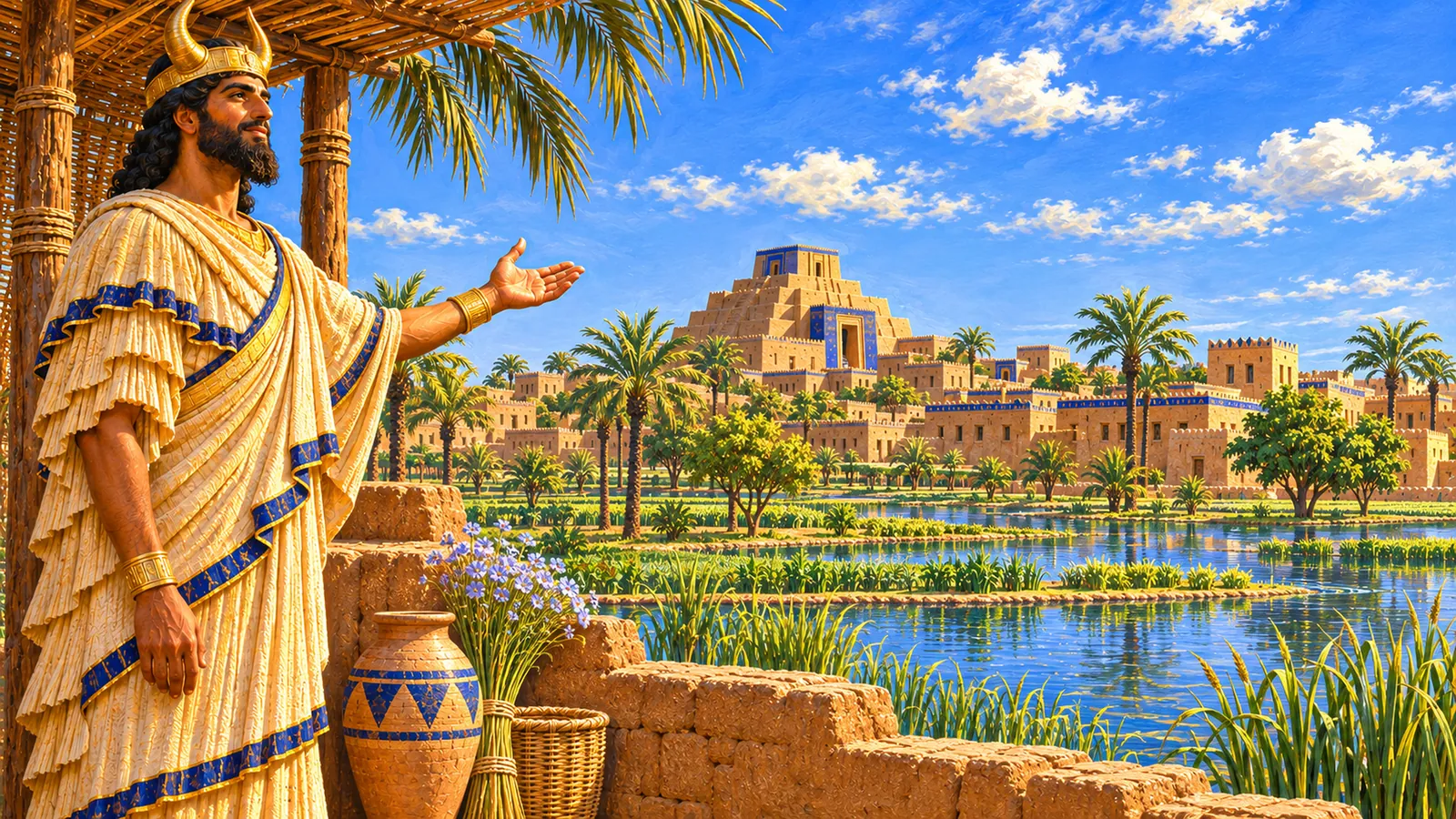
Then Utu, the sun god, comes out and lights heaven and earth. After the long storm, daylight reaches the flooded land.
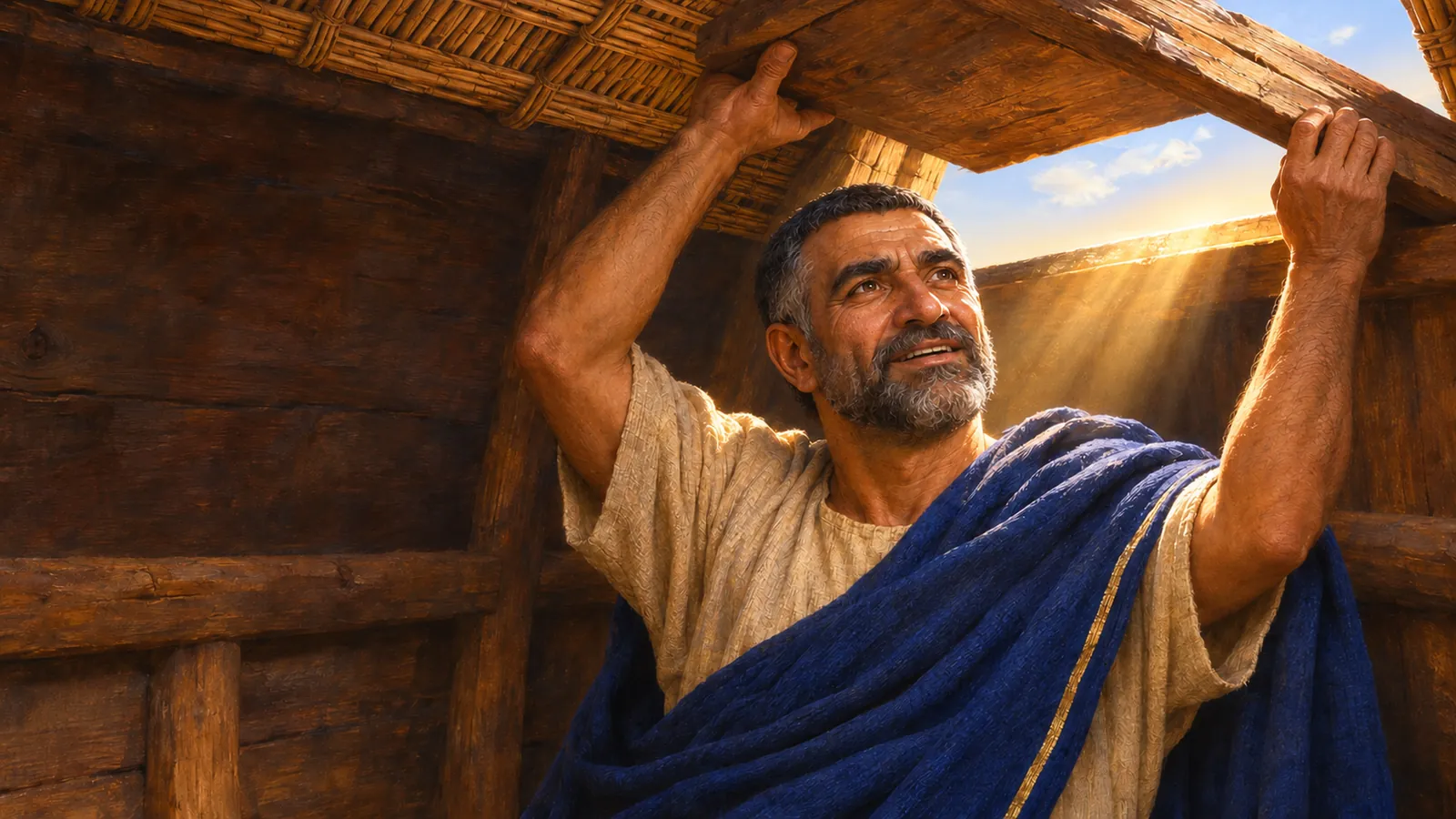
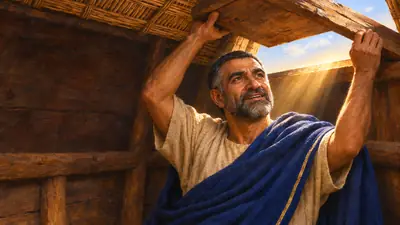
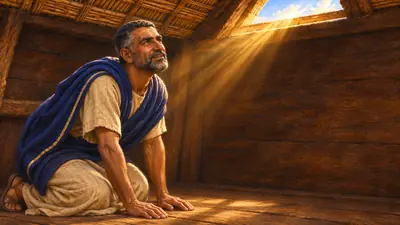
Ziusudra makes an opening in the large boat. Through it the rays of Utu enter and reach the boat’s interior.
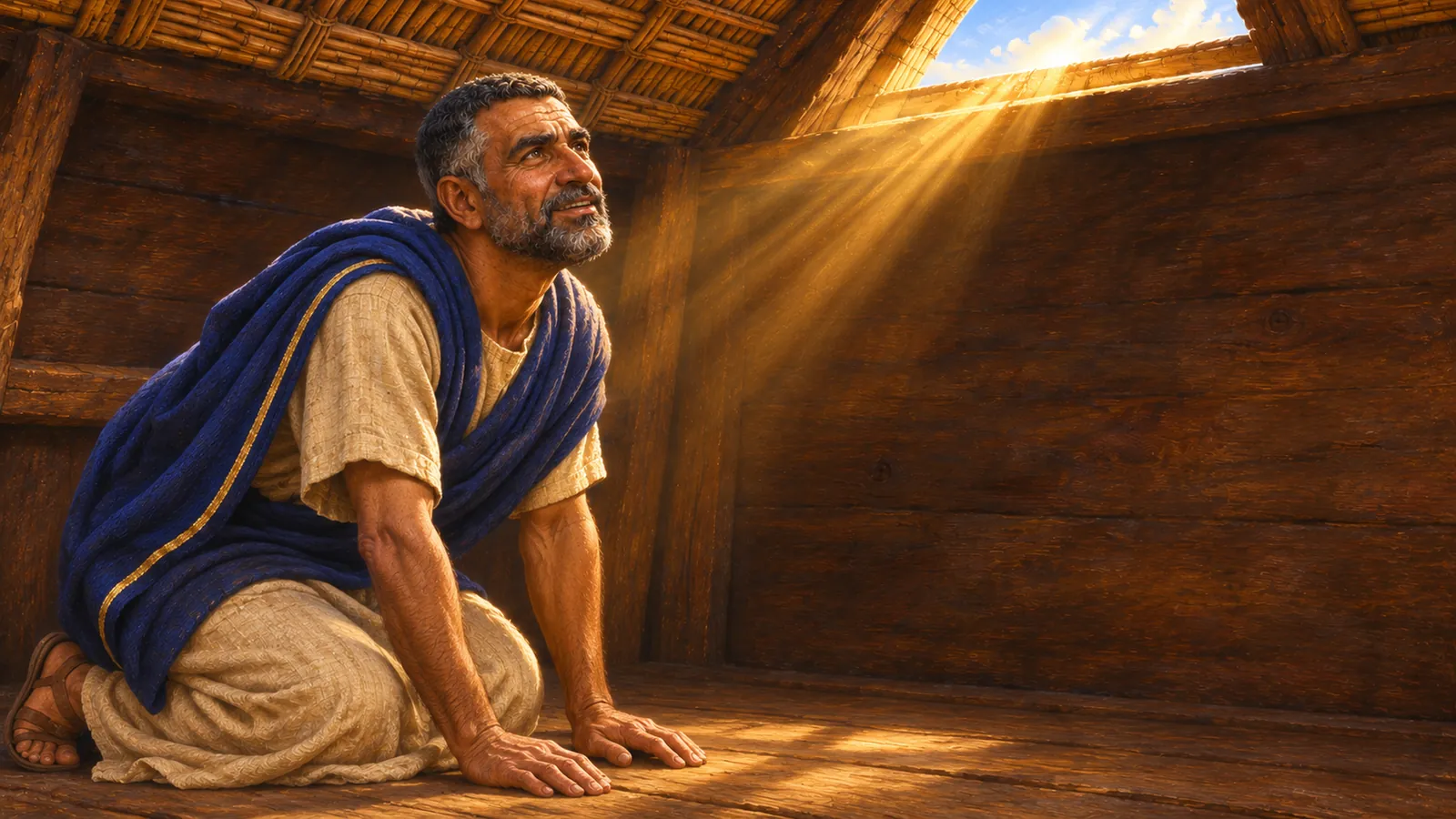
King Ziusudra prostrates himself before Utu, the sun god whose rays have come through the opening in the boat.
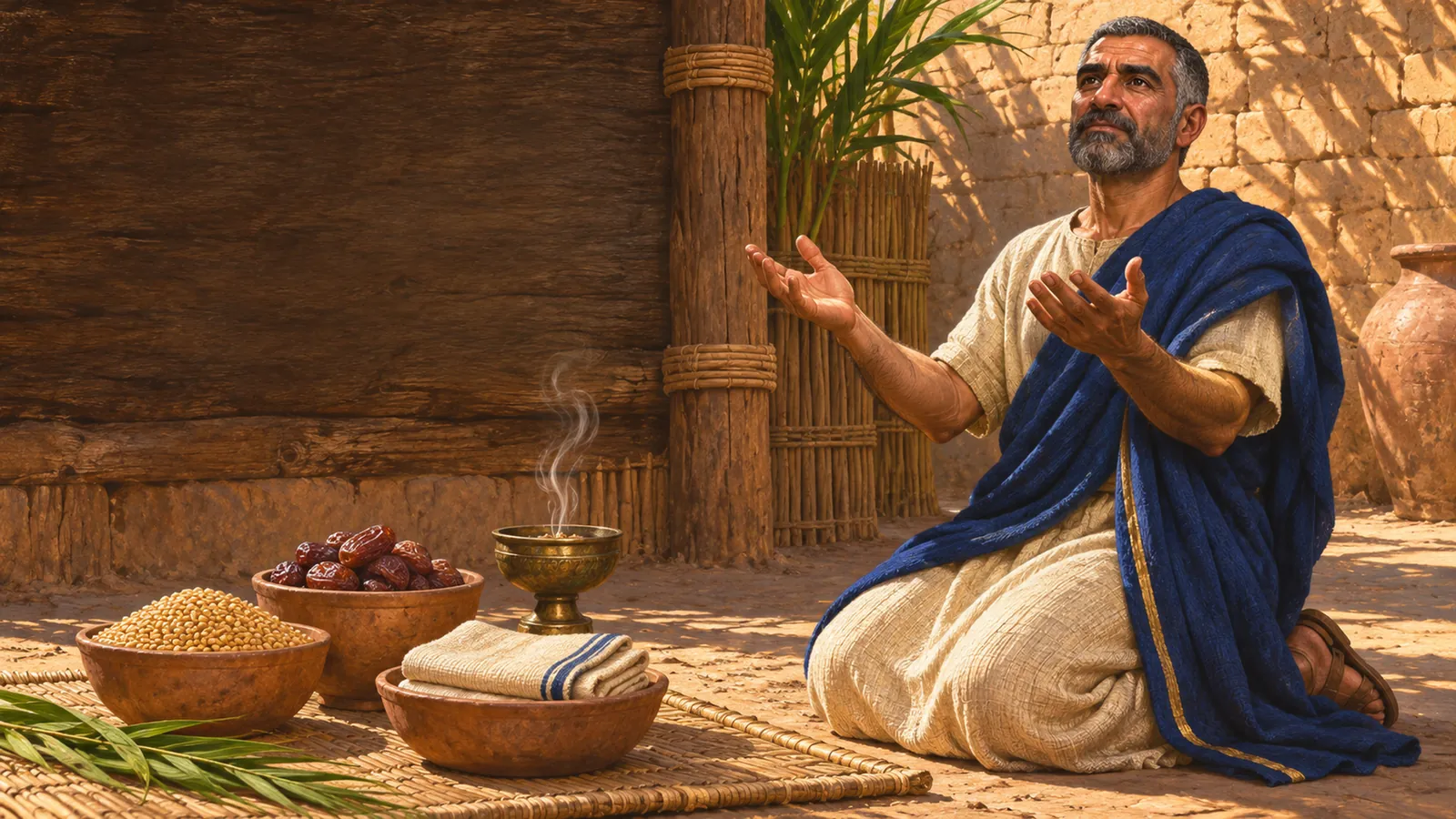
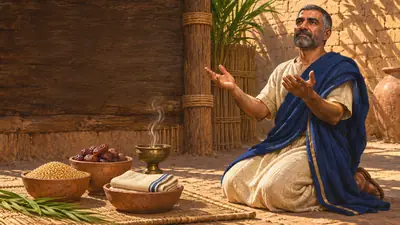
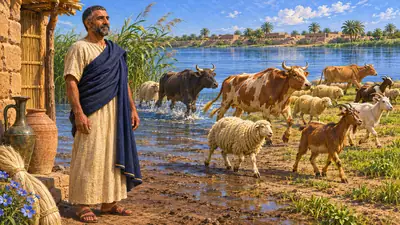
Ziusudra sacrifices oxen and offers many sheep. The tablet records what the king gives after the light returns.
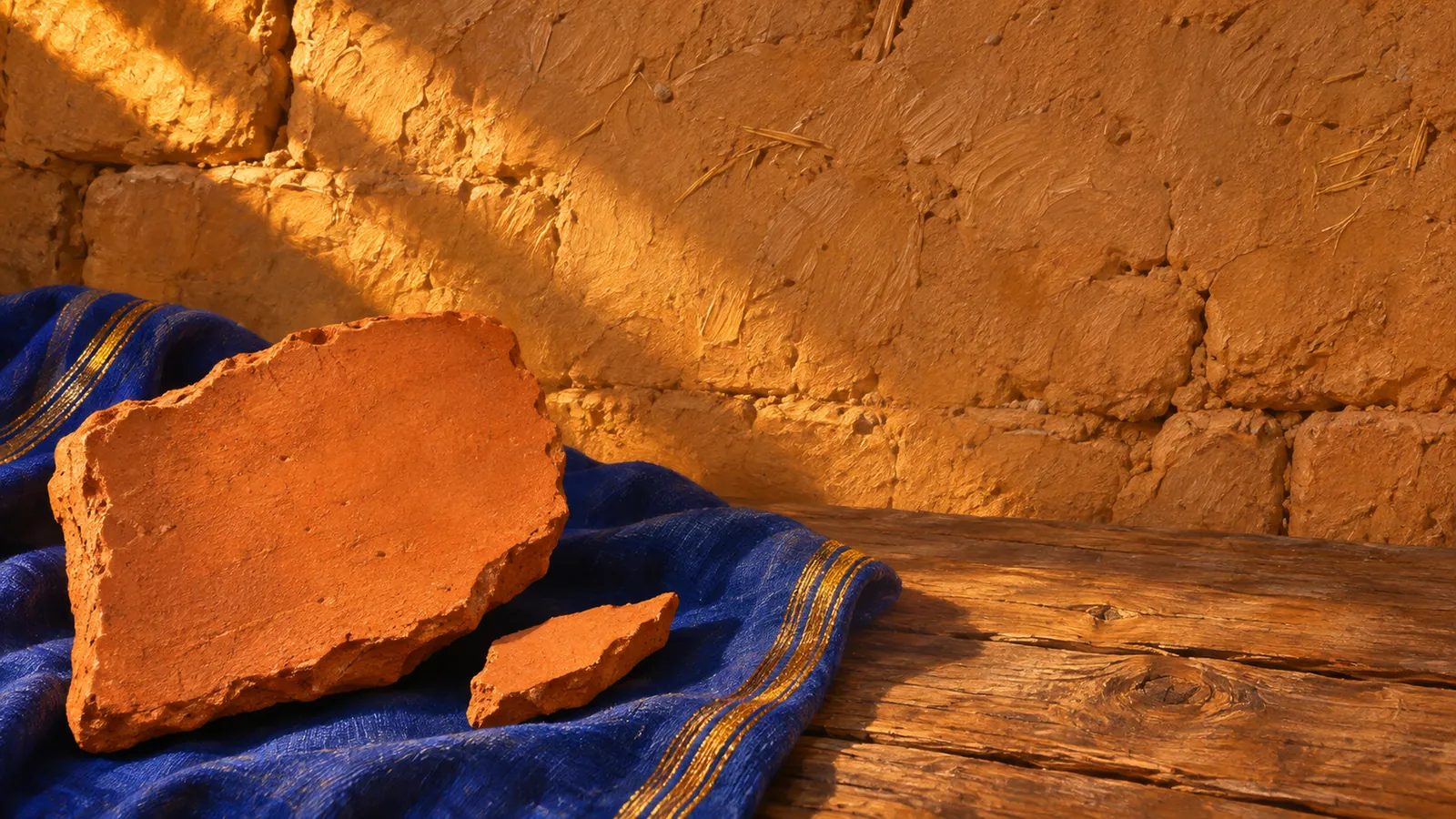
The next six lines are too fragmentary to translate. About thirty-three more are missing before the surviving words pick up again.
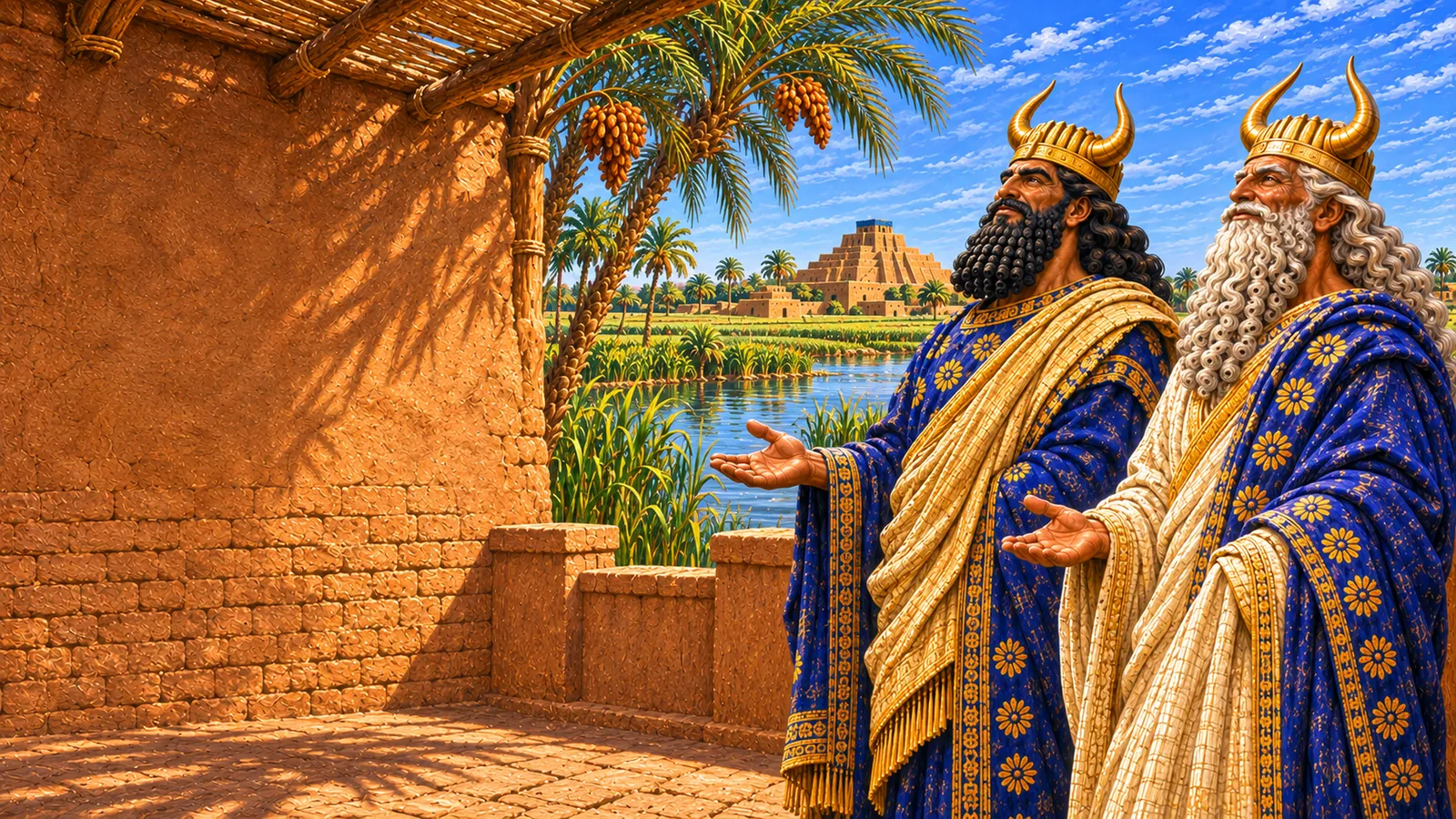
A broken speech names An and Enlil and speaks of an oath by heaven and earth. The words around the oath are lost.
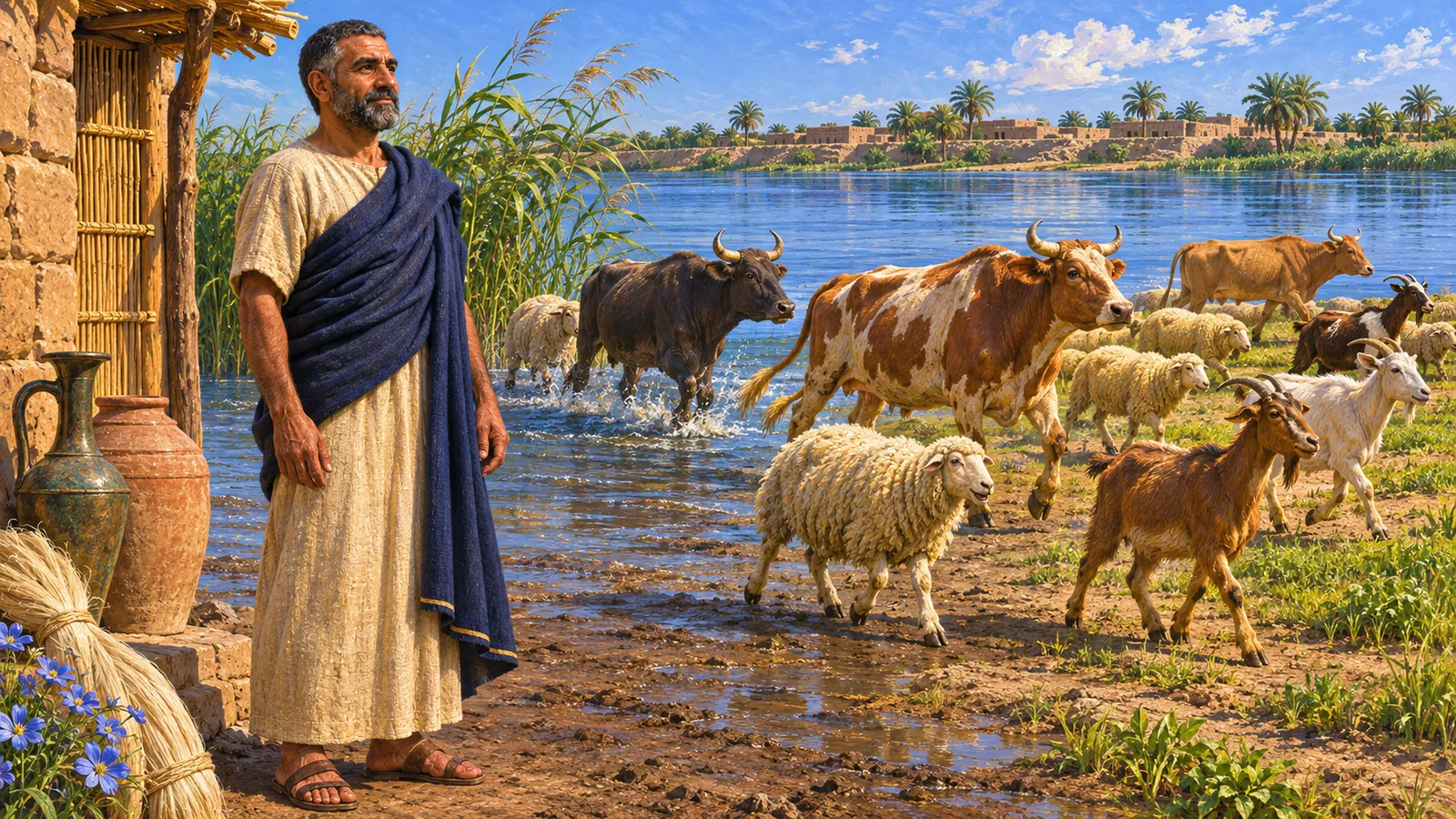
More and more animals come out onto the earth. The tablet resumes with their arrival on land after the missing passage.
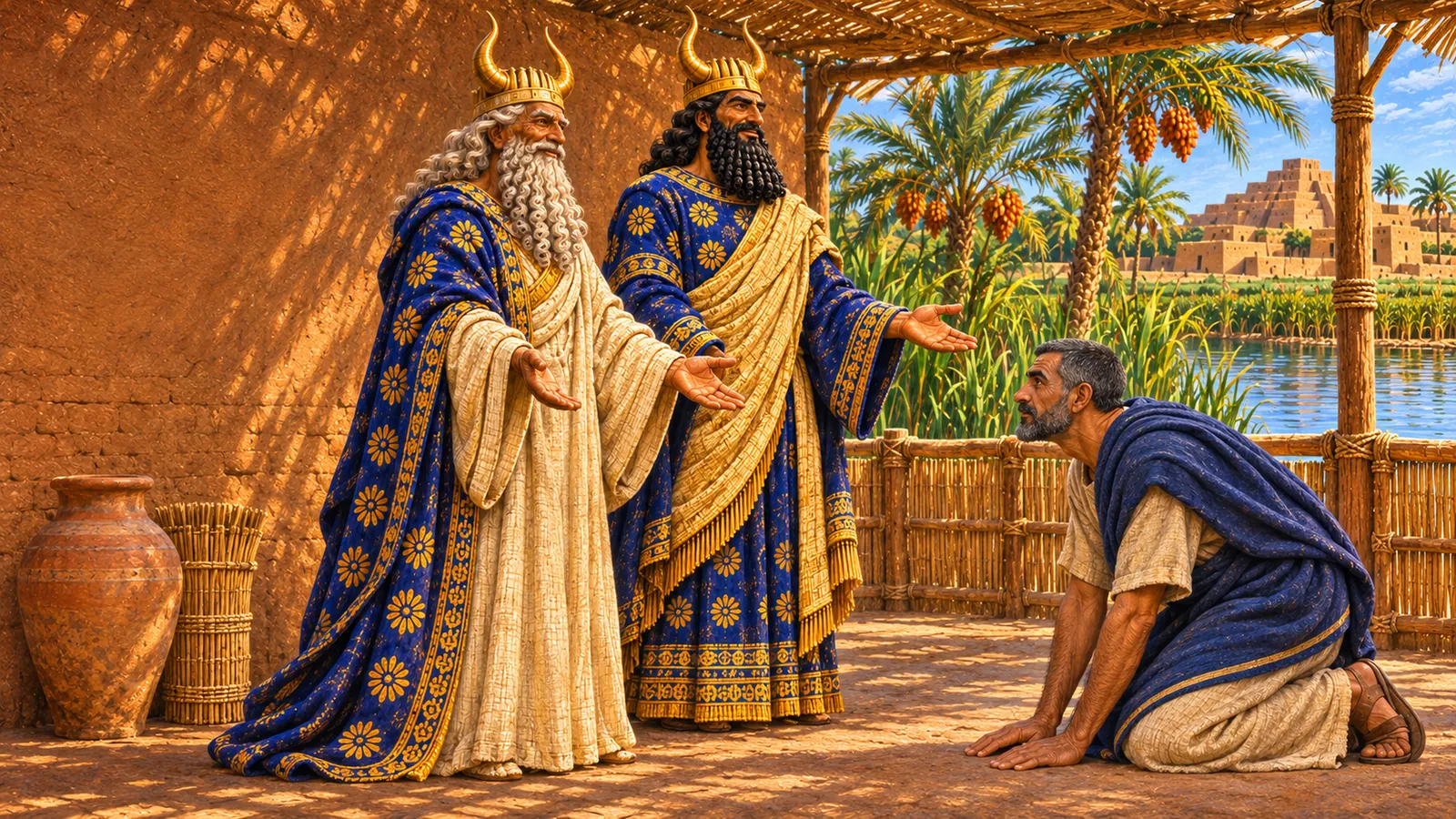
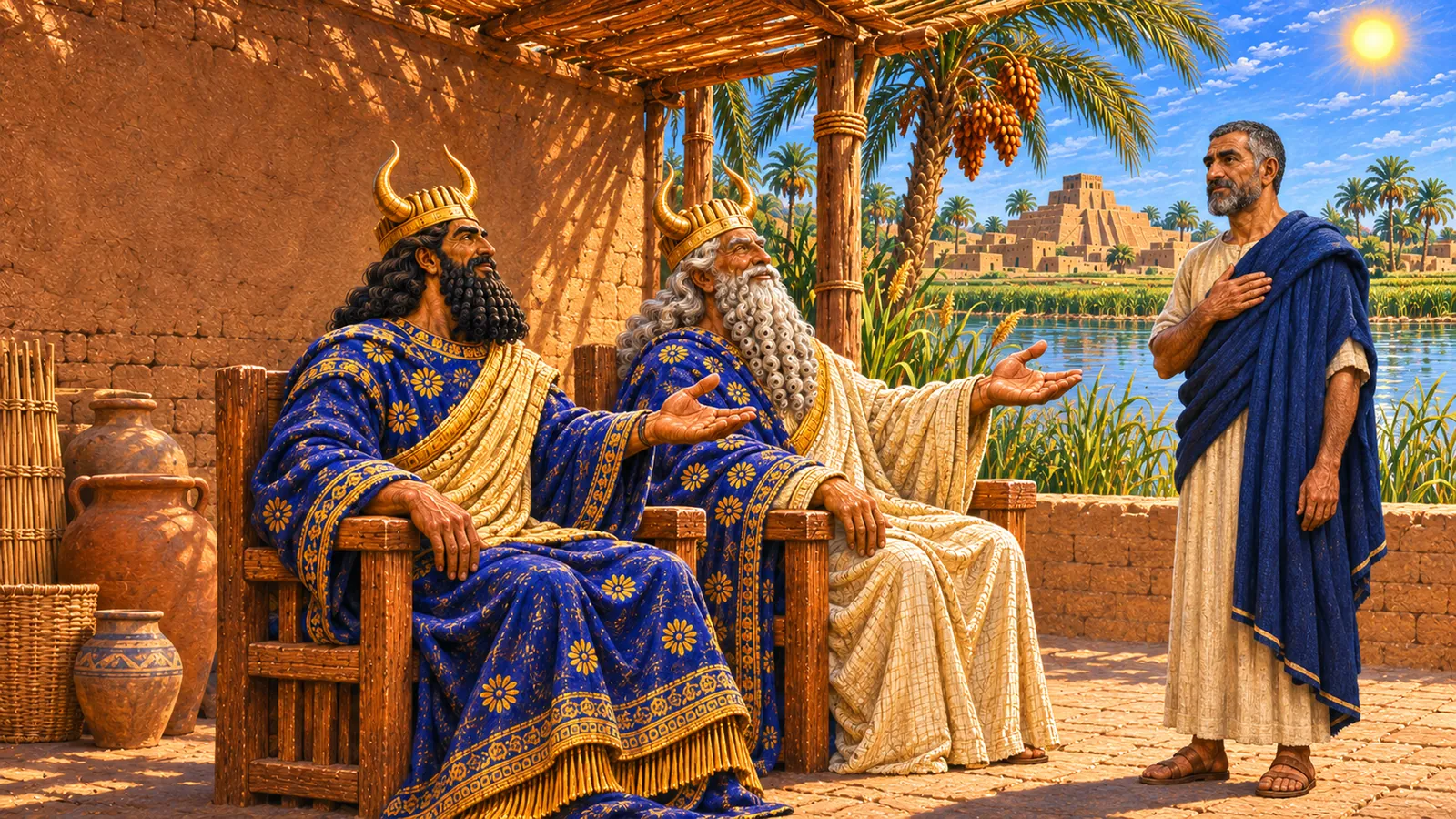
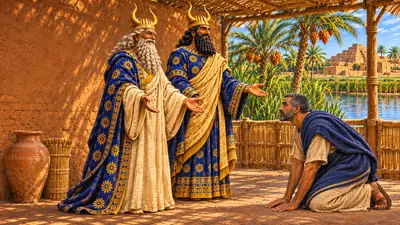
King Ziusudra prostrates himself before An and Enlil. He bows before the two whose order the wall speech had announced.
LIFE
An and Enlil treat Ziusudra kindly. The tablet says they grant him eternal life, giving him a life like that of a god.
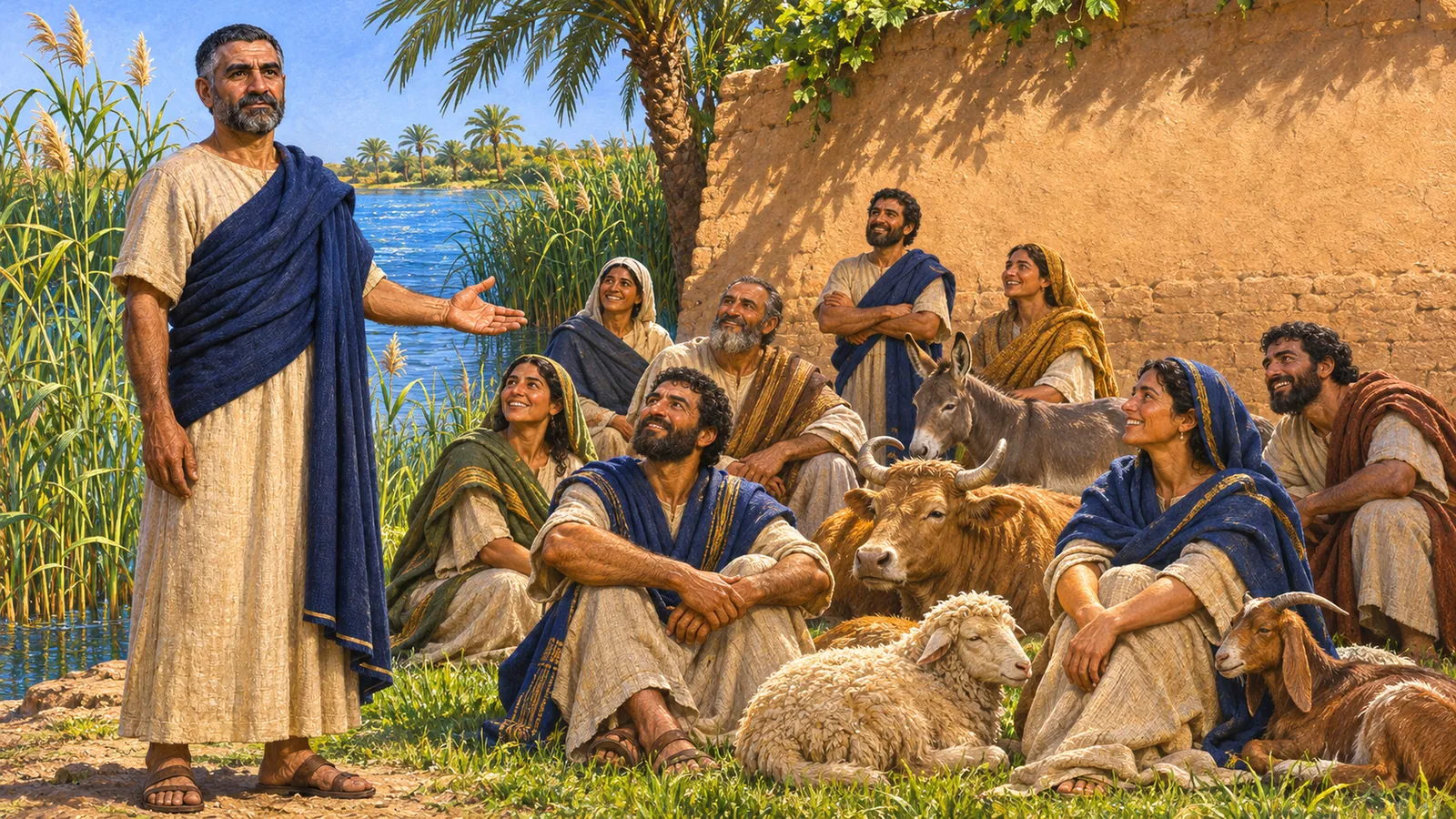
The tale recalls that Ziusudra preserved the animals and humankind. It gives this as the reason he is settled across the sea.
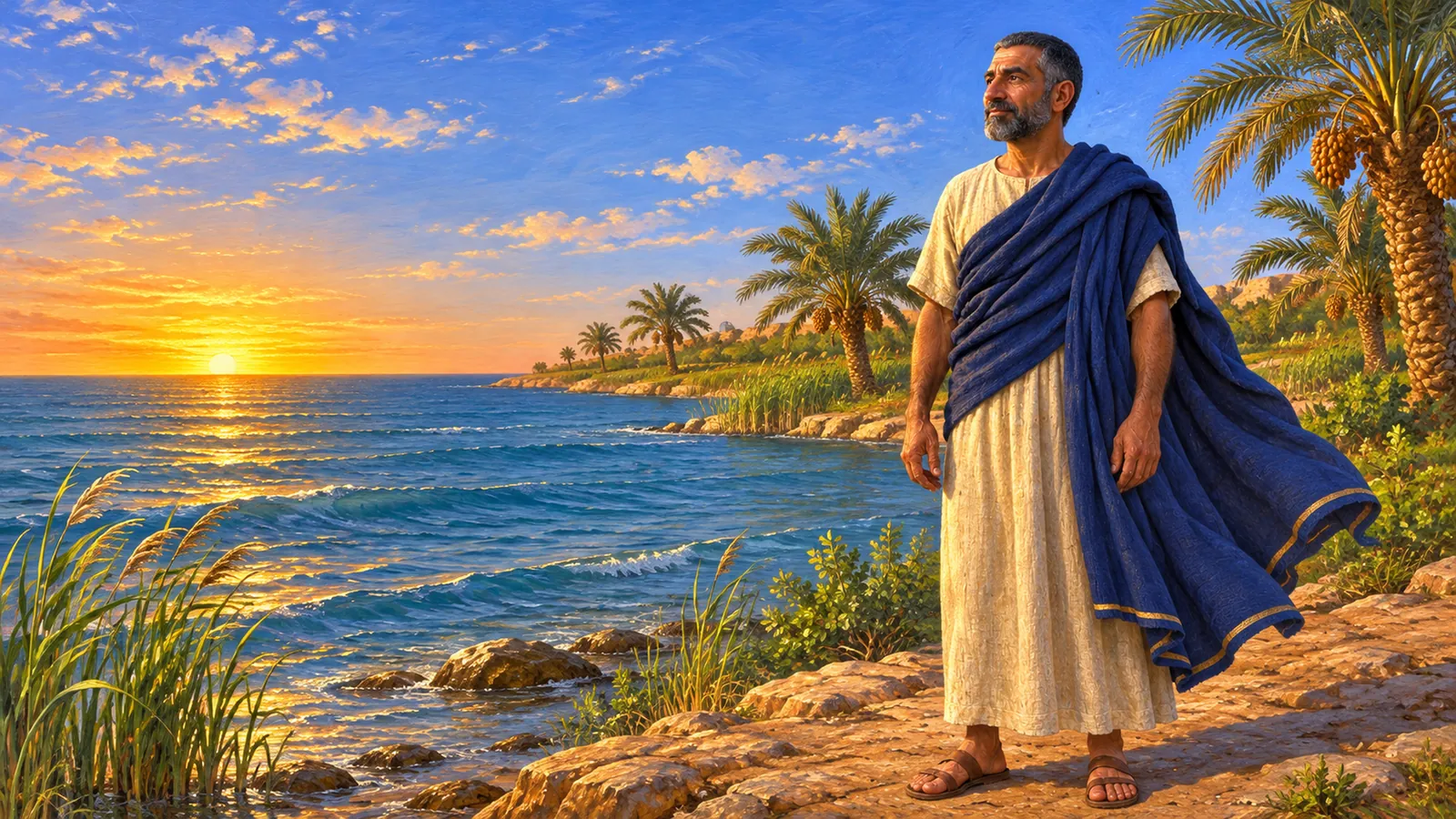
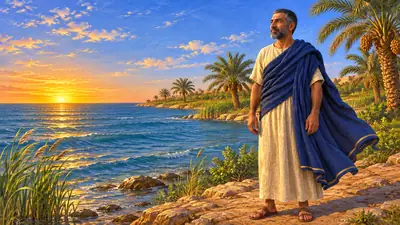
An and Enlil settle King Ziusudra in Dilmun, a land across the sea. It is where the sun rises, the tale says.
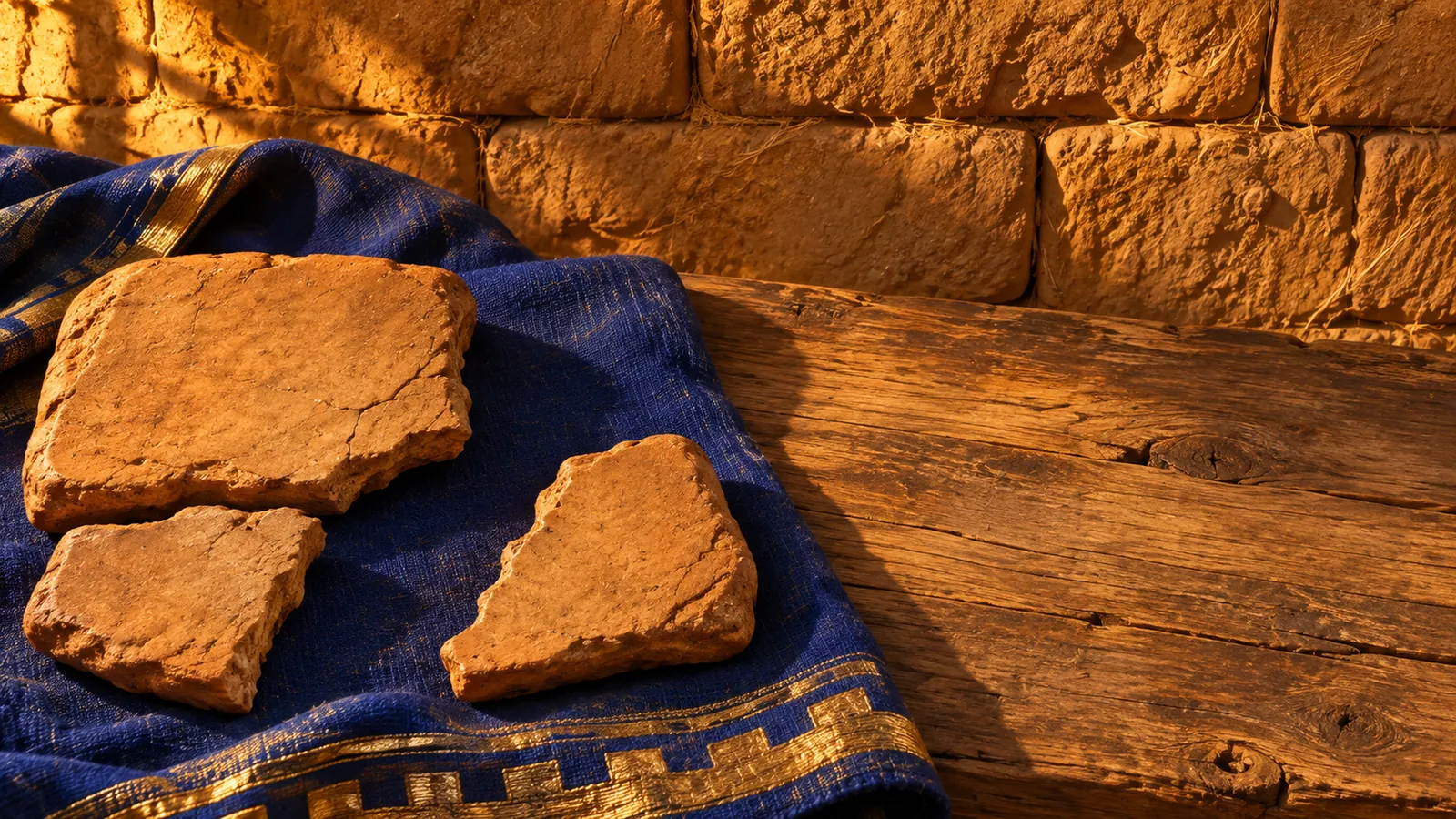
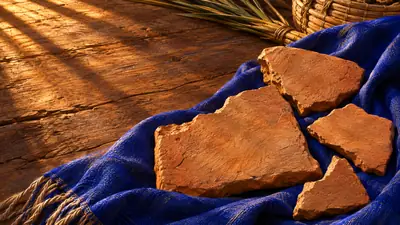
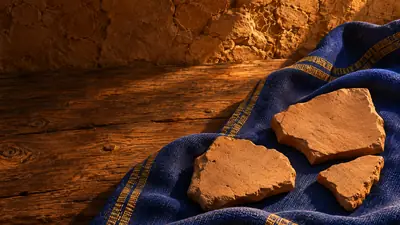
A last fragment of speech survives after Ziusudra’s settlement. About thirty-nine lines are missing after it, and the rest of the story is lost.
End of chapter 1
All pages


Sources
On page 5, the words about rites, powers and irrigation follow a damaged phrase about quenching a fire (Oxford ETCSL English translation, A 1–10).
Editions consulted
- University of Oxford, ETCSL 1.7.4, English translation and segment divisions
- University of Oxford, ETCSL 1.7.4, bibliography and witness numbering
- Penn Museum, catalogue of the Nippur Flood Tablet, CBS 10673
- CDLI P265876, CBS 10673 and its join CBS 10867
- Jeremiah Peterson, N 3514 and its proposed relationship to the Nippur tablet
Notes on this retelling
On page 6, the Oxford English translation uses the expression “black-headed people” for those fashioned by An, Enlil, Enki and Ninhursag (A 10–14).
On pages 12–16, the Oxford English translation uses the spellings Eridug, Bad-tibira, Larag, Zimbir and Curuppag (B 6–18). The translation identifies the recipient of Bad-tibira by the title “the Mistress.”
The speaker’s identity remains uncertain in the surviving words.
On pages 29–30, windstorms and gales rise together, floodwater sweeps over the land, and wind and waves rock the large boat for seven days and seven nights (Oxford ETCSL English translation, D 1–11).
On page 34, the text describes Ziusudra sacrificing oxen and offering innumerable sheep (Oxford ETCSL English translation, D 1–11).
On page 42, the last readable speech fragment has the displayed Oxford locator E 12–99. About 39 missing lines follow.
Ancient lines behind each page
- Page 1: ETCSL 1.7.4, Opening lacuna and A 1–10
- Page 2: ETCSL 1.7.4, A 1–10
An empty place to carry the damaged speech. - Page 3: ETCSL 1.7.4, A 1–10
- Page 4: ETCSL 1.7.4, A 1–10
- Page 5: ETCSL 1.7.4, A 1–10
- Page 6: ETCSL 1.7.4, A 10–14
- Page 7: ETCSL 1.7.4, A 10–14
- Page 8: ETCSL 1.7.4, A/B lacuna and B 1–3
- Page 9: ETCSL 1.7.4, B 4–5
- Page 10: ETCSL 1.7.4, B 6–18
- Page 11: ETCSL 1.7.4, B 6–18
- Page 12: ETCSL 1.7.4, B 6–18
- Page 13: ETCSL 1.7.4, B 6–18
- Page 14: ETCSL 1.7.4, B 6–18
- Page 15: ETCSL 1.7.4, B 6–18
- Page 16: ETCSL 1.7.4, B 6–18
- Page 17: ETCSL 1.7.4, B 6–18
- Page 18: ETCSL 1.7.4, B/C lacuna and C 1–27 (opening)
Simple transition between surviving parts without enacted weather. - Page 19: ETCSL 1.7.4, C 1–27
- Page 20: ETCSL 1.7.4, C 1–27
- Page 21: ETCSL 1.7.4, C 1–27
- Page 22: ETCSL 1.7.4, C 1–27
- Page 23: ETCSL 1.7.4, C 1–27
- Page 24: ETCSL 1.7.4, C 1–27
- Page 25: ETCSL 1.7.4, C 1–27
- Page 26: ETCSL 1.7.4, C 1–27
- Page 27: ETCSL 1.7.4, C 1–27
- Page 28: ETCSL 1.7.4, C/D lacuna
- Page 29: ETCSL 1.7.4, D 1–11
- Page 30: ETCSL 1.7.4, D 1–11
- Page 31: ETCSL 1.7.4, D 1–11
- Page 32: ETCSL 1.7.4, D 1–11
- Page 33: ETCSL 1.7.4, D 1–11
- Page 34: ETCSL 1.7.4, D 1–11
- Page 35: ETCSL 1.7.4, D 12–17 and D/E lacuna
- Page 36: ETCSL 1.7.4, E 1–2
- Page 37: ETCSL 1.7.4, E 3–11
- Page 38: ETCSL 1.7.4, E 3–11
- Page 39: ETCSL 1.7.4, E 3–11
- Page 40: ETCSL 1.7.4, E 3–11
- Page 41: ETCSL 1.7.4, E 3–11
- Page 42: ETCSL 1.7.4, E 12–99 display label and closing lacuna
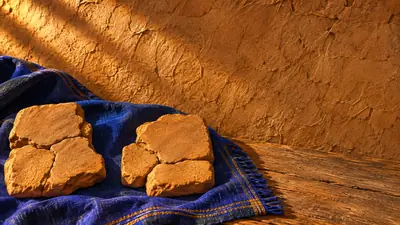
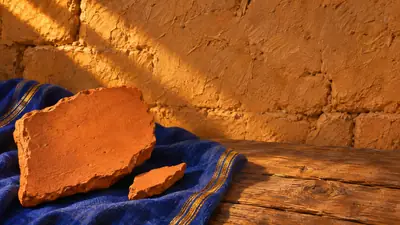
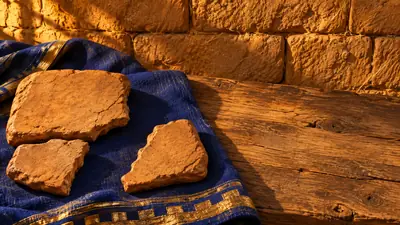
A final editorial still of low, unmarked clay fragments along the very bottom left.
Illustrations made with AI tools by IL Archive; the text is based on the ancient sources (see the sources at the end of each chapter).