Ancient text
Adapa and the South Wind
A text for line-by-line reading, with transliteration, translation, and resources.
Mesopotamian tradition in Sumerian and Akkadian about wisdom, wind and heavenly ascent; its differing witnesses are not one tablet.
Metadata
These are descriptive fields, not conclusions.
- Edition
- 2
Text
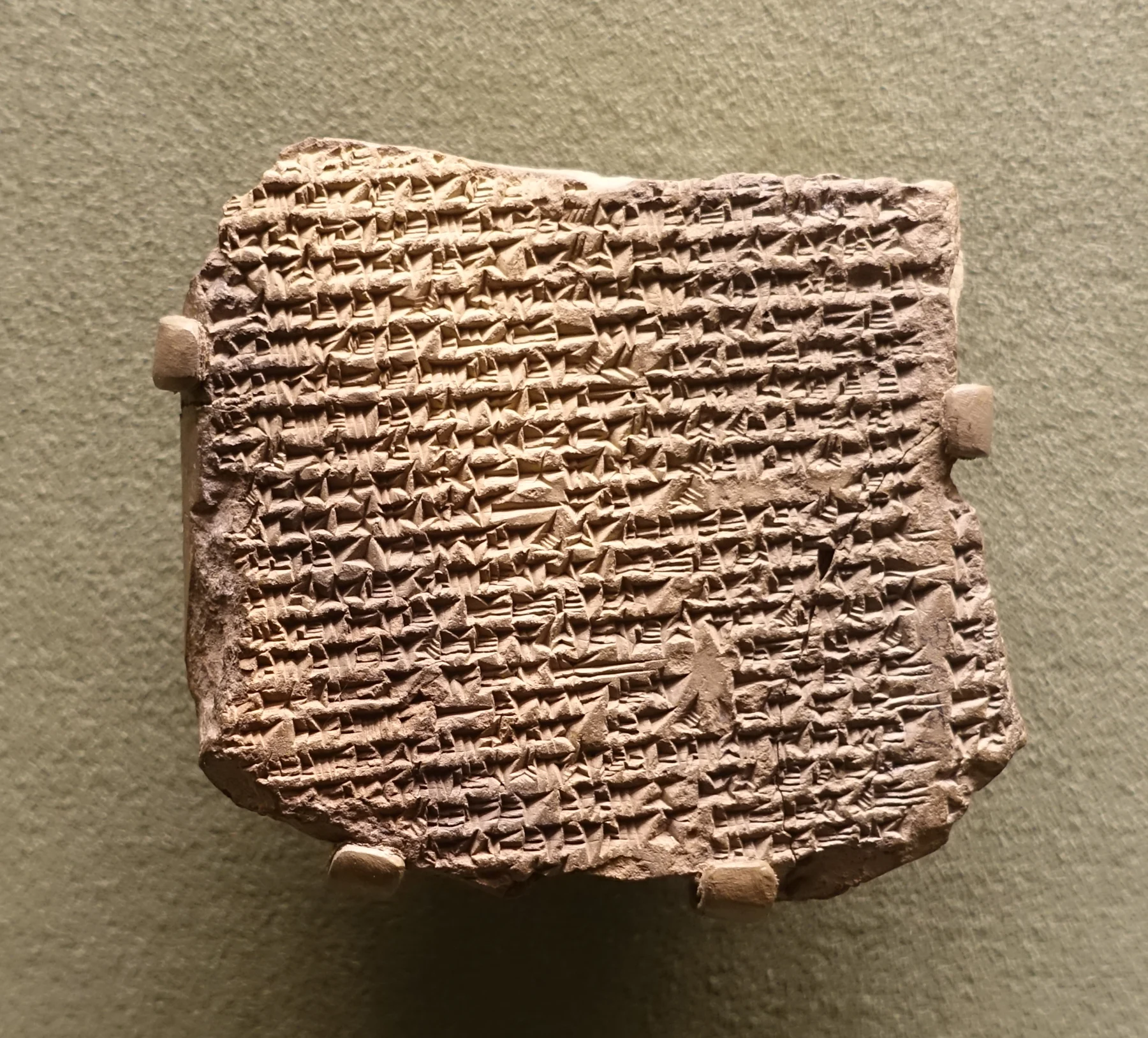
AmarnaAmarna / AkhetatenSite of Akhenaten’s capital in Middle Egypt; boundary stelae record successive proclamations and reaffirmation.Glossary · Click to read the explanation EAEnkiMesopotamian deity associated with deep fresh water, wisdom and Eridu, known as Ea in Akkadian tradition. The earliest preserved written mention does not date his cult’s origin or identify Ubaid Eridu’s deity.Glossary · Click to read the explanation 356 preserves Ea’s instructions, AdapaAdapaWise figure of Eridu associated with Ea; multiple texts recount his ascent to Anu and refusal of offered food.Glossary · Click to read the explanation’s summons and refusal of life’s food and water. Clothing and oil are accepted; the instructions’ purpose and Ea’s intention are interpretive questions. [1][2]
Earlier Sumerian witnesses and later Assyrian fragments also exist. Filling gaps from different versions requires explicit explanation. MLC 1296 shows the opening, not EA 356. [3][12]
References and notes
- All reproduced fragments read; the page’s introductory summary is distinct. Rogers is a historical translation, not a current critical edition. Food, clothing and oil checked against EA 356 and Callender. R. W. Rogers, Cuneiform Parallels to the Old Testament (1912); three preserved fragments reproduced Return to the text ↑
- Metadata and specified scene lines consulted. CDLI gives a broad period; Izre’el’s description dates this witness to the fourteenth century. This Berlin/Amarna tablet differs from the photographed Morgan fragment. CDLI P270855; EA 356 / VAT 00348; obverse 20′–36′, reverse 1–34; object metadata Return to the text ↑
- Introduction and part of the translation read, not all notes or Sanders’ book. This version’s refusal of clothing is not mixed with Akkadian acceptance; Cavigneaux’s full edition was not read. Seth L. Sanders (2020), introduction and selected Sumerian translation; based on Cavigneaux 2014 Return to the text ↑
- Contents and item 3 description on the specified pages read; PDF pages 6–7 inspected. Identifies MLC 1296 and the opening. The entire 112-page volume and its old theories about other texts are not adopted. Albert T. Clay, Babylonian Records in the Library of J. Pierpont Morgan IV (1923), contents and pp. 10–11, item 3 Return to the text ↑
Research history
Substantive changes are retained here. Minor copy edits remain in the internal operational log.
-
Substantive record update
Archive records may be reviewed and refined as better evidence or sources become available. Suggest a correction
Suggest a correction · Suggest a source for this record
Cite this record
IL Archive, «Adapa and the South Wind», Edition 2, https://ilarchive.com/en/texts/adapa-south-wind