Entity · Book
Enuma Elish
A reference page linking a name, group, or concept to the materials that discuss it.
Enuma Elish is a seven-tablet Babylonian poem in Akkadian about Marduk’s victory over Tiamat, the ordering of the world and the creation of humans. An introduction to its narrative, composition, manuscripts, ritual use and reception.
Estimated reading time: 6 min Published Last reviewed:
Share article
Video
Enuma Elish: The first waters, the storm and the fifty names
The first waters, the storm and the fifty names. The whole story in four illustrated chapters, told from the ancient clay tablets; where the tablets are broken, the narration says so. Illustrations, narration voice and visual effects were created with AI tools by IL Archive; the text is a faithful retelling based on the ancient tablets.
The YouTube player loads only when you press play. Watch on YouTube
Text
Introduction
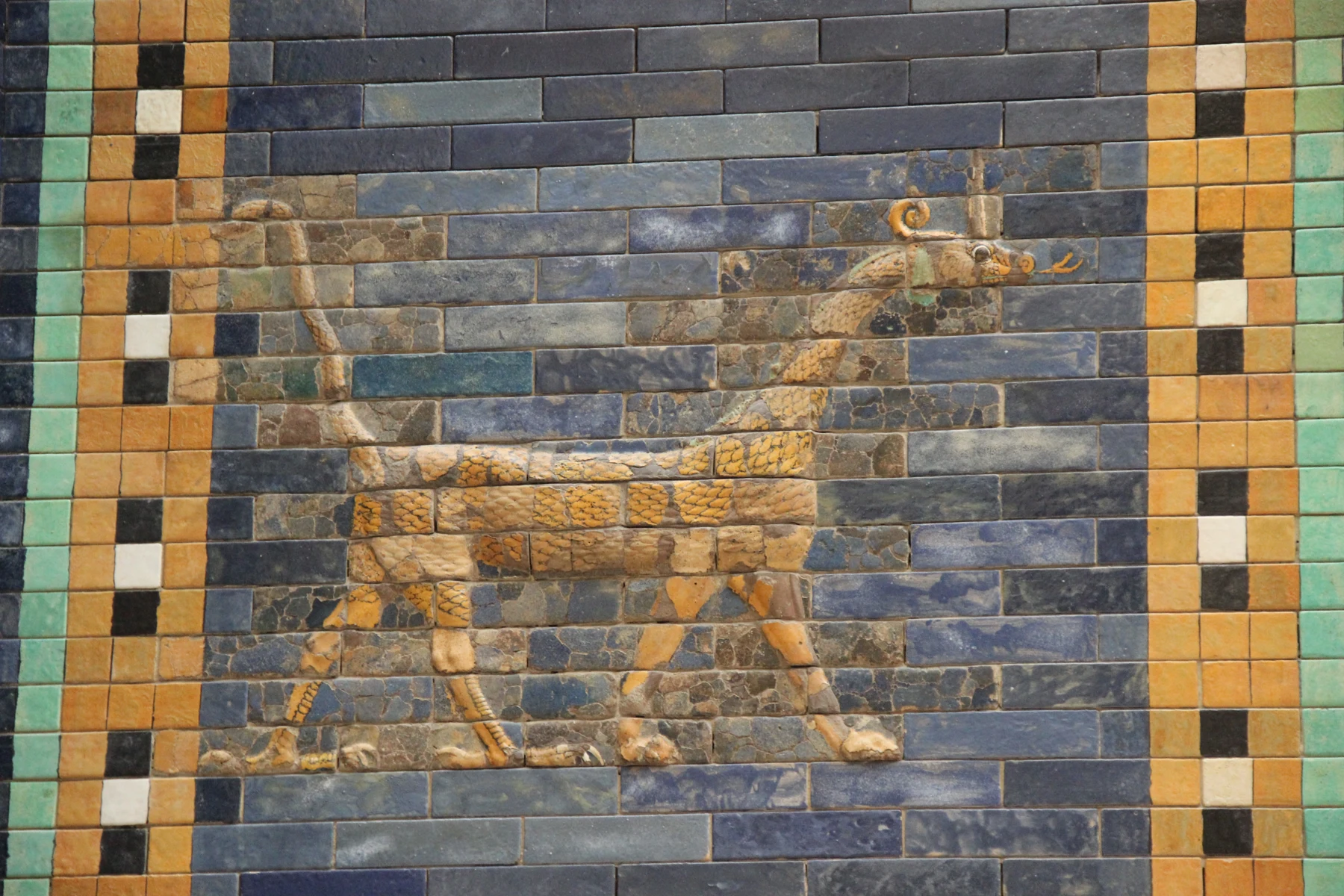
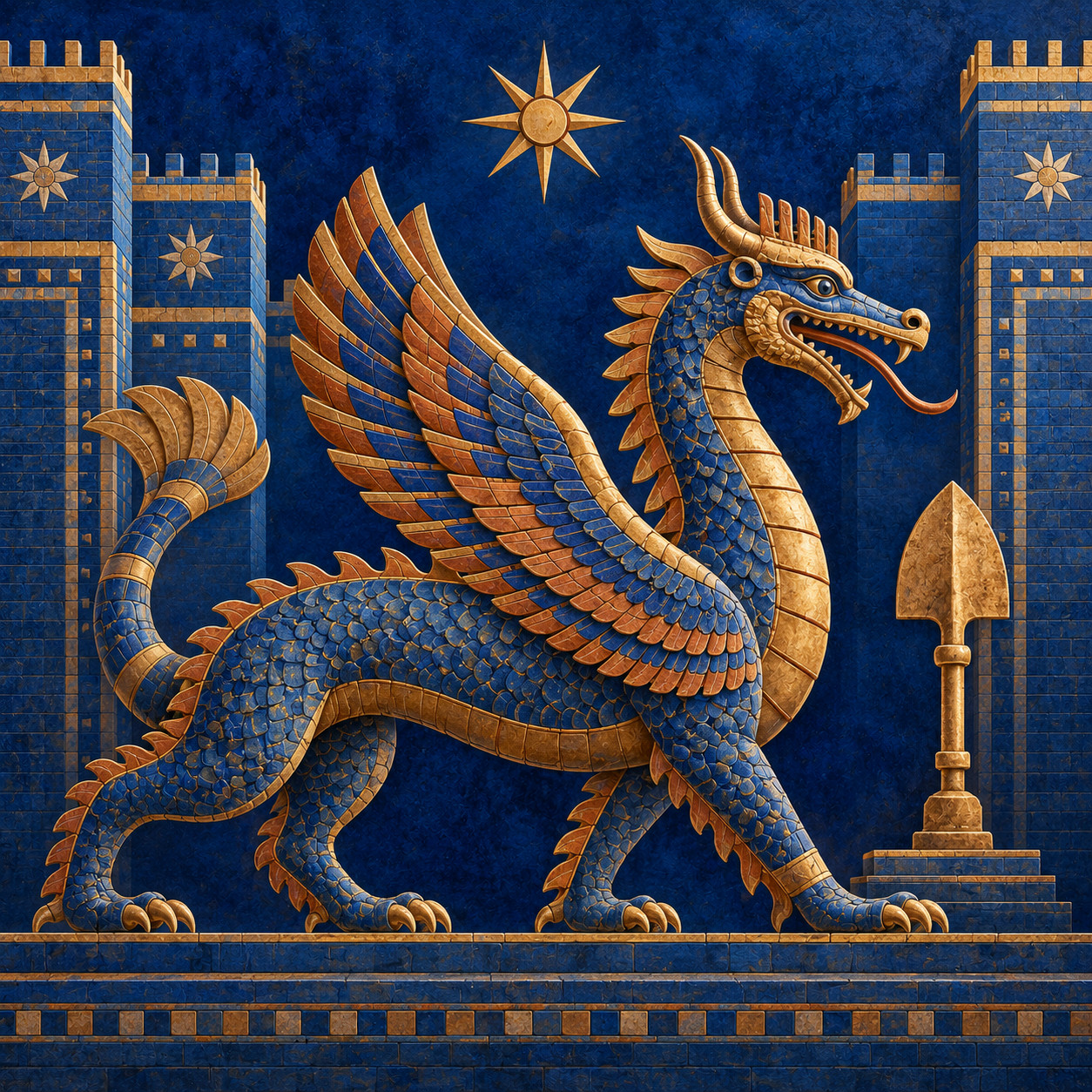
Enuma Elish, “When on high,” is a Babylonian poem written in AkkadianAkkadianAn ancient East Semitic language written in cuneiform from the third millennium BCE; its varieties include Babylonian and Assyrian, and it served in international diplomacy.Glossary · Click to read the explanation and divided into seven tablets. It recounts the formation of the world, but also explains how MardukMardukBabylon’s leading god, worshipped at Esagil and elevated in the Akkadian Enūma eliš. His symbols include a spade and mušḫuššu dragon. His earliest origins remain obscure; Nibiru is no evidence of a planetary homeland.Glossary · Click to read the explanation, BabylonBabylonBabylon is an ancient city in central present-day Iraq, south of BaghdadGlossary · Click to read the explanation’s god, became king of the gods. This introduction follows the story alongside its transmission and ritualRitualAn organised or distinguished practice meaningful to a community; it may leave traces, but its form alone does not reveal an associated doctrine.Glossary · Click to read the explanation use, distinguishing the poem’s imagined beginnings from the historical circumstances of its composition and copying.[1][3]
The text and its date
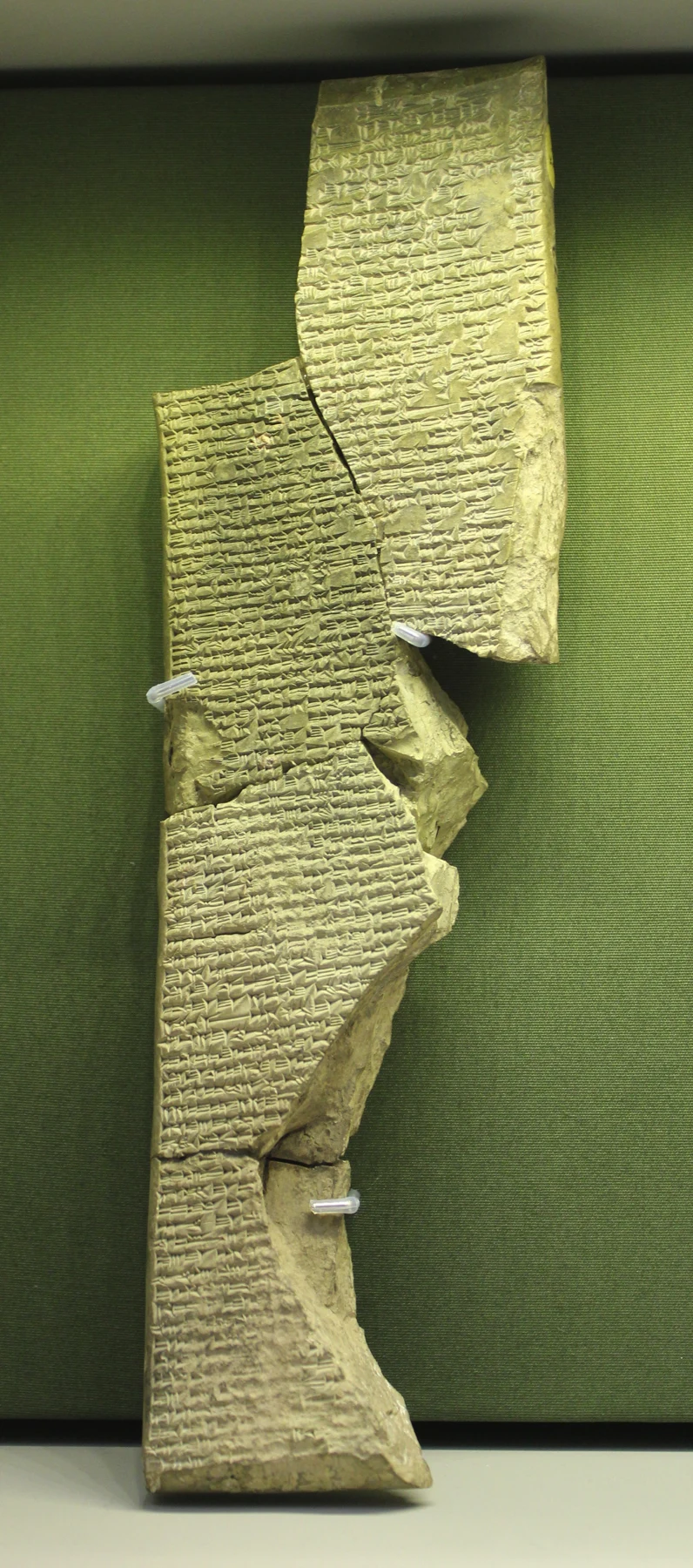
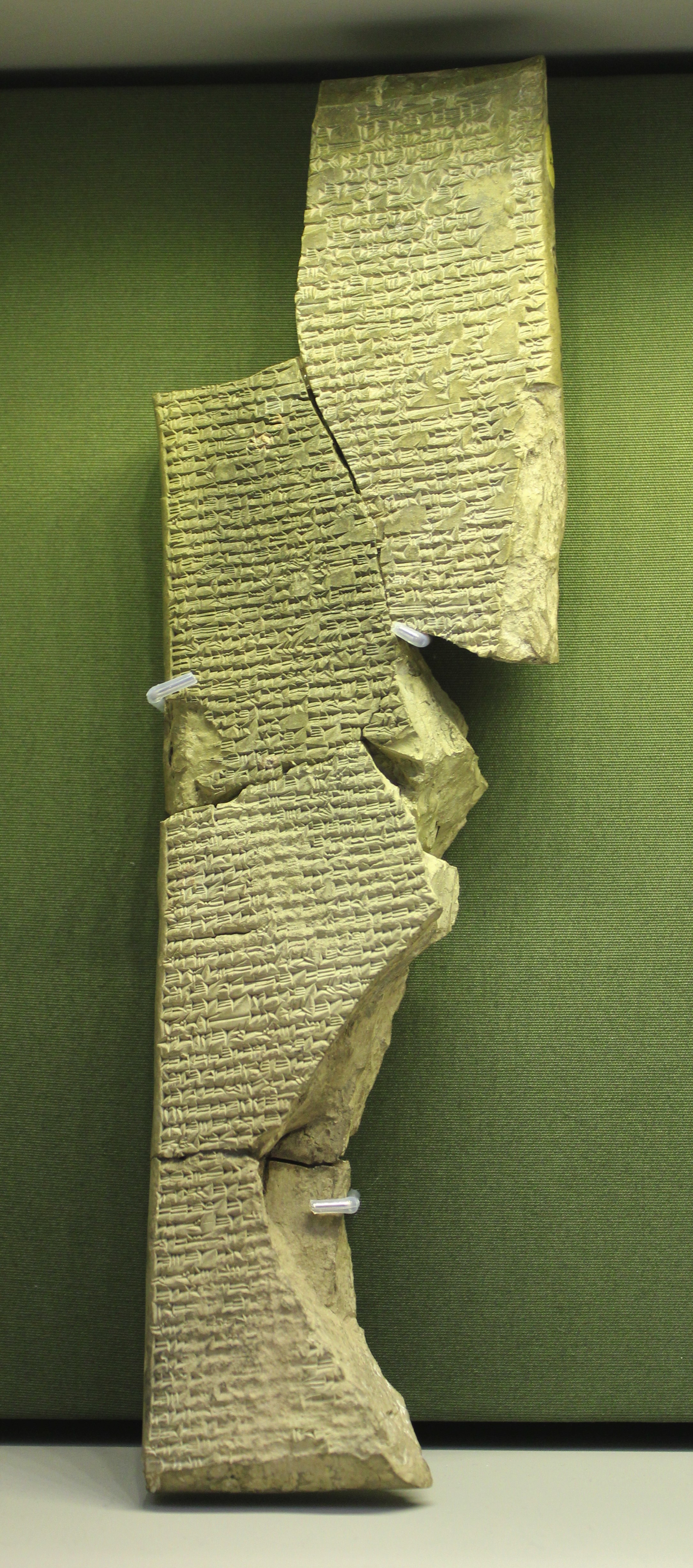
The poem takes its name from its opening words, rather than a modern descriptive title. Its language is Standard Babylonian, the literary register of Akkadian. The “seven tablets” are divisions of the work: modern editions reconstruct the text from numerous manuscripts and fragments, not a complete original set discovered together. Babylonian and Assyrian scribes preserved it, including those responsible for AshurbanipalAshurbanipalAshurbanipal was an Assyrian king of the seventh century BCE, reigning about 668–631 BCEGlossary · Click to read the explanation’s library at NinevehNineveh and KuyunjikNineveh is an ancient Assyrian city near Mosul in northern Iraq; Kuyunjik is one of its archaeological moundsGlossary · Click to read the explanation in the seventh century BCE.[3]
Its date of composition remains debated. Many scholars favour the late second millennium BCE, especially the twelfth century, although earlier dates have been proposed. Wilfred G. LambertWilfred G. LambertAssyriologist and cuneiform scholar associated with Birmingham who translated Enūma Eliš.Glossary · Click to read the explanation associated its composition with Nebuchadnezzar I’s recovery of Marduk’s statue from Elam; no surviving commission directly establishes that connection. Enrique JiménezEnrique JiménezAssyriologist and scholar of Babylonian literature, professor of ancient Oriental languages at LMU Munich, working on reconstructing and dating cuneiform texts.Glossary · Click to read the explanation identifies a phrase in an inscription of Marduk-nadin-ahhe, who ruled around 1099–1082 BCE, as an early quotation of Tablet IV’s battle. If this interpretation is correct, the poem was circulating by that reign. This is evidence for the work’s existence, not a date for the particular manuscript photographed here.[4]
Jiménez’s argument turns on a rare formulation, not generic battle imagery. IV 99 reads:[4]
Compare the curse addressed to Marduk in BM 90841, column ii 25:[4]
Both combine karšu, “belly”, with ṣânu, “bloat/fill”; Jiménez knows this combination nowhere else. The inscription names the water-associated aganutillû disease, strengthening the connection with Marduk’s defeat of the sea-being TiamatTiamatTiamat is a primeval divine mother and watery figure in Enūma eliš who later opposes Marduk; he divides her body in making the cosmos. No Babylonian portrait of her is securely identified.Glossary · Click to read the explanation. Quotation is a strong interpretation, but still an inference: rarity in surviving texts cannot exclude a lost common source or prove that all seven tablets were then complete. These readings follow the modern edition without silently supplied restorations.[4]
An earlier, fifteenth- or fourteenth-century BCE dating appeals to the exclusively directional use of -iš, rather than its later comparative sense; deliberate archaizing remains possible. The absence of Old Babylonian copies is negative evidenceNegative evidenceFailure to find an expected trace can test a hypothesis when preservation and investigation make discovery expectable; not every absence is evidence.Glossary · Click to read the explanation, not proof of impossibility. Lambert linked official Marduk supremacy and the absence of Nabu with Nebuchadnezzar I’s reign; yet a poem could advocate religious change before it became established. Narrated theology is not a secure composition date.[4][6]
From primordial waters to divine kingship
The story opens before heaven and earth have names, with the mingled waters of Apsu and TiamatTiamatTiamat is a primeval divine mother and watery figure in Enūma eliš who later opposes Marduk; he divides her body in making the cosmos. No Babylonian portrait of her is securely identified.Glossary · Click to read the explanation giving rise to generations of gods. Apsu represents primordial fresh water; Tiamat is the primeval sea and their mother. Disturbed by the younger gods, Apsu plans to destroy them, but Tiamat initially objects to killing their children. EaEnkiMesopotamian deity also known as Ea, linked with Eridu and the Abzu (deep fresh waters), wisdom, incantations, and narratives of creation and cosmic order. Later written attestations do not identify the deity of Eridu’s earliest layers.Glossary · Click to read the explanation, the god of wisdom also known as Enki, discovers the plan, kills Apsu and establishes his dwelling there. Marduk is born there to Ea and Damkina.[2]
Tiamat subsequently turns to war, gathering an army and giving its leader QinguQinguQingu (Kingu): a god whom Tiamat appoints commander and gives the Tablet of Destinies; captured after Marduk’s victory, his blood is used to make humans in Tablet VI.Glossary · Click to read the explanation the Tablet of Destinies. She is not simply “evil” from the outset: the primordial mother and waters become the adversary whose body will furnish the world. In Tablets II–III, the gods prepare their response, and Marduk agrees to fight on condition that he receive supreme authority. They confirm his kingship at the beginning of IV. He then traps Tiamat with his net and wind and kills her with an arrow. Military victory, authoritative speech and sovereignty together define his rise.[2][3]
Ordering the cosmos and creating humans
At the end of Tablet IV, Marduk divides Tiamat’s body and makes one half a roof for heaven. Tablet V continues with the stars, year, months and terrestrial features. Creation here orders pre-existing beings and materials; it is not creation from nothing. The narrative then centres on Babylon, the city in present-day IraqIraqIraq is a modern country encompassing much of ancient MesopotamiaGlossary · Click to read the explanation, and Marduk’s temple, the Esagil.[2]
In VI, Marduk proposes making humans to take over the gods’ work. Ea proposes sacrificing the guilty god; Qingu is handed over and killed, and Ea creates humanity from his blood according to Marduk’s design. After the gods’ ranks are assigned, they build the Esagil and assemble for a banquet.[2]
Numbers require their precise context. VI 39–46 places three hundred gods in heaven and six hundred in heaven and the Netherworld together; VI 68 instead mentions three hundred heavenly gods and six hundred of the Apsu. The modern edition notes the inconsistency: neither passage supplies a universal census for all Mesopotamian traditions. The poem also shares with AtrahasisAtrahasis: Epic and HeroAkkadian narrative on human creation, relations with the gods and the flood, named for its survivor warned by Enki. Its surviving manuscripts differ in date and preservation; its hero must not be equated uncritically with every Utnapishtim version.Glossary · Click to read the explanation the idea of humans assuming divine labour, but Atrahasis is a different narrative, not an identical version of this one.[2][3]
The difference is explicit in the edition’s normalized Akkadian. VI 44 reads:[2]
VI 68 instead reads:[2]
Ḫamšat šušši literally means “five sixties”, and nēr means six hundred. In the first passage six hundred covers both domains; in the second it is additional to the heavenly three hundred. These are inconsistent formulations within the poem, not an invitation to silently correct either.[2]
Marduk’s names and the ending
The granting of Marduk’s fifty names extends from the end of VI through VII. These express his functions and authority, rather than introducing fifty separate new gods. They include NibiruNibiru: Crossing and Astral NameAn Akkadian word for a crossing, ford or ferry, also a celestial name associated with Marduk and applied to Jupiter or Mercury in particular contexts; it does not identify one body in every use.Glossary · Click to read the explanation, associated in VII 124–132 with crossing and the regulation of the stars; Nibiru’s station also appears in V 6. The epilogue calls for the names to be remembered and taught to children, linking divine praise to the transmission of knowledge.[2]
Ritual and different readings
Hellenistic ritual instructions prescribe reciting the entire poem before Marduk on the fourth day of Nisannu during the akitu, the New Year festival. Other texts attest recitation on different occasions in his cult. Céline Debourse distinguishes this evidence from a hypothetical dramatic staging of the battle: no unambiguous evidence establishes a complete re-enactment, and the relationship between poem and ritual changed over time.[5]
The direct instruction in MNB 1848, column ii 22–24, in Debourse’s translation, is that “the high priest recites Enuma Elish from its beginning until its end to Bel”. Bel, “Lord”, here designates Marduk. The wording specifies recitation, its scope and addressee; it does not prescribe acting out characters or restaging the battle. This quotation is mediated through the specialist study, not an independent Akkadian collation.[5]
The poem circulated in scribal education and commentaries, without its message being uniformly accepted. An Assyrian recension replaced Marduk with the god Ashur, while the Babylonian version continued to be copied as well. Enuma Elish is therefore an influential statement of Babylon’s and Marduk’s centrality, not the single creation doctrine of all ancient Mesopotamians.[3]
Chronological layers and literary unity
The story’s primordial beginning cannot be converted into a historical year. The late second millennium BCE is a proposed composition horizon; Marduk-nadin-ahhe’s reign (1099–1082) is a possible limit for the passage’s existence if the quotation is accepted; seventh-century Nineveh copies are later transmission witnesses; Hellenistic instructions attest ritual use, not composition.[3][4][5]
“Battle epic” therefore describes only part of the work: divine conflict, cosmic formation, distribution of labour, Babylon’s foundation and Marduk’s names successively justify his authority. The ending is not extraneous to the narrative: it turns victory into knowledge to be remembered and taught.[2][3]
References and notes (6)
- Nicole Brisch, “Marduk (god),” Ancient Mesopotamian Gods and Goddesses, ORACC, 2019. Functions and historical attestation: Marduk as Babylon’s patron and his elevation in Enuma Elish. Return to the text ↑
- Enuma Elish, transcription by Adrian C. Heinrich and English translation by Sophus Helle, in Enuma Elish: The Babylonian Epic of Creation, edited by Johannes Haubold et al., Bloomsbury Academic, 2025. I 1–162, pp. 27–35; II 117–162, pp. 43–45; III 125–138, p. 53; IV 1–36 and 95–146, pp. 55, 61–63; V 1–20 and 57–158, pp. 65, 69–73; VI 1–166, pp. 75–83; VII 123–164, pp. 93–95. Account based on the English translation and notes, not an independent collation of Akkadian. See p. 79, note 107, for the inconsistent number in VI 68. Added: VI 44 and 68, normalized text pp. 76 and 78; translation pp. 77 and 79 n. 107. Return to the text ↑
- Sophus Helle, “Introduction,” in Enuma Elish: The Babylonian Epic of Creation, Bloomsbury Academic, 2025. Pp. 3–15, especially pp. 5–9 on narrative and language, pp. 11–14 on composition, manuscripts and the Assyrian recension; p. 7 on Atrahasis. Return to the text ↑
- Enrique Jiménez, “Marduk and the battle with the sea: On the dating of Enuma Elish,” in Enuma Elish: The Babylonian Epic of Creation, 2025. Pp. 99–106: limits of linguistic and thematic dating; BM 90841 ii 25 compared with IV 99–100; conclusion on p. 106. Identification as a quotation is Jiménez’s argument. Added: pp. 101–106, IV 99 and BM 90841 ii 25; lexical and aganutillû argument. Return to the text ↑
- Céline Debourse, “Enuma Elish in cult and ritual performance,” in Enuma Elish: The Babylonian Epic of Creation, 2025. Pp. 115–124, especially pp. 116–118 on re-enactment, pp. 117 and 122–123 on recitation. New Year instructions MNB 1848 ii 22–26 read through Debourse’s quotation and analysis, not by examining the original tablet. Added: p. 117, MNB 1848 ii 22–24; p. 123, ii 24–26. Ritual quoted via Debourse 2025, not a new full reading of the 2022 edition. Return to the text ↑
- W. G. Lambert, Babylonian Creation Myths (2013). pp. 439–444, Quando: dating arguments and limits. Indexed book text read; mirror PDF download unavailable; no page-image collation claimed. Return to the text ↑
Suggest a correction · Suggest a source for this record
Cite this record
IL Archive, «Enuma Elish», https://ilarchive.com/en/entities/enuma-elish
Continue reading