Study
Inanna and Ishtar’s Descent: What Changes between the Narratives?
An extended study of a topic, with evidence and references.
- Timeline
- From 1900 BCE to 600 BCE
- Region
- Mesopotamia
Seven gates, rescue, substitution and interrupted life: distinguishing the Sumerian and Akkadian narratives and the limits of comparison.
Share article
Text
InannaInanna / IshtarProminent Mesopotamian goddess with a major centre at Uruk, whose parentage and cult traditions vary rather than forming one fixed genealogy.Glossary · Click to read the explanation enters the underworld with the signs of her standing. At each gate she loses another item until the protection of her upper-world prestige is gone. Even a powerful goddess cannot assume that her authority operates everywhere. Yet there is more than one account: the Sumerian Descent of Inanna and the AkkadianAkkadianAn ancient East Semitic language written in cuneiform in Mesopotamia.Glossary · Click to read the explanation Descent of Ishtar share a passage into death’s domain, without forming one interchangeable narrative.
Related goddesses, distinct compositions
InannaInanna / IshtarProminent Mesopotamian goddess with a major centre at Uruk, whose parentage and cult traditions vary rather than forming one fixed genealogy.Glossary · Click to read the explanation and Ishtar are historically connected. This does not make every Sumerian work a literal translation of an Akkadian one. Characters, sequence, endings and surviving manuscripts must be examined separately.[1][2]
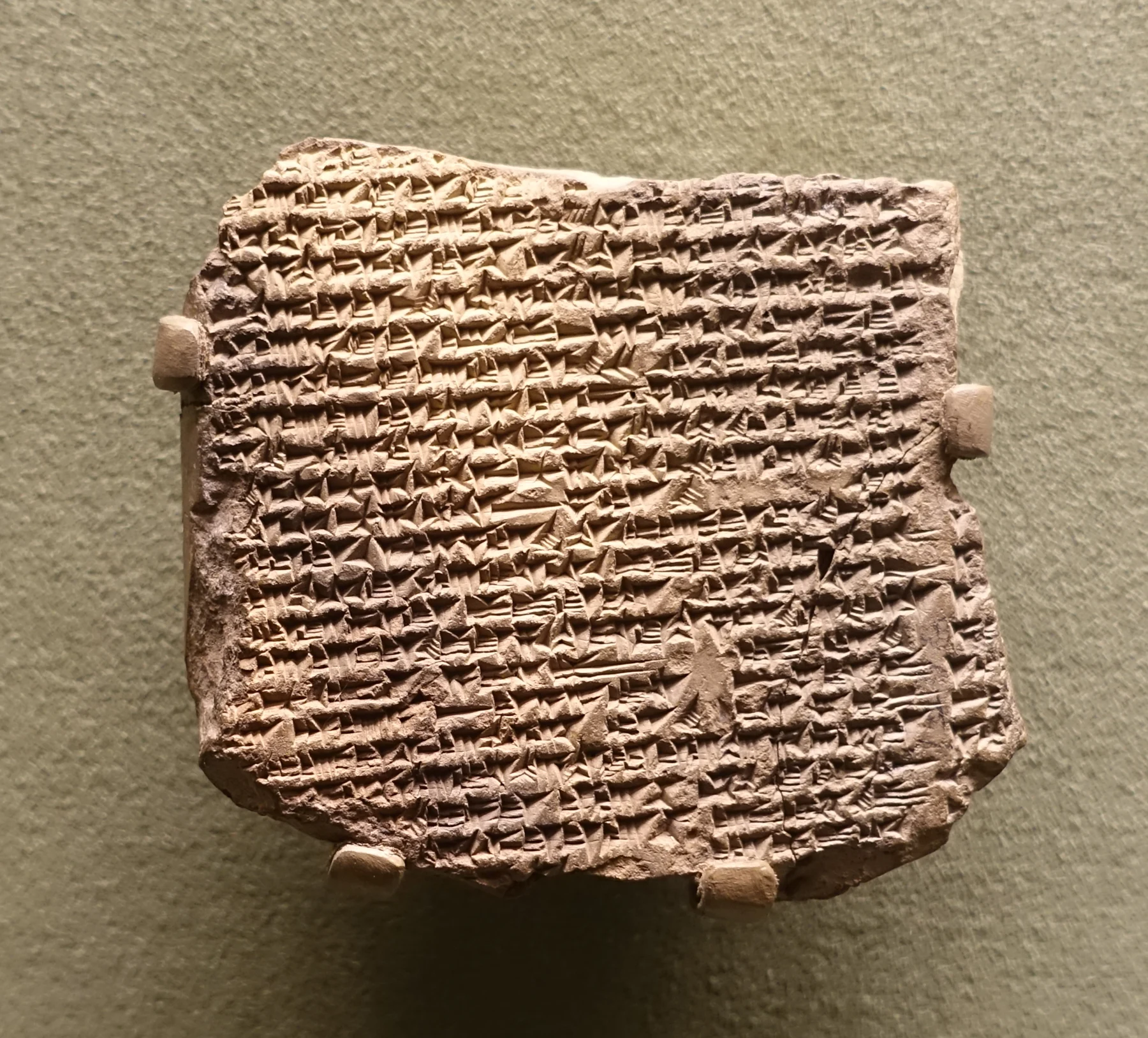
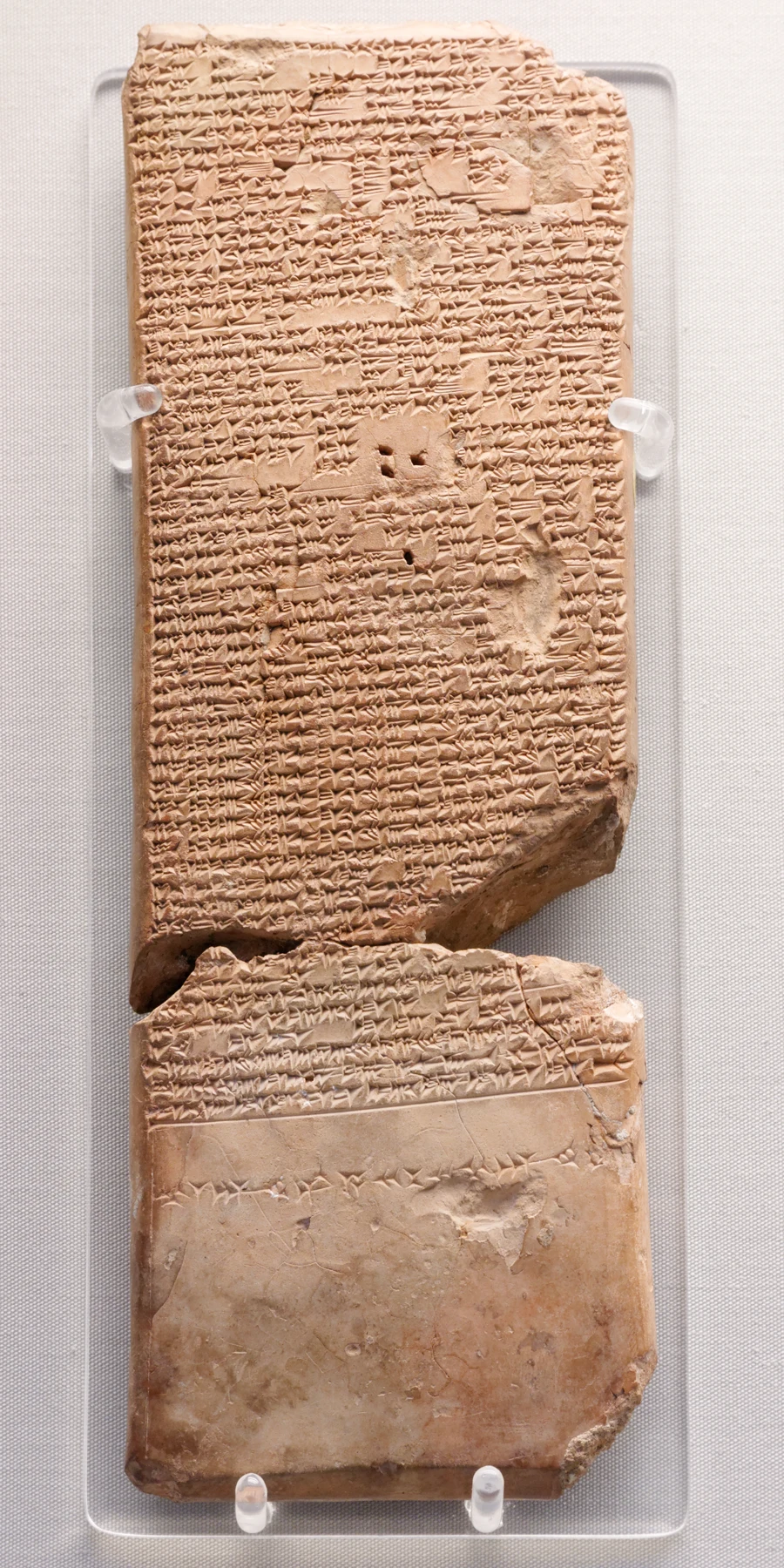
The cover shows Akkadian tablet K.162 from AshurbanipalAshurbanipalAshurbanipal was an Assyrian king of the seventh century BCE, reigning about 668–631 BCEGlossary · Click to read the explanation’s library at NinevehNineveh and KuyunjikNineveh is an ancient Assyrian city near Mosul in northern Iraq; Kuyunjik is one of its archaeological moundsGlossary · Click to read the explanation, dating to the seventh century BCE. That dates a material witness, not necessarily the emergence of every descent tradition.[3]
Seven gates and limits on authority
Both compositions remove the goddess’s clothing and ornaments through successive gates. The structure can be read as entry into a realm with its own rules: a visitor does not retain all earlier privileges. This is a reading of narrative arrangement, not certain instructions for a ceremony historically performed by women.[1][2]
EreshkigalEreshkigalRuler of the underworld in Mesopotamian traditions, exercising authority over death’s realm in the descent narratives.Glossary · Click to read the explanation governs the destination. Death’s world is not presented as an unorganized void but as a place of gatekeeping, commands and sanctions. Descent therefore tests the limits of power as well as moving a character through space.
What happens to Inanna?
In the Sumerian composition judges condemn her and she becomes a corpse. After three days and nights, NinshuburNinshuburInanna’s attendant in the Sumerian descent, following her instructions and seeking help during her absence.Glossary · Click to read the explanation follows her mistress’s instructions and seeks help. EnkiEnkiMesopotamian deity associated with deep fresh water, wisdom and Eridu, known as Ea in Akkadian tradition. The earliest preserved written mention does not date his cult’s origin or identify Ubaid Eridu’s deity.Glossary · Click to read the explanation’s intervention enables rescue; ascent then requires a substitute.[1]
Return does not erase the underworld’s conditions. Reducing the story to a goddess who died and rose strips away preparation, mediationIntercessionMediation subject in the cited Quranic texts to permission and approval, not divine independence.Glossary · Click to read the explanation and substitution, precisely the elements that give this particular narrative its shape.
Dumuzi and the cost of return
The Sumerian narrative distinguishes mourners from Dumuzi, encountered in splendid clothing on a throne. Inanna refuses to surrender some loyal companions but hands Dumuzi over. The ending introduces an arrangement for periods of absence, amid textual gaps.[1]
Fertility and recurring absence are legitimate topics for discussion. Nevertheless, a complete equation with the seasons compresses a narrative also concerned with mourning, loyalty, exchange and authority. A periodic outcome does not make every scene one agricultural symbol.
Ishtar and the upper world’s crisis
The Akkadian work subjects Ishtar to illnesses and associates her absence with interrupted sexual activity among people and animals. Ea intervenes through a rescuer; the ornaments are restored during ascent. This work does not reproduce Inanna’s detailed Sumerian encounters with mourners and Dumuzi.[2]
Ishtar’s absence thus threatens the continuation of life above, while the Sumerian narrative devotes substantial attention to help, fidelity and replacement. A sound comparison keeps resemblance and difference together rather than silently importing details from one composition into the other.
Do three days establish later borrowing?
The three-day interval belongs to a particular sequence: Ninshubur then begins the rescue appeal. It supplies no transmission history by itself. A common number, descent or return does not demonstrate borrowing without chronology, contact and more specific structural correspondences.[1]
Later religious narratives can be compared, but comparison should pose a testable question rather than label every return from death a copy of Inanna.
These compositions let a powerful goddess encounter a realm beyond her sole control. Their differences show a tradition reformulating questions: who can help, what does return cost, and what happens to the living when a force associated with love and life disappears? These are richer questions than those offered by an artificially unified story attributed to all Mesopotamians.
Connected readings
Anunna and Anunnaki · The flood before Noah · Similarity and borrowing
References and notes
- Oxford ETCSL edition of Inanna’s Sumerian descent, including variants and gaps; references identify narrative units rather than reproduce the translation. ETCSL 1.4.1; lines 114–175, 217–289, 306–358 Return to the text ↑
- Historical public-domain translation of the Akkadian text; its older terminology does not settle present-day questions of identity or gender. Morris Jastrow, 1915; Akkadian Descent of Ishtar Return to the text ↑
- Akkadian tablet from Ashurbanipal’s library, seventh century BCE; the copy’s date does not establish the story’s first composition. British Museum K.162 Return to the text ↑
Suggest a correction · Suggest a source for this record
Cite this record
IL Archive, «Inanna and Ishtar’s Descent: What Changes between the Narratives?», Edition 1, https://ilarchive.com/en/studies/inanna-ishtar-descent
Continue reading