Entity
Ninshubur: Divine Messenger of Inanna and An
A reference page linking a name, group, or concept to the materials that discuss it.
- Names
- Nincubur · Ninshubur · Ninšubur
A Mesopotamian divine envoy and intermediary: Sumerian and Akkadian texts and votive inscriptions illuminate Ninshubur’s roles with Inanna and An, contested identifications, and later connections with Papsukkal.
Estimated reading time: 8 min Published Last reviewed:
Share article

Video
Inanna and Enki: Divine gifts, a feast and the Boat of Heaven
Divine gifts, a feast and the Boat of Heaven. The whole story in one illustrated chapter, told from the ancient clay tablets; where the tablets are broken, the narration says so. Illustrations, narration voice and visual effects were created with AI tools by IL Archive; the text is a faithful retelling based on the ancient tablets.
The YouTube player loads only when you press play. Watch on YouTube
Text
Introduction
Ninshubur (Ninšubur) is the name of a Mesopotamian deity associated with divine messages, intercession, and service. The figure is best known as the attendant who remembers InannaInanna / IshtarA prominent Mesopotamian goddess whose Sumerian name Inanna became associated with Akkadian Ishtar across diverse traditions. She was associated with desire, war, royal authority and Venus, while local forms and genealogies varied among texts.Glossary · Click to read the explanation’s orders and seeks her rescue from the underworld, but that episode is not the whole history. Votive inscriptions, Sumerian hymns, god listsGod ListsTexts collecting divine names for preservation, teaching and classification, with varying theological organization.Glossary · Click to read the explanation, and AkkadianAkkadianAn ancient East Semitic language written in cuneiform from the third millennium BCE; its varieties include Babylonian and Assyrian, and it served in international diplomacy.Glossary · Click to read the explanation traditions do not always assign the same identity or representation to the name. Each witness must be distinguished from a modern reconstruction of cult history, and Ninshubur from the later figure Papsukkal.[1][2]
Name and office: more than an attendant
The name is written Ninšubur or Ninshubur in modern scholarship; Oxford’s corpus also uses Nincubur, reflecting a transliteration convention rather than demonstrating two separate figures. The title sukkal designates a divine messenger, minister, or intermediary who communicates orders and petitions those in power. Calling Ninshubur a mere “servant” therefore understates the religious agency of the office, and association with Inanna does not exhaust its history.
A third-millennium votive inscription from Adab (Bismaya) directly links the name to the god An. The first two lines of a composite inscription in the CuneiformCuneiformWriting with wedge-shaped signs, developed from Mesopotamian recording traditions and used for several languages from the third millennium BCE.Glossary · Click to read the explanation Digital Library Initiative (CDLI) are transliterated by its editors as follows:[2]
Here the words mean “For Ninshubur, minister/messenger of An.” This is a dedicatory text, not an identification of a deity depicted in art; its late Early Dynastic dating is approximate and marked as uncertain in the catalogue. Another Adab witness is a statue of a male worshipper at the Walters Art Museum (21.5), dated approximately 2500–2250 BCE: its incomplete inscription invokes Ninshubur. The statue represents a worshipper, not demonstrably Ninshubur herself.[4]
An and Inanna: what the hymns actually establish
The Sumerian composition “Ninshubur A” in the Electronic Text Corpus of Sumerian Literature (ETCSL) addresses the deity in feminine terms while also calling her the minister of An. Segment A, line 1, reads in the editors’ composite transliteration:
A close rendering is “Lady, true seed of the Land, minister of An.” The slashes reproduce editorial notation around part of the line; this must not be presented as a perfectly preserved quotation from one identified tablet. Line 2 calls her “mother Ninshubur.” In segment B she calms divine hearts and brings joy to Inanna, and Akkil appears as an associated cult setting. The conjunction of An, Inanna, and feminine address within this hymn weighs against the simple rule that every “Ninshubur of An” is male whereas every “Ninshubur of Inanna” is female.[5]
The Sumerian descent: a mission planned in advance
In “Inana’s Descent to the Nether World” (ETCSL 1.4.1), Ninshubur accompanies her mistress to the threshold of the journey. Inanna then dispatches her with precise instructions: perform laments, beat the drum, visit divine sanctuaries, and petition EnlilEnlilEnlil/Ellil: a major Mesopotamian god associated with destinies, kingship, and Ekur at Nippur, already prominent in third-millennium god lists. His name’s origin and cult beginnings remain debated.Glossary · Click to read the explanation at NippurNippur / NuffarAncient Nippur (modern Nuffar, Iraq), major cult centre of Enlil and Ekur; excavations revealed sanctuaries, houses and thousands of cuneiform tablets across many periods.Glossary · Click to read the explanation, NannaNanna / Su’en / SinMesopotamian moon god known as Nanna, Su’en and Sîn/Sin. Worshipped especially at Ur and Harran, he is associated with the crescent and lunar cycle; names and myths have different histories.Glossary · Click to read the explanation at Ur, and finally EnkiEnkiMesopotamian deity also known as Ea, linked with Eridu and the Abzu (deep fresh waters), wisdom, incantations, and narratives of creation and cosmic order. Later written attestations do not identify the deity of Eridu’s earliest layers.Glossary · Click to read the explanation at EriduEriduEridu (Abu Shahrain), a multi-mound site in southern Iraq occupied since the Ubaid, later home to a religious precinct associated with Enki. Its eighteen sounding levels are not proof that every early building was a temple.Glossary · Click to read the explanation. Inanna explicitly says that Enki knows the life-giving plant and water. The rescue mission is therefore arranged before the disaster, rather than improvised afterwards.[1]
After three days and three nights within the narrative, Ninshubur carries out the orders. Enlil and then Nanna refuse to intervene. Enki responds by creating two beings, the kur-gara and gala-tura, who are instructed to reach EreshkigalEreshkigalMesopotamian goddess ruling the netherworld; Inanna’s sister in descent texts, with varying accounts of her relationship with Nergal.Glossary · Click to read the explanation, queen of the underworld, and revive Inanna with the life-giving plant and water. Thus Ninshubur’s appeal initiates the rescue; she does not herself descend into the underworld or administer the substances of revival. The ETCSL composite records additions and alternative readings in particular witnesses, including around lines 173–175; every phrase cannot be attributed to a single surviving manuscript.[1]
Why Ninshubur is spared as a substitute
Revival alone does not complete Inanna’s exit: underworld powers demand a substitute. When demons encounter Ninshubur prostrating herself at the gate, they propose to take her. Inanna refuses, reciting her attendant’s laments and journeys and saying, in the sense of the text, that she brought Inanna back to life. Inanna also protects Šara and Lulal before DumuziDumuzi / TammuzDumuzi is a deity of ancient Mesopotamian traditions associated with shepherding and Inanna; Tammuz appears as the name in later linguistic and textual traditions.Glossary · Click to read the explanation is selected in a different scene. The narrative subsequently includes Inanna’s mourning for Dumuzi; its ending should not be flattened into a morality play about one loyal figure and one unfaithful one.[1]
Loyalty here is a deed with narrative consequences: the orders kept explain both the rescue and Inanna’s decision to protect the messenger. Making this into a universal moral law, however, would go beyond this composition; substitution and Dumuzi’s place in other ritualsRitualAn organised or distinguished practice meaningful to a community; it may leave traces, but its form alone does not reveal an associated doctrine.Glossary · Click to read the explanation and traditions are more complicated.
Beyond the descent: the Boat of Heaven and divine appeasement
In “Inana and Enki” (ETCSL 1.3.1), Inanna transports the me—powers and institutions structuring divine and civic life—toward UrukUrukAncient city at Warka in southern Iraq, a major urban centre around 3200 BCE that preserved early writing and accounting tablets.Glossary · Click to read the explanation aboard the Boat of Heaven. Enki attempts to recover the boat through his minister Isimud. Inanna repeatedly calls upon Ninshubur, situating her in the defense of the journey, not in another underworld adventure. Parts of the seventh attempt are damaged, so a complete account of every intervention cannot be claimed.[6]
“Ninshubur B” places the deity at Akkil and uses titles such as “faithful minister of E-ana” and “mother of the Land.” Together the hymns associate her office with appeasement, petition, and care for communities: these are cultic and laudatory functions rather than just a metaphor drawn from the descent story. But parts of the hymn are broken, and these lines alone cannot settle whether Akkil should be understood as a town, a sanctuary, or a name with more than one application.[7]
Inscribed seals and cult: the name does not identify the picture
Two Old Babylonian cylinder sealsCylinder sealSmall engraved cylinder rolled over soft clay to leave an extended image. Used to secure, document and identify administrative actions; its pictures do not automatically constitute writing.Glossary · Click to read the explanation catalogued by the Louvre name Ninshubur. KLQ 33 / CCO A.363 bears the dedication “Ninshubur, faithful messenger of Anu” and is dated to the First Dynasty of BabylonBabylonBabylon is an ancient city in central present-day Iraq, south of BaghdadGlossary · Click to read the explanation, approximately 1894–1595 BCE. The inscription on MNB 1908 / CCO A.309 reads “Ninshubur, messenger of Anu”; the seal is dated stylistically to approximately 1700–1600 BCE. These inscriptions attest to name and function in worship; they do not authorize identifying every deity drawn on either seal as Ninshubur. The catalogue descriptions mention other figures in their scenes. Louvre photographs have not been incorporated because reuse permission for those specific files was not established.[8][9]
Gender and identity: competing readings, not automatic fusion
Sumerian texts centered on Inanna clearly use feminine forms for Ninshubur, while hymns supply the epithets “lady” and “mother.” Elsewhere and later, masculine depictions occur, and the name becomes associated with Papsukkal, a male divine messenger and gatekeeper. The specialist AMGG entry describes distinct figures in the Old Babylonian period and a subsequent syncretism in the Kassite period, followed by a revival of Papsukkal’s cult in Hellenistic Uruk. In the Akkadian “Descent of Ishtar,” Papsukkal performs the corresponding messenger role; the Akkadian character’s name must not be silently changed to Ninshubur.[10]
Uri Gabbay compares Ninshubur’s ability to soothe divine hearts and perform lament-related duties with the ritual lamentation specialists known as gala/kalû. He discusses a damaged passage that may refer to male and female garments, while explicitly acknowledging the competing view that different male and female deities shared the same name. Functional analogy is a modern interpretation, not proof that Ninshubur belonged to the gala clergy, and it does not license the unqualified projection of contemporary gender identities onto all ancient witnesses. The best-supported editorial approach is to distinguish the contexts, leaving open the extent of historical change and multiple referents where the evidence does not decide.[11]
A chronology of evidence, not a single date for a myth
- Approximately 2500–2340 BCE: An Adab dedicatory composite calls Ninshubur the minister of An. Its Early Dynastic date is uncertain and some words are restored. The Walters statue has a broader approximate date of 2500–2250 BCE.[2][4]
- Approximately 1900–1600 BCE: Old Babylonian Sumerian school copies of Inanna’s Descent survive, including manuscripts from Nippur catalogued by CDLI. A copy’s date does not establish when every component of the myths and hymns was first composed.[12]
- Second millennium BCE: Old Babylonian seals invoke the messenger of Anu, while later traditions move Ninshubur and Papsukkal closer together. These are different stages.[8][9][10]
- Kassite period to seventh century BCE: Scholarship documents the continued copying of Sumerian passages and a different Akkadian retelling. British Museum K.162 is a later Assyrian copy of the Descent of Ishtar, not evidence for Ninshubur’s physical appearance or a manuscript of the identical Sumerian lines.[3][13]
Images and the limits of identification
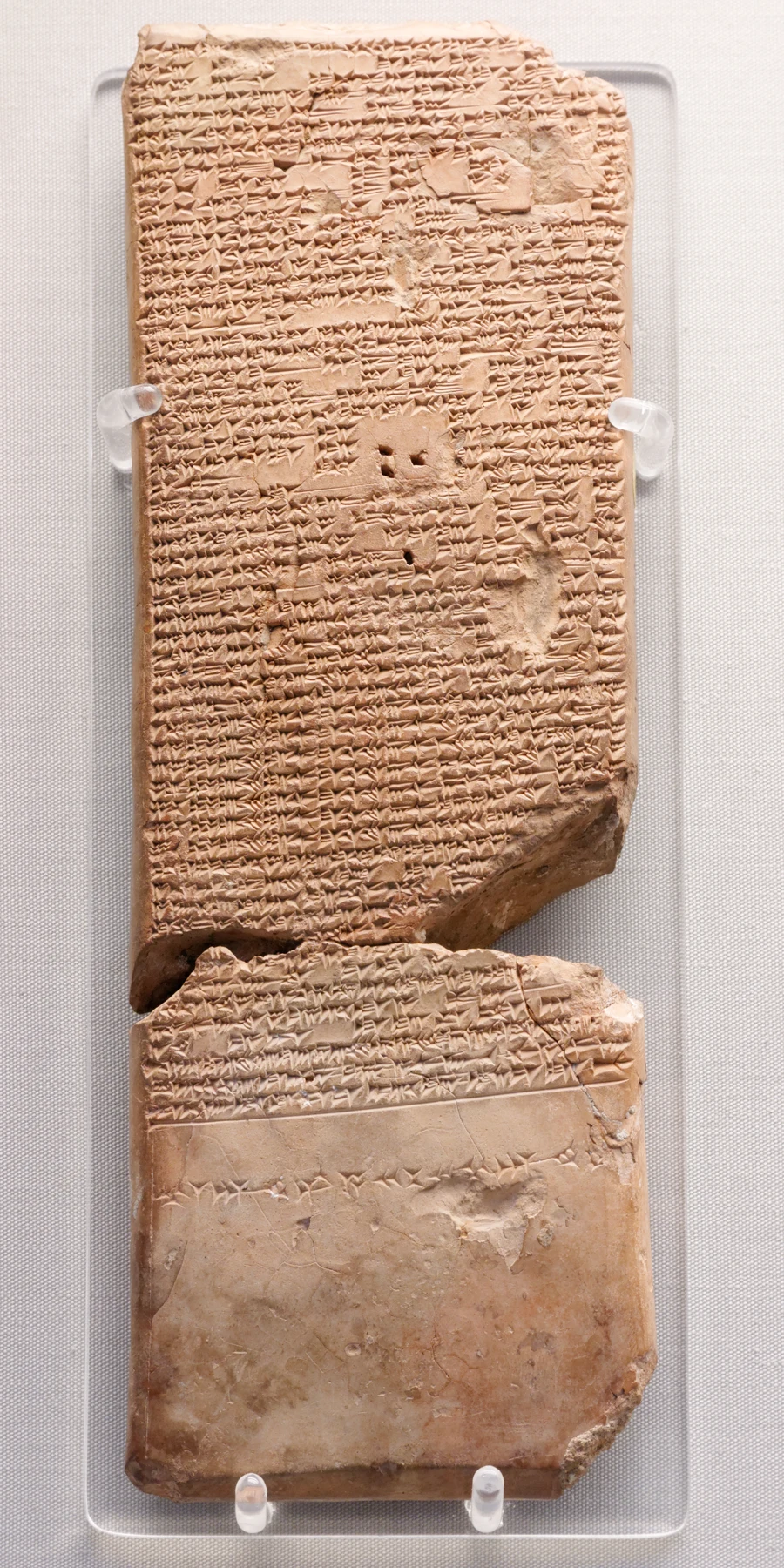
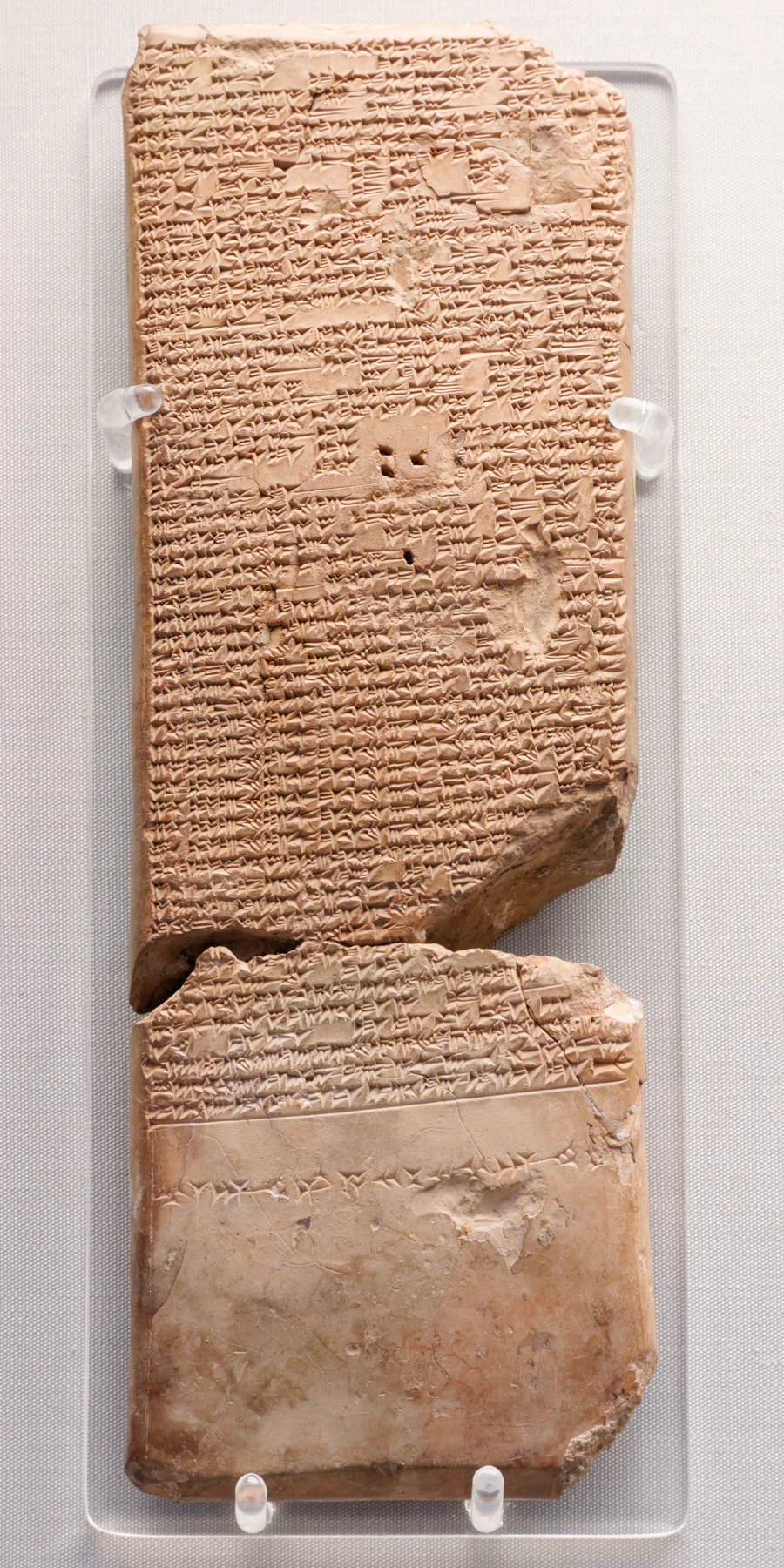
The cover is an original modern, AI-generated symbolic illustration of mediation between two realms, not an ancient artifact or a documented reconstruction of Mesopotamian art. The following tablet belongs to the Akkadian Descent of Ishtar and remains useful as material evidence for the later circulation of a descent story; it does not demonstrate that Ninshubur appears on that tablet or that the two narratives are identical.[3][13]
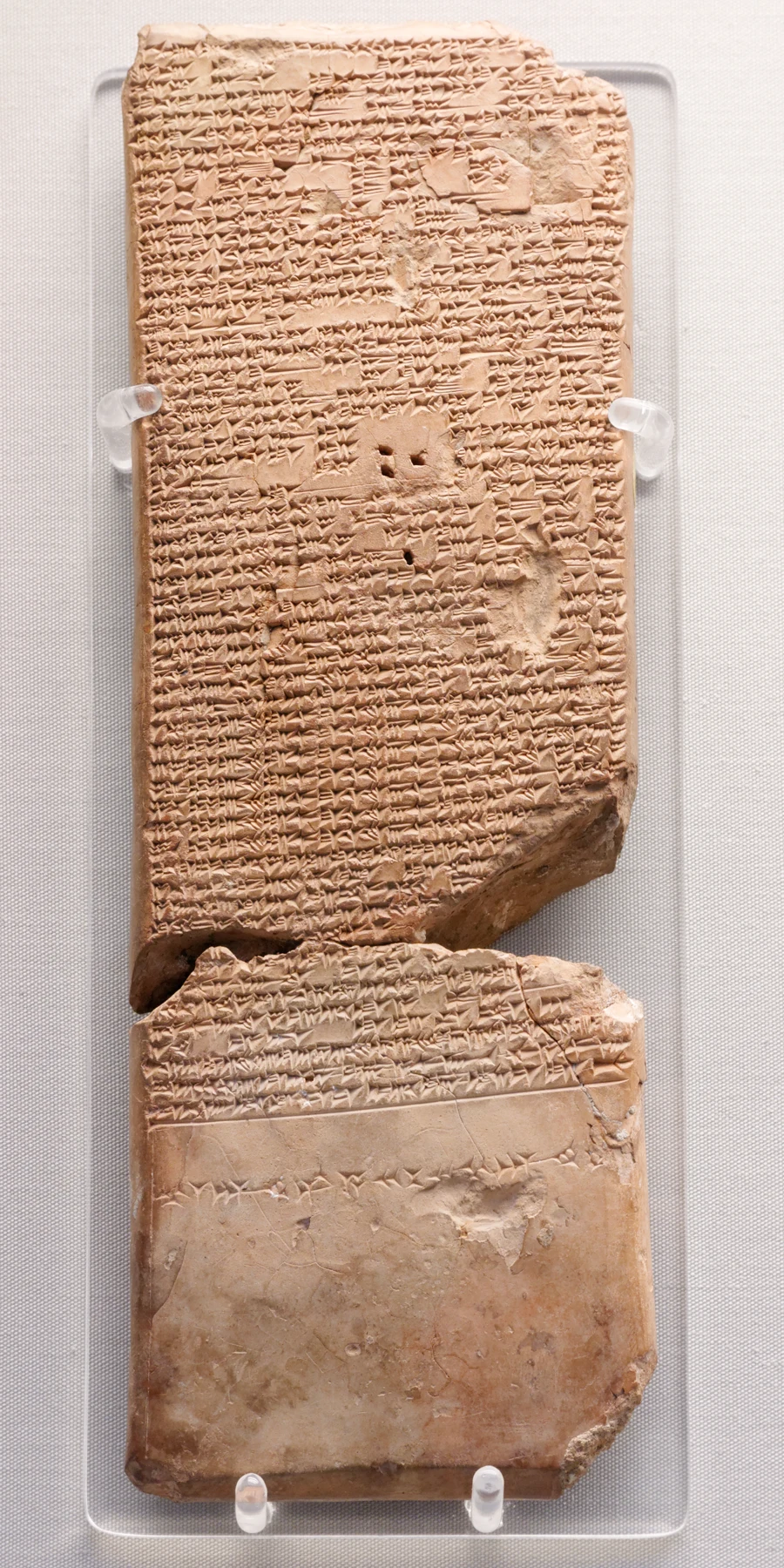
Read together, votive text, inscription, hymn, and narrative show an effective divine envoy who intercedes and seeks help, is particularly associated with Inanna, and is also called a minister of An. They do not yield one unbroken identity for every spelling of the name, a securely identified ancient portrait, or a gender designation that remains constant across all periods and traditions.
References and notes (13)
- Oxford ETCSL edition of Inanna’s Sumerian descent, including variants and gaps; references identify narrative units rather than reproduce the translation. ETCSL 1.4.1; lines 26–72, 164–225, 226–289, 306–358, 384–410 (selected passages) Return to the text ↑
- CDLI, composite Early Dynastic votive inscription from Adab naming Ninšubur minister of An; restorations and dating caveats recorded. RIME 1.01.09.x2001; CDLI P431023; lines 1–2 and 12–14; Early Dynastic IIIb (uncertain dating) Return to the text ↑
- Akkadian tablet from Ashurbanipal’s library, seventh century BCE; the copy’s date does not establish the story’s first composition. British Museum K.162 Return to the text ↑
- Walters Art Museum, “Male Worshiper,” Adab, accession 21.5; damaged dedicatory text to Ninshubur and object metadata. Object 21.5; object description and shoulder/back inscription; ca. 2500–2250 BCE Return to the text ↑
- Oxford ETCSL, “A shir-gida (?) of Ninshubur (Ninshubur A),” edited Sumerian composite; compare its English translation and editorial marks. ETCSL 4.25.1; segment A lines 1–5; segment B lines 1–9 Return to the text ↑
- Oxford ETCSL, “Inana and Enki”; Ninshubur in the Boat of Heaven sequence and its lacunae. ETCSL 1.3.1; segment H, lines 20–217 Return to the text ↑
- Oxford ETCSL, “A hymn to Ninshubur (Ninshubur B)”; Akkil and the epithets “mother of the Land” and “faithful minister.” ETCSL 4.25.2; lines 1–10 and 25–40 Return to the text ↑
- Musée du Louvre collection catalogue, Old Babylonian cylinder seal dedicated to Ninshubur, faithful messenger of Anu; the image is not thereby identified. KLQ 33; CCO A.363; “Inscriptions” and “Date” fields Return to the text ↑
- Musée du Louvre catalogue, Old Babylonian cylinder seal inscribed “Ninshubur, messenger of Anu”; stylistic dating ca. 1700–1600 BCE. MNB 1908; CCO A.309; description, inscription and dating Return to the text ↑
- Yağmur Heffron, “Papsukkal (god),” ORACC, Ancient Mesopotamian Gods and Goddesses; examined indexed page extract, direct full-page retrieval unavailable. Indexed extract: “Divine Genealogy and Syncretisms,” “Time Periods Attested,” “Iconography” Return to the text ↑
- Uri Gabbay, “The Akkadian Word for ‘Third Gender’: The kalû (gala) Once Again,” in Proceedings of the 51st RAI, SAOC 62 (Chicago, 2008); printed pp. 53–54 read directly. Book pp. 53–54 (PDF viewer pp. 65–66); sections 3–4, notes 43–54 Return to the text ↑
- CDLI, “Inanna’s Descent” literary composite and enumerated Old Babylonian manuscript witnesses, distinguished from the unknown date of composition. CDLI P468903, Q000343; “Chronology” and “Witnesses”; Nippur and other copies Return to the text ↑
- Niek Veldhuis, “Kassite Exercises: Literary and Lexical Extracts,” Journal of Cuneiform Studies 52 (2000), pp. 67–94, specifically transmission of Inanna’s Descent. Printed p. 82; PDF page 16; Kassite copying and Akkadian retelling Return to the text ↑
Suggest a correction · Suggest a source for this record
Cite this record
IL Archive, «Ninshubur: Divine Messenger of Inanna and An», https://ilarchive.com/en/entities/ninshubur
Continue reading
Related readings