Entity · Concept
Igigi
A reference page linking a name, group, or concept to the materials that discuss it.
- Names
- Igigi · Igigu · Igigū
- Region
- Mesopotamia
The Igigi (Igigū) are a collective of gods attested in Akkadian texts from the Old Babylonian period. In Atrahasis they perform heavy labour and rebel, but their rank, relationship to the Anunnaki and numbers vary by source.
Estimated reading time: 6 min Published Last reviewed:
Share article
Video
The Anunnaki: Stranger Than the Story
Our second documentary places the popular Anunnaki story beside the clay tablets, line by line, to see what the ancient texts actually say. Some scenes are AI-generated illustrations.
The YouTube player loads only when you press play. Watch on YouTube
Text
Introduction
Who are the Igigi in Mesopotamian texts, and why do they sometimes appear alongside, and sometimes in contrast to, the Anunna or AnunnakiAnunna / AnunnakiAnunna/Anunnaki is a collective designation for Mesopotamian gods whose scope varies by text and period; it is not a group with one fixed membership or number.Glossary · Click to read the explanation? This entry traces the collective designation from the labour dispute in Atrahasis to divine assemblies and later cosmological arrangements, without imposing the scheme of any one narrative on every period.
We are dealing with a collective name for deities in texts, not an identifiable historical population. Numbers assigned to these gods need to be read in the passage that gives them, not turned into a census of a permanent pantheon.
The name and its earliest attestations
Igigū, also conventionally Igigi, is a collective designation in AkkadianAkkadianAn ancient East Semitic language written in cuneiform from the third millennium BCE; its varieties include Babylonian and Assyrian, and it served in international diplomacy.Glossary · Click to read the explanation writings. Spellings include i-gi-gu and i-gi-gi. Its earliest known Akkadian attestations belong to the Old Babylonian period, in the second millennium BCE. Its etymology remains uncertain: different Semitic derivations have been proposed, but no definitive derivation follows from resemblance to modern words. [1]
The term does not provide a roll call of individual gods. Scholars have proposed different relatively small memberships, yet no stable roster covers all the texts. Nor does the name itself fix their rank or home in a particular region of the cosmos; those details depend on genre and date. [1]
Labour and revolt in Atrahasis
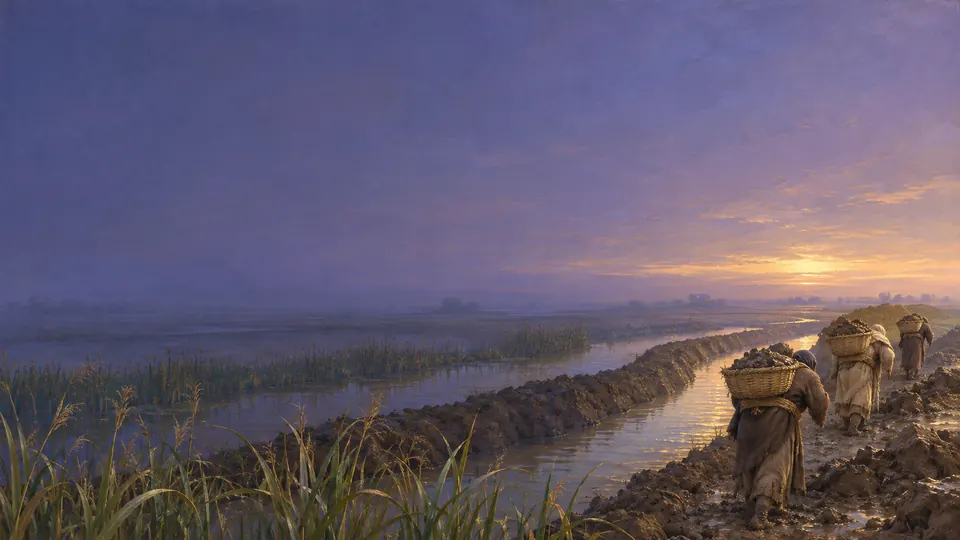
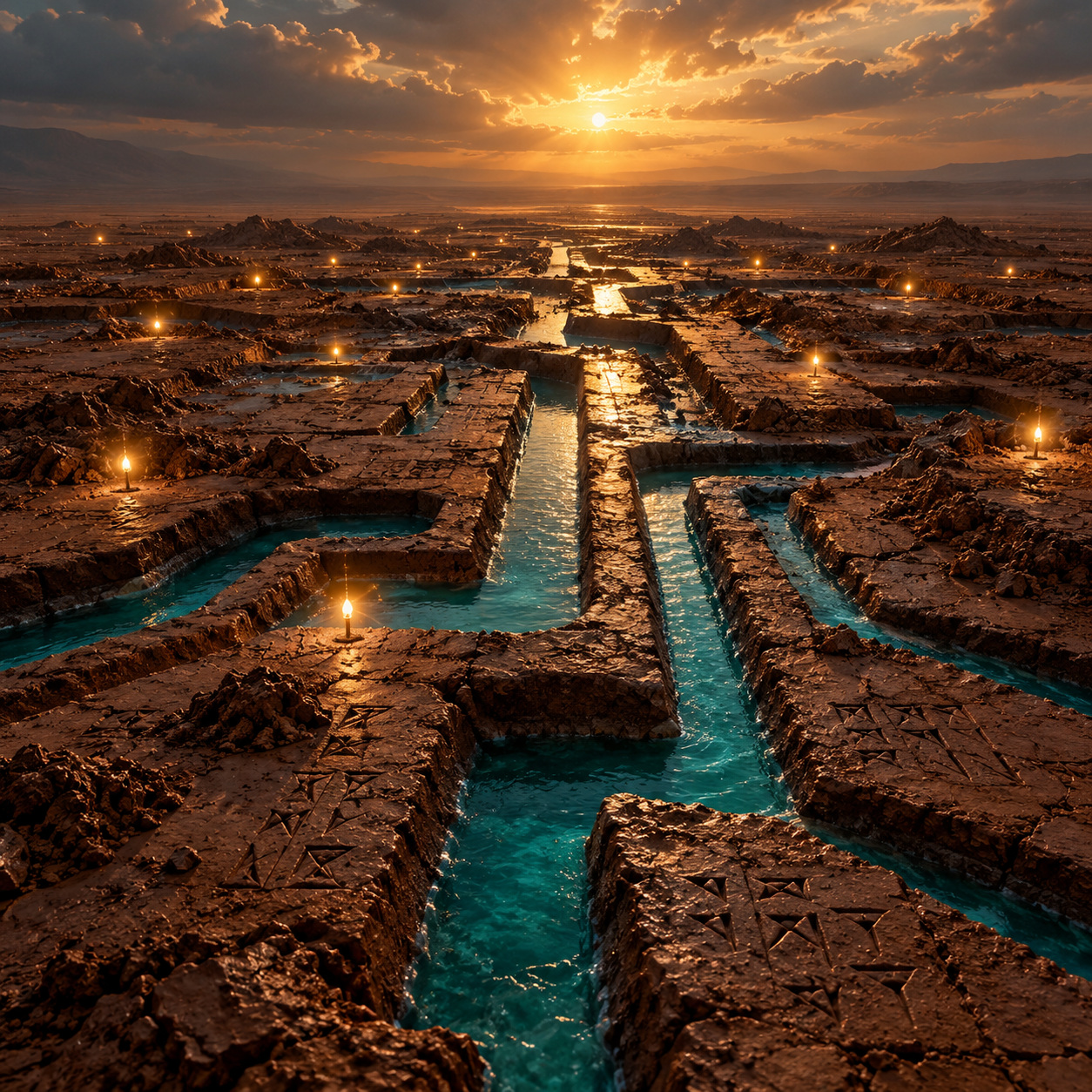
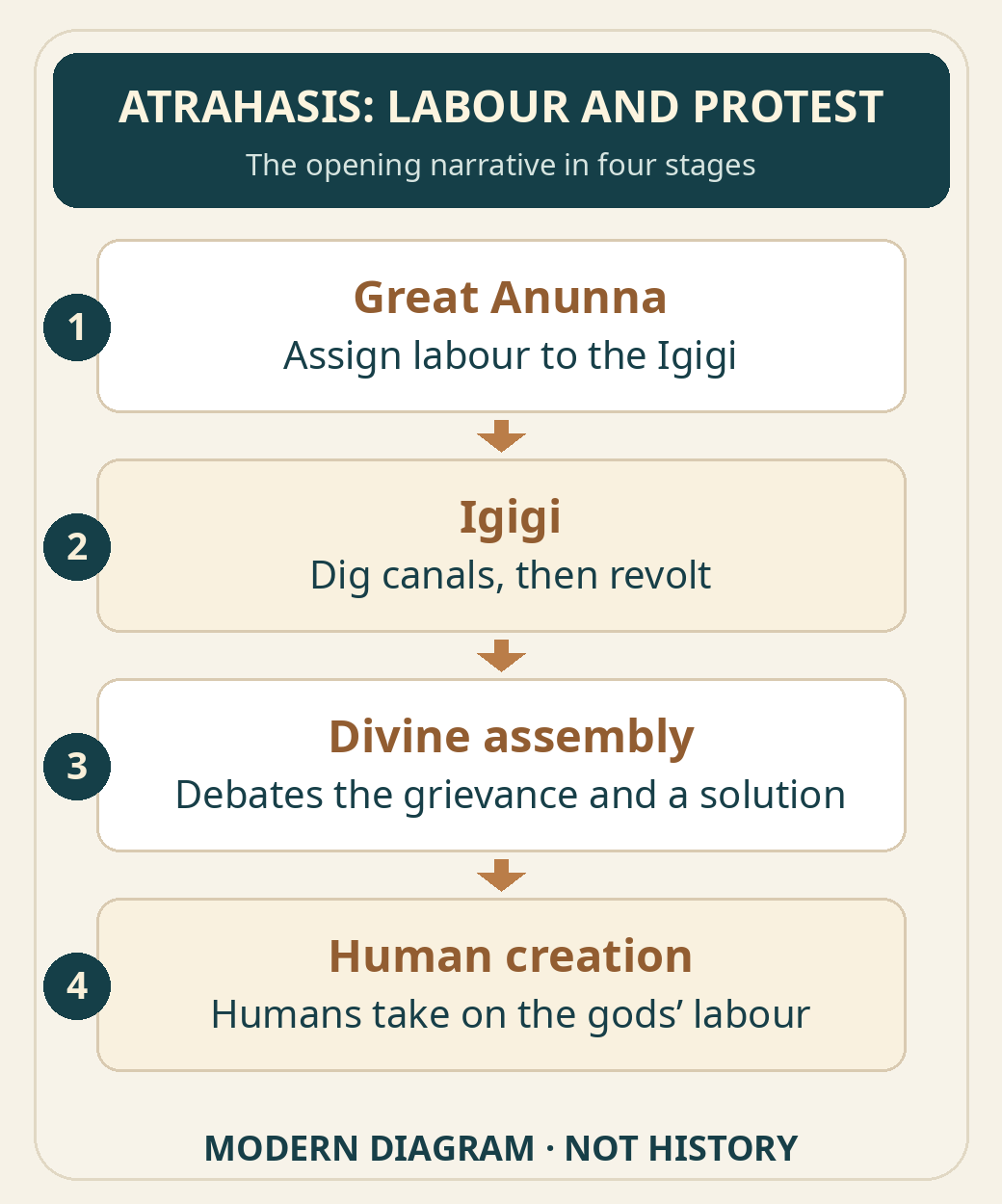
The Akkadian epic AtrahasisAtrahasis: Epic and HeroAkkadian narrative on human creation, relations with the gods and the flood, named for its survivor warned by Enki. Its surviving manuscripts differ in date and preservation; its hero must not be equated uncritically with every Utnapishtim version.Glossary · Click to read the explanation opens with gods burdened by work. In Tablet I, lines 1–6, the “seven great Anunna” set the Igigi to hard labour. The subsequent lines describe the Igigi excavating canals and watercourses. Exhausted and angry, they burn their working implements and gather at the residence of EnlilEnlilEnlil/Ellil: a major Mesopotamian god associated with destinies, kingship, and Ekur at Nippur, already prominent in third-millennium god lists. His name’s origin and cult beginnings remain debated.Glossary · Click to read the explanation, a major Mesopotamian god. In this episode they are divine labourers challenging the distribution of toil. [2]
The canal setting evokes the irrigated environment of MesopotamiaMesopotamiaHistorical region associated with the Tigris and Euphrates: Uruk, Ur, Eridu, cuneiform, Sumer, Akkad, Babylon and Assyria, their languages and cults, and the limits of archaeological evidence.Glossary · Click to read the explanation, but the existence of actual canals does not make the gods’ revolt a historical event. Descriptions of “lesser gods” in some explanations refer to their narrative role here, not to an immutable rank for every occurrence of their name.
Resolving the dispute: the creation of humans
The divine assembly considers how to relieve the burden. In the published narrative, Nintu, the birth goddessNintu, birth goddess in AtrahasisBirth goddess in Atrahasis, grieving for humanity, blaming the flood decision and involved in regulating future births.Glossary · Click to read the explanation, also called Mami and Bēlet-ilī, works with EnkiEnkiMesopotamian deity also known as Ea, linked with Eridu and the Abzu (deep fresh waters), wisdom, incantations, and narratives of creation and cosmic order. Later written attestations do not identify the deity of Eridu’s earliest layers.Glossary · Click to read the explanation, the god associated with wisdom and water, to make humans from clay combined with material from a sacrificed deity. Humans take over divine labour within the story’s logic. Around line 233, the Igigi are themselves called “the great gods” as they participate in the episode involving the clay—another reason not to insist on a single, unqualified label of “lower class” for them. [3]
This is a mythic explanation of humanity’s function in the divine world, not a documentary account of the emergence of our species. Moreover, the epic survives in witnesses of different dates and completeness; a translated composite passage should not silently be attributed to every individual tablet.
A royal witness: Hammurabi’s prologue
The name is not confined to the rebellion. In the opening of the Laws of HammurabiLaws of HammurabiAn eighteenth-century BCE Babylonian legal text in Akkadian, presenting property, family, labor and injury provisions within Hammurabi’s account of justice.Glossary · Click to read the explanation, an Old Babylonian royal inscription, Anu and Enlil exalt MardukMardukBabylon’s leading god, worshipped at Esagil and elevated in the Akkadian Enūma eliš. His symbols include a spade and mušḫuššu dragon. His earliest origins remain obscure; Nibiru is no evidence of a planetary homeland.Glossary · Click to read the explanation “among the Igigi.” SOAS publishes a transcription of the Akkadian expression in igigī ušarbiušu, alongside a translation. This is a statement of divine prestige in a royal account of BabylonBabylonBabylon is an ancient city in central present-day Iraq, south of BaghdadGlossary · Click to read the explanation’s authority, not evidence that Marduk participated in a labour strike in every text. [4]
The contrast in genre matters: the royal prologue glorifies a god, city and king, while Atrahasis builds a narrative around contested labour. Neither passage authorizes projecting its precise institutional arrangement into the other.
A Sumerian expression and a problem of dating
The Sumerian expression nun-gal-e-ne, “great princes,” occurs in line 2 of a hymn to InanaInanna / IshtarA prominent Mesopotamian goddess whose Sumerian name Inanna became associated with Akkadian Ishtar across diverse traditions. She was associated with desire, war, royal authority and Venus, while local forms and genealogies varied among texts.Glossary · Click to read the explanation called Inana C by modern editors. The Oxford ETCSL translation glosses the expression as a name for the Igigi. Although the composition has traditionally been attributed to Enheduanna, its surviving manuscripts are Old Babylonian. This is therefore not independent proof that the Akkadian group name was in use in the twenty-third century BCE, when the attributed author lived. [5]
An attribution to an early poet, the dating of extant copies, and an editor’s equivalence between a Sumerian expression and an Akkadian group name are distinct claims. Treating them separately preserves what each piece of evidence actually establishes.
Numbers in Enuma Elish and an Assyrian scholarly text
In Enūma ElišEnuma ElishA seven-tablet Babylonian creation poem in Akkadian, recounting Marduk’s rise, victory over Tiamat, cosmic ordering and human creation, and culminating in praise through fifty names. Its composition date is debated; later manuscripts and recitation traditions preserve it.Glossary · Click to read the explanation, the Babylonian creation epic, Marduk allocates the Anunna to heavenly and lower-world duties in Tablet VI, lines 39–44, with a total of six hundred. Line 69 in the published translation also refers to three hundred Igigi in heaven and six hundred of the Apsû. These lines have to be read as they stand in their respective textual setting: their figures cannot simply be added into one permanent divine census. [6]
A different arrangement appears in a first-millennium-BCE Assyrian explanatory tablet known as KAR 307 or SAA 3, 39. Lines 30–31 place three hundred Igigi in the upper heaven and mention Igigi again in the middle heaven, without assigning a second number. Line 37 places six hundred Anunnaki in the depths of the lower earth. This is one learned cosmological configuration, not a key to classifying all earlier traditions. [7]
Assemblies, worship and images
Other compositions, including the Anzu myth, refer to an assembly of Igigi, while passages in the Erra poem distinguish the Igigi from the Anunna. This does not establish a single permanent corporate council with known rules and membership. As Nicole Brisch explains, individual gods may be associated with more than one group; Marduk is a particularly important case, and the attribution of other names remains debated. [8]
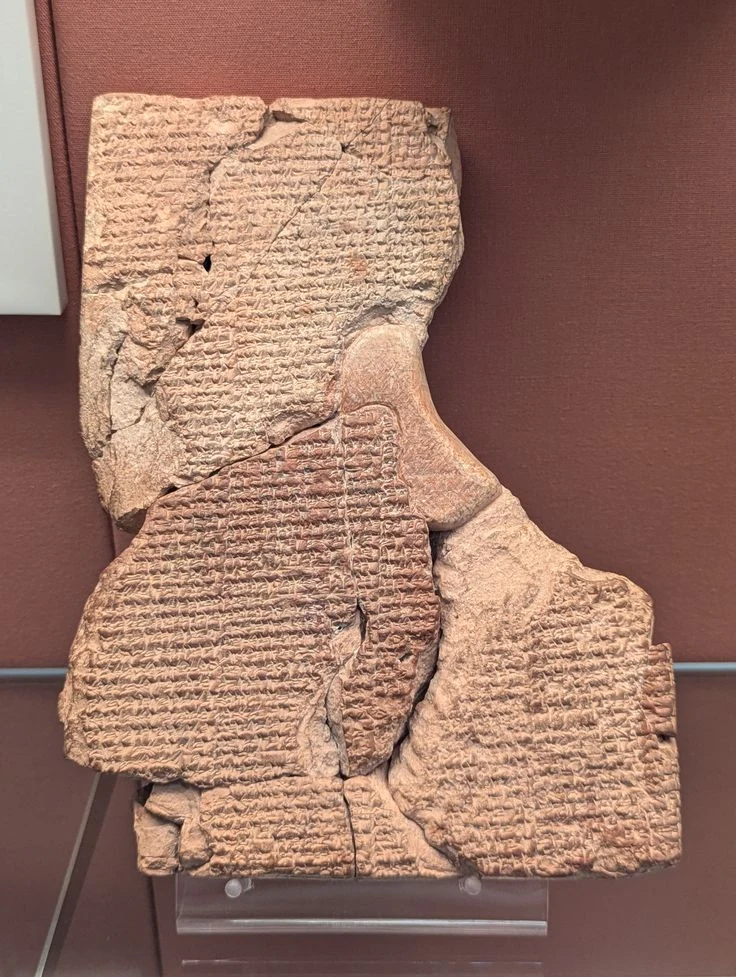
No cult centre is securely known as belonging specifically to the Igigi collectively, and there is no securely identified ancient image of the group as such. A few proposed theophoric personal names do not suffice to reconstruct a collective cult. Actual ancient tablets transmit parts of Atrahasis, including the Morgan Library & Museum’s MLC 1889, a witness to its second tablet; its photograph cannot be treated as an image of the opening revolt or as a portrait of the gods. [9][10]
What the evidence supports
The evidence supports the Igigi as a collective designation for deities in Akkadian Mesopotamian textual traditions, not one unchanging definition of their numbers, rank or relationship to the Anunnaki. Atrahasis stages their protest within a creation narrative; royal, epic and learned texts assign the name other roles. The productive questions are always: which text, which witness, which passage? The answer should distinguish what is actually stated there from later interpretation.
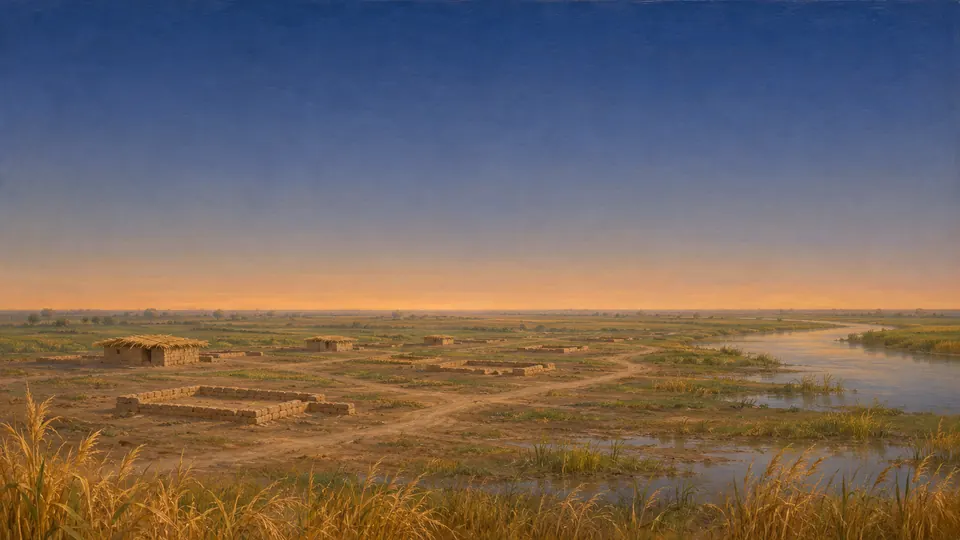
The cover is a modern, AI-generated expressive image of imagined canal labour: it is neither an identified archaeological site nor an ancient artefact or a verified representation of the Igigi. The flow diagram in the body is a modern teaching aid to the opening episode, not a historical record.
References and notes (10)
- Nicole Brisch, “Igigi/Igigu (a group of gods),” Ancient Mesopotamian Gods and Goddesses, ORACC (2019). Name and Spellings; Time Periods Attested; Functions; entry recovered via indexed web text, without successful live opening. Return to the text ↑
- Jona Lendering, “The Epic of Atraḥasis,” Livius; English translation adapted from Benjamin R. Foster. “Complaints of the Lower Gods” and “Insurrection,” Tablet I 1–6, 21–80, including marked lacunae; read in adapted English translation, not independently in Akkadian. Return to the text ↑
- Jona Lendering, “The Epic of Atraḥasis,” Livius, adapted from B. R. Foster. Published translation from the proposal to create humans through approximately line 245, especially 190–240; no complete Akkadian critical edition read. Return to the text ↑
- SOAS University of London, “The Codex Hammurabi, part of the Prologue,” with Akkadian transcription after R. Borger and English translation adapted from Martha T. Roth. Opening rows of the paired Akkadian transcription and English translation, notably in igigī ušarbiušu; only this displayed prologue passage examined. Return to the text ↑
- ETCSL, Oxford, “A hymn to Inana (Inana C),” no. 4.07.3, line 2, transliteration and English gloss; contextual dating from Brisch 2019. Line 2 of Inana C and its English paragraph translation, lines 1–10; manuscripts and critical apparatus not independently collated. Return to the text ↑
- W. G. Lambert, Babylonian Creation Myths (2013), English translation of Enūma Eliš VI as reproduced in ETANA; access was to indexed excerpts, not the full book. Tablet VI, lines 39–44 and 67–69 in indexed text; full Lambert volume unavailable, no comprehensive collation of witnesses. Return to the text ↑
- SAA 3, no. 39, “Mystical Miscellanea” (KAR 307; CDLI P336234), ORACC State Archives of Assyria Online. Obverse lines 30–38, indexed transliteration and English translation; full printed edition and artefact photograph not examined. Return to the text ↑
- ORACC, Ancient Mesopotamian Gods and Goddesses, “Anunna (Anunnaku, Anunnaki),” section Functions; Erra references cited second-hand. Functions section, indexed summary of Erra I 62–63, II 8–9, V 3; Erra passages not independently read in a critical edition. Return to the text ↑
- Nicole Brisch, “Igigi/Igigu (a group of gods),” ORACC (2019). Indexed “Cult Place(s)” and “Iconography” sections; proposed theophoric-name evidence is limited, no securely identified group iconography. Return to the text ↑
- The Morgan Library & Museum, “The Deluge Story,” object MLC 1889; description of a tablet from the second part of Atrahasis. Object description only: MLC 1889, date, dimensions, and attribution to the epic’s second tablet; no independent decipherment of the surface. Return to the text ↑
Suggest a correction · Suggest a source for this record
Cite this record
IL Archive, «Igigi», https://ilarchive.com/en/entities/igigi
Continue reading
Related readings