Ancient text
Enki and Ninmah
A text for line-by-line reading, with transliteration, translation, and resources.
A Sumerian composition preserved in Old Babylonian copies: human creation relieves divine labor, followed by scenes about bodies and fates.
Metadata
These are descriptive fields, not conclusions.
- Edition
- 2
Text
NammaNammaA goddess who asks Enki to relieve the gods’ labor in Enki and Ninmah.Glossary · Click to read the explanation wakes EnkiEnkiMesopotamian deity associated with deep fresh water, wisdom and Eridu, known as Ea in Akkadian tradition. The earliest preserved written mention does not date his cult’s origin or identify Ubaid Eridu’s deity.Glossary · Click to read the explanation as working gods complain about digging canals. The opening proposes a human fashioned from clay above the AbzuAbzuDeep fresh waters in historical Mesopotamian conceptions, associated with Enki/Ea. The name occurs in E-abzu, “House of the Abzu”. It cannot automatically identify an Ubaid platform or a water basin.Glossary · Click to read the explanation with birth goddesses and NinmahNinmahA major goddess involved in human making and in assigning fates to fashioned bodies in the Sumerian composition.Glossary · Click to read the explanation, to carry baskets. A later section has another focus and lacunae. The extant creation scene does not mix a slain god’s blood into clay, unlike Atraḫasīs. Surviving copies do not establish the first date of composition. [1][13][15]
References and notes
- Full extant English translation read. Lines 1–37 and 44–51 govern the labor and human-creation comparison; lines 52–139 concern Ninmah's subsequent fashioned persons and their assigned fates and contain lacunae and manuscript variants. The translation is not an autograph of composition. Oxford ETCSL 1.1.2, Enki and Ninmaḫ, lines 1–51, 52–139 Return to the text ↑
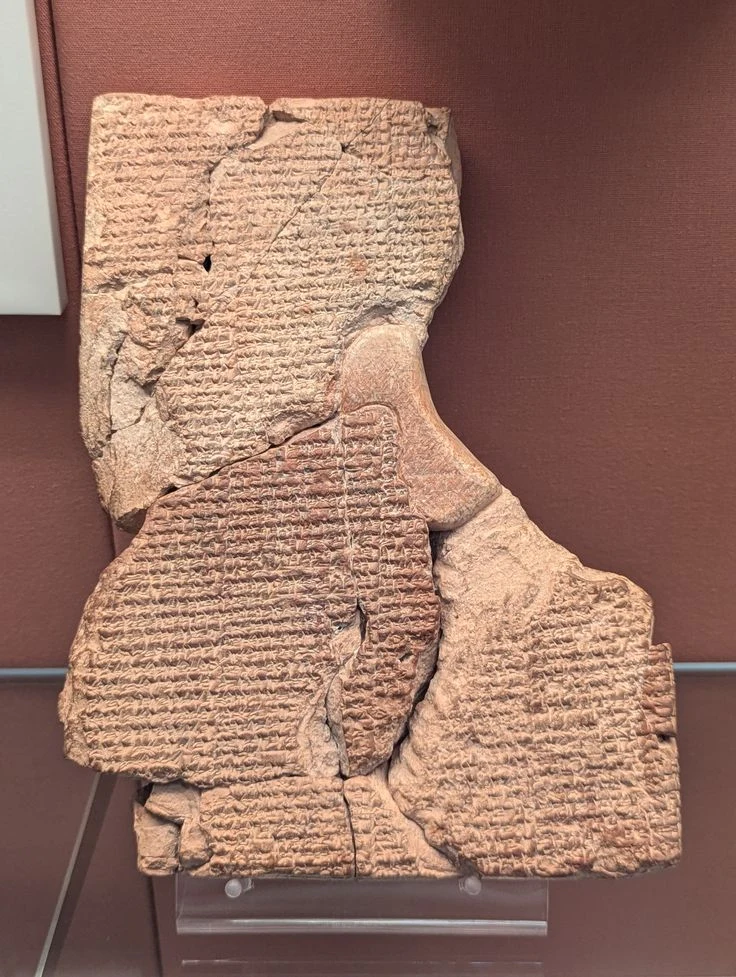
- Full object catalogue metadata and image-list description read. Actual image 76961 inspected visually at 1600px; no claim that every sign was identified or that the image captures every witness. Penn Museum CBS2168, joined fragment of Enki and Ninmah, Old Babylonian 1900–1600 BCE, Nippur Return to the text ↑
- Full object metadata and dates read as independent check that Old Babylonian witnesses of the Sumerian composition survive; Louvre image reuse terms were not used for the article cover. Louvre AO 7036, Enki and Ninmah tablet; catalogue only Return to the text ↑
Research history
Substantive changes are retained here. Minor copy edits remain in the internal operational log.
-
Substantive record update
Archive records may be reviewed and refined as better evidence or sources become available. Suggest a correction
Suggest a correction · Suggest a source for this record
Cite this record
IL Archive, «Enki and Ninmah», Edition 2, https://ilarchive.com/en/texts/enki-and-ninmah