Entity
Namma
A reference page linking a name, group, or concept to the materials that discuss it.
Namma is an early Sumerian goddess associated with Enki and subterranean waters; a foundation inscription attests her cult, while Enki and Ninmah gives her a part in organizing humanity’s creation.
Estimated reading time: 7 min Published Last reviewed:
Share article

Text
Introduction
Namma (also conventionally transcribed Nammu) is a Sumerian goddess whose name is attested among the early divine names of southern MesopotamiaMesopotamiaHistorical region associated with the Tigris and Euphrates: Uruk, Ur, Eridu, cuneiform, Sumer, Akkad, Babylon and Assyria, their languages and cults, and the limits of archaeological evidence.Glossary · Click to read the explanation. She appears as the mother of EnkiEnkiMesopotamian deity also known as Ea, linked with Eridu and the Abzu (deep fresh waters), wisdom, incantations, and narratives of creation and cosmic order. Later written attestations do not identify the deity of Eridu’s earliest layers.Glossary · Click to read the explanation, a god associated with wisdom and deep waters, and takes part in the account of human creation in Enki and NinmahEnki and NinmahSumerian work on humanity’s creation to relieve the gods’ labour, and Enki and Ninmaḫ’s contest over bodies, destinies and sustenance; with manuscript evidence, variant readings and dating limits.Glossary · Click to read the explanation. A royal inscription also records a temple dedicated to her, so her evidence extends beyond a single literary story. Her distinctive appearance, the development of her functions, and the scope of her connection with primordial waters are, however, not equally well established. [1][2][3]
Name and early evidence
The goddess's written name has been transcribed in different ways, especially Namma and Nammu. This is a dispute over reading and rendering the name across writing traditions, not proof of two separate goddesses subsequently identified with each other. Nammu was widespread in earlier scholarship; linguistic discussion subsequently favoured Namma, without settling its etymology. The divine name is written with a sign that can elsewhere be read engur, associated with subterranean waters. Sharing a sign does not, by itself, show that she was imagined as a personified cosmic ocean in every text. [3][4]
According to Nicole Brisch's survey, a divine list from Fara in the Early Dynastic period already names her. In the scholarly god-list tradition An = Anum, she receives a title identifying her as the mother who bore heaven and earth. This documents a theological designation within the transmitted list tradition; it is not a continuous narrative telling us how the world was made, nor can its meaning simply be projected back onto every earlier period. The attestation of a title, its interpretation, and its historical generalization are different questions. [3][4]
Namma in Enki and Ninmah
The Sumerian poem begins in mythic time: lesser gods dig canals and heap up silt while more senior gods supervise their labour. The workers complain, and Enki sleeps within the subterranean depths. Namma brings their distress to her son, wakes him, and urges him to provide an alternative that will release the gods from toil. Line 17 of the composite Sumerian text, in the Oxford Electronic Text Corpus of Sumerian Literature, describes her as follows. [1]
In an independent, approximate English rendering: “Namma, the first mother who gave birth to the many gods.” The cited Sumerian is the editorial composite transliteration in ETCSL, with subscript numerals simplified for display, not the transcription of a photographed line on one particular tablet. Within the story the epithet establishes her high place in divine ancestry; it does not, by itself, provide a full account of the origin of the cosmos. [1]
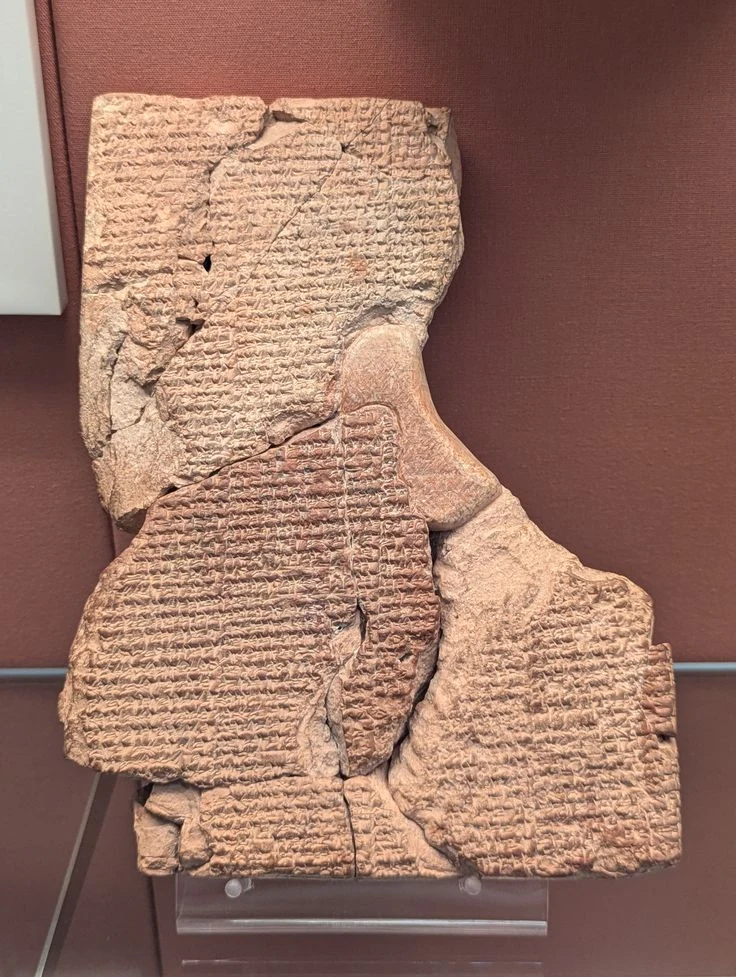
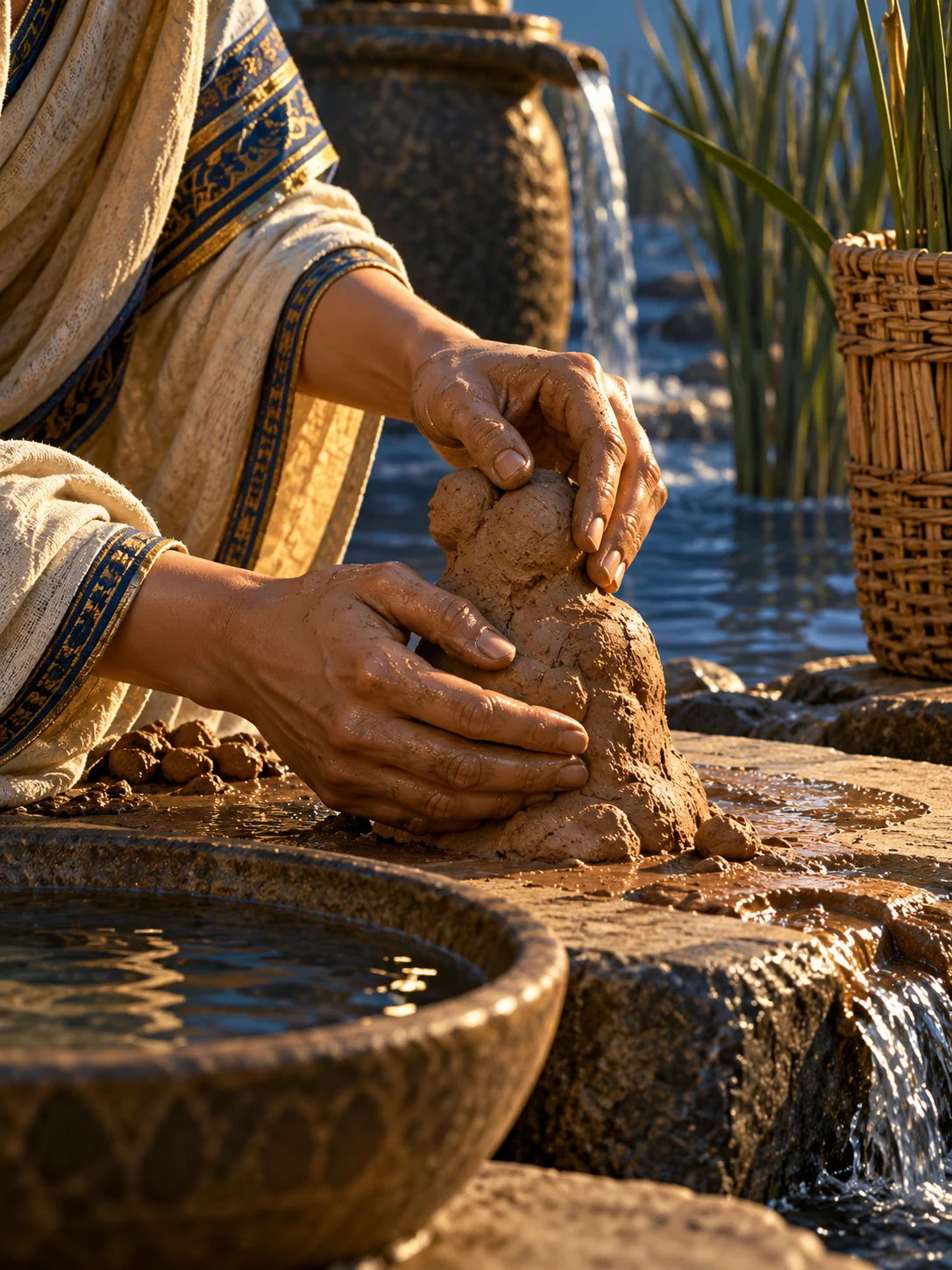
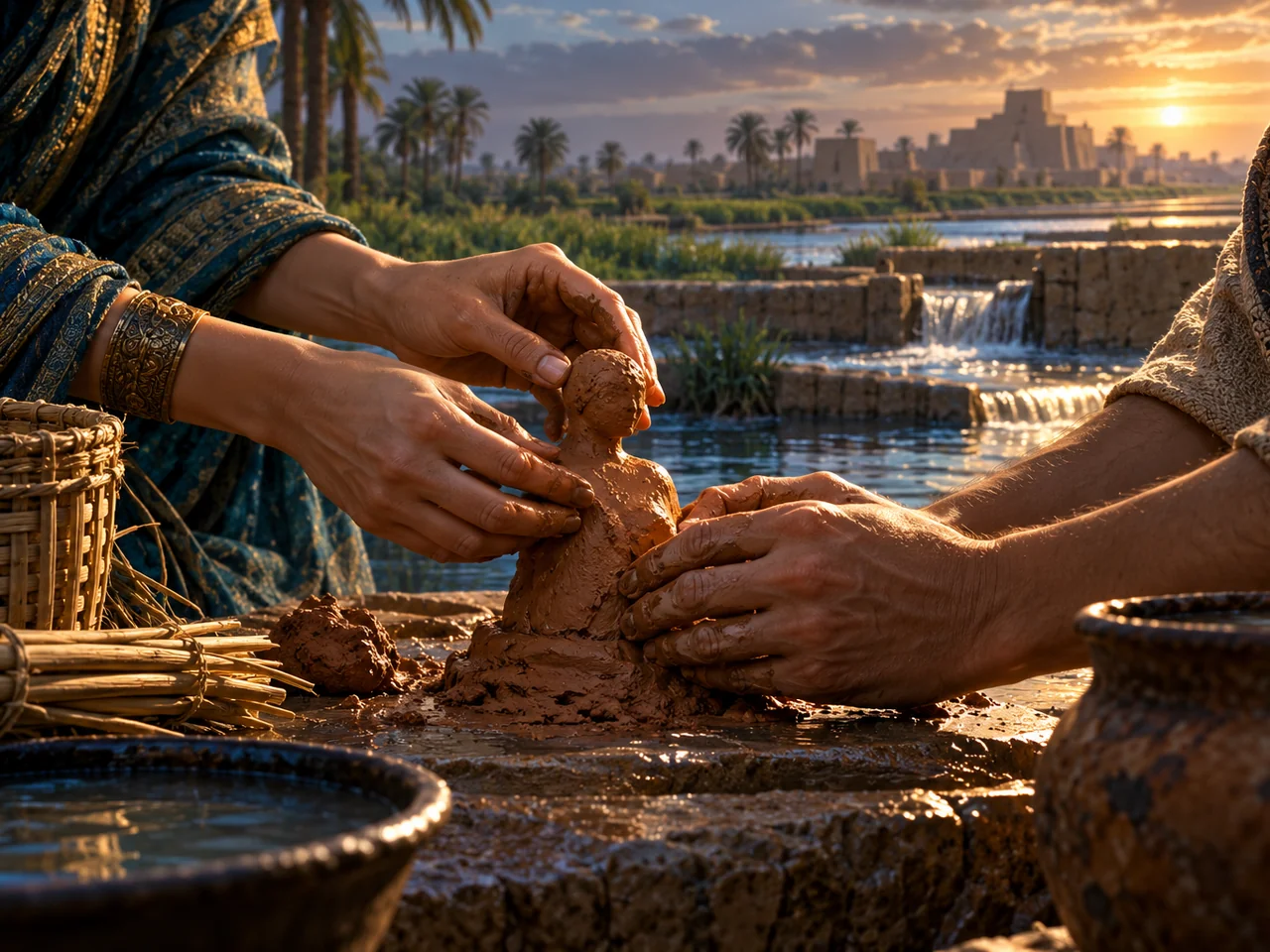
Upon waking, Enki tells his mother that the being she has devised can indeed come into existence. He directs her to knead clay from the upper part of the abzu, the domain of deep waters here, assisted by birth goddesses and NinmahNinmahSumerian mother goddess who assists human creation and contests Enki over the fates of different fashioned bodies; later Babylonian inscriptions also attest her worship.Glossary · Click to read the explanation. Humans are assigned the burden of carrying baskets and labouring in place of the gods. Some details depend on uncertain readings or restorations, including the group of assistants and the request for a substitute; the scene should therefore not be presented as a fixed, literal technical recipe. [1]
The subsequent episode, in which Ninmah fashions people with different bodies and abilities and Enki assigns them sustenance and social positions, followed by a contest about the fates of their creatures, is not an account of actions performed by Namma. Lacunae and differences between manuscripts affect parts of the narrative. Crediting Namma with everything, or automatically equating her with Ninmah or NinhursagaNinhursaga, birth and healing goddessMesopotamian goddess central to the births and Enki’s healing in Enki and Ninhursaga.Glossary · Click to read the explanation because of shared motherhood and birth functions, obscures the distinctions made in the poem. [1]
Cult and genealogy in a royal inscription
One of the strongest pieces of cult evidence is a Sumerian foundation inscription of King Lugalkisalsi, dated to Early Dynastic IIIb. A limestone piece from this inscriptional tradition is kept in Berlin's Vorderasiatisches Museum as VA 04855 and catalogued in the CuneiformCuneiformWriting with wedge-shaped signs, developed from Mesopotamian recording traditions and used for several languages from the third millennium BCE.Glossary · Click to read the explanation Digital Library Initiative as P222897. The following excerpts reproduce the relevant lines in the composite edition, omitting the royal titles between them; parts of the actual witness are damaged or editorially normalized. [2][6]
The text calls Namma the “wife of AnAn / AnuAn is the Sumerian sky god, called Anu in Akkadian. The sign AN by itself does not identify him: it also denotes sky or divinity.Glossary · Click to read the explanation”, the sky god, and says that the king “built Namma's temple.” It offers tangible evidence for royal dedication and a marital designation in this inscription, but does not establish that An was her husband in every myth or securely locate the temple. The Berlin piece is assigned an UrukUrukAncient city at Warka in southern Iraq, a major urban centre around 3200 BCE that preserved early writing and accounting tablets.Glossary · Click to read the explanation provenance in some catalogues, with qualifications; the specialized survey treats the inscription's provenance as uncertain. The human figure carved on the foundation peg should not be represented as an identified portrait of Namma. [2][3][6]
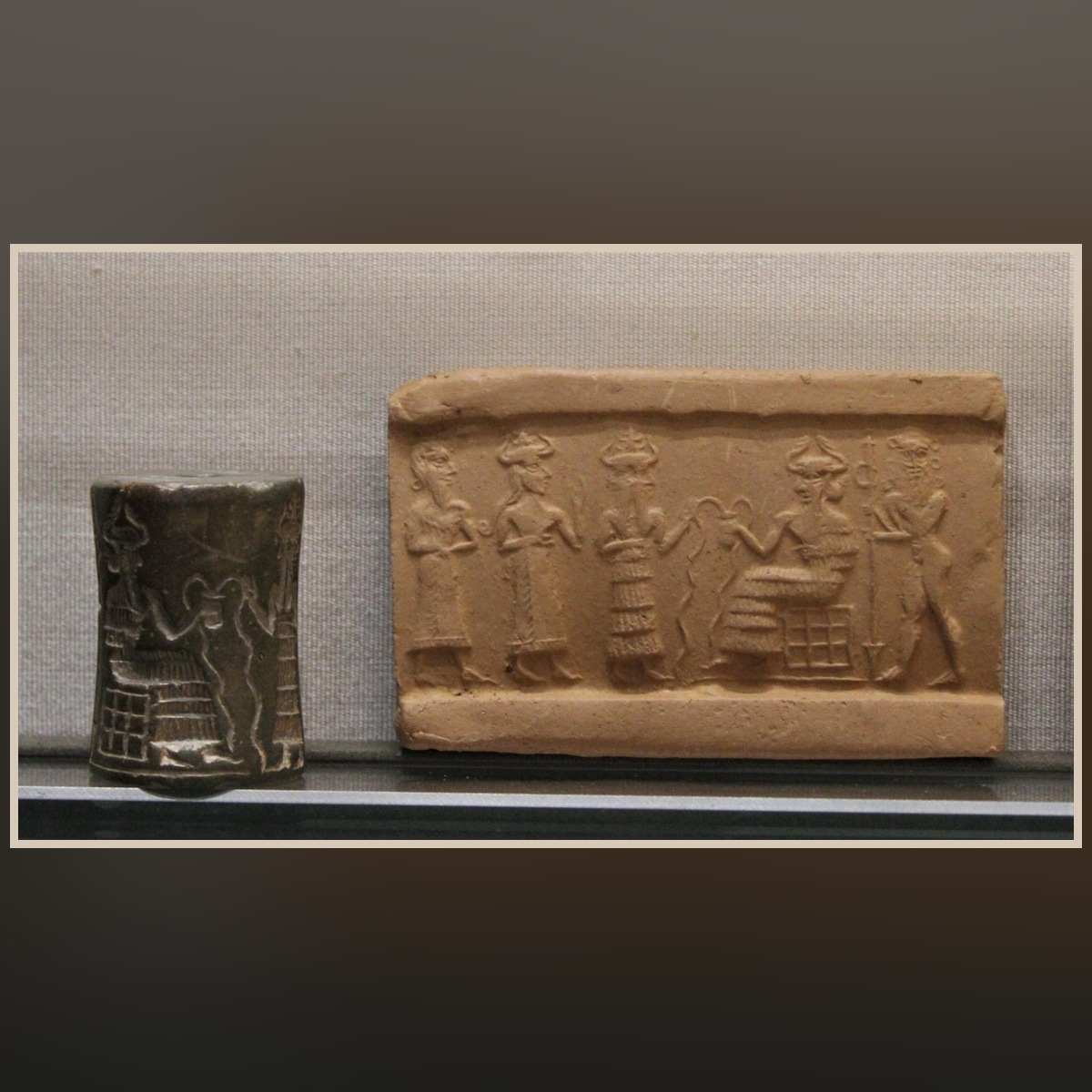
Brisch also cites an early Sumerian hymn whose temple reference is difficult to read, and a shrine bearing Namma's name mentioned in BabylonBabylonBabylon is an ancient city in central present-day Iraq, south of BaghdadGlossary · Click to read the explanation under Nabonidus in the sixth century BCE. These widely spaced references do not establish uninterrupted cult practice throughout the intervening centuries. Her specific iconography remains uncertain: an unidentified mother-goddess figurineFigurineA small shaped object depicting a human, animal or abbreviated form, in clay, stone or another medium. Its form alone does not establish its use; manufacture, handling traces and find context matter.Glossary · Click to read the explanation or aquatic motif cannot safely be assigned to Namma without a pertinent inscription or other specific evidence. [3]
Deep waters and the limits of comparison
Three features should be distinguished. Namma belongs to a divine milieu associated with deep waters and EriduEriduEridu (Abu Shahrain), a multi-mound site in southern Iraq occupied since the Ubaid, later home to a religious precinct associated with Enki. Its eighteen sounding levels are not proof that every early building was a temple.Glossary · Click to read the explanation, an important centre of Enki's traditions. In particular texts she is called a primeval mother or mother of gods. Modern interpretations also associate her with personified groundwater or propose a more comprehensive primordial cosmology. Manuel Ceccarelli examines the case for groundwater, rather than assuming a universal saltwater ocean, and cautions against back-projecting the fully developed water-before-creation setting of Enūma elišEnuma ElishA seven-tablet Babylonian creation poem in Akkadian, recounting Marduk’s rise, victory over Tiamat, cosmic ordering and human creation, and culminating in praise through fifty names. Its composition date is debated; later manuscripts and recitation traditions preserve it.Glossary · Click to read the explanation onto every earlier Sumerian account. For this review, only the published abstract and an indexed opening excerpt of his article were accessible, not its complete pages. [3][4]
Namma's ancestral role may be compared, in a limited functional sense, with that of TiamatTiamatTiamat is a primeval divine mother and watery figure in Enūma eliš who later opposes Marduk; he divides her body in making the cosmos. No Babylonian portrait of her is securely identified.Glossary · Click to read the explanation in the Babylonian Enūma elišEnuma ElishA seven-tablet Babylonian creation poem in Akkadian, recounting Marduk’s rise, victory over Tiamat, cosmic ordering and human creation, and culminating in praise through fifty names. Its composition date is debated; later manuscripts and recitation traditions preserve it.Glossary · Click to read the explanation. Yet Tiamat is involved in a cosmic conflict; the Namma evidence examined here contains no equivalent conflict showing her as an adversary fought by another deity. Resemblance is neither identity nor proof of direct textual borrowing. Separately, the AkkadianAkkadianAn ancient East Semitic language written in cuneiform from the third millennium BCE; its varieties include Babylonian and Assyrian, and it served in international diplomacy.Glossary · Click to read the explanation Atraḫasīs includes a human-creation tradition involving the blood of a slain god. That is not an element of Namma's scene in Enki and Ninmah. [1][3][4]
A chronology of evidence, not of mythical events
- Approximately the twenty-sixth to twenty-fifth centuries BCE: an early divine list from Fara attests Namma, as reported in the specialist survey. [3]
- Approximately 2500–2340 BCE, Early Dynastic IIIb: Lugalkisalsi's inscription refers to Namma and the building of her temple. This is an approximate date for a historical witness, not the poem's date of composition. [2]
- Approximately 1900–1600 BCE, Old Babylonian period: surviving cuneiform copies of Enki and Ninmah include a witness from Nippur in the Penn Museum. Tablet dates alone do not establish the original date of composition or every subsequent editorial stage. [5]
- Sixth century BCE: a scholarly survey reports a shrine named for Namma in Babylon under Nabonidus, evidence for the later presence of her name in ritualRitualAn organised or distinguished practice meaningful to a community; it may leave traces, but its form alone does not reveal an associated doctrine.Glossary · Click to read the explanation or scholarly settings rather than for the unchanged survival of all earlier beliefs. [3]
The time the poem imagines—before human beings take over the gods' work—is narrative time within a myth, not an independently datable archaeological event. The ETCSL text is also a modern scholarly composite of older witnesses, not one complete tablet of a single date. [1][5]
What the evidence supports
The inscription and the poem attest a goddess named Namma connected with cult, motherhood of Enki, and the initiative to solve the divine-labour crisis in a particular creation narrative. God listsGod ListsTexts collecting divine names for preservation, teaching and classification, with varying theological organization.Glossary · Click to read the explanation provide further evidence for her high status. The origins of her name, the extent to which she embodied pre-cosmic waters, and the continuity of her cult require more qualified readings and an explicit distinction between primary and secondary evidence. The strongest description is of a Sumerian mother goddess associated with deep waters and creation, not a single figure identical to every birth goddess or a Sumerian duplicate of Tiamat. [1][2][3][4]
References and notes (6)
- Oxford, Electronic Text Corpus of Sumerian Literature (ETCSL), “Enki and Ninmah”: extant composite English translation read across lines 1–141; Sumerian composite transliteration checked for crucial lines 17 and 24–37. Translations here are independently worded, not transcriptions of a single tablet. ETCSL 1.1.2, lines 1–51 and 52–141; esp. 17 and 24–37 Return to the text ↑
- Cuneiform Digital Library Initiative (CDLI), royal foundation inscription RIME 1.14.15.02, exemplar 01, P222897, Berlin VA 04855. All seven transliterated lines and object metadata consulted, noting damaged or editor-normalized signs. P222897, lines 1–7; provenance and museum metadata Return to the text ↑
- Nicole Brisch, “Namma (goddess),” Ancient Mesopotamian Gods and Goddesses, Oracc, 2019. Complete entry read (identity, functions, god lists, kinship, cult, attestations, iconography, spellings); references therein to Litke, Wiggermann, George, Biggs and Krebernik are SECONDARY reports here, not claims to have read those books. Full online entry; further books cited only at second hand Return to the text ↑
- Manuel Ceccarelli, “Bemerkungen zu Namma und weiteren Wassergottheiten,” Altorientalische Forschungen 44/1 (2017): 1–8, DOI 10.1515/aofo-2017-0001. PUBLISHED ABSTRACT and indexed opening extract of p. 1 ONLY consulted; the complete PDF was inaccessible and has not been claimed as read. Published abstract and indexed beginning of p. 1 only, not pp. 1–8 in full Return to the text ↑
- CDLI, literary witness of “Enki and Ninmah,” P259234, from Nippur, Penn Museum. Object metadata, Old Babylonian dating, inventory joins and link to the composite inspected; no claim that every line in the composite survives on this one tablet. P259234, object metadata, dating, composite-witness link Return to the text ↑
- CDLI, composite RIME 1.14.15.02, P431224. All lines 1–7 and the displayed English translation read and compared against witness P222897; this composite is not a separately photographed object. P431224, lines 1–7 and English glosses Return to the text ↑
Suggest a correction · Suggest a source for this record
Cite this record
IL Archive, «Namma», https://ilarchive.com/en/entities/namma
Continue reading