A Hymn to Enki Chapter 1
Counsel, Water and Cities
An anonymous hymn voice praises Enki’s counsel, his authority from Anu and Enlil, and his care for water, fields and settled people. This reading adapts the bounded quotation presented by Thorkild Jacobsen with poetic English by H A Groenewegen Frankfort in the 1946 text reissued in 1977. Its printed internal ellipsis is retained.
SourcesTurn the pages with the arrows, the arrow keys or a swipe.
HYMN
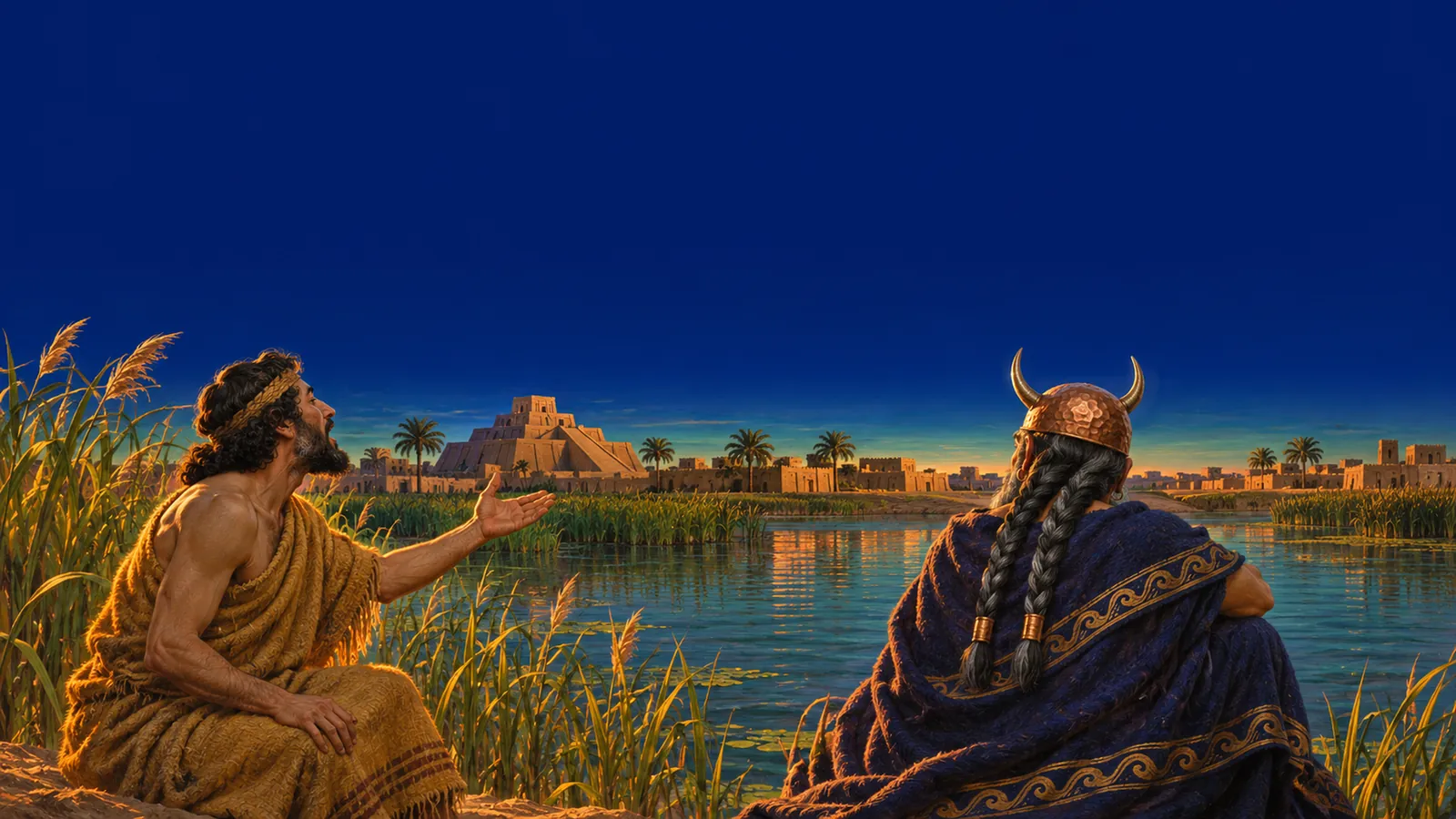
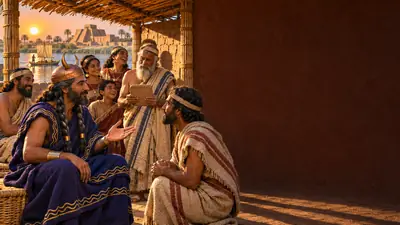
An anonymous Sumerian hymn voice addresses Enki. Though wrapped in thought and motionless, he is praised as perceiving everything.
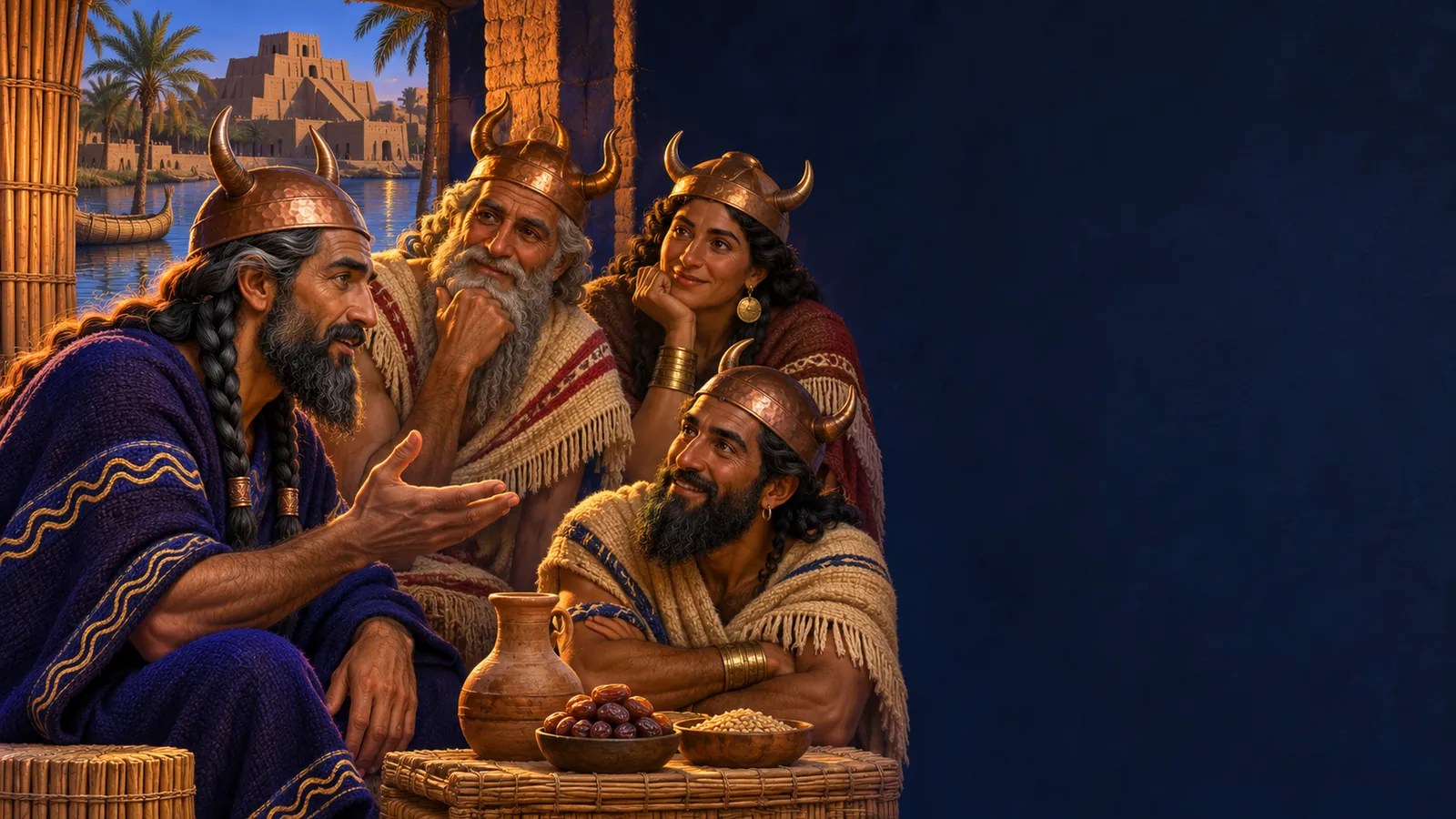
The hymn praises Enki's awareness as limitless. It calls him the exalted counsel of the Anunnaki.
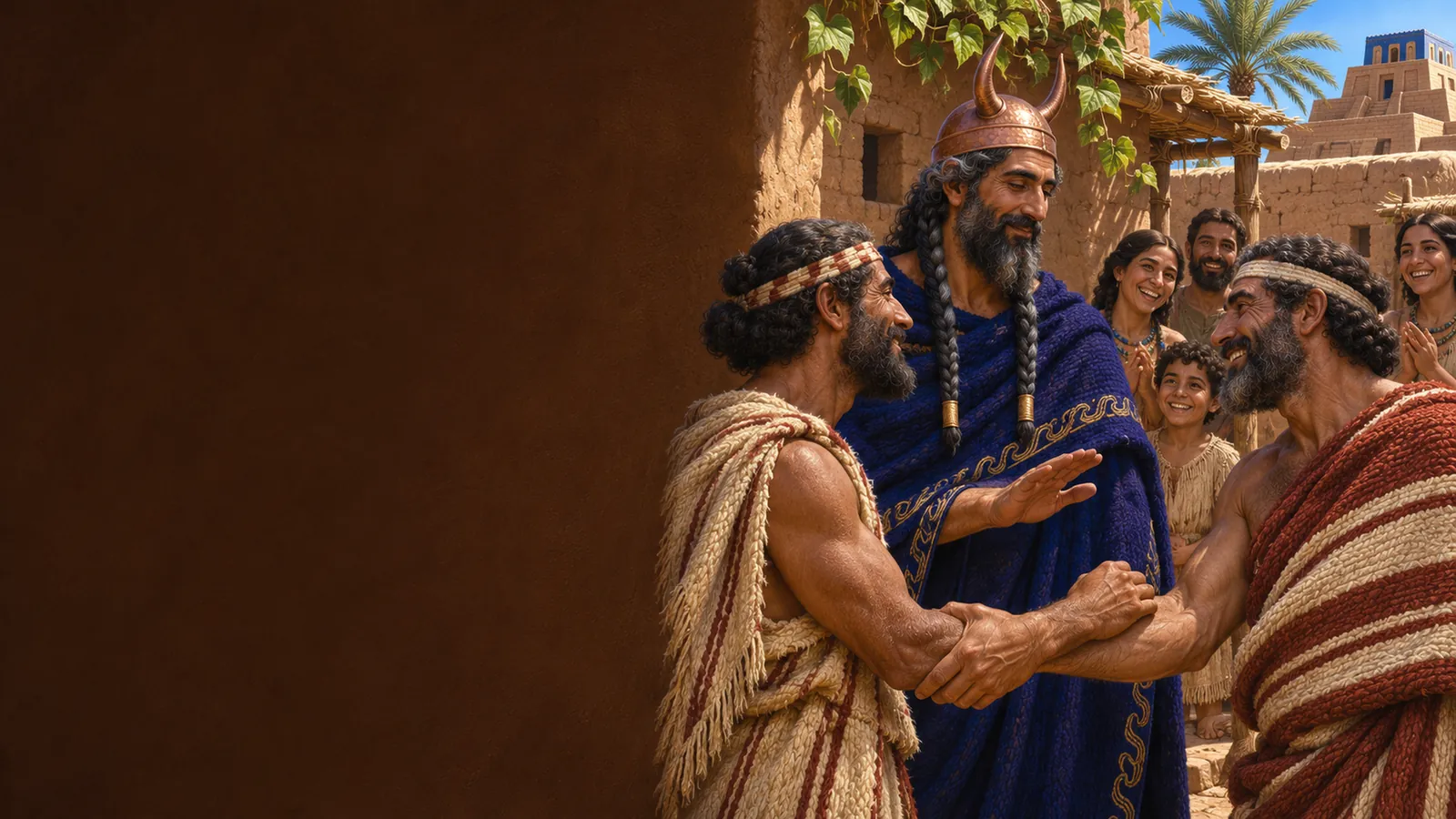
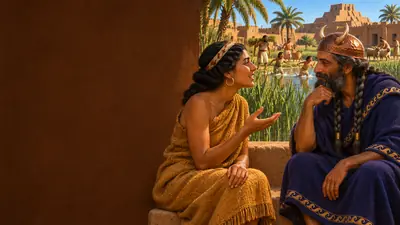
Through understanding, Enki is praised as commanding obedience. He applies his wisdom to reconciliation and decision.
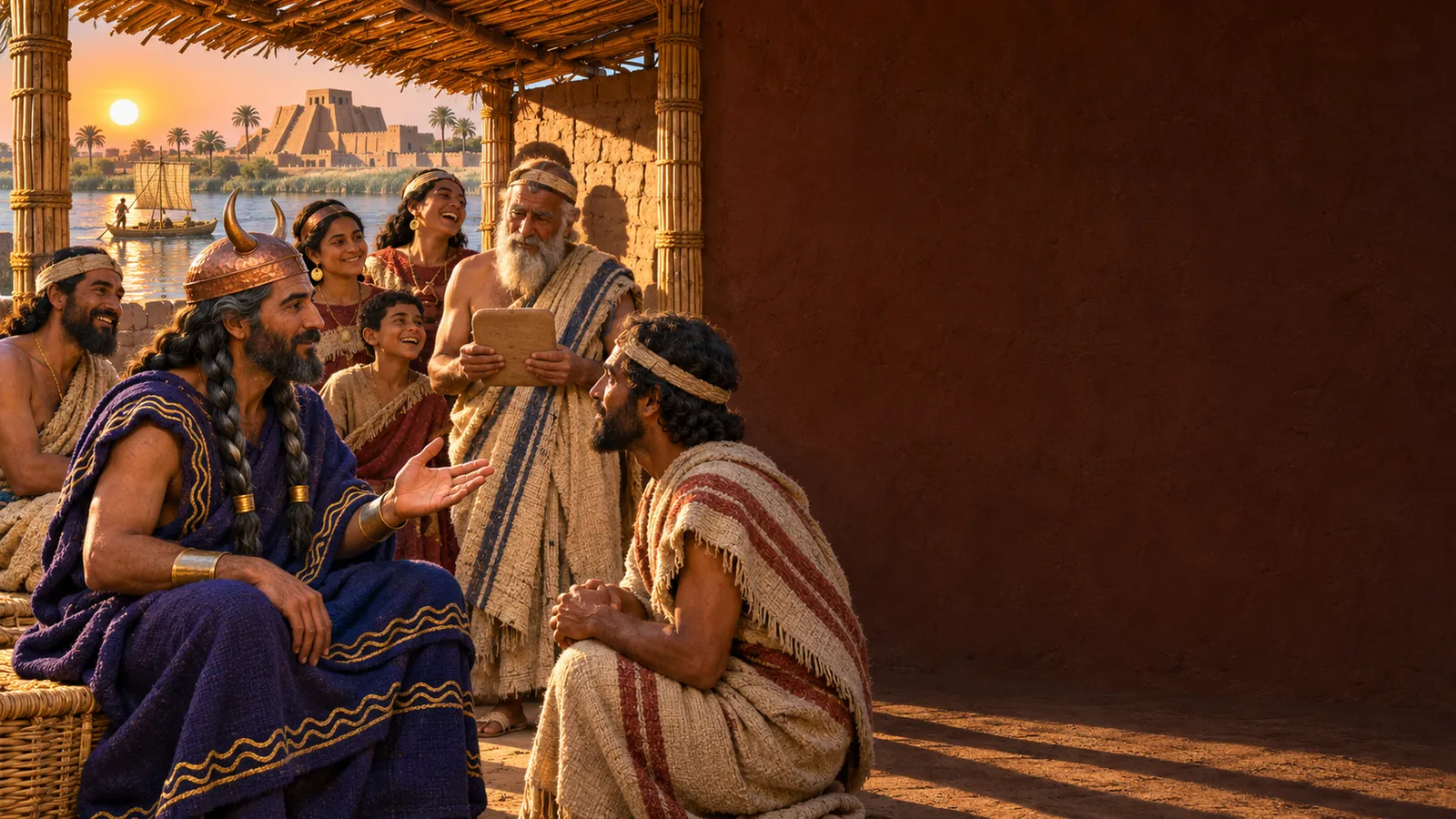
The hymn praises him for settling legal disputes and offering counsel throughout the day, from sunrise to sunset.
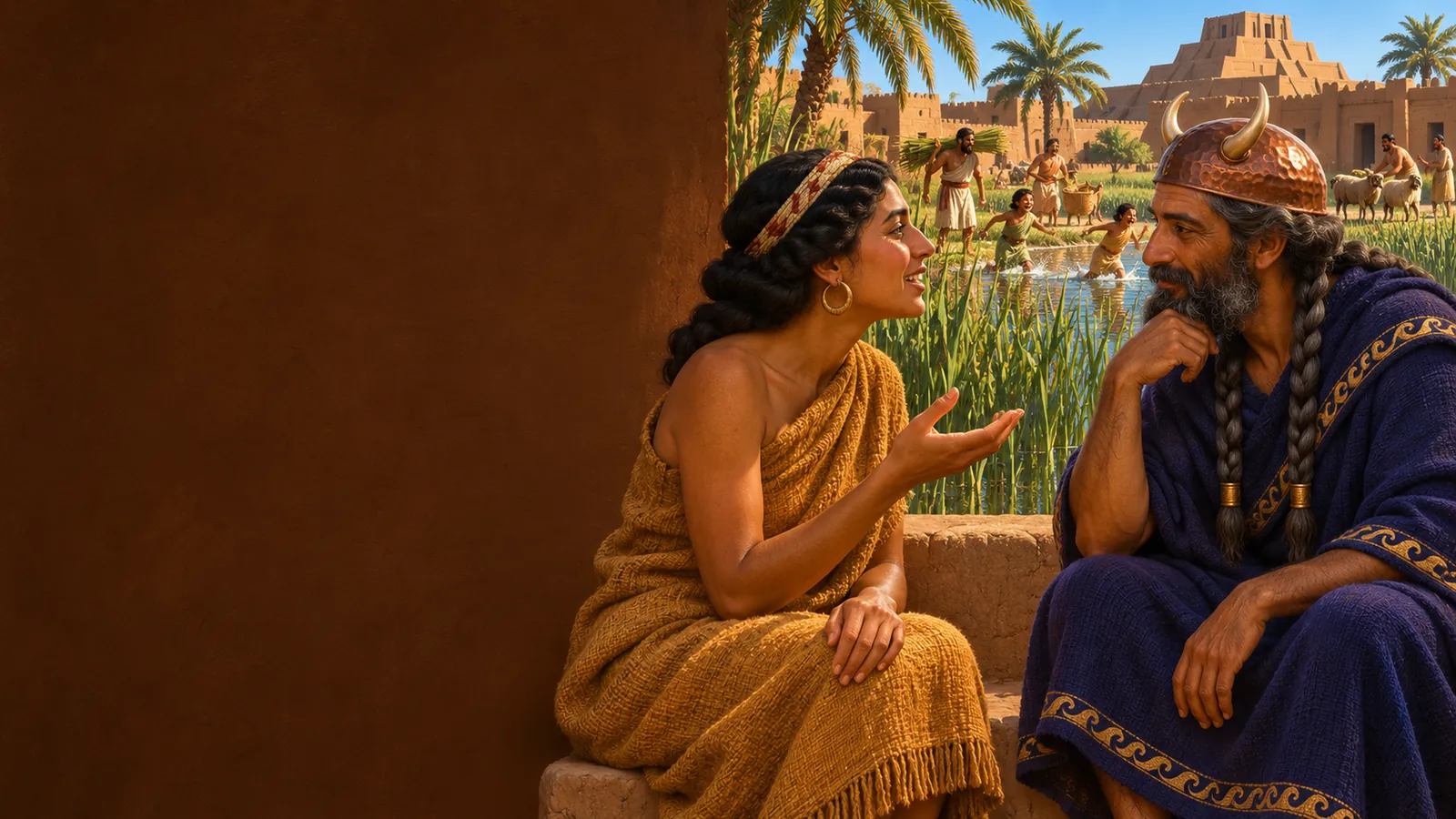
Enki is addressed as master of prudent words. The anonymous voice then declares its intention to praise him.

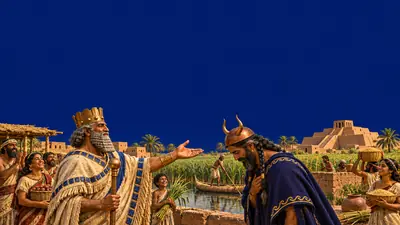
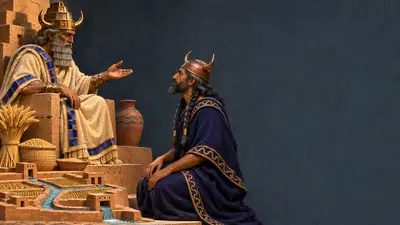
The hymn names Anu as Enki's father. It calls Anu an original king and ruler over a world still unformed.
AUTHORITY
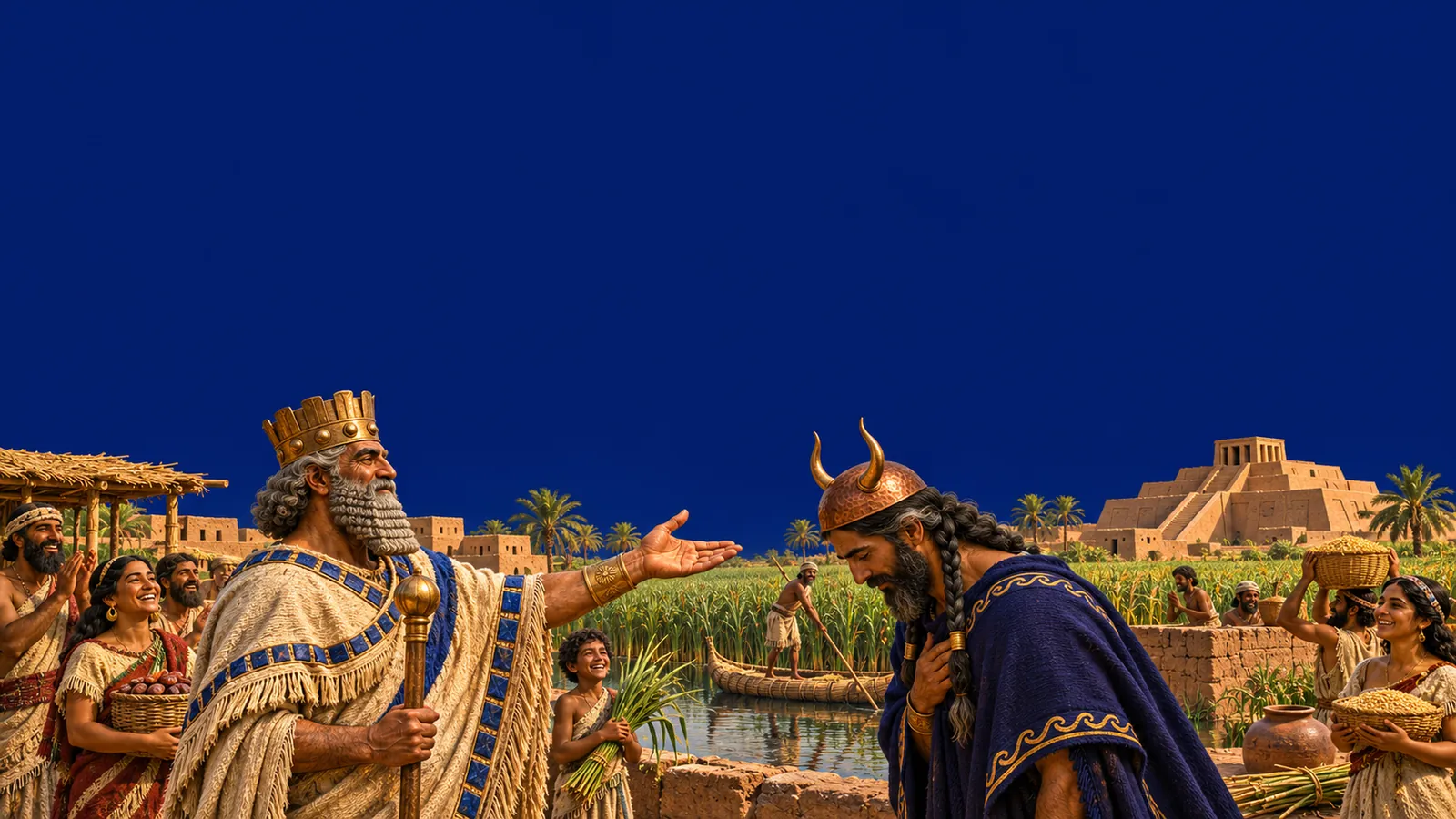
Anu empowers Enki to guide and form in heaven and on earth. The hymn says he raises him to lordship over them.

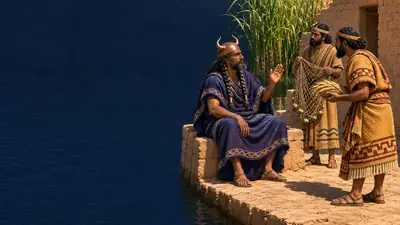
The hymn charges Enki with clearing the mouths of the Tigris and Euphrates. It describes those river mouths as pure.

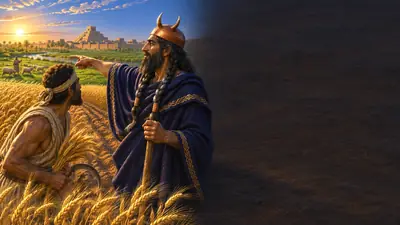
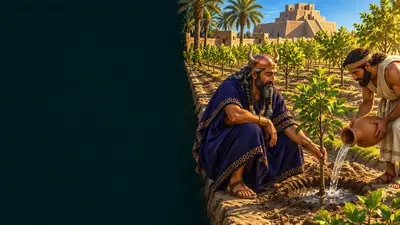
His duties include making vegetation plentiful and the clouds dense. He must also supply abundant water to all ploughed fields.
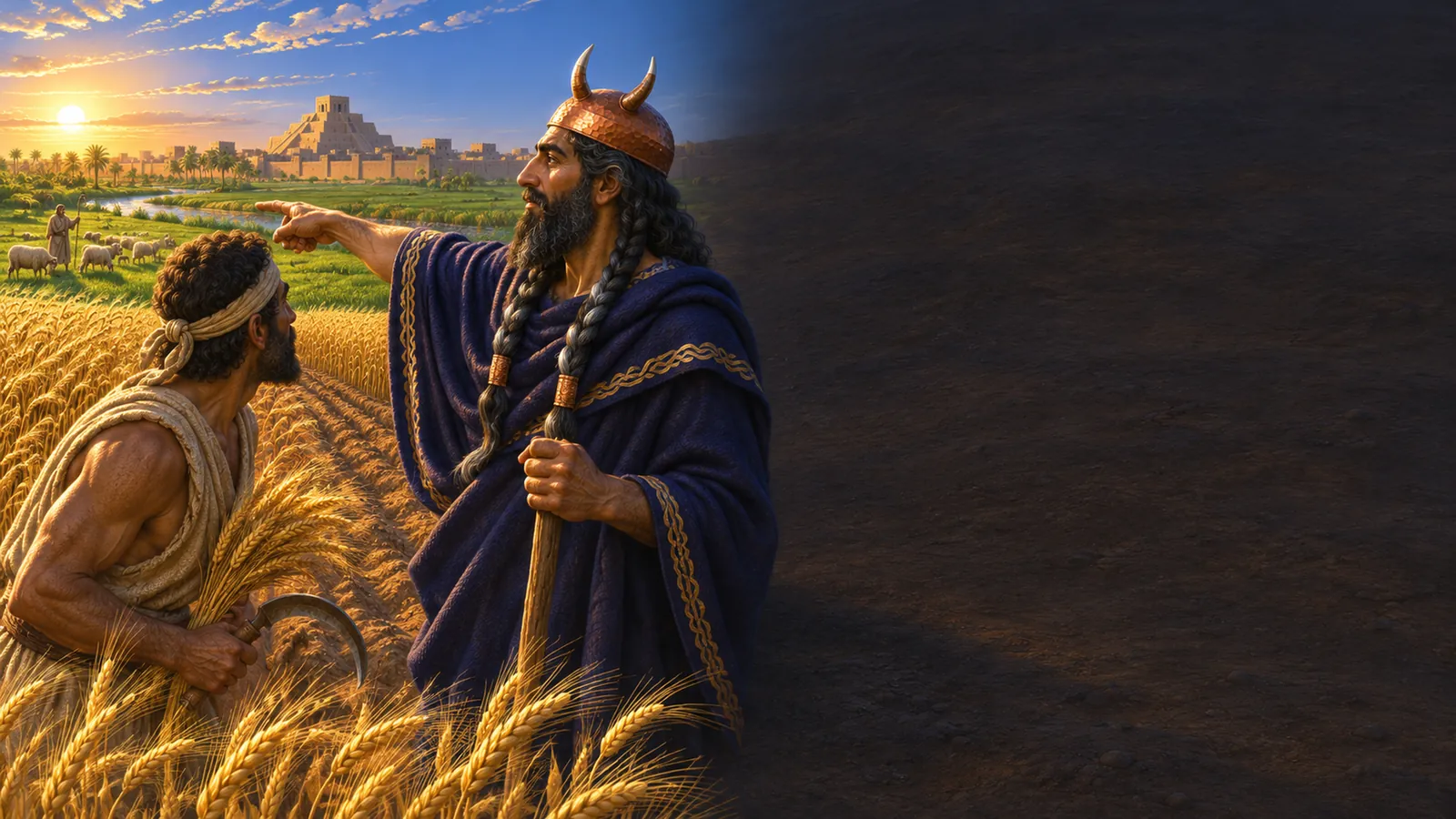
The hymn charges Enki with raising grain in the furrows and making pasture abundant in the desert.
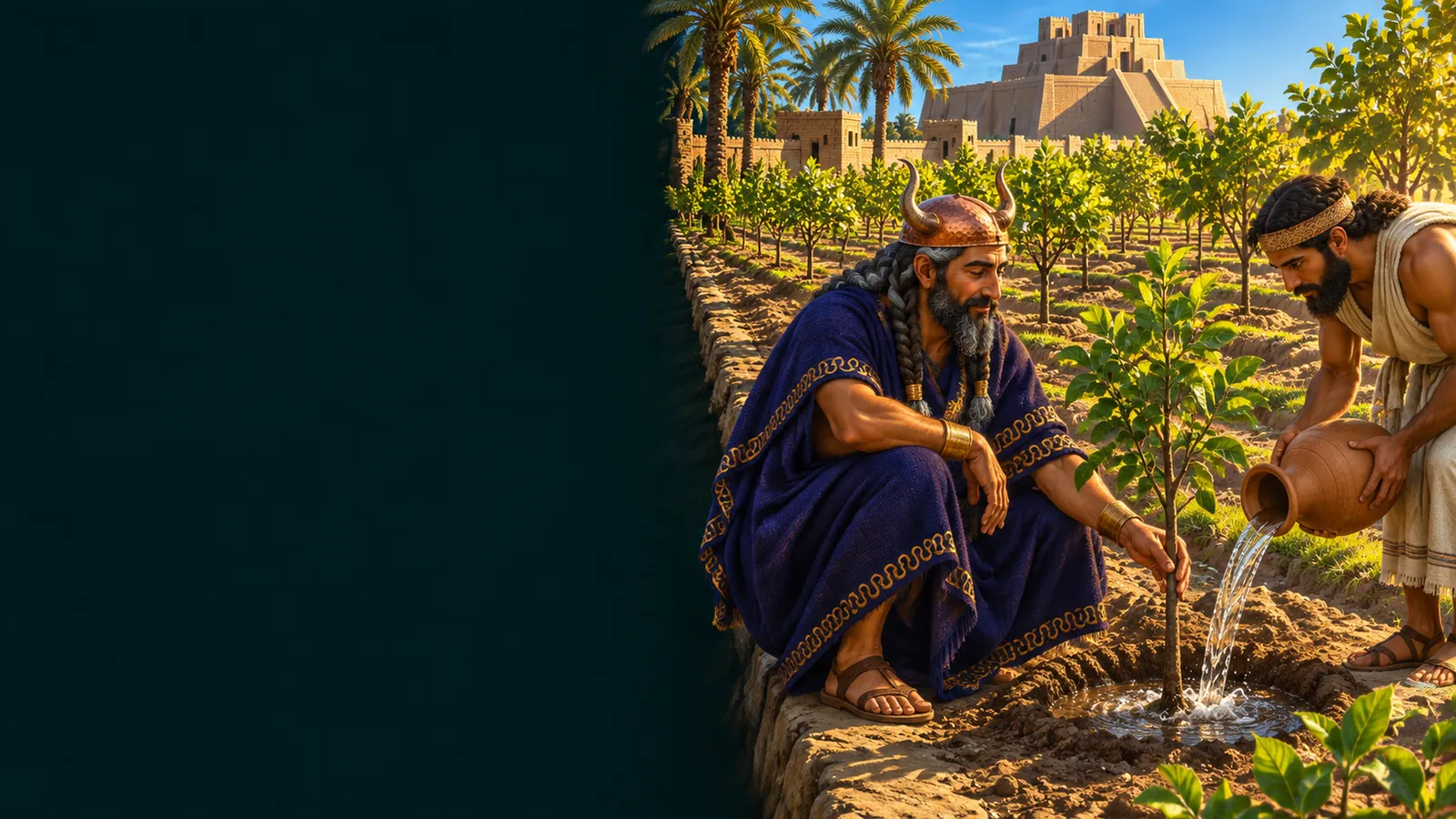
The hymn credits Enki with making young trees sprout in plantations and orchards. It describes the trees as planted densely, like a forest.
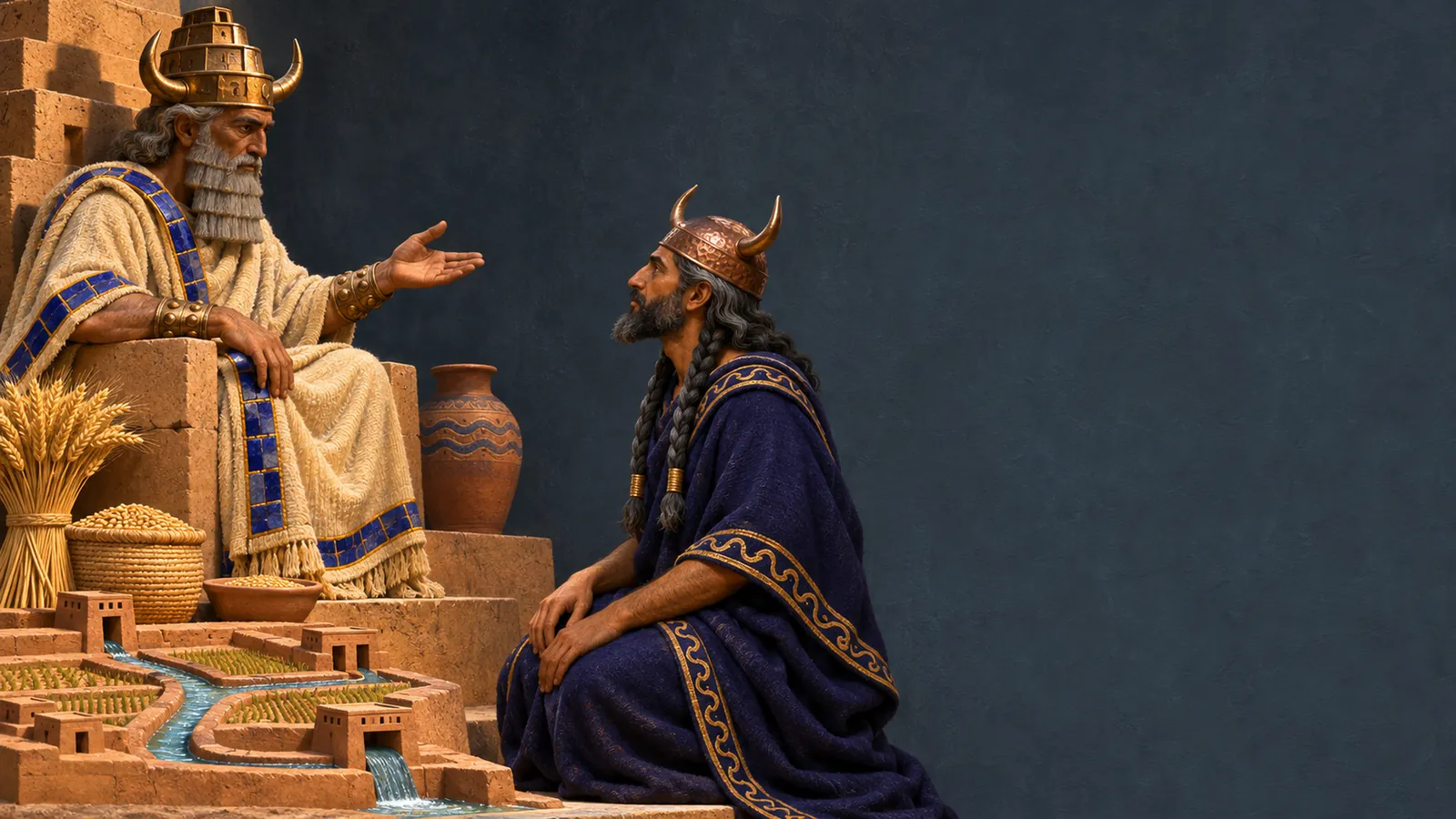
The voice returns to Anu, king of the gods, and says he entrusted these acts to Enki.
THE NAME
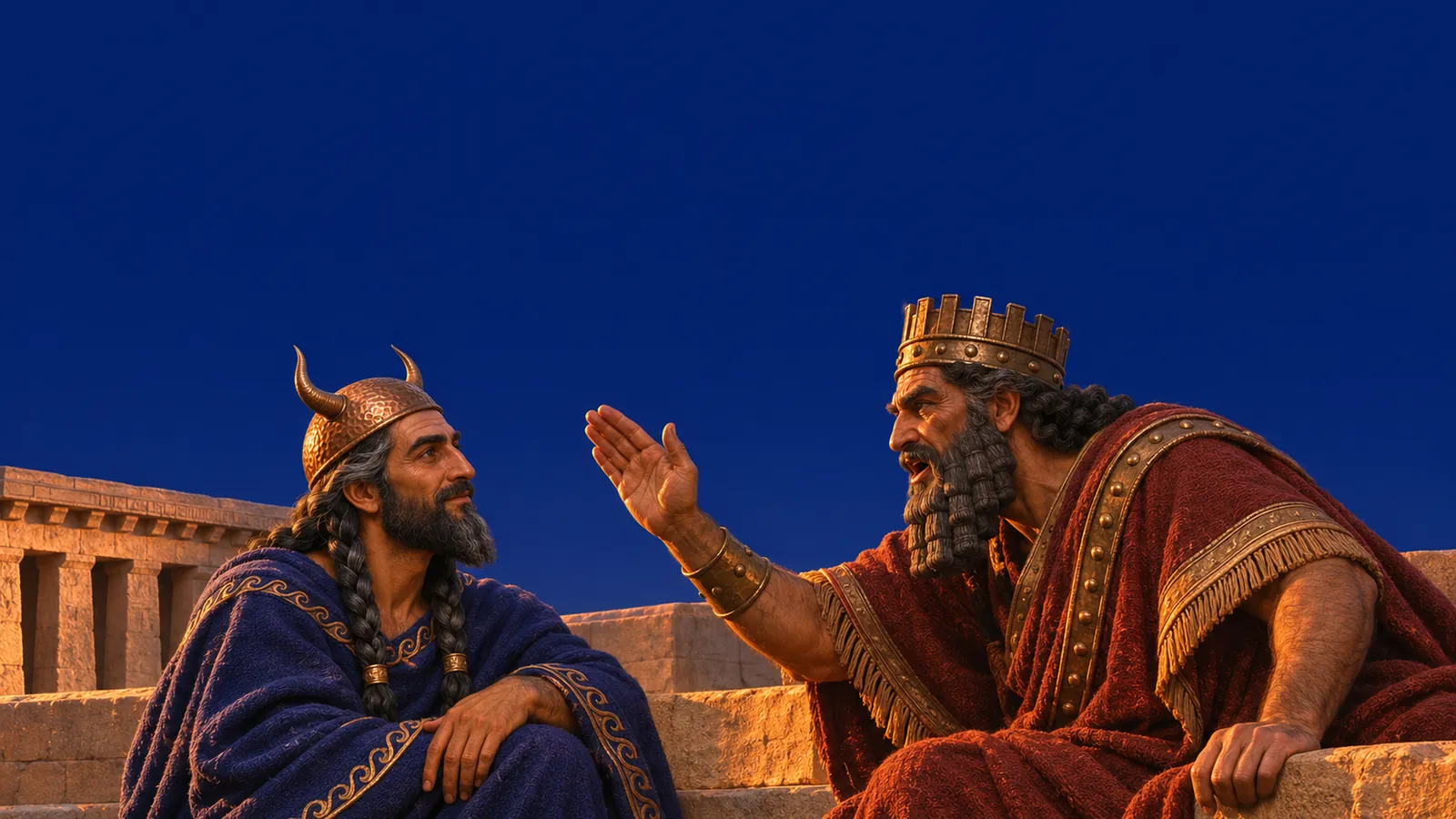
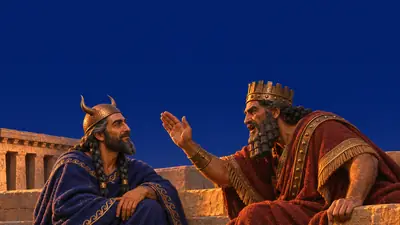
The hymn says Enlil granted Enki his powerful and awe-inspiring name. An ellipsis follows in the printed English.
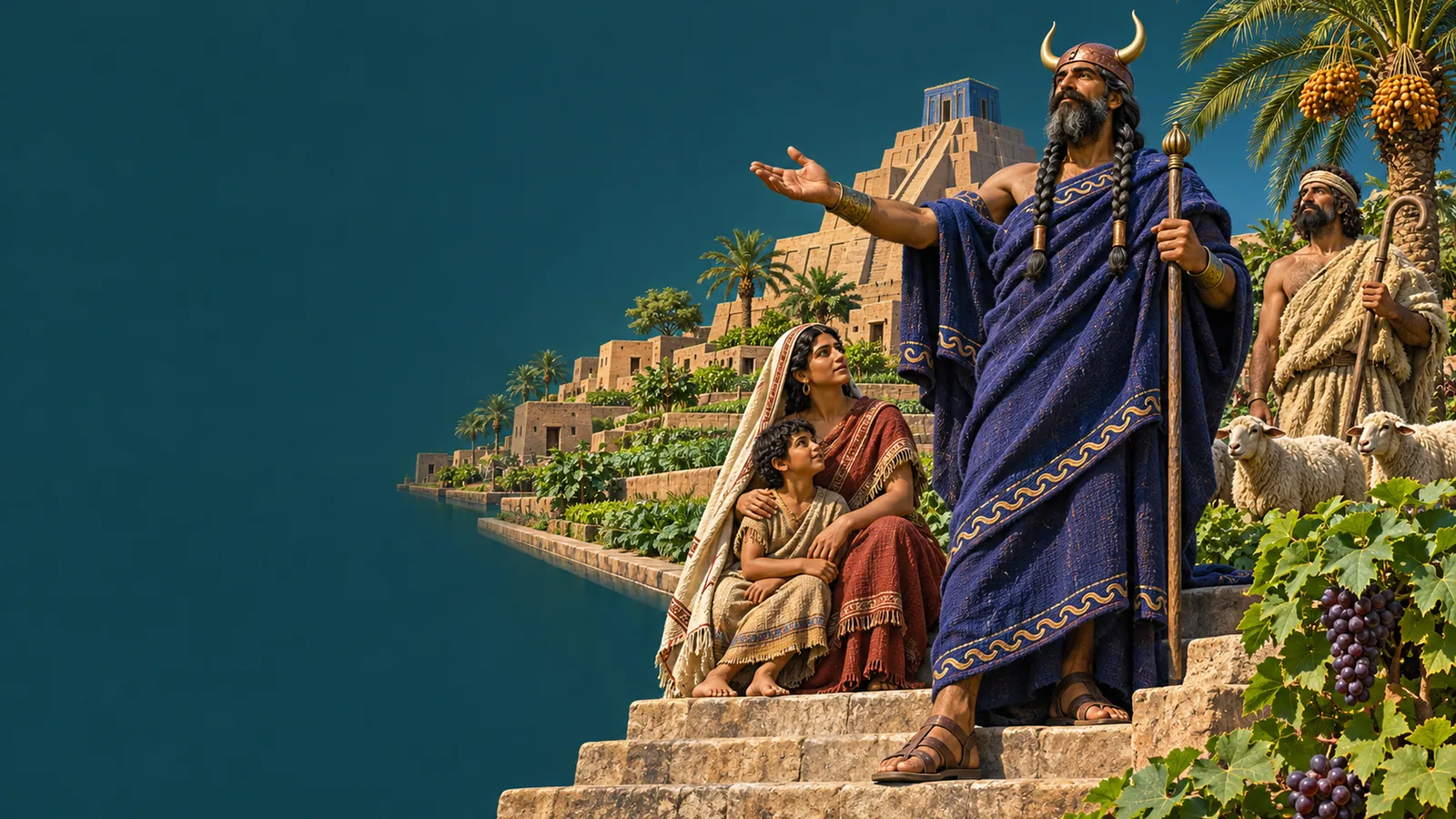
The hymn calls Enki a ruler over everything that has been born. It then describes him as a younger Enlil.

The hymn calls Enki the younger brother of the one it names the sole god in heaven and earth.
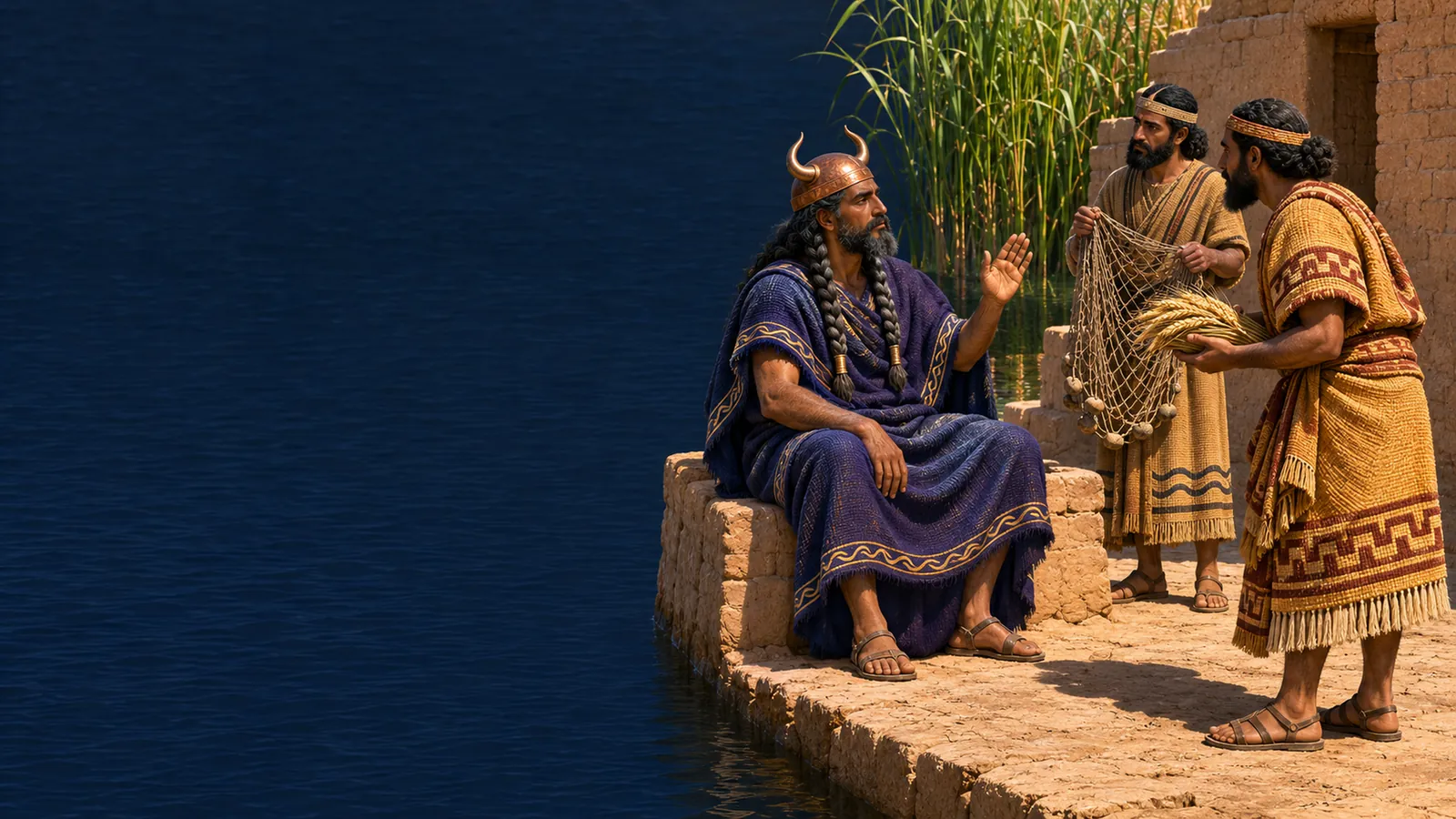
The voice says Enki has been empowered to determine the fates of North and South, like the one just praised.
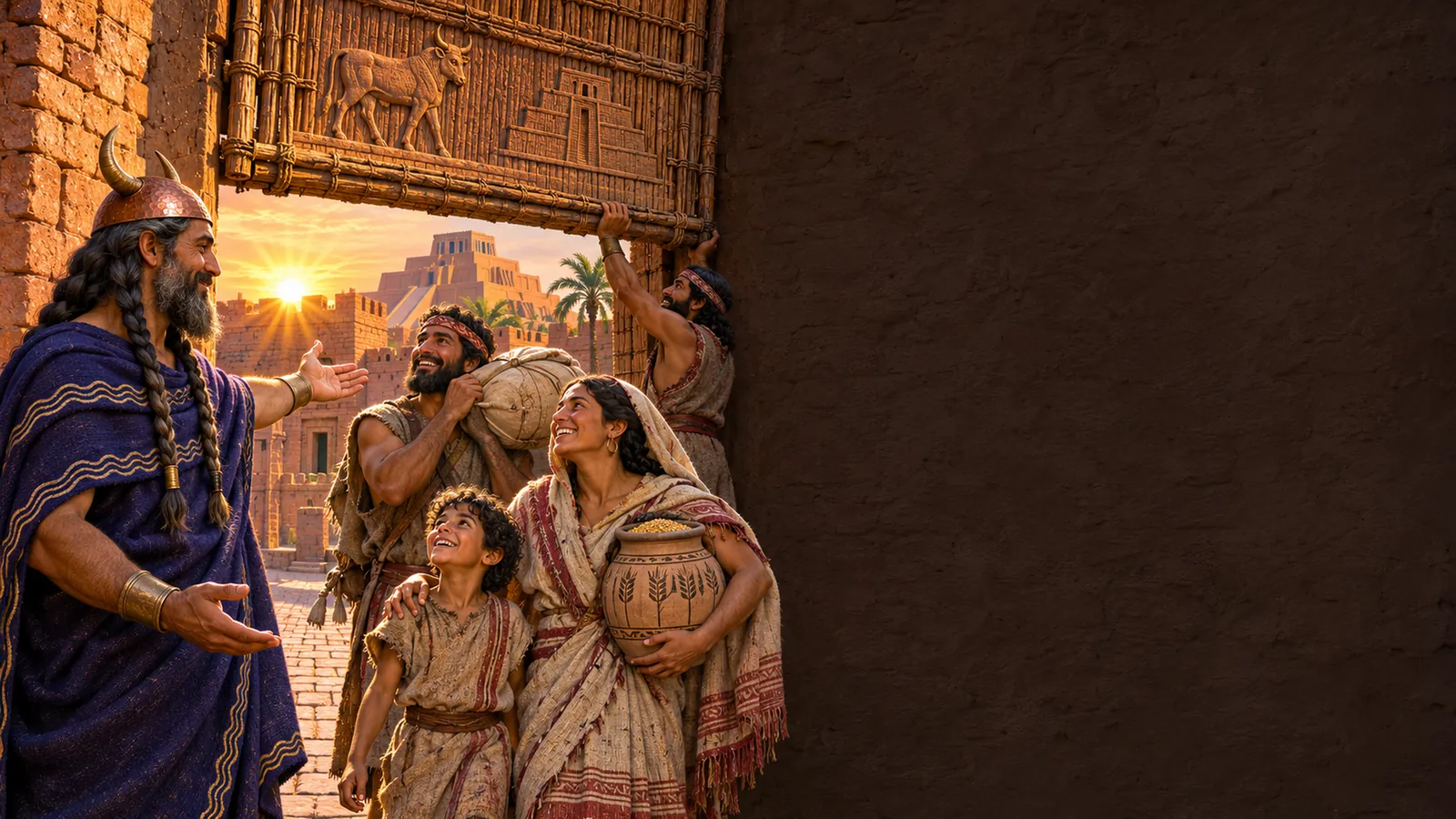
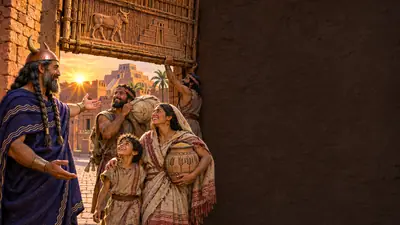
The hymn says that, through Enki’s righteous decisions and pronouncements, deserted cities become places where people live again.

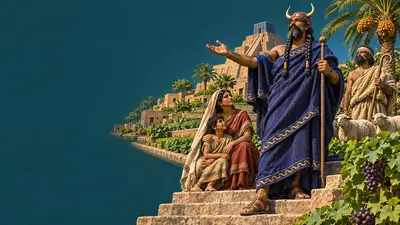
The voice now addresses its lord as Sabara. It speaks of countless people settled far and wide throughout the country.

The hymn says Enki gives his attention to the sustenance of the settled people. It describes him as a father to them.
PRAISE
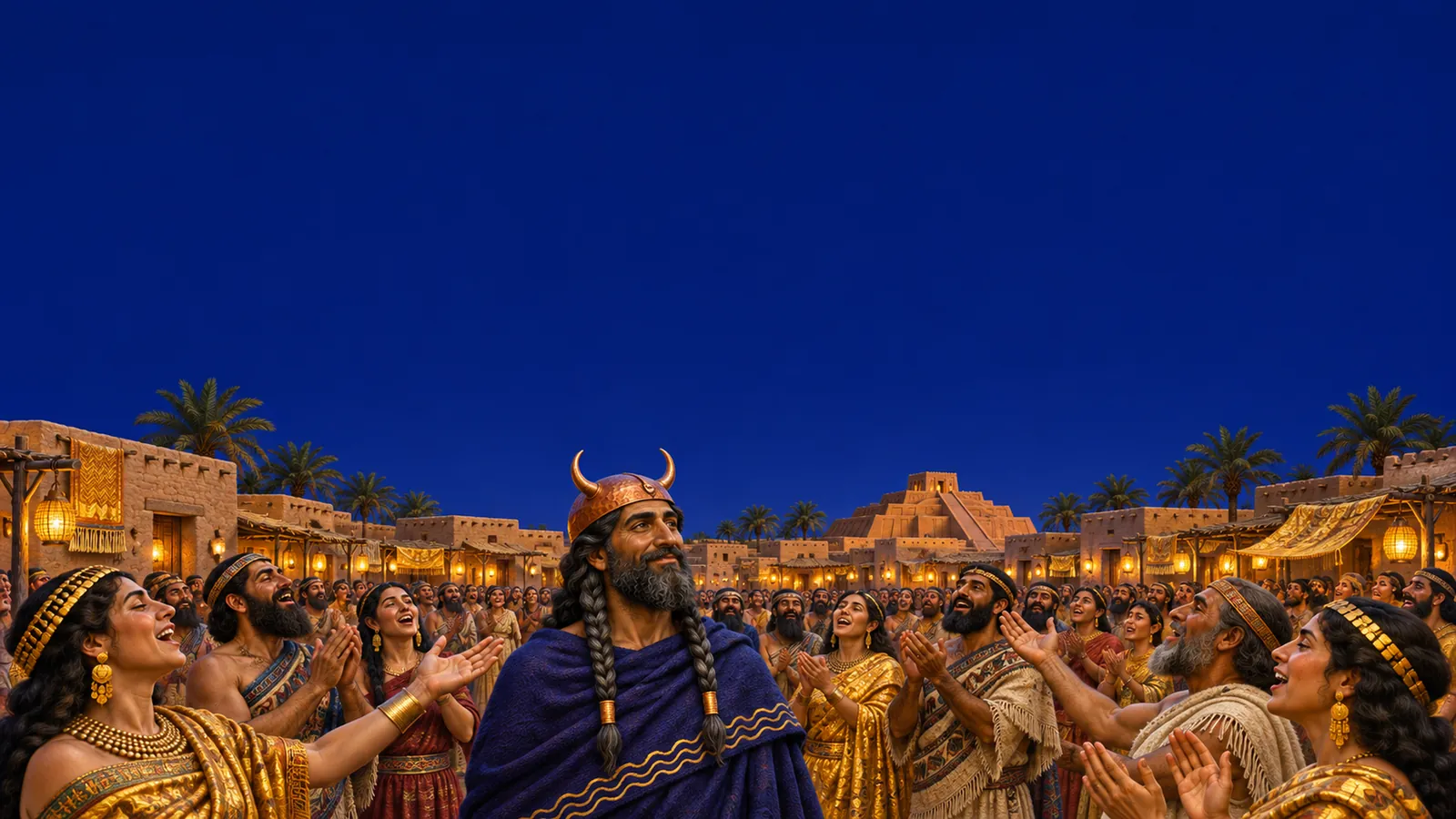
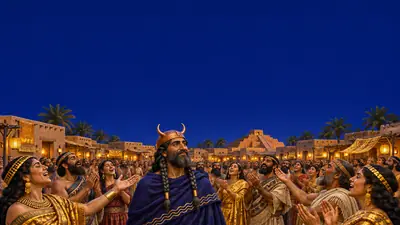
The quoted passage ends with the people praising the greatness of the one they call their lord and god.
End of chapter 1
All pages







Sources
This chapter paraphrases the hymn excerpt printed by Thorkild Jacobsen on pp. 147–148 of The Intellectual Adventure of Ancient Man. His note 22 cites CT XXXVI, plate 31, lines 1–20. The preface credits H A Groenewegen Frankfort with the poetic English of Sumerian and Akkadian translations in chapters V–VII. The 1946 main text is retained in the 1977 Phoenix edition. The title A Hymn to Enki is descriptive editorial wording. A printed ellipsis follows Enlil’s grant of the name. The chapter preserves that break, follows the kinship formula as printed, and ends at the people’s praise before Jacobsen’s next prose section.
Editions consulted
- University of Chicago, The Intellectual Adventure of Ancient Man
- Jacobsen’s quoted Sumerian hymn, printed pp. 147–148
- Source note 22 and poetic-rendering credit, printed p. 184
Notes on this retelling
opening invocation. He is praised for perceiving everything while absorbed in thought and immobile. The opening eye metaphor accompanies that penetrating perception.
invocation continued. Enki’s awareness is limitless, and the hymn calls him the exalted counsel of the Anunnaki. The localized word for counsellor expresses the counsel-giving epithet in natural language.
last lines on the page. The knowing addressee exacts obedience when he turns his understanding toward conciliation and decision. This remains praise within the hymn.
continuation across the page break. The decision clause leads into settlement of legal strife and counsel from sunrise until sunset.
conclusion of the opening address. Enki is master of prudent words. The anonymous speaker then states in the first person the intention to give praise.
Anu passage begins. Anu is named as Enki’s father and described as a pristine king and ruler over an inchoate world. This is the hymn’s praise of Anu within its address to Enki.
Anu’s commission. Anu empowers Enki in heaven and on earth to guide and form, and elevates him to lordship over them.
first water duty. Enki is to clear the pure mouths of the Tigris and Euphrates. The printed reading is clear. The two rivers are explicitly named, and pure is their epithet here.
next agricultural clauses. Vegetation is to be plentiful, clouds dense and water abundant for all ploughlands.
paired clauses before the saplings passage. Grain rises in furrows, and pasture becomes abundant in the desert. The printed agricultural word is corn. The sapling and orchard clauses belong to page 11 in the continuing fragment.
Page 11, CT XXXVI, plate 31, lines 1–20, tree clauses on p. 148. The source credits the addressee with saplings sprouting in plantations and orchards, planted densely like a forest.
Page 12, same inclusive range, Anu’s commission restated. Anu, identified as king of the gods, entrusts the acts just described to Enki. This repeats the commission after the passage on cultivation.
Page 13, same inclusive range, Enlil’s grant and printed break. The English passage says Enlil grants his potent, awe-inspiring name and then prints an ellipsis. The book gives no explanation of the break.
Pages 14–15, same inclusive range, the following praise and kinship formula. The next clause makes him the younger brother of the one described as the sole god in heaven and earth.
Page 16, same inclusive range, the fates clause. The excerpt gives neither named geographic borders nor a separate identification of that antecedent.
Page 17, same inclusive range, deserted cities.
Page 18, same inclusive range, Sabara and settlement. The printed address is Sabara, followed by countless people settled throughout the country far and wide. The name is retained as it appears in the hymn, without an additional identification.
Pages 19–20, same inclusive range, closing sustenance and praise. The addressee attends to the people’s sustenance and is compared to a father. The final printed line gives their praise of their lord and god. This is the endpoint of the selected excerpt.
The names in the catalogue tags identify the source context.
Ancient lines behind each page
- Page 1: Jacobsen, The Intellectual Adventure of Ancient Man, first Phoenix ed. (1977; main text 1946), p. 147, quotation opening, address to Enki and perception during thought and immobility; CT XXXVI, plate 31, inclusive lines 1–20, cited in note 22 on p. 184; poetic English by H A Groenewegen Frankfort
- Page 2: Jacobsen, The Intellectual Adventure of Ancient Man, first Phoenix ed. (1977; main text 1946), p. 147, quotation invocation continued, limitless awareness and exalted counsel of the Anunnaki; CT XXXVI, plate 31, inclusive lines 1–20, cited in note 22 on p. 184; poetic English by H A Groenewegen Frankfort
- Page 3: Jacobsen, The Intellectual Adventure of Ancient Man, first Phoenix ed. (1977; main text 1946), p. 147, end of printed page within the quotation, knowing, obedience, conciliation and decision; CT XXXVI, plate 31, inclusive lines 1–20, cited in note 22 on p. 184; poetic English by H A Groenewegen Frankfort
- Page 4: Jacobsen, The Intellectual Adventure of Ancient Man, first Phoenix ed. (1977; main text 1946), pp. 147–148, phrase continues across the page break into settlement of legal strife and counsel from sunrise to sunset; CT XXXVI, plate 31, inclusive lines 1–20, cited in note 22 on p. 184; poetic English by H A Groenewegen Frankfort
- Page 5: Jacobsen, The Intellectual Adventure of Ancient Man, first Phoenix ed. (1977; main text 1946), p. 148, opening address concludes with prudent words and the speaker’s first-person promise of praise; CT XXXVI, plate 31, inclusive lines 1–20, cited in note 22 on p. 184; poetic English by H A Groenewegen Frankfort
- Page 6: Jacobsen, The Intellectual Adventure of Ancient Man, first Phoenix ed. (1977; main text 1946), p. 148, Anu passage begins, father, pristine kingship and rule over an inchoate world; CT XXXVI, plate 31, inclusive lines 1–20, cited in note 22 on p. 184; poetic English by H A Groenewegen Frankfort
- Page 7: Jacobsen, The Intellectual Adventure of Ancient Man, first Phoenix ed. (1977; main text 1946), p. 148, Anu’s commission, authority to guide and form in heaven and on earth and elevation to lordship; CT XXXVI, plate 31, inclusive lines 1–20, cited in note 22 on p. 184; poetic English by H A Groenewegen Frankfort
- Page 8: Jacobsen, The Intellectual Adventure of Ancient Man, first Phoenix ed. (1977; main text 1946), p. 148, first assigned water duty, clearing the pure mouths of the Tigris and Euphrates; CT XXXVI, plate 31, inclusive lines 1–20, cited in note 22 on p. 184; poetic English by H A Groenewegen Frankfort
The tall right reserve is physically continuous deep indigo water, detailed only by fine low-contrast silt beneath it and gentle natural surface variation, without a bank line or hard bright ripple. - Page 9: Jacobsen, The Intellectual Adventure of Ancient Man, first Phoenix ed. (1977; main text 1946), p. 148, next agricultural clauses, plentiful verdure, dense clouds and abundant water for all ploughlands; CT XXXVI, plate 31, inclusive lines 1–20, cited in note 22 on p. 184; poetic English by H A Groenewegen Frankfort
- Page 10: Jacobsen, The Intellectual Adventure of Ancient Man, first Phoenix ed. (1977; main text 1946), p. 148, paired clauses before the saplings passage, grain lifting in furrows and abundant pasture in the desert; CT XXXVI, plate 31, inclusive lines 1–20, cited in note 22 on p. 184; poetic English by H A Groenewegen Frankfort
- Page 11: Jacobsen, The Intellectual Adventure of Ancient Man, first Phoenix ed. (1977; main text 1946), p. 148, CT XXXVI, plate 31, lines 1–20 (note 22, p. 184), tree clauses, plantations and orchards
- Page 12: Jacobsen, The Intellectual Adventure of Ancient Man, first Phoenix ed. (1977; main text 1946), p. 148, CT XXXVI, plate 31, lines 1–20 (note 22, p. 184), commission restated, Anu king of the gods
- Page 13: Jacobsen, The Intellectual Adventure of Ancient Man, first Phoenix ed. (1977; main text 1946), p. 148, CT XXXVI, plate 31, lines 1–20 (note 22, p. 184), Enlil grants the name, immediately before the printed ellipsis
- Page 14: Jacobsen, The Intellectual Adventure of Ancient Man, first Phoenix ed. (1977; main text 1946), p. 148, CT XXXVI, plate 31, lines 1–20 (note 22, p. 184), praise after the ellipsis, ruler of all born and younger Enlil
- Page 15: Jacobsen, The Intellectual Adventure of Ancient Man, first Phoenix ed. (1977; main text 1946), p. 148, CT XXXVI, plate 31, lines 1–20 (note 22, p. 184), kinship formula following the younger Enlil designation
- Page 16: Jacobsen, The Intellectual Adventure of Ancient Man, first Phoenix ed. (1977; main text 1946), p. 148, CT XXXVI, plate 31, lines 1–20 (note 22, p. 184), authority clause, fates of North and South
- Page 17: Jacobsen, The Intellectual Adventure of Ancient Man, first Phoenix ed. (1977; main text 1946), p. 148, CT XXXVI, plate 31, lines 1–20 (note 22, p. 184), resettlement clause, deserted cities reinhabited
- Page 18: Jacobsen, The Intellectual Adventure of Ancient Man, first Phoenix ed. (1977; main text 1946), p. 148, CT XXXVI, plate 31, lines 1–20 (note 22, p. 184), Sabara address and people settled far and wide
- Page 19: Jacobsen, The Intellectual Adventure of Ancient Man, first Phoenix ed. (1977; main text 1946), p. 148, CT XXXVI, plate 31, lines 1–20 (note 22, p. 184), penultimate clauses, sustenance and father comparison
- Page 20: Jacobsen, The Intellectual Adventure of Ancient Man, first Phoenix ed. (1977; main text 1946), p. 148, CT XXXVI, plate 31, lines 1–20 (note 22, p. 184), final printed line, praise by the people
Illustrations made with AI tools by IL Archive; the text is based on the ancient sources (see the sources at the end of each chapter).