Artifact · Tablet
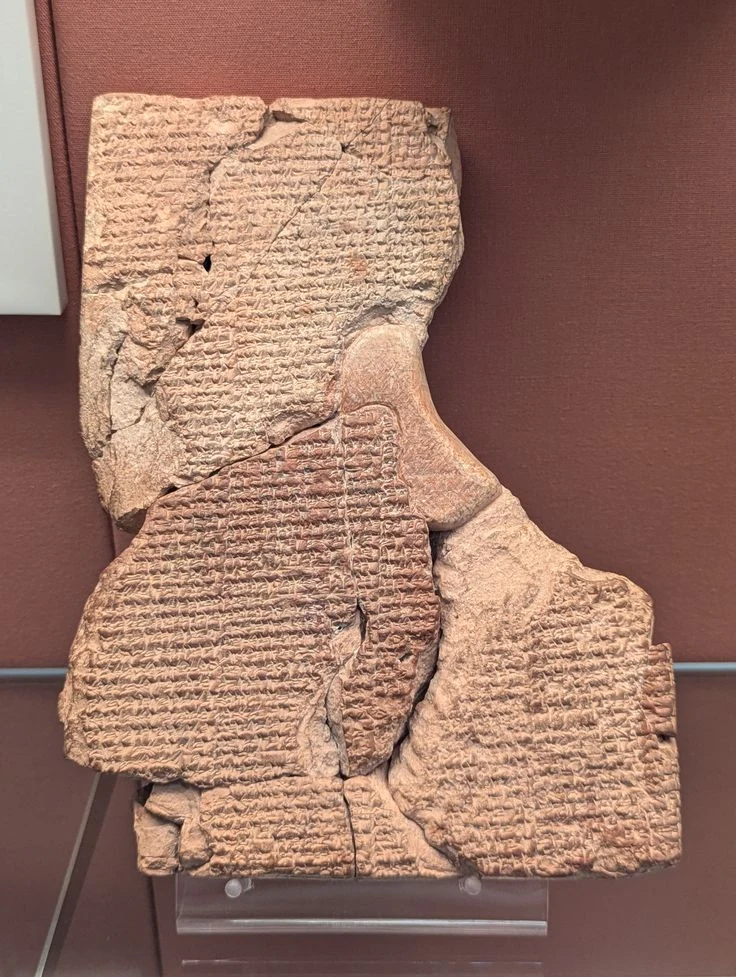
Tablet I of Atrahasis from Sippar (BM 78941 and 78943)
An object record bringing together its image, metadata, rights, and context.
- Timeline
- From 1635 BCE to 1634 BCE
- Region
- Mesopotamia
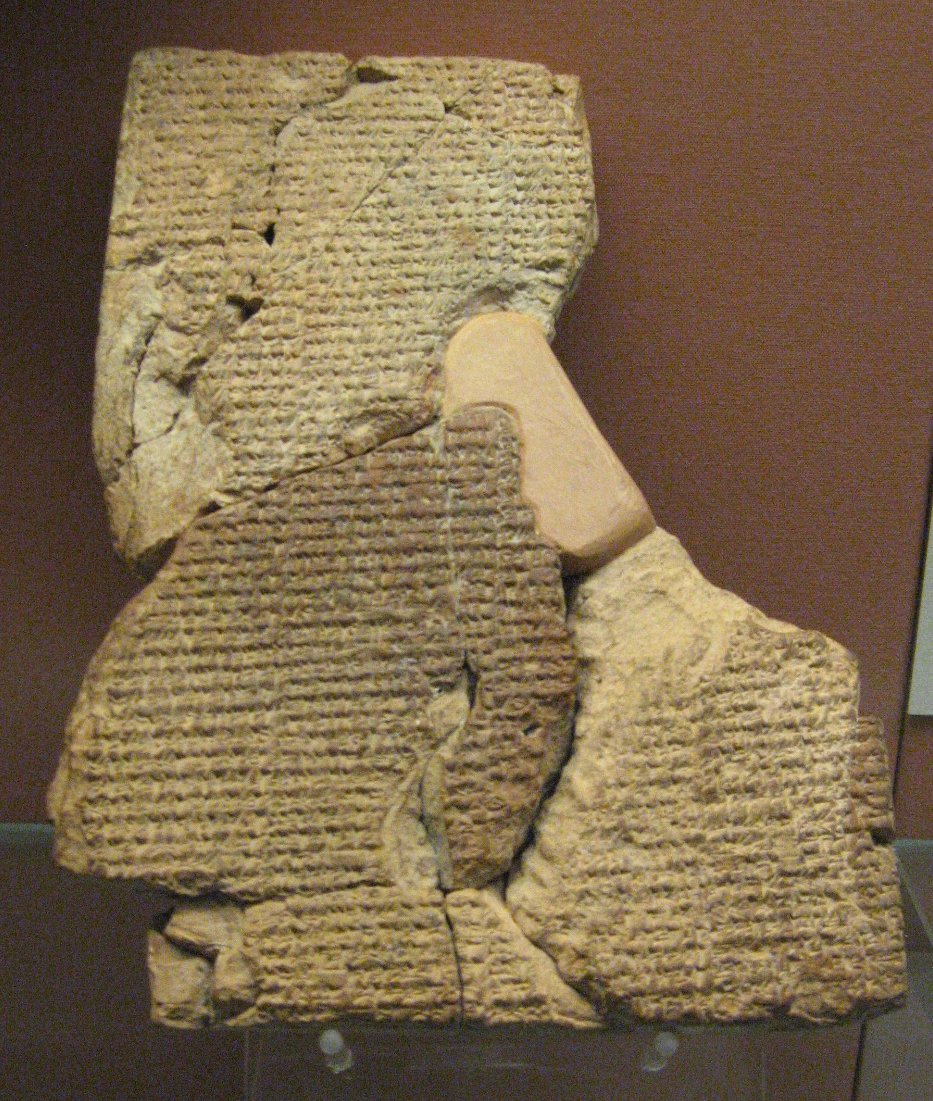
On this clay tablet from Sippar, the gods burn their work tools and surround Enlil’s house. A note at the end counts 416 lines and names the scribe who copied this Old Babylonian account of human creation.
Estimated reading time: 4 min Published Last reviewed:
Share article
Photograph
Jack1956 / Wikimedia Commons, Public domain.
Clay fragments from Tablet I of Atrahasis on display in the British Museum. The photograph is identified with BM 78941
Image sourceVideo
Atrahasis: Toil, noise and the great flood
Toil, noise and the great flood. The whole story in two illustrated chapters, told from the ancient clay tablets; where the tablets are broken, the narration says so. Illustrations, narration voice and visual effects were created with AI tools by IL Archive; the text is a faithful retelling based on the ancient tablets.
The YouTube player loads only when you press play. Watch on YouTube
Object details
- Title
- Tablet I of Atrahasis from Sippar (BM 78941 and 78943)
- Timeline
- From 1635 BCE to 1634 BCE
- Region
- Mesopotamia
- Rights
- Public domain
Text
Introduction
In the opening of a clay copy of AtrahasisAtrahasis: Epic and HeroAkkadian narrative on human creation, relations with the gods and the flood, named for its survivor warned by Enki. Its surviving manuscripts differ in date and preservation; its hero must not be equated uncritically with every Utnapishtim version.Glossary · Click to read the explanation attributed to Sippar, gods dig waterways and carry baskets. In the story their work leads to revolt, then to the creation of humans to take up the burden. The British Museum holds the surviving clay fragments under two numbers, BM 78941 and BM 78943. The copy ends with a scribe’s name and a date from the reign of the Babylonian king Ammī-ṣaduqa. [1][2][3]
A tablet with two museum numbers
The CuneiformCuneiformWriting with wedge-shaped signs, developed from Mesopotamian recording traditions and used for several languages from the third millennium BCE.Glossary · Click to read the explanation Digital Library Initiative records the two numbered portions together as P285809 and gives their provenance as Sippar-Yahrurum, now Tell Abu Habbah in IraqIraqIraq is a modern country encompassing much of ancient MesopotamiaGlossary · Click to read the explanation. The museum lists the portion BM 78941 under the registration 1889,0426.234. The records give no more precise findspot. The catalogue places the object in the Old Babylonian period, approximately 1900–1600 BCE. Alan Millard drew the signs for the British Museum’s 1965 publication, where the piece appears as Cuneiform Texts 46, no. 1, across twelve plates. His manuscript list identifies it as A and locates its surviving writing across eight columns and an end note. [1][2][3][8]
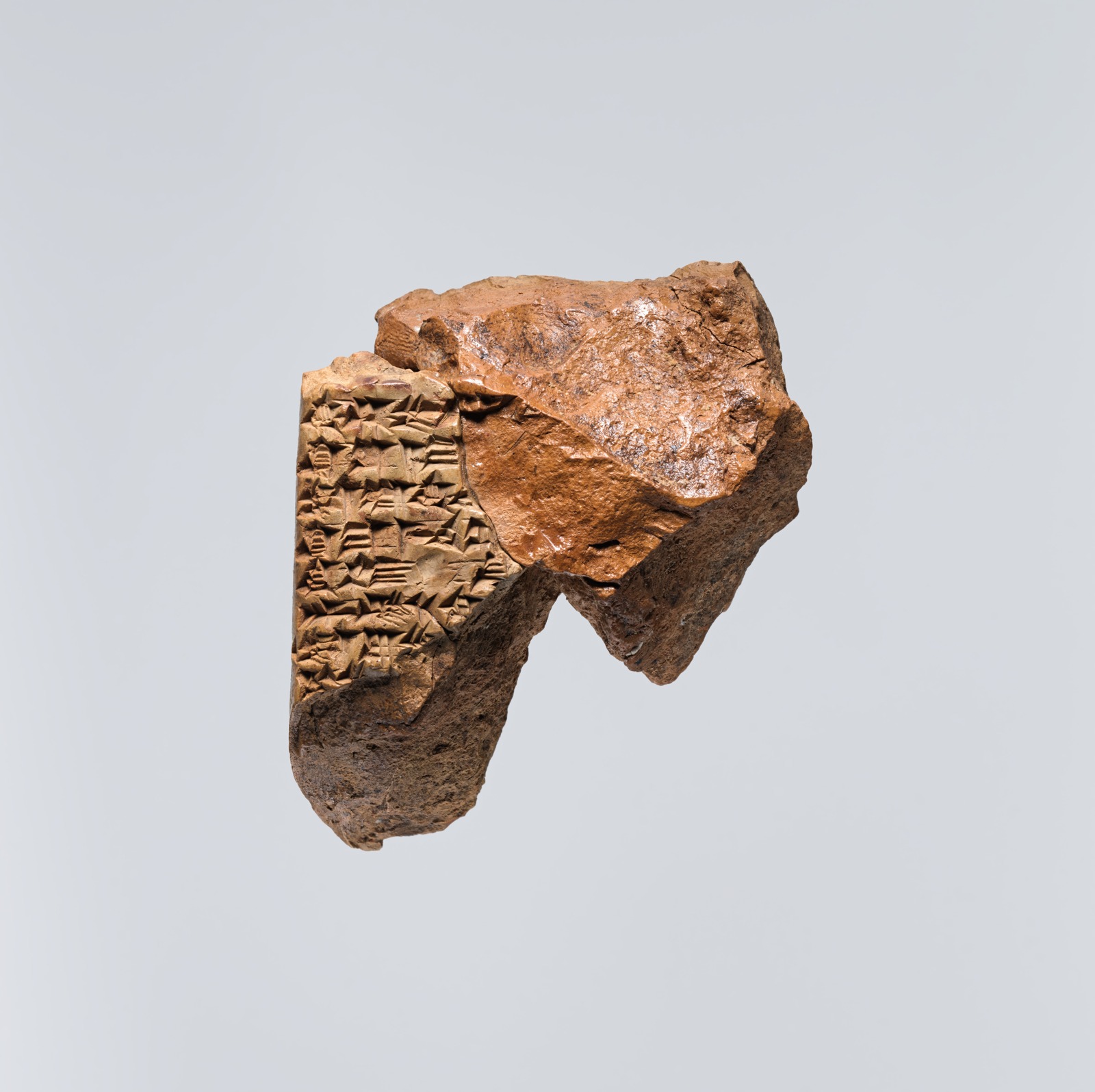
The modern edition Sources of Early AkkadianAkkadianAn ancient East Semitic language written in cuneiform from the third millennium BCE; its varieties include Babylonian and Assyrian, and it served in international diplomacy.Glossary · Click to read the explanation Literature assigns this copy material from lines 1–170, 209–251 and 281–416, with breaks within those ranges. For example, the proposal to make humans in lines 184–196 is reconstructed from other copies, including one from Sippar now in the British Museum, BM 78257. The mixing of clay and divine blood later in the episode is attested on the copy catalogued here. The edition places the words carried by each copy beside the reconstructed reading. [2]
From canal work to human labour
The opening names the AnunnakiAnunna / AnunnakiAnunna/Anunnaki is a collective designation for Mesopotamian gods whose scope varies by text and period; it is not a group with one fixed membership or number.Glossary · Click to read the explanation and the IgigiIgigiCollective of deities called Igigi or Igigū in Akkadian sources from the Old Babylonian period onward. They labour and rebel in Atrahasis; their numbers and relation to the Anunnaki vary by text.Glossary · Click to read the explanation. The modern edition links the Akkadian word for “seven” to the Igigi, the group made to do the work. Andrew George and Farouk Al-Rawi put the number with the Anunnaki in their translation of another Sippar manuscript, as Lambert and Millard did in their edition. The difference concerns which group is counted in lines 5–6. In both readings the Anunnaki impose the work and the Igigi bear it. [2][4]
In the story, the workers dig waterways and eventually burn their spades and baskets. They surround the EkurEkur: Enlil’s Temple at NippurEkur (“Mountain House”) was Enlil’s chief sanctuary at Nippur, present-day Iraq; the name may extend to its precinct. Hymns and royal inscriptions attest to its prestige and rebuilding across periods; it is not simply the ziggurat.Glossary · Click to read the explanation, the dwelling of EnlilEnlilEnlil/Ellil: a major Mesopotamian god associated with destinies, kingship, and Ekur at Nippur, already prominent in third-millennium god lists. His name’s origin and cult beginnings remain debated.Glossary · Click to read the explanation, at night. EnkiEnkiMesopotamian deity also known as Ea, linked with Eridu and the Abzu (deep fresh waters), wisdom, incantations, and narratives of creation and cosmic order. Later written attestations do not identify the deity of Eridu’s earliest layers.Glossary · Click to read the explanation proposes the use of clay and the flesh and blood of a god. The birth goddess Nintu mixes them, and the work of carrying baskets is transferred to humanity. [2]
Column four of the Sippar tablet gives the slain god’s name as WēWē and Alla: the slain god in AtrahasisWē names the god whose flesh and blood mix with clay in one reading of Atrahasis I; another witness has Alla in the corresponding passage.Glossary · Click to read the explanation, in lines 223–226 of the modern edition. Another manuscript of the story from Sippar names him Alla and calls the goddess who mixes the clay Bēlet-ilī. These details show how copies from the same city could transmit the same episode with different names. The first tablet goes on to tell of the increase in human numbers and a plague. The flood narrative survives on other tablets, including a separate set of fragments from Sippar in the British Museum and in Geneva. [2][4][5]
The words at the end
The scribe’s note, or colophon, calls this the first tablet of inūma ilū awīlum, using the Akkadian words that open the story. It gives the copy a total of 416 lines and identifies the hand as that of Ipiq-Aya, a junior scribe. He records the twenty-first day of Nisan and names the year by an act of Ammī-ṣaduqa involving royal statues. The colophon describes one with a young goat held to its breast. That formula corresponds to the twelfth year of his reign, which Nele Ziegler places in 1634 BCE for this tablet. The British Museum’s online exhibit dates it to 1635 BCE. The line count records the extent of the ancient copy before it broke. The named scribe and date belong to this copy, while the date of the story’s composition remains uncertain. [2][6][7][8]
Quick answers
What do BM 78941 and BM 78943 identify?
They identify the surviving fragments of the same clay tablet of Atrahasis from Sippar. The combined catalogue record is CDLI P285809. [1][2][3]
How do we know this was the first tablet?
Its colophon calls it Tablet I and identifies the work by its opening Akkadian words, inūma ilū awīlum. [2]
Who wrote the surviving copy?
The colophon names Ipiq-Aya, a junior scribe, and dates the tablet to the twelfth year of Ammī-ṣaduqa’s reign. [2][6][7]
Does this tablet tell the story of the flood?
It recounts the gods’ labour, their revolt, the creation of humans and a plague. The story of the flood is preserved on other tablets. [2][4][5]
References and notes
- Cuneiform Digital Library Initiative, CT 46, 01 (P285809) Museum numbers, accession numbers, clay, Sippar-Yahrurum and Old Babylonian period. References list the 1965 publication. Return to the text ↑
- Sources of Early Akkadian Literature (SEAL), ‘Atraḫasis I (all periods)’ Manuscript table, witness A; lines 1–26 and commentary on line 5; lines 63–73, 184–196, 204–241 and 352–416; colophon lines 416c–i. Return to the text ↑
- Alan Ralph Millard, The Atrahasis Epic and Its Place in Babylonian Literature, MPhil thesis, University of London, 1966 Ch. I, p. 18, manuscript A, with the two numbers, column references, colophon and hand copy in CT 46. Return to the text ↑
- A. R. George and F. N. H. Al-Rawi, ‘Tablets from the Sippar Library VI. Atra-ḫasīs’, Iraq 58, 1996, pp. 147–190 P. 147, plot and Sippar discoveries. P. 153, lines 5–6 of IM 124646. Pp. 149 and 171, Alla and Bēlet-ilī in the later Sippar version, including IM 124649, lines 103–106. Return to the text ↑
- Nathan Wasserman, The Flood: The Akkadian Sources, Orbis Biblicus et Orientalis 290, 2020 Section 2.2.2, manuscripts C1 and C2 of Atrahasis III. The Sippar Flood fragments in London and Geneva. Return to the text ↑
- Cuneiform Digital Library Initiative, Mesopotamian Year Names, Babylon: Ammī-ṣaduqa, year 12a Sumerian date formula, English translation and reference to RlA 2, p. 190, no. 260. Return to the text ↑
- Nele Ziegler, ‘Les dieux créateurs (et destructeurs) selon la documentation mésopotamienne du IIe millénaire av. J.-C.’, Collège de France, 29 February 2024 Slides 5–8, especially slide 6. The first tablet’s date in Ammī-ṣaduqa’s reign, its modern calendar equivalent, and the tablets of Ipiq-Aya in the seventeenth century BCE. Return to the text ↑
- British Museum, ‘When the gods were Man’, Google Arts & Culture, registration 1889,0426.234 Object details for the registration number, clay, Sippar and the museum’s date of 1635 BCE. Return to the text ↑
Archive records may be reviewed and refined as better evidence or sources become available. Suggest a correction
Suggest a correction · Suggest a source for this record
Cite this record
IL Archive, «Tablet I of Atrahasis from Sippar (BM 78941 and 78943)», https://ilarchive.com/en/artifacts/atrahasis-tablet-one-bm78941
Continue reading