Site
Eninnu, Ningirsu's Temple
- Names
- E-ninnu · E-ninnu-Anzu-babbar · Eninnu · Eninnu, the White Thunderbird · House Fifty · Temple of Ningirsu at Girsu
- Timeline
- From 2125 BCE to 1750 BCE
- Region
- Mesopotamia
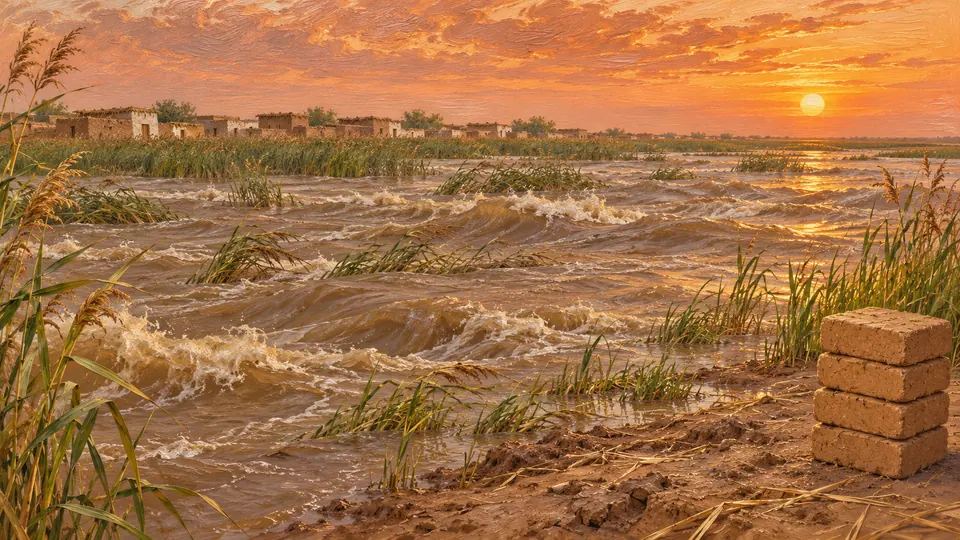
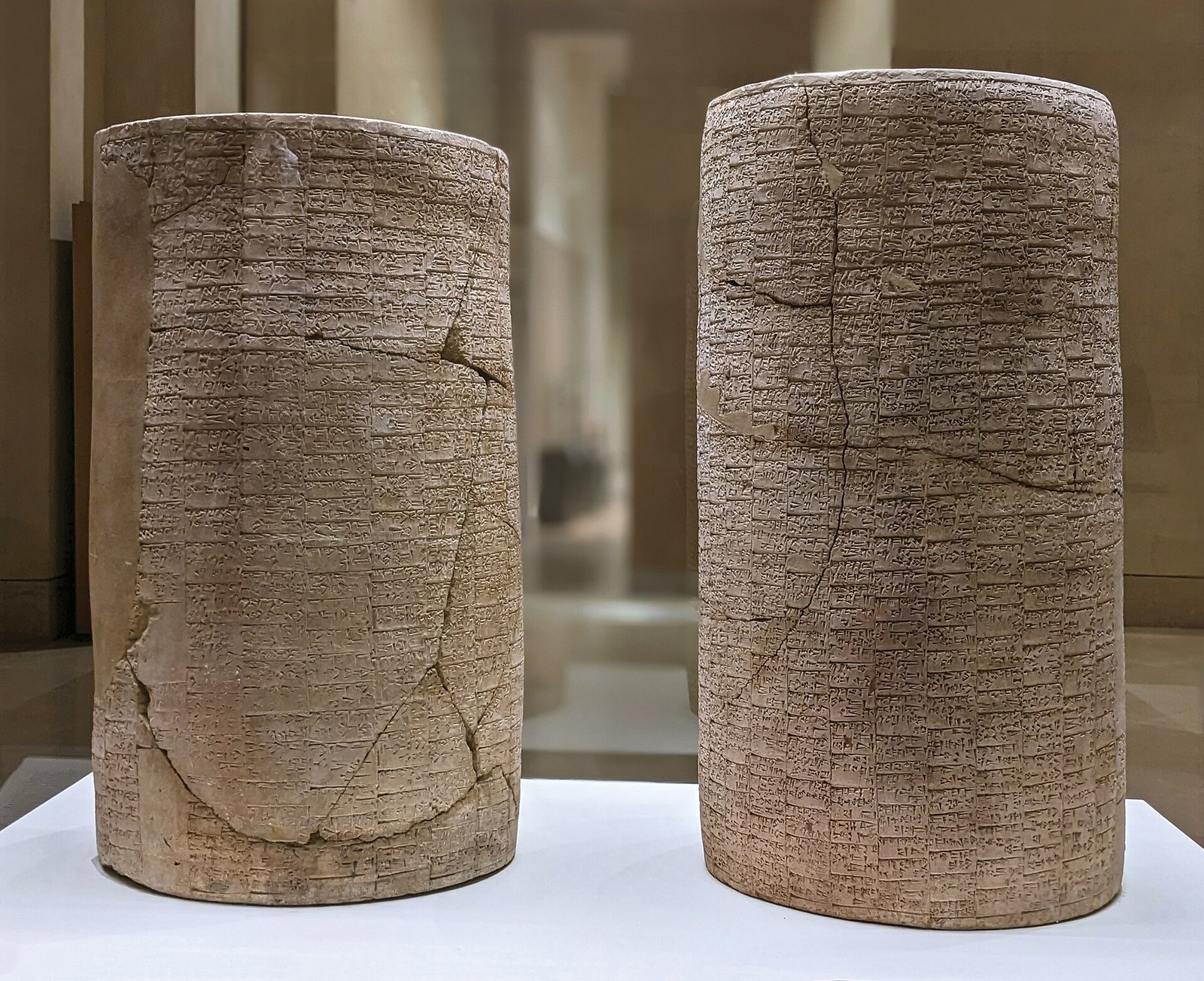
The great temple of the god Ningirsu at Girsu, in the Sumerian state of Lagash. Gudea rebuilt it around 2120 BCE and told the story on two clay cylinders now in the Louvre.
Estimated reading time: 6 min Published Last reviewed:
Share article
Text
Introduction
The Eninnu was the temple of NingirsuNingirsuA major god of the Sumerian state of Lagash, invoked in Urukagina’s reform undertaking.Glossary · Click to read the explanation, the warrior and storm god of Girsu, the holy city of the Sumerian state of LagashLagash, Sumerian city-stateCity-state in present-day southern Iraq; Girsu was one of its centers associated with royal inscriptions.Glossary · Click to read the explanation in what is now southern IraqIraqIraq is a modern country encompassing much of ancient MesopotamiaGlossary · Click to read the explanation. Its ruins lie at the site of Tello. The name means "House Fifty", and its full form, "Eninnu, the White Thunderbird", joins the god to the lion-headed eagle that was his emblem. [2][4]
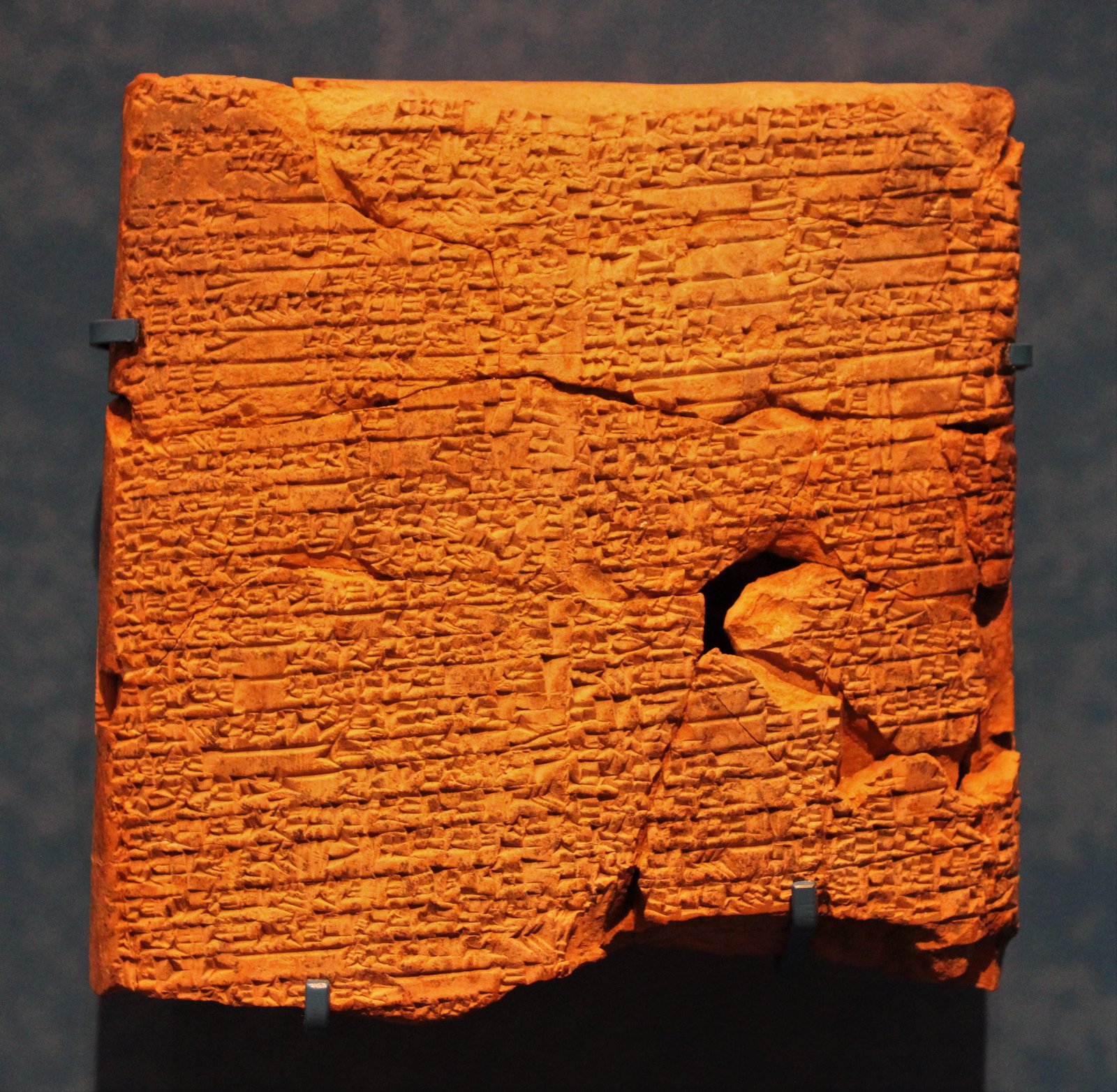
The temple is famous because of one ruler, GudeaGudeaRuler of Lagash in the late third millennium BCE, whose inscriptions document temple construction and the name Anunna.Glossary · Click to read the explanation, who rebuilt it around 2120 BCE and had the whole project told in a long poem in the Sumerian languageSumerian languageAncient language of southern Mesopotamia, clearly attested in third-millennium BCE texts and maintained in learning and ritual after its spoken use declined.Glossary · Click to read the explanation, written on two clay cylinders that are now in the Louvre. Long known only from inscriptions, the building itself has been uncovered since 2016 by a British Museum team. [2][3][4]
"House Fifty"
In Sumerian, é means "house" and ninnu means "fifty". Sébastien Rey, who directs the new excavations, links the number to the fifty powers of the god EnlilEnlilEnlil/Ellil: a major Mesopotamian god associated with destinies, kingship, and Ekur at Nippur, already prominent in third-millennium god lists. His name’s origin and cult beginnings remain debated.Glossary · Click to read the explanation, which Enlil gave to his son and champion Ningirsu. In Gudea's poem the god says of Enlil that he "endowed me with fifty powers". Fifty here stands for fullness, as we say "a hundred per cent", so Rey suggests "house of the almighty". [1][2]
The temple is much older than its name. The first shrine of Ningirsu at Girsu, from about 3000 BCE, was simply called "house of Ningirsu". The name Eninnu first appears on a mace head from the reign of Enanatum I, of the dynasty that Ur-Nanshe founded around 2450 BCE. The longer name with the White Thunderbird was made famous by Ur-Bau, Gudea's predecessor, and Gudea used it in all his inscriptions. [2]
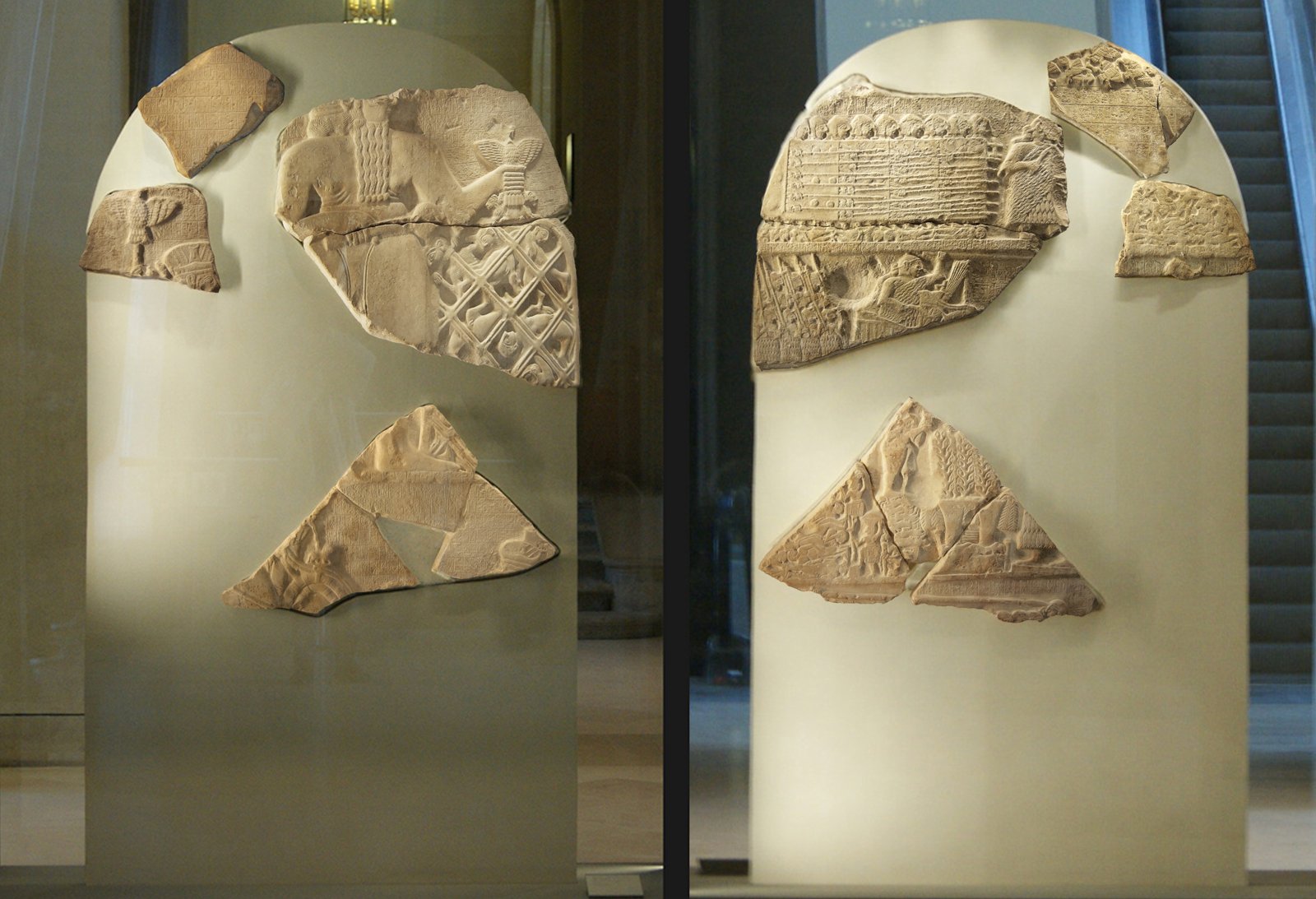
The Thunderbird, called Imdugud (also read Anzu), was imagined as a giant eagle with a lion's head, a storm cloud in the shape of a bird. In myth Ningirsu tamed it, and it became his sign. The same creature spreads its wings on the Imdugud relief from Tell al-Ubaid. [2]
Gudea's dream
Cylinder A opens as Enlil resolves to make the greatness of the Eninnu known. Ningirsu then appears to Gudea in a dream, but Gudea cannot understand it. He travels by boat to the goddess NansheNansheSumerian goddess praised in a hymn for caring for widows, orphans, people in need, and fugitives.Glossary · Click to read the explanation, who reads dreams, and tells her what he saw: a man as huge as the sky, with a god's crown, the wings of the Thunderbird and a flood for a body, lions lying at his sides; a woman holding a silver stylus over a tablet of favourable stars; a warrior drawing the plan of a house on a tablet of lapis lazuli; a basket and a brick mould; and a donkey pawing the ground. [1]
Nanshe explains each sign. The giant is Ningirsu, who wants his house built. The woman is NisabaNisabaMesopotamian goddess of grain and writing, associated with Ereš and scribes; also called Nidaba.Glossary · Click to read the explanation, goddess of writing, announcing the right stars. The warrior is the god Nindub, drawing the plan. The donkey is Gudea himself, impatient to begin. In a second dream Ningirsu speaks to Gudea directly and promises full canals and rich harvests once the foundations are laid. [1][2]
These scenes belong to a royal hymn, not a builder's diary. The dreams and divine speeches present the project as the god's own will, and its details are praise, not measurements. [1][2]
Building the house
Gudea purifies the city, frees prisoners and suspends harsh punishments. He moulds the first brick with great ceremony, and when it comes out of the mould the whole land celebrates. Materials arrive from far away: cedar cut in the cedar mountains and floated downriver on long rafts, copper, gold, silver, stone and carnelian, brought from Elam and SusaSusa, ancient ShushSusa is an archaeological city at Shush in southwestern present-day IranGlossary · Click to read the explanation in IranIranIran is the modern country containing Shush, ancient SusaGlossary · Click to read the explanation, from Magan (in today's Oman) and from Meluhha (the Indus Valley). [1][2][3]
The finished temple has a bedchamber and a great dining hall for the god, gates and doors, storerooms, a courtyard where drums sound, and a shrine for Bau, Ningirsu's wife. The poem says Gudea made it rise "so high as to fill the space between heaven and earth". [1][2]
The god moves in
Cylinder B tells how, at the new year, Ningirsu and Bau enter the house. Gudea then installs the god's household: lesser gods serve as doorkeeper, general, adviser, musician, herald, farmer and inspector of fisheries. At the feast that follows, the poem says, for seven days the slave woman was equal to her mistress. It ends: "Ningirsu be praised!" [1]
The two cylinders
The cylinders are hollow and made of fired clay. Cylinder A (Louvre MNB 1512) is 60 cm tall, 32 cm across and carries 30 columns of text; Cylinder B (MNB 1511) is a little shorter. Ernest de Sarzec found both in 1877 at Tello, on a small mound at the foot of the hill where the oldest temples of Ningirsu stood. Together they hold the longest literary work that survives from ancient Sumer. Rey argues that they were two parts of a set of three: a lost third cylinder, known only from a few fragments, probably held an opening hymn and the story of Ningirsu's victories. [2][3]
Finding the temple
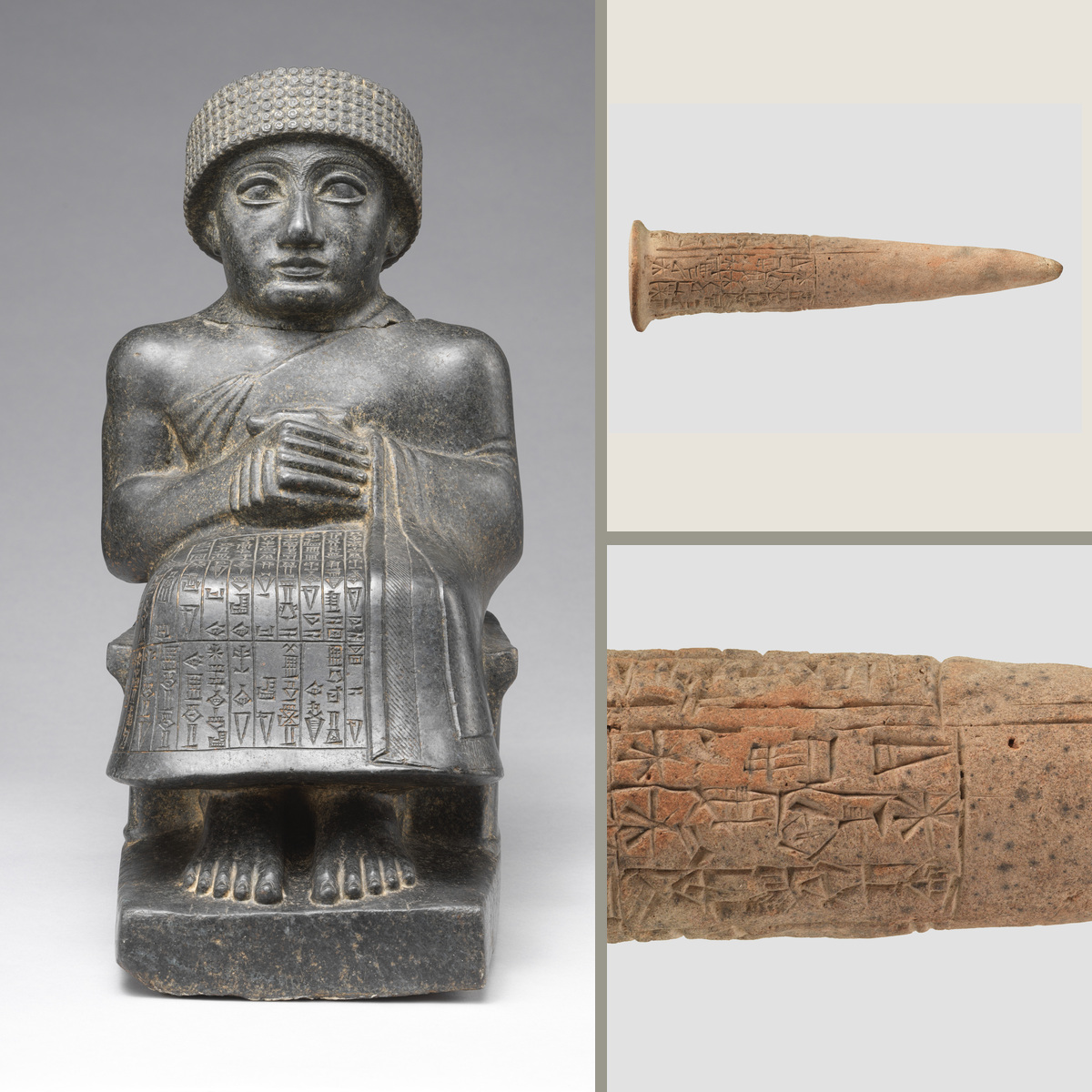
French excavators worked at Tello from 1877 into the 1930s. On the mound they called Tell A, the "Mound of the Palace", they found many statues of Gudea, including the seated "Architect with a Plan" with a temple plan carved on his lap. But the statues lay in a shrine built nearly two thousand years later, after Alexander the GreatAlexander the GreatMacedonian king who lived from 356 to 323 BCE and became a hero of stories in different languages and traditions after his death.Glossary · Click to read the explanation, by a local notable named Adadnadinakhe, and Gudea's temple itself was not identified. [2]
From 2016 the British Museum team, working with Iraq's State Board of Antiquities and Heritage and later funded by the Getty, uncovered mud-brick walls on Tell A studded with clay cones. Each cone repeats that Gudea built the Eninnu for Ningirsu. After the objects reached the British Museum in late 2017, Rey recognised that three cones seized by the London police in 2003 had the same text and came from this very wall; they were returned to Iraq in 2018. The British Museum announced the identification of the temple in February 2023. [2][4][5]
According to Rey, Ur-Bau had moved the temple from its ancient hill to Tell A, a very rare break with the custom of rebuilding on the same spot, and Gudea's new temple stood over older shrines of Bau. The enclosure wall drawn on Gudea's statue matches walls found in the ground. The temple was restored under Shulgi of the Third Dynasty of Ur and later kings, and stayed in use until about 1750 BCE. [2]
What remains debated
- Dates. The sources place Gudea's reign between about 2125 and 2100 BCE; exact years differ between scholars. [2][3]
- Reading the ruins. Rey's account of the move to Tell A, the shrines of Bau below it and the match with the statue plan is new and set out mainly in his own 2024 publication. Which excavated walls match which rooms in the poem remains an open question. [2]
References and notes (5)
- Jeremy Black et al., “The building of Ningirsu's temple (Gudea, cylinders A and B)”, The Electronic Text Corpus of Sumerian Literature (ETCSL) 2.1.7, University of Oxford, 1998–2006 Whole translation, Cylinder A (lines 1–814) and Cylinder B (lines 815–1363): Enlil's decision (1–16); the dream and Nanshe's reading (17–151); Ningirsu's speech and the fifty powers (226–314); purification of the city (323–344); the materials and the cedar rafts (392–445); the first brick (499–542); the house rising between heaven and earth (655–672); the entry of Ningirsu and Bau (851–928); the divine household (944–1106); the seven days of equality (1211–1223); the closing praise (1355–1363). Return to the text ↑
- Sébastien Rey, The Temple of Ningirsu: The Culture of the Sacred in Mesopotamia, vol. 1 (University Park, PA: Eisenbrauns / The British Museum, 2024), chapter 1, “The Temple of Ningirsu from Its Origins to the Present Day” Chapter 1, pp. 3–25 (publisher's sample chapter): Gudea's dream and the French rediscovery; Ningirsu and the Thunderbird; the names of the temple (house of Ningirsu, Eninnu first attested under Enanatum I, the fifty powers of Enlil, the White Thunderbird name from Ur-Bau); Gudea the architect, the cylinders and the lost third cylinder, Statue B; the move from Tell K to Tell A under Ur-Bau; Adadnadinakhe's Hellenistic shrine; the British Museum team's results on Tell A (walls with cones, plan of the sanctuary, the Bau shrines below, the match with Statue B, restorations to about 1750 BCE). Return to the text ↑
- Musée du Louvre, Département des Antiquités orientales, “Cylindre A de Gudea”, MNB 1512, collection record Whole record: Neo-Sumerian period, Gudea (c. 2120–2110 BCE); Tello, “tell du chemin tournant”; excavations of Ernest de Sarzec, 1877; fired clay, height 60 cm, diameter 32 cm, 30 columns; Sumerian royal votive text on Enlil's decision, Ningirsu's dream appearance and the temple at Girsu, with Magan and Meluhha. Return to the text ↑
- The British Museum, press release “Lost Royal Sumerian Palace and Temple discovered in Iraq's ancient city of Girsu”, February 2023 Whole release: the Girsu Project of the British Museum, Iraq's State Board of Antiquities and Heritage and Getty; Tello as ancient Girsu; the identification of Ningirsu's main sanctuary, the Eninnu, “the White Thunderbird”, in the sacred precinct (Urukug); the temple previously known only from inscriptions; Getty grant of January 2021. Return to the text ↑
- Daniel Weiss, “The Case of the Stolen Sumerian Antiquities”, Archaeology, January/February 2019 Whole article: the British Museum excavation at Tello from 2016; Gudea's inscribed cones in the mud-brick walls of the Eninnu; the eight objects seized by the Metropolitan Police on 2 May 2003, examined at the British Museum from late 2017; the cones matched to the temple wall; return to Iraq in August 2018. Return to the text ↑
Suggest a correction · Suggest a source for this record
Cite this record
IL Archive, «Eninnu, Ningirsu's Temple», https://ilarchive.com/en/sites/eninnu
Continue reading
Related readings