Ancient text
Covenant Collection
A text for line-by-line reading, with transliteration, translation, and resources.
The Covenant Collection in Exodus sets out rules for worship, injury, debts, courts and rest. The narrative ties these instructions to the covenant at Sinai, where Moses reads the book aloud and the people, in the account, accept its terms.
Estimated reading time: 3 min Published Last reviewed:
Share article
Text
Introduction
The Covenant Collection is the body of instructions in Exodus 20:22–23:33 in the New American Bible, Revised Edition. It begins after the Ten Commandments and leads into the account of the ceremony at SinaiSinai: peninsula and biblical mountainSinai is a peninsula in eastern Egypt; in the Torah the name also denotes the mountain of revelation to MosesGlossary · Click to read the explanation, where, according to Exodus 24, MosesMosesCentral figure in Exodus, Torah traditions and the Qur’an; childhood accounts differ in detail.Glossary · Click to read the explanation reads the Book of the Covenant aloud. Rules for altars, household obligations, injury and justice appear within this story of a covenant. [1][2][3][7]
The instructions at Sinai
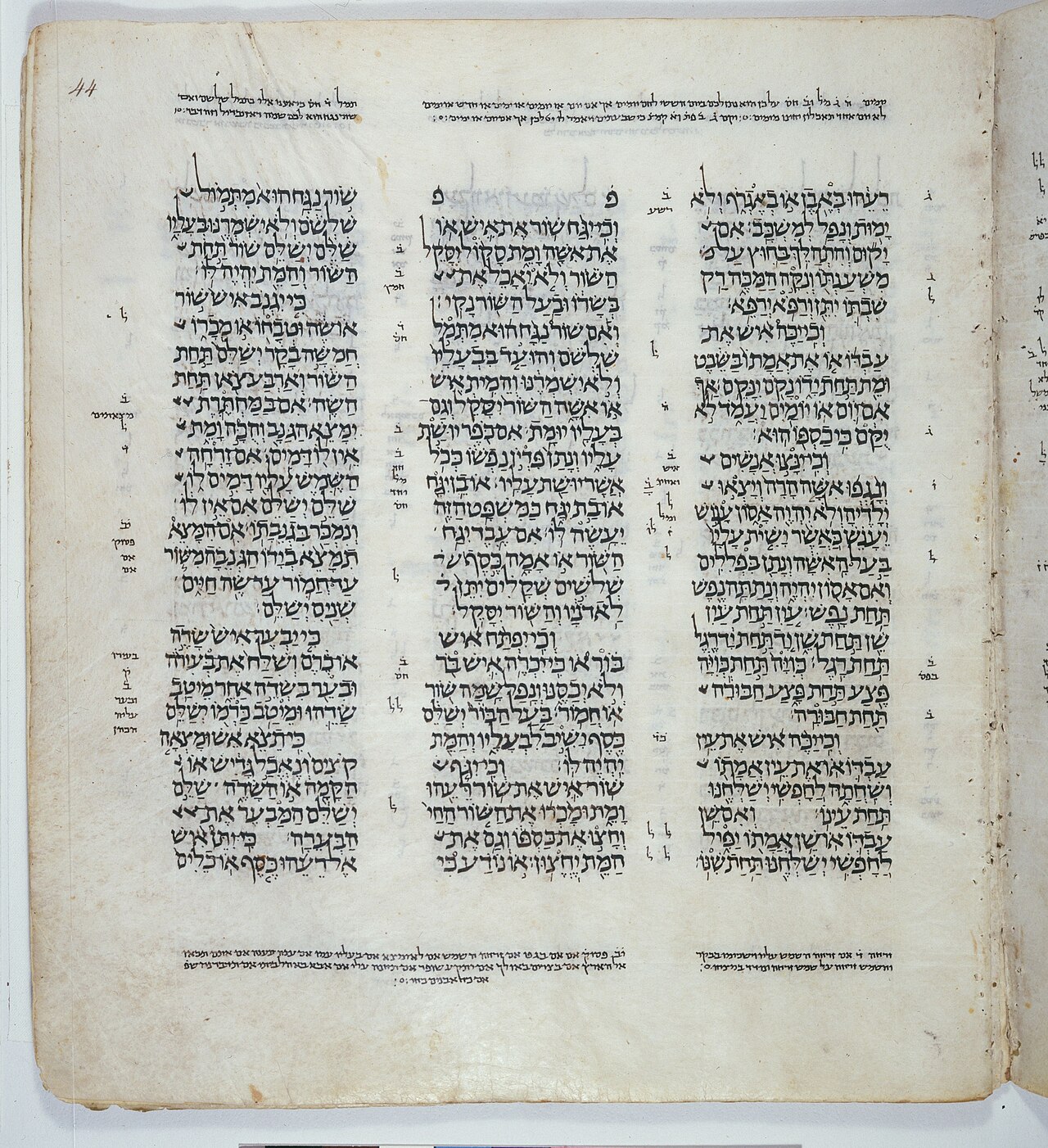
In the text, the collection opens with God telling Moses to speak to the Israelites. In the verse numbering used by Mechon-Mamre, the speech begins at Exodus 20:18. The opening commands concern gods made of silver or gold and the construction of altars. Then Exodus 21:1 introduces the ordinances Moses is to present. This second opening leads into cases about service, bodily injury, damage and compensation. [1][2][3][4]
The collection often states a situation and then gives the consequence. Exodus 21:33–34 considers a person who opens or digs a pit and leaves it uncovered. If an ox or donkey falls in, the owner of the pit compensates the animal’s owner and receives the dead animal. Exodus 21:28–30 uses a sequence of cases to consider whether an ox’s owner was warned of its tendency to gore. The opening case leaves the owner free from liability. With a warning, the owner faces a death sentence, with payment allowed if a ransom is imposed. [4]
Debts, justice and the rhythms of work
Other passages address the reader directly. Exodus 22:20–26 forbids mistreating a resident foreigner and harming widows and fatherless children. It bars interest on a loan to a poor person among the people. A garment taken as security is to be returned by sunset because the borrower may need it as a covering for the night. Exodus 23:1–9 addresses truthful testimony, fair judgment and bribes. Its instructions again recall that the Israelites had been foreigners in Egypt, as the text puts it. [5][6]
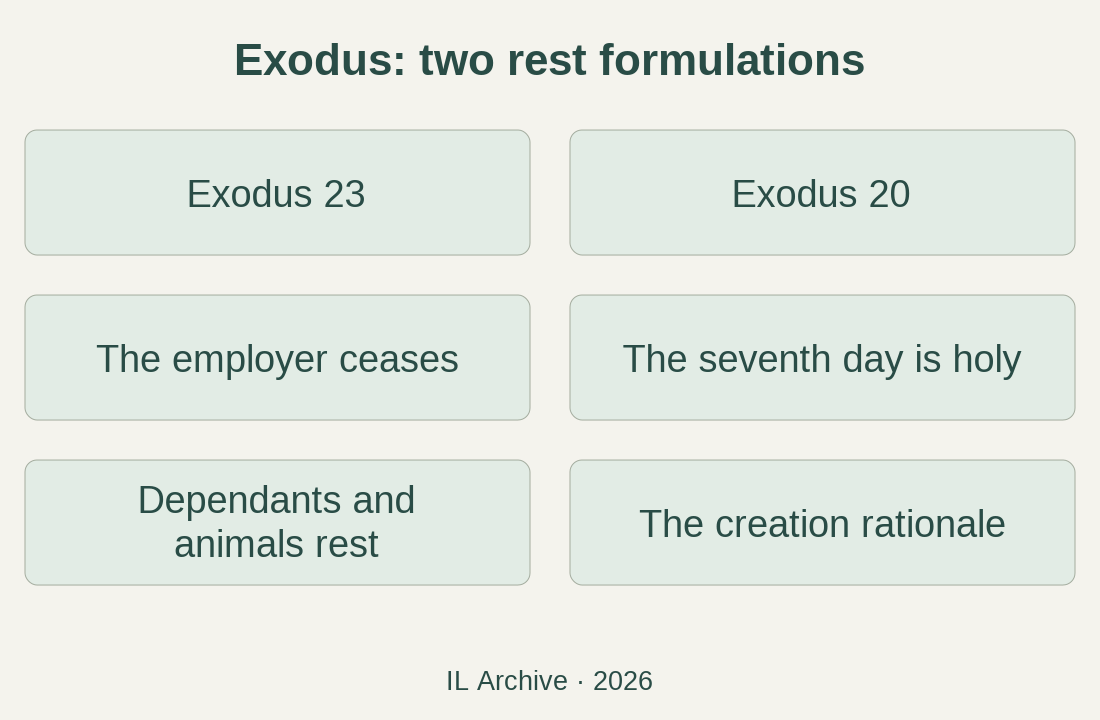
Exodus 23 also sets out cycles of work and rest. The text directs that in the seventh year the land be left fallow so that the poor may eat what grows and wild animals may consume what remains. The seventh day gives rest to working animals and refreshment to people in the household and resident foreigners. The chapter names three annual festivals connected with unleavened bread, the harvest and ingathering. These instructions bring farming and worship into the same calendar. [6]
Quick answers
Where does the name Book of the Covenant come from? According to Exodus 24:7, Moses reads a document with that name aloud and the people agree to obey. The passage belongs to the account of the ceremony that follows the instructions. [1][7]
References and notes (7)
- William S. Morrow, “Law in the Old Testament,” St Andrews Encyclopaedia of Theology Section 4, “The Book of the Covenant.” Conventional scope Exodus 20:22–23:33, the name from 24:7 and the two openings of the collection. Return to the text ↑
- United States Conference of Catholic Bishops, “Exodus 20,” New American Bible, Revised Edition, via Bible Gateway Verses 22–26 under “The Covenant Code.” Speech to Moses and opening altar instructions in this verse numbering. Return to the text ↑
- Mechon-Mamre, “Exodus Chapter 20,” Hebrew Bible in English Verses 18–22 in this page’s numbering. The opening address begins at 20:18 and the altar instruction follows. Return to the text ↑
- Mechon-Mamre, “Exodus Chapter 21,” Hebrew Bible in English Verses 1–6 and 28–34. Opening of the ordinances, service, the goring ox and the uncovered pit. Return to the text ↑
- Mechon-Mamre, “Exodus Chapter 22,” Hebrew Bible in English Verses 20–26 in the Hebrew numbering. The resident foreigner, widow, children without a father, loans and pledged garment. Return to the text ↑
- Mechon-Mamre, “Exodus Chapter 23,” Hebrew Bible in English Verses 1–17. Testimony, judgment, bribes, treatment of the foreigner, work and rest, and annual festivals. Return to the text ↑
- Mechon-Mamre, “Exodus Chapter 24,” Hebrew Bible in English Verses 3–8, especially verse 7. Words written by Moses, reading of the Book of the Covenant and the people’s response. Return to the text ↑
Archive records may be reviewed and refined as better evidence or sources become available. Suggest a correction
Suggest a correction · Suggest a source for this record
Cite this record
IL Archive, «Covenant Collection», https://ilarchive.com/en/texts/covenant-code
Continue reading