Entity · People
Amorites
A reference page linking a name, group, or concept to the materials that discuss it.
Groups associated with West Semitic speech in the Levant and Mesopotamia, whose dynasties were particularly prominent in the nineteenth and eighteenth centuries BCE (ca. 1900–1700 BCE).
Text
The Amorites were groups associated with West Semitic speech in the LevantThe LevantThe Levant is a regional name for lands along the eastern MediterraneanGlossary · Click to read the explanation and MesopotamiaMesopotamiaA historical region associated with the Tigris and Euphrates, home to many societies and civilisations.Glossary · Click to read the explanation. They appear in sources of the late third millennium BCE. Amorite dynasties then became prominent in several kingdoms in the early second millennium, particularly the nineteenth and eighteenth centuries BCE, approximately 1900–1700 BCE. This dates a notable phase of their influence, rather than the beginning and end of every group bearing the name. [1][2]
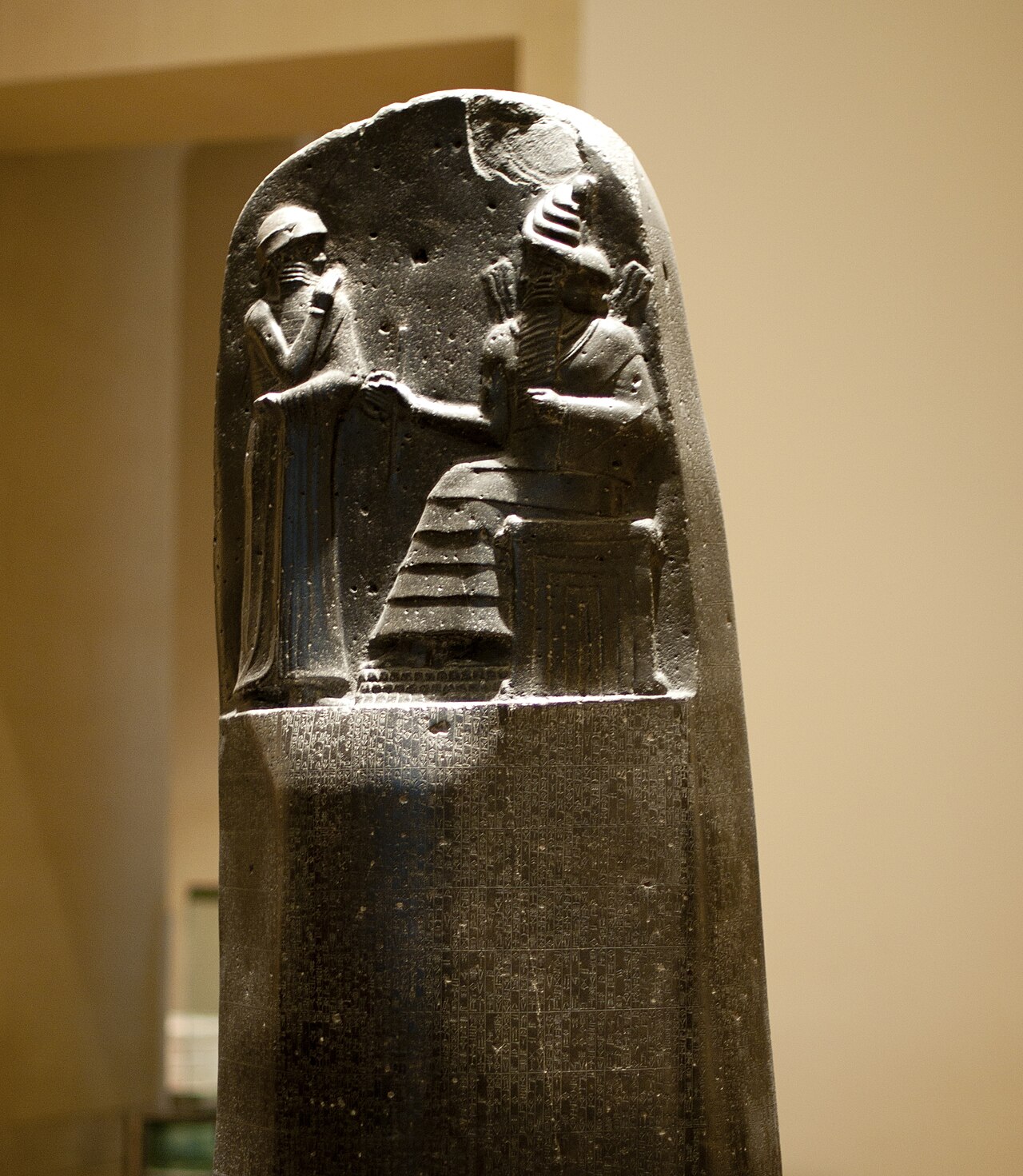
One of the best-known kings associated with these dynasties was HammurabiHammurabiKing of Babylon in Mesopotamia, reigning around 1792–1750 BCE. A celebrated legal text preserved on a stele and cuneiform copies bears his name.Glossary · Click to read the explanation of BabylonBabylonBabylon is an ancient city in central present-day Iraq, south of BaghdadGlossary · Click to read the explanation, who ruled approximately 1792–1750 BCE. Amorite communities and dynasties belonged to different regions and kingdoms, so the designation's meaning depends on its place and period. [2][3]
Personal names preserved in cuneiformCuneiformWriting with wedge-shaped signs, developed from Mesopotamian recording traditions and used for several languages from the third millennium BCE.Glossary · Click to read the explanation documents help scholars study their language and religious vocabulary. Each name provides a small piece of linguistic evidence, understood alongside the document and the person who bore it. [1]
References and notes
- Ignace J. Gelb, Computer-Aided Analysis of Amorite, Assyriological Studies 21 (1980) Collection description: names preserved in Sumerian and Akkadian texts; Ebla is excluded. Individual entries were not all analysed. Return to the text ↑
- Aaron A. Burke, The Amorites and the Bronze Age Near East (Cambridge, 2021), Introduction, pp. 1–2 and 6–8. Publisher excerpt only; dynastic horizon and changing identities. Full book not read. Return to the text ↑
- The Metropolitan Museum of Art, Babylon: Hammurabi's reign, ca. 1792–1750 BCE. Old Babylonian history paragraphs; approximate regnal chronology. Return to the text ↑
Research history
Substantive changes are retained here. Minor copy edits remain in the internal operational log.
-
Substantive record update
-
Substantive record update
-
Substantive record update
-
Substantive record update
Suggest a correction · Suggest a source for this record
Cite this record
IL Archive, «Amorites», Edition 5, https://ilarchive.com/en/entities/amorites