Site
Alalakh (Tell Atchana)
- Names
- Alalah · Alalakh · Alalaḫ · Açana Höyük · Tell Atchana · Tell Açana
- Timeline
- From 2000 BCE to 1300 BCE
- Region
- The Levant
A Bronze Age city on the Orontes in southern Türkiye. Two burnt palaces kept clay archives from the eras of Aleppo's kings and of Mittani; the city was largely abandoned around 1300 BCE.
Estimated reading time: 6 min Published Last reviewed:
Share article
Text
Introduction
Alalakh was the leading city of the Amuq Plain, near the great bend of the Orontes River, for most of the second millennium BCE. Its ruins form the mound of Tell Atchana, in the Hatay province of modern TürkiyeTurkeyTurkey is a modern country including Anatolia and territory in southeastern EuropeGlossary · Click to read the explanation, close to Antakya. The city was never a great power itself. It sat where roads from AnatoliaAnatoliaAnatolia is the region occupying the Asian part of present-day TurkeyGlossary · Click to read the explanation, inner Syria and the Mediterranean coast met, so it served larger kingdoms in turn: first the kings of AleppoAleppo, historical cityNorthern Syrian city whose region appears in Mari reports, with architecture from multiple periods.Glossary · Click to read the explanation, then the empire of Mittani, then the HittitesHittitesAncient people and kingdom of Anatolia, dominating much of Anatolia and northern Syria around 1650–1200 BCE.Glossary · Click to read the explanation. [1][2]
Two of its palaces burned with their archives inside. The surviving clay tablets are a rare window on Aleppo's kingdom and on Mittani, whose own capitals have left almost no archives. Many dates and causes at the site are still debated. [2][3]
A mound in the Amuq Plain
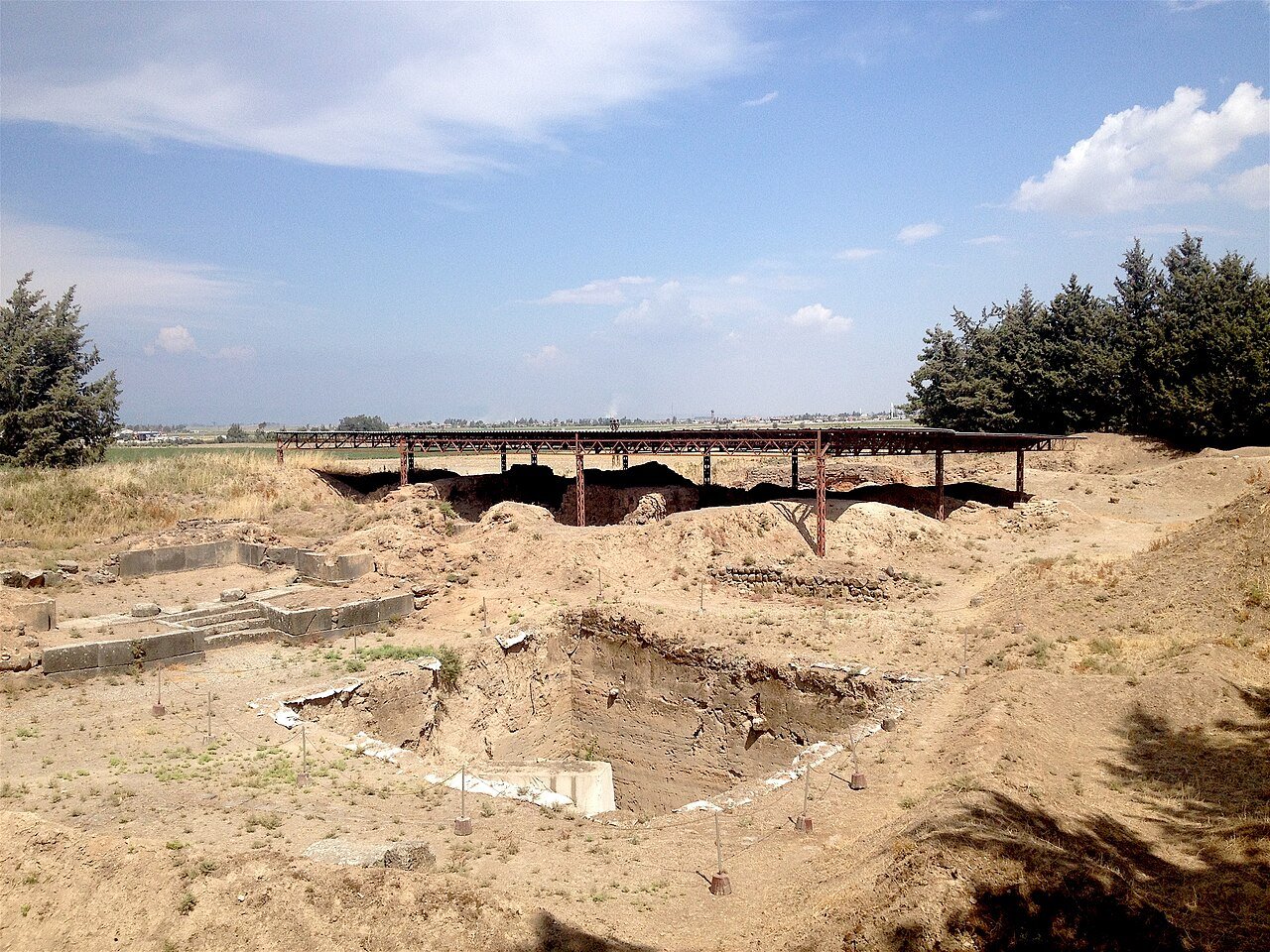
Tell Atchana lies about 400 metres from the Orontes. The mound is an irregular oval about 750 metres long and 300 metres wide, rising just under nine metres. It once stood taller: in the sixth century CE earthquakes blocked the river's way to the sea, the plain flooded, and silt raised the ground by about five metres. [1]
A "tell" is a hill made by people: each generation built on the levelled ruins of the last, like layers of a cake. At Alalakh the layers are numbered from the top down, so Level XVII is the oldest and Level 0 the latest. [1][2]
Settlement on the mound began at the end of the Early Bronze Age or the start of the Middle Bronze Age, around 2200–2000 BCE. The neighbouring mound of Tell TayinatTell TayinatSite in Hatay, present-day Turkey, yielding a copy of Esarhaddon’s succession oath of 672 BCE.Glossary · Click to read the explanation, a few hundred metres away, was occupied before and after Alalakh. A city written "Alalahu" appears in third-millennium texts from EblaEblaAncient city at Tell Mardikh, southwest of Aleppo, Syria. Its Palace G archives illuminate third-millennium BCE administration, language, and cult; the site has later occupation phases.Glossary · Click to read the explanation. Some scholars think those texts refer to an older town at Tayinat, and that the name moved with the settlement. [1][2][3][4]
Digging the city
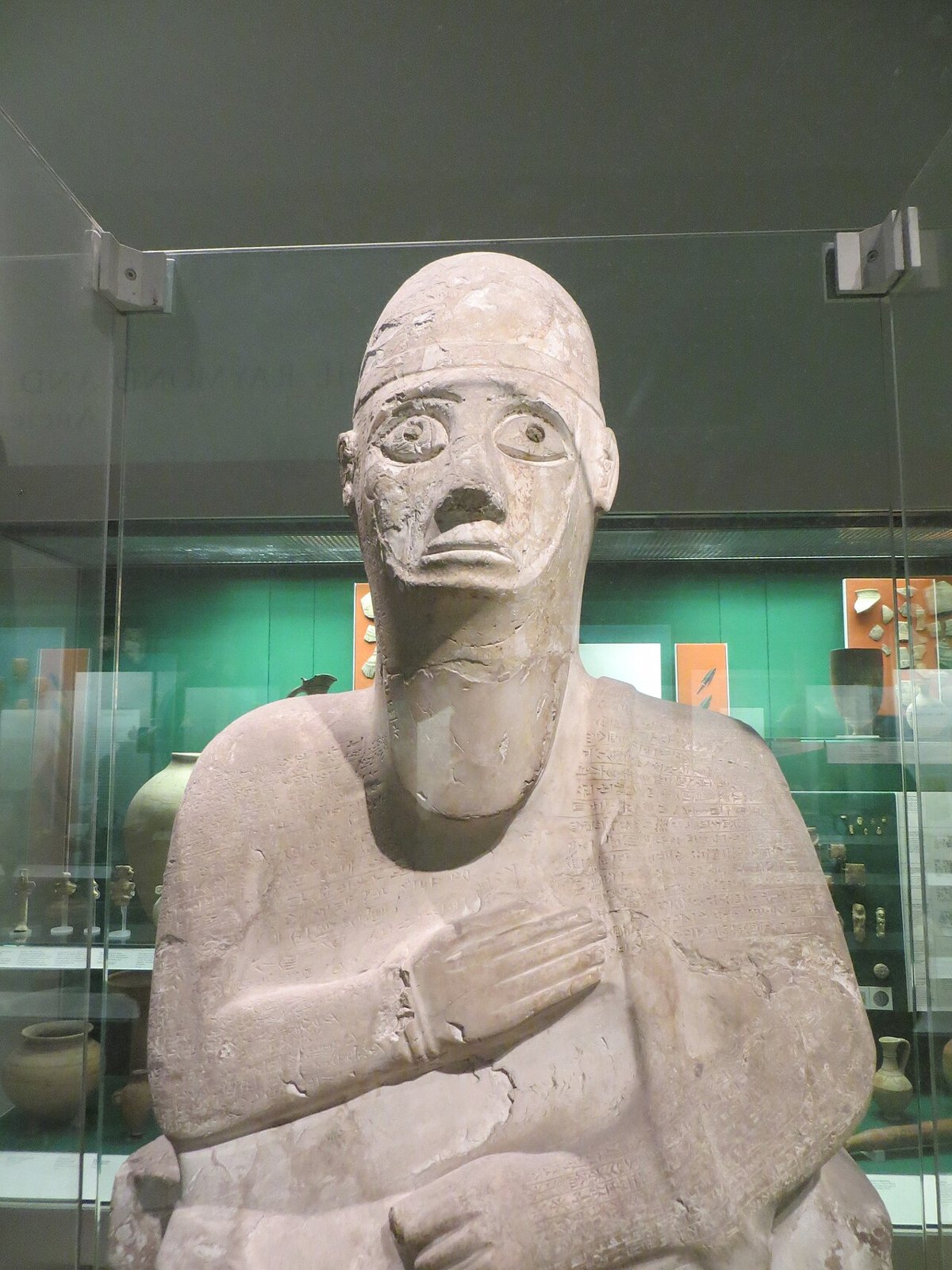
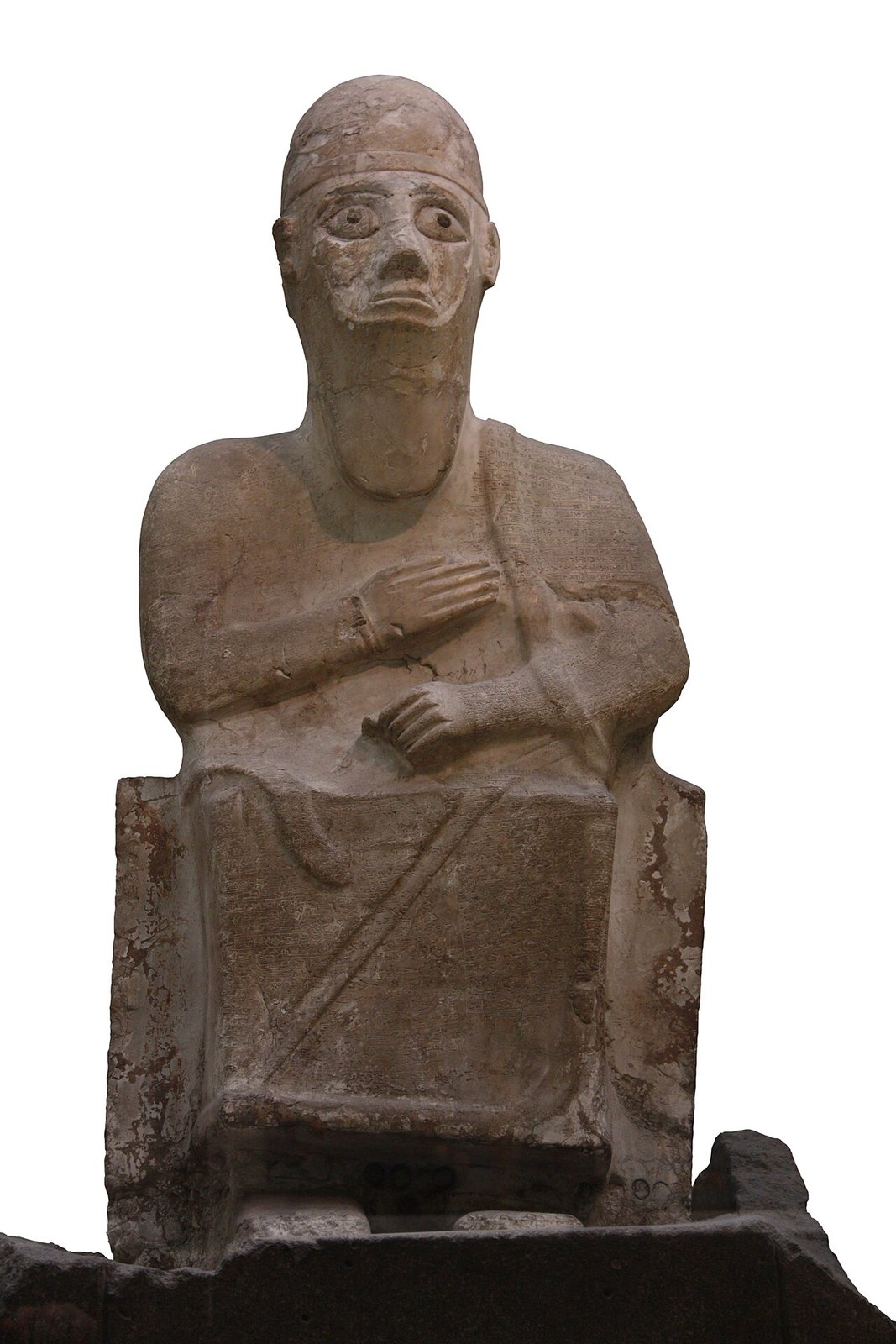
The British archaeologist Leonard Woolley, fresh from UrUr of the ChaldeansCity named in Genesis’s account of Abraham’s family, commonly associated with archaeological Ur near Nasiriyah in southern Iraq.Glossary · Click to read the explanation, came looking for links between the Aegean and the Near East. He dug at Tell Atchana in 1937–1939 and 1946–1949 and recorded eighteen levels. The first tablets appeared in 1937, the archives of the Level IV palace in 1938, and the Level VII palace archives and the inscribed statue of King Idrimi in 1939. [1][2]
Excavations resumed in 2003 under K. Aslıhan Yener and later Murat Akar, and have corrected Woolley's dates. He believed the earliest levels were very old and that the city fell to the Sea Peoples around 1200 BCE. The new results date the early levels to the Middle Bronze Age, and show that most of the city was abandoned around 1300 BCE; only the temple area remained in use after that. [2][3][5]
The Level VII palace: Alalakh under Aleppo
In the Middle Bronze Age, Alalakh belonged to Yamhad, the kingdom ruled from Aleppo. Texts from MariMariMari at Tell Hariri on the Syrian Euphrates was founded around 2900 BCE and rebuilt through three major urban phases. Its palace and cuneiform archives illuminate trade, royal government and religious practice, especially in the eighteenth century BCE.Glossary · Click to read the explanation call it Alahtum and tell how Zimri-Lim, king of Mari, obtained it for a time, with some difficulty, from HammurabiHammurabiKing of Babylon in Mesopotamia, reigning around 1792–1750 BCE. A celebrated legal text preserved on a stele and cuneiform copies bears his name.Glossary · Click to read the explanation of Aleppo (not the famous Hammurabi of BabylonBabylonBabylon is an ancient city in central present-day Iraq, south of BaghdadGlossary · Click to read the explanation). A junior branch of Aleppo's royal family then received the city: its first ruler, Yarim-Lim, was given Alalakh in exchange for another city that had been destroyed in a revolt. The Level VII archives follow this family over several generations. [2]
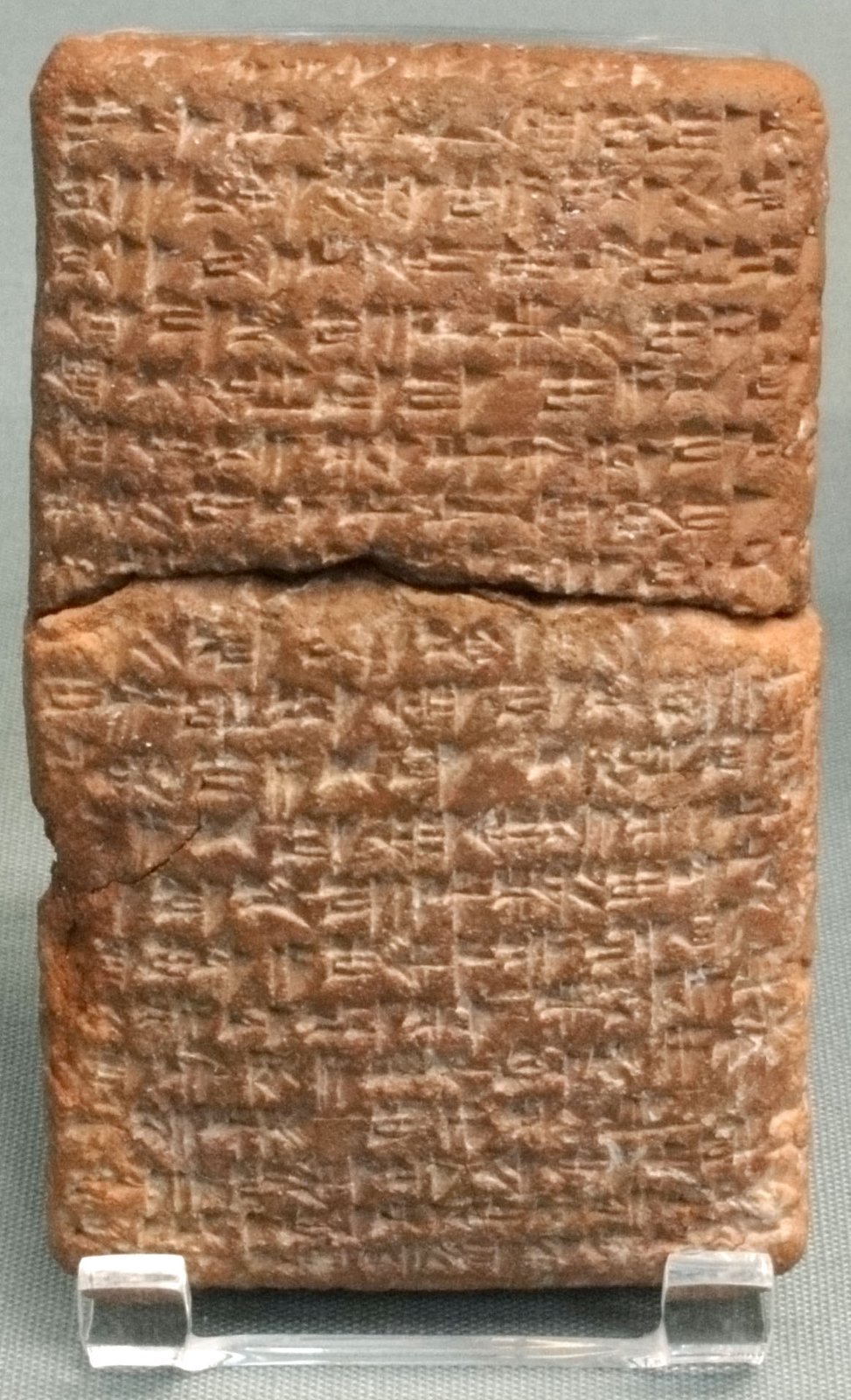
Woolley named the Level VII palace after Yarim-Lim. It was built into an angle of the city wall and was about 100 metres long. A temple stood right beside it, and a fortified city gate belonged to the same building phase. One count gives about 470 tablets from this level, written in the Old Babylonian form of AkkadianAkkadianAn ancient East Semitic language written in cuneiform from the third millennium BCE; its varieties include Babylonian and Assyrian, and it served in international diplomacy.Glossary · Click to read the explanation in cuneiformCuneiformWriting with wedge-shaped signs, developed from Mesopotamian recording traditions and used for several languages from the third millennium BCE.Glossary · Click to read the explanation. They record the palace's business: metals, grain, oil, animals, and the workers and slaves attached to the palace. [1][2][6]
Woolley found painted wall plaster in the palace and compared it closely with the paintings of the Minoan palace at Knossos on CreteCreteGreek island in the eastern Mediterranean, associated in Hesiod with hiding the infant Zeus.Glossary · Click to read the explanation. He read it as evidence of influence from western Asia on Crete, not the reverse. Between 2015 and 2019 the new team found more than seventy further fragments. Radiocarbon dating, which measures the slow decay of carbon in once-living material, places them between about 1780 and 1680 BCE. Who taught whom, and whether travelling painters carried the style across the sea, is still debated. [1][3]
The palace, temple and gate all ended in fire. The destruction is usually linked to the campaigns of the Hittite king Hattushili I in Syria, around 1650 BCE on the most common dating system, but that link is not certain. [2][3]
The Level IV palace: a subject kingdom of Mittani
After a gap in the written record, the archives resume in the fifteenth century BCE in a new palace (Level IV). Three generations of one family ruled: Idrimi, his son Niqmepa and his grandson Ilimi-ilima. Woolley, following the statue's first editor, Sidney Smith, put Idrimi last in this line and credited the palace to Niqmepa; most of its tablets do date to Niqmepa's reign. [2]
By now Alalakh was the capital of a kingdom called Mukish and a subject of Mittani, the great power of northern Syria and upper MesopotamiaMesopotamiaHistorical region associated with the Tigris and Euphrates: Uruk, Ur, Eridu, cuneiform, Sumer, Akkad, Babylon and Assyria, their languages and cults, and the limits of archaeological evidence.Glossary · Click to read the explanation, in which HurrianHurriansAncient Near Eastern groups and language, prominent in northern Mesopotamia, the Levant and Anatolia in the second millennium BCE.Glossary · Click to read the explanation language and names were prominent. A subject king in this sense kept his throne and his court but answered to an overlord, rather like a local branch that answers to a head office. The Level IV tablets deal mostly with state business: population lists, accounts of income and spending, and the ranks of society, such as the chariot-owning elite called mariannu. A few small groups of tablets record private affairs. [2][6]
This palace also burned, around 1400 BCE. Woolley blamed a local rebellion. Others think of a Hittite campaign, perhaps under Tudhaliya I. Neither view is proven. [1][2]
Under the Hittites, and the end
In the fourteenth century a ruler of Alalakh named Itur-Addu joined a coalition against the Hittite king Shuppiluliuma I. The coalition lost, and Alalakh became part of the Hittite Empire. [2]
The temple, traditionally linked to IshtarInanna / IshtarA prominent Mesopotamian goddess whose Sumerian name Inanna became associated with Akkadian Ishtar across diverse traditions. She was associated with desire, war, royal authority and Venus, while local forms and genealogies varied among texts.Glossary · Click to read the explanation, "lady of Alalakh", was rebuilt on the same spot for centuries. Near it the new excavations found Hittite seal impressions, one naming a Princess Ashnu-Hepa and a Prince Tudhaliya, and Hittite-style miniature offering vessels. Yener argues that the Hittite administration worked through the goddess's temple to give the new order local authority. Around 1300–1290 BCE most of the city was abandoned, while the temple area stayed in use. [5]
The people of Alalakh
More than 340 graves have been excavated, most of them simple pits. A study of tooth enamel, whose chemistry records where a child grew up, and of ancient DNA found that nearly everyone sampled was local. Only a few were newcomers. In an age of busy trade and diplomacy, most people of Alalakh were still born, lived and buried close to home. [4]
References and notes (6)
- Sir Leonard Woolley, Alalakh: An Account of the Excavations at Tell Atchana in the Hatay, 1937–1949 (Reports of the Research Committee of the Society of Antiquaries of London 18; Oxford, 1955), open-access OAPEN edition Introduction, pp. 1–2 (aims of the expedition, seasons 1936–1949); ch. I, pp. 5–6 (setting of the mound, its size, the silting of the Amuq Plain after the sixth-century earthquakes, Tayinat); ch. III, pp. 91–92 (the Level VII palace: tablets of Hammurabi of Yamhad, Yarim-Lim and Niqme-epukh, size, temple and gate, destruction by fire) and pp. 110–111 (the Level IV palace, Niqme-pa and Ilim-ilimma, burnt in a rebellion); ch. VII(b), p. 228 (the frescoes and the comparison with Knossos). Return to the text ↑
- Jacob Lauinger, The Labors of Idrimi: Reading a Statue and Its Inscriptions (Ancient Near East Monographs 33; Atlanta: SBL Press, 2024), open access Introduction, § 1.1 “Alalah: The City and Its Excavations”, pp. 11–14 with nn. 2–12 (location, Woolley's and the renewed excavations, the Ebla and Mari references, Yamhad and the Level VII archives, the Level IV archives under Mittani, the destructions, the Hittite conquest, the end of Level I c. 1300 BCE); § 1.2, pp. 14–15 (the 1939 season). Return to the text ↑
- Murat Akar, K. Aslıhan Yener, Müge Bulu and Tara Ingman, “A Fresh Perspective on the Middle Bronze Age at Tell Atchana, Alalakh: The 2007–2019 Seasons,” in S. R. Steadman and G. McMahon (eds.), The Archaeology of Anatolia IV: Recent Discoveries (2018–2020) (Newcastle upon Tyne: Cambridge Scholars, 2021), 75–95 Pp. 75–78 (the site between Anatolia and the Levant, the end of the Middle Bronze Age c. 1650 BC with the early Hittite campaigns, Atchana and Tayinat, the Ebla reference, Woolley's soundings, the new Periods); pp. 80–81 (the new wall-painting fragments of 2015–2019, radiocarbon 1780–1680 BC, the Knossos debate); p. 81 (342 graves). Return to the text ↑
- Tara Ingman, Stefanie Eisenmann, Eirini Skourtanioti et al., “Human mobility at Tell Atchana (Alalakh), Hatay, Turkey during the 2nd millennium BC: Integration of isotopic and genomic evidence,” PLoS ONE 16/6 (2021): e0241883, CC BY Abstract; Introduction and Background, pp. 2–5 (settlement from c. 2200–2000 BC to near abandonment c. 1300 BC, Woolley's and Yener's excavations, the 342 graves, Table 1 chronology); Conclusions. Return to the text ↑
- K. Aslıhan Yener, “Cult and Ritual at Late Bronze Age II Alalakh: Hybridity and Power under Hittite Administration,” in A. Mouton (ed.), Hittitology Today: Studies on Hittite and Neo-Hittite Anatolia in Honor of Emmanuel Laroche's 100th Birthday (Istanbul: Institut français d'études anatoliennes, 2017), 215–224, OpenEdition Books Whole chapter (¶ 1–16): location and the kingdom of Mukish, the temple sequence and its attribution to Ishtar, the Hittite sealings of Ašnu-Hepa and Tuthaliya, miniature vessels, the abandonment of most of the site c. 1300–1290 BC while the temple continued. Return to the text ↑
- Nurgül Yıldırım, “A Babylonian Ration Document from the Hatay Archeology Museum,” Belleten 90/317 (2026): 1–18, doi:10.37879/belleten.2026.001 Introduction and § 1 “Alalah Level IV Texts”, pp. 2–5 (about 470 Old Babylonian tablets from Level VII and their contents, after Wiseman 1953; the Level IV texts: population lists, revenues and expenditures, social ranks such as mariannu). Return to the text ↑
Suggest a correction · Suggest a source for this record
Cite this record
IL Archive, «Alalakh (Tell Atchana)», https://ilarchive.com/en/sites/alalakh
Continue reading