Entity
Hurrians
A reference page linking a name, group, or concept to the materials that discuss it.
Ancient Near Eastern groups and language, prominent in northern Mesopotamia, the Levant and Anatolia in the second millennium BCE.
Text
Hurrians names ancient Near Eastern groups and their language. Their traditions were prominent in the second millennium BCE across northern MesopotamiaMesopotamiaA historical region associated with the Tigris and Euphrates, home to many societies and civilisations.Glossary · Click to read the explanation, the LevantThe LevantThe Levant is a regional name for lands along the eastern MediterraneanGlossary · Click to read the explanation and AnatoliaAnatoliaAnatolia is the region occupying the Asian part of present-day TurkeyGlossary · Click to read the explanation. Their presence overlapped several kingdoms and populations, rather than a single fixed territorial state. [1]
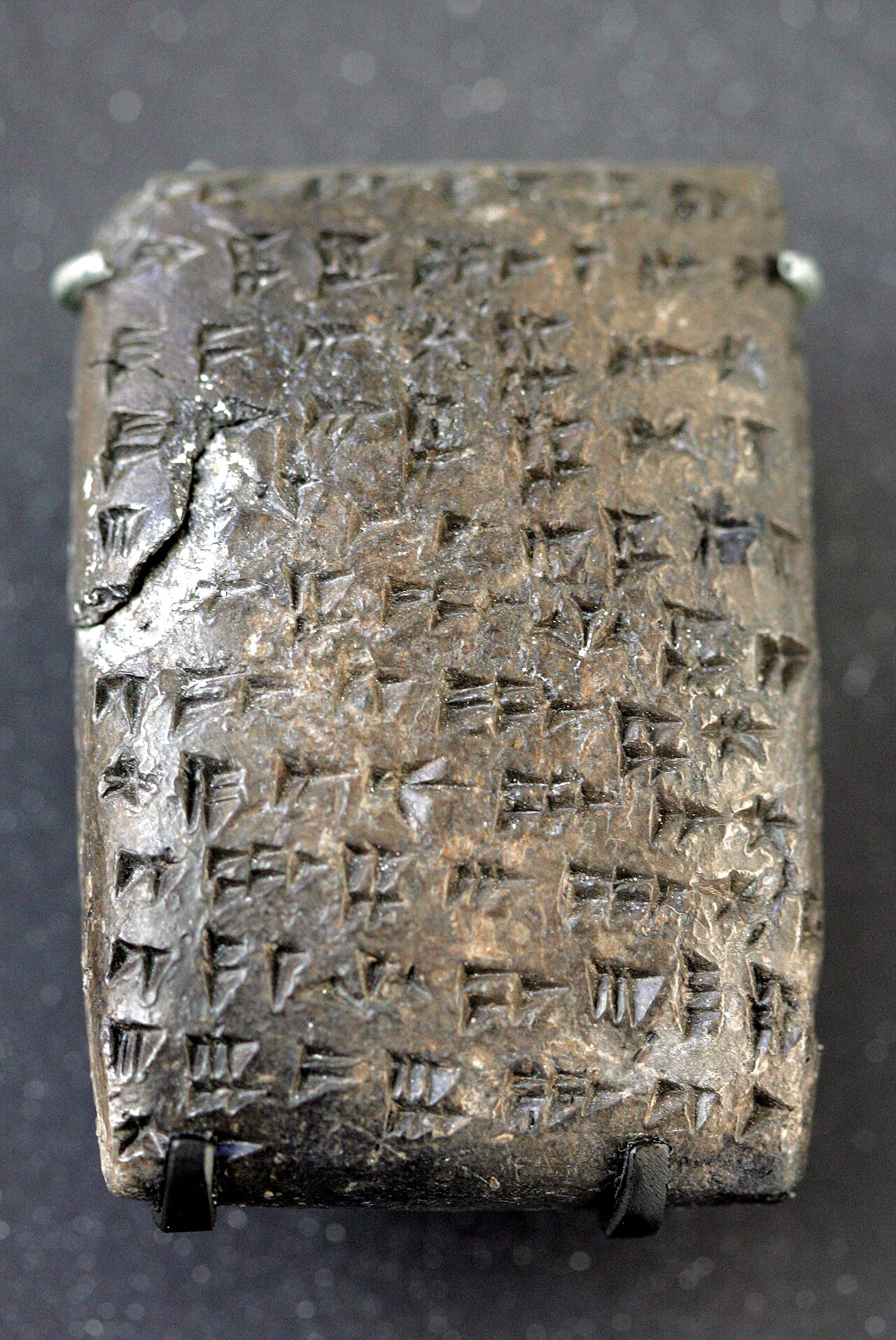
The KumarbiKumarbiHurrian divine figure in Hittite CTH 344; challenges Anu and carries the storm god after swallowing his seed.Glossary · Click to read the explanation song is connected with Hurrian tradition, although the version read here is Hittite. UgaritUgaritAncient city and kingdom at Ras Shamra on the Syrian coast, flourishing between the fourteenth and early twelfth centuries BCE and preserving multilingual archives.Glossary · Click to read the explanation also preserves Hurrian-language texts, including the incantation tablet shown here, dated about 1400–1200 BCE. Language, version and setting are distinct aspects of textual history. [2][3]
References and notes
- The Metropolitan Museum of Art — Mesopotamia,2000–1000BCE Timeline and Hurrian/Mitanni context. Return to the text ↑
- Amir Gilan, The Social Setting of the Hurro-Hittite Song of Emergence Chapter summary and metadata only. Return to the text ↑
- Musée du Louvre — AO12016 Tablet identity, language and date: an incantation from Ras Shamra. Return to the text ↑
Research history
Substantive changes are retained here. Minor copy edits remain in the internal operational log.
-
Substantive record update
Suggest a correction · Suggest a source for this record
Cite this record
IL Archive, «Hurrians», Edition 2, https://ilarchive.com/en/entities/hurrians