Entity
Kumarbi
A reference page linking a name, group, or concept to the materials that discuss it.
Hurrian god in Hittite songs from Hattusha; he overthrows Anu and carries the storm god. A study of CTH 344, contested genealogy, and Greek parallels.
Estimated reading time: 7 min Published Last reviewed:
Share article

Text
Introduction
Kumarbi is a Hurrian god known chiefly through songs written down by HittiteHittitesAncient people and kingdom of Anatolia, dominating much of Anatolia and northern Syria around 1650–1200 BCE.Glossary · Click to read the explanation scribes at HattushaHattusha, Hittite capitalHittite capital near Boğazkale in present-day Turkey, preserving witnesses to treaty traditions.Glossary · Click to read the explanation during the Late Bronze AgeLate Bronze AgeAn archaeological period around 1600–1200 BCE in much of the Near East, with international diplomacy, exchange and religious diversity; its endpoints vary by region.Glossary · Click to read the explanation. A story of kingship in heaven places him between Anu and the storm god; other songs make him the storm god’s challenger. This entry examines what the damaged tablets actually preserve, why scholars dispute the divine genealogy and the order of the songs, and how far comparison with Greek myth can take us.[1][2]
Who was Kumarbi?
Kumarbi belongs to the religious world of the HurriansHurriansAncient Near Eastern groups and language, prominent in northern Mesopotamia, the Levant and Anatolia in the second millennium BCE.Glossary · Click to read the explanation, whose language and traditions were influential in northern MesopotamiaMesopotamiaHistorical region associated with the Tigris and Euphrates: Uruk, Ur, Eridu, cuneiform, Sumer, Akkad, Babylon and Assyria, their languages and cults, and the limits of archaeological evidence.Glossary · Click to read the explanation, northern Syria, and AnatoliaAnatoliaAnatolia is the region occupying the Asian part of present-day TurkeyGlossary · Click to read the explanation during the second millennium BCE. The opening of the Song of Ullikummi calls him a “father of gods”; scholarship also associates him with the Hurrian city of Urkesh. These are divine titles and cultic or literary associations, not the biography of a historical king. “Kumarbi Cycle” is a modern grouping of interconnected songs, not the surviving ancient title of one complete book.[4][5]
The textual witnesses and their dates
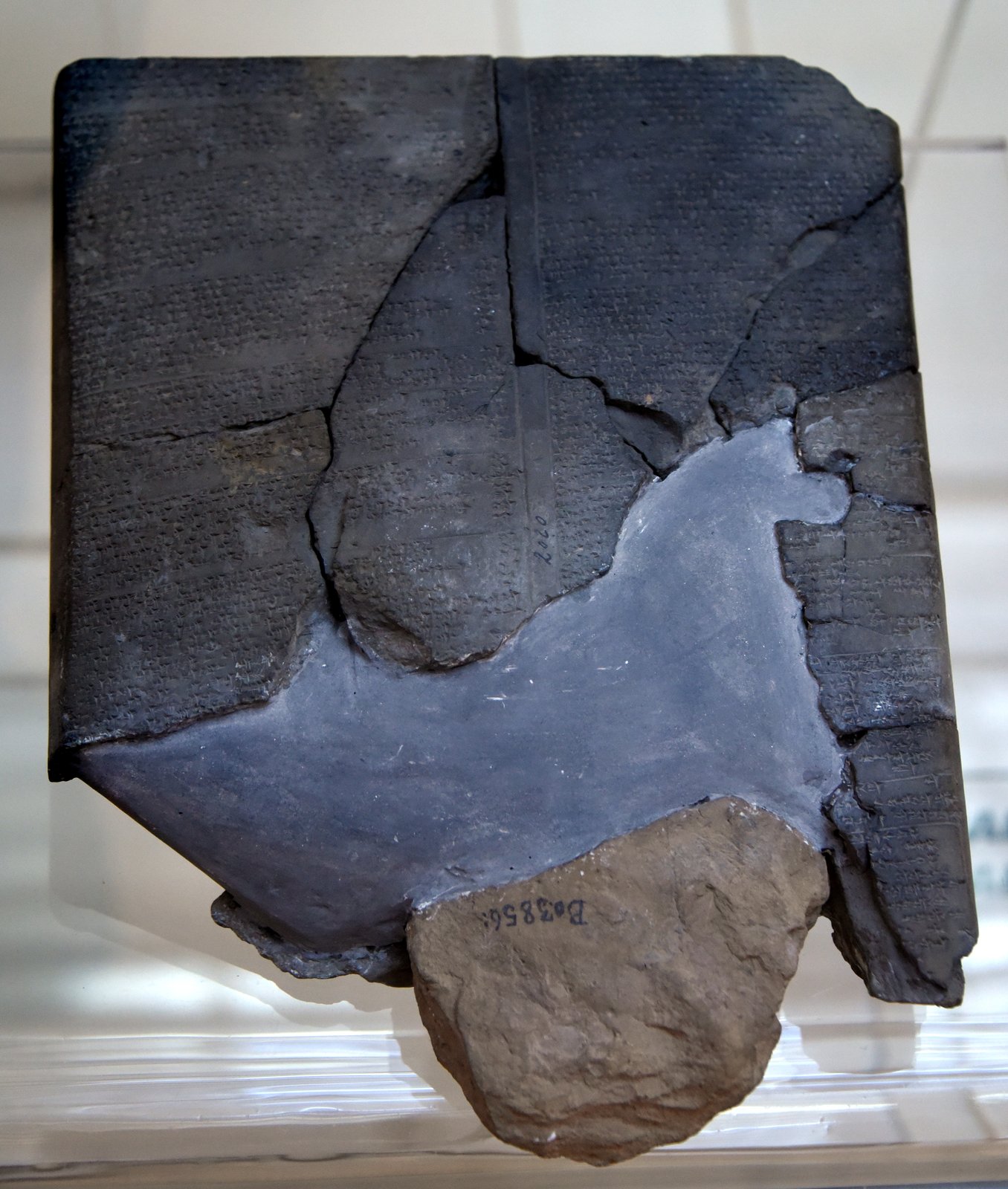
The succession narrative appears in the Hittite text CTH 344, commonly called the Song of Going Forth or Song of Emergence, formerly “Kingship in Heaven” or “Song of Kumarbi.” Damaged cuneiformCuneiformWriting with wedge-shaped signs, developed from Mesopotamian recording traditions and used for several languages from the third millennium BCE.Glossary · Click to read the explanation witnesses were recovered at Hattusha. The TITUS inventory gives the composite KUB 33.120 + KUB 33.119 + KUB 48.97 + KUB 36.31 + KBo 52.10, alongside witness KUB 36.1. An editorially assembled text is not a single intact tablet, and line numbers in a continuous online translation should not automatically be equated with a tablet’s face, column, and lines.[1][2]
The Hittite manuscripts belong to the Late Bronze Age, commonly discussed within the fourteenth to thirteenth centuries BCE. They may adapt earlier Hurrian narrative material whose original text has not survived intact. The mythical time of the first divine rulers cannot be converted into historical years; likewise, a manuscript’s date is not automatically the date of composition of every episode or tradition it contains.[5][7]
Succession and Anu’s overthrow
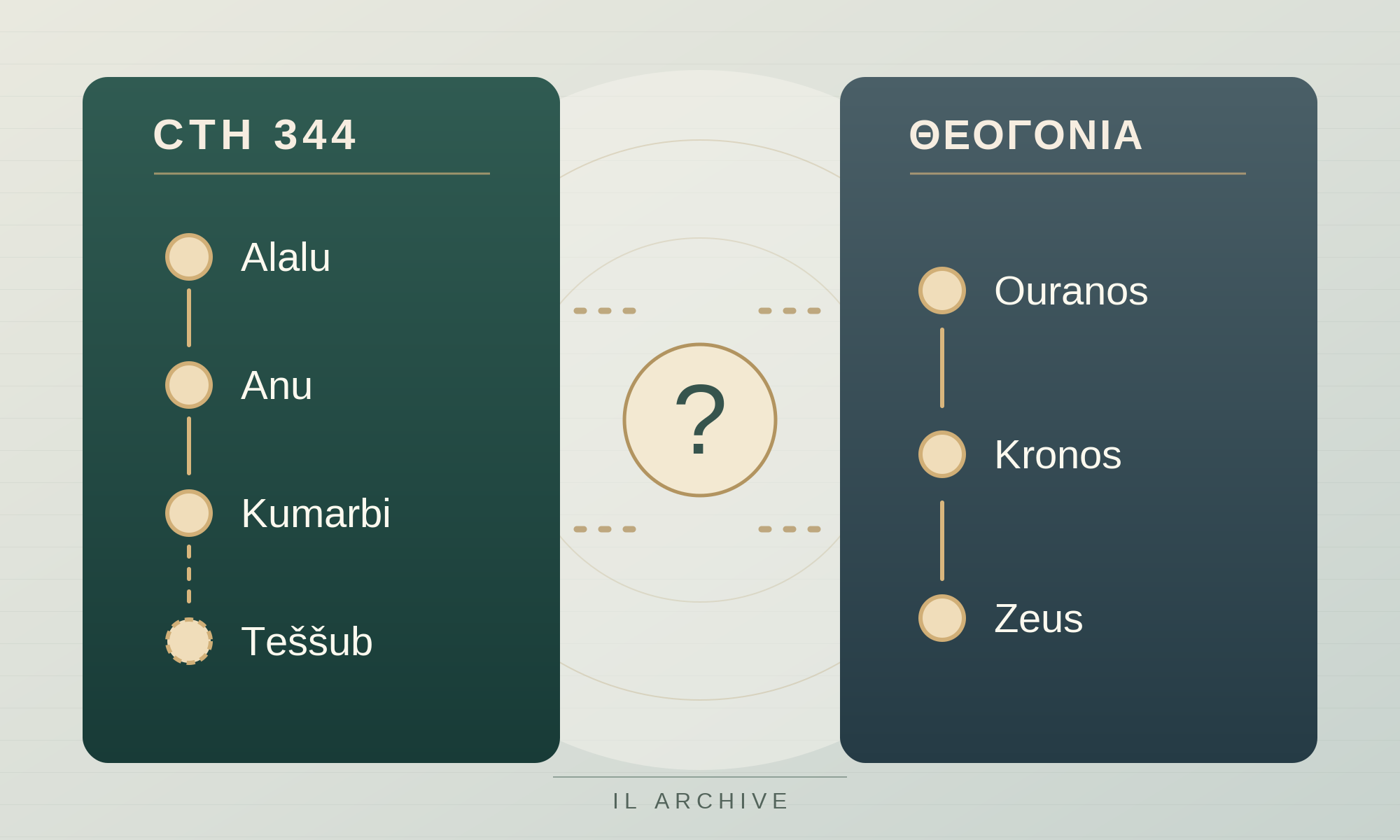
The song invokes primeval gods as listeners. AlaluAlaluFirst heavenly ruler in the surviving Kumarbi song; defeated by Anu, he flees to the dark earth.Glossary · Click to read the explanation rules in heaven for nine years while AnuAn / AnuAn is the Sumerian sky god, called Anu in Akkadian. The sign AN by itself does not identify him: it also denotes sky or divinity.Glossary · Click to read the explanation, the Mesopotamian sky god, serves him and presents a drinking cup. In the ninth year Anu defeats Alalu, who flees to the dark earth, and takes his throne. The picture of service and nine years repeats with Kumarbi attending Anu. Kumarbi then challenges him; Anu flees upward, but Kumarbi seizes his feet and drags him down.[1]
Kumarbi bites off Anu’s genitals and swallows his “manhood,” only for the act to make him pregnant. Anu announces the storm god, the deified river AranzahAranzahRiver as a divine figure, named among those Kumarbi carries in the Hittite song.Glossary · Click to read the explanation, and TashmishuTashmishuDivine figure named in Kumarbi’s pregnancy with the storm god and the river Aranzah.Glossary · Click to read the explanation, a divine companion of the storm god, as beings carried inside him. The episode makes divine succession a drama of violent and unexpected birth, not an event in human history. The storm god is Teššub in the Hurrian setting, while phonetic indications in the Hittite copy point to the Hittite Tarḫunnaš. These names reveal adaptation for different cultural audiences.[1][10]
Pregnancy, the stone, and the missing conclusion
Kumarbi spits out matter, and a damaged passage describes Mount Kanzura receiving a fearsome god. A broken reference places him at NippurNippur / NuffarAncient Nippur (modern Nuffar, Iraq), major cult centre of Enlil and Ekur; excavations revealed sanctuaries, houses and thousands of cuneiform tablets across many periods.Glossary · Click to read the explanation, EnlilEnlilEnlil/Ellil: a major Mesopotamian god associated with destinies, kingship, and Ekur at Nippur, already prominent in third-millennium god lists. His name’s origin and cult beginnings remain debated.Glossary · Click to read the explanation’s Mesopotamian cult centre. Later passages concern ways the child might leave Kumarbi’s body and the intervention of EaEnkiMesopotamian deity also known as Ea, linked with Eridu and the Abzu (deep fresh waters), wisdom, incantations, and narratives of creation and cosmic order. Later written attestations do not identify the deity of Eridu’s earliest layers.Glossary · Click to read the explanation, god of wisdom. Kumarbi demands the boy so that he may devour him, while the diorite stone that injures his teeth points to a stone-substitution trick. Because crucial lines are missing, the precise sequence of this trick comes partly from editorial reconstruction rather than uninterrupted tablet text.[1][9]
The storm god’s eventual kingship is a plausible reading of the wider narrative and accords with other songs in which he is already king. CTH 344, however, has not preserved an uninterrupted enthronement ending. It directly attests the sequence Alalu–Anu–Kumarbi, the storm god’s conception, and further divine conflict, not a complete coronation scene.[1][9]
A disputed phrase changes the family tree
The crux lies in KUB 33.120, obverse column I, lines 19–20. The following brief passage reproduces a published transliteration quoted by Christian ZgollChristian ZgollScholar at Göttingen working on ancient languages and comparative mythology, including Greek poetry and Hittite texts.Glossary · Click to read the explanation, not an independent examination of the original tablet; the raised brackets mark uncertainty in a damaged sign.[10]
The usual translation is, in substance, “Kumarbi, the descendant of Alalu, fought Anu.” Zgoll proposes a different grammatical attachment: “Kumarbi fought Anu, the descendant of Alalu.” The Sumerogram NUMUN denotes “seed/offspring” and bears an AkkadianAkkadianAn ancient East Semitic language written in cuneiform from the third millennium BCE; its varieties include Babylonian and Assyrian, and it served in international diplomacy.Glossary · Click to read the explanation possessive -ŠU; without a phonetic case ending fixing the apposition, he argues, the phrase can modify Anu instead of Kumarbi. His case cites comparable Hittite constructions. This makes his translation possible, but does not by itself prove that Anu was Kumarbi’s father: a single father–son line is a broader reconstruction built from other evidence too.[10]
Harry Hoffner instead reconstructed two rival dynasties, treating Kumarbi as Alalu’s son and Anu as the storm god’s father. Zgoll counters that Kumarbi is also a parent through pregnancy and birth and that the rival-dynasty model is not stated by the surviving text. Another fragment, KUB 33.110, has a broken paternal name beginning with “A-”; restoration as Anu or Alalu is a proposal, not a complete surviving name. Here the secure succession of rulers is distinguished from the contested genealogy: Zgoll’s alternative deserves consideration, not automatic elevation into fact.[10]
Kumarbi across the other songs
The Song of Ullikummi (CTH 345) opens in a world where the storm god is already king. Kumarbi tries to overthrow him by coupling with a rock that gives birth to the stone being Ullikummi. Placed on the shoulder of Upelluri, who supports heaven and earth, the creature grows until it threatens the gods. The poem involves Urkesh, the sea god and his messengers, Šauška, a Hurrian goddess who attempts to confront the adversary, and Ea, who seeks a way to sever Ullikummi from the source of his strength. Hans Gustav Güterbock’s 1951 edition combines several manuscript copies, whose tablet divisions and lengths vary; its reconstructed account must not be attributed wholesale to a single witness.[4]
Scholars also associate the Song of Ḫedammu (CTH 348) with a sea monster, the Song of Silver (CTH 364) with another son of Kumarbi, and the Song of the Protective Deity LAMMA (CTH 343) with the fitness of a divine ruler. Shared figures and Ea’s participation do not settle the relative composition dates or establish that an ancient scribe possessed a fixed “cycle” in the modern editorial order. Kumarbi’s role as an adversary extends beyond his famous act against Anu.[4][6]
Mesopotamia, Ugarit, and Greece
The cast blends traditions: Alalu, Anu, Ea, and Nippur look toward Mesopotamia; Kumarbi, Teššub, and Urkesh toward Hurrian culture; the writing of the storm god toward a Hittite audience. Zgoll compares god listsGod ListsTexts collecting divine names for preservation, teaching and classification, with varying theological organization.Glossary · Click to read the explanation from UgaritUgaritAncient city and kingdom at Ras Shamra on the Syrian coast, flourishing between the fourteenth and early twelfth centuries BCE and preserving multilingual archives.Glossary · Click to read the explanation, including one placing DaganDaganA god worshipped in Syria and Mesopotamia, especially at Tuttul and Terqa on the Euphrates, and associated with royal authority. His name appears as Dagon in the Hebrew Bible; no ancient image of him is securely identified.Glossary · Click to read the explanation in a position associated with Kumarbi and a Hurrian list that orders Kumarbi and Teššub differently. These are list evidence interpreted by a modern scholar; they are not narrative tablets independently preserving the castration scene or a complete shared family tree.[10]
In Hesiod’s TheogonyHesiod’s TheogonyGreek poem on divine generations and Zeus’s kingship; its surviving form does not identify all of Hesiod’s sources.Glossary · Click to read the explanation, KronosKronosGreek divine figure and Zeus’s father; Hesiod connects his reign with struggles between divine generations.Glossary · Click to read the explanation castrates his father OuranosOuranosSky as a divine figure in Greek poetry; Kronos’s father in Hesiod.Glossary · Click to read the explanation and swallows his own children; ZeusZeusZeus is the sky god and leading deity in many Greek traditions. In the Iliad he presides over divine gatherings while others can still speak and object.Glossary · Click to read the explanation escapes through a substitution involving a stone and ultimately assumes power. The correspondences in castration, swallowing, stone, and generational challenge are striking. Yet Kumarbi carries newly conceived gods, whereas Kronos swallows already-born children; the two figures are not interchangeable. Such patterned similarities support examining historical exchange across Anatolia and the eastern Mediterranean, while Erik van DongenErik van DongenResearcher who examined Kumarbi–Hesiod connections in a 2010 doctoral thesis at University College London.Glossary · Click to read the explanation considers several possible overland and maritime routes without identifying a documented single chain of transmission.[8][9]
A chronology and a measured conclusion
- Mythic sequence: nine years each for Alalu and Anu before their defeat—narrative time, not datable history.[1]
- Second millennium BCE: Hurrian traditions circulate in northern Mesopotamia, Syria, and Anatolia; no intact Hurrian prototype fixes the date of each composition.[5][7]
- Approximately fourteenth–thirteenth centuries BCE: a conventional broad setting for Late Bronze Age Hittite copying at Hattusha; individual manuscripts and episodes may require different dates.[2][7]
- Late eighth or early seventh century BCE: the usual setting of HesiodHesiodGreek poet whose major work is generally dated to the late eighth or early seventh century BCE, including the Theogony.Glossary · Click to read the explanation’s Greek poem, later than the Hittite witnesses; priority does not itself prove a particular route of transmission.[8][9]
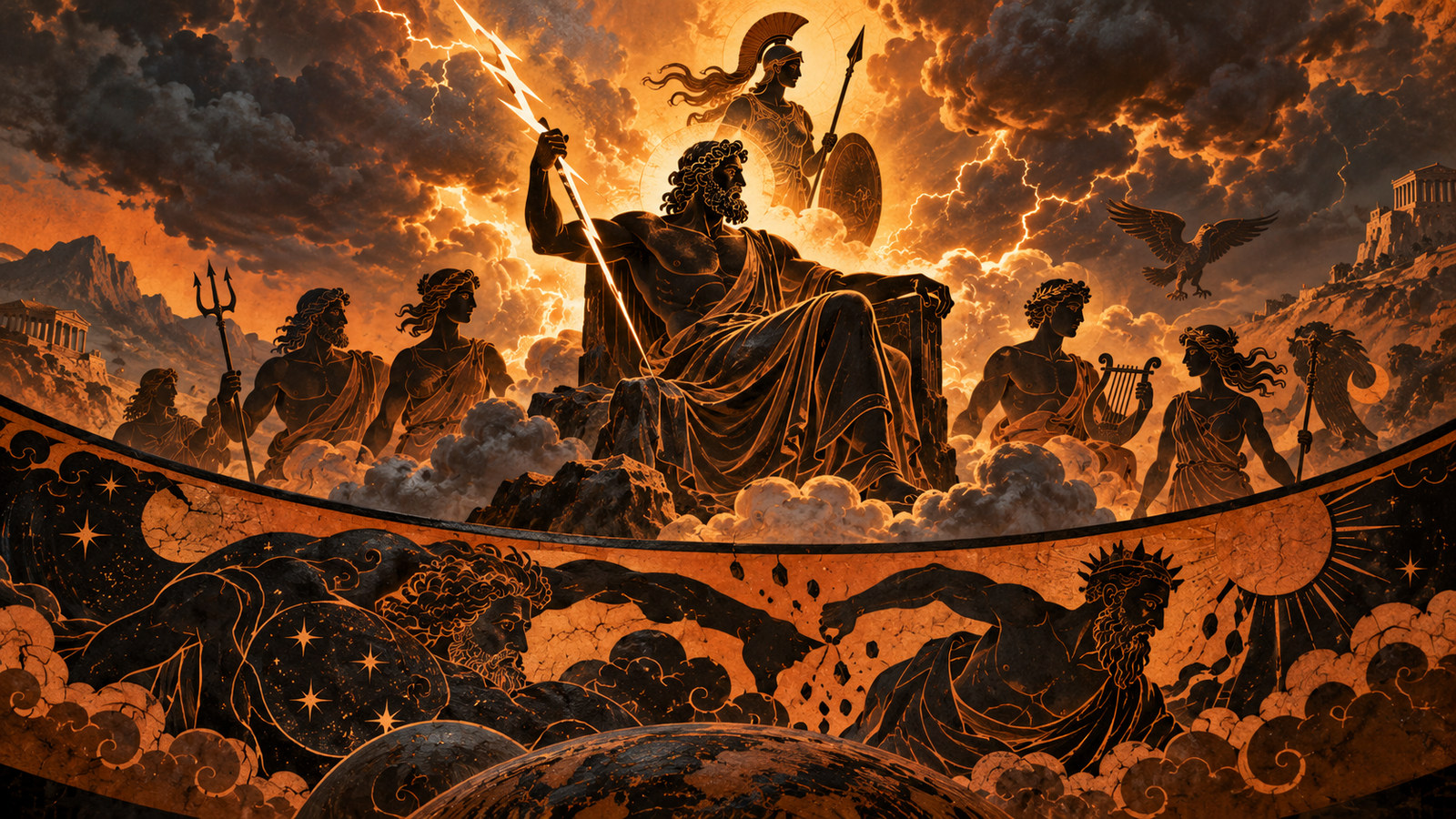
“Kumarbi, the Hurrian Kronos” can be a comparative shorthand but not a claim of identical gods. The strongest preserved evidence concerns divine kingship, the assault on Anu, and the conception of the storm god. The precise pedigree, lost ending, and pathways by which motifs could have circulated to Greece remain questions of unequal and stated evidential strength. The accompanying generated cover is a modern symbolic illustration, not an archaeological artefact or an authenticated depiction of the god.[1][9][10]
References and notes (9)
- TITUS, Corpus of Hittite Mythological Texts — Translation, CTH 344, German electronic translation (not an autopsy of the cuneiform). — German translation, not a direct tablet reading; extant and restored passages. Continuously numbered translation lines 9–79, 105–160, 204–251; translation notes 9–25. Return to the text ↑
- Hethitologie-Portal Mainz, TLHdig catalogue CTH 344; LAMAN KUB 33.120 metadata. — Institutional CTH 344 catalogue and KUB 33.120 metadata; not textual decipherment. TLHdig CTH 344 list; LAMAN fragment 33.120 description, inventory and attestation table. Return to the text ↑
- Hans Gustav Güterbock, “The Song of Ullikummi: Revised Text of the Hittite Version of a Hurrian Myth”, Journal of Cuneiform Studies 5/4 (1951), 135–161. — Güterbock 1951, edited manuscripts and summary, not a single tablet. Printed pp. 135–140, especially the manuscript reconstruction and epic summary at 135–139 (PDF pages 2–7, counting first PDF page as 1). Return to the text ↑
- Amir Gilan, “Let Those Important Primeval Deities Listen: The Social Setting of the Hurro-Hittite Song of Emergence”, in Gods and Mortals in Early Greek and Near Eastern Mythology (2021), 19–36. — Publisher chapter abstract only; no claim to reading pp. 19–36 in full. Cambridge University Press description and abstract, not chapter full text. Return to the text ↑
- Jean Catsanicos, “Études anatoliennes : Hittite et Hourrite”, EPHE Annuaire 10 (1996), 16; plus TLHdig catalogue of the songs. — Catsanicos song list, not the full text of the songs. Printed p. 16 only: CTH 343/344/348/364 identification. Return to the text ↑
- Hans G. Güterbock, “The Hittite Version of the Hurrian Kumarbi Myths: Oriental Forerunners of Hesiod”, AJA 52/1 (1948), 123–134; citation in UChicago ISAC reprint metadata. — Introductory excerpt only, not the entire 1948 article; date range is the author’s historical estimate. Reprint indexed excerpt from opening of 1948 article, esp. general dating 1400–1200 BCE; not a full reading. Return to the text ↑
- Hesiod, Theogony, esp. 154–210 and 453–506; English translation by Hugh G. Evelyn-White (1914), Perseus text; chronological notice for Hesiod in IL Archive public identity 517. — Published English translation, not Greek manuscript collation. Theogony 453–490 consulted in English translation; 154–210 section checked by section index; not a full Greek-text collation. Return to the text ↑
- Erik van Dongen, “The ‘Kingship in Heaven’-Theme of the Hesiodic Theogony: Origin, Function, Composition”, Greek, Roman, and Byzantine Studies 51 (2011), 180–201. — Stone episode, source comparison, transmission routes and Alalu, replacing previously cited but inaccessible 2010 thesis for these claims. Printed pp. 182–190, 194–195; PDF pages 3–11 and 15–16 counting cover as p. 1. Return to the text ↑
- Christian Zgoll, “The Hittite ‘Theogony’ or Song of Going Forth (CTH 344): Stratification of Mythical Traditions”, Journal of Ancient Near Eastern Religions 21 (2021), 208–227. — Accessible author full text, 2021; philological interpretations are attributed to Zgoll, not independently collated. Printed pp. 208–225, esp. 209–213 and 221–225 (transliteration at KUB 33.120 obv. I 19–20); HTML full text at Academia.edu. Return to the text ↑
Suggest a correction · Suggest a source for this record
Cite this record
IL Archive, «Kumarbi», https://ilarchive.com/en/entities/kumarbi
Continue reading
Related readings