Person · Figure
Suppiluliuma I
- Names
- Shuppiluliuma I · Suppiluliuma I · Suppiluliumas · Šuppiluliuma I
- Timeline
- From 1344 BCE to 1322 BCE
- Region
- The Levant, Anatolia and Mesopotamia
Hittite king of the fourteenth century BCE who broke the power of Mitanni and brought northern Syria under Hatti. Treaties, letters and his son's prayers tell his story.
Estimated reading time: 6 min Published Last reviewed:
Share article
Text
Introduction
Suppiluliuma I was a king of the HittitesHittitesAncient people and kingdom of Anatolia, dominating much of Anatolia and northern Syria around 1650–1200 BCE.Glossary · Click to read the explanation, whose kingdom of Hatti had its capital at HattushaHattusha, Hittite capitalHittite capital near Boğazkale in present-day Turkey, preserving witnesses to treaty traditions.Glossary · Click to read the explanation in central AnatoliaAnatoliaAnatolia is the region occupying the Asian part of present-day TurkeyGlossary · Click to read the explanation, in today's TurkeyTurkeyTurkey is a modern country including Anatolia and territory in southeastern EuropeGlossary · Click to read the explanation. He ruled in the Late Bronze AgeLate Bronze AgeAn archaeological period around 1600–1200 BCE in much of the Near East, with international diplomacy, exchange and religious diversity; its endpoints vary by region.Glossary · Click to read the explanation, about 1344 to 1322 BCE in one widely used scheme, though the exact years are debated. In his reign Hatti defeated its eastern rival, the kingdom of Mitanni, and took control of northern Syria. With that, Hatti joined the small club of great powers of the age, beside EgyptEgyptEgypt lies mainly in northeastern Africa and includes the Sinai Peninsula in AsiaGlossary · Click to read the explanation, Babylonia and Assyria. [1][2][3]
We know him from treaties he made, a few letters, and texts written after his death under his son Mursili IIMursili IIHittite king of the late fourteenth century BCE, party to a loyalty treaty with Amurru’s ruler.Glossary · Click to read the explanation: a long account of his wars and a set of prayers. This entry sets out what these sources say and where they disagree. [2][4]
A disputed road to the throne
Suppiluliuma was a son of a king named Tudhaliya: one of his seal impressions names this Tudhaliya as his father. In the surviving account of his wars he first appears as a prince who fights for his father against rebel lands. [1][4][5]
How he became king is known from one source only, a prayer of his son Mursili. It says that the heir to the throne was another prince, Tudhaliya the Younger. The nobles, the officers and Suppiluliuma himself had sworn an oath of loyalty to him. Then Suppiluliuma "wronged" him, the nobles went over to Suppiluliuma, and Tudhaliya and the brothers who stood by him were killed. Others were sent away to Alasiya, which is Cyprus. In plain words, Suppiluliuma took the throne by force from the heir he had sworn to serve. [2]
The wars with Mitanni and the conquest of Syria
At that time Mitanni, a kingdom of the HurriansHurriansAncient Near Eastern groups and language, prominent in northern Mesopotamia, the Levant and Anatolia in the second millennium BCE.Glossary · Click to read the explanation in northern MesopotamiaMesopotamiaHistorical region associated with the Tigris and Euphrates: Uruk, Ur, Eridu, cuneiform, Sumer, Akkad, Babylon and Assyria, their languages and cults, and the limits of archaeological evidence.Glossary · Click to read the explanation and Syria, was Hatti's main rival. Its king was Tushratta. A treaty made later by Suppiluliuma tells the story from the Hittite side. Tushratta, it says, grew "presumptuous". Suppiluliuma crossed the Euphrates, ravaged the land of Ishuwa, where rebels against his father had found shelter, and raided Mitannian territory; Tushratta came out against him but did not fight. On his way back he took AleppoAleppo, historical cityNorthern Syrian city whose region appears in Mari reports, with architecture from multiple periods.Glossary · Click to read the explanation and Mukish, the land of the city of Alalakh, then Nuhashshe, Qatna and other Syrian states. The treaty says that he did all this in a single year of campaigning. [5]
Soon afterwards Tushratta was murdered by one of his sons, and Mitanni fell apart. Another son, Shattiwaza (older translations read the name Mattiuaza), fled to Suppiluliuma. The Hittite king gave him one of his daughters as his wife and set him on his father's throne as a subordinate king. [5]
The last Mitannian stronghold in Syria was Carchemish, a city on the Euphrates on today's border between Syria and Turkey. Suppiluliuma besieged it around 1325 BCE and took it. He made his son Sharri-Kushuh, also called Piyassili, its ruler under Hatti. Aleppo too came to be ruled by a branch of the Hittite royal family. [1][4][5]
Ruling through treaties
Suppiluliuma did not rule these lands directly. He bound their kings to him by treaties. Such a treaty opened with a short history that explained why the other king owed loyalty. Then came the rules, and a list of gods called as witnesses. A typical clause, in the treaty with Tette of Nuhashshe, says that the vassal shall be at peace with the Hittite king's friend and an enemy to his enemy. [5]
Several of these treaties survive. Besides those with Shattiwaza and Tette, there is a treaty with Huqqana, ruler of the land of Hayasa, to whom Suppiluliuma had given his sister in marriage. In a letter to Niqmaddu II of UgaritUgaritAncient city and kingdom at Ras Shamra on the Syrian coast, flourishing between the fourteenth and early twelfth centuries BCE and preserving multilingual archives.Glossary · Click to read the explanation he tells him to keep his treaty and to watch how the Great King will deal with the kings of Nuhashshe and Mukish, who had broken theirs. Aziru of AmurruAmurru, Late Bronze Age kingdomLevantine kingdom in Hittite treaties; its political name differs from the broader designation Amorites.Glossary · Click to read the explanation became his subject, probably late in the reign, and stayed loyal when Nuhashshe and the Syrian kingdom of Kinza rebelled. [4][5][6]
Marriage served the same aim. Suppiluliuma took a daughter of the king of BabylonBabylonBabylon is an ancient city in central present-day Iraq, south of BaghdadGlossary · Click to read the explanation as his second wife. In Hatti she used the title Tawannanna, borne by Hittite queens, and her name appears beside his on documents from Ugarit. [2]
Letters to Egypt
A letter from Suppiluliuma was found at AmarnaAmarna / AkhetatenAmarna is the archaeological site of Akhetaten, Akhenaten’s fourteenth-century BCE capital in Middle Egypt, preserving royal boundary stelae, temples, houses and cemeteries.Glossary · Click to read the explanation, the capital of AkhenatenAkhenatenEgyptian eighteenth-dynasty king, formerly Amenhotep IV, who reorganized royal religion around Aten and founded Akhetaten.Glossary · Click to read the explanation. Like the other letters between great kings, it is written in AkkadianAkkadianAn ancient East Semitic language written in cuneiform from the third millennium BCE; its varieties include Babylonian and Assyrian, and it served in international diplomacy.Glossary · Click to read the explanation cuneiformCuneiformWriting with wedge-shaped signs, developed from Mesopotamian recording traditions and used for several languages from the third millennium BCE.Glossary · Click to read the explanation, the shared language of diplomacy. Suppiluliuma calls the new pharaoh "my brother" and asks why he has held back the gifts his father used to send. He asks for gold and silver statues and for a marriage bond between the two houses, and he sends silver vessels in the shape of a stag and a young ram. The pharaoh is called Huriya. Scholars disagree whether he was Akhenaten, TutankhamunTutankhamunLate Eighteenth-Dynasty Egyptian king, originally Tutankhaten, later Tutankhamun as official patronage of Amun resumed. Famous for tomb KV62; aspects of his parentage and death are debated.Glossary · Click to read the explanation or Smenkhkare. [1]
Later, while Suppiluliuma was besieging Carchemish, a widowed queen of Egypt wrote to ask for one of his sons as husband. After long doubts he sent his son Zannanza, who was killed on the way. Suppiluliuma answered with new raids on Egyptian-held land. [1][2]
Plague and judgment
Prisoners from these raids, Mursili believed, brought a plague into Hatti. It lasted some twenty years and seems to have killed Suppiluliuma himself and then his eldest son and successor, Arnuwanda II. Mursili asked the gods through oracles why they were angry, and every answer pointed to his father. Suppiluliuma had broken his oath to Tudhaliya the Younger. He had broken an old treaty with Egypt, sworn before the Storm-god of Hatti, by attacking Amqa, an Egyptian border district. And the offerings to the Euphrates river had stopped in his days. [2]
The same prayer still praises his rule. In Itamar Singer's translation: [2]
These lines come from Mursili's "First" Plague Prayer (CTH 378.I, §4), as translated in Singer's Hittite Prayers; the square brackets mark a word restored where the tablet is broken.
How we know: sources and dates
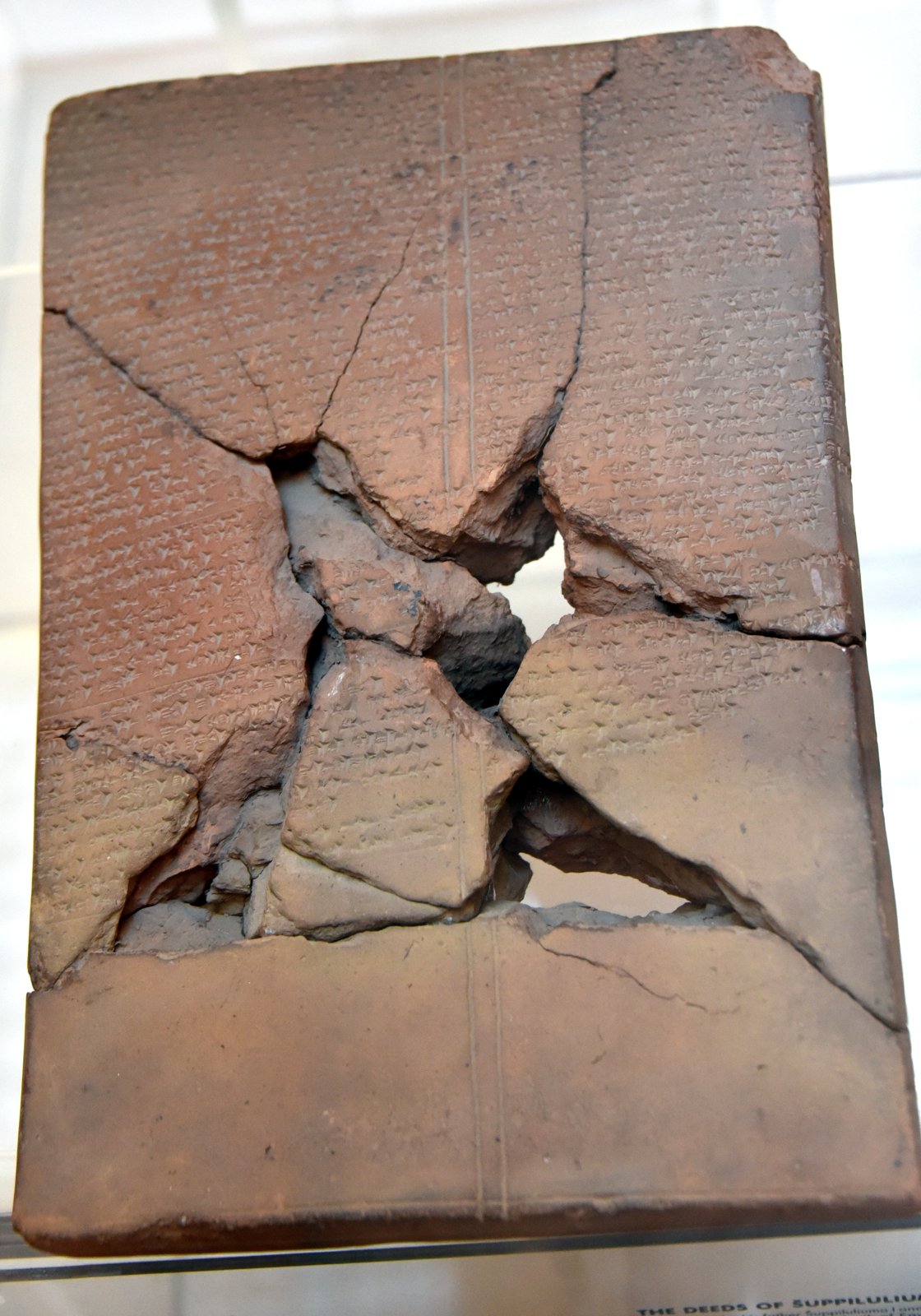
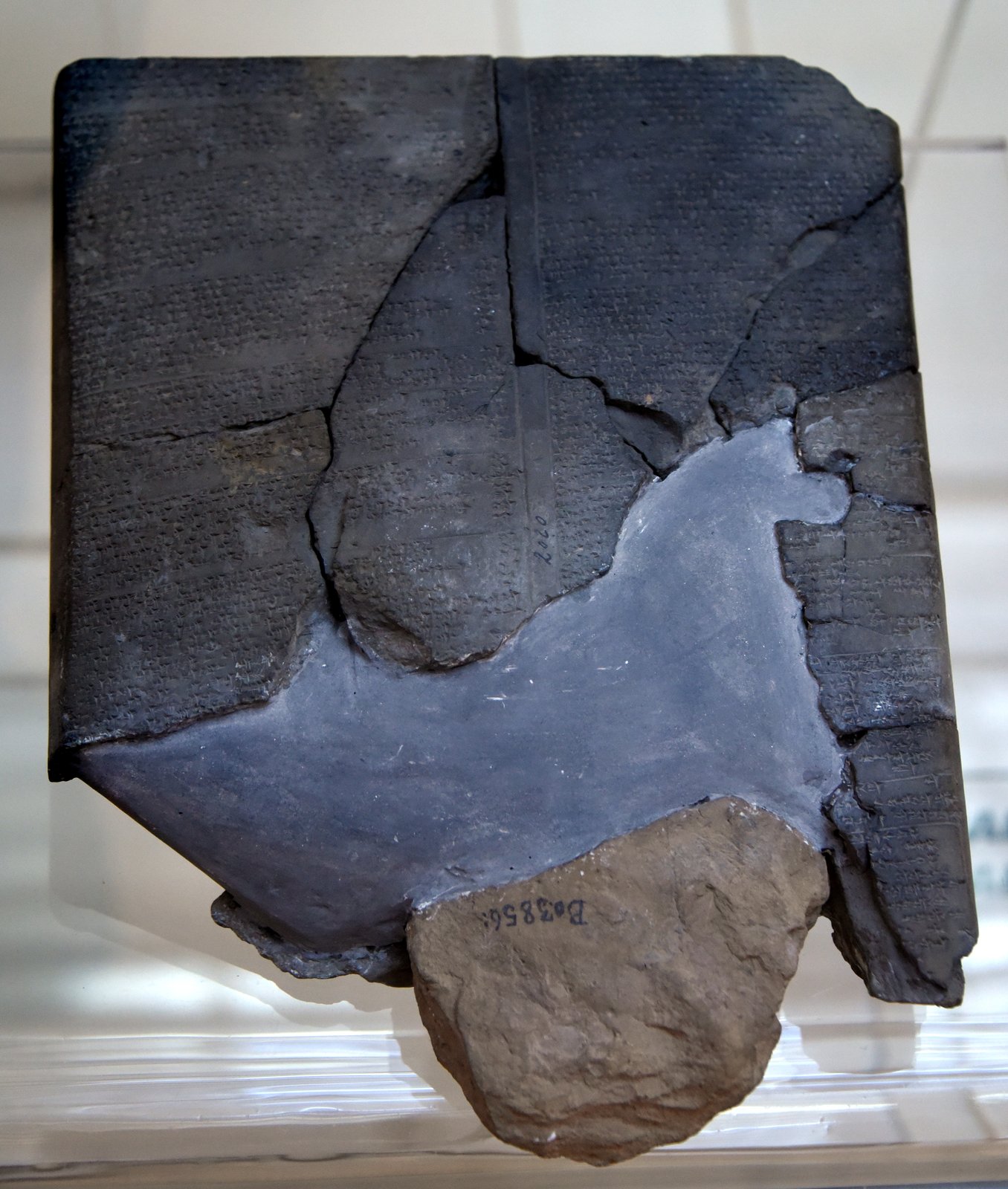
The main narrative is the Deeds of Suppiluliuma, written down under Mursili II. It probably filled about twelve clay tablets, and less than a fifth survives. Some copies end with a note that the text had not yet been engraved on a bronze tablet. There may also have been a separate account told by the king himself, and the fragments of the two are hard to tell apart. So the order of events is partly a modern reconstruction, like a jigsaw puzzle with most of the pieces missing. [4]
The length of the reign is also debated. Older works gave him about forty years. In 1987 the scholars Wilhelm and Boese argued for about twenty, and later work, by Jared Miller and Elena Devecchi among others, has tested such schemes against the Amarna letters and the Egyptian dates. [3][7]
Quick answers
Who was Suppiluliuma I?
A Hittite king of the fourteenth century BCE who defeated Mitanni and brought northern Syria under Hittite control. [1][5]
How did he die?
Probably in the plague that struck Hatti at the end of his reign. [2]
References and notes (7)
- Harry A. Hoffner Jr., Letters from the Hittite Kingdom, ed. Gary M. Beckman, Writings from the Ancient World 15 (Atlanta: Society of Biblical Literature, 2009) P. 40 (seal impression naming Tudhaliya as Suppiluliuma's father); p. 70 (Theo van den Hout's summary: siege of Carchemish around 1325 BCE, the raids on Amqa, the widow's letter, Zannanza, the plague); text 96, pp. 277–279 (EA 41, Suppiluliuma to Huriya: introduction on the addressee, transliteration and translation); p. 314 (Suppiluliuma I reigned 1344–1322); glossary pp. 401–403 (Alalakh, Aleppo, Amarna Age, Carchemish). Return to the text ↑
- Itamar Singer, Hittite Prayers, ed. Harry A. Hoffner Jr., Writings from the Ancient World 11 (Atlanta: Society of Biblical Literature, 2002) Introduction, pp. 16–17; chapter III introduction, pp. 47–48; no. 11, Mursili's “Second” Plague Prayer (CTH 378.II) §§1–4, pp. 57–58; no. 12, Mursili's “First” Plague Prayer (CTH 378.I) §§1–4, pp. 61–62; chapter IV introduction, p. 70 (the Babylonian princess Tawannanna). Return to the text ↑
- Jared L. Miller, “Amarna Age Chronology and the Identity of Nibḫururiya in the Light of a Newly Reconstructed Hittite Text,” Altorientalische Forschungen 34 (2007): 252–293 Section 7, pp. 276–277 with notes 105–109: Wilhelm and Boese's 1987 reduction of Suppiluliuma's reign from some forty years to roughly twenty, and how scholars received it. Return to the text ↑
- Jared L. Miller, “The Placement of the Death of Tutḫaliya III and the Kinza/Nuḫḫašše Rebellion within the Deeds of Suppiluliuma I,” in Stefano de Martino and Jared L. Miller (eds.), New Results and New Questions on the Reign of Suppiluliuma I (Florence: LoGisma, 2013), 115–132 Pp. 115–117 (state of the Deeds: under 20% of an assumed 12 tablets; colophons of the Deeds and the first-person Annals, with the note that the text was not yet on a bronze tablet); pp. 122–127 (fragments moved since Güterbock 1956; the grandfather Tudhaliya alive in tablets 2–4); pp. 128–130 (conquest of Carchemish; Aziru's loyalty in the Nuhashshe and Kinza revolt; Suppiluliuma's letter to Niqmaddu II quoted in Beckman's translation). Return to the text ↑
- D. D. Luckenbill, “Hittite Treaties and Letters,” The American Journal of Semitic Languages and Literatures 37 (1921): 161–211 (JSTOR Early Journal Content, free to read) No. 1, KBo 1.1 (treaty of Suppiluliuma with Shattiwaza, read “Mattiuaza”), pp. 162–168: the historical prologue on Tushratta, Ishuwa, the one-year Syrian campaign, Tushratta's murder and the marriage of Shattiwaza; no. 2, KBo 1.3, pp. 172–176 (Shattiwaza's version, Piyassili at Carchemish); no. 3, KBo 1.4 (treaty with Tette of Nuhashshe), pp. 177–178. Return to the text ↑
- Rukiye Akdoğan, “Huqqana Antlaşması B Nüshasına Birleşen Yeni Bir Tablet Parçası / A New Join to Copy B of the Huqqana Treaty,” Colloquium Anatolicum 8 (2009): 45–76 Pp. 45–46 and the English summary pp. 64–67 (the two copies A and B of CTH 42, the two treaties on one text, fragments in Ankara and Istanbul); p. 57 n. 61 (the clause in which Suppiluliuma says he gave his sister to Huqqana as wife). Return to the text ↑
- Elena Devecchi and Jared L. Miller, “Hittite-Egyptian Synchronisms and their Consequences for Ancient Near Eastern Chronology,” in Jana Mynářová (ed.), Egypt and the Near East – the Crossroads (Prague: Charles University, 2011), 139–176 Pp. 143–144 (the Kurustama treaty broken under Suppiluliuma; EA 41 and the question of a later treaty); pp. 157–159 with n. 48 (the date of Suppiluliuma's first Syrian campaign and accession, and the length of his reign). Return to the text ↑
Suggest a correction · Suggest a source for this record
Cite this record
IL Archive, «Suppiluliuma I», https://ilarchive.com/en/people/suppiluliuma-i
Continue reading
Related readings