Person · Figure
Idrimi of Alalakh
- Names
- Idri-mi · Idrimi · Idrimi of Alalakh
- Timeline
- From 1475 BCE to 1450 BCE
- Region
- The Levant
A king of Alalakh in the fifteenth century BCE. Clay tablets confirm his rule, while a statue tells his story of exile, return and an oath to a Hurrian overlord, perhaps written decades after his death.
Estimated reading time: 5 min Published Last reviewed:
Share article
Text
Introduction
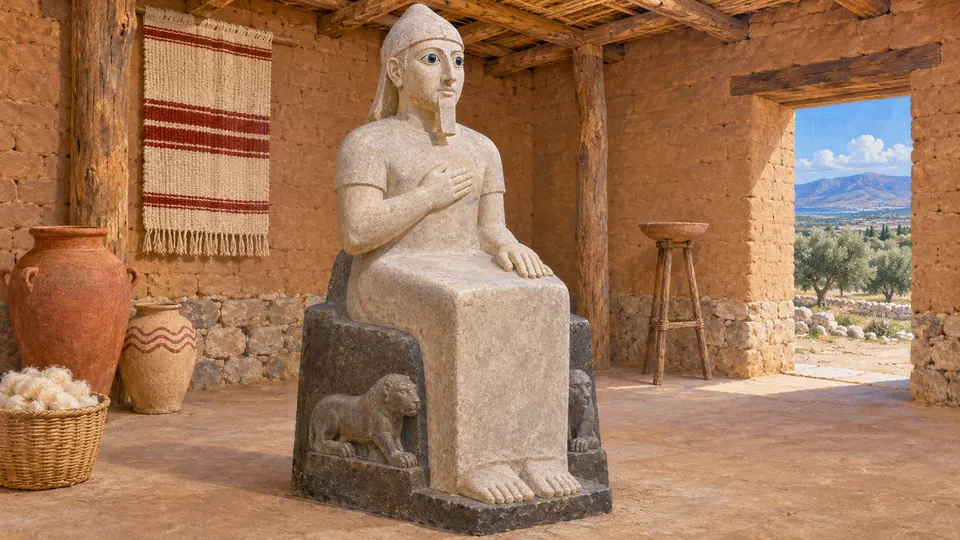
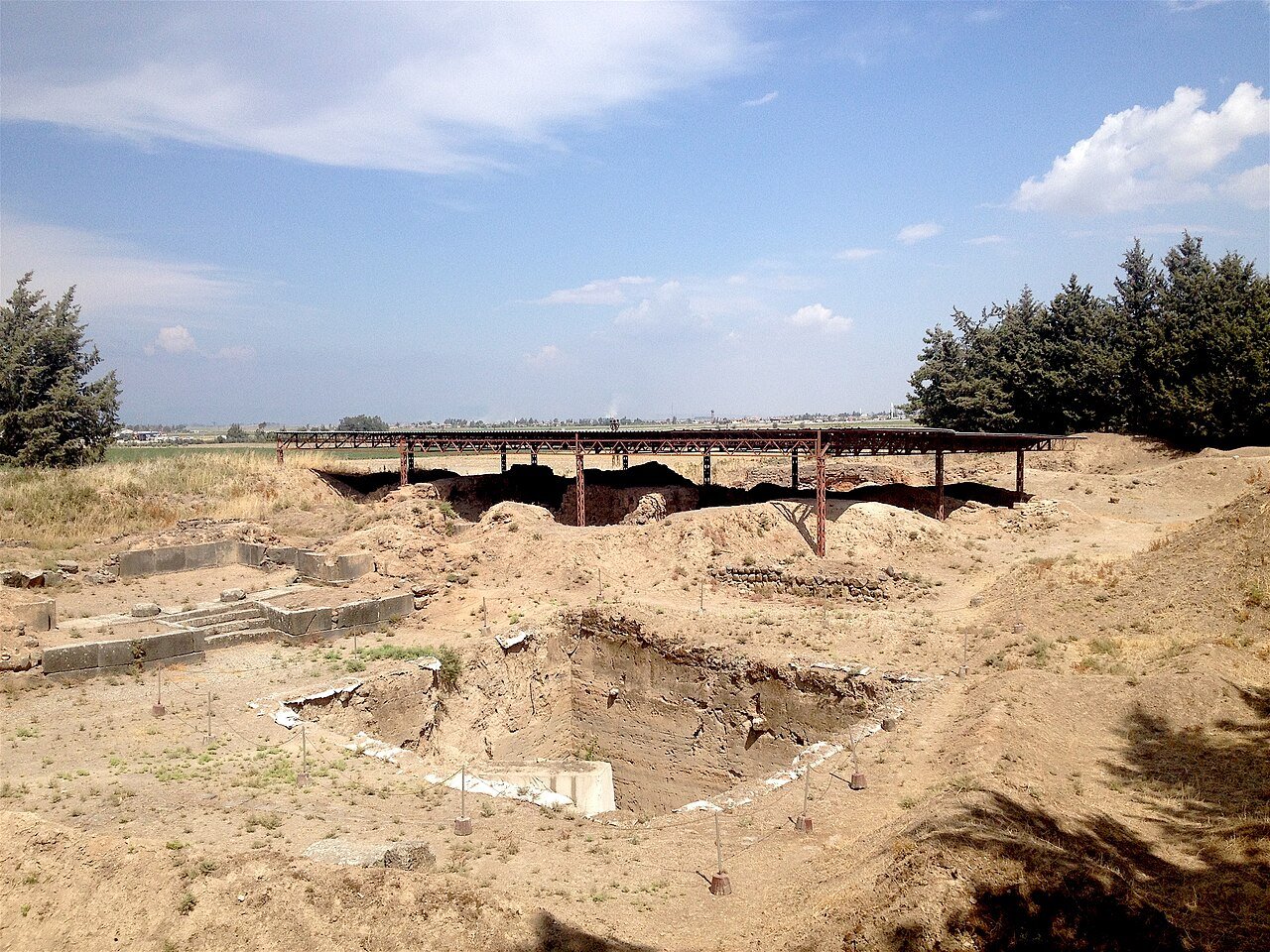
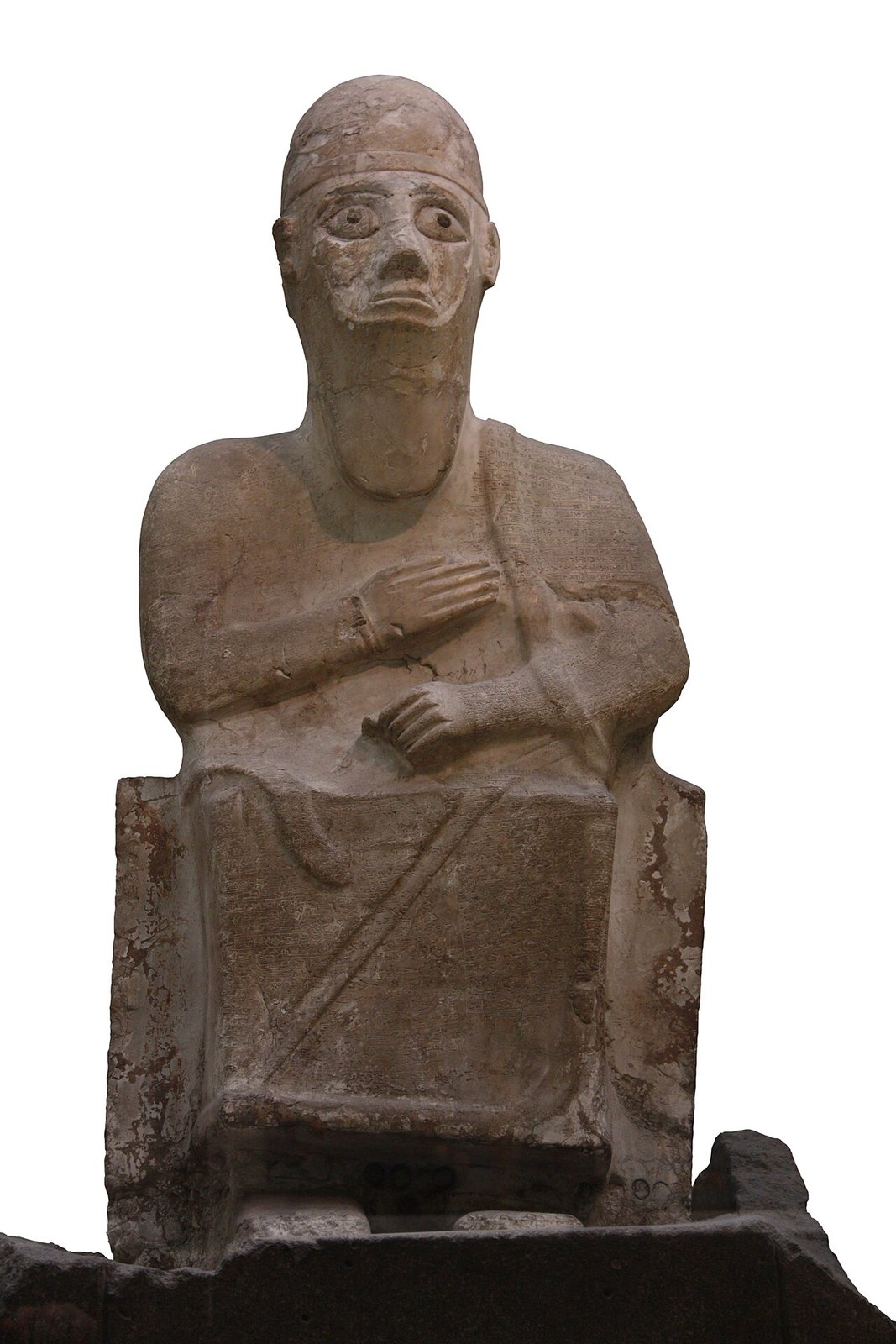
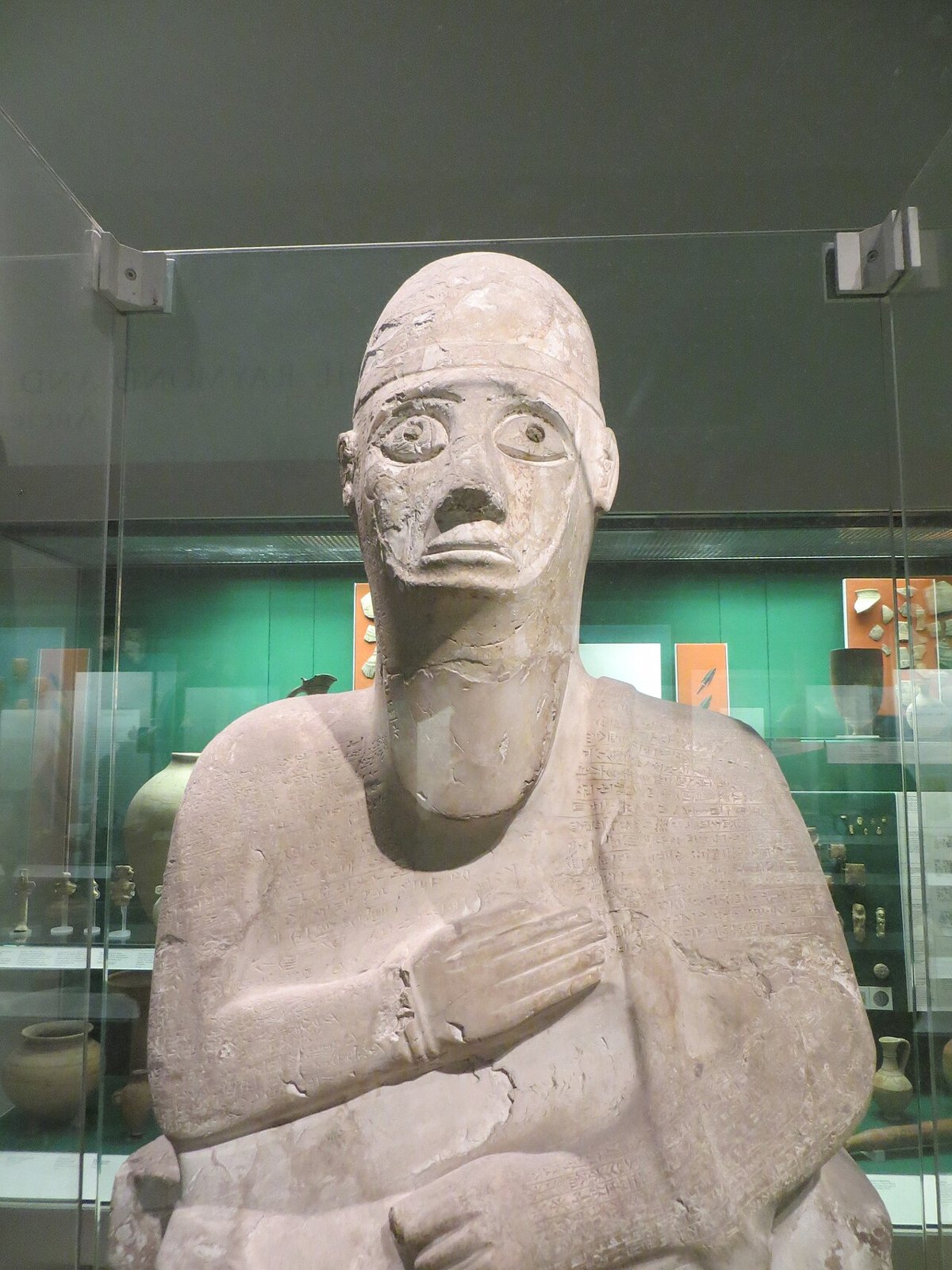
Idrimi was a king of Alalakh, a city near the bend of the Orontes River, at the site now called Tell Atchana in southern TürkiyeTurkeyTurkey is a modern country including Anatolia and territory in southeastern EuropeGlossary · Click to read the explanation. He ruled in the Late Bronze AgeLate Bronze AgeAn archaeological period around 1600–1200 BCE in much of the Near East, with international diplomacy, exchange and religious diversity; its endpoints vary by region.Glossary · Click to read the explanation, around 1475–1450 BCE on current estimates. Clay tablets from the city's palace show him doing the ordinary business of a ruler: making a treaty, buying a slave, sealing documents. A seated stone statue, found in 1939, tells his life story in the first person, from a family disaster in AleppoAleppo, historical cityNorthern Syrian city whose region appears in Mari reports, with architecture from multiple periods.Glossary · Click to read the explanation to his rule at Alalakh. [1][2]
The story reads almost like a novel: a youngest son leaves home, wins followers in exile, returns by sea and becomes king. Scholars still disagree about when it was written, and why. This entry sets out what the tablets show, what the statue claims, and where the debate stands. [2]
The story told on the statue
The statue's main inscription is in AkkadianAkkadianAn ancient East Semitic language written in cuneiform from the third millennium BCE; its varieties include Babylonian and Assyrian, and it served in international diplomacy.Glossary · Click to read the explanation, the diplomatic language of the time, written in cuneiformCuneiformWriting with wedge-shaped signs, developed from Mesopotamian recording traditions and used for several languages from the third millennium BCE.Glossary · Click to read the explanation, the wedge-shaped script. It opens with Idrimi's name and loyalties:
Translation: Jacob Lauinger, The Labors of Idrimi (2024), p. 3. [2]
The Storm God is written with the sign used for AdadAdad: storm godAdad is the storm god in Mesopotamian traditions, associated with rain, thunder and powers of fertility or destruction.Glossary · Click to read the explanation; at Alalakh he was probably Teshub, the storm god of the HurriansHurriansAncient Near Eastern groups and language, prominent in northern Mesopotamia, the Levant and Anatolia in the second millennium BCE.Glossary · Click to read the explanation, whose wife was Hebat.
A "criminal act" took place in his father's house in Aleppo; the text never says what it was. The family fled to EmarEmar, ancient MeskeneAncient Euphrates city in Syria with Late Bronze Age cuneiform archives and Gilgamesh fragments.Glossary · Click to read the explanation on the Euphrates and stayed with his mother's relatives, as outsiders without a voice in the city. Idrimi, the youngest brother, says he alone saw that no one could rule his father's house while serving the people of Emar. [1][2]
So he took his horse, chariot and driver, crossed the desert, and went on to the land of CanaanCanaanRegional name in the Mediterranean Levant, associated with Canaanite cities and cultures in the second millennium BCE and with Abraham’s family’s destination in Genesis.Glossary · Click to read the explanation, to a town called Ammiya, probably near modern Tripoli in Lebanon. People from Aleppo and from lands of his father's former kingdom lived there. They recognised him as their lord's son and made him their leader. The text calls them hapiru, not a people but a label, often unflattering, for uprooted men who had left their own communities. [1][2]
Idrimi says he lived among them for seven years, reading divine signs in the flight of birds and the insides of sacrificed lambs. In the seventh year the Storm God favoured him. He built ships, sailed north with soldiers and landed below Mount Hazzi, the mountain known in Greek as Mount KasiosMount Kasios — Jebel AqraCoastal mountain in the Syrian–Turkish border area, known as Jebel Aqra and by ancient names including Kasios.Glossary · Click to read the explanation. Alalakh and its lands accepted him "in one day, as one man". [1][2]
The oath with Parattarna
Parattarna, "king of the Hurrian armies", ruled the kingdom of Mittani, the great power of northern Syria. He was hostile to Idrimi for seven years. In the seventh year Idrimi reminded him that his forefathers had paid tribute to the Hurrian kings. Parattarna accepted, an oath was sworn, and only then does the text say "I was king". In plain terms, Idrimi became a client king: he kept his throne by accepting a greater king above him, as a branch manager answers to a head office. [2]
Then he acted as a proper king. He rebuilt the city walls, raided seven towns in the land of Hatti (probably in Kizzuwatna, modern CiliciaCiliciaHistorical region on Anatolia’s southern coast in modern Türkiye, with plains and uplands connected to the Levant and Anatolian interior.Glossary · Click to read the explanation, near the HittitesHittitesAncient people and kingdom of Anatolia, dominating much of Anatolia and northern Syria around 1650–1200 BCE.Glossary · Click to read the explanation), shared the spoils, built a house and settled new people on the land. He kept up offerings for the royal ancestors and handed this duty to his son IM-nerari. The text ends with curses on anyone who harms the statue and a note by the scribe Sharruwa, who says he carved it. [1][2]
What the clay tablets add
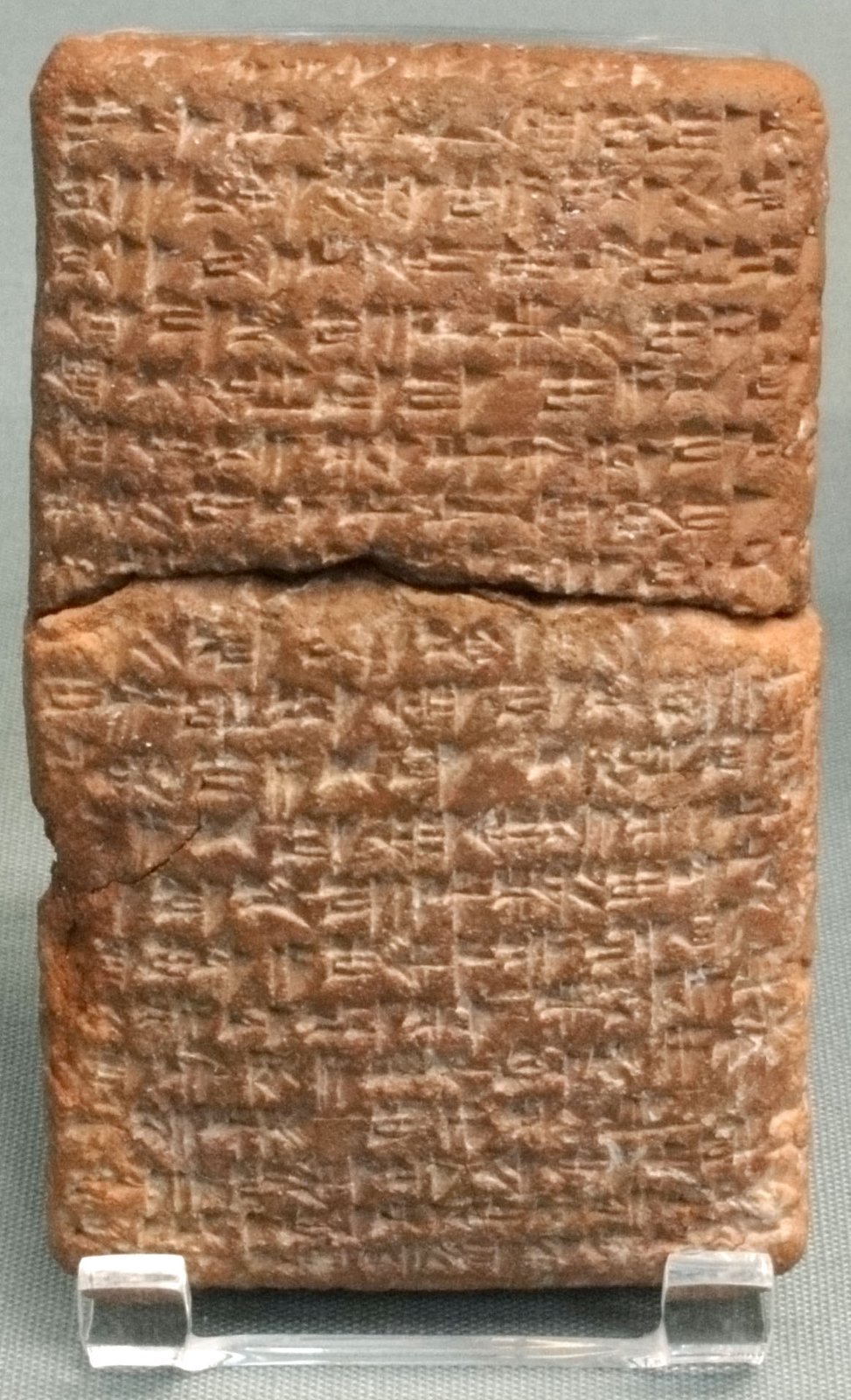
Idrimi also appears in the archives of Alalakh's palace. A treaty between Idrimi and Pilliya, ruler of Kizzuwatna, deals with returning runaway slaves and takes effect from the day Parattarna swore the oath of the gods with Idrimi. Another tablet records him buying a slave. His cylinder sealCylinder sealSmall engraved cylinder rolled over soft clay to leave an extended image. Used to secure, document and identify administrative actions; its pictures do not automatically constitute writing.Glossary · Click to read the explanation, a small carved stone rolled across wet clay as a signature, names him "Idrimi, servant of the Storm God". [2]
The treaty is the strongest independent link between Idrimi and Parattarna. Many scholars read it as a sign that both rulers answered to the same Mittanian overlord; others think Pilliya acted more independently. Jared Miller defends the first view. [4] The tablets also show that Idrimi's successor was his son Niqmepa. No king called IM-nerari appears in them, which is one of the statue's puzzles. [2]
When was the story written?
Leonard Woolley, the excavator, assumed that the statue was carved in Idrimi's lifetime. Jack SassonJack M. SassonHebrew Bible and ancient Near Eastern cultures scholar, Vanderbilt professor emeritus, also specializing in Mari’s archives.Glossary · Click to read the explanation argued that it belonged to a much later generation, under Hittite rule. A re-examination of the excavation records by Amir Sumaka'i Fink placed the find in an earlier temple level. On this view the inscriptions date between about 1400 and 1330 BCE, decades or even a century after Idrimi's death. [2]
Jacob Lauinger goes further. He argues that the statue is older still and first showed a nameless ancestor. In his reading, the two inscriptions were added later to turn it into Idrimi and to back the claim of IM-nerari, whoever he was. Their message was that a ruler of Alalakh must accept Mittani's authority. [2]
A story with a familiar shape
Edward Greenstein and David Marcus noted that seven is used as a round, symbolic number: seven years in exile, seven years of hostility, seven towns. They compared the pattern of flight, a following among outsiders and return to rule with the biblical stories of Jephthah and DavidDavid, the biblical kingRoyal figure in Samuel and Kings, cited here in an instance of “adversary” applied to a human.Glossary · Click to read the explanation, and with the reunion of JosephJoseph in Genesis and the Qur’anFigure whose story in Genesis and Sūrat Yūsuf combines enslavement, accusation, prison and advancement in Egypt.Glossary · Click to read the explanation and his brothers. [3] Lauinger links the short inscription on the statue's cheek, "I inscribed my labors", to the opening of the Epic of GilgameshEpic of GilgameshA Babylonian literary work with multiple recensions, preceded by separate Sumerian poems on Uruk’s king and Enkidu. Its standard form explores friendship, death, the flood and the limits of seeking eternal life.Glossary · Click to read the explanation, where a king's life becomes a lesson for later rulers. [2]
Translation of the cheek inscription: Jacob Lauinger, The Labors of Idrimi (2024), p. 3. [2]
The statue's fate
Woolley found the statue in 1939 in a pit dug into the floor of a room beside the temple, its broken head lying next to the body. He imagined a loyal citizen hiding it after an enemy sack; some scholars now think the Hittite conquerors toppled and buried it themselves. It is now in the British Museum. [2]
References and notes (4)
- Jacob Lauinger, The Electronic Idrimi: Statue of Idrimi, body inscription (P500443; British Museum 130738, 1939,0613.101), Oracc digital edition, CC BY-SA 3.0 Edition page: catalogue data, transliteration and translation of lines 1–100 (flight from Halab to Emar, the Suteans, Ammiya in Canaan, seven years among the displaced, the landing below Mount Hazzi, the oath with Parattarna, the campaign, the works at home, the son, the curses and the scribe Sharruwa), with the project's introduction page. Return to the text ↑
- Jacob Lauinger, The Labors of Idrimi: Reading a Statue and Its Inscriptions (Ancient Near East Monographs 33; Atlanta: SBL Press, 2024), open access Introduction, pp. 1–19 (description of the statue, translation of the cheek and body inscriptions, Alalah and its excavations, the discovery in 1939, Woolley's accounts of the find-spot, layout of the inscriptions); §§ 2.1–2.3, pp. 33–42 (Fink's and Yener–Akar's reassessment of the find-spot, destruction and burial, the tablets naming Idrimi, the dates proposed by Woolley, Sasson, Fink, von Dassow); Conclusion, pp. 175–178; Appendix A.1, p. 179. Return to the text ↑
- Edward L. Greenstein and David Marcus, “The Akkadian Inscription of Idrimi,” Journal of the Ancient Near Eastern Society 8 (1976): 59–96 Pp. 59–64 (literature, method, orthography, language, and “The Literary Character of the Inscription and Biblical Parallels”) and the commentary on lines 24–28, pp. 76–78 (the parallels with Jephthah and David, and seven as a typological number). Return to the text ↑
- Jared L. Miller, “Two Notes on Kizzuwatna’s Status as a Hittite Vassal in the Middle Hittite Period,” in M. Cammarosano, E. Devecchi and M. Viano (eds.), talugaeš witteš: Ancient Near Eastern Studies Presented to Stefano de Martino (Kasion 2; Münster: Zaphon, 2020), 345–350 Section 1, pp. 345–346: the treaty between Idrimi of Alalah and Pilliya of Kizzuwatna (AlT 3) ratified before Parattarna I of Mittani, Schwemer's view of Kizzuwatna as independent, and Miller's arguments against it. Return to the text ↑
Suggest a correction · Suggest a source for this record
Cite this record
IL Archive, «Idrimi of Alalakh», https://ilarchive.com/en/people/idrimi
Continue reading