Artifact · Inscription
The Statue of Idrimi (British Museum 1939,0613.101)
An object record bringing together its image, metadata, rights, and context.
- Names
- BM 130738 · British Museum 1939,0613.101 · CDLI P500443 · Idrimi statue · Statue of Idrimi · Statue of King Idrimi
- Timeline
- From 1500 BCE to 1330 BCE
- Region
- The Levant
A seated white stone king from Alalakh, his body covered in cuneiform. Found buried in a pit in 1939, the statue raises open questions: who carved it, when the text was added, and who buried it.
Estimated reading time: 6 min Published Last reviewed:
Share article
Photograph
Photo: Rama, CC BY-SA 2.0 FR, via Wikimedia Commons.
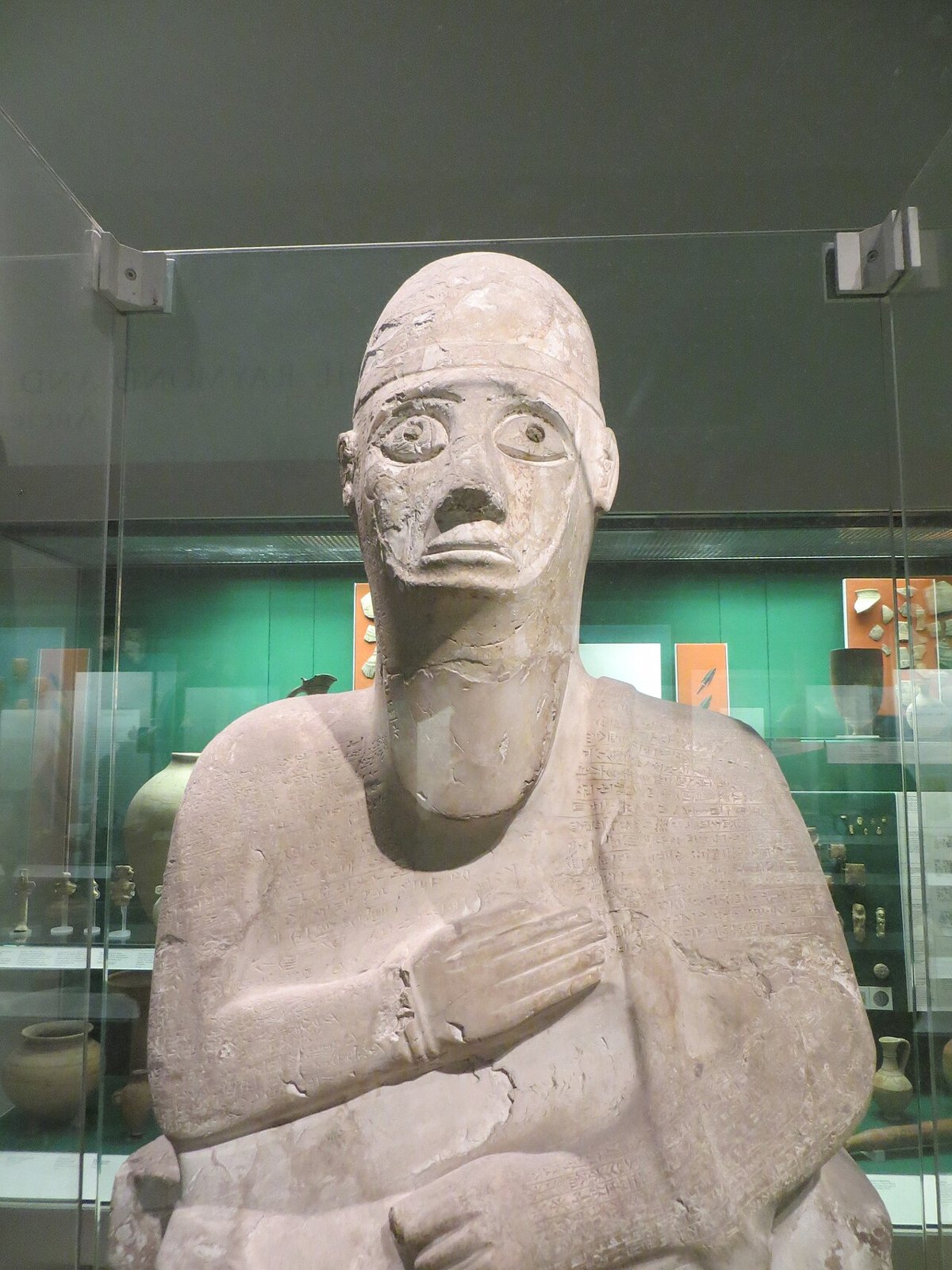
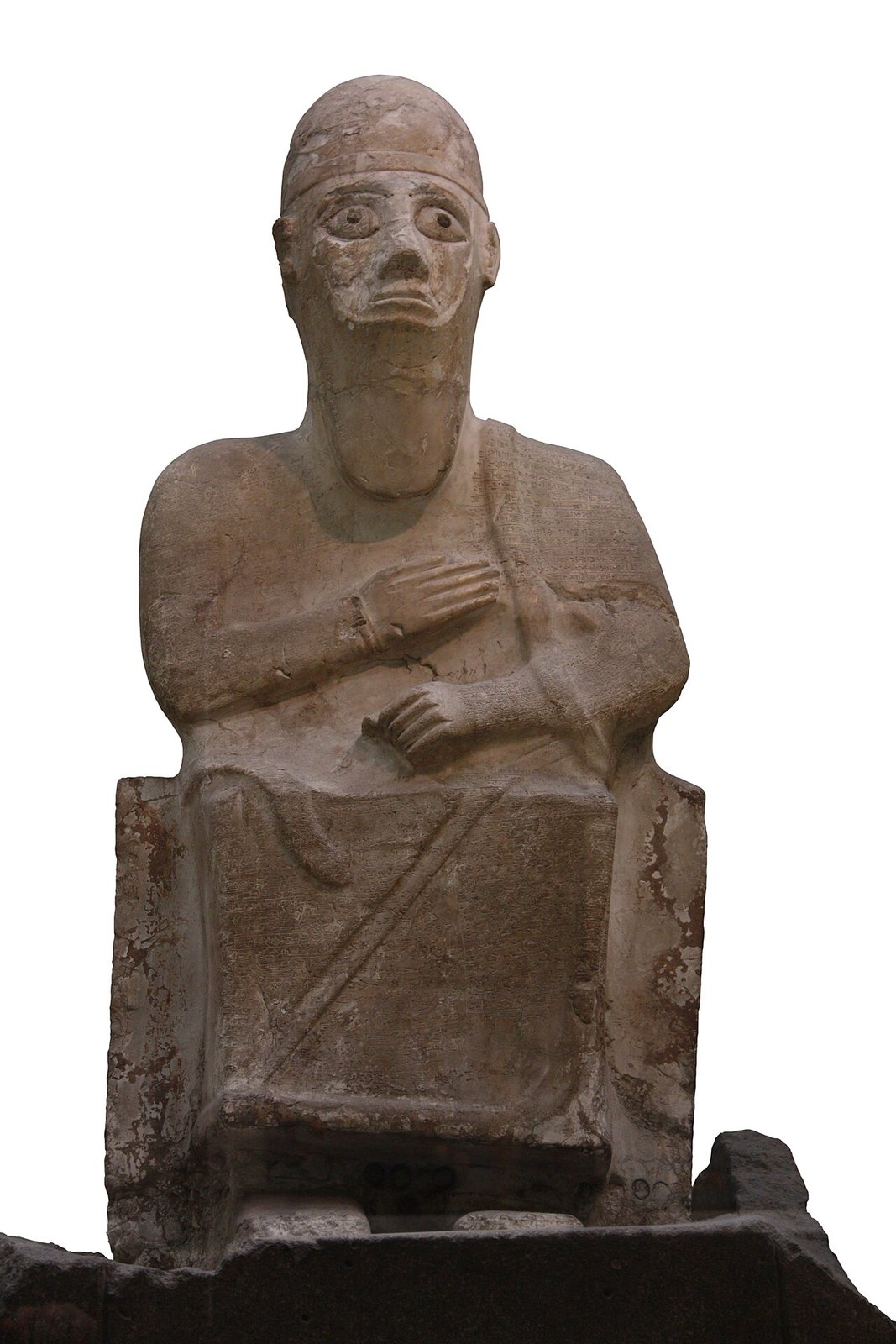
The Statue of Idrimi from Alalakh (Tell Atchana): a seated king in white magnesite, his body covered with a cuneiform inscription, on the top of his basalt throne. British Museum, 1939,0613.101
License · Image sourceObject details
- Title
- The Statue of Idrimi (British Museum 1939,0613.101)
- Timeline
- From 1500 BCE to 1330 BCE
- Region
- The Levant
- Rights
- CC BY-SA
Text
Introduction
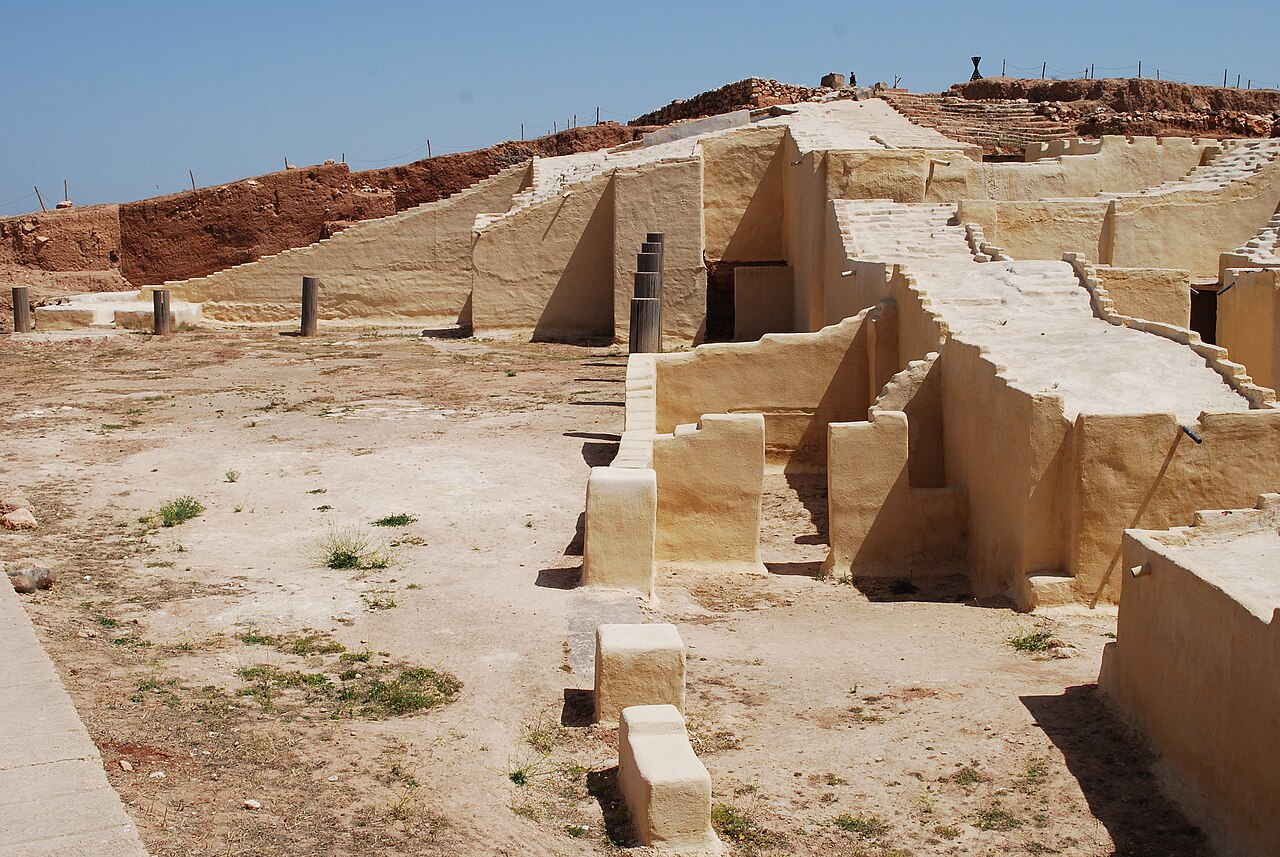
The Statue of Idrimi is a seated figure of a king, carved in white stone and set on a black stone throne. It was found in 1939 at Tell Atchana, ancient Alalakh, in the Hatay province of TürkiyeTurkeyTurkey is a modern country including Anatolia and territory in southeastern EuropeGlossary · Click to read the explanation, and is now in the British Museum (number 1939,0613.101). What makes it famous is that the king is dressed in writing: an inscription in cuneiformCuneiformWriting with wedge-shaped signs, developed from Mesopotamian recording traditions and used for several languages from the third millennium BCE.Glossary · Click to read the explanation, the wedge-shaped script, covers his chest, arms and legs, and three more lines run down his right cheek. [1][2]
The text tells the life of Idrimi, a king of Alalakh in the Late Bronze AgeLate Bronze AgeAn archaeological period around 1600–1200 BCE in much of the Near East, with international diplomacy, exchange and religious diversity; its endpoints vary by region.Glossary · Click to read the explanation, in his own voice. His story has its own page. This entry is about the object: what it looks like, how the writing sits on it, where it was found, and the questions its date and burial still raise. [1]
What the statue looks like
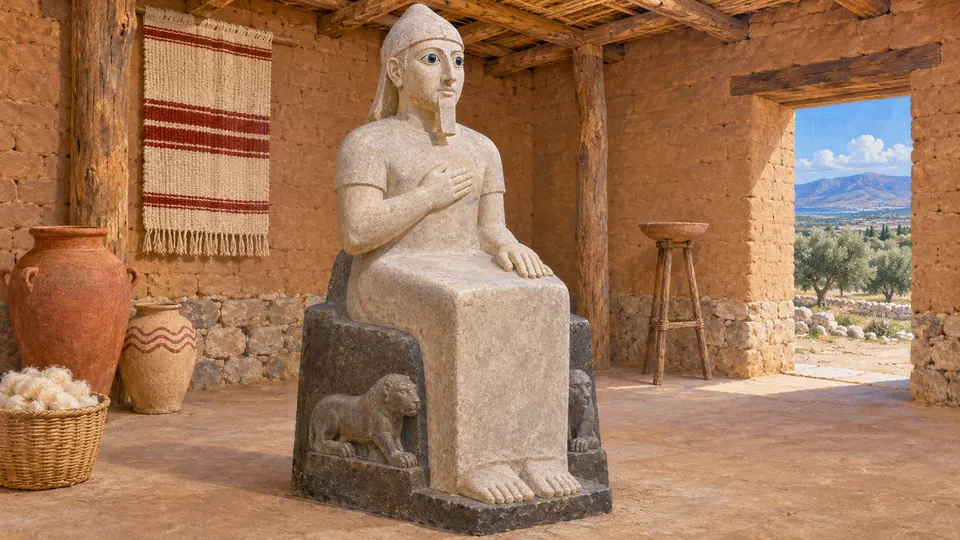
The king is carved from magnesite, a soft white stone that is easy to carve and easy to damage. The throne is basalt, a hard, dark volcanic stone, flanked by lions (or perhaps sphinxes). Seated on his throne, the king measures about 1.67 metres, so his eyes meet those of a standing visitor; the figure alone is just over a metre high. [1]
He wears a plain conical cap and a robe that reaches his ankles, with a heavy rolled hem. His beard is one smooth block, and his lap is a square shape with no folds. Yet his right hand, open against his chest, is carved with care: the fingers have their true lengths and form a gentle curve. The plainness elsewhere looks like the sculptor's choice, not a lack of skill. [1]
A body dressed in writing
The main inscription is in AkkadianAkkadianAn ancient East Semitic language written in cuneiform from the third millennium BCE; its varieties include Babylonian and Assyrian, and it served in international diplomacy.Glossary · Click to read the explanation, the shared written language of the time. It has exactly one hundred lines in four blocks. Seen from the front, it starts on the upper chest and arm, runs down the leg below, jumps to the other leg, and ends on the other side of the chest: it goes round the body, not in tidy columns. Older editions count 101 lines, but the last "line" is only the end of line 100 carried over, marked by a small slanting wedge. [1]
The three lines on the cheek run up and down, not across, and may have been carved while the statue lay on its back. They read: "I was king for thirty years. I inscribed my labors on myself." Scholars long treated them as the end of the main text; many now read them as a separate inscription. [1]
The writing is not neat. Edward Greenstein and David Marcus described a scribe with a weak grasp of Akkadian grammar, and a stonecutter who seems to have copied signs he did not understand. [3] The main text ends with curses on anyone who harms the statue:
Translation: Jacob Lauinger, The Electronic Idrimi (Oracc), line 92. [2]
A closing note names the scribe, Sharruwa, as the one "who inscribed this statue", and asks the gods to keep him alive. [2]
Found in a pit
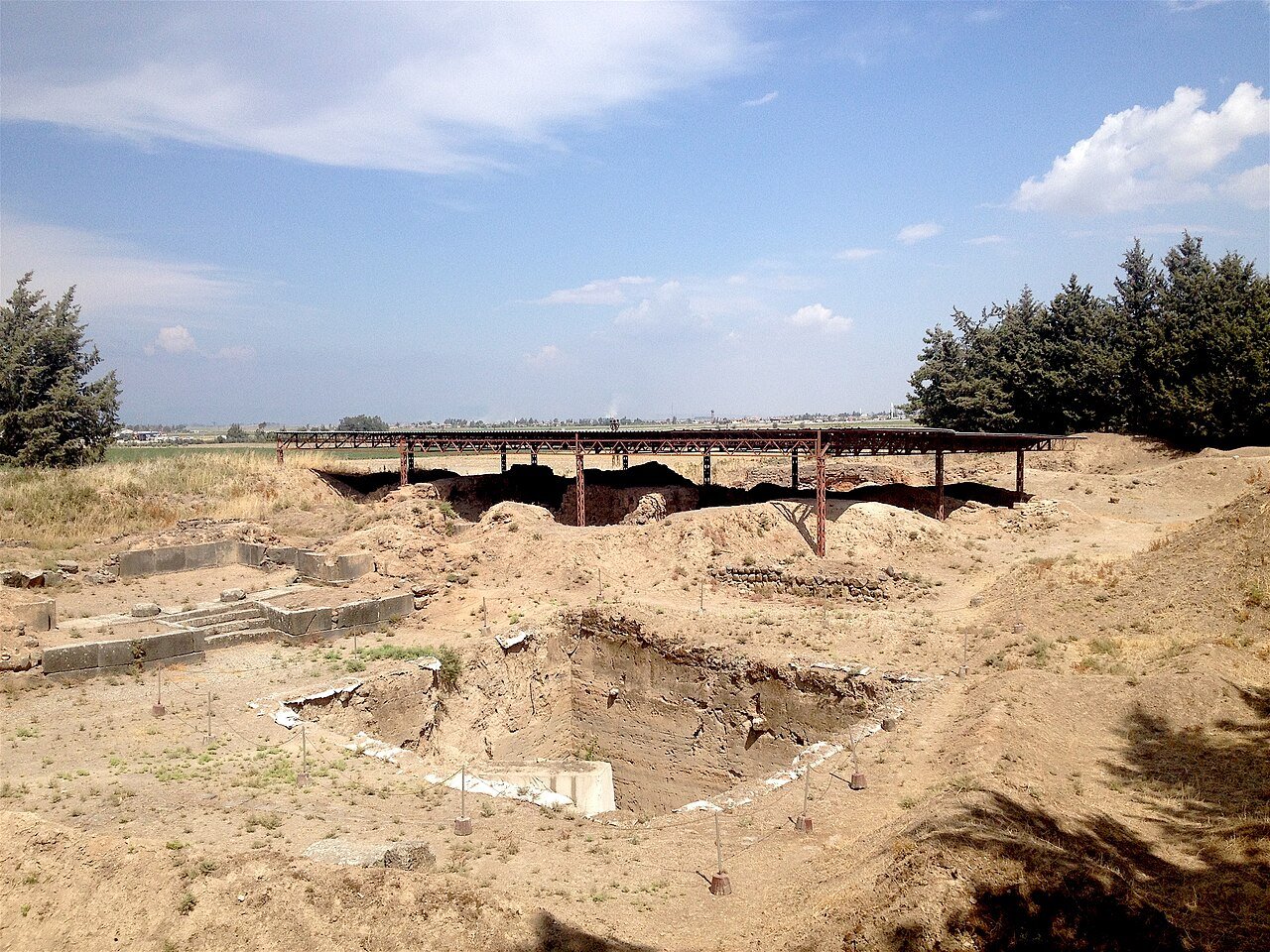
Leonard Woolley's team found the statue in May 1939, near the end of the season. It lay in a pit dug into the floor of a room beside the city's temple. The head had been knocked off and lay next to the body with a piece of beard and part of a foot. Large stones, the biggest weighing nearly a ton and a half, filled the pit above it. The throne was found on a floor nearby, and the statue's feet fit its sockets exactly. [1]
Woolley pictured a loyal citizen creeping back after enemies sacked the temple and hiding the broken king. But his accounts changed over the ten years before he published them, a decade that included the Second World War. A "rubbish pit" in his first letter became a hole "specially dug, as if for concealment". [1]
Amir Sumaka'i Fink later checked the excavation plans and field notes. Old sites are layers, like a stack of newspapers with the newest on top, and Fink concluded that the temple had been drawn ten metres out of place. In his reading, the pit belongs to an earlier layer than Woolley thought. Jacob Lauinger accepts this and dates the burial to about 1400–1350 BCE, up to the Hittite conquest of Alalakh. He finds it more likely that the HittitesHittitesAncient people and kingdom of Anatolia, dominating much of Anatolia and northern Syria around 1650–1200 BCE.Glossary · Click to read the explanation toppled and buried the statue to cut the old king's link with his gods, as Petra Goedegebuure proposed; filling a pit with such heavy stones was no hasty act of rescue. Who buried the statue, and exactly when, is still debated. [1]
How old is the statue?
Art historians have never agreed. Woolley later called it "almost grotesquely ugly", and others echoed him; some compared it with much later Iron Age statues, others with Egypt. Its cap and rolled-hem robe, however, are the dress of kings and high officials on seals from an earlier phase of Alalakh, in the Middle Bronze Age. [1]
Lauinger notes a further clue: in at least three places the signs were carved around damage that was already there. Near the end of line 73 the last two signs leave the body and turn a right angle onto the side of the seat. He argues that the statue first stood for some time without writing, perhaps as an image of nameless royal ancestors. Seated stone ancestors without inscriptions are known from Qatna, EblaEblaAncient city at Tell Mardikh, southwest of Aleppo, Syria. Its Palace G archives illuminate third-millennium BCE administration, language, and cult; the site has later occupation phases.Glossary · Click to read the explanation and HazorHazorAncient Canaanite city in present-day northern Israel, where Middle Bronze Age legal-tablet fragments were found in 2010.Glossary · Click to read the explanation. In his view, the text was added later to turn it into Idrimi. This is one scholar's argument, carefully made, not a settled fact. [1]
From Alalakh to London
Under the antiquities rules of the time, finds were split into two equal shares at the end of each season: one for the host country, one for the excavator's museum. The country could still keep an exceptional piece. In June 1939 the director of antiquities of the short-lived State of Hatay claimed the statue, and its council of ministers twice voted to keep it. Woolley called on British diplomats, the Turkish government told the Hatay authorities to accept his view, and the statue went to London. Hélène Maloigne has shown how this fitted the talks that brought Hatay into Türkiye that summer. [4][1]
The statue is still on display in the British Museum. In Antakya, the new Hatay Archaeology Museum, opened in 2014, chose to show Idrimi as a hologram, framed by lines from his inscription. [4]
References and notes (4)
- Jacob Lauinger, The Labors of Idrimi: Reading a Statue and Its Inscriptions (Ancient Near East Monographs 33; Atlanta: SBL Press, 2024), open access Introduction, pp. 1–5 (description of the statue and throne, size, dress, cheek inscription) and §§ 1.1–1.4, pp. 11–20 (Alalah and its excavations, the discovery in 1939 and Woolley's letter of 21 May, the division of finds, Woolley's accounts of the find-spot, the layout of the body and cheek inscriptions); §§ 2.1–2.2, pp. 27–37 (Fink's reassessment of the find-spot, Yener–Akar's caution, destruction and burial, Goedegebuure's proposal); § 2.4, pp. 42–46 (art-historical judgements, dress parallels, text and image); §§ 3.3–3.4, pp. 94–104 (ancestor statues from Qatna, Ebla and Hazor, the altar, signs carved around earlier damage in lines 11–12, 73 and 90). Return to the text ↑
- Jacob Lauinger, The Electronic Idrimi: Statue of Idrimi, body inscription (P500443; British Museum 130738, 1939,0613.101), Oracc digital edition, CC BY-SA Catalogue data and translation of lines 87–98 (offerings for the ancestors, curses on anyone who removes or defaces the statue, the scribe Sharruwa), with the project's introduction page. Return to the text ↑
- Edward L. Greenstein and David Marcus, “The Akkadian Inscription of Idrimi,” Journal of the Ancient Near Eastern Society 8 (1976): 59–96 Pp. 59–64: literature, methodology (the scribe's weak Akkadian and the stonecutter's copying), orthography, language and literary character. Return to the text ↑
- Hélène Maloigne, “How Idrimi Came to London: Diplomacy and the Division of Archaeological Finds in the 1930s,” Museum History Journal 10.2 (2017): 200–216 (accepted manuscript, UCL Discovery) Whole article: the statue as text and image, the hologram in the New Hatay Archaeological Museum, the Sanjak of Alexandretta and the State of Hatay, the antiquities law and the division of finds, the dispute of June 1939 and the diplomatic intervention, conclusion. Return to the text ↑
Archive records may be reviewed and refined as better evidence or sources become available. Suggest a correction
Suggest a correction · Suggest a source for this record
Cite this record
IL Archive, «The Statue of Idrimi (British Museum 1939,0613.101)», https://ilarchive.com/en/artifacts/statue-of-idrimi
Continue reading