Site · City
Ebla
- Region
- The Levant
Ancient Ebla at Tell Mardikh, Syria, preserved thousands of Palace G records on government, economy, language, and cult in the third millennium BCE. An evidence-based guide to the site, archives, and divine names.
Estimated reading time: 7 min Published Last reviewed:
Share article
Video
The Name No One Owns | The Road of El
More than four thousand years ago a palace burned at Ebla, and one small word waited in its clay: ʾl, El. We follow it through names and inscriptions, from Ebla, Mari and Ugarit to the kings of Samʾal, Karatepe and Saba and the stones of the basalt desert, then set the Torah's names and the Arabic question side by side. Some scenes are AI-generated illustrations.
The YouTube player loads only when you press play. Watch on YouTube
Text
Introduction
How was Tell Mardikh identified as ancient Ebla, and what can the palace tablets tell us about the city, its inhabitants, and its gods? This entry brings together archaeological and documentary evidence from the third millennium BCE, explains the records and the scribal practices behind them, and considers what divine and personal names can—and cannot—establish.
Ebla had a history longer than the lifetime of any one archive. Its archaeological phases, the period documented by the palace administration, and the modern history of decipherment must therefore be kept distinct.
Site and identification
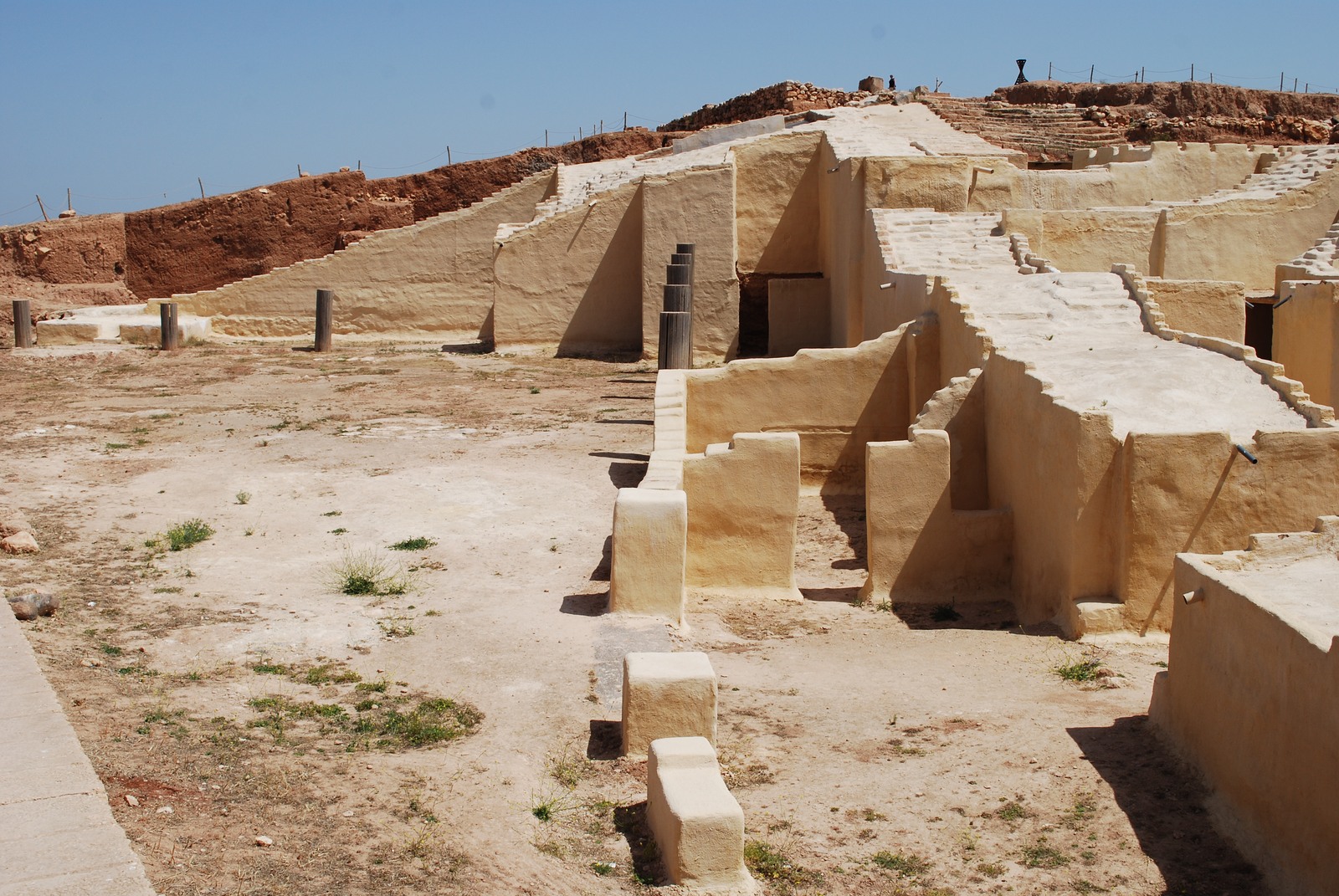
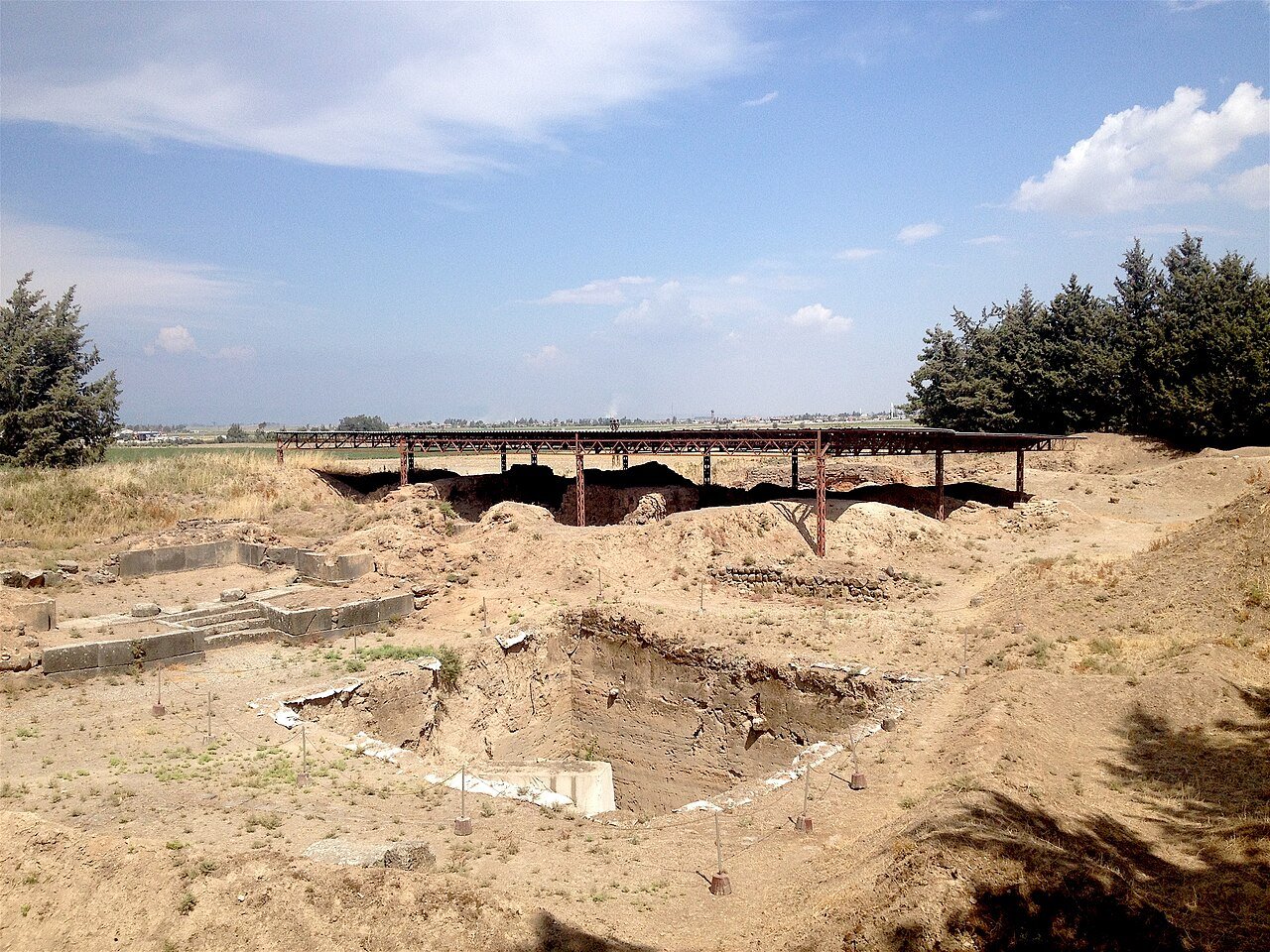
Ebla occupies Tell Mardikh in northern Syria, southwest of AleppoAleppo, historical cityNorthern Syrian city whose region appears in Mari reports, with architecture from multiple periods.Glossary · Click to read the explanation. A tell is an accumulation of successive occupation levels, not a single surviving building. Archaeological fieldwork by a team from the University of Rome “La Sapienza,” directed by Paolo Matthiae, began in 1964. Finds allowed the site to be securely identified with ancient Ebla in 1968; discoveries in the following decade radically expanded what could be known about the city. [1]
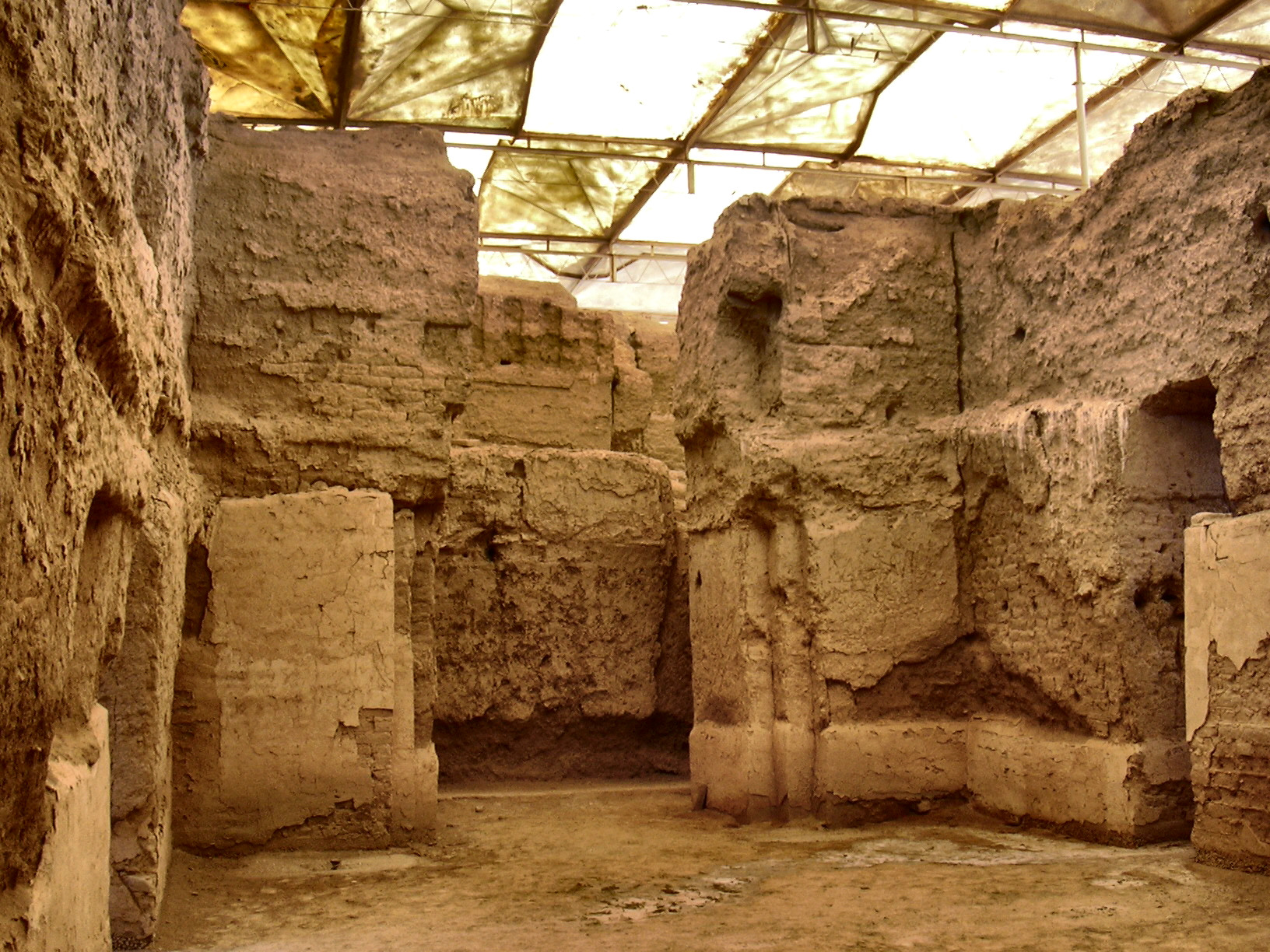
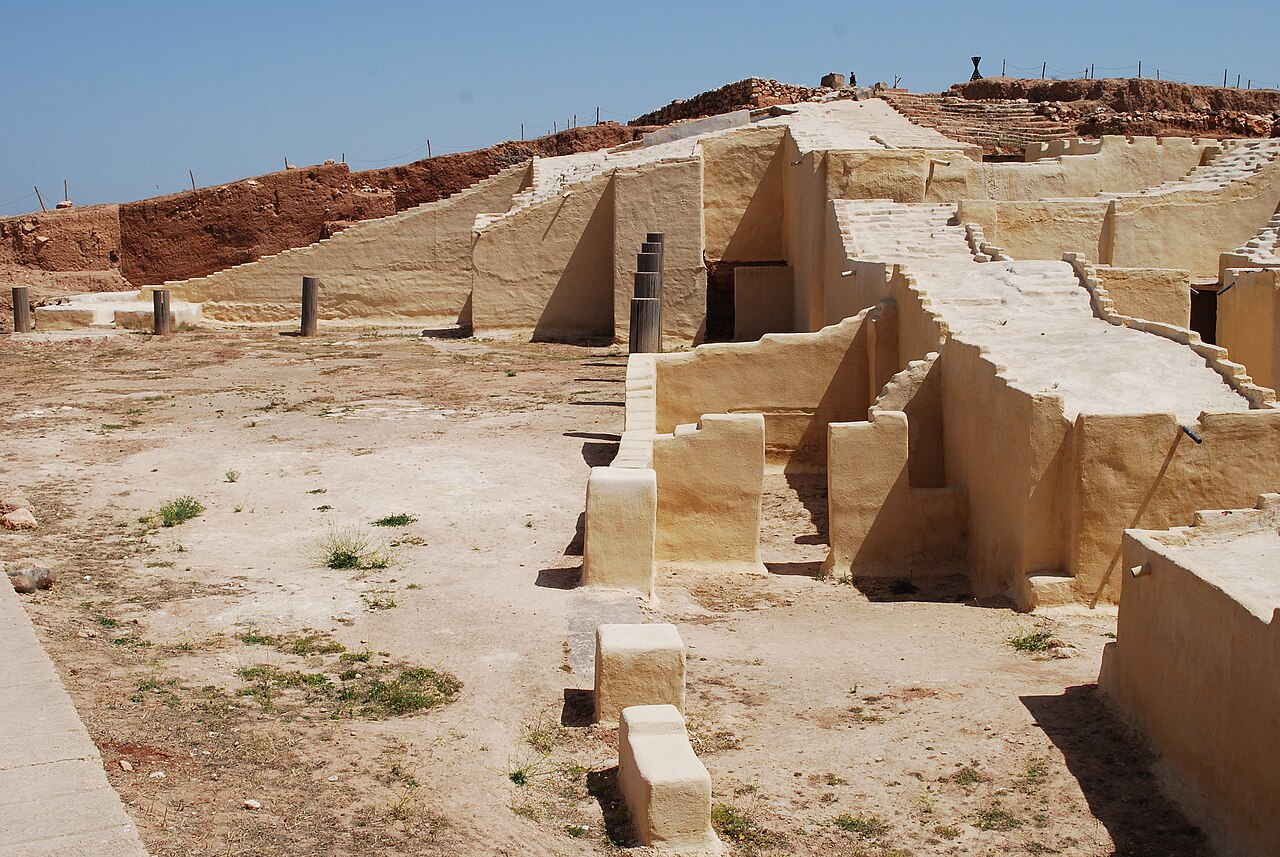
Ebla became a major political and administrative centre in the Early Bronze Age, during the third millennium BCE. Yet Tell Mardikh was also occupied and rebuilt in the Middle Bronze Age. “Ebla” thus refers to a city with several phases, whereas the “Palace G archive” designates a particular earlier assemblage. The visible walls in a modern photograph cannot all be dated merely from the tablets, nor does the fate of the early palace represent the end of the entire city's history. [2]
Discovery of the palace archives
The first cuneiformCuneiformWriting with wedge-shaped signs, developed from Mesopotamian recording traditions and used for several languages from the third millennium BCE.Glossary · Click to read the explanation group was found in Royal Palace G in 1974: forty-two small tablets, many recording objects of silver and gold. Two major groups were excavated in 1975, notably the Great Archive in room L.2769 and the smaller archive in L.2712. Their findspots and storage arrangements reveal an organized administrative practice; tablets in the Great Archive had stood on wooden shelving before the palace burned and collapsed. Further groups and fragments appeared in adjoining spaces in 1976 and in later excavations. [3]
Accounts of the discovery often mention more than 17,000 “Ebla tablets.” That number includes fragments and excavation or inventory numbers; it does not mean 17,000 separate, intact tablets. Researchers estimate that the Great Archive originally held approximately 4,000–5,000 tablets, with additional material in the other deposits. Distinguishing find numbers from reconstructed documents is essential to understanding the scale and limitations of the surviving corpus. [4]
What the administration recorded
Most of the archive consists of working records, not a uniform library of myths. Tablets register textile allotments, precious-metal accounts, food rations, livestock deliveries, and distributions to personnel, messengers, and religious institutions. Some accounts are monthly, others annual; comparison of these sequences helps reconstruct the rhythm of palace management and its control of resources. Lexical texts, correspondence, agreements, and ritualRitualAn organised or distinguished practice meaningful to a community; it may leave traces, but its form alone does not reveal an associated doctrine.Glossary · Click to read the explanation documents also survive. One identifiable example is the treaty between Ebla and Abarsal, cited as excavation number TM.75.G.2420 and edition ARET XIII 5. Diplomatic documents, however, are far fewer than the accounting records. [5]
This writing illuminates a centre that collected and redistributed goods and maintained connections with cities in Syria and MesopotamiaMesopotamiaHistorical region associated with the Tigris and Euphrates: Uruk, Ur, Eridu, cuneiform, Sumer, Akkad, Babylon and Assyria, their languages and cults, and the limits of archaeological evidence.Glossary · Click to read the explanation, including MariMariMari at Tell Hariri on the Syrian Euphrates was founded around 2900 BCE and rebuilt through three major urban phases. Its palace and cuneiform archives illuminate trade, royal government and religious practice, especially in the eighteenth century BCE.Glossary · Click to read the explanation. Court correspondence, gifts, and political marriages make parts of these relationships visible. The resulting view of society, however, is uneven: it largely reflects what palace officers chose to record and what the destruction preserved, not the daily experience of every inhabitant or the entire economy beyond institutional control.
Writing and the Eblaite language
The records were impressed on clay in cuneiformCuneiformWriting with wedge-shaped signs, developed from Mesopotamian recording traditions and used for several languages from the third millennium BCE.Glossary · Click to read the explanation. Scribes used syllabic signs capable of representing sounds alongside word-signs inherited from SumerianSumerian languageAncient language of southern Mesopotamia, clearly attested in third-millennium BCE texts and maintained in learning and ritual after its spoken use declined.Glossary · Click to read the explanation scribal traditions, especially in administrative terminology. The presence of a Sumerian sign does not establish that everyone in Ebla spoke Sumerian; nor does an individual logogram necessarily reveal the precise spoken word behind it. Vocabulary lists, including bilingual lists, have proved important for interpreting the language and technical expressions of the archive. [6]
Eblaite is an early Semitic language, but its precise position within the Semitic languageSemitic languagesA branch of the Afroasiatic language family, including Akkadian, Ugaritic, Hebrew, Aramaic, Arabic, Ethio-Semitic and South Arabian languages; a linguistic, not racial or religious, classification.Glossary · Click to read the explanation family remains disputed. Some specialists emphasize its relationship to AkkadianAkkadianAn ancient East Semitic language written in cuneiform from the third millennium BCE; its varieties include Babylonian and Assyrian, and it served in international diplomacy.Glossary · Click to read the explanation or treat it as an early variety of Akkadian; others study it as a distinct Semitic linguistic system. Scribal conventions and Sumerian-derived signs further complicate the evidence. Spoken language, writing convention, and the modern interpretation of an ambiguous sign are three different levels of the inquiry. [7]
Gods and rites in the palace records
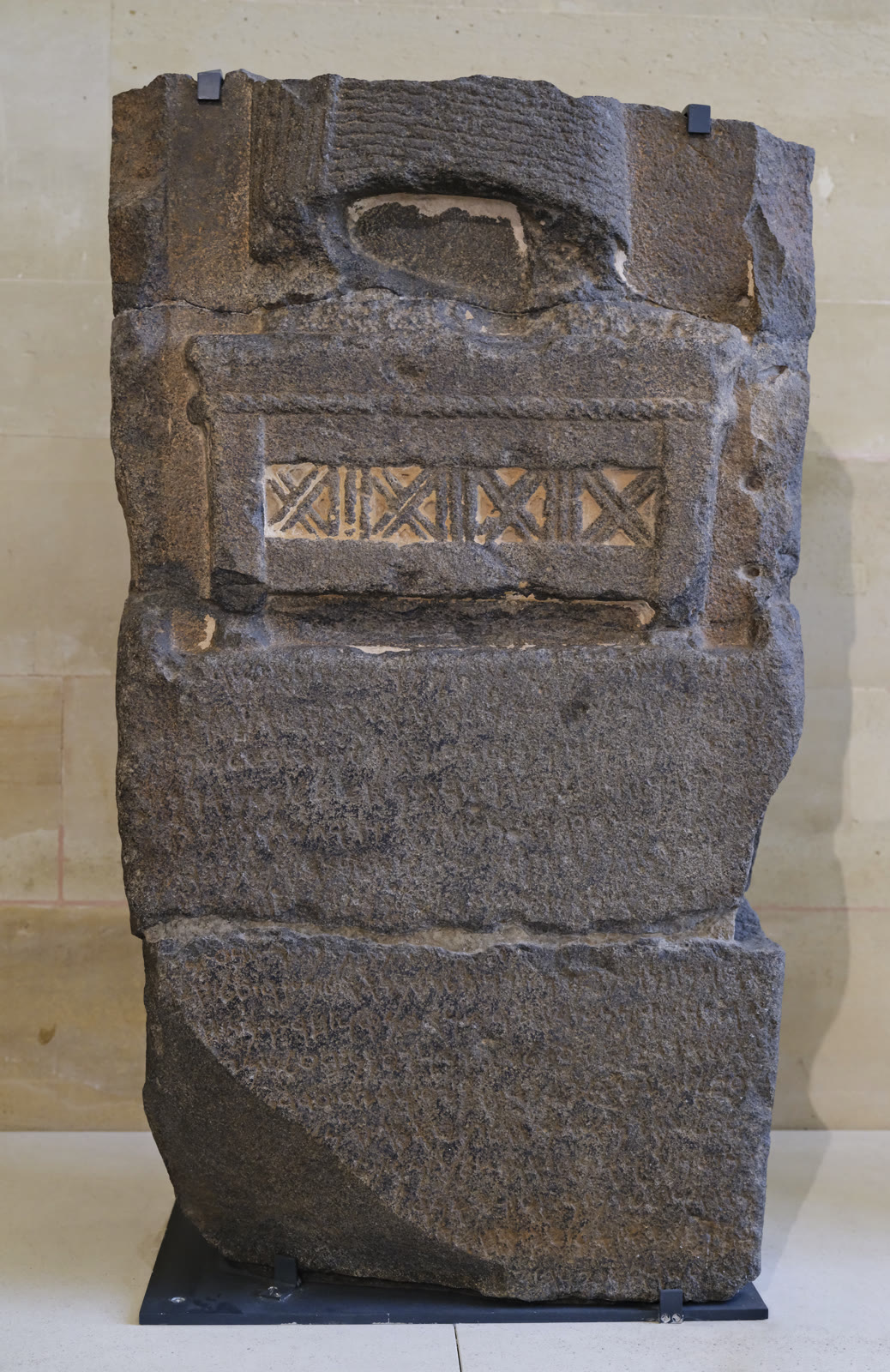
The religious records identify Kura as Ebla’s city-god in the period of Palace G and associate Barama with him as his consort. The royal marriage accounts published in ARET XI (texts 1–3) describe gifts for the divine couple and a symbolic parallel between human and divine rulership. Other divine names, including Ishara and DaganDaganA god worshipped in Syria and Mesopotamia, especially at Tuttul and Terqa on the Euphrates, and associated with royal authority. His name appears as Dagon in the Hebrew Bible; no ancient image of him is securely identified.Glossary · Click to read the explanation, appear in offerings and in the wider regional cultic network. Walther Sallaberger’s argument for Kura’s central position draws on several kinds of evidence—silver allotments, sacrifice, oaths, and royal rites—rather than on similarities between names alone. [8]
The records document particular actions: a gift, a sacrifice, a procession, or a written ritual formula. They do not preserve a coherent mythology explaining every Eblaite god and every divine relationship. Scholars also differ over the identification of particular excavated temples with the cult of Kura: proximity to the palace or a modern archaeological label cannot by itself establish the dedication of a building. These limits matter even where an individual ritual is comparatively well documented.
Divine elements in personal names
Ebla’s records preserve many personal names, some of which contain elements with religious meanings. Their study helps trace early Semitic vocabulary, including forms related to ilSemitic ilAn ancient Semitic word meaning “god,” with cognates across several languages. It may function as a common noun or a proper name according to context; it is not always Ugaritic El.Glossary · Click to read the explanation, a term meaning “god” or possibly functioning as a divine element in particular contexts. Yet a word embedded in a personal name is not automatically the proper nameProper nameA name that identifies a particular person, place, group, or entity in context, unlike a common noun denoting a class. Spelling alone may not settle the distinction.Glossary · Click to read the explanation of one identifiable god. Interpretation depends on the name’s structure, spelling, context, and comparison with linguistic evidence of a suitably close date. [9]
Three questions should be distinguished: whether an ordinary Semitic term was used; whether a specific document uses that term as a divine name or title; and whether the deity in question can be identified with a figure known from another tradition. Comparisons with UgaritUgaritAncient city and kingdom at Ras Shamra on the Syrian coast, flourishing between the fourteenth and early twelfth centuries BCE and preserving multilingual archives.Glossary · Click to read the explanation, whose texts belong to the second millennium BCE, can illuminate the longer history of divine vocabulary. They do not, by themselves, turn every instance of “il” at Ebla into direct evidence for the deity described in later Ugaritic literature. Context, chronology, and genre matter as much as verbal resemblance.
Destruction and later transformations
Palace G ended in a destructive fire, which also created the conditions in which large groups of tablets survived in their findspots. The archive belongs broadly to the middle and later third millennium BCE, but its precise chronology remains debated. A radiocarbon study of short-lived plant remains has suggested a range of approximately 2367–2293 BCE for the palace destruction. Correlating that range with the historical sequence and administrative accounts remains debated; it does not establish one exact year or one perpetrator. [10]
Royal inscriptions associated with Akkadian rulers, including Sargon of AkkadSargon of AkkadSargon of Akkad was a historical third-millennium BCE ruler and founder of the Akkadian dynasty; royal accounts of his campaigns must be distinguished from later stories of his birth and rise.Glossary · Click to read the explanation and Naram-Sin, refer to taking Ebla or claim victories connected with it. But naming a city in a royal conquest inscription does not independently prove that the ruler caused the destruction level excavated in Palace G. Proposals involving Mari and regional rivalries have also been advanced. Settlement at Tell Mardikh continued or resumed after the early palace fell, and its history took further turns in the Middle Bronze Age. One destruction must not stand for the entire life of the city.
Reading the tablets today
Eblaite texts are studied through scholarly editions, notably the ARET (Archivi Reali di Ebla, Testi) and MEE (Materiali Epigrafici di Ebla) series, and through the EbDA digital-archive project. An object can have an excavation number, later be joined to other fragments, and receive a different number in a published edition; scholars therefore recommend giving both excavation and edition references when discussing an individual tablet. Gaps between published and unpublished documents, and revisions of earlier readings, make this an ongoing research process rather than a fixed set of transcriptions. [11]
This entry does not present a new translation of an individual tablet. Instead, it synthesizes research based on scholarly editions, identifying what the evidence can support. Ebla matters to the El Archive because it supplies early Syrian evidence for administration, language, and cult within a specific historical setting. It makes comparisons with other cities possible without turning administrative data into an unattested myth or treating shared words as proof of a demonstrated transfer of religious ideas.
References and notes (11)
- Erica Scarpa, “The Archives of Ebla: A Primer,” International Association for Assyriology, 2024. Section 1: excavations from 1964; identification of Tell Mardikh in 1968. Return to the text ↑
- Amalia Catagnoti, “Eblaite,” Mnamon: Ancient Writing Systems, Scuola Normale Superiore, updated 2022. Introduction and historical outline of the site: palace archive and later Bronze Age phases. Return to the text ↑
- Erica Scarpa, “The Archives of Ebla: A Primer,” International Association for Assyriology, 2024. Sections 1.1 and 1.1.1: rooms L.2586, L.2769 and L.2712; discoveries of 1974–1976 and archival organization. Return to the text ↑
- Erica Scarpa, “The Archives of Ebla: A Primer,” International Association for Assyriology, 2024. Section 1.1.1 distinguishes 15,000-plus pieces/fragments in L.2769 from an estimated 4,000–5,000 original tablets; section 2.1 explains excavation numbers. Return to the text ↑
- Amalia Catagnoti, “Eblaite,” Mnamon: Ancient Writing Systems, Scuola Normale Superiore, updated 2022. “Traditions and textual typology” and the illustrated treaty with Abarsal, TM.75.G.2420 = ARET XIII 5; the treaty text was not directly translated. Return to the text ↑
- Amalia Catagnoti, “Eblaite,” Mnamon: Ancient Writing Systems, Scuola Normale Superiore, updated 2022. Passages on the writing system and text genres: syllabic and logographic signs, lexical lists. Return to the text ↑
- Michael P. Streck, “Eblaite and Old Akkadian,” in The Semitic Languages: An International Handbook, ed. Stefan Weninger et al., 2011. Opening and language-classification discussion, especially pp. 340–352; relevant extracts, not the entire handbook, consulted. Cross-checked against Catagnoti’s Mnamon language overview. Return to the text ↑
- Walther Sallaberger, “Kura, Youthful Ruler and Martial City-God of Ebla,” in Ebla and Beyond, 2018. Pp. 107–109; Kura, Barama, and the royal marriage rite on pp. 114–121; related deities around p. 127; selected sections, not the whole chapter. Return to the text ↑
- Michael P. Streck, “Eblaite and Old Akkadian,” in The Semitic Languages: An International Handbook, 2011. Discussion of language and personal names, especially pp. 349–351; the caution about divine identity is methodological, not a direct tablet translation. Return to the text ↑
- Erica Scarpa, “The Archives of Ebla: A Primer,” International Association for Assyriology, 2024. Section 2.2: chronology, radiocarbon evidence, and competing attributions to Sargon, Naram-Sin, or Mari. Return to the text ↑
- Erica Scarpa, “The Archives of Ebla: A Primer,” International Association for Assyriology, 2024. Sections 2.1 and 2.3: excavation–publication concordances, ARET and MEE editions; description of EbDA, not direct database inspection. Return to the text ↑
Suggest a correction · Suggest a source for this record
Cite this record
IL Archive, «Ebla», https://ilarchive.com/en/sites/ebla
Continue reading