Study · Academic article
The Road of El through Ancient Names and Inscriptions
An extended study of a topic, with evidence and references.
- Names
- El in Names and Inscriptions · The Road of El
Clay tablets, royal monuments, desert inscriptions and scripture preserve forms of El in different settings. Their spelling and context help distinguish a name, a title and a word for a deity.
Estimated reading time: 19 min Published Last reviewed:
Share article
Video
The Name No One Owns | The Road of El
More than four thousand years ago a palace burned at Ebla, and one small word waited in its clay: ʾl, El. We follow it through names and inscriptions, from Ebla, Mari and Ugarit to the kings of Samʾal, Karatepe and Saba and the stones of the basalt desert, then set the Torah's names and the Arabic question side by side. Some scenes are AI-generated illustrations.
The YouTube player loads only when you press play. Watch on YouTube
Text
Introduction
The name El is written in royal records, stories, dedications and personal names across several ancient languages. The records preserve different kinds of information. A cuneiformCuneiformWriting with wedge-shaped signs, developed from Mesopotamian recording traditions and used for several languages from the third millennium BCE.Glossary · Click to read the explanation list can tell us what someone was called, a royal inscription can say which deity was invoked, and an account preserved in two scripts can sometimes offer evidence for pronunciation. The witnesses from EblaEblaAncient city at Tell Mardikh, southwest of Aleppo, Syria. Its Palace G archives illuminate third-millennium BCE administration, language, and cult; the site has later occupation phases.Glossary · Click to read the explanation, Mari, UgaritUgaritAncient city and kingdom at Ras Shamra on the Syrian coast, flourishing between the fourteenth and early twelfth centuries BCE and preserving multilingual archives.Glossary · Click to read the explanation and later inscriptions make it possible to follow the written forms and to ask what each use meant in its own setting. [1]
What the palace archives preserve
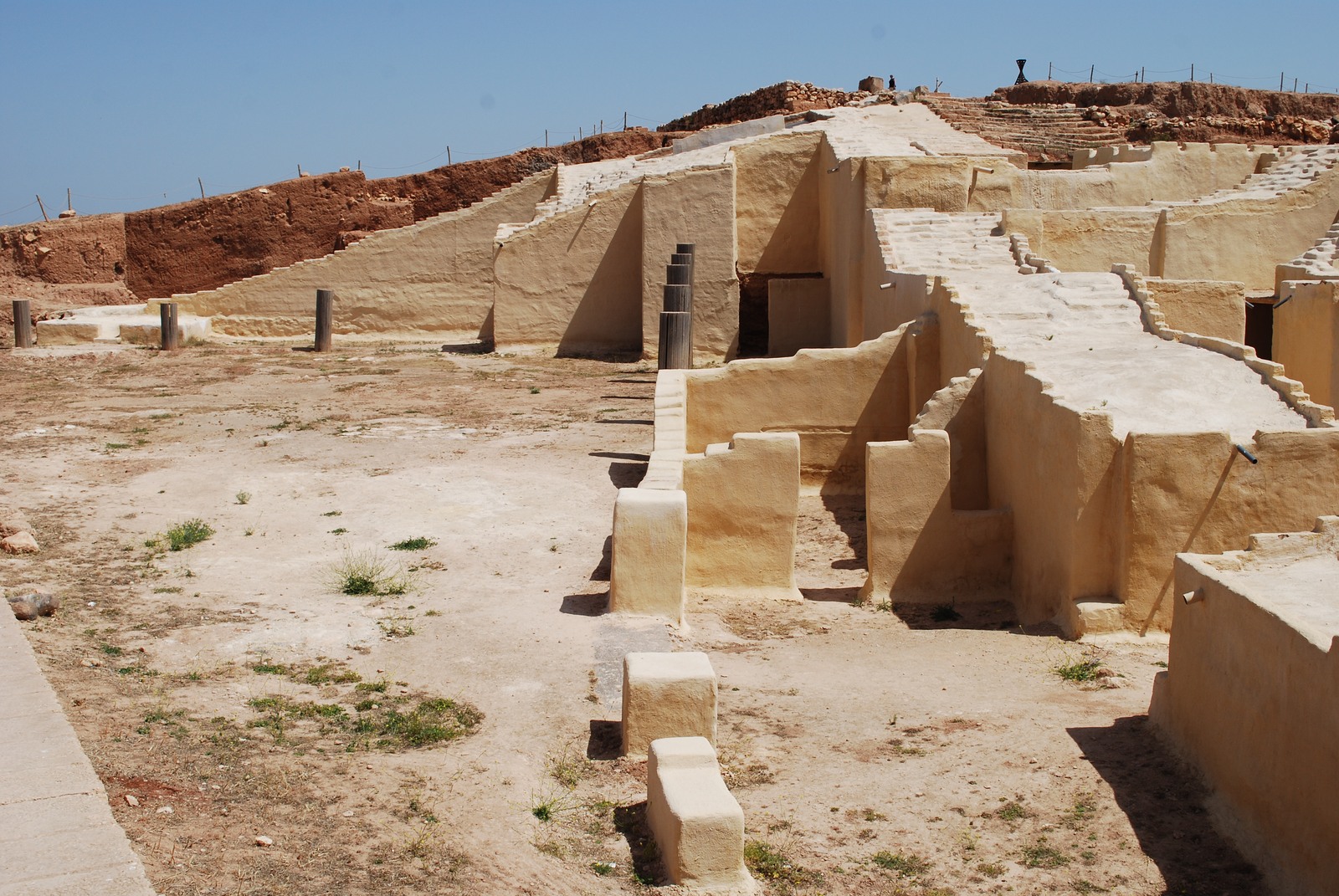
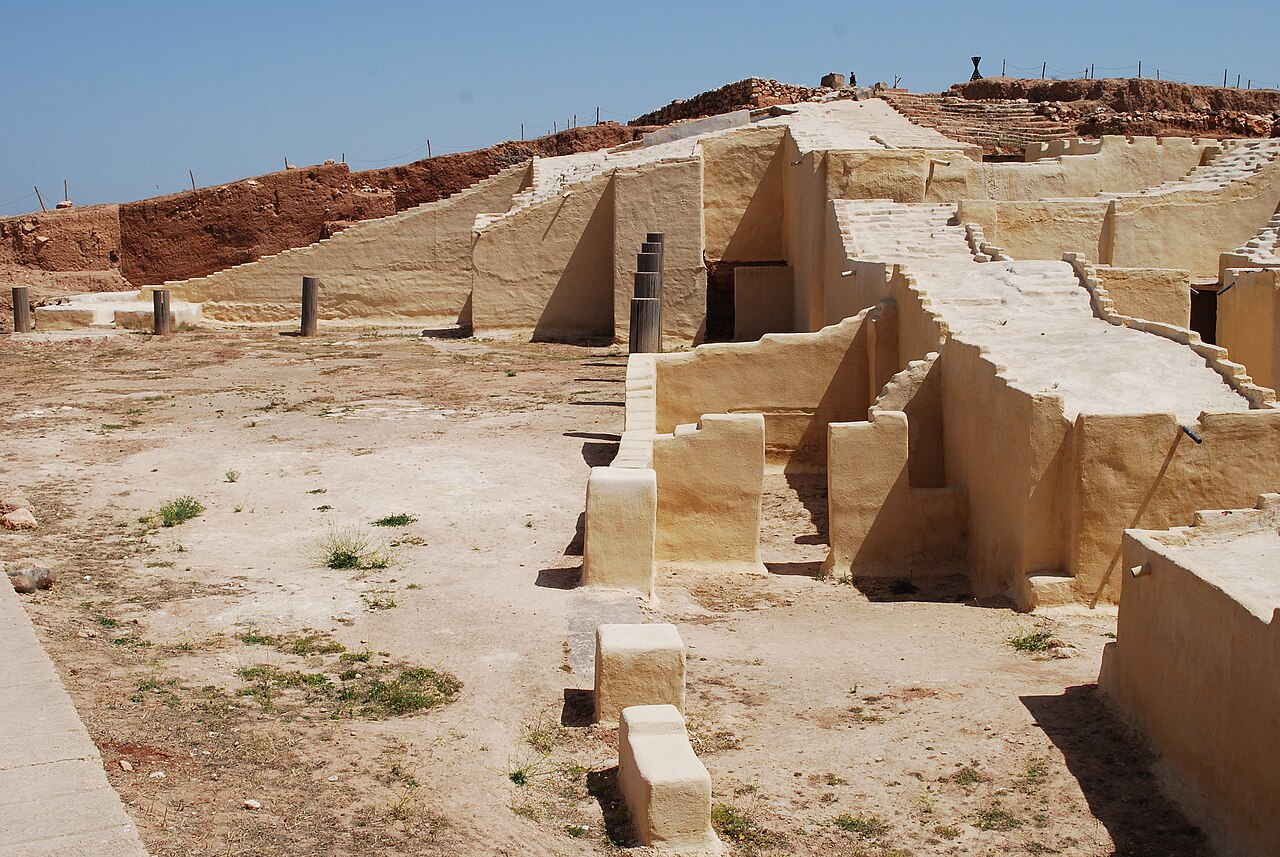
The royal archive at EblaEblaAncient city at Tell Mardikh, southwest of Aleppo, Syria. Its Palace G archives illuminate third-millennium BCE administration, language, and cult; the site has later occupation phases.Glossary · Click to read the explanation comes from the third millennium BCE. Clay tablets from the palace record transactions and people and preserve written forms of personal names. Joseph M. Pagan’s lexical study, available in a digital edition, reads some spellings as names meaning that ʾIl knows. It analyzes other forms with the common word god. The spelling can use different cuneiform signs, including a sign conventionally transcribed DINGIR. The catalogue records the signs of the tablet and a proposed linguistic analysis, which are two distinct stages in reading the name. [1][2]
The names in palace accounts can be compared with records about public cult. Walther Sallaberger’s study identifies Kura as the tutelary deity of Ebla in the age of the archive and discusses the offerings and royal ritualsRitualAn organised or distinguished practice meaningful to a community; it may leave traces, but its form alone does not reveal an associated doctrine.Glossary · Click to read the explanation that give the identification its basis. This evidence helps put the personal names in perspective. A name in an administrative list and an account of a sacrifice answer different questions. To identify the deity attached to a specific rite, the terms of that rite supply a kind of evidence that an isolated personal name cannot provide. [2][3]
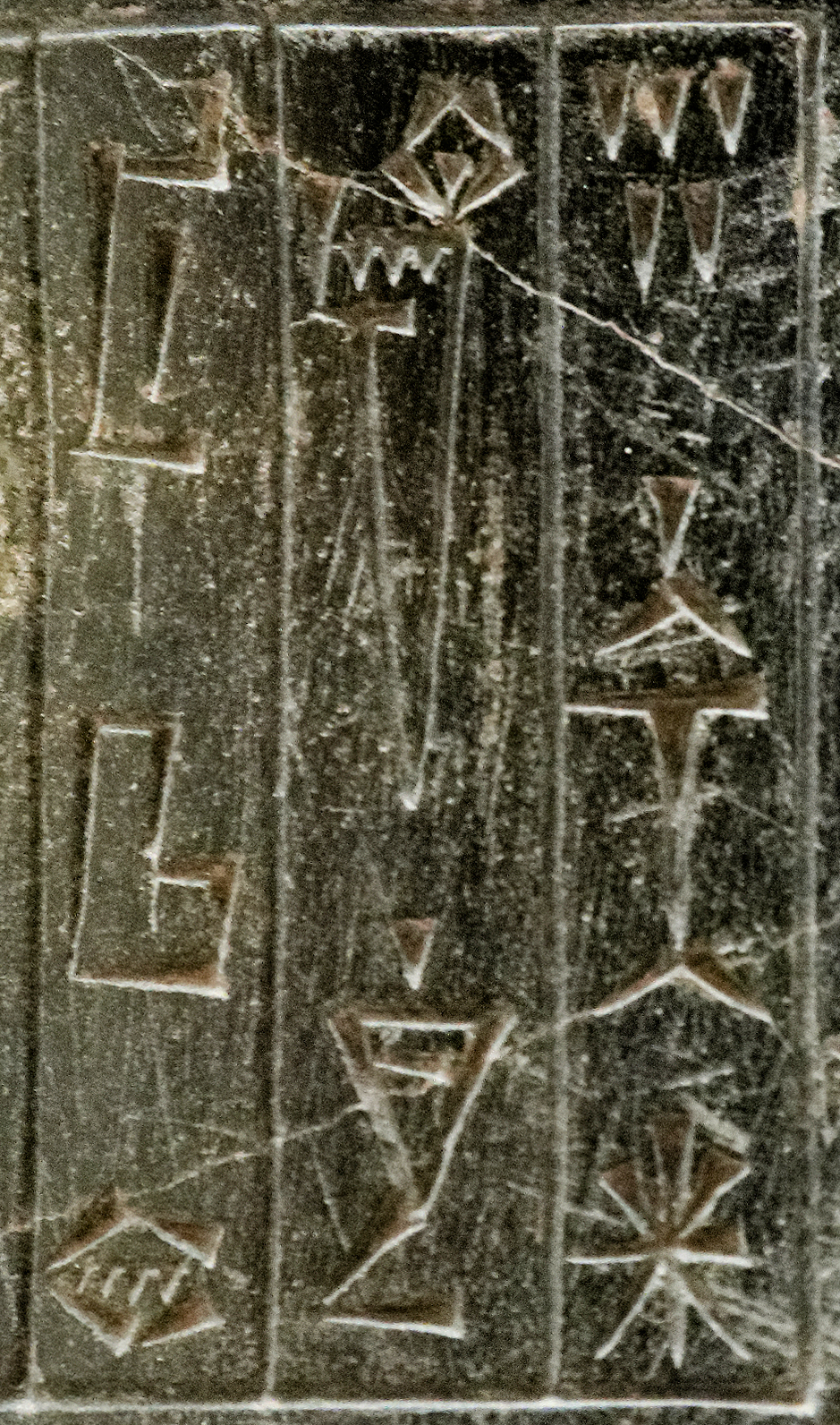
A statue from MariMariMari at Tell Hariri on the Syrian Euphrates was founded around 2900 BCE and rebuilt through three major urban phases. Its palace and cuneiform archives illuminate trade, royal government and religious practice, especially in the eighteenth century BCE.Glossary · Click to read the explanation illustrates the two kinds of evidence on one object. The inscription names its donor as Ebih-Il and identifies IshtarInanna / IshtarA prominent Mesopotamian goddess whose Sumerian name Inanna became associated with Akkadian Ishtar across diverse traditions. She was associated with desire, war, royal authority and Venus, while local forms and genealogies varied among texts.Glossary · Click to read the explanation as the recipient of his offering. In much later letters from the Mari archives, Ichiro Nakata finds that El and Il can occur as spelling variants in a set of names. He also discusses cases where a divine sign takes the position of that element. The grammar of certain names, he argues, favors reading it as a divine name. His case rests on the individual forms and comparisons within the corpus. [4][5]
A god named in the literature of Ugarit
At Late Bronze AgeLate Bronze AgeAn archaeological period around 1600–1200 BCE in much of the Near East, with international diplomacy, exchange and religious diversity; its endpoints vary by region.Glossary · Click to read the explanation UgaritUgaritAncient city and kingdom at Ras Shamra on the Syrian coast, flourishing between the fourteenth and early twelfth centuries BCE and preserving multilingual archives.Glossary · Click to read the explanation, a commonly used cuneiform alphabet represented sounds differently from the syllabic writing used in many earlier accounts. The script had signs that distinguish a glottal onset with different following vowels, alongside its other signs. The spelling in this system offers more specific information about the initial sound of certain names. It is still the writing of a particular language and scribal tradition. A form from Ugarit can help readers understand a Ugaritic text while leaving open how a name sounded in another place and period. [6]
Theodore J. Lewis discusses places in the Ugaritic compositions where ʾIlu is explicitly called king. In the Baal CycleBaal CycleA group of Late Bronze Age Ugaritic religious texts recounting Baal’s conflicts, relationships with the gods and the building of his palace.Glossary · Click to read the explanation, KTU 1.4 IV includes both that title and an expression conventionally rendered Father of Years, with other readings of its final word possible. The titles are spoken of a divine figure in the literature. They give more information about how the figure is presented than the two consonants of the name could supply on their own. [7]
Oaths and protections written on stone
The stele of Zakkur opens by identifying the monument as set up for ʾElwer, while a subsequent passage describes Baalshamayin helping the king. The dedication and the report of divine aid name their figures in the course of different statements. At Karatepe, the Phoenician text places El with the title qn ʾrṣ among divine witnesses to a warning against damaging the gate. The DEAPS editors render the title as creator of the land. Ryan Thomas argues for a reading involving possession. Both cases show why the clause around a name or title matters for interpreting it. [8][9][10]
In Sabaean evidence from Ṣirwāḥ, Karibʾil Watar is named in his own royal account. Norbert Nebes links him to the Karibili named by Sennacherib. Much farther north and later in time, the SafaiticSafaiticAn Ancient North Arabian consonantal script used for rock inscriptions recording names, kinship, pastoral movement and prayers in the pre-Islamic deserts of Syria, Jordan and northern Arabia.Glossary · Click to read the explanation inscription WH 1849 names members of a family in a sequence that can be compared with a Greek inscription, WH 1860. In the Greek version, the corpus editors read Wahballāh, Ẓannʾel and Wahballāh again. They consider it likely that the two inscriptions are by the same writer. With the rare aid of a matching family sequence, the Greek letters can help recover the sound that an inscription in another script did not spell out in the same way. [11][12][13]
Titles in the received wording of scripture
Genesis 14 calls Melchizedek a priest of El ElyonEl ElyonA Hebrew expression meaning “God Most High.” Genesis 14 identifies its bearer with Yahweh, while the Most High’s identity in Deuteronomy 32 remains debated separately from its manuscript readings.Glossary · Click to read the explanation and uses the title in his blessing of Abram. The blessing refers to heaven and earth, and the title recurs in Abram’s oath. In Genesis 21, Abraham invokes the name rendered by the Jewish Publication Society as the Everlasting God. These titles are preserved in passages about blessing, oath and worship. They offer points of comparison with other Northwest Semitic expressions while retaining the particular form and use that each passage gives them. [14][15]
Across the inscriptions, the name can belong to a person’s own name, name a divine figure directly, or occur with an epithet. A translation records a judgment about which of those uses fits a particular occurrence. The fullest cases for comparison preserve more than a sequence of letters. The statue at Mari has a dedication as well as its donor’s name. The Ugaritic texts give the deity titles and a role. The desert texts preserve a family line in two scripts. Those additional words supply much of what can be known about the name in each setting. [4][7][12][13]
Further reading on IL Archive
- The Statue of Ebih-Il and the Il-Names of Mari
- El in the Iron Age Inscriptions of Sam’al, Karatepe and Sefire
- ʾIl in Ancient Arabian Names, from Saba to the Basalt Desert
- El Before Ugarit
- El at Ugarit
Sources and credits of the film
The documentary The Name No One Owns | The Road of El (IL Archive, 2026) draws on the photographs, pages, footage, maps, music and sounds listed here. Each licence is the one given by the source.
Photographs
- Ebla, the south-west gate. Gianfranco Gazzetti, CC BY-SA 4.0: Wikimedia Commons
- Saddle querns and grinding stones in situ at Ebla. Ywpark2003, CC0: Wikimedia Commons
- Cast of an Ebla tablet, Museo d'Arte Orientale, Rome. Davide Mauro, CC BY-SA 4.0: Wikimedia Commons
- Statue of Ebih-Il, Louvre AO 17551 (four photographs). Jastrow, public domain: photo a, photo b, photo c, photo d
- Inscription of the Ebih-Il statue. Jastrow, CC BY 2.5: Wikimedia Commons
- Mari, palace of Zimri-Lim (three photographs). Gianfranco Gazzetti, CC BY-SA 4.0: photo a, photo b, photo c
- Cuneiform clay tablets from the Amorite kingdom of Mari (five photographs). Gary Todd, CC0: photo a, photo b, photo c, photo d, photo e
- Tablet of Zimri-Lim, king of Mari, Louvre AO 20161. M0tty, CC BY-SA 3.0: Wikimedia Commons
- Head of the statue of Ishtup-Ilum, Mari (photograph of 14 March 1936). André Bianquis, Mari mission, public domain: Wikimedia Commons
- Tablet of the Baal Cycle, Louvre AO 16636. Shonagon, CC0: Wikimedia Commons
- Tablet of the Baal Cycle, AO 16636 (details). Rama, CC BY-SA 2.0 fr: photo a, photo b, photo c, photo d, photo e, photo f
- Administrative tablet from Ugarit, Louvre AO 19967. Zunkir, CC BY-SA 4.0: Wikimedia Commons
- The ruins of Ugarit (two photographs). Gerhard Haubold, CC BY-SA 4.0: photo a, photo b
- Statue of Pharaoh Osorkon I, AO 9502, bust. Rama, CC BY-SA 3.0 fr: Wikimedia Commons
- Statue of Pharaoh Osorkon I, AO 9502, inscribed chest. Onceinawhile, CC BY-SA 4.0: Wikimedia Commons
- Kilamuwa stele, Pergamon Museum. Dosseman, CC BY-SA 4.0: Wikimedia Commons
- Inscription on the torso of Panamuwa II (KAI 215). Felix von Luschan and others, public domain: Wikimedia Commons
- Karatepe, Phoenician text of the Azatiwada inscription. Dosseman, CC BY-SA 4.0: Wikimedia Commons
- Karatepe bilingual inscription. Volker Höhfeld, CC BY-SA 4.0: Wikimedia Commons
- The Sefire steles in Ronzevalle's publication, plates XL and XLI. Sébastien Ronzevalle, public domain: plate XL, plate XLI
- Stele of Zakkur. Rama, CC BY-SA 2.0 fr: Wikimedia Commons
- Sabaic slab, Louvre AO 4091. Mbzt, CC BY-SA 4.0: Wikimedia Commons
- Inscription in Sabaic. Rowanwindwhistler, CC BY-SA 4.0: Wikimedia Commons
- Panel with a dedication to Almaqah, Louvre DAO 18. unknown artist, public domain: Wikimedia Commons
- Dadanitic and Aramaic bilingual inscription. Zunkir, CC BY-SA 4.0: Wikimedia Commons
- Stele of Tayma, Louvre AO 1505. Shonagon, CC0: Wikimedia Commons
- Safaitic inscriptions and desert drawings, Jordan Museum (four photographs). Osama Shukir Muhammed Amin FRCP(Glasg), CC BY-SA 4.0: photo a, photo b, photo c, photo d
- Inscriptions in the landscape of the Harra region, and an inscription from al-Safawi. Shatha Mubaideen, CC BY-SA 4.0: photo a, photo b
- View from Kef el-Kelb in the Black Desert, eastern Jordan. Joe Roe, CC BY-SA 4.0: Wikimedia Commons
- HebrewHebrewA Northwest Semitic language of the Canaanite group, encompassing Iron Age epigraphy, Biblical, Rabbinic, medieval and Modern Hebrew; its scripts and pronunciations changed over time.Glossary · Click to read the explanation seal, 850 to 700 BCE, Museum of Fine Arts, Boston. ArnoldReinhold, CC BY-SA 4.0: Wikimedia Commons
- Mesha steleMesha SteleA ninth-century BCE Moabite royal basalt stele at the Louvre (AO 5066; KAI 181). Its inscription names Chemosh, Omri, Israel and YHWH (line 18). A proposed “House of David” reading in damaged line 31 is disputed.Glossary · Click to read the explanation, Louvre AO 5066. Tangopaso, public domain: Wikimedia Commons
- Kudurru of Meli-Shipak II, Louvre Sb 22. Shonagon, CC0: Wikimedia Commons
- Proto-cuneiformProto-cuneiformEarly southern Mesopotamian script (c. 3350–3000 BCE): clay tablets with counting systems and signs for commodities, people and offices, as well as lexical lists; not yet a full rendering of speech.Glossary · Click to read the explanation tablet from UrukUrukAncient city at Warka in southern Iraq, a major urban centre around 3200 BCE that preserved early writing and accounting tablets.Glossary · Click to read the explanation listing terms for pigs, Pergamon Museum. Osama Shukir Muhammed Amin FRCP(Glasg), CC BY-SA 4.0: Wikimedia Commons
- Tablet from Fara with a list of professions, Pergamon Museum. Osama Shukir Muhammed Amin FRCP(Glasg), CC BY-SA 4.0: Wikimedia Commons
- Warka (Uruk) vase. Osama Shukir Muhammed Amin FRCP(Glasg), CC BY-SA 4.0: Wikimedia Commons
- Fragment of Atrahasis, Morgan Library & Museum. Mike Peel, CC BY-SA 4.0: Wikimedia Commons
- Tablet of the Epic of Atrahasis, British Museum. SpeakingArch, CC BY-SA 4.0: Wikimedia Commons
- Mushhushshu dragon from the Ishtar Gate, Istanbul Archaeology Museums. Ywpark2003, CC0: Wikimedia Commons
- Ishtar Gate, Pergamon Museum. Kurt Kaiser, CC0: Wikimedia Commons
- Cylinder sealCylinder sealSmall engraved cylinder rolled over soft clay to leave an extended image. Used to secure, document and identify administrative actions; its pictures do not automatically constitute writing.Glossary · Click to read the explanation with a deity accepting an offering, Walters Art Museum 42.713. Walters Art Museum, public domain: Wikimedia Commons
- AkhenatenAkhenatenEgyptian eighteenth-dynasty king, formerly Amenhotep IV, who reorganized royal religion around Aten and founded Akhetaten.Glossary · Click to read the explanation, Nefertiti and their children, Berlin. Gerbil, public domain: Wikimedia Commons
- Stela of Nabonidus, British Museum (top). author not named in the file record, CC0: Wikimedia Commons
- Boundary stone (kudurru), Walters Art Museum 2110. Walters Art Museum, public domain: Wikimedia Commons
- Baal Cycle tablets AO 16640 and AO 16641 to 16642. Rama, CC BY-SA 2.0 fr: tablet a, tablet b
- Tablet with a cuneiform abecedary, Ras Shamra, AO 19992. Rama, CC BY-SA 3.0 fr: Wikimedia Commons
- Code of HammurabiHammurabiKing of Babylon in Mesopotamia, reigning around 1792–1750 BCE. A celebrated legal text preserved on a stele and cuneiform copies bears his name.Glossary · Click to read the explanation, Louvre Sb 8. Rama, CC BY-SA 3.0 fr: Wikimedia Commons
- Inscription of the Ahiram sarcophagus, National Museum of Beirut. Onceinawhile, CC BY-SA 4.0: Wikimedia Commons
- Plaster inscription of Deir Alla, Jordan Museum. Jona Lendering, Livius.org, CC0 1.0: Livius.org
- Fushimi Inari shrine, Kyoto. Balon Greyjoy, CC0: Wikimedia Commons
- Western Wall plaza, JerusalemJerusalemJerusalem is a city of religious importance in Judaism, Christianity and IslamGlossary · Click to read the explanation. Demetrios Karatassos, CC0: Wikimedia Commons
- Mass in Notre-Dame, Paris. Júlia Barbon, CC BY-SA 3.0: Wikimedia Commons
- Buddha Tooth Relic Temple, Singapore. Basile Morin, CC BY-SA 4.0: Wikimedia Commons
- Harmandir Sahib, Amritsar. Bernard Gagnon, CC BY-SA 4.0: Wikimedia Commons
- Atash Behram, Yazd. Diego Delso, CC BY-SA 4.0: Wikimedia Commons
Manuscripts and printed pages
- Leningrad Codex (B 19a), about 1008 to 1010 CE, three folios; scan by USC Dornsife. Public domain: folio a, folio b, folio c
- Hebrew Bible, edited by M. H. Letteris, Vienna 1852. Public domain: Internet Archive
- Qur'an, Amiriyya Press (Bulaq), Cairo 1928, King Fuad edition; scan by the Bibliotheca Alexandrina. Public domain: Internet Archive
- al-Tabari, Jami' al-bayan, Maymaniyya Press, Cairo; scan by the University of Toronto. Public domain: volume a, volume b
- Ibn Kathir, Tafsir, with al-Baghawi, Ma'alim al-tanzil, edited by Rashid Rida, al-Manar, Cairo 1928. Public domain: Internet Archive
- Old Testament in SyriacSyriacAn Aramaic literary language rooted in Edessa, first attested in non-Christian inscriptions and later prominent in Christian writing, scholarship, translation and liturgy.Glossary · Click to read the explanation (Peshitta), TrinitarianTrinityChristian formulation of divine unity and Father/Son/Spirit distinction, with a history of debate.Glossary · Click to read the explanation Bible Society, London 1913. Public domain: Internet Archive
- The Holy Bible in Arabic (Van Dyck and Bustani), British and Foreign Bible Society, London 1872. Public domain: Internet Archive
- Qur'an text shown on screen: Tanzil Project. CC BY 3.0: tanzil.net
- Hebrew Bible text and the JPS 1917 English translation shown on screen: Mechon Mamre. Public domain: mechon-mamre.org
Video footage
- Ganga aarti at Varanasi. Kasyap, CC0: Wikimedia Commons
- Tawaf al-Ifadha, 2016. Amm Salim, CC BY 3.0: Wikimedia Commons
- Landscapes and skies under the Pixabay Content Licence: drone over desert ridges toward the rising sun (AlonaMalakh), sea at noon on a rocky shore (Mario_Krimer), sunset behind a ridge (adege), cranes across a dusk sky (dlabiebrzy), wild grass at sunset (JoshuaWoroniecki), dust specks (MilanWulf) and a thread of smoke (LuminousPresence).
- Two clips under the Pexels licence (a cloud over a ridge at dusk and a full moon rising); the contributors are not named on the clip pages used.
- Fire, smoke and ember elements composited in the scenes of burning archives, under the Pixabay Content Licence: u_d3cxnwp477, Stek59, Arcaion, knownsensefilms, u_q72e381w5k, Christopher_OToole_Images, FreeCreativeStuff, Joshua_Willson, ArtSqb, Sety_SB_Films and TH-DARK-Media.
Maps and terrain data
- Terrain Tiles by Mapzen and Tilezen on AWS Open Data, with SRTM and GMTED2010 data courtesy of the U.S. Geological Survey and ETOPO1 from NOAA: AWS Open Data
- Rivers and coastlines: Natural Earth, public domain: naturalearthdata.com
- Depth Anything V2 (Yang and others, 2024), ONNX version by onnx-community, Apache-2.0, used only to add depth to still pictures: Hugging Face
Music
- Kevin MacLeod (incompetech.com), CC BY 4.0: "Lord of the Land", "Healing", "Teller of the Tales", "The Sky of our Ancestors", "Midnight Tale", "Lotus", "Echoes of Time v2", "Stormfront", "Thunder Dreams" and "Spellbound": incompetech.com, licence
- "Oasis" by Christian-Z (Jamendo), CC BY 3.0: Internet Archive, licence
Sound
- Wind: daveincamas, CC BY 4.0, Internet Archive; klankbeeld, CC BY 4.0, riverside wind and rocky stream
- Fire: heckfricker, CC0, campfire a and campfire b; RyanKingArt, CC0, campfire on the beach
- Nature: Ted Ellis (Yarmonics), CC0, wind, birds and woods; Benbojangles, CC0, beach waves; klau78 and chrov_, CC0, river and stream; Carlo Patrao, public domain mark, reeds, water and wind
- U.S. National Park Service, public domain: dawn chorus at Yellowstone (recorded by Jennifer Jerrett) and Bryce Canyon, and a rockslide at Yosemite
- Pixabay Content Licence: night fire (vrogov) and brush (24687763)
- Qur'an recitation of 2:97, 9:8 and 31:25: Aaqib Azeez (Atcovi), CC0, via the Internet Archive and Wikimedia Commons
- Other effects (beams, clay, stylus, chisel, storm, flood, river at night and low tones): made for IL Archive with AI tools. Drums, risers and designed layers: made by IL Archive.
AI-generated material
- The eight chapter openings and some scenes, including the dam of Maʾrib, the incense altar, the lion gate, the basalt stele, the cairn and the lamp, are AI-generated video made from AI stills and IL Archive start images. They are reconstructions, not photographs.
- Further AI stills (the palace, the mother at the doorway, the river gorge, Ugarit, the afterglow, the dawn road and the burning archive) and the closing sequence were designed by IL Archive and animated with depth.
- The prologue reuses AI clips from earlier IL Archive films. Gods are shown only as their ancient emblems or as light.
- Narration voice: AI-generated. Maps, basalt cards, type and motion graphics: made in code by IL Archive. Fonts: SIL Open Font License.
References and notes (15)
- Erica Scarpa, The Archives of Ebla: A Primer Read the excavation and chronology sections and the discussion of the archival material. Return to the text ↑
- Joseph M. Pagan, personal names from Ebla, digital edition Read the entries and analyses for 2433, 2440, 2461, 2467 and 2707, including variant spellings and proposed readings. Return to the text ↑
- Walther Sallaberger, Kura, Youthful Ruler and Martial City-God of Ebla Read the sections on Kura as city god, royal ritual, offerings and political oaths. Return to the text ↑
- Musée du Louvre, Nu-banda Ebih-Il, AO 17551 A Read the object record and translation of the dedication naming Ebih-Il and Ishtar. Return to the text ↑
- Ichiro Nakata, A Mari Note: Ikrub-El and Related Matters Read pp. 15–18 on spelling, grammar, and the divine name and common noun in the Mari forms. Return to the text ↑
- Mnamon, Scuola Normale Superiore, Ugaritic Read the script description, sign inventory discussion and scope of the corpus. Return to the text ↑
- Theodore J. Lewis, God (ʾIlu) and King in KTU 1.23 Read the discussion of ʾIlu as king, including note 17 on epithets in the Baal Cycle. Return to the text ↑
- James D. Moore, Louvre AO 8185, DEAPS Read the opening Aramaic lines and the translation of the dedication to ʾElwer and Zakkur’s account of Baalshamayin. Return to the text ↑
- James D. Moore and Armand Rogers, Karatepe Bilingual Luwian-Phoenician Inscription, DEAPS Read the Phoenician warning at the end, including El’s title. Return to the text ↑
- Ryan Thomas, Creator, Begetter, or Owner of the Earth? Read the competing interpretation of the epithet at Karatepe and the conclusion on the root qny. Return to the text ↑
- Norbert Nebes, Der große Tatenbericht des Karibʾil Watar aus Ṣirwāḥ Read the discussion of the ruler named in the Sabaean text and the Assyrian parallel. Return to the text ↑
- Ahmad Al-Jallad and Michael C. A. Macdonald, WH 1849, OCIANA Read the Safaitic text and translation of the family names. Return to the text ↑
- Ahmad Al-Jallad and Michael C. A. Macdonald, WH 1860, OCIANA Read the Greek family names and commentary on the parallel Safaitic inscription and vocalization. Return to the text ↑
- Genesis 14, Hebrew text and JPS English translation Read verses 18–22 on Melchizedek, the blessing and the oath. Return to the text ↑
- Genesis 21, Hebrew text and JPS English translation Read verse 33 on the invocation using the title Everlasting God. Return to the text ↑
Suggest a correction · Suggest a source for this record
Cite this record
IL Archive, «The Road of El through Ancient Names and Inscriptions», https://ilarchive.com/en/studies/road-of-el-names-and-inscriptions
Continue reading