Artifact
The Aramaic Stele of Zakkur (Louvre AO 8185)
An object record bringing together its image, metadata, rights, and context.
- Timeline
- From 900 BCE to 780 BCE
- Region
- The Levant
On a broken stele, Zakkur of Hamath recounts how a coalition besieged Hazrak and how a god answered him. An Assyrian inscription names the same king in a ruling on a border along the Orontes River.
Estimated reading time: 4 min Published Last reviewed:
Share article
Photograph
Photograph by Rama, via Wikimedia Commons. CC BY-SA 2.0 France. Image resized.
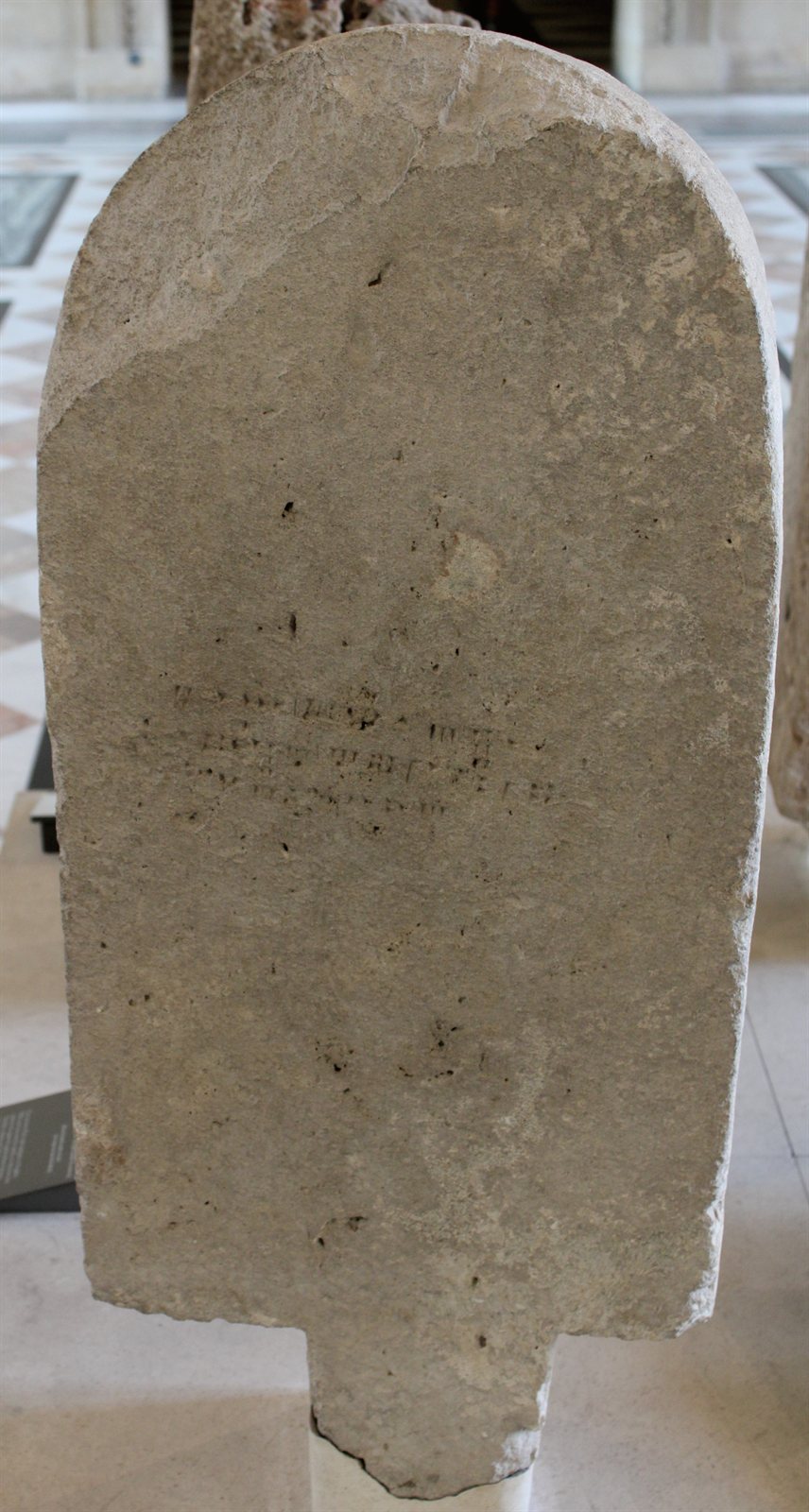
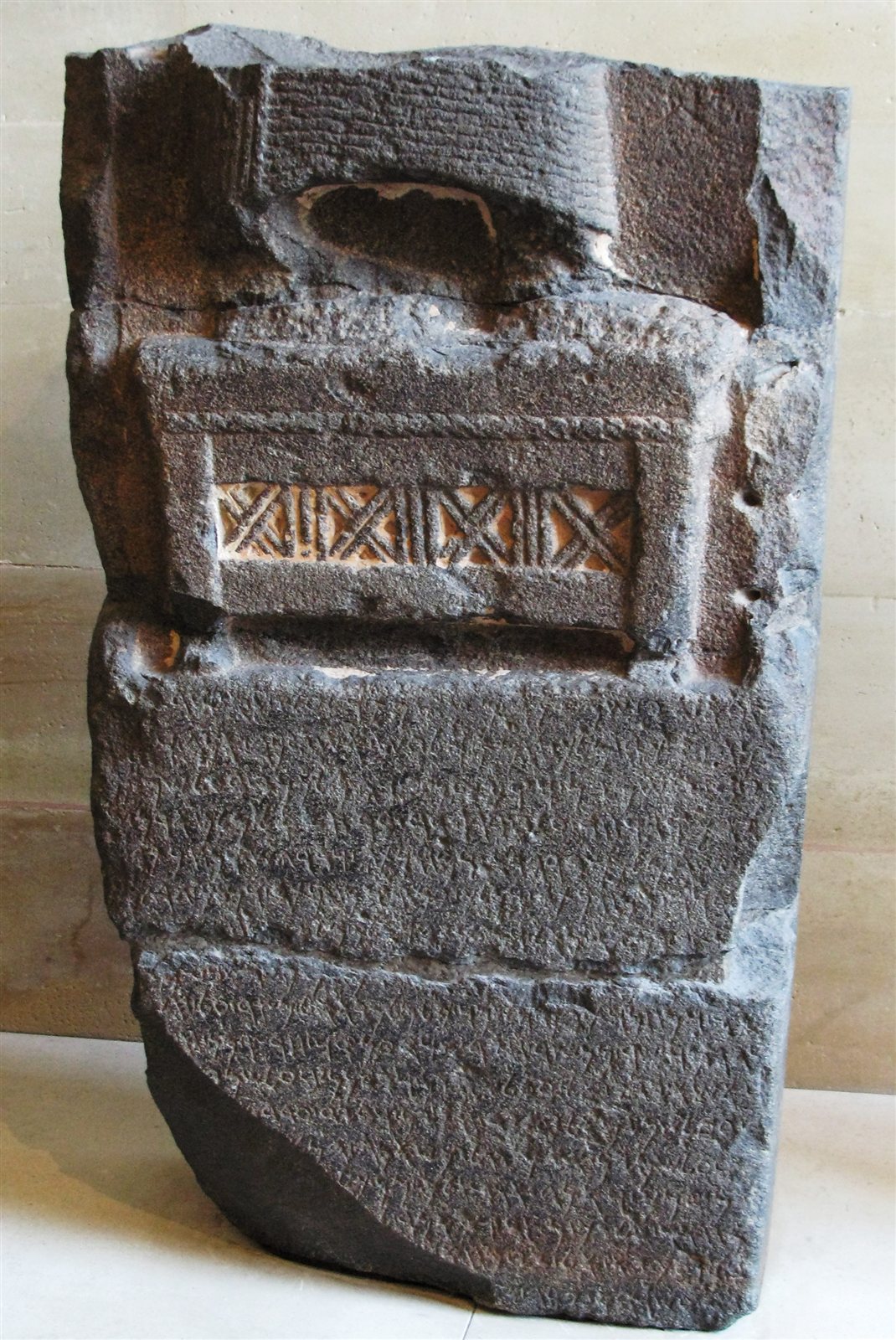
The surviving lower part of Zakkur’s stele, Louvre AO 8185. The figure’s feet and decorated pedestal appear above the Old Aramaic inscription
License · Image sourceObject details
- Title
- The Aramaic Stele of Zakkur (Louvre AO 8185)
- Timeline
- From 900 BCE to 780 BCE
- Region
- The Levant
- Rights
- CC BY-SA
Text
Introduction
The lower part of a stele in the Louvre preserves the feet of a standing figure and a royal inscription in Old Aramaic. The first line names Zakkur as king of Hamath and Luʿash and records his dedication of the stone to Elwer. The text then turns to a siege at Hazrak, usually identified with Tell Afis. Henri Pognon found the fragments in 1903 and kept the findspot private. The Louvre catalogues the findspot as Tell Afis. The inscription presents the siege from the king’s point of view. Its damaged lines preserve only part of what he wanted readers to remember. [1][2][3][6]
The surviving stone
The Louvre identifies the figure as Zakkur. Above the text, part of a pleated garment and the lower portion of the figure remain on a raised stand. The catalogue lists basalt and sandstone as possible materials. It assigns the stele to the 9th century BCE. Maria Giulia Amadasi Guzzo places it around 790–780 BCE, in the early 8th century BCE. The inscription’s surviving wording supplies no precise year, and the two dates should be understood as different modern assessments. [1][2][3][4]
The name appears as ZKR in the Aramaic text. Some publications read it as Zakir. Jimmy Daccache adopts Zakkur and points to the syllabic spelling in an Assyrian inscription for support. The next line contains a phrase whose reading matters for the king’s biography. James D. Moore translates it as a statement of modest standing, while Daccache reads it as a reference to the city of ʿAnah. The line can carry different implications about the speaker’s origins, depending on how the Aramaic is understood. [2][4][5]
The siege of Hazrak
In Zakkur’s account, Barhadad son of Hazael, king of Aram, brought several other kings and their forces against him. Names preserved in the list include Gurgum and Sam’al. Damage complicates the reading of the total number. The account describes a wall higher than the city’s and a trench deeper than its own. Its wording draws attention to how far the attackers’ works exceeded the defenses of Hazrak. The monument gives these details from the position of the ruler inside the city. [2][3][4]
Zakkur says that he raised his hands to BaalshaminBaalshaminCelestial deity attested in the Palmyrene region of Syria; depicted with Aglibol and Malakbel in a Louvre relief.Glossary · Click to read the explanation and that the god answered through intermediaries. The first group is usually translated as seers. Moore renders the other group as witnesses, while Daccache understands them as diviners. In the message, Baalshamin recalls that he made Zakkur king and assures him of protection from the coalition. Elwer is named in the dedication, while Baalshamin is the deity who speaks in the siege account. Both names belong to the surviving inscription. [2][3][4]
Building and remembering
The lines following the promise of protection are more fragmentary. They mention a wall, work at Hazrak, fortified places and the building of temples. Later lines return to the act of setting up the stele before Elwer and address the possibility of interference with the monument or its inscription. The king had the siege and these works recorded on the same stone. The surviving sequence moves from a threat to his rule to what he claims to have built and to the future of the monument that bears his name. [2][4]
A second monument names Zakkur
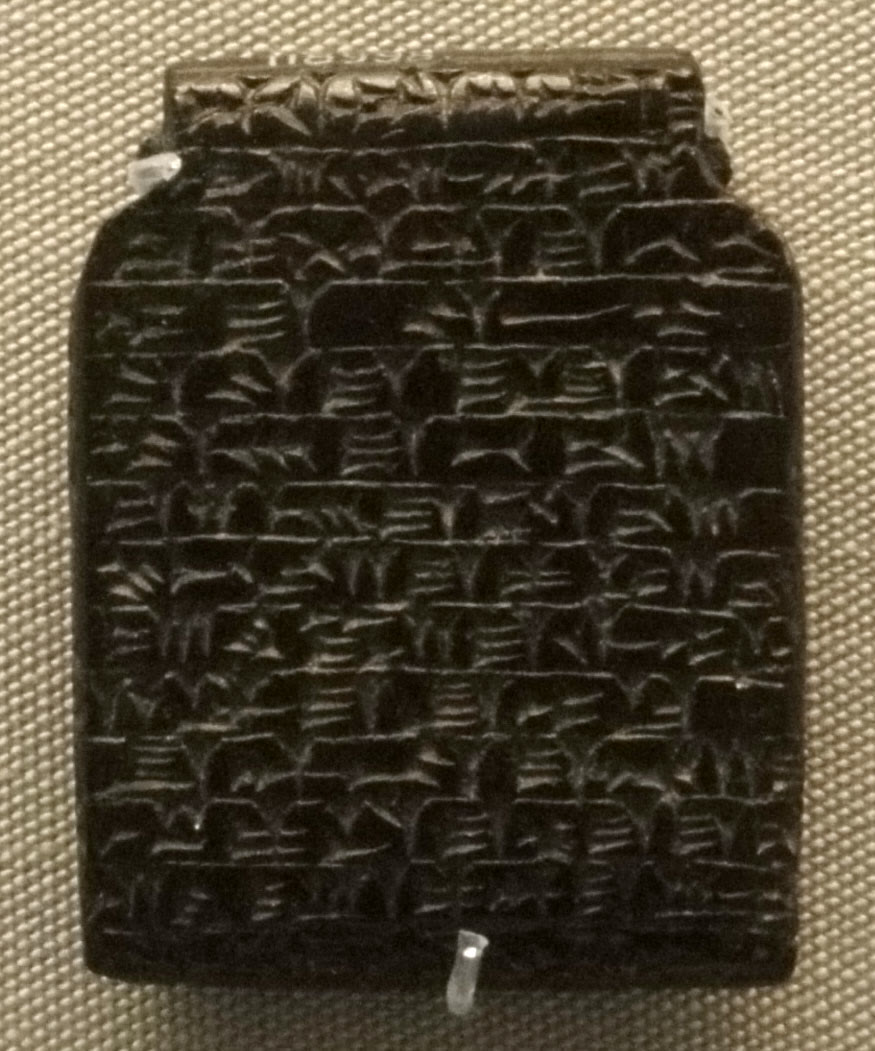
The Assyrian stele from Antakya names Zakkur of Hamath in a different context. It says that Adad-nirari III of Assyria and the field marshal Shamshi-ilu established a boundary between Zakkur and Attar-shumki. The text assigns the town of Nahlasi and its surrounding land to Attar-shumki and identifies the Orontes River as the border. The passage gives no account of how the siege of Hazrak ended. [4][5]
The two inscriptions preserve different acts that their sponsors wanted set down in stone. The Louvre fragment gives Zakkur’s account of a danger to his city, a divine response and works he claimed as king. The Assyrian stele records the decision of a king and an official over the lands held by two rulers. Reading them together establishes that Zakkur appears in both traditions and shows where each account leaves the reader with unanswered questions. [1][2][4][5]
References and notes
- Musée du Louvre, Département des Antiquités orientales, “Stèle de Zakkur,” AO 8185, KAI 202 Description, physical characteristics, places and dates, and history. Read the catalogue’s description of the standing figure, its stone identification with question marks, dating, and Afis findspot. Return to the text ↑
- James D. Moore, “Louvre AO 8185,” Digital Editions of Aramaic and Phoenician Sources (DEAPS), The Ohio State University Text and Translation, lines 1–16 for the dedication and siege, 17–29 for building works, and the Aramaic text of lines 30–43 for the setting up and protection of the stele. Return to the text ↑
- Maria Giulia Amadasi Guzzo, “Tell Afis in the Iron Age: The Aramaic Inscriptions,” Near Eastern Archaeology 77 (1), 2014, 54–57 Publisher’s open abstract. Read the proposed date of 790–780 BCE, the discovery in 1903 by Pognon, the location of Hazrak, and the epigraphic attestation of Elwer at Tell Afis. Return to the text ↑
- Jimmy Daccache, “Guerres et discours sur la guerre dans la propagande royale : le monde ouest-sémitique au Ier millénaire av. J.-C.,” BABELAO 5, 2016, 47–75 Pp. 51–52 with nn. 13–17 for the name, date, dedication, and oracle, pp. 56–57 for the Antakya comparison, and pp. 61–62 for the coalition. Return to the text ↑
- Royal Inscriptions of Assyria online, “Adad-nerari III 02,” Q004750, RIMA 3 A.0.104.2, adapted by Jamie Novotny and Nathan Morello from A. Kirk Grayson Antakya stele, lines 4–11a, the names of Zakkur, Attar-shumki and the Assyrian officials, and the boundary provisions involving Nahlasi and the Orontes. Return to the text ↑
- René Dussaud, ‘La stèle araméenne de Zakir au Musée du Louvre’, Syria 3 (2), 1922, pp. 175–176 P. 175 dates Pognon’s discovery of the fragments to 1903 and reports that he withheld the findspot. P. 176 records the identification of the findspot as Afis reported after his death. Return to the text ↑
Archive records may be reviewed and refined as better evidence or sources become available. Suggest a correction
Suggest a correction · Suggest a source for this record
Cite this record
IL Archive, «The Aramaic Stele of Zakkur (Louvre AO 8185)», https://ilarchive.com/en/artifacts/zakkur-stele
Continue reading