The Song of Hedammu Chapter 1
The Shoreline Song
The gods argue about the cost of their quarrel as the sea serpent grows. Shaushka approaches the water with music. Other surviving fragments tell how scent and a dream enter the encounter.
SourcesTurn the pages with the arrows, the arrow keys or a swipe.
THE SONG OF HEDAMMU
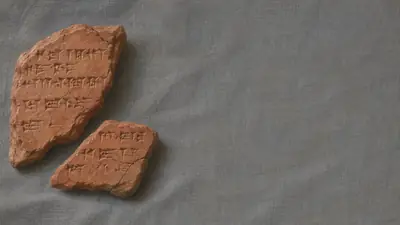
Clay tablets from Hattusha carry the song of a sea serpent and the gods who set its story in motion. The tablets are broken. Several passages survive in more than one form.
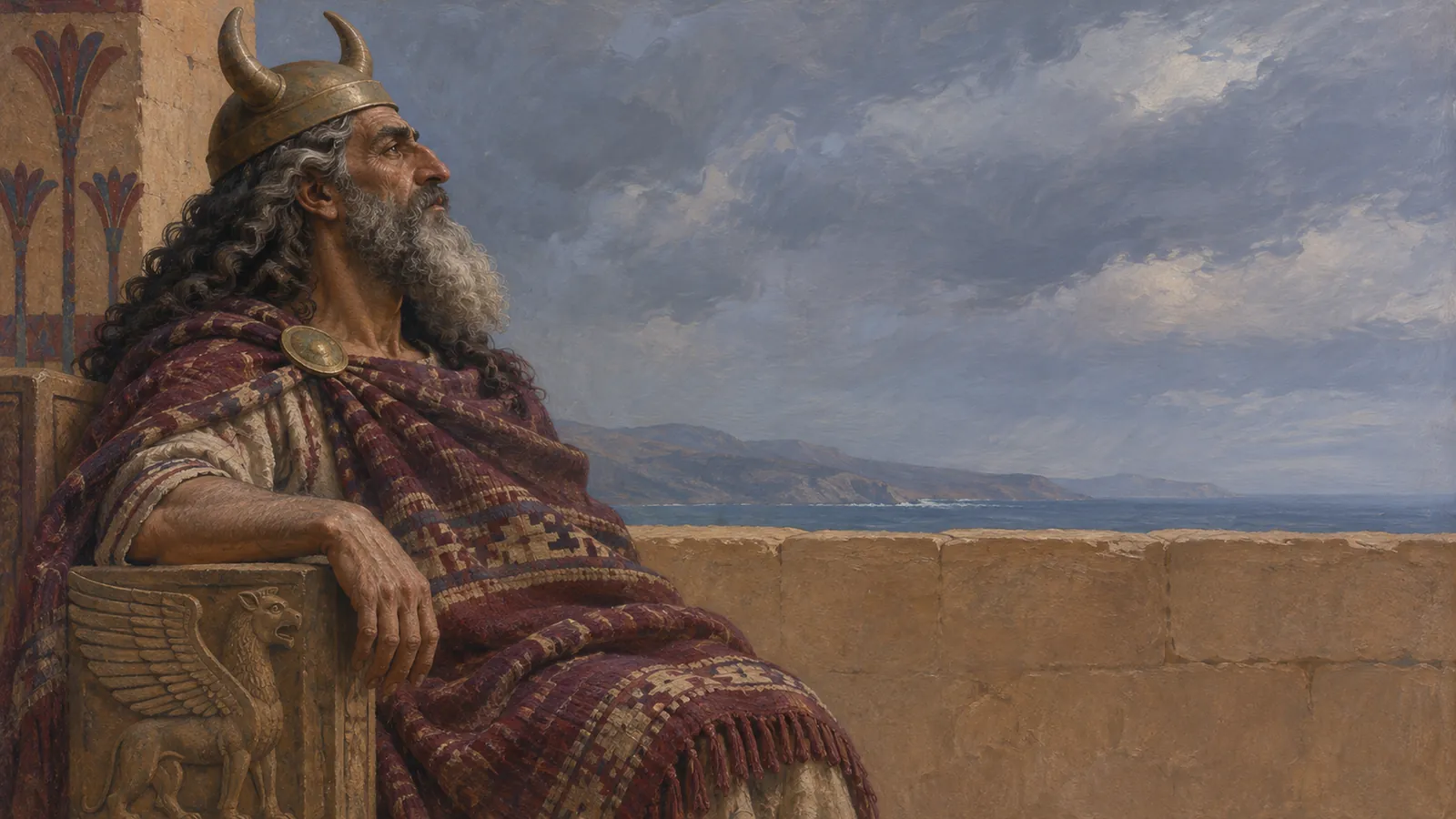
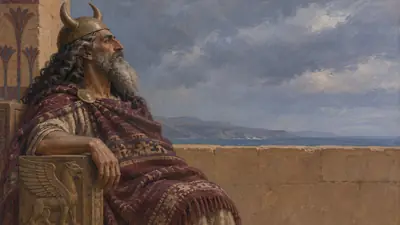
Kumarbi feels his standing among the gods has been diminished. In one damaged passage he looks for a way to recover it. He wants a rival for Teshub, the Storm God.
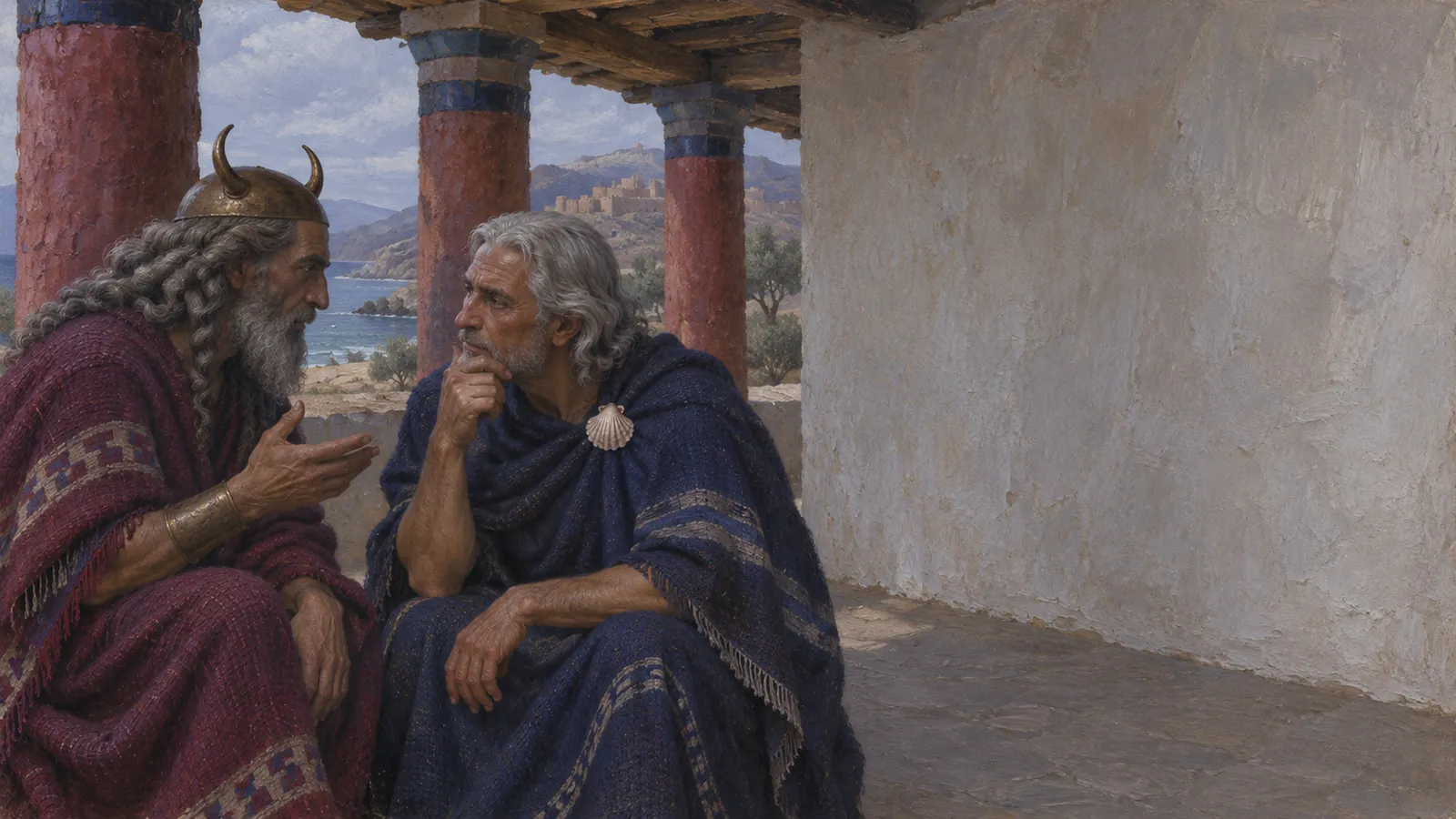
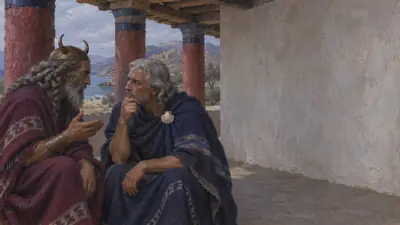
Kumarbi and the Great Sea meet. Their compact concerns the Sea’s daughter. Each has something to offer the other, though the fragment leaves much of their first conversation in darkness.
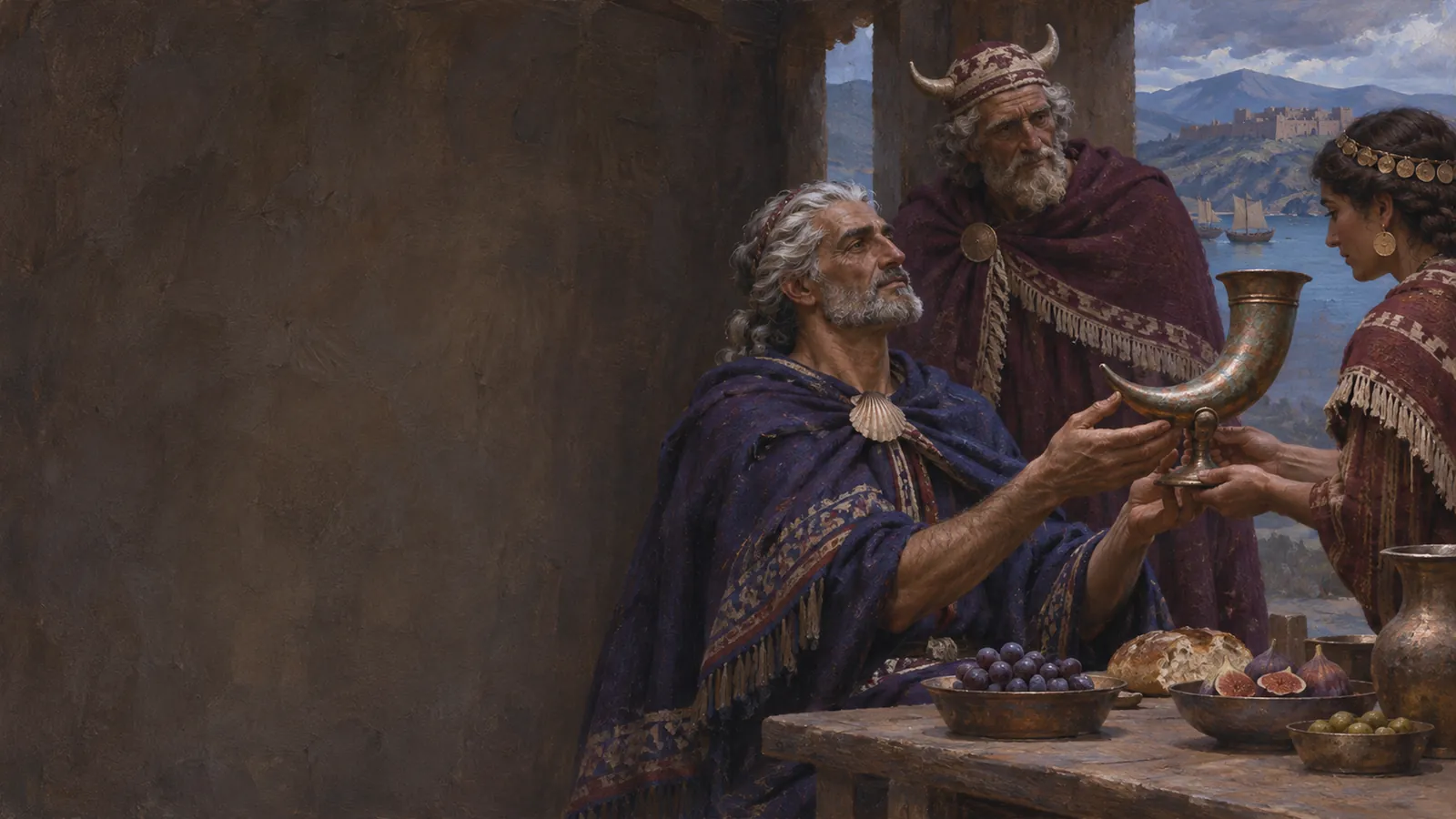
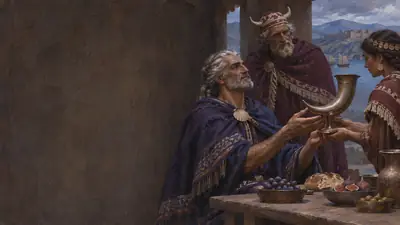
The Great Sea is handed a drinking vessel at Kumarbi’s house. He says the matter is agreed and asks Kumarbi to come to his own house on the seventh day.
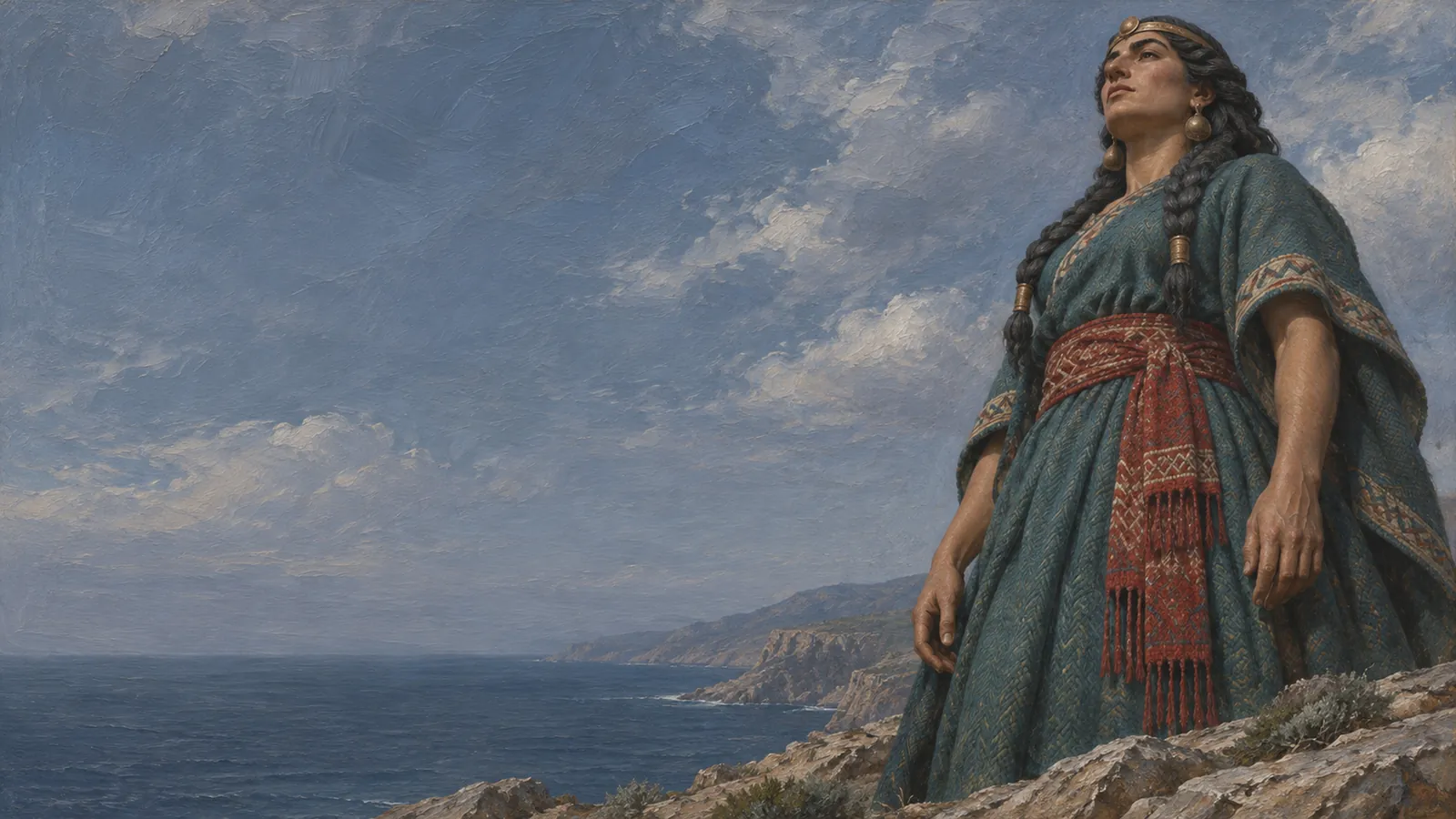
The Sea offers his daughter Sertapsuruhi. The poem imagines her on an immense scale and compares her to sweet milk. Kumarbi is glad to hear the offer.
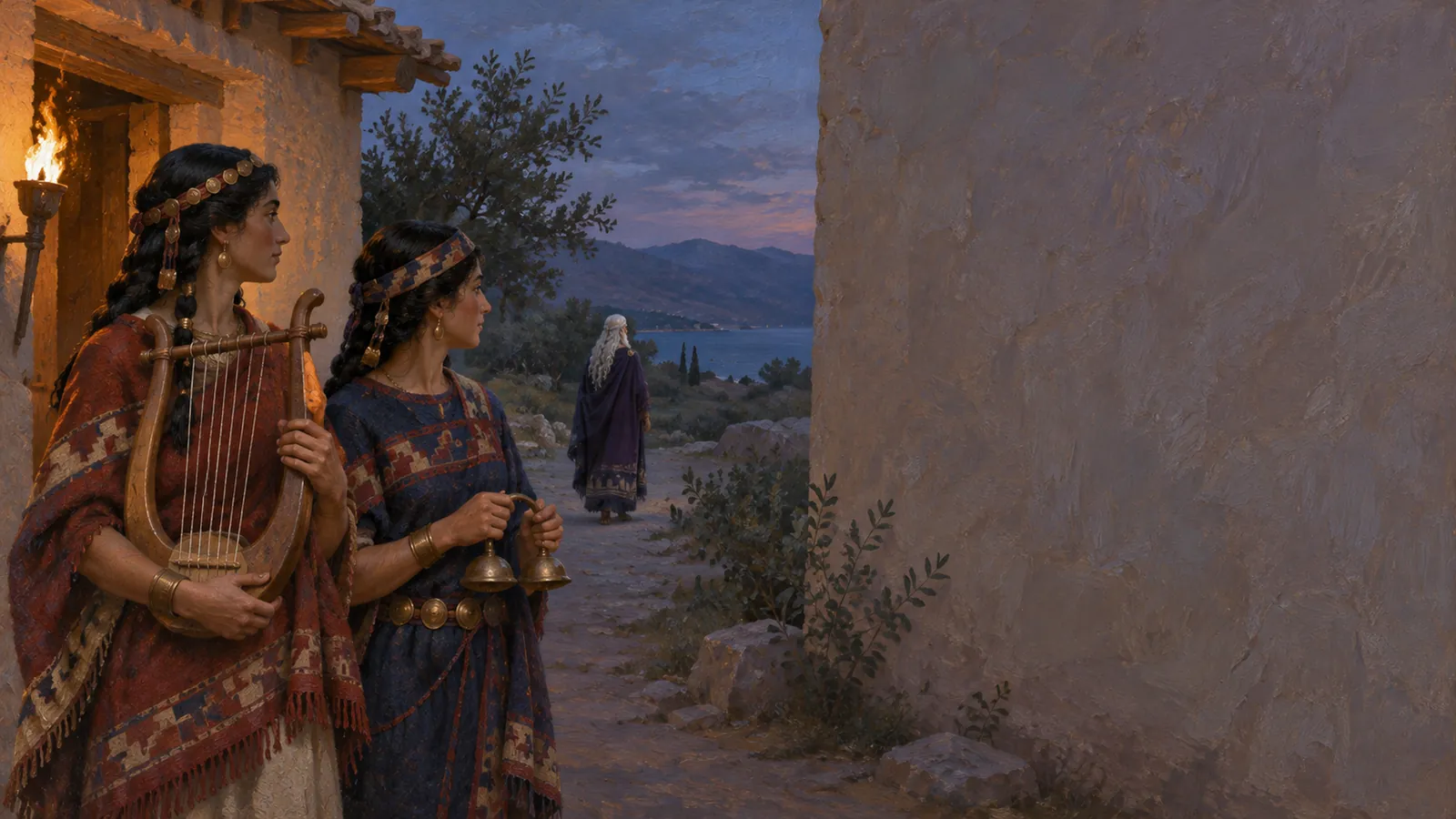
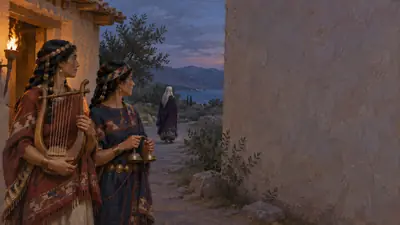
Night comes. The company escorts the Great Sea out with a lyre, a bronze instrument and bronze drinking vessels. Even through the gaps, the departure has a sound.
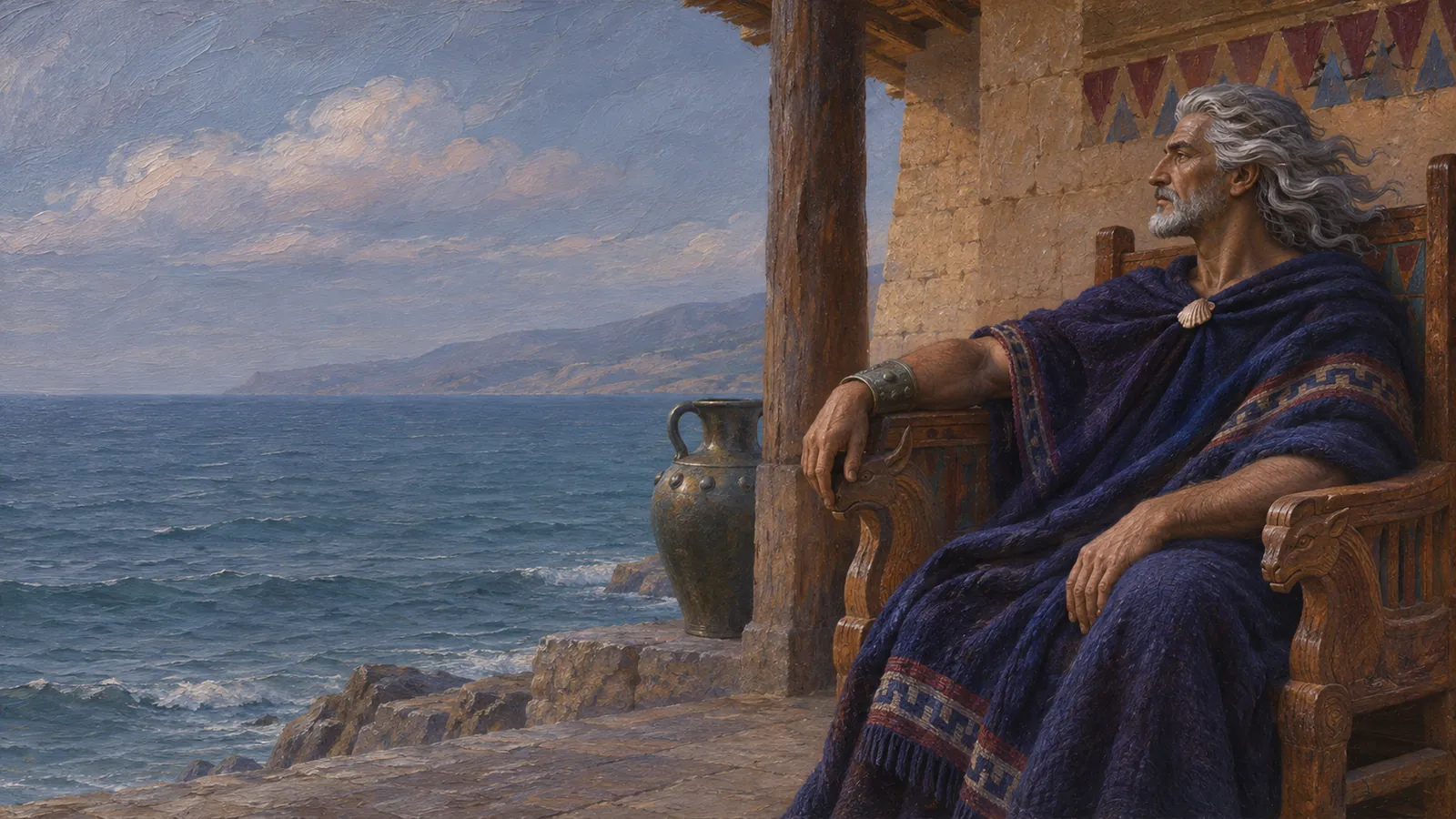
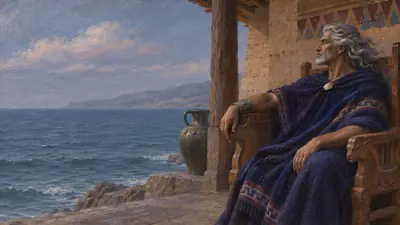
The Sea returns to his own house and sits in a fine chair. There he watches for Kumarbi for the agreed seven days. The tablet breaks away from their arrangement.
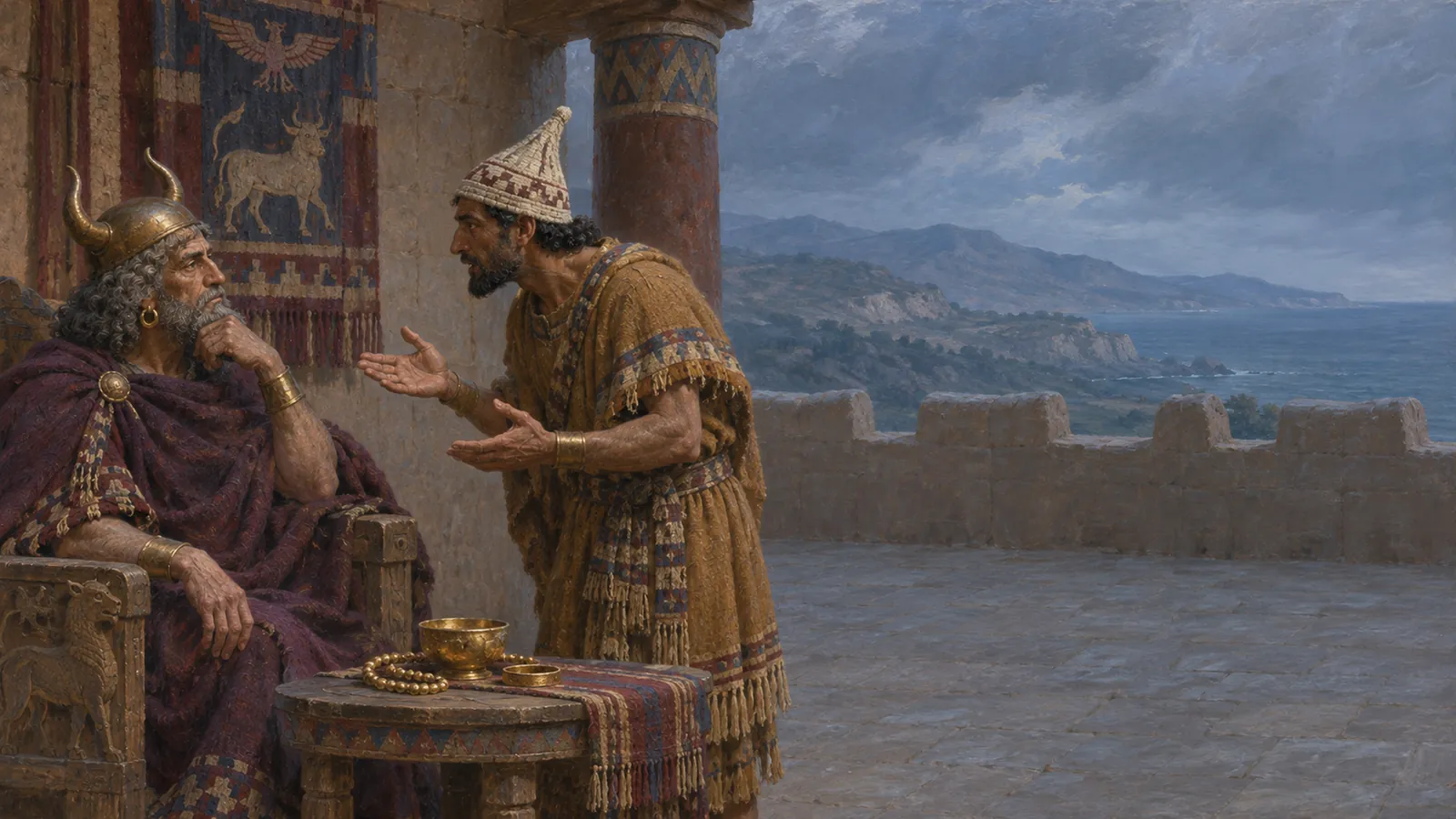
The text starts again in a different piece of clay. An envoy brings news of a son. In one reconstruction, Kumarbi rewards the messenger and goes to the Sea’s house.
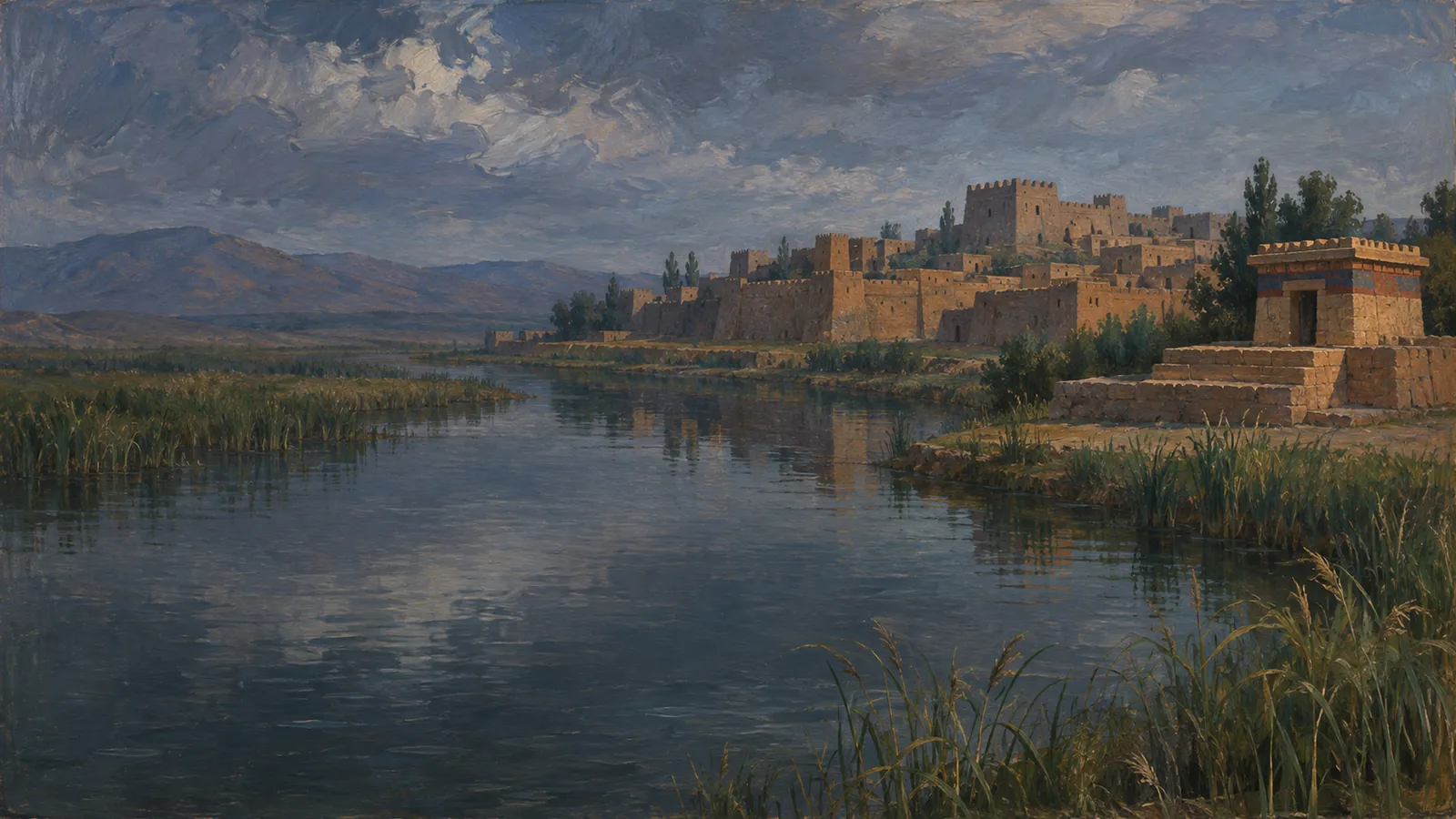
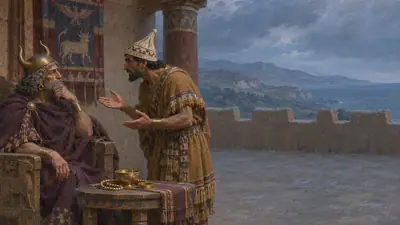
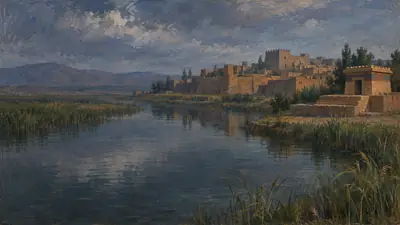
Another piece puts Nippur, Nineveh and Kumme in the same conversation. Kumarbi seems to want a place to speak about his child away from the ears of Shaushka and the Storm God.
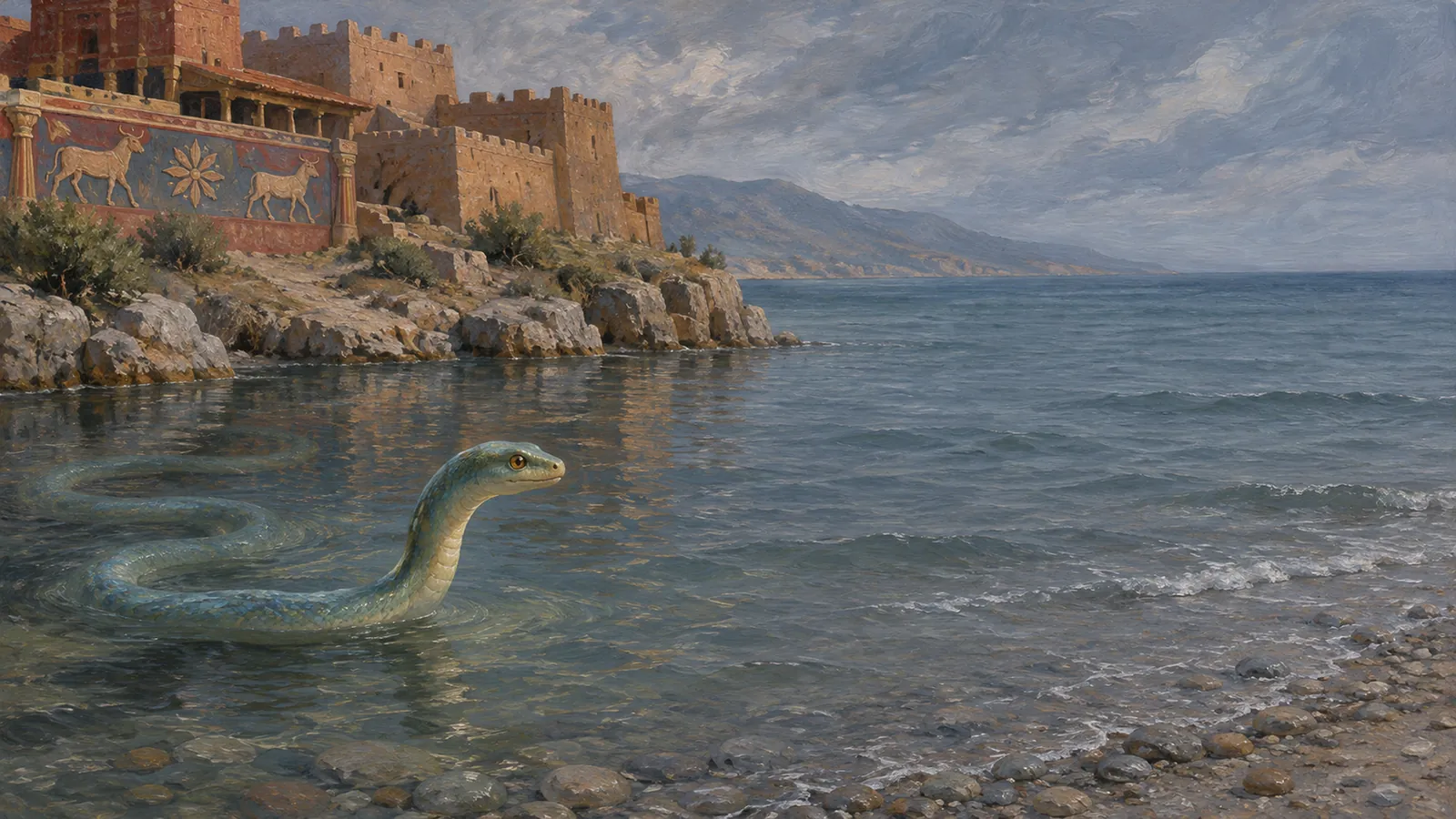
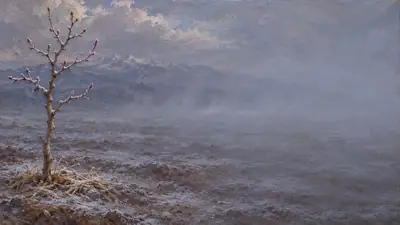
The son of Kumarbi and Sertapsuruhi is a sea serpent. A fragment describes water and oil in his upbringing. Its broken comparison evokes care for an apple tree in the cold.
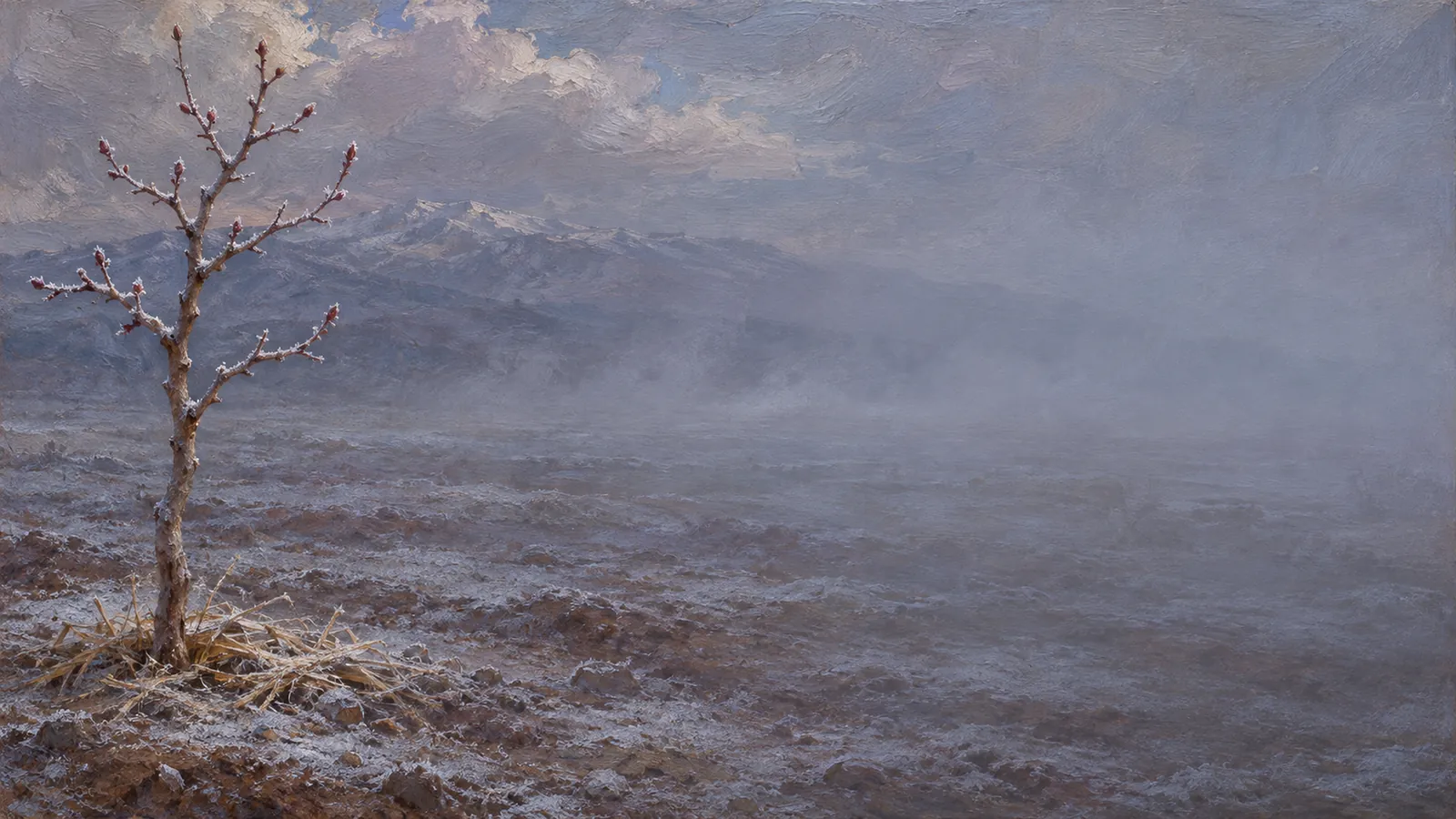
An apple tree stands through the cold in the picture. The comparison lets the monster appear briefly as a creature someone has to nurse and protect. The song soon measures what that care costs.
A HUNGER WITHOUT END
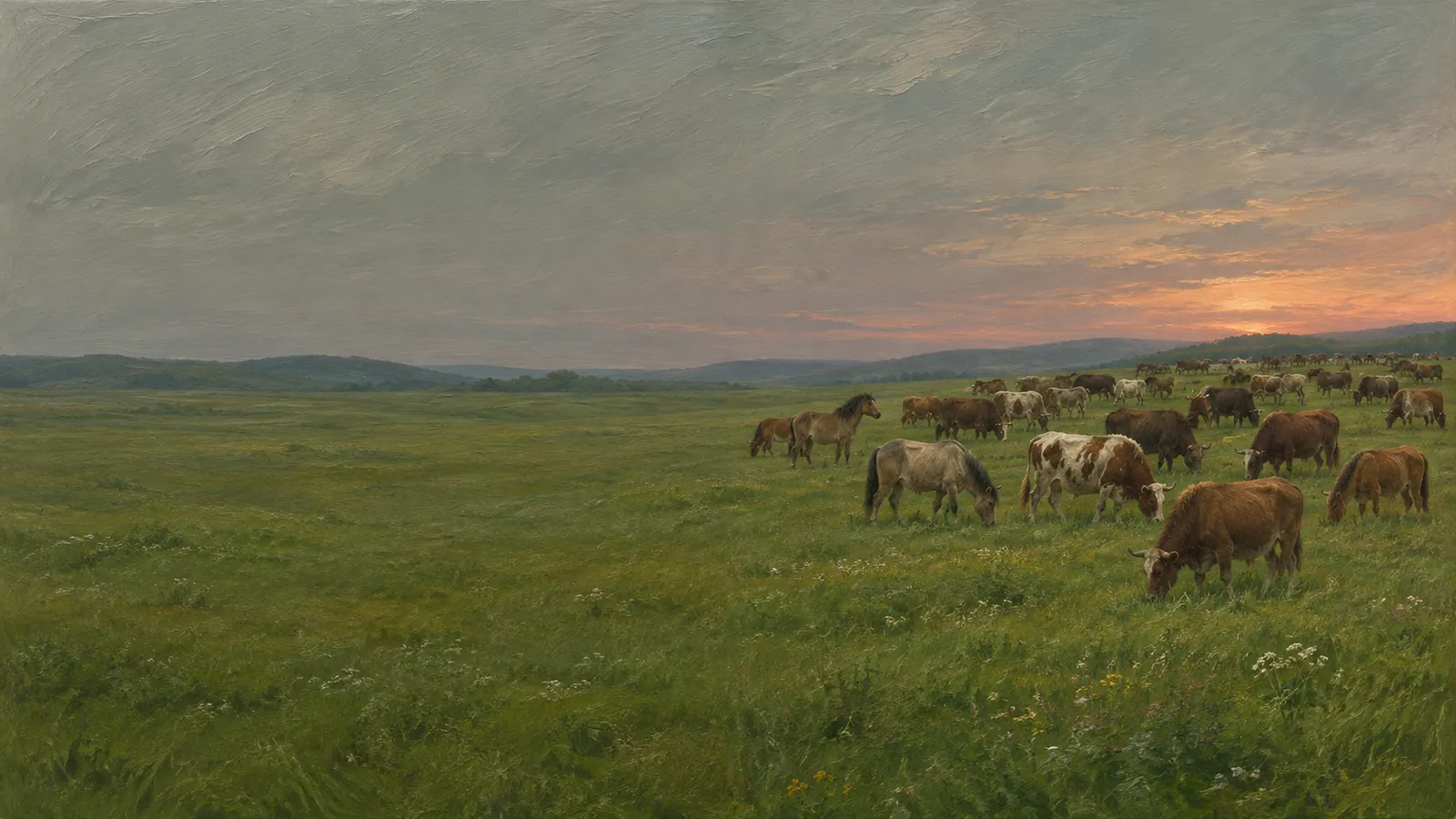
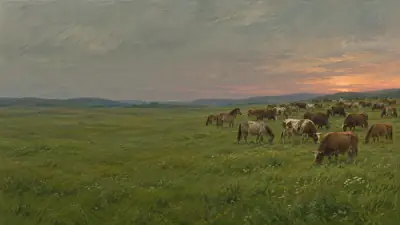
Hedammu is fed in thousands. The singer counts herds of cattle and horses, then so many young goats and lambs they defy a count. Even enormous fish are prey in this tale.
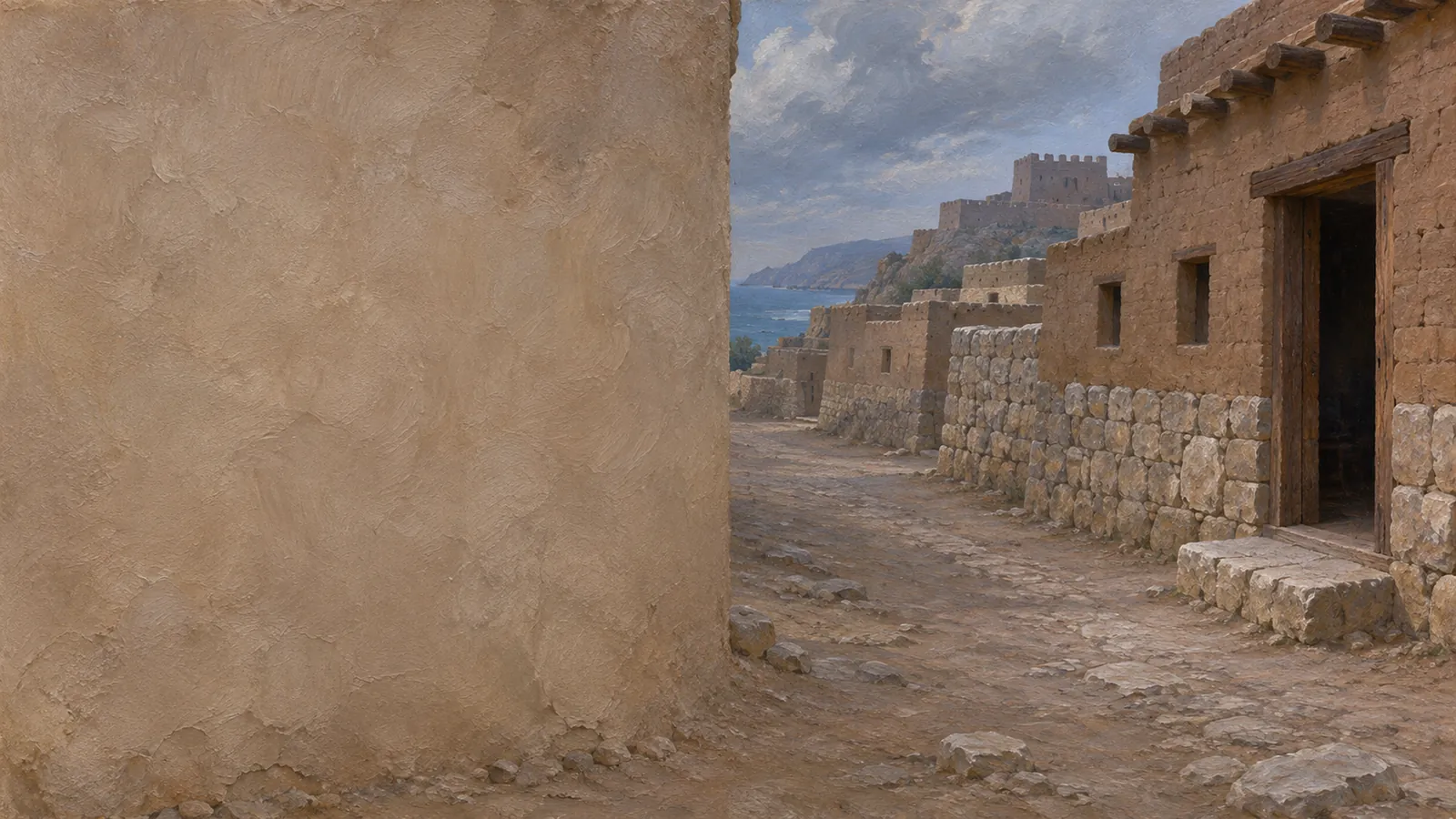
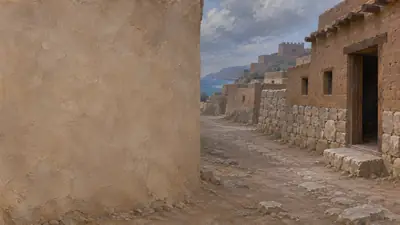
A broken line speaks of empty cities. The vast appetite that fascinated the singer now bears down on the people of the land. The picture imagines what an empty street might look like.
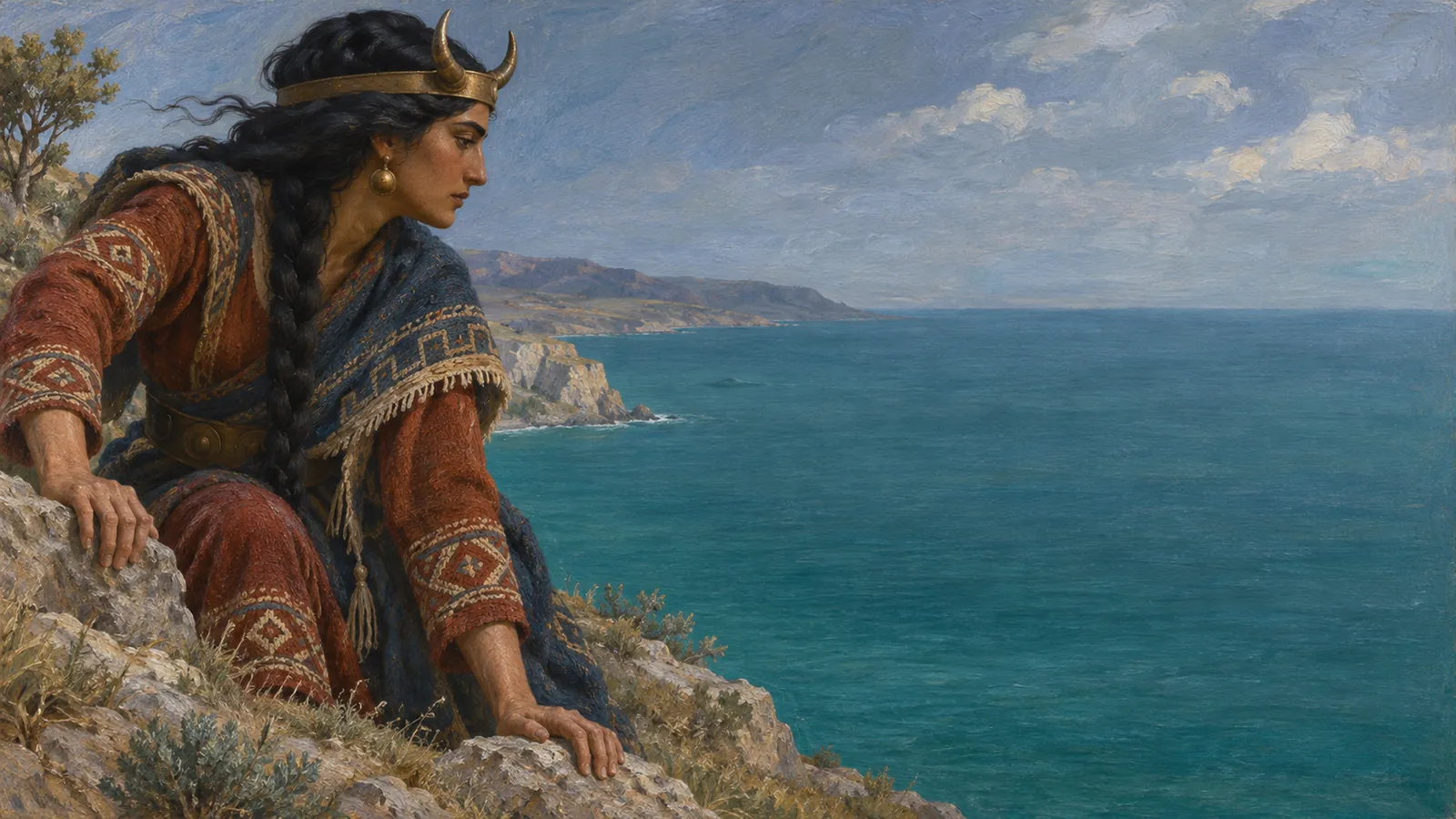
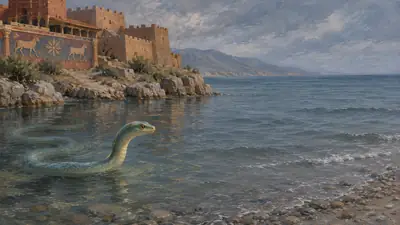
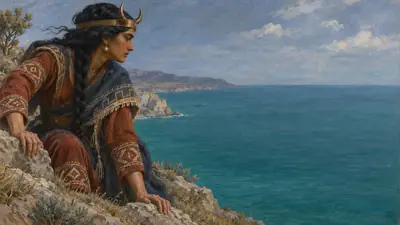
Shaushka, queen of Nineveh, goes out to the sea in one fragment. The surviving lines put her, Hedammu and fear of serpents close together. The whole shape of that first encounter is lost.
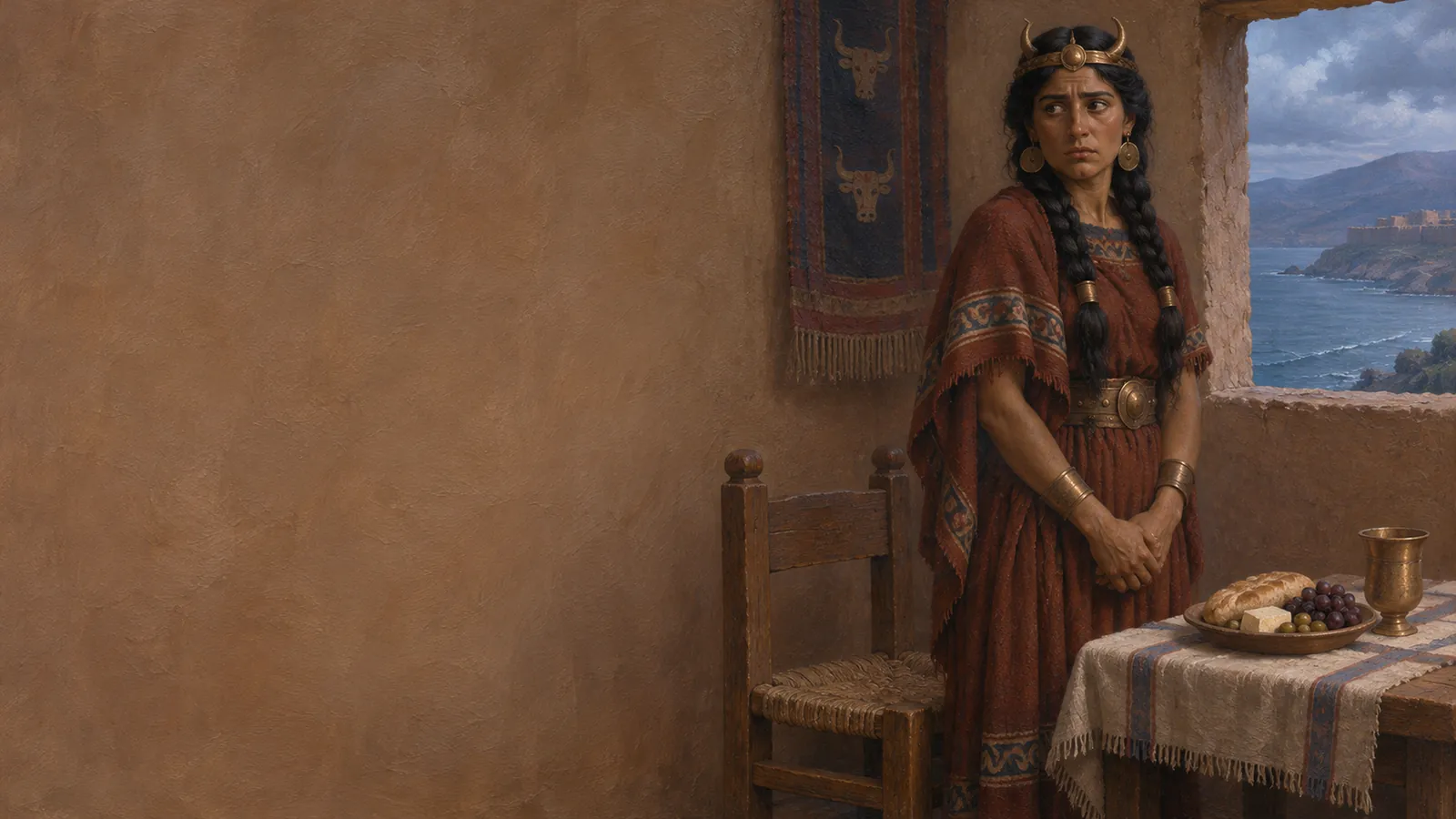
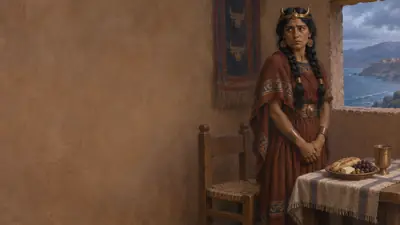
In a damaged scene a seat, a table and a cup go unused. Many readings understand Shaushka to be the guest who cannot eat or drink. A rival in the sea enters the conversation.
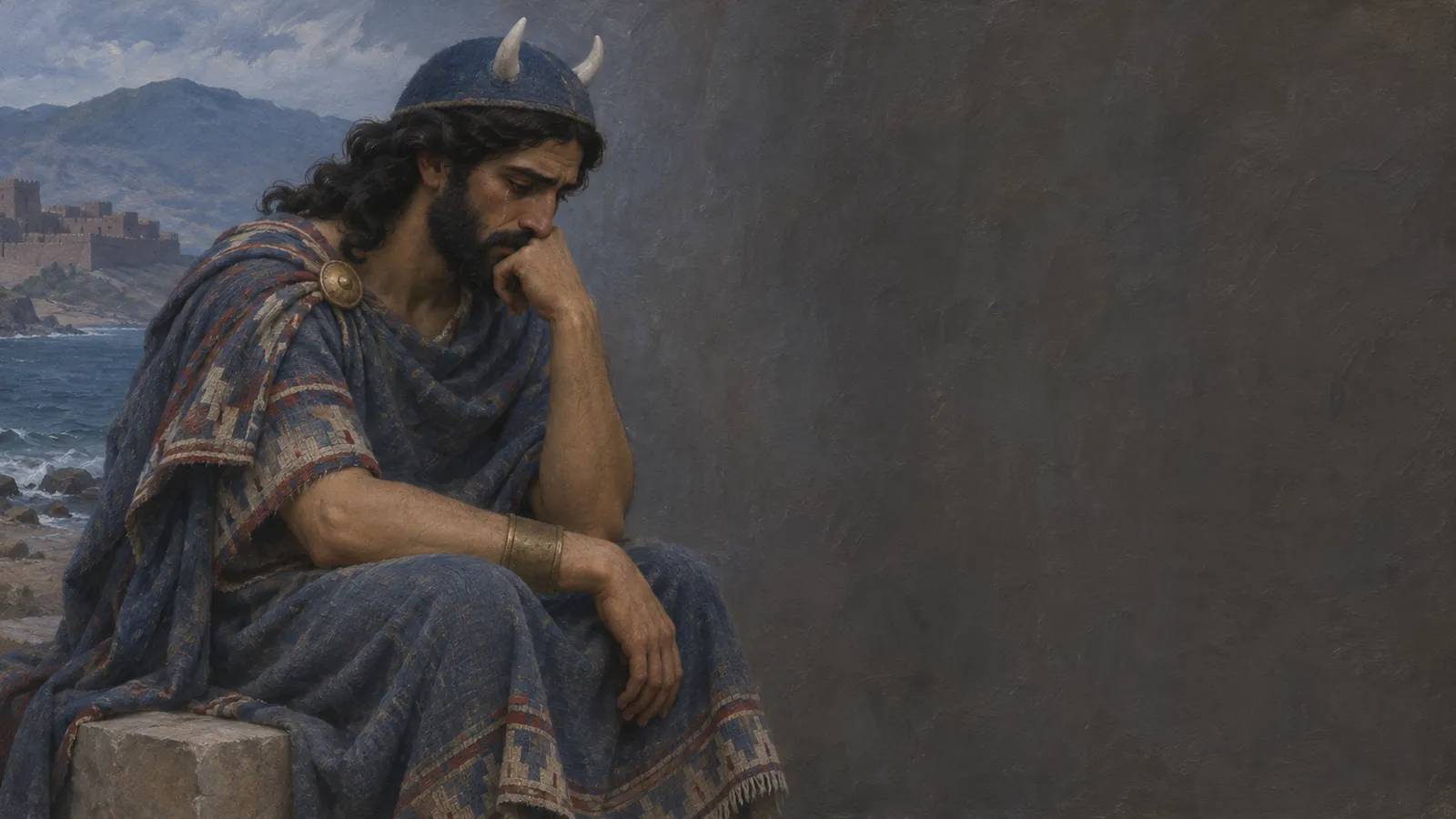
Tears stream out like channels of water. The text is broken here, and one reading understands the weeping figure to be Teshub. The danger that began in a private bargain is now known.
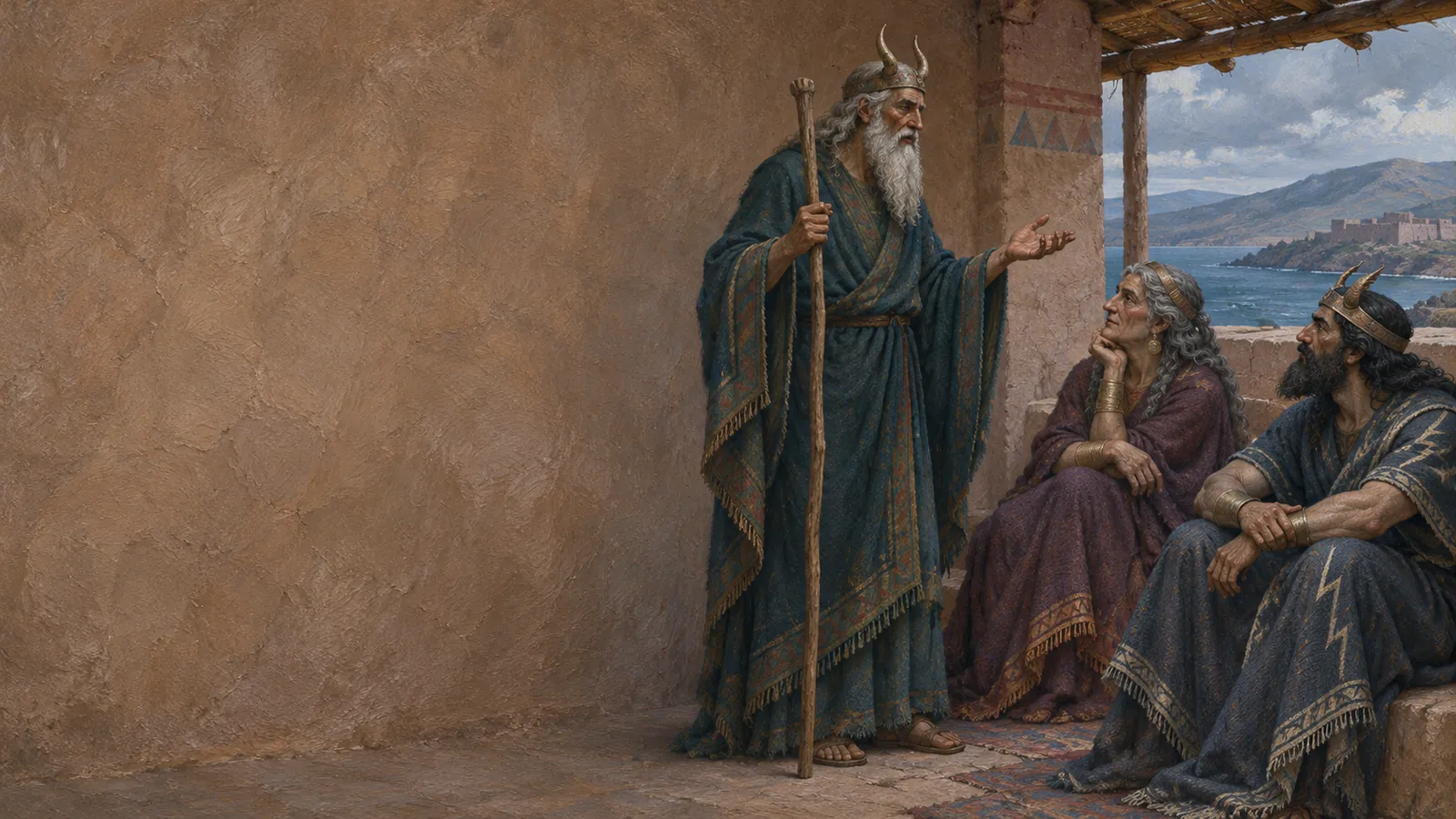
EA’S QUESTION
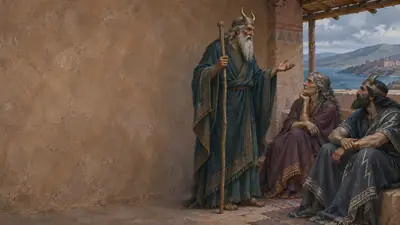
Ea, king of wisdom, asks the gods why they are bringing ruin on the human race. He addresses them together first. Then he asks Kumarbi himself to answer for the damage.
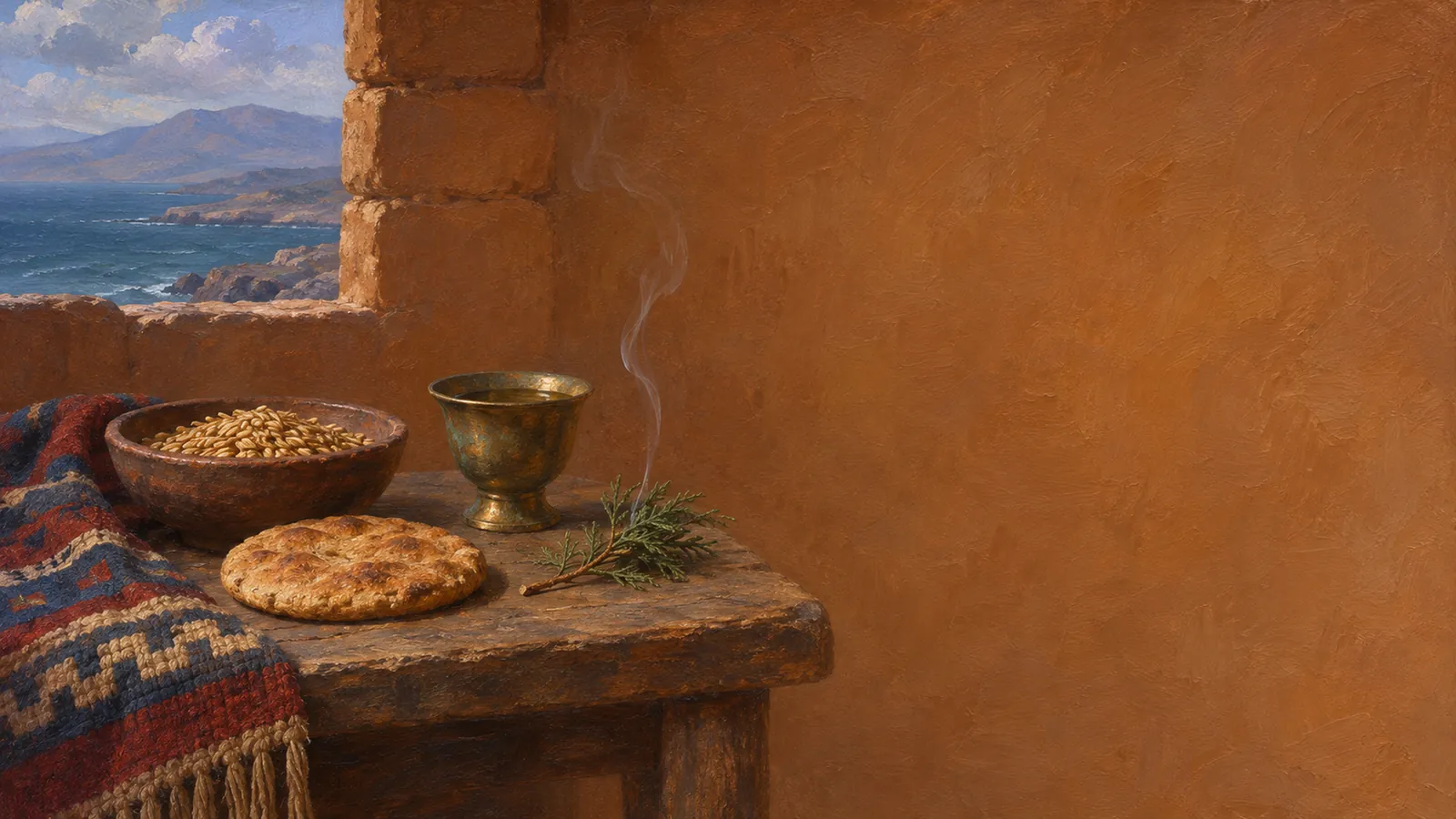
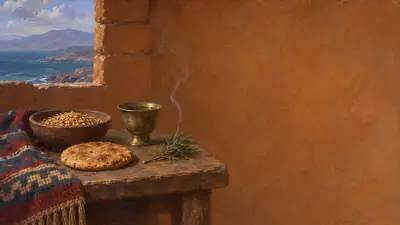
People lay grain before the gods and offer bread, drink and cedar. Ea asks what will happen to those gifts if people disappear. The gods at the assembly depend on every one of them.
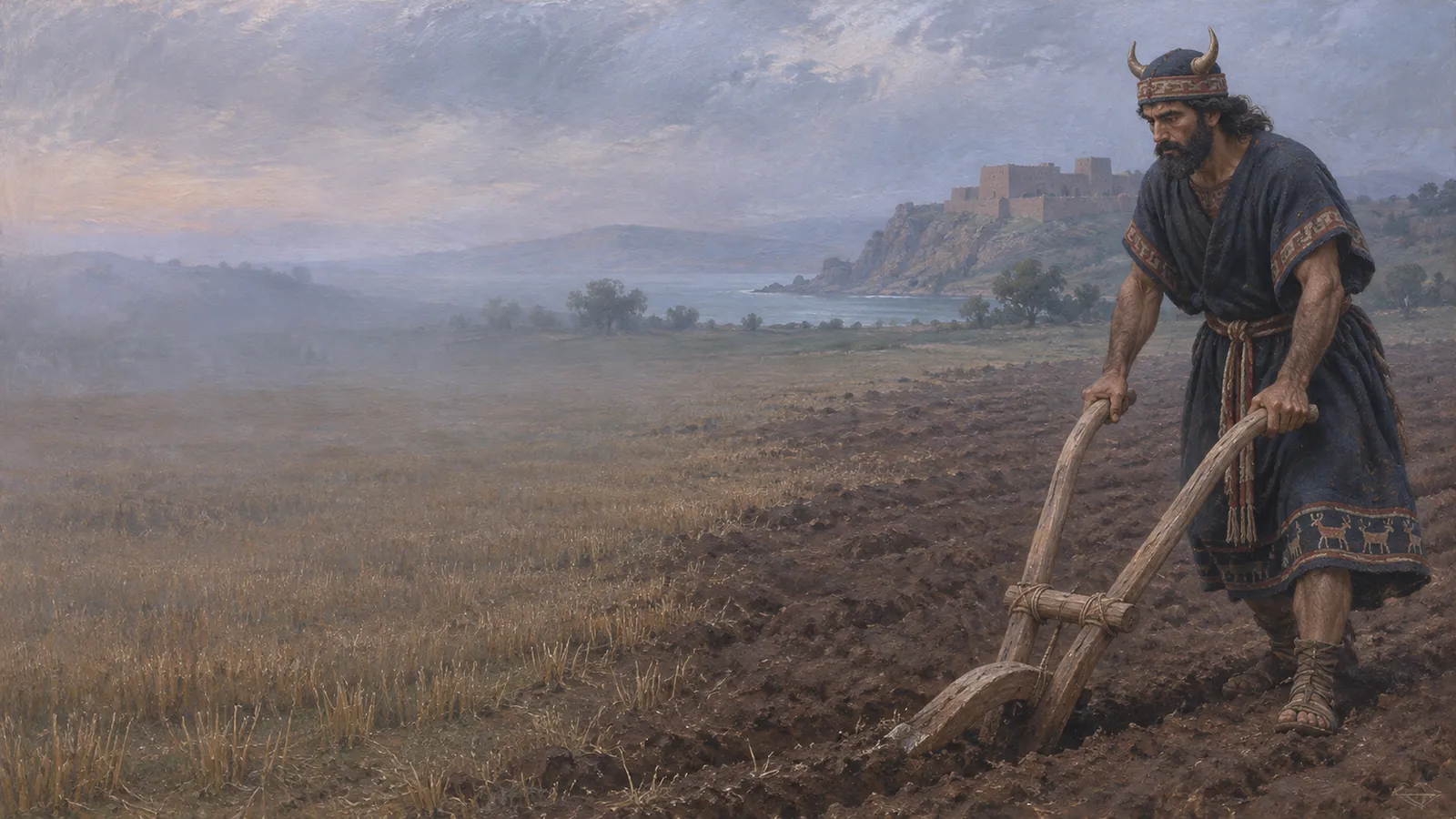
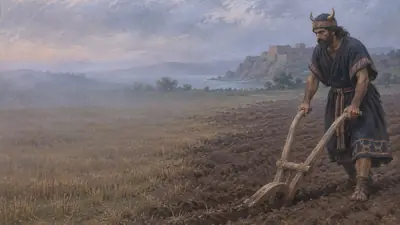
Ea imagines the heroic ruler of Kumme having to grasp a plough himself. For a moment, the divine quarrel is measured against a plain field and the work of turning earth.
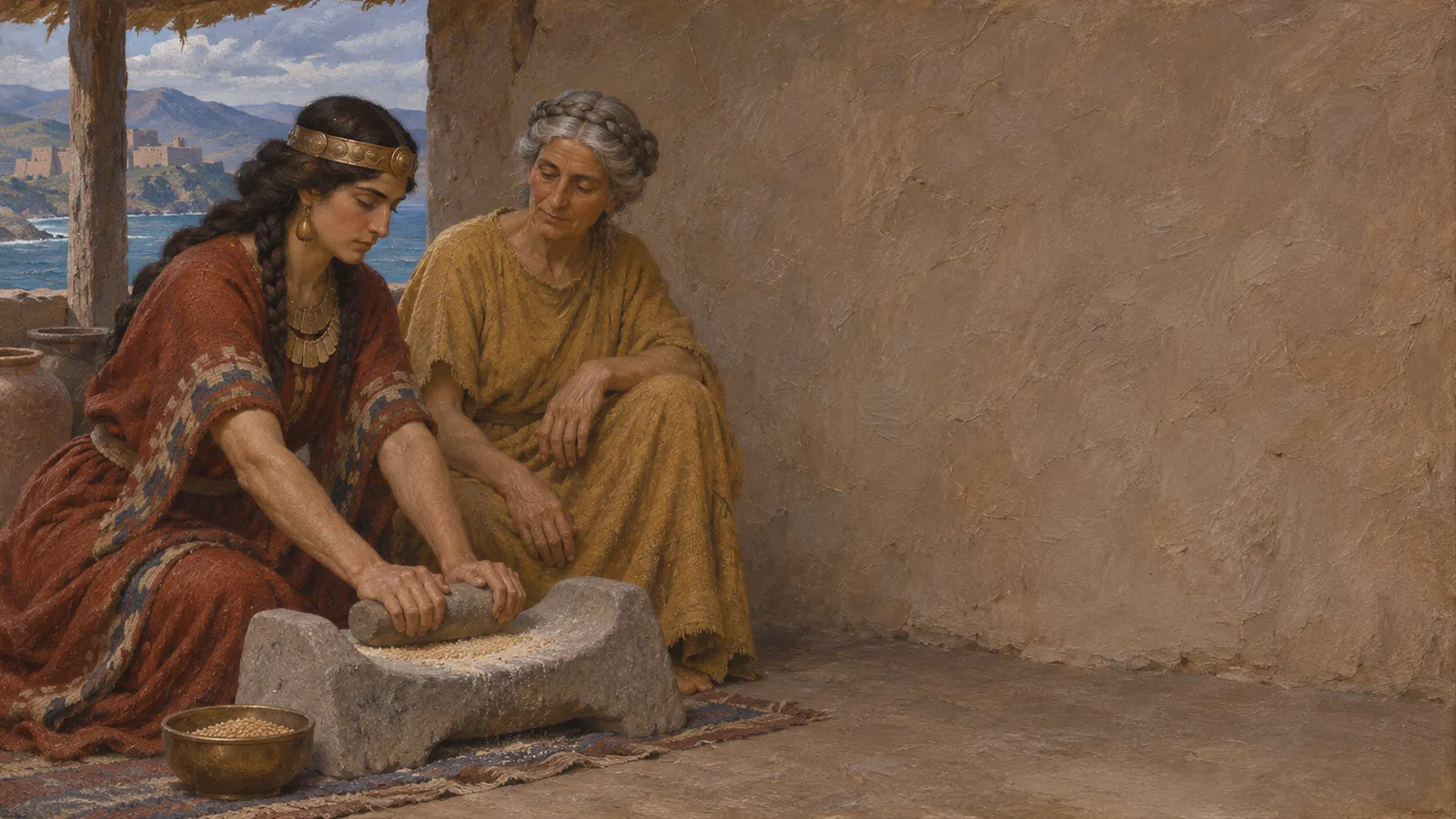
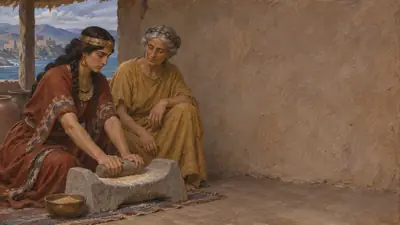
Ea says that Shaushka and Hebat would have to grind grain for themselves. Even the father of the gods relies on people, Ea tells Kumarbi. The words about Kumarbi’s response are broken.
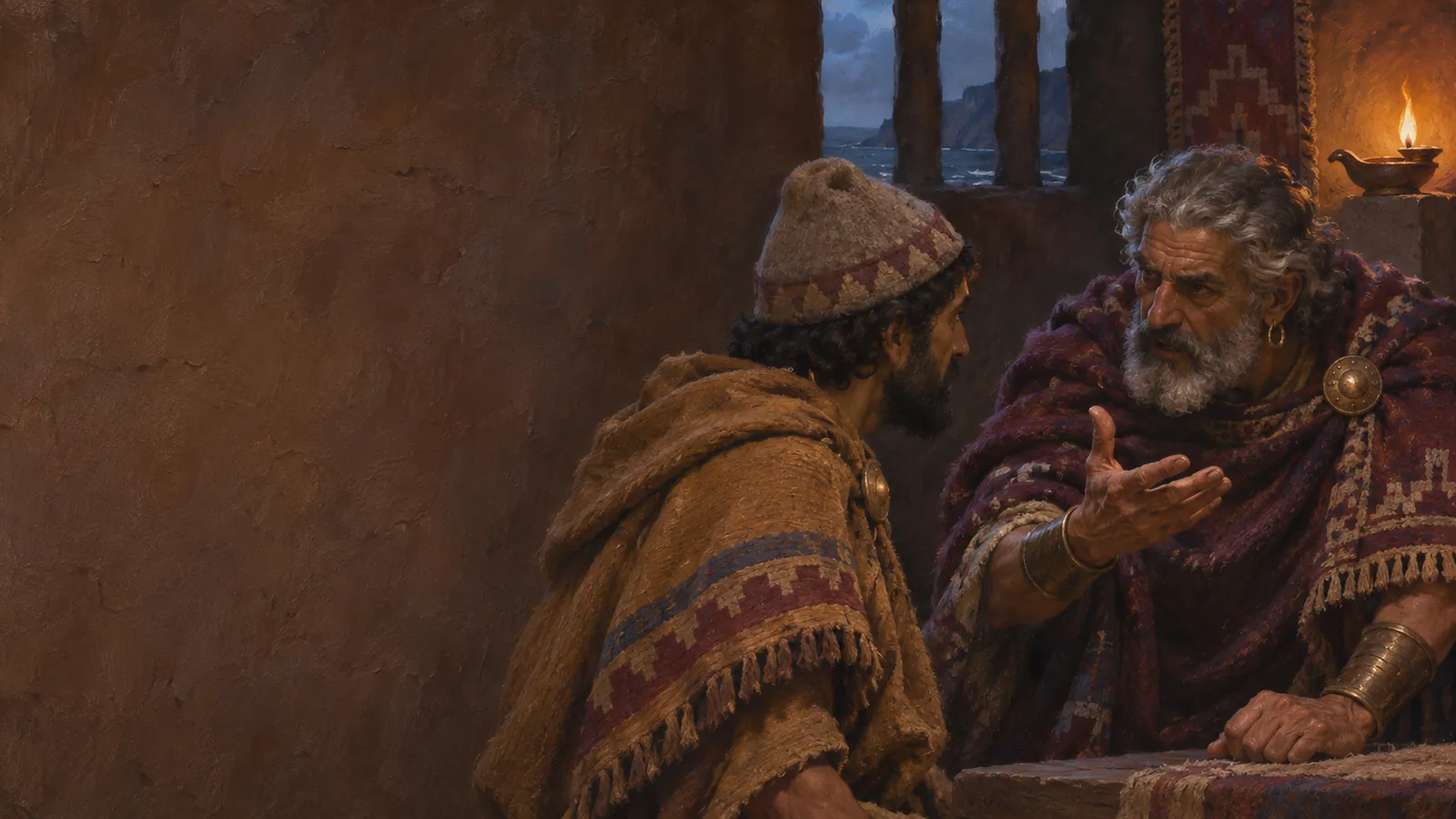
Kumarbi sends his envoy Mukishanu to the Sea. He is to carry an urgent invitation and travel by river and earth. The Sun God, the Moon God and the gods of earth should see nothing.
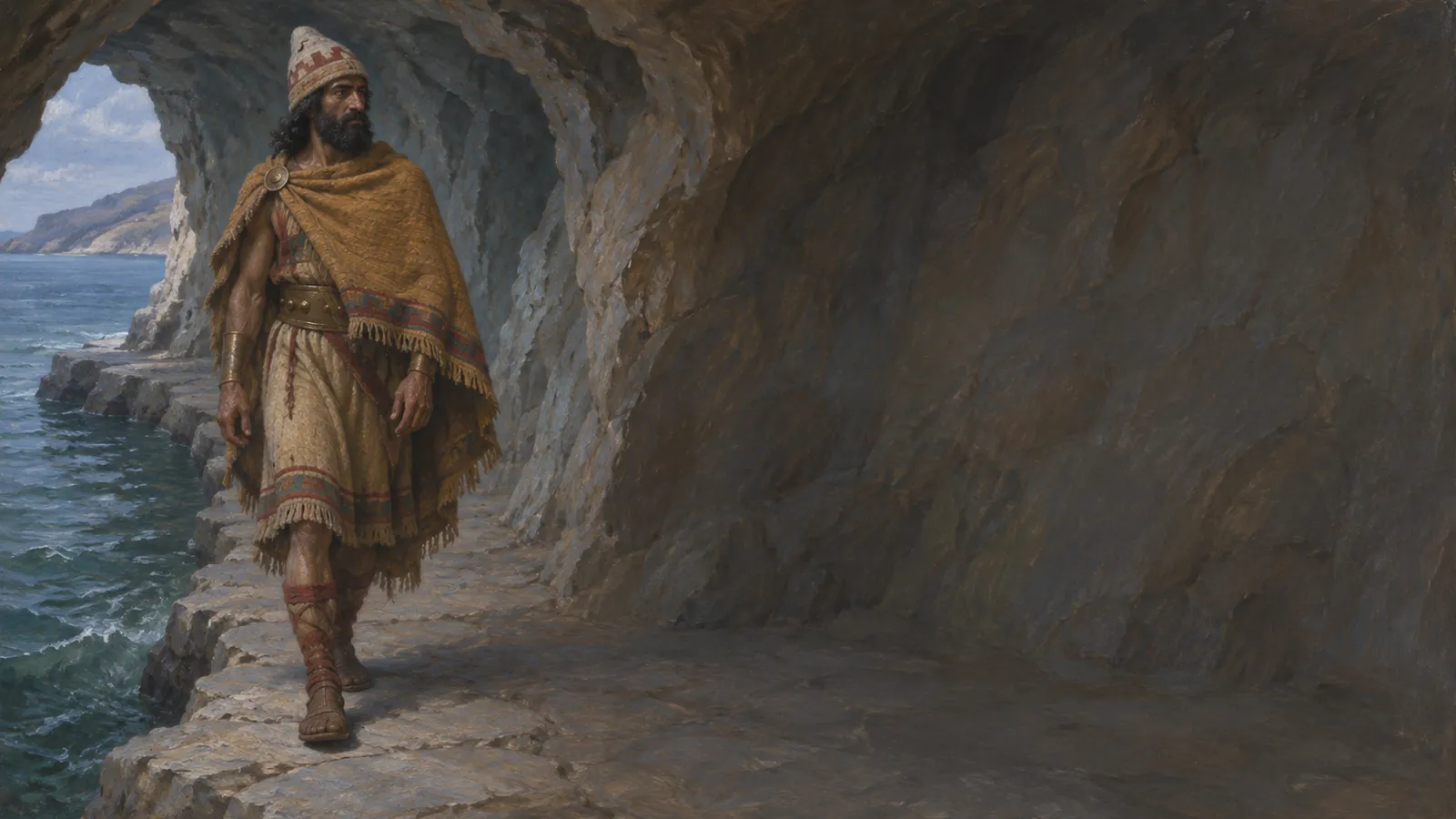
Mukishanu sets out as instructed and goes down to the Sea. The Great Sea takes the same swift hidden route in return. The lines say he covers the distance in one stretch.
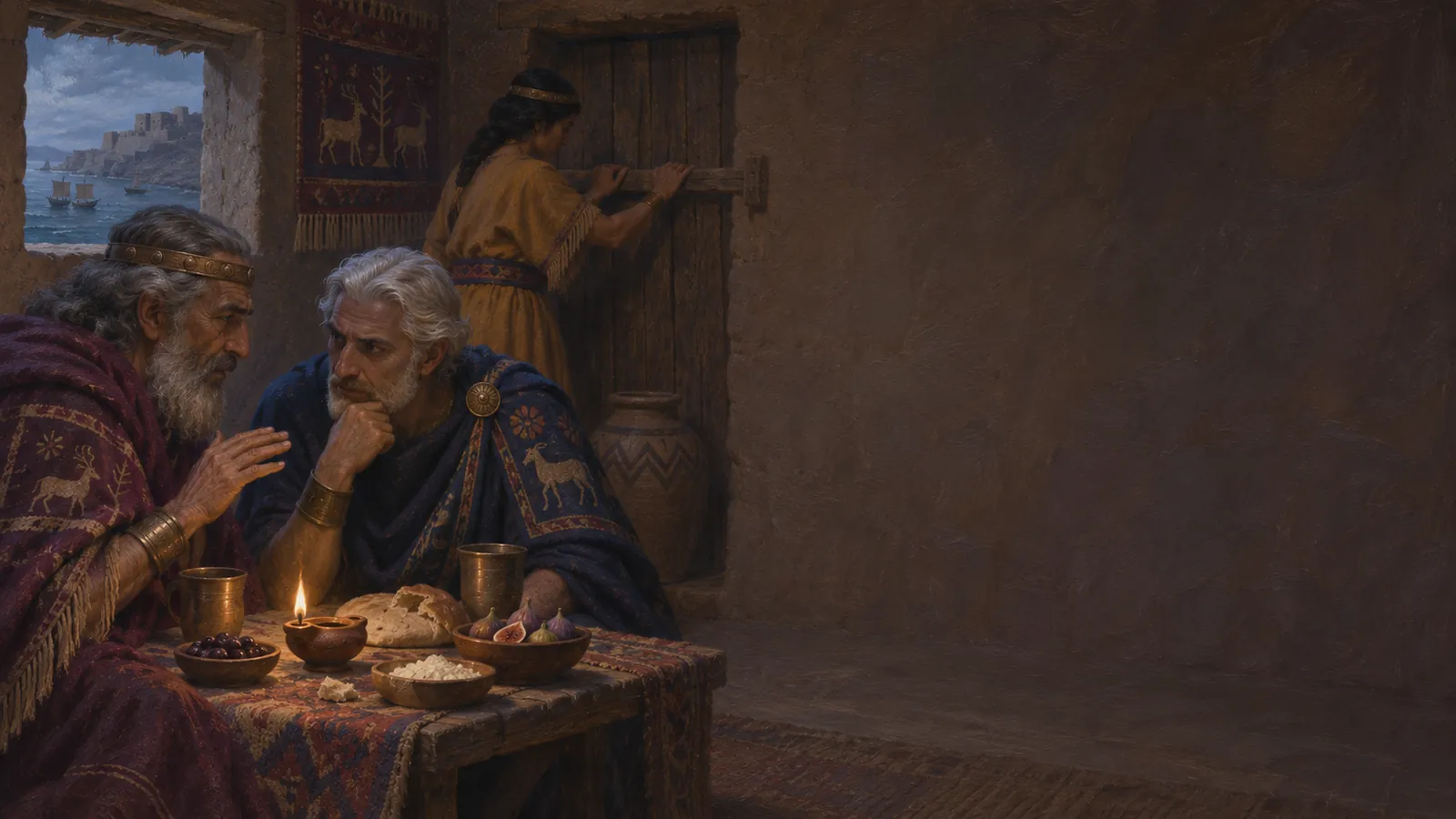
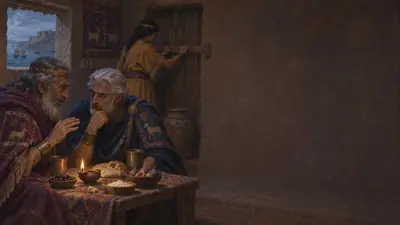
Kumarbi and the Great Sea sit together and eat and drink. Their cupbearer pours sweet wine. Then Kumarbi calls over Mukishanu and orders him to bar the door.
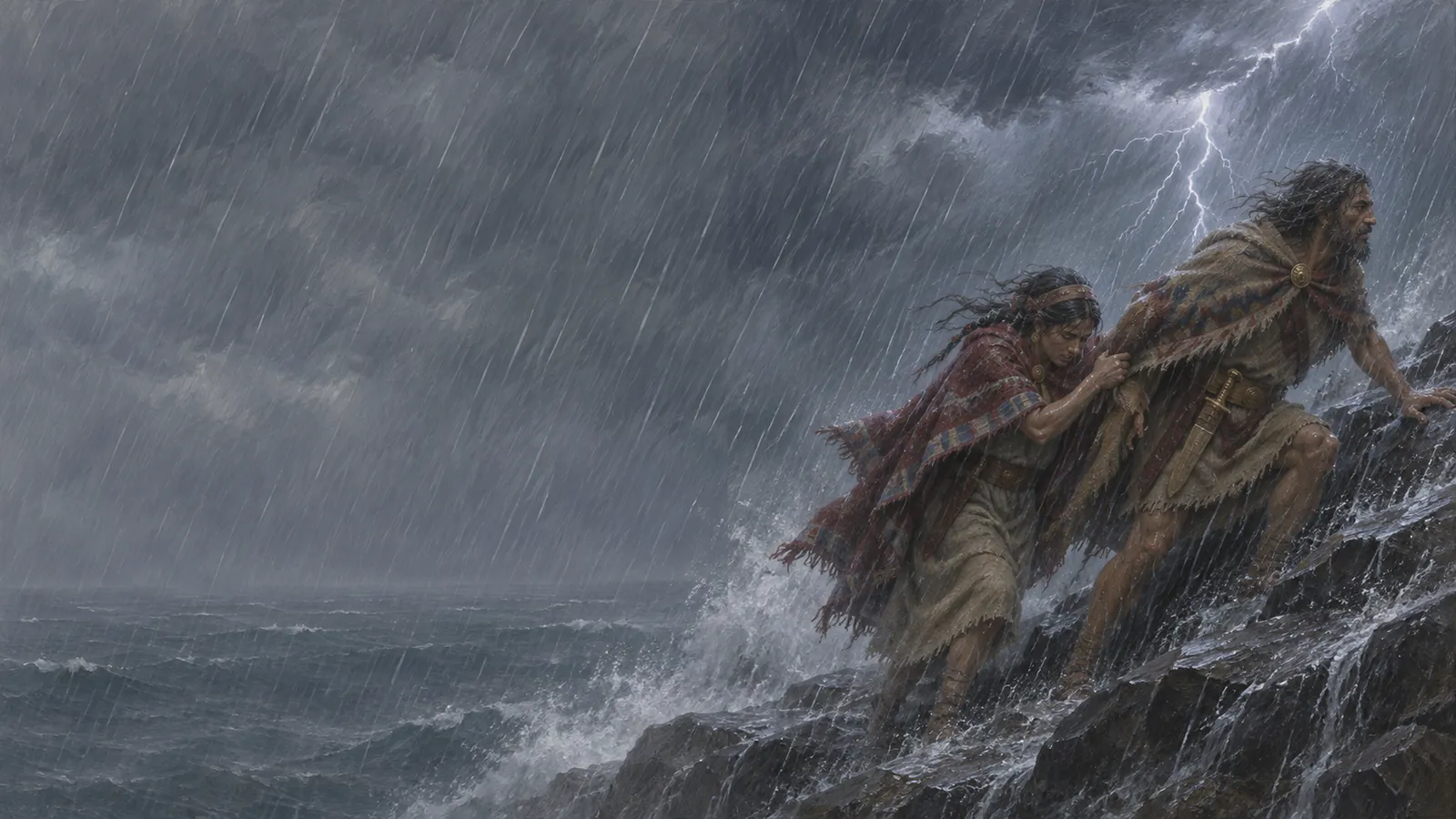
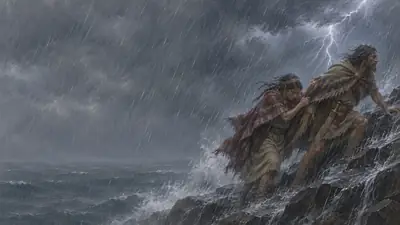
In another broken passage, rain, thunder and lightning still have the speakers in their grip. Their knees shake and their heads spin. The words compare their dizziness to a turning potter’s wheel.
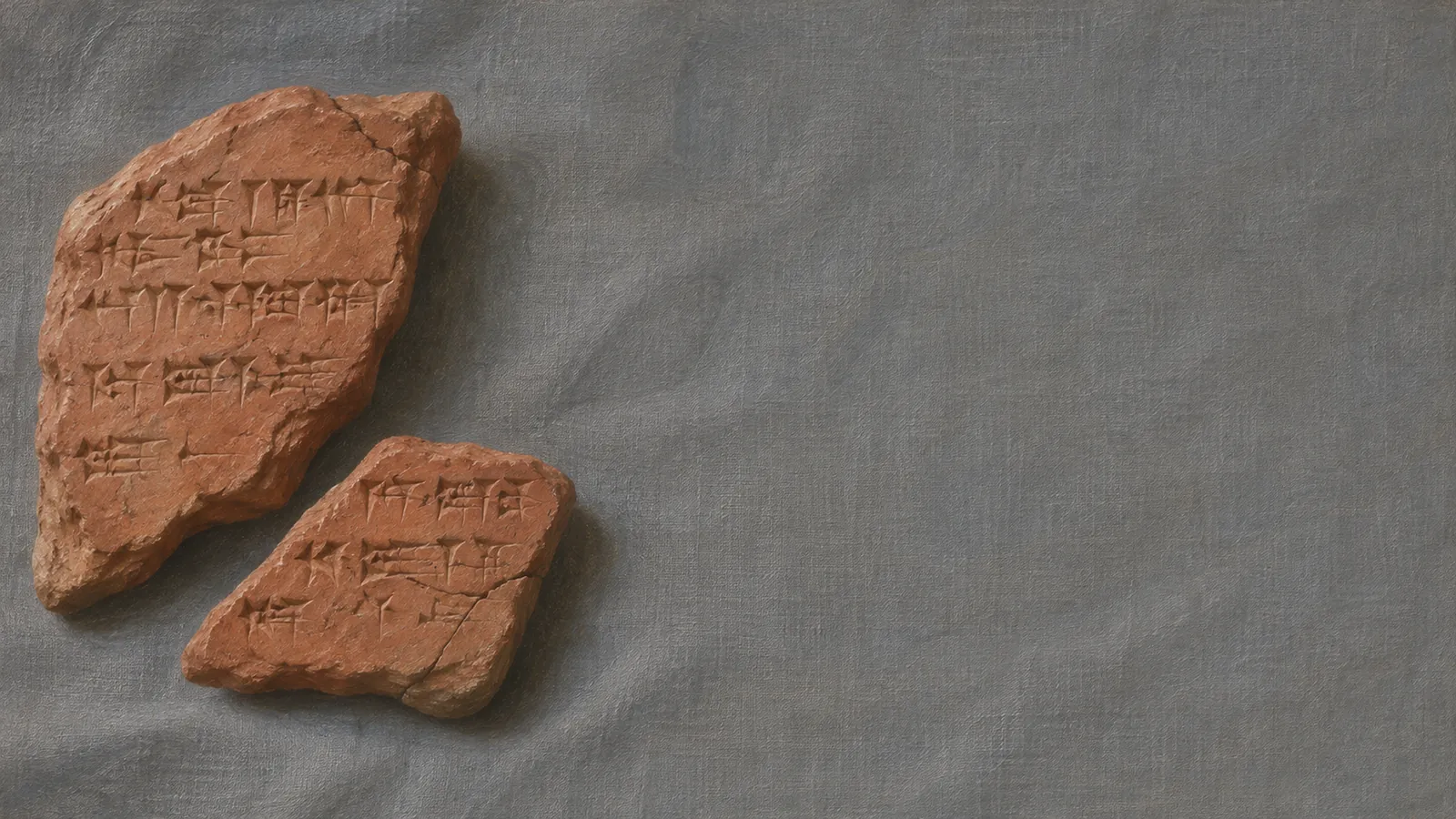
Different pieces of the song take us back to the water. One lingers on Shaushka’s preparations and words. Another places more weight on scent and sleep. Their order across the breaks is uncertain.
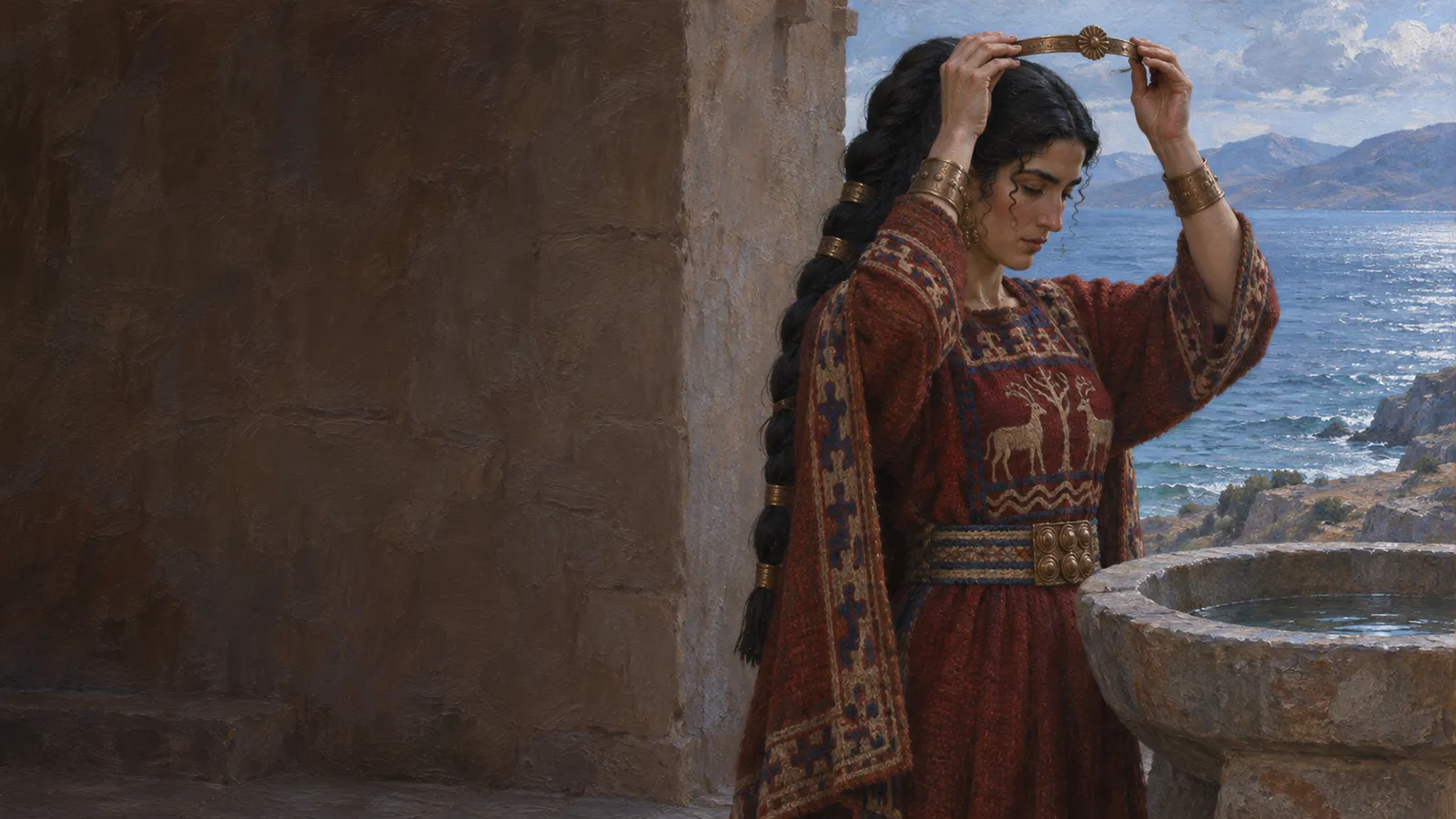
TO THE SHORE
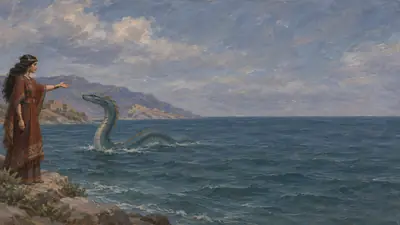
The goddess prepares to go out to Hedammu. The surviving lines mention bathing and ornaments. We picture her clothed at the water’s edge, making ready to be seen and heard.
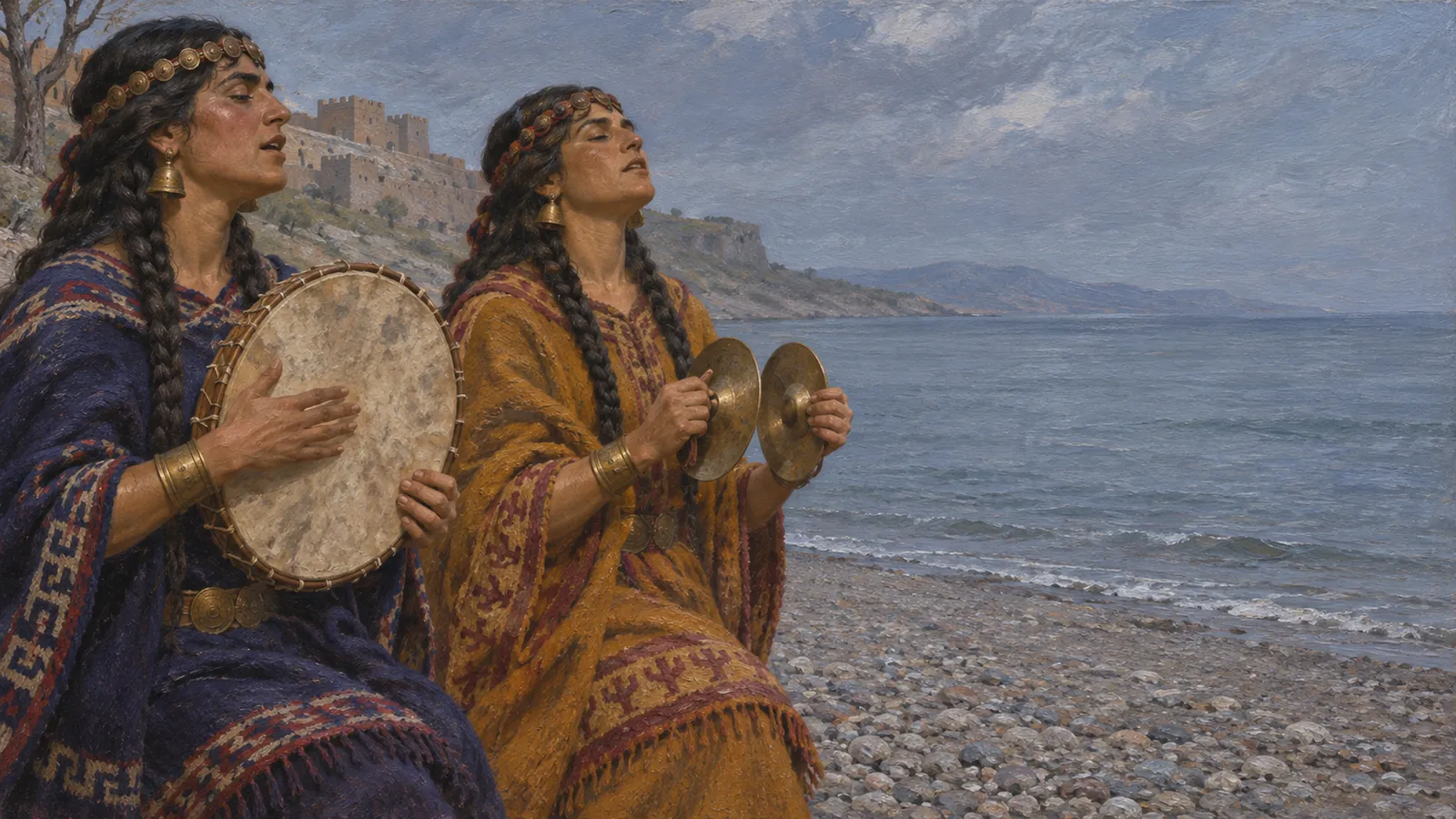
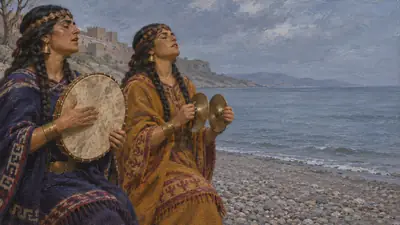
Shaushka calls for Ninatta and Kulitta. The two attendants bring music to the shore. In this telling one holds a drum and the other bronze cymbals, set on either side of the singer.
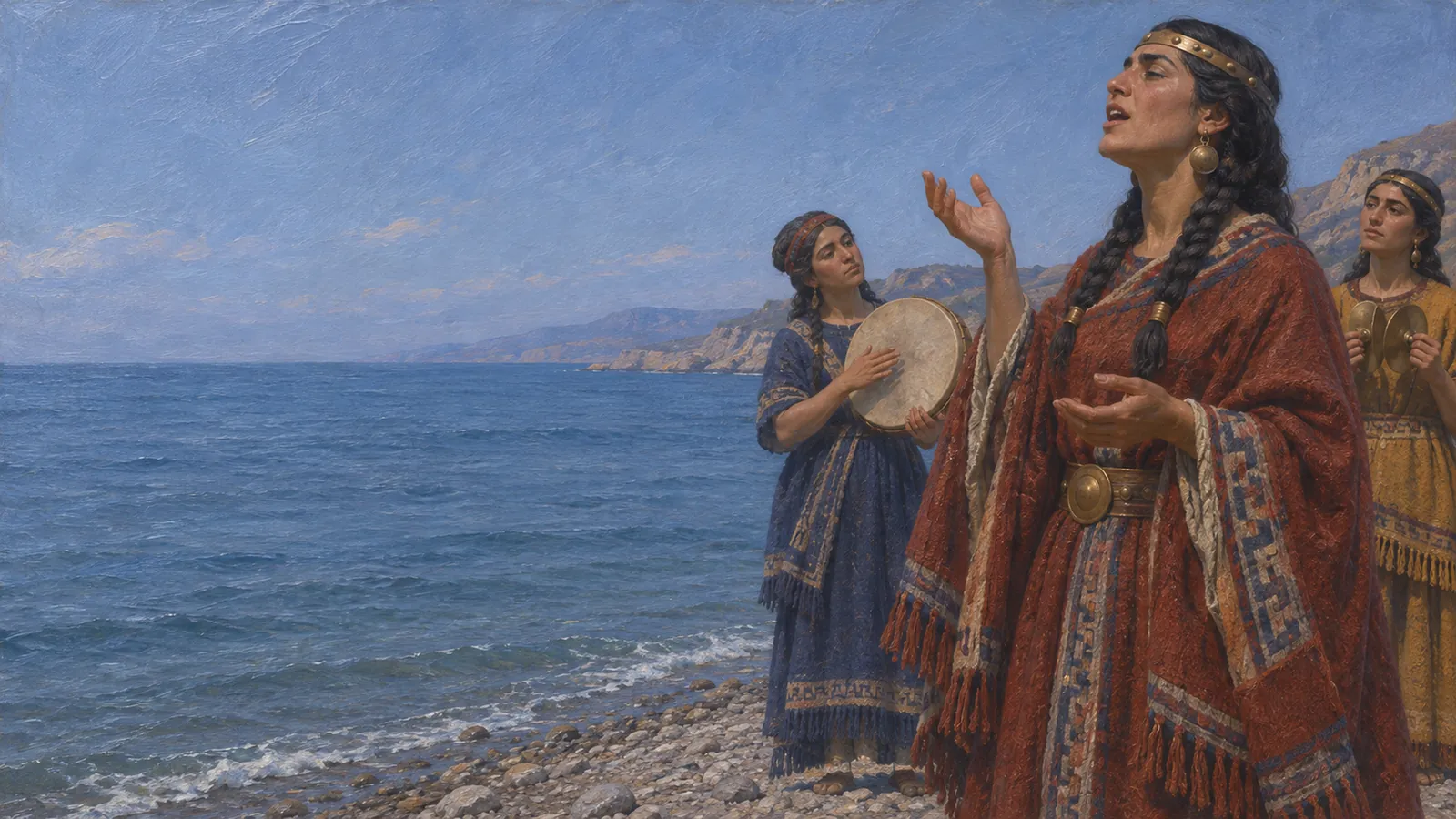
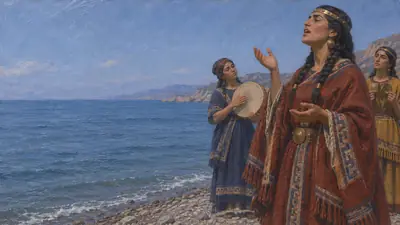
Shaushka’s music carries out over the sea. Even the pebbles of the shore seem to respond in the lines as they are often read. Then attention moves from the beach to the water.
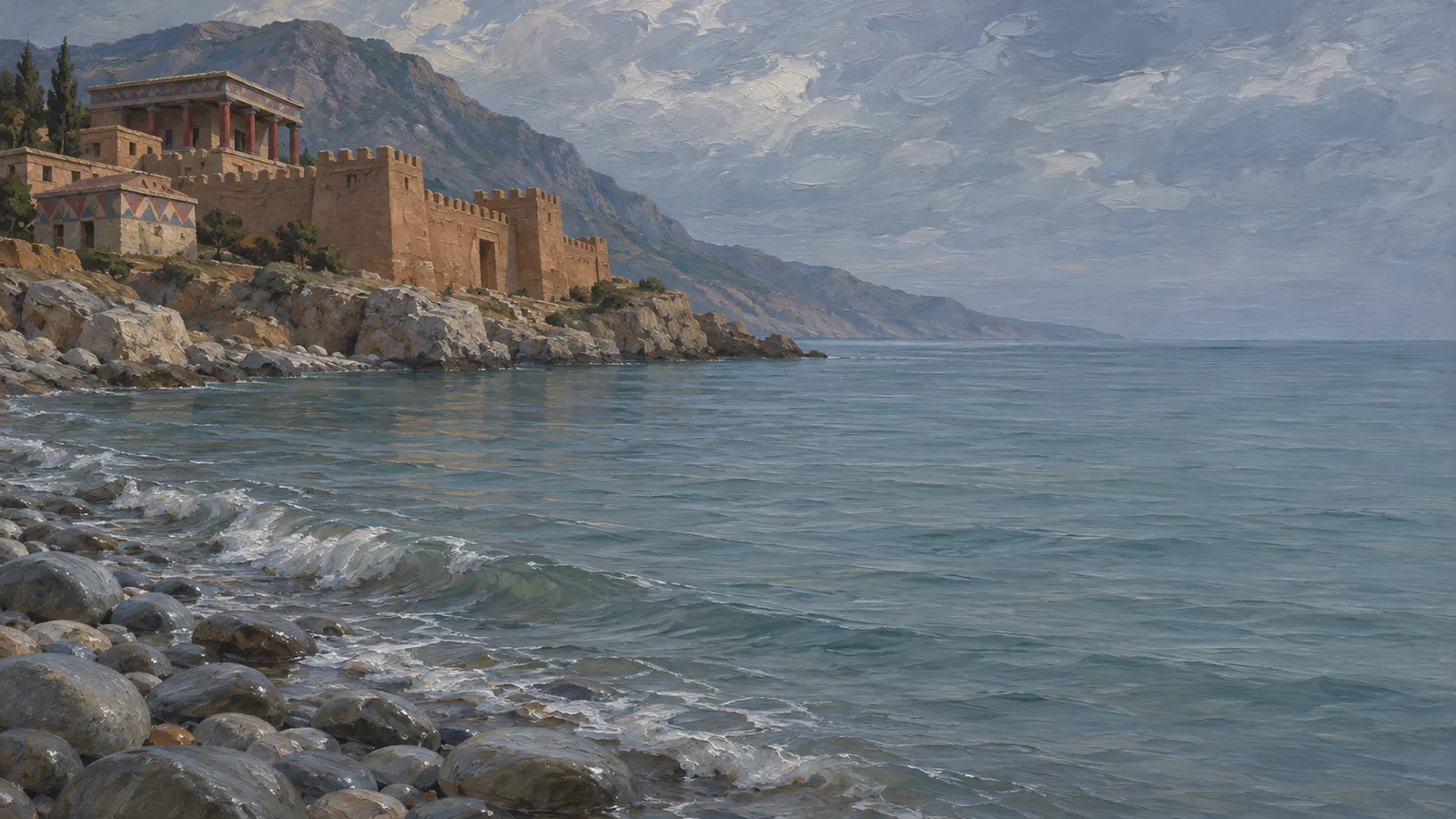
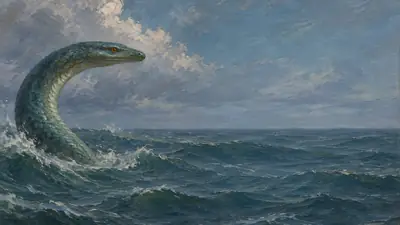
A drumbeat and the crash of the sea meet over stones worn smooth by waves. The picture stays close to the beach while the creature beneath the surface turns toward the sound.
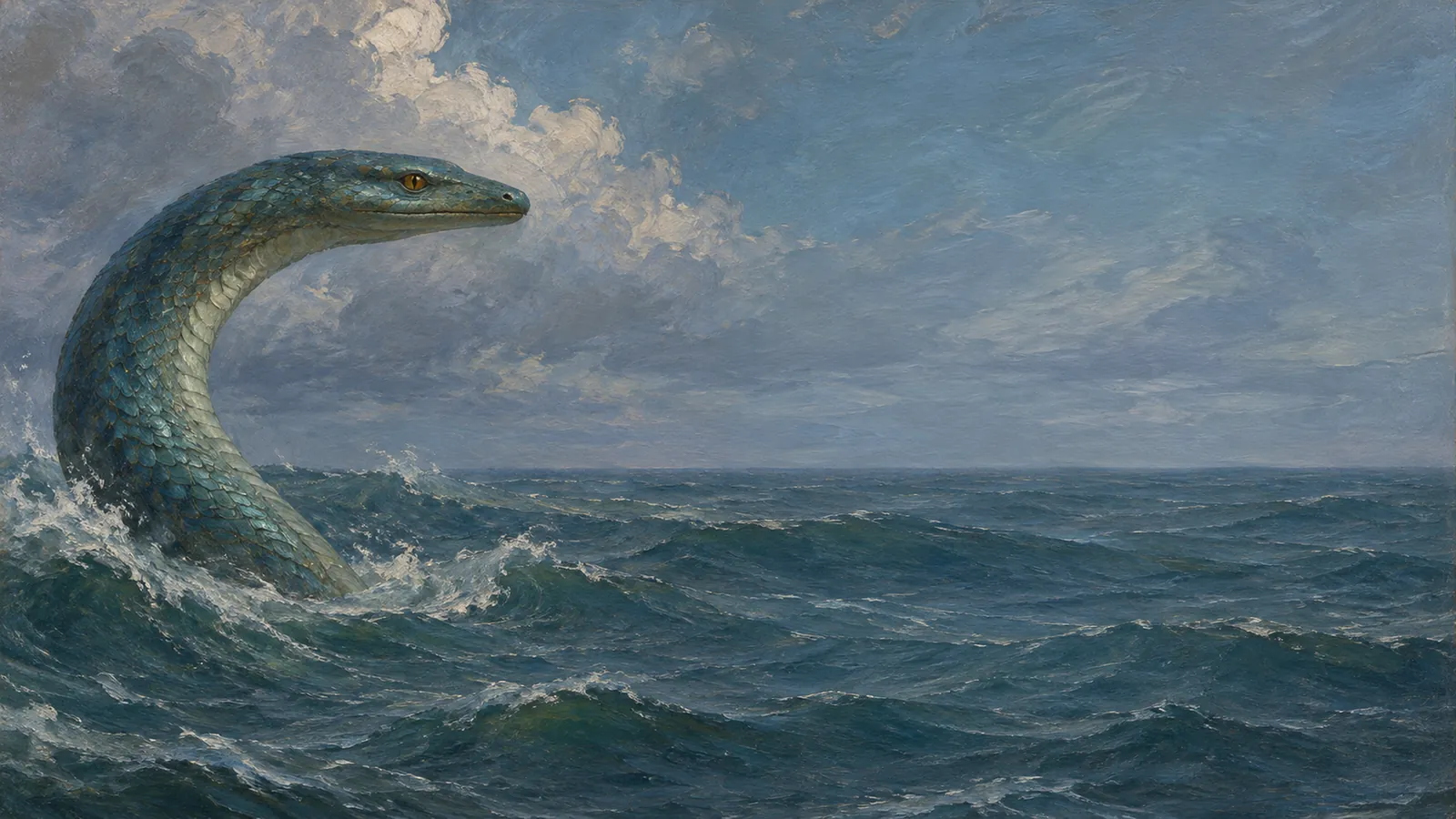
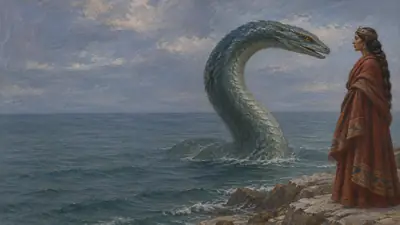
Hedammu rises where he can see the goddess. Some signs near the mention of his head remain hard to interpret. In the encounter that follows, she has his attention.
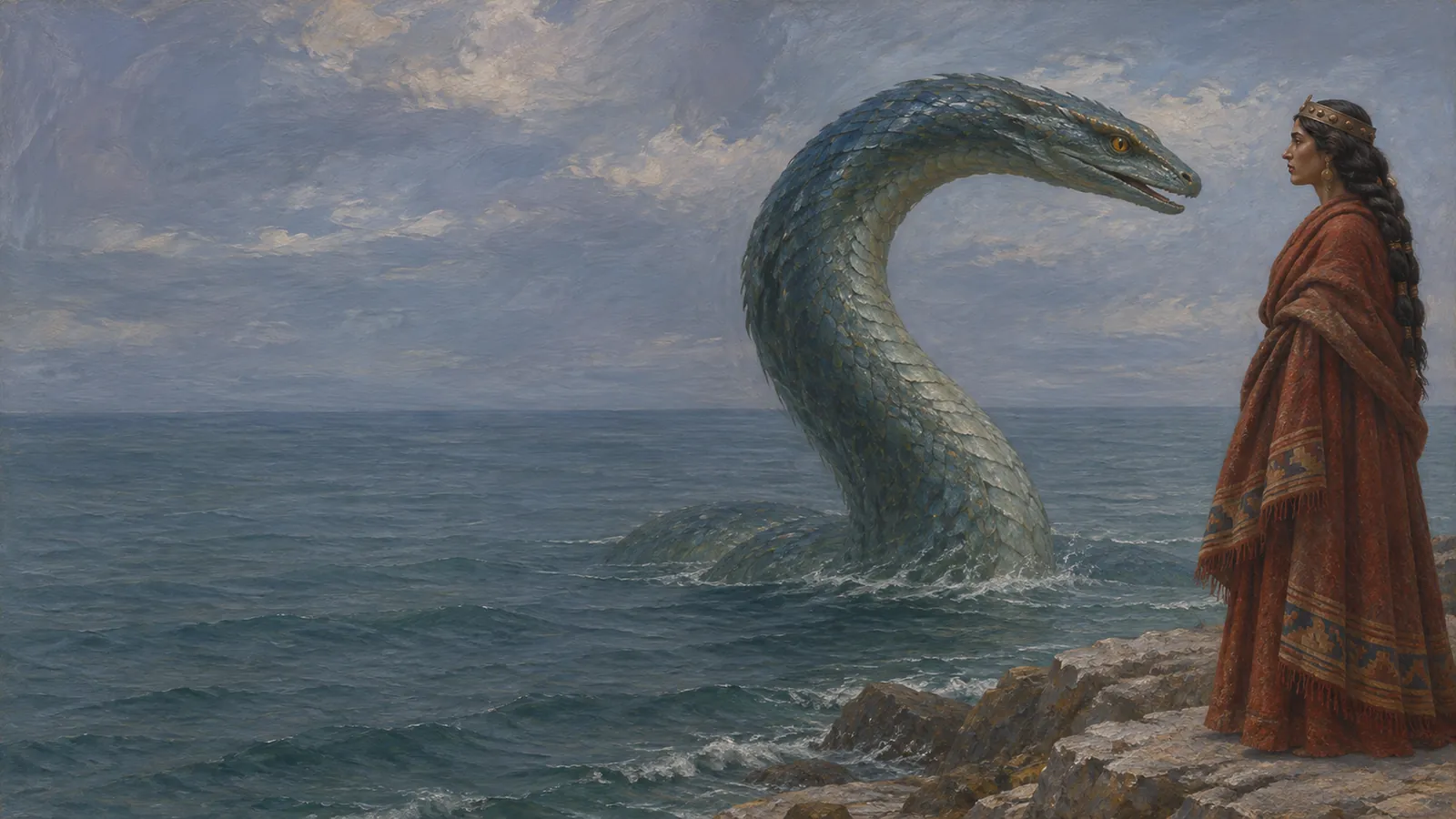
Hedammu asks what goddess stands before him and whether she is afraid. The question surfaces more than once in the surviving pieces. In one exchange, he threatens to eat her.
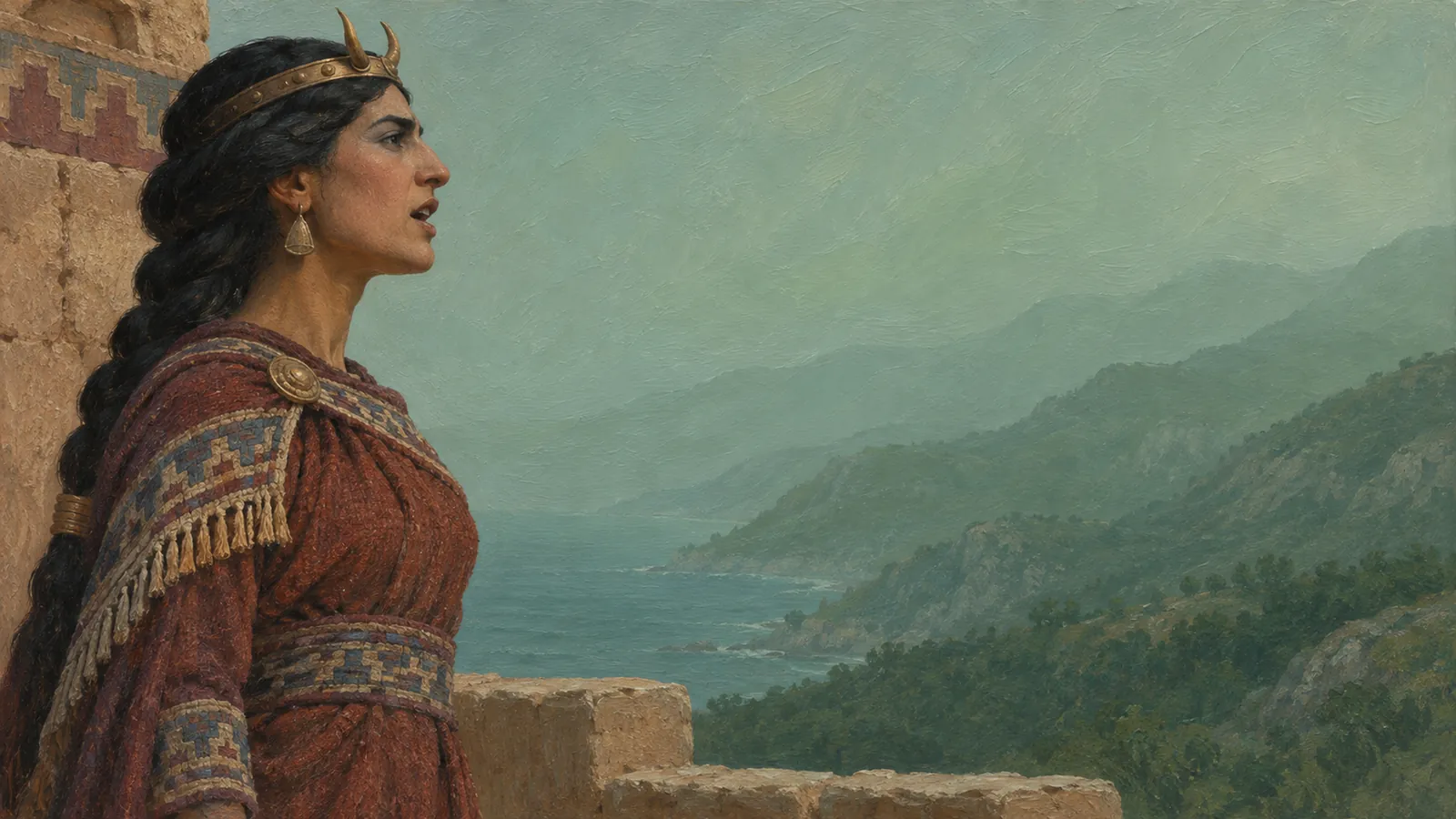
Shaushka speaks of herself as a young woman in anger. The broken words compare her with greenery over mountains. We keep the image of the mountain without filling in the whole answer.
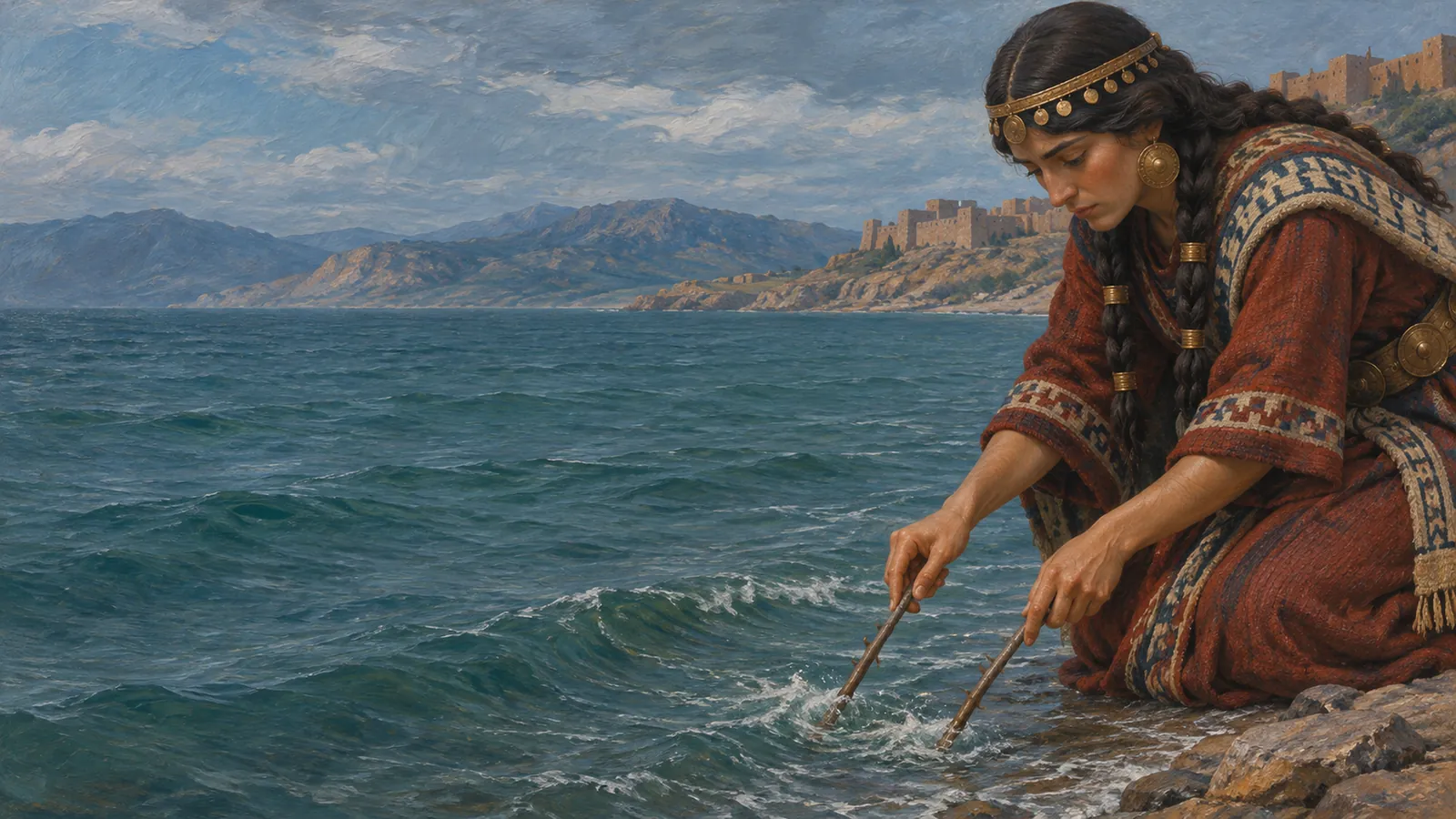
Another form of the encounter names materials put into deep water. Two are kinds of wood that scholars cannot confidently identify. The passage also mentions beer and a scent that reaches Hedammu.

The scent and the sound belong to overlapping parts of the song. Broken clay leaves the full exchange hard to follow. In the scent passage the monster’s great appetite gives way to sleep.
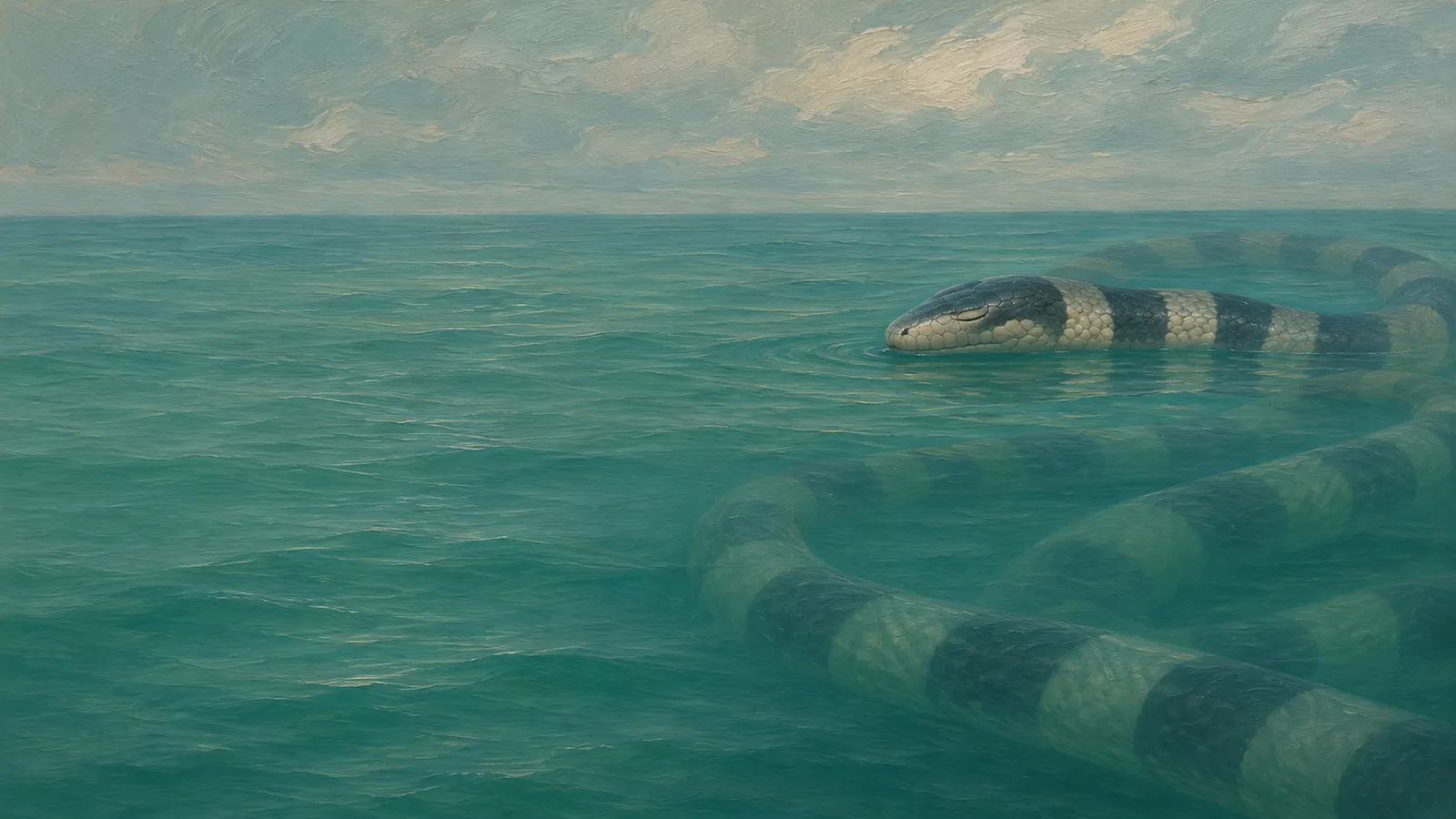
Hedammu tastes the scented drink. A sweet dream or sleep takes hold. The lines compare his heaviness to the sleep of great domestic animals, though translations name the animals differently.
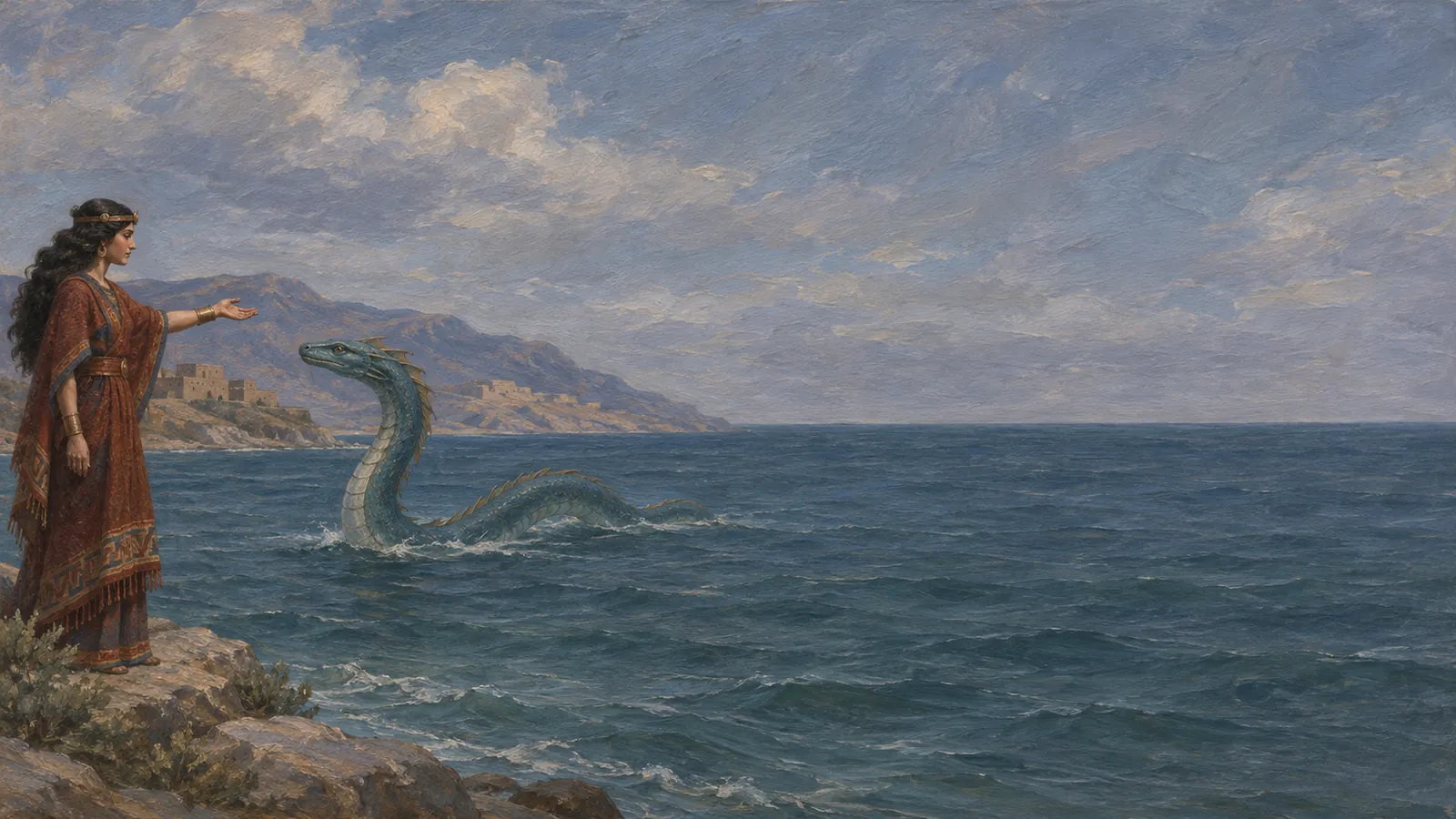
Shaushka calls Hedammu up out of the heavy waters. Later lines give him a voice of his own as he invites her into them. Her answer survives only in pieces.
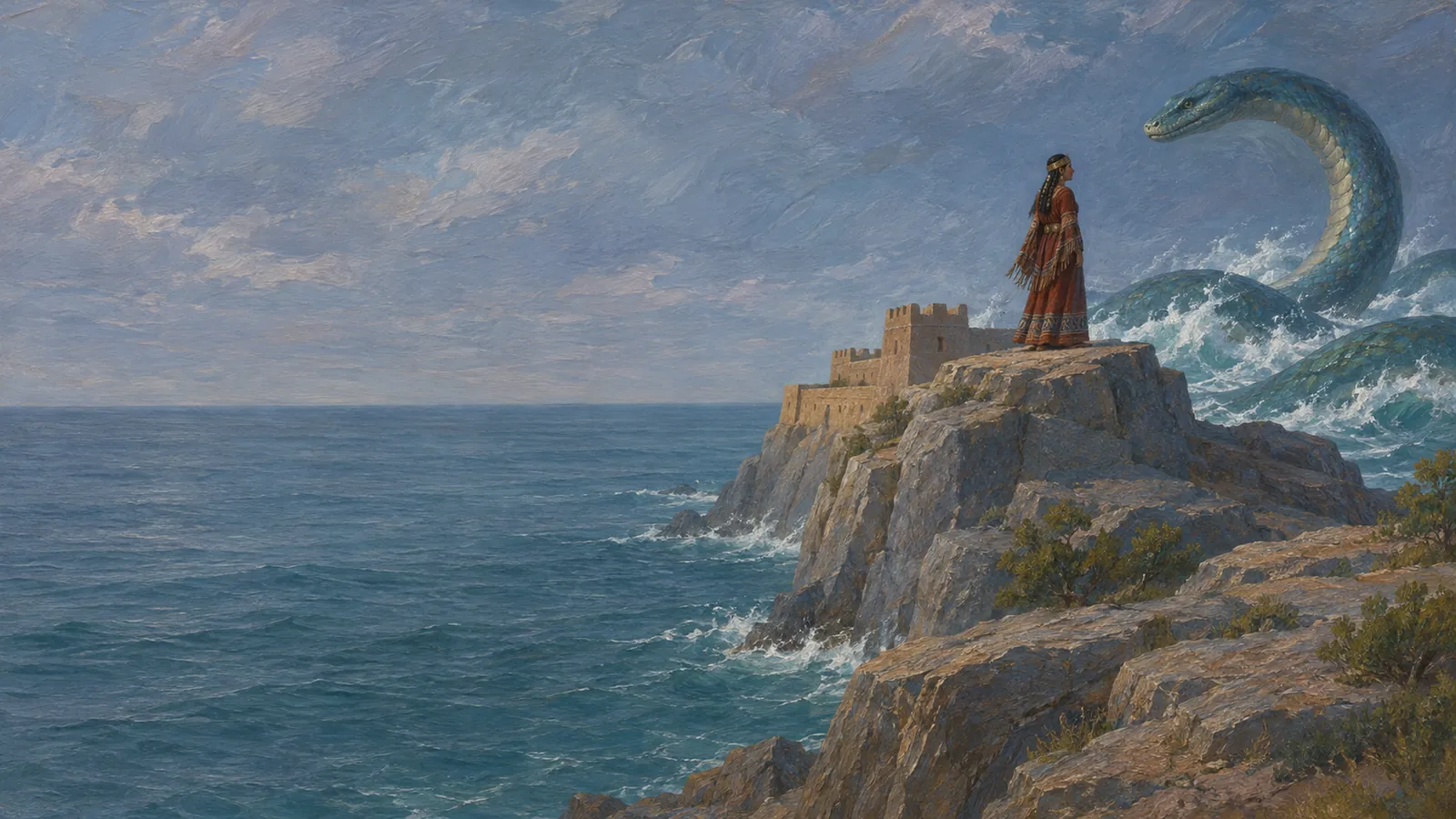
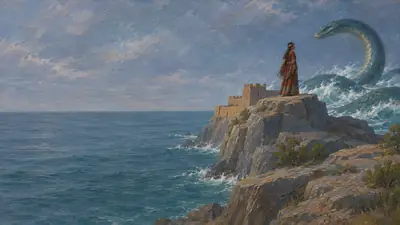
Hedammu comes down from his throne in the sea. The lines around him mention many cities and great floods without preserving all the actions. The goddess goes ahead of him.
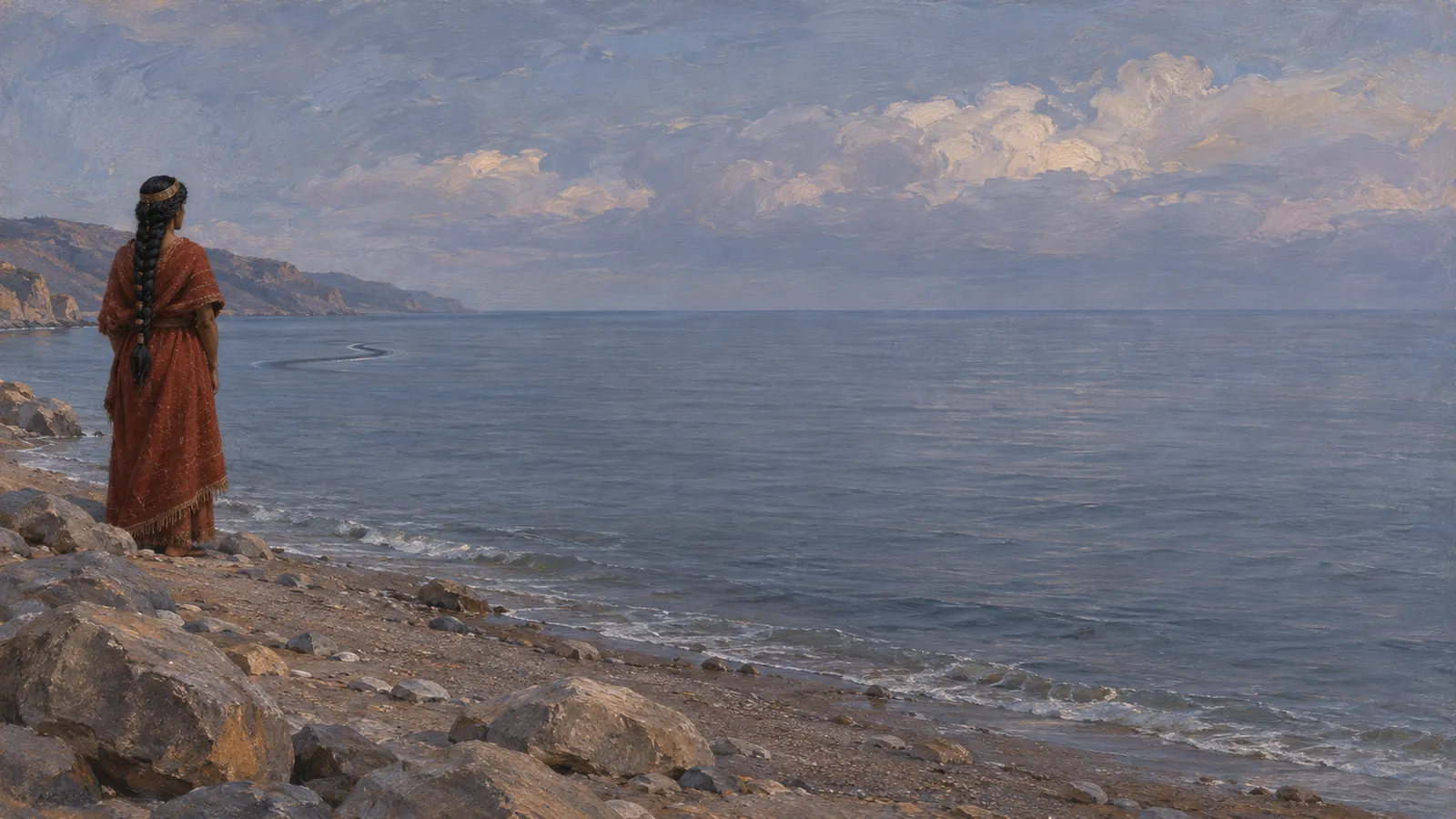
Hedammu seems to reach dry land in one reading. Past these broken words, there is no continuous end to the encounter. The tablets leave the serpent and the singer at the edge of the sea.
End of chapter 1
All pages











Sources
Editions consulted
- CTH 348, manuscript concordance
- Rieken and colleagues, CTH 348.I.1, the assembly, envoy and storm
- Rieken and colleagues, CTH 348.I.2, upbringing and appetite
- Rieken and colleagues, CTH 348.I.4, the encounter at sea
- Rieken and colleagues, CTH 348.I.5, the visit and the tears
- Rieken and colleagues, CTH 348.I.6, the agreement and the Sea's daughter
- Bachvarova, Multiformity in the Song of Hedammu
- Hoffner, Hittite Myths, second edition, pp. 50–55
- Siegelová, Appu-Märchen und Ḫedammu-Mythus, StBoT 14
Ancient lines behind each page
- Page 1: CTH 348 concordance
See source notes for which details are attested. - Page 2: KUB 33.110; Bachvarova, Table 1, fragment 1
See source notes for which details are attested. - Page 3: CTH 348.I.6 §§1–2
See source notes for which details are attested. - Page 4: CTH 348.I.6 §2
See source notes for which details are attested. - Page 5: CTH 348.I.6 §2
See source notes for which details are attested. - Page 6: CTH 348.I.6 §2
See source notes for which details are attested. - Page 7: CTH 348.I.6 §§2–4
See source notes for which details are attested. - Page 8: KBo 26.80 + KBo 66.108; Bachvarova, Table 1
See source notes for which details are attested. - Page 9: KBo 26.83; Bachvarova, Table 1
See source notes for which details are attested. - Page 10: CTH 348.I.2 lines 5–11
See source notes for which details are attested. - Page 11: CTH 348.I.2 lines 7–14
See source notes for which details are attested. - Page 12: CTH 348.I.2 lines 12–21
See source notes for which details are attested. - Page 13: CTH 348.I.1 lines 23–38
See source notes for which details are attested. - Page 14: CTH 348.I.1 lines 27–43
See source notes for which details are attested. - Page 15: CTH 348.I.5 lines 8–31
See source notes for which details are attested. - Page 16: CTH 348.I.5 lines 32–37; Bachvarova, Table 1
See source notes for which details are attested. - Page 17: CTH 348.I.1 lines 52–69
See source notes for which details are attested. - Page 18: CTH 348.I.1 lines 54–59, 62–67
See source notes for which details are attested. - Page 19: CTH 348.I.1 line 60
See source notes for which details are attested. - Page 20: CTH 348.I.1 lines 61–71
See source notes for which details are attested. - Page 21: CTH 348.I.1 lines 72–88
See source notes for which details are attested. - Page 22: CTH 348.I.1 lines 76–93
See source notes for which details are attested. - Page 23: CTH 348.I.1 lines 94–114
See source notes for which details are attested. - Page 24: CTH 348.I.1 lines 116–121
See source notes for which details are attested. - Page 25: Bachvarova, Tables 2–5
See source notes for which details are attested. - Page 26: Bachvarova, version X, A.1 and parallels
See source notes for which details are attested. - Page 27: Hoffner, fragments 11–12
See source notes for which details are attested. - Page 28: Hoffner, fragments 11–12
See source notes for which details are attested. - Page 29: Hoffner, fragments 11–12, visual interpretation
See source notes for which details are attested. - Page 30: Bachvarova, version X, A.2–A.4
See source notes for which details are attested. - Page 31: Bachvarova, version X, A.4–A.5
See source notes for which details are attested. - Page 32: Hoffner, fragment 14
See source notes for which details are attested. - Page 33: CTH 348.I.4 lines 8–14
See source notes for which details are attested. - Page 34: CTH 348.I.4 lines 10–17; Bachvarova, version Y
See source notes for which details are attested. - Page 35: CTH 348.I.4 lines 13–17
See source notes for which details are attested. - Page 36: CTH 348.I.4 lines 18–24, 41–49
See source notes for which details are attested. - Page 37: CTH 348.I.4 lines 27–40
See source notes for which details are attested. - Page 38: CTH 348.I.4 lines 33–49
See source notes for which details are attested.
Illustrations made with AI tools by IL Archive; the text is based on the ancient sources (see the sources at the end of each chapter).