Entity
Ouranos
A reference page linking a name, group, or concept to the materials that discuss it.
Sky as a divine figure in Greek poetry; Kronos’s father in Hesiod.
Last reviewed:
Text
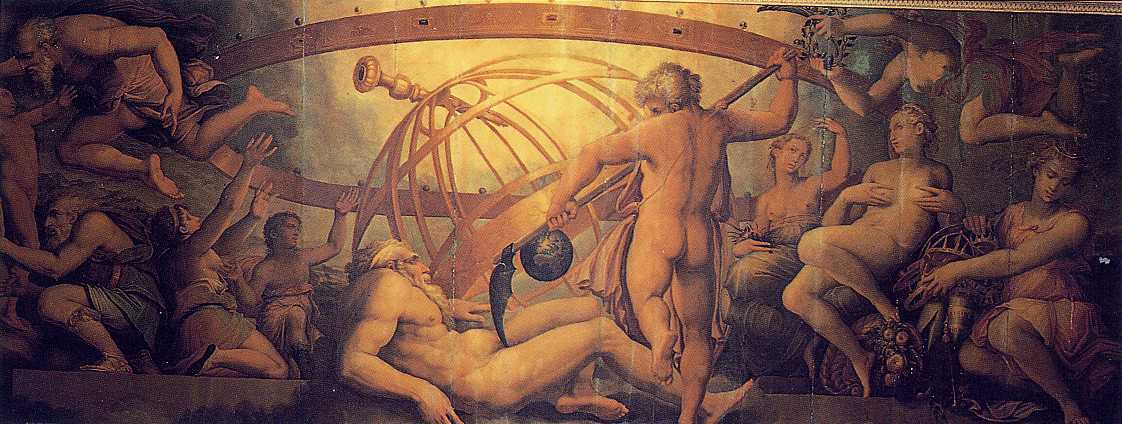
Ouranos is Sky as a divine figure in the Greek poet HesiodHesiodGreek poet whose major work is generally dated to the late eighth or early seventh century BCE, including the Theogony.Glossary · Click to read the explanation’s TheogonyHesiod’s TheogonyGreek poem on divine generations and Zeus’s kingship; its surviving form does not identify all of Hesiod’s sources.Glossary · Click to read the explanation. The poem makes him father of KronosKronosGreek divine figure and Zeus’s father; Hesiod connects his reign with struggles between divine generations.Glossary · Click to read the explanation and other children with Gaia, Earth. His conflict with Gaia and their children occurs early in divine succession. [1]
Gaia devises the plan Kronos carries out with a sickle. Here Ouranos is the sky god and a narrative figure; context distinguishes this name from modern planetary usage. [1][2]
References and notes (2)
- Hesiod, Theogony Lines130–174: family and plan. Return to the text ↑
- Hesiod, Theogony Lines175–209: the plan carried out. Return to the text ↑
Suggest a correction · Suggest a source for this record
Cite this record
IL Archive, «Ouranos», https://ilarchive.com/en/entities/ouranos-greek-god
Continue reading