Person · Contextual definition
Hesiod
Greek poet whose major work is generally dated to the late eighth or early seventh century BCE, including the Theogony.
Last reviewed:
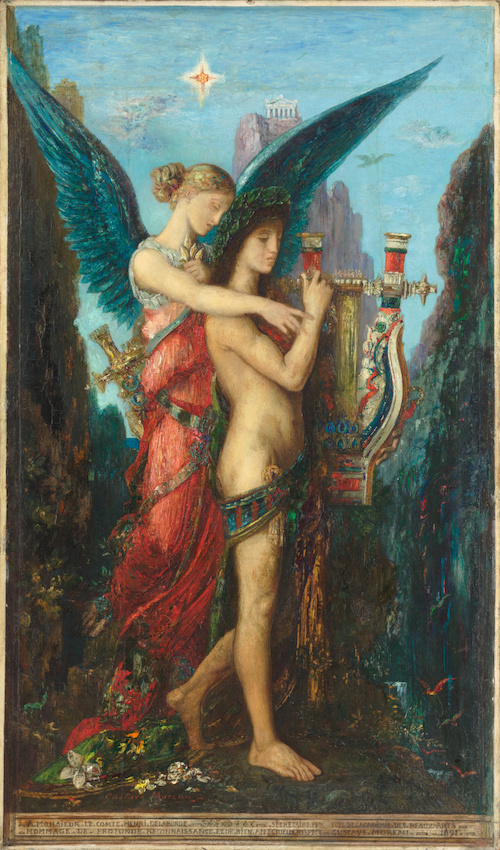
Text
Hesiod was an ancient Greek poet. Scholars broadly date the TheogonyHesiod’s TheogonyGreek poem on divine generations and Zeus’s kingship; its surviving form does not identify all of Hesiod’s sources.Glossary · Click to read the explanation to the late eighth or early seventh century BCE; this is an approximate date for the work, not a documented birth date for the poet. [1]
The poem tells of the world’s and gods’ origins and successive divine generations, culminating in ZeusZeusZeus is the sky god and leading deity in many Greek traditions. In the Iliad he presides over divine gatherings while others can still speak and object.Glossary · Click to read the explanation’s rule. Its TyphoeusTyphon / TyphoeusTyphon (Typhoeus), a serpentine adversary of Zeus in Greek myth; his defeat and punishment vary across Hesiod, Pindar, and the later Library.Glossary · Click to read the explanation passage is read separately from Greek retellings composed centuries later. [1]
References and notes (1)
- Debbie Felton, Hesiod, Theogony — Selections (2018) Publisher’s critical-introduction summary: dating and literary context. Return to the text ↑
Suggest a correction · Suggest a source for this record
Cite this record
IL Archive, «Hesiod», https://ilarchive.com/en/people/hesiod