Site
Jericho / Tell es-Sultan
Beside a perennial spring in the Jordan Valley, Tell es-Sultan preserves Neolithic houses and burials alongside Bronze Age city walls. Excavated layers show how ancient Jericho changed from one period to the next.
Estimated reading time: 2 min Published Last reviewed:
Share article
Text
Introduction
Tell es-Sultan is an archaeological mound northwest of present-day Jericho, in the Jordan Valley. The perennial spring of ʿAin es-Sultan lies beside it. A tell forms as buildings, debris and other remains accumulate over successive occupations. At Jericho the deposits include traces of human activity from about 10,500 BCE. The World Heritage Centre’s description identifies twenty-nine occupation phases in the mound. These layers preserve evidence for both the growth of early permanent settlements and the development of Bronze Age towns in the southern LevantThe LevantThe Levant is a regional name for lands along the eastern MediterraneanGlossary · Click to read the explanation. [1]
Houses, stonework and an early settlement
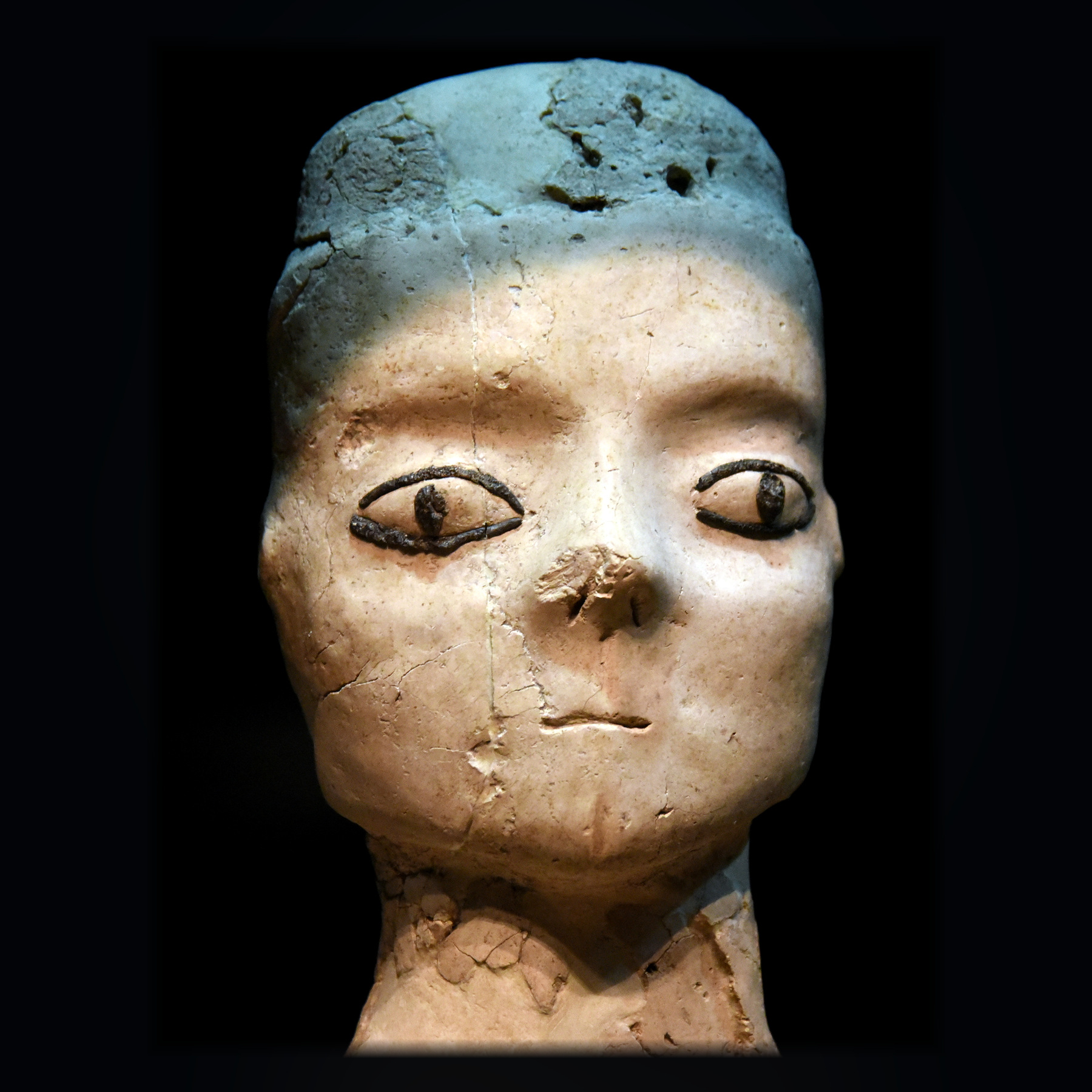
By the ninth and eighth millennia BCE, a sizeable permanent settlement stood beside the spring. A wall, a tower and a ditch dug into the bedrock belong to the early settlement. House plans changed over time, from circular, partly sunken houses to mud-brick houses with courtyards and rectangular rooms. Changes in domestic buildings help trace the development of the settlement alongside the larger works. [1][4]
Plastered faces and burial practices
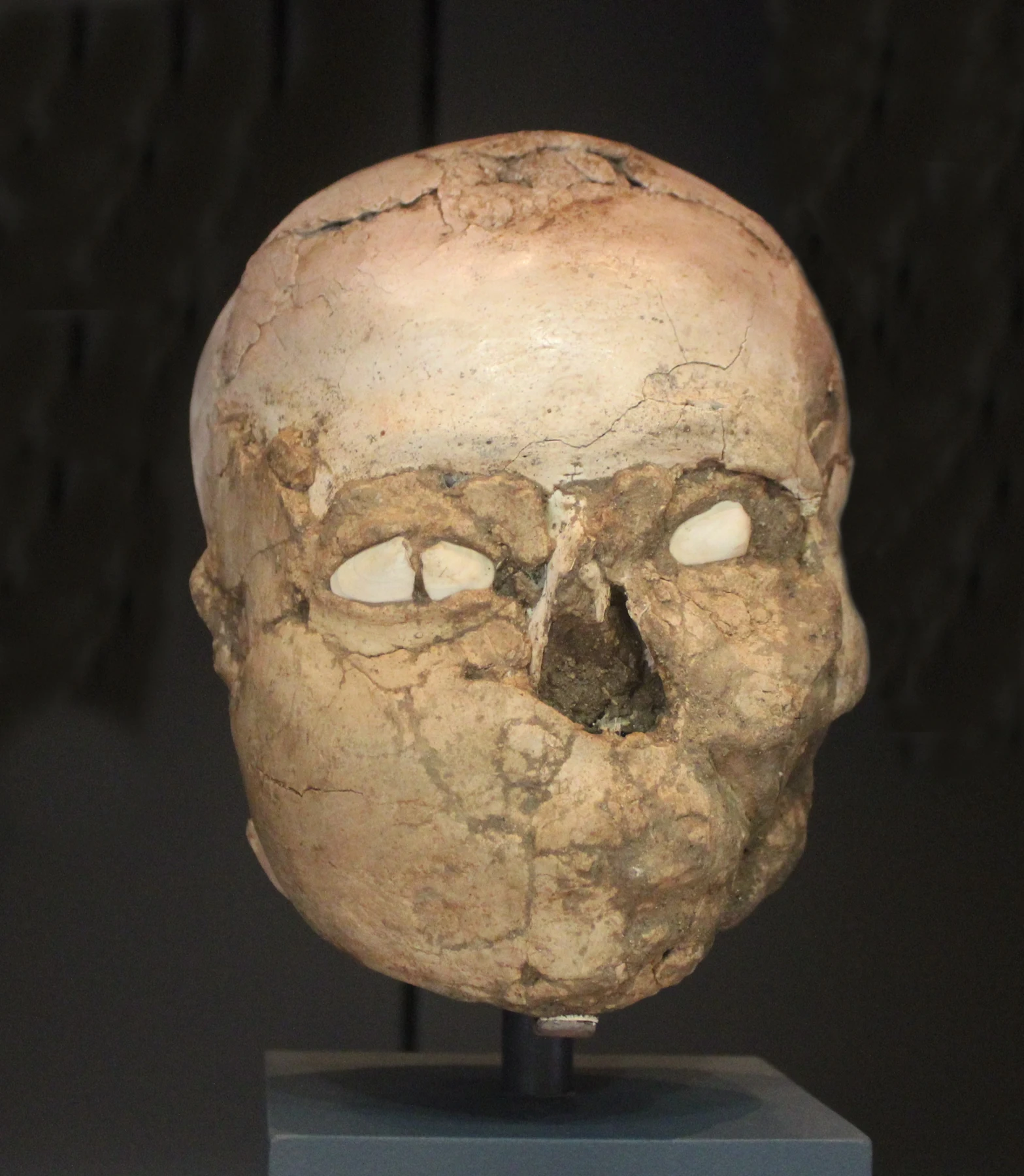
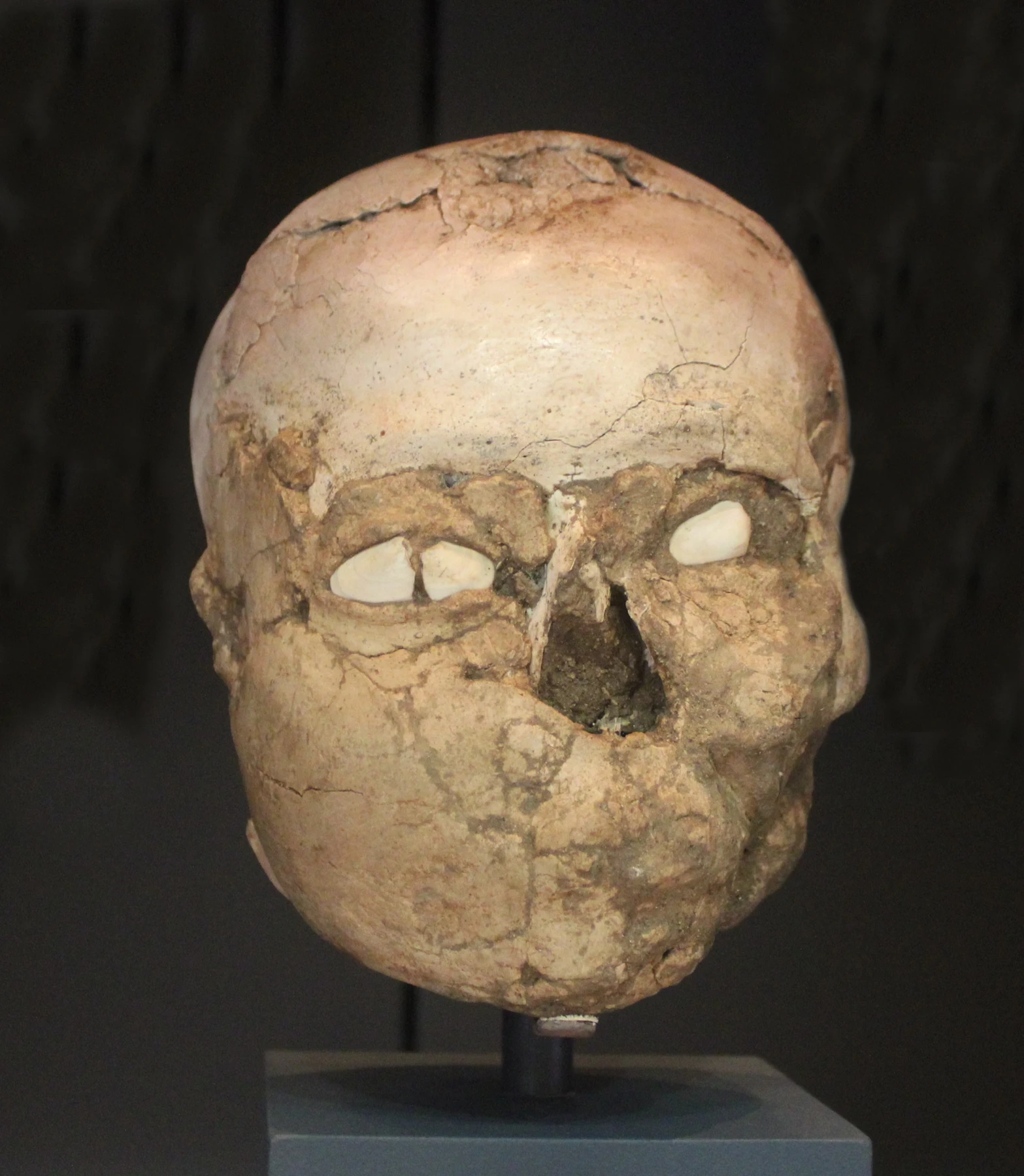
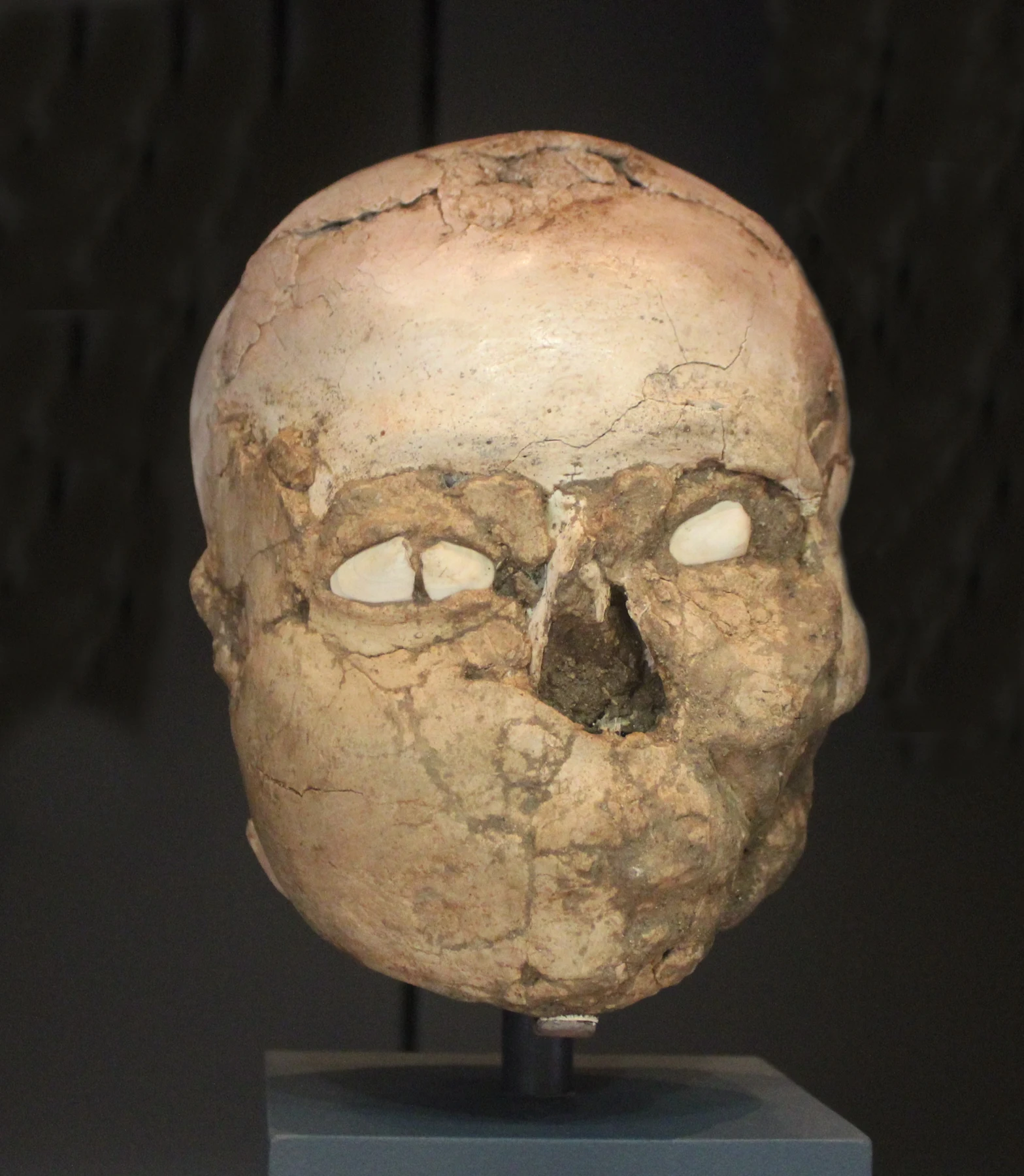
Kenyon’s team found seven plastered human skulls buried together in 1953. One of them, British Museum 1954,0215.1, belongs to Pre-Pottery NeolithicPre-Pottery NeolithicA regional archaeological framework for early settlement, cultivation and animal management in Southwest Asia before the local spread of pottery vessels; its dates and trajectories vary and it implies no common religion.Glossary · Click to read the explanation B. The lower jaw had been removed, the face remodelled in plaster and shells placed in the eye sockets. Researchers used X-ray imaging to examine parts concealed by the plaster while preserving the object. The burial group provides evidence for the care given to these human remains. Suggestions that the faces commemorated particular individuals, or that the skulls served communal ritualsRitualAn organised or distinguished practice meaningful to a community; it may leave traces, but its form alone does not reveal an associated doctrine.Glossary · Click to read the explanation before burial, are interpretations of the practice. [2][3]
Bronze Age buildings and ramparts
The Bronze Age town occupied the same mound. The ICOMOS evaluation records three massive fortification walls of the Early Bronze Age and public buildings, among them a large apsidal building. In the Middle Bronze Age the town was defended by a large system of ramparts, buttresses and retaining walls. [1][4]
Quick answers
Where is Tell es-Sultan? It lies beside ʿAin es-Sultan, northwest of present-day Jericho, in the Jordan Valley. [1]
What are the plastered skullsPlastered skullsHuman skulls whose features were modelled after death with plaster or similar material, sometimes with shell eyes. Distinct from childhood head shaping; they do not by themselves disclose a person’s identity or the community’s beliefs.Glossary · Click to read the explanation from Jericho? They are human remains with faces remodelled in plaster. Kenyon’s expedition found a group of seven buried together. [2][3]
What periods are represented at the site? The tell preserves early Neolithic settlement levels and several phases of Bronze Age construction. [1][4]
References and notes (4)
- UNESCO World Heritage Centre, “Ancient Jericho/Tell es-Sultan,” World Heritage List 1687 Brief synthesis and criteria (iii)–(iv). Site location, the spring, early occupation, twenty-nine phases and Neolithic and Bronze Age features. Return to the text ↑
- British Museum, “Plastered skull,” collection record 1954,0215.1 Object description and registration details. The deposited group of seven, plaster, shells and non-invasive imaging. Return to the text ↑
- Alexandra Fletcher et al., “Beneath the Surface: Imaging Techniques and the Jericho Skull,” in Regarding the Dead, British Museum (2014) Chapter 8, pp. 91–100. The 1953 find, Middle Pre-Pottery Neolithic B context, imaging methods and interpretations of the skull’s treatment. Return to the text ↑
- ICOMOS, “Ancient Jericho/Tell es-Sultan (Palestine),” World Heritage nomination evaluation no. 1687 (2023) Description and assessment of criterion (iv). The Neolithic ditch, settlement buildings and Middle Bronze Age ramparts. Return to the text ↑
Suggest a correction · Suggest a source for this record
Cite this record
IL Archive, «Jericho / Tell es-Sultan», https://ilarchive.com/en/sites/jericho
Continue reading