Site
Göbekli Tepe
- Timeline
- From 9600 BCE to 8200 BCE
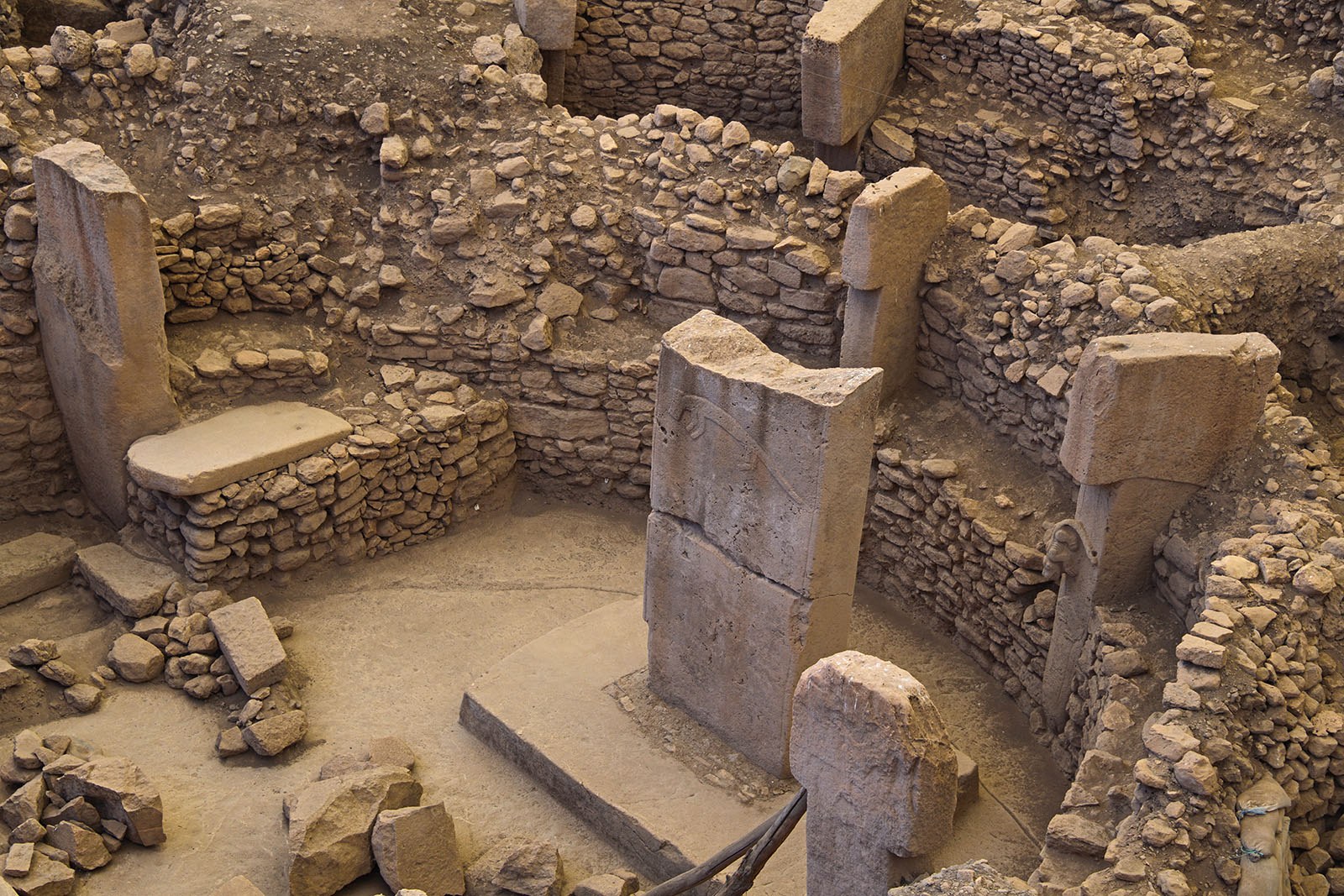
A Neolithic site in southeastern Turkey, known for communal buildings and T-shaped pillars; the excavation team describes a settlement with a pronounced ritual component.
Dates
Dates have distinct roles. The timeline uses creation, composition or historical coverage, rather than publication or discovery dates.
- Historical coverage
- Approximately From 9600 BCE to 8200 BCE
Text
UNESCO approximately dates the famous monuments to 9600–8200 BCE. Some pillars carry animal imagery and human attributes; their elements also have architectural functions.[5]
Domestic evidence has broadened interpretation towards a settlement with a ritualRitualAn organised or distinguished practice meaningful to a community; it may leave traces, but its form alone does not reveal an associated doctrine.Glossary · Click to read the explanation component, rather than a necessarily isolated sanctuary.[4] The names of any figures represented by pillars are unknown, and size alone does not establish divine identity.
References and notes
- Deutsches Archäologisches Institut. Göbekli Tepe, project 5746. Current project overview; domestic evidence, settlement and a ritual component. The team gives an approximate site chronology broader than UNESCO’s range for the monuments. Return to the text ↑
- UNESCO World Heritage Centre. Göbekli Tepe, property 1572. Description and Outstanding Universal Value; monuments approximately 9600–8200 BCE, communal and architectural functions. Return to the text ↑
Research history
Substantive changes are retained here. Minor copy edits remain in the internal operational log.
-
Substantive record update
Suggest a correction · Suggest a source for this record
Cite this record
IL Archive, «Göbekli Tepe», Edition 2, https://ilarchive.com/en/sites/gobekli-tepe