Artifact
The Stele of Mamy from Ugarit (Louvre AO 13176)
An object record bringing together its image, metadata, rights, and context.
- Timeline
- From 1300 BCE to 1150 BCE
- Region
- The Levant
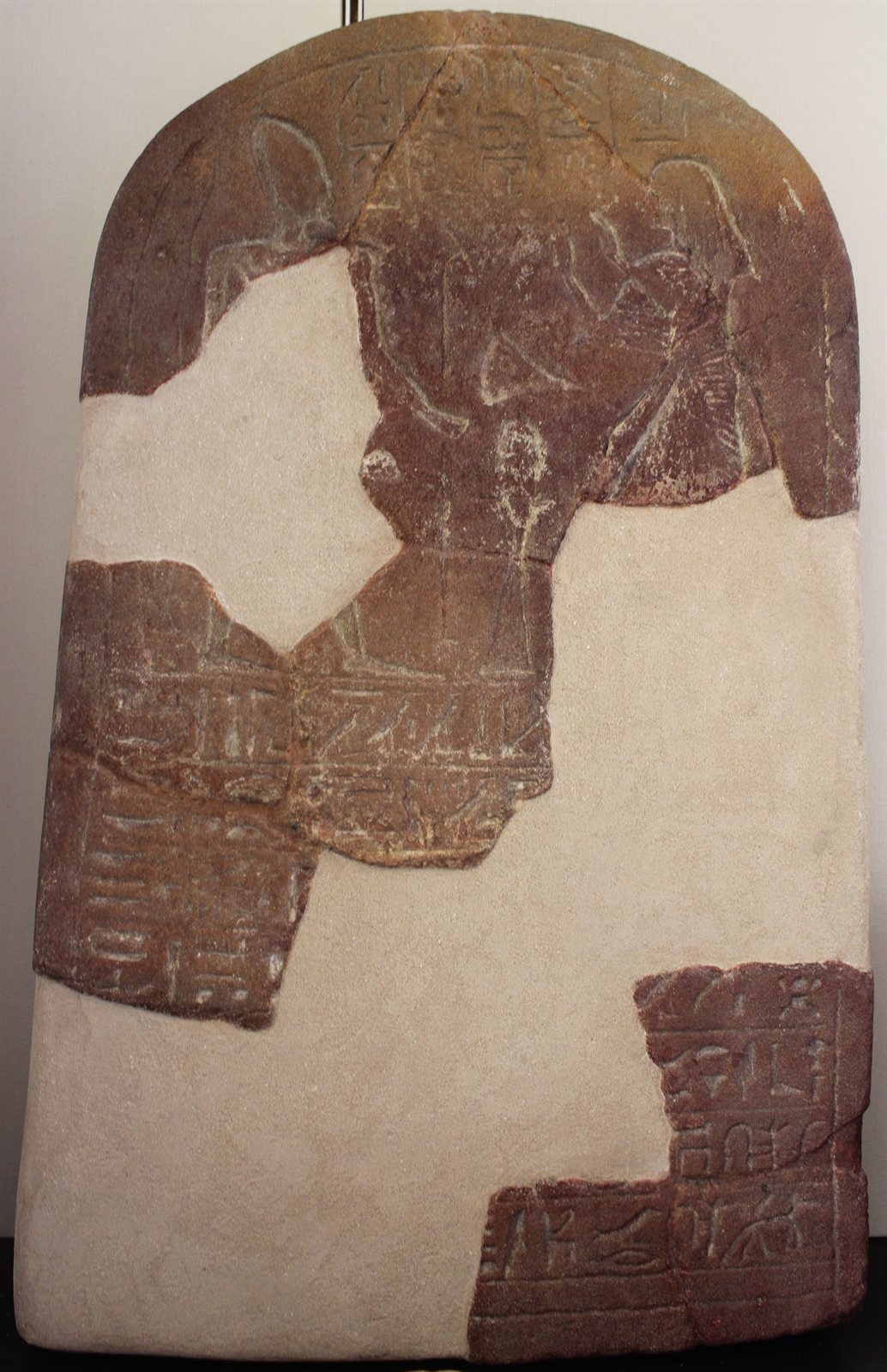
An Egyptian hieroglyphic inscription identifies the god who faces a royal scribe on this sandstone stele. The fragments from Ugarit preserve a dedication to Baal of Mount Saphon and clues to how Egyptian scribes wrote his name.
Estimated reading time: 4 min Published Last reviewed:
Share article
Photograph
Zunkir / Wikimedia Commons, CC BY-SA 4.0. Image resized.
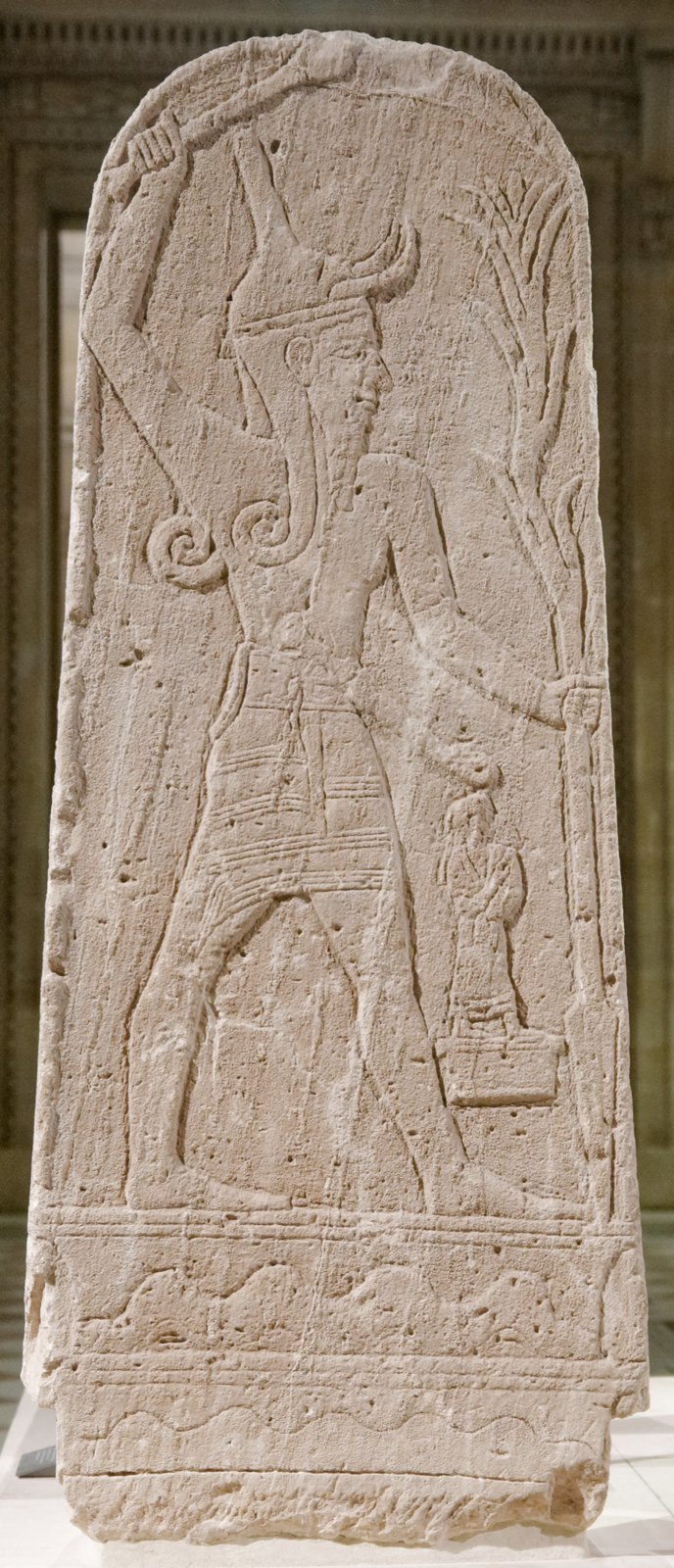
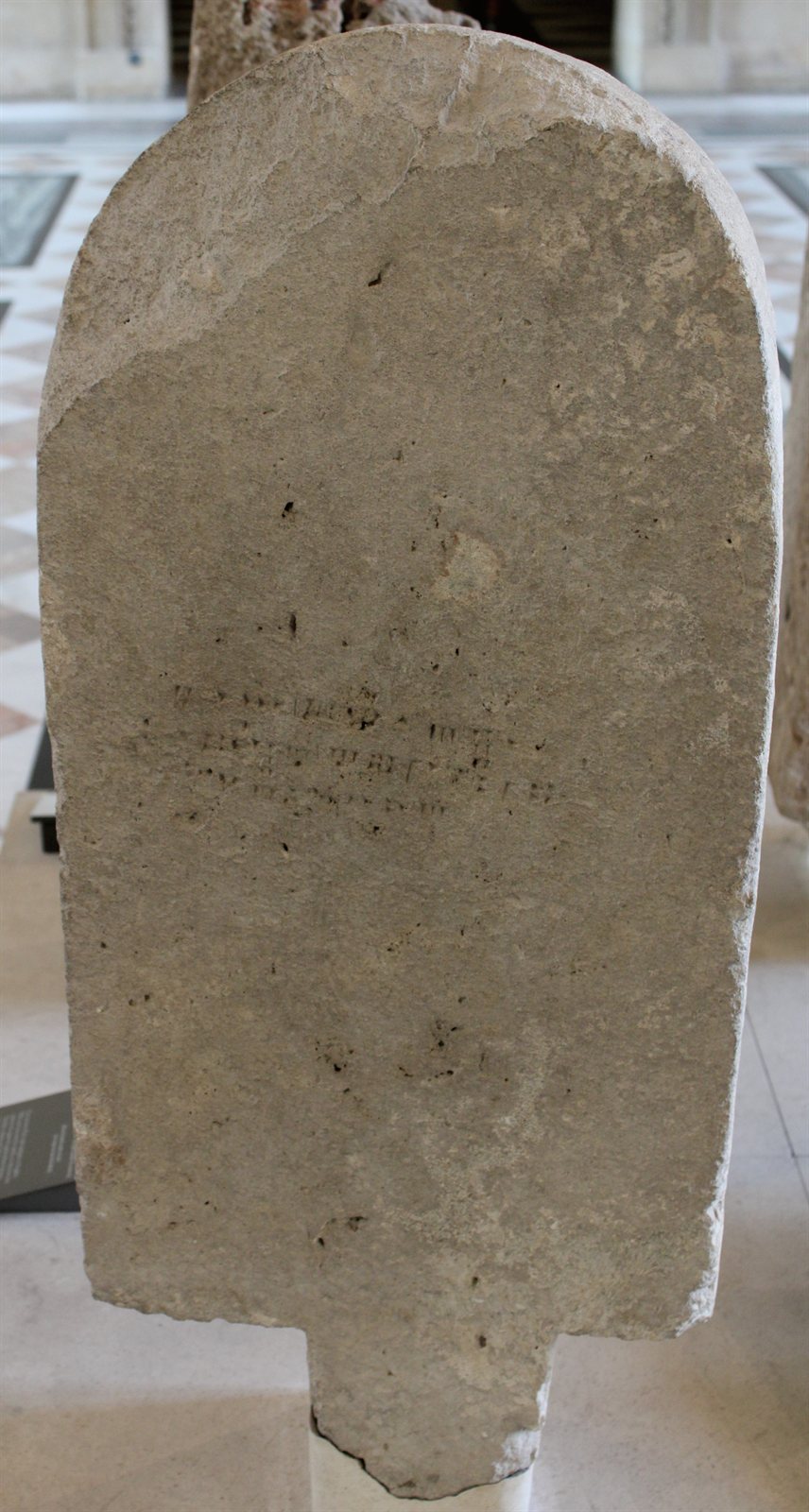
Fragmentary sandstone stele showing Mamy facing Baal of Mount Saphon. Egyptian hieroglyphs are preserved on the joined fragments (Louvre AO 13176)
License · Image sourceObject details
- Title
- The Stele of Mamy from Ugarit (Louvre AO 13176)
- Timeline
- From 1300 BCE to 1150 BCE
- Region
- The Levant
- Rights
- CC BY-SA
Text
Introduction
In the upper scene of a sandstone stele from UgaritUgaritAncient city and kingdom at Ras Shamra on the Syrian coast, flourishing between the fourteenth and early twelfth centuries BCE and preserving multilingual archives.Glossary · Click to read the explanation, a god and a man face one another. The Louvre identifies them as BaalBaalUgaritic storm god and warrior king who defeats Yamm, builds his palace with El’s consent and confronts Mot. References to El and Dagan as fathers do not define a single genealogy.Glossary · Click to read the explanation of Mount Saphon and the royal scribe Mamy, also written Mami. The Egyptian hieroglyphs give the god a name and preserve part of a prayer. The stone came to light in fragments in the area of the temple of Baal on the acropolis of Ras Shamra. The Louvre registers the assembled piece as AO 13176. [1][2][3][4]
Fragments from three seasons
The Louvre lists three excavation numbers under the same museum number, RS 1.089, RS 2.033 and RS 5.183. Its catalogue records finds in 1929, 1930 and 1933. Valérie Matoïan reproduces an excavation photograph showing how pieces had already been fitted together before the fifth season. The photograph precedes the discovery of the fragment found in 1933. The breaks in the present stele interrupt both the scene and the lines of writing below it. [1][2]
The museum describes the stone as dark red sandstone with quartz grains and an iron-rich cement, the material that binds the grains together. It lists the stone as imported from Egypt and records a laboratory analysis from 1990. The Louvre gives measurements of 40 centimetres high, 25 wide and 7 thick. František Válek, following Marguerite Yon’s archaeological catalogue, gives a height of 42 centimetres. Jürg Eggler’s iconographic catalogue lists 29 centimetres without specifying which fragments that height covers. The Louvre dates the piece broadly to 1300–1150 BCE. Matoïan places it more narrowly at the beginning of Egypt’s Nineteenth Dynasty. [1][2][3][5]
The scene and the name
The Louvre places Baal at the left and Mamy at the right. It identifies an altar and a lotus among the motifs. Eggler describes the god as holding an Egyptian was sceptre. He compares this pose with other representations of the Levantine storm god, where a raised weapon or spear is more typical. The inscription makes the identification on Mamy’s stele unusually direct. The dress and sceptre show how this particular image used Egyptian forms. [1][3][5]
The Louvre’s inscription entry gives the divine name as Seth of Sapouna. Válek, presenting Eythan Levy’s reading, transcribes it as Baal of Mount Ṣapan, another spelling of Saphon. He notes that the hieroglyphs accompanying the name include the Seth animal as a determinative, a sign used to classify a word. The wording names Baal of a specific mountain, while the sign shows the association with Seth in the Egyptian writing of the name. The precise relationship between the two gods is part of the interpretation of the inscription. [1][3][4]
Mamy’s offering
The surviving text gives Mamy the title of royal scribe. Matoïan reads his further title as overseer of the royal estate. The prayer follows an Egyptian formula in which the king gives an offering. The translation presented by Válek includes a wish for well-being, and the concluding section names Mamy with a conventional epithet of the dead. Eythan Levy describes the monument as a funerary stele. His edition draws on direct inspection of the stone, parallel texts and a fragment that an earlier study had noted. [1][2][3][4]
The Egyptian writing, stone and imagery provide evidence for the kind of monument Mamy used to address Baal. Matoïan reads the object as a dedication by an Egyptian. She also records Élisabeth Lagarce’s proposal that Mamy may have been from Syria. The inscription gives his offices and the recipient of the offering, while his origin remains a matter of interpretation. [2][3][4]
Quick answers
What is the Stele of Mamy?
It is a fragmentary sandstone stele from Ugarit with a dedication by a royal scribe to Baal of Mount Saphon. The Louvre holds it as AO 13176. [1][2][3]
Where was it found?
The fragments were found in the area of the temple of Baal on the acropolis of Ras Shamra, in the excavation seasons of 1929, 1930 and 1933. [1][2]
Why does Seth appear in the discussion of the inscription?
The Egyptian spelling of the name read as Baal of Mount Saphon uses the Seth animal as a determinative. It is a sign that helps classify the name. [1][3][4]
When was the stele made?
The Louvre dates it broadly to 1300–1150 BCE. Matoïan places it near the beginning of Egypt’s Nineteenth Dynasty. [1][2]
References and notes
- Musée du Louvre, ‘Stèle de Mamy’, AO 13176 / RS 1.089 / RS 2.033 / RS 5.183 Description and Inscriptions for the scene, titles and catalogued divine name. Physical characteristics for the Louvre dimensions and Querré’s November 1990 analysis L 20168. Places and dates for the three excavation years, acropolis findspot and museum date range. Return to the text ↑
- Valérie Matoïan, ‘Nouvelles données sur les monuments de l’acropole de Ras Shamra-Ougarit (Syrie)’, Comptes rendus des séances de l’Académie des Inscriptions et Belles-Lettres 162 (1), 2018, pp. 251–303 Pp. 283–284, fig. 16 and n. 101. The excavation photograph and reassembly before the 1933 find, the early Nineteenth Dynasty date, title and partial offering formula, and Lagarce’s proposal about Mamy’s origin. Return to the text ↑
- František Válek, ‘Foreigners and Religion at Ugarit’, Studia Orientalia Electronica 9 (2), 2021, pp. 47–66 Pp. 57–58, ‘Stele of Mami’ and fig. 3. Height following Yon, reading of the deity’s name, Seth animal determinative, inscription translated after Levy, and n. 28 on the relationship to Seth. Return to the text ↑
- Eythan Levy, ‘A Fresh Look at the Baal-Zaphon Stele’, The Journal of Egyptian Archaeology 100 (1), 2014, pp. 293–310 Publisher’s abstract. Describes the funerary monument, inspection at the Louvre, comparisons with other inscriptions, Montet’s fragment and the question of Baal and Seth. Return to the text ↑
- Jürg Eggler, ‘Baal’, Iconography of Deities and Demons in the Ancient Near East, University of Zurich, 19 December 2007 Introduction, section II.1 A.2, worshipper in section II.2 and catalogue no. 7. Egyptian garb, the was sceptre, the named image, compared poses, and a distinct height figure. Return to the text ↑
Archive records may be reviewed and refined as better evidence or sources become available. Suggest a correction
Suggest a correction · Suggest a source for this record
Cite this record
IL Archive, «The Stele of Mamy from Ugarit (Louvre AO 13176)», https://ilarchive.com/en/artifacts/mamy-stele-ao13176
Continue reading