Artifact · Tablet
The Babylonian Astronomical Diary of 331–330 BCE (BM 36761)
An object record bringing together its image, metadata, rights, and context.
- Timeline
- From 331 BCE to 330 BCE
- Region
- Mesopotamia
A Babylonian clay tablet records a lunar eclipse, a battle in which Darius’s troops deserted him, and Alexander’s entry into Babylon. Its broken lines show how dates and royal titles survive alongside observations of the sky.
Estimated reading time: 4 min Published Last reviewed:
Share article
Photograph
Brigade Piron / Wikimedia Commons, CC BY-SA 4.0. Image resized.
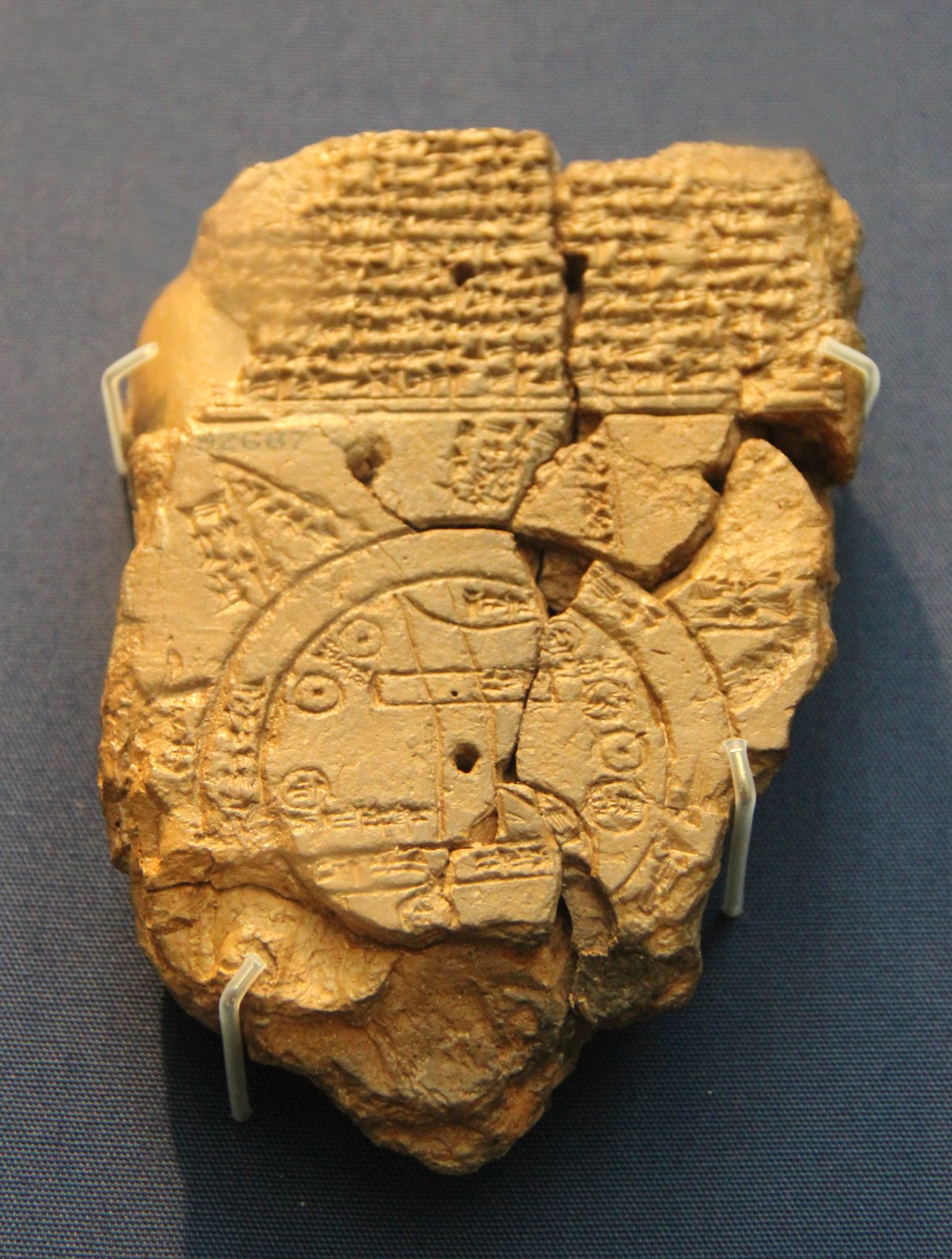
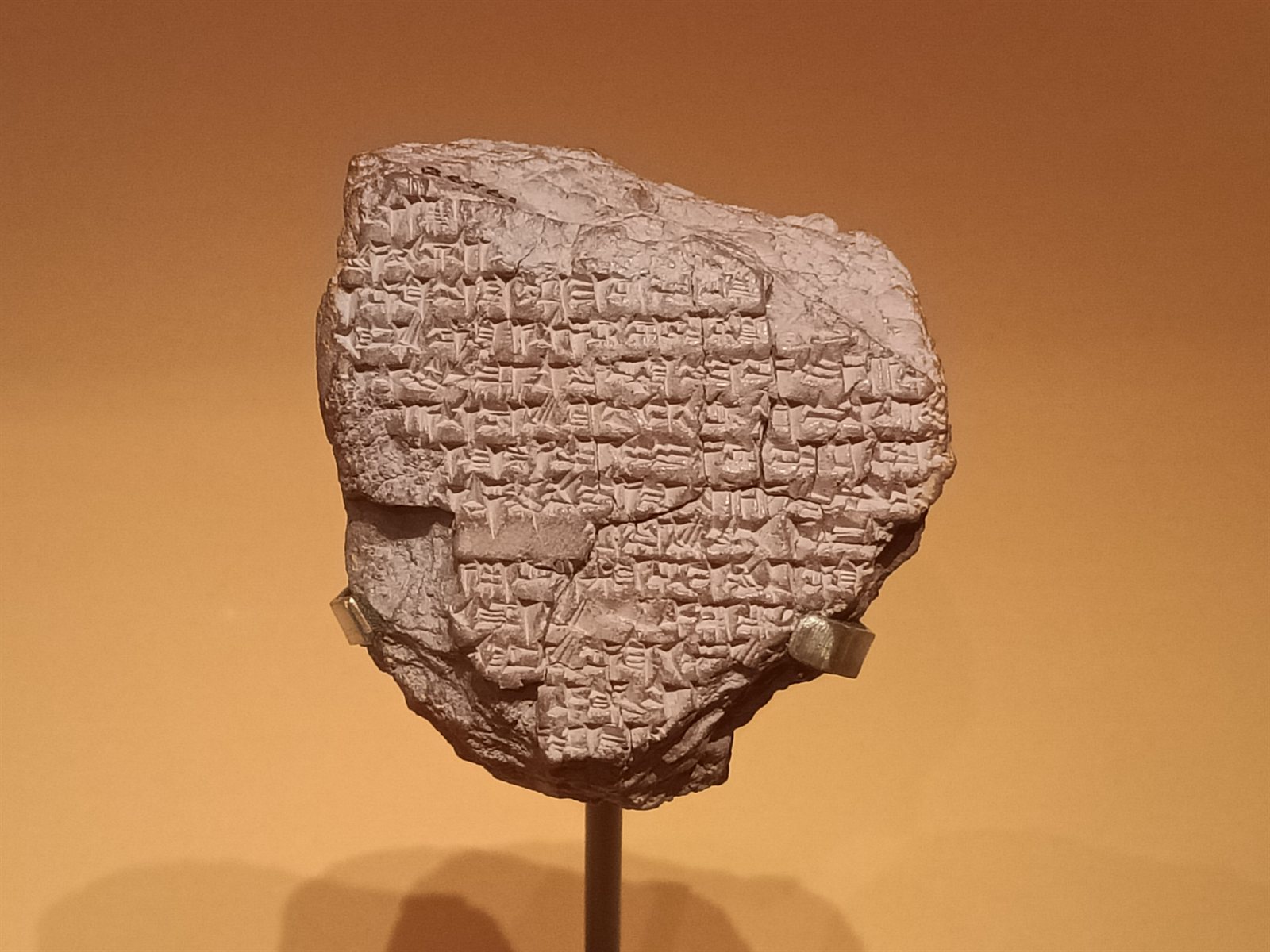
Clay fragment of the Babylonian astronomical diary of 331–330 BCE, on display at the British Museum (BM 36761)
License · Image sourceObject details
- Title
- The Babylonian Astronomical Diary of 331–330 BCE (BM 36761)
- Timeline
- From 331 BCE to 330 BCE
- Region
- Mesopotamia
- Rights
- CC BY-SA
Text
Introduction
In the fifth year of Darius III, a Babylonian scribe recorded a lunar eclipse and a battle within the same month. In the next month the diary names Alexander as he enters BabylonBabylonBabylon is an ancient city in central present-day Iraq, south of BaghdadGlossary · Click to read the explanation. Two fragments of the clay tablet are in the British Museum. The fragment numbered BM 36761 preserves the historical notices and is the fragment shown here. The other, BM 36390, preserves part of the eclipse report. [1][2][3]
Two fragments of one diary
Reinhard Pirngruber identifies the two fragments as parts of one tablet, with a gap between them. He measures BM 36761 at 8.5 centimetres high. Its surviving lines extend about 6.5 centimetres on the front and up to 7.5 centimetres on the more damaged reverse. BM 36390 carries the right-hand section of the first 13 lines of the front. The pieces are edited together as diary −330 A+B in the series Astronomical Diaries and Related Texts from Babylonia. [1][3]
The label 331–330 BCE refers to the Babylonian year covered by the diary. The months preserved in these fragments are VI and VII, Ulūlu and Tašrītu. In Brinkman’s calculation, month VII begins on 8 October. The historical notices discussed here fall in September and October 331 BCE. John A. Brinkman pointed out that the astronomical notation −330 corresponds to 331 BCE. A dating convention with a year zero changes the year number by one for dates before the common era. [1][2]
An eclipse before the battle
The eclipse was recorded on the night of the thirteenth day of month VI. On the usual historical dating it took place on the night of 20–21 September 331 BCE. V. F. Polcaro, G. B. Valsecchi and L. Verderame compared the partly preserved report with a calculated view of the eclipse from Babylonia. They read the tablet’s ten degrees of time as about 40 minutes of totality. Their calculation gives 63 minutes. They suggest that the ancient observers may have used a different criterion for the start and end of totality. [1][2][3]
An astronomical diary typically follows the Moon’s position relative to named stars. This kind of record can also preserve commodity prices, river levels and reports of events affecting the city. In this diary, the eclipse belongs to the dated observations. On the reverse a damaged line also gives a price expressed against one shekel of silver. The surviving signs give the weight of silver against which the price was stated. The rest of the entry is broken. [1][3][4]
The battle and the entry into Babylon
The battle passage on the front gives day 24 of month VI, corresponding to 1 October 331 BCE. One ruler is called simply the king, and the other receives the Babylonian title šar kiššati, conventionally translated “king of the world”. The first is Darius and the second is Alexander. The account describes the forces meeting and then says that Darius’s troops deserted him. Pirngruber compares this with Arrian’s account, in which Darius leaves his troops, and notes that other classical accounts are closer to the diary on this point. [1][2]
On the reverse, damaged lines mention an order of Alexander at Sippar and the outer gate of Esangila, the temple of MardukMardukBabylon’s leading god, worshipped at Esagil and elevated in the Akkadian Enūma eliš. His symbols include a spade and mušḫuššu dragon. His earliest origins remain obscure; Nibiru is no evidence of a planetary homeland.Glossary · Click to read the explanation. Line 11 then names Alexander with the royal title and records his entry into Babylon. The day number is broken at the start of that line. Brinkman dates the entry to 21 October or shortly afterward, based on its place after the preceding entries. The words that survive give Alexander’s name and the city. The estimate for the day comes from the order of the notices. [1][2][3]
Quick answers
Where is the astronomical diary kept?
The British Museum holds both fragments, BM 36761 and BM 36390. The photograph shows BM 36761, the piece with the historical notices. [1][3]
Which lunar eclipse does the diary record?
It records the eclipse of 20–21 September 331 BCE, in month VI of the fifth year of Darius III. [1][2][3]
How does the diary date the battle of Gaugamela?
It records the battle on day 24 of month VI. Brinkman gives the equivalent date as 1 October 331 BCE. [1][2]
What title does the diary use for Alexander?
It uses the Babylonian royal title šar kiššati, commonly translated “king of the world”. The reverse preserves his name and this title in the entry about Babylon. [1][2]
References and notes
- Reinhard Pirngruber, The Impact of Empire on Market Prices in Babylon, doctoral thesis, Vrije Universiteit Amsterdam, 2012 Appendix, diary −330 A+B, pp. 154–159. Fragment dimensions and positions, month VI account of the eclipse and battle, and month VII notices including the silver price reference and Alexander’s arrival. Return to the text ↑
- John A. Brinkman, ‘BM 36761, the Astronomical Diary for 331 B.C.’, Nouvelles Assyriologiques Brèves et Utilitaires 1987/3, no. 63 Calendar notation, eclipse date, day 24 of Ulūlu and the evidence for Alexander’s entry around 21 October. Return to the text ↑
- V. F. Polcaro, G. B. Valsecchi and L. Verderame, ‘The Gaugamela Battle Eclipse: An Archaeoastronomical Analysis’, Mediterranean Archaeology and Archaeometry 8 (2), 2008, pp. 55–64 Pp. 56–58. Contents of the diaries, BM 36761 and 36390, the eclipse report on 13/VI and the comparison of recorded and modeled durations. Return to the text ↑
- Tero Alstola et al., ‘Sources at the End of the Cuneiform Era’, Studia Orientalia Electronica 11 (2), 2023, pp. 5–29 Section 5, ‘The Astronomical Diaries’. Lunar observations, named stars and the terrestrial information recorded alongside them, including prices, river levels and the Gaugamela diary. Return to the text ↑
Archive records may be reviewed and refined as better evidence or sources become available. Suggest a correction
Suggest a correction · Suggest a source for this record
Cite this record
IL Archive, «The Babylonian Astronomical Diary of 331–330 BCE (BM 36761)», https://ilarchive.com/en/artifacts/babylonian-astronomical-diary-bm36761
Continue reading