Artifact · Tablet
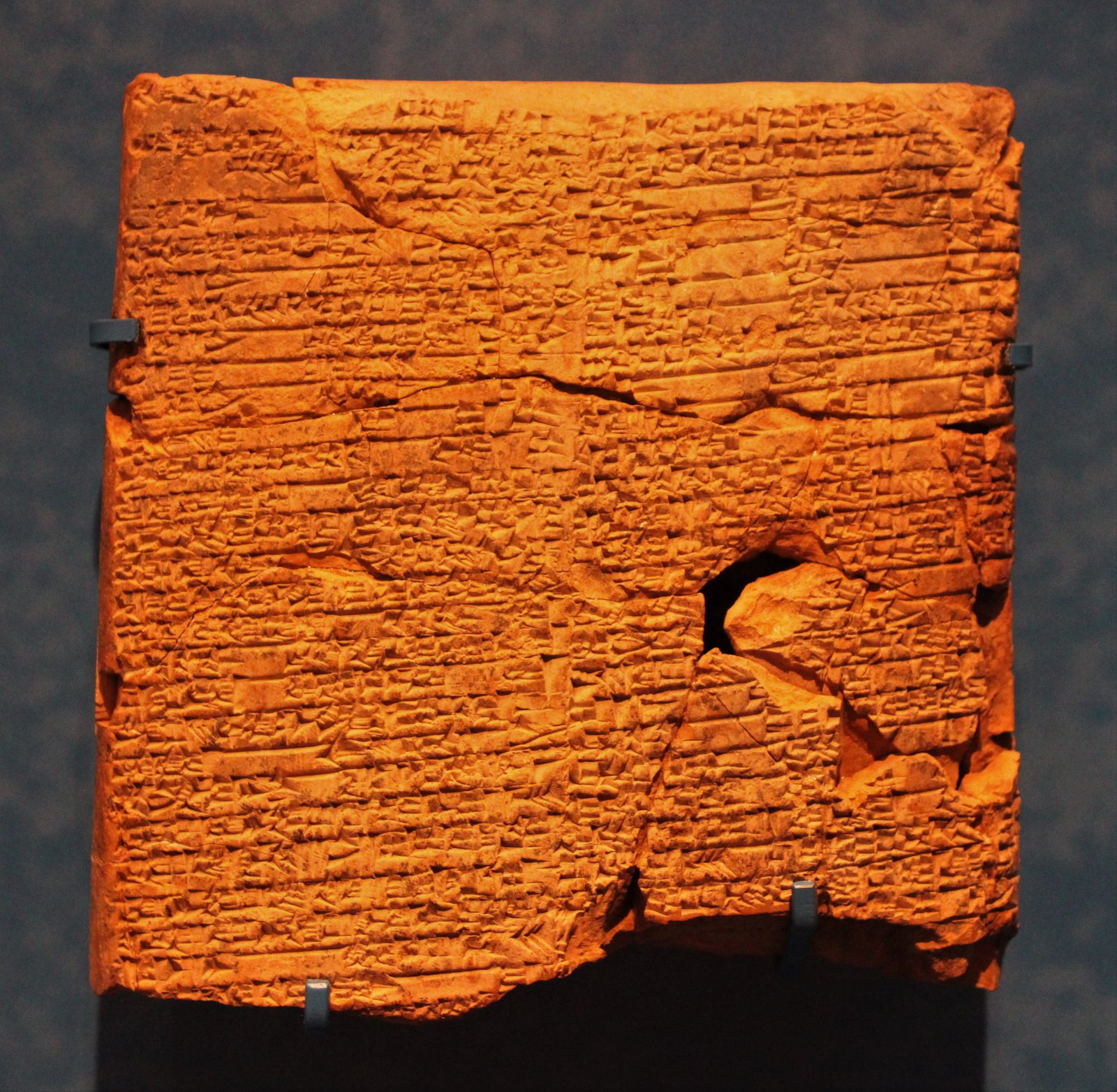
A Tablet of Gilgamesh and Huwawa from Kish
An object record bringing together its image, metadata, rights, and context.
- Timeline
- From 1900 BCE to 1600 BCE
- Region
- Mesopotamia
A clay tablet from Kish preserves an Old Babylonian copy of the Sumerian cedar-forest story. Its columns retain Utu’s seven helpers, Enkidu’s warning and a version of the ending in which two gods receive Huwawa’s head.
Estimated reading time: 4 min Published Last reviewed:
Share article
Photograph
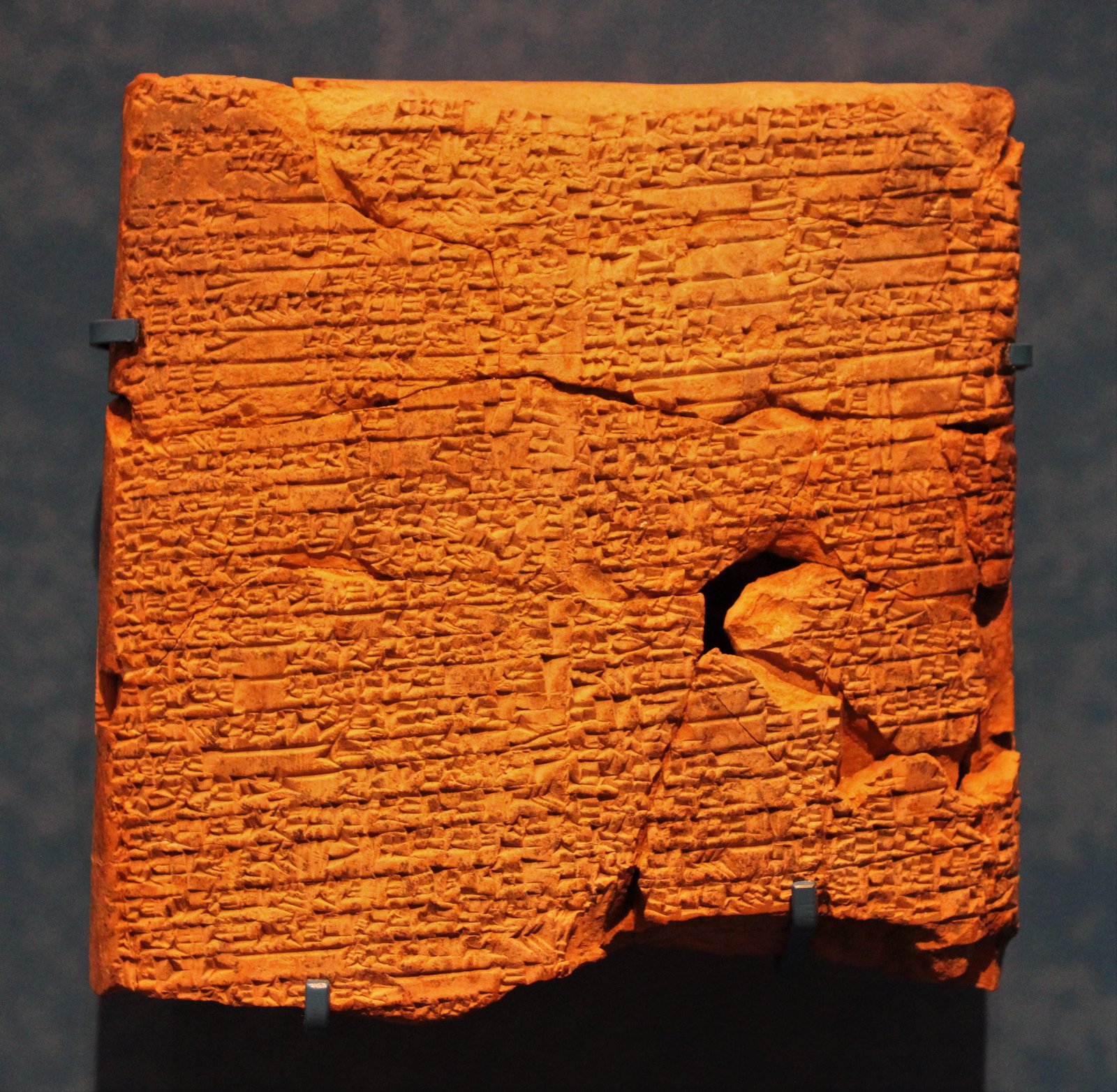
Photograph by Zunkir, Wikimedia Commons, CC BY-SA 4.0. Resized.
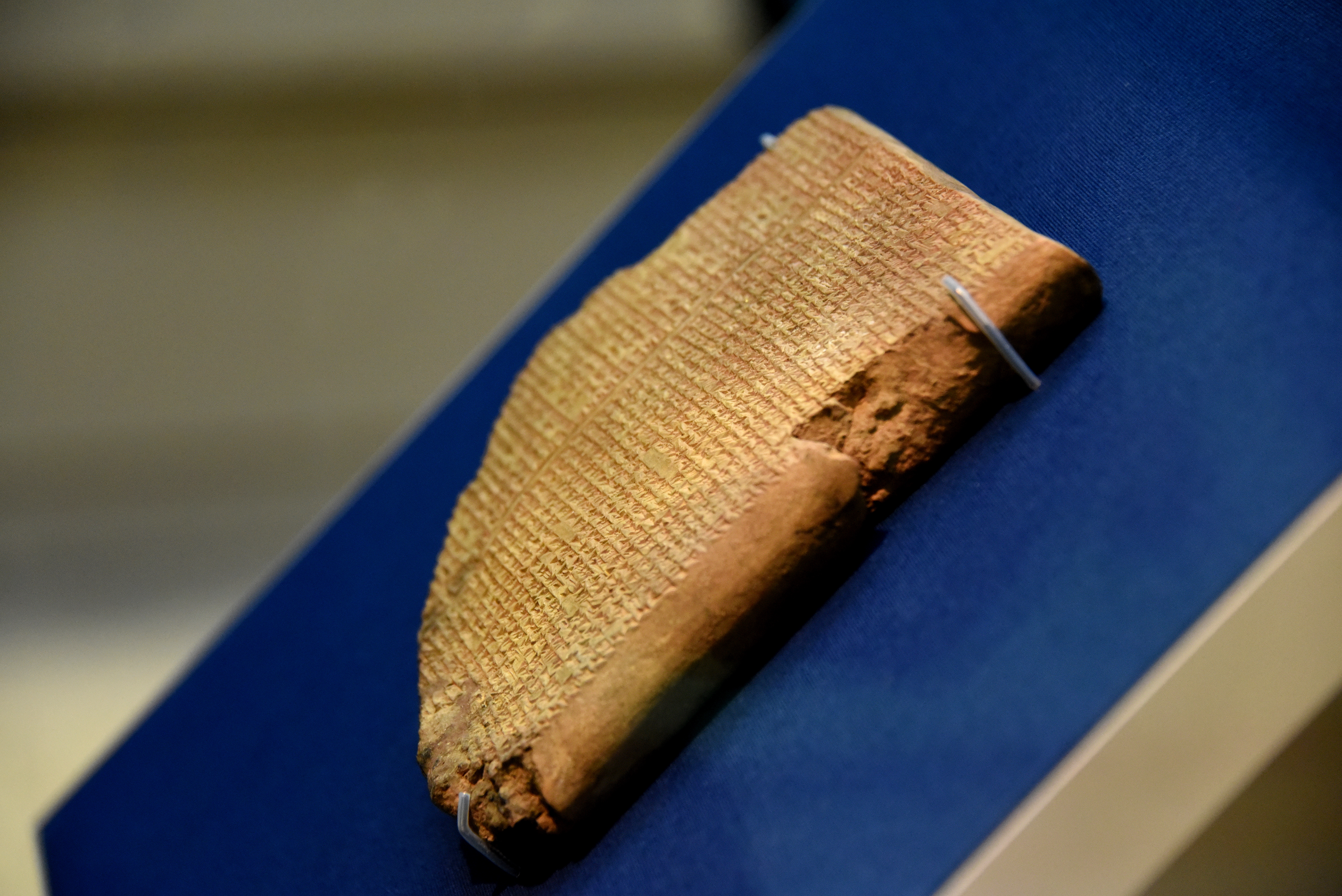
The surviving part of the clay tablet from Kish, inscribed with the Sumerian poem Gilgamesh and Huwawa. Ashmolean Museum, AN1932.155
License · Image sourceObject details
- Title
- A Tablet of Gilgamesh and Huwawa from Kish
- Timeline
- From 1900 BCE to 1600 BCE
- Region
- Mesopotamia
- Rights
- CC BY-SA
Text
Introduction
A broken clay tablet from ancient Kish preserves parts of the Sumerian poem now called Gilgamesh and Huwawa, Version A. The surviving piece is 12.5 cm high. Its cuneiformCuneiformWriting with wedge-shaped signs, developed from Mesopotamian recording traditions and used for several languages from the third millennium BCE.Glossary · Click to read the explanation runs in two columns on each face. The Ashmolean Museum, Oxford, dates the copy to about 1900–1600 BCE and holds it under the number AN1932.155. [1][2]
From the excavation to Oxford
In 1932 Stephen Langdon reported that Watelin had found several Sumerian tablets at Hursagkalamma, the part of Kish around the temple of NinlilNinlilMesopotamian goddess and consort of Enlil, associated with Nippur, Tummal, destinies and royal ritual. Identified with Sud in literary tradition and known as Mulliltu/Mullissu in Akkadian and Assyrian contexts; her genealogies and roles vary by text and period.Glossary · Click to read the explanation. His account places the find in trench C 15, north of the temple, in a layer he attributed to the time of HammurabiHammurabiKing of Babylon in Mesopotamia, reigning around 1792–1750 BCE. A celebrated legal text preserved on a stele and cuneiform copies bears his name.Glossary · Click to read the explanation. Fragments joined in Oxford formed the lower half of a large tablet. Langdon estimated that the complete tablet had been about 25 cm long. The Ashmolean attributes its acquisition to the Oxford Field Museum Expedition in 1932. The museum’s broad Old Babylonian date remains the date range for the object. [1][2][3]
Langdon also thought that another two-column fragment, VAT 6281, belonged to the same series. It was narrower, and its reported findspot at Dilbat came from a dealer. The proposed relationship concerns how the story might have been arranged across tablets. The fragments assembled in Oxford came from the Kish excavation. The modern identification of the text as Version A follows the surviving wording and its parallels in other copies. [2][3][4][5]
The journey and the two groups of seven
The upper break has taken the opening of the poem. In the first surviving column, Gilgamesh says he will enter the mountains to establish his name. The sun god Utu responds with a description of seven warriors born to one mother. The first has a lion’s paws and an eagle’s talons. The sixth is likened to a destructive flood, and lightning features in the damaged description of the seventh. The remainder of the column turns from the helpers to Gilgamesh’s call for companions in his own city. [2][4]
The second column preserves a different sort of warning. EnkiduEnkidu, Gilgamesh’s companionGilgamesh’s companion in the Babylonian epic; his death sets the king searching for life beyond mortality.Glossary · Click to read the explanation says he has seen HuwawaHumbaba, guardian of the Cedar ForestGuardian of the Cedar Forest confronted by Gilgamesh and Enkidu in the epic traditions.Glossary · Click to read the explanation, the figure known as Humbaba in AkkadianAkkadianAn ancient East Semitic language written in cuneiform from the third millennium BCE; its varieties include Babylonian and Assyrian, and it served in international diplomacy.Glossary · Click to read the explanation. A dragon’s mouth, a lion’s face and a raging flood convey what Gilgamesh is about to face. On the reverse Gilgamesh argues that two people can help each other survive. He draws on images of a three-stranded textile and the equipment of a sinking boat. The other group of seven in the poem belongs to Huwawa. These powers, variously translated as terrors or auras, figure in how Gilgamesh overcomes him. The two groups do different work in the story. [2][4][5]
An ending with Enlil and Ninlil
The last surviving column shows Gilgamesh taking pity on his captive and asking Enkidu to let him go. The appeal compares Huwawa to a captured bird that could return home and to a man who could return to his mother. Enkidu opposes the release and, after Huwawa addresses him, cuts his throat. Enkidu puts the head in a leather bag. The Kish copy names both EnlilEnlilEnlil/Ellil: a major Mesopotamian god associated with destinies, kingship, and Ekur at Nippur, already prominent in third-millennium god lists. His name’s origin and cult beginnings remain debated.Glossary · Click to read the explanation and Ninlil when it says where the head was taken. The main text of the Oxford composite names Enlil at this point and lists the wording with both gods as a manuscript variant. [2][4]
The Oxford edition combines several copies and indicates where they differ. Dietz Otto Edzard also distinguishes two Sumerian versions, A and B, whose opening words appear as different entries in ancient literary catalogues. Joshua Bowen places the Ashmolean tablet among three surviving Kish copies of Version A in his study of texts used in scribal education. This is the most extensive of the three listed there. Its wording and local spellings show how scribes at Kish copied this tale, even where a modern edition can fill a break from other tablets. [2][4][5][6]
Quick answers
What is Ashmolean AN1932.155?
It is a fragmentary Old Babylonian clay tablet bearing parts of the Sumerian poem Gilgamesh and Huwawa, Version A. [1][2]
Where was it found and where is it now?
It was excavated at Kish, in present-day IraqIraqIraq is a modern country encompassing much of ancient MesopotamiaGlossary · Click to read the explanation, and is kept at the Ashmolean Museum in Oxford. [1][2][3]
What does this copy preserve about the seven warriors?
Its first surviving column describes seven sons of one mother whom Utu gives to Gilgamesh. The first is described with a lion’s paws and an eagle’s talons. [2][4]
What is distinctive about its ending?
The Kish copy names both Enlil and Ninlil as the gods before whom Huwawa’s head was brought. The Oxford edition records this as a variant alongside copies that name Enlil alone at that point. [2][4]
References and notes
- Ashmolean Museum, Schools and Scholars, Ancient Middle East Gallery Case List Entry AN1932.155. Museum accession, clay, size, approximate date, and presentation by the Oxford Field Museum Expedition in 1932. Return to the text ↑
- Cuneiform Digital Library Initiative, CDLI Literary 000365, ex. 005 (P412444) Catalogue entry. Obverse I, 5–24 and II, 19–26. Reverse I, 3–12 and II, 4–28. Museum number, attribution to Kish and transliteration of the surviving passages. Return to the text ↑
- Stephen H. Langdon, “The Sumerian Epic of Gilgamish”, Journal of the Royal Asiatic Society 64 (4), 1932, pp. 911–948 Opening extract. Trench C 15, join of the surviving fragments in Oxford, estimate of the original length, and proposed relationship with VAT 6281. Return to the text ↑
- J. A. Black et al., “Gilgamesh and Huwawa, Version A”, Electronic Text Corpus of Sumerian Literature, Oxford, 1.8.1.5 Composite translation, lines 21–51, 96–119, 140–151 and 158–192. The seven helpers and Huwawa’s powers, analogies, and the different readings of the ending. Return to the text ↑
- Dietz Otto Edzard, Gilgames und Huwawa. Zwei Versionen der sumerischen Zedernwaldepisode nebst einer Edition von Version B, Bayerische Akademie der Wissenschaften, 1993, no. 4 Pp. 5–7. Distinction between the two Sumerian versions, separate entries in ancient literary catalogues, and the Akkadian treatment of the episode. Return to the text ↑
- Joshua A. Bowen, A Preliminary Study of the Sumerian Curricular and Lamentational Texts from the Old Babylonian City of Kish, Johns Hopkins University, 2017 Pp. 85–86, table 3.13, and chapter 5. Copies of Version A at Kish, the advanced scribal curriculum, and spelling variation in AN1932.155 (PSK 435). Return to the text ↑
Archive records may be reviewed and refined as better evidence or sources become available. Suggest a correction
Suggest a correction · Suggest a source for this record
Cite this record
IL Archive, «A Tablet of Gilgamesh and Huwawa from Kish», https://ilarchive.com/en/artifacts/gilgamesh-huwawa-tablet-an1932-155
Continue reading