Artifact
Meli-Shipak’s Land Grant to Marduk-apla-iddina (Louvre Sb 22)
An object record bringing together its image, metadata, rights, and context.
- Timeline
- From 1186 BCE to 1172 BCE
- Region
- Mesopotamia
A Kassite king recorded a gift of farmland to his son on a limestone monument. Its cuneiform names canals, exemptions and the officials bound by the grant. Carved emblems invoke the protection of the gods.
Estimated reading time: 4 min Published Last reviewed:
Share article
Photograph
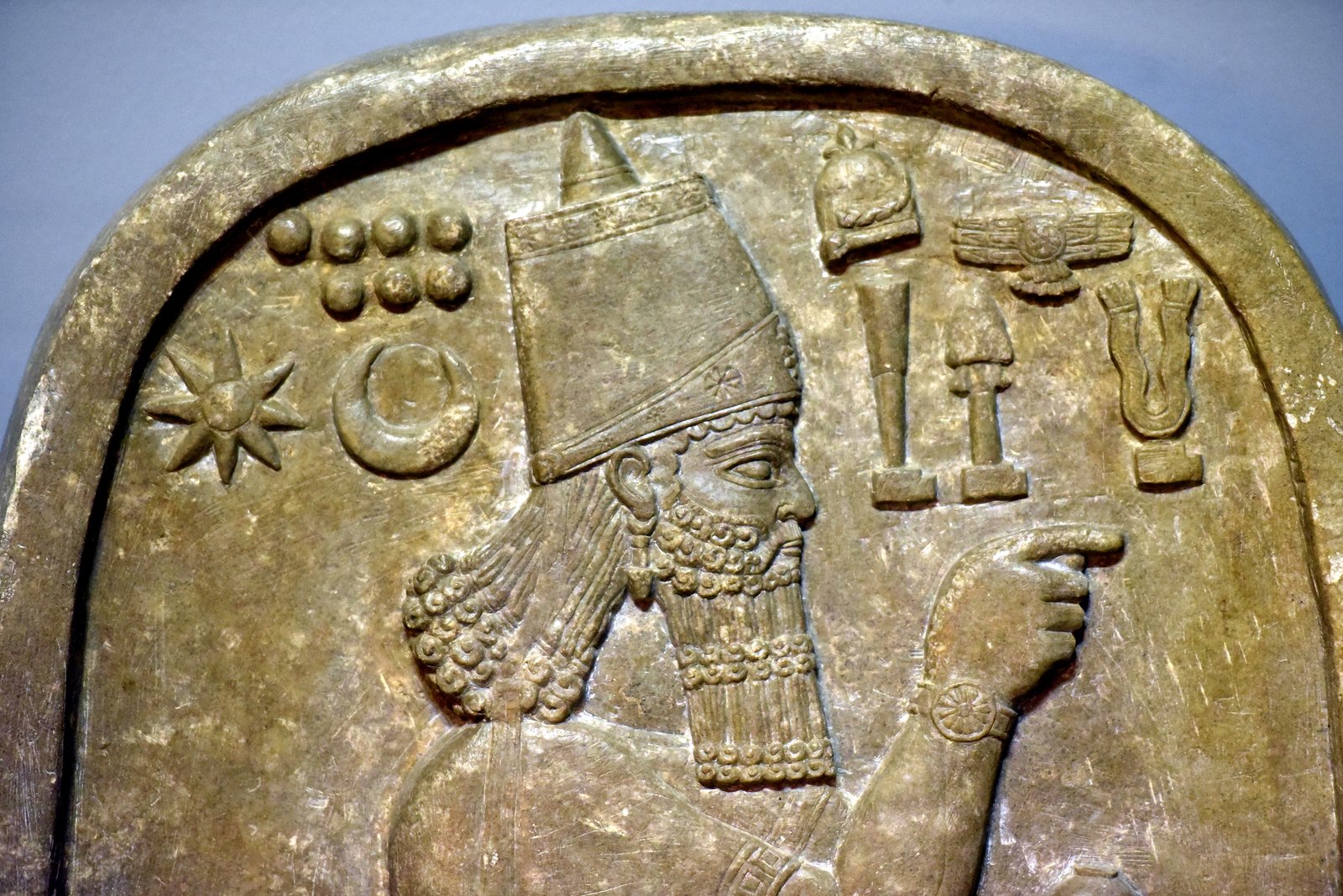
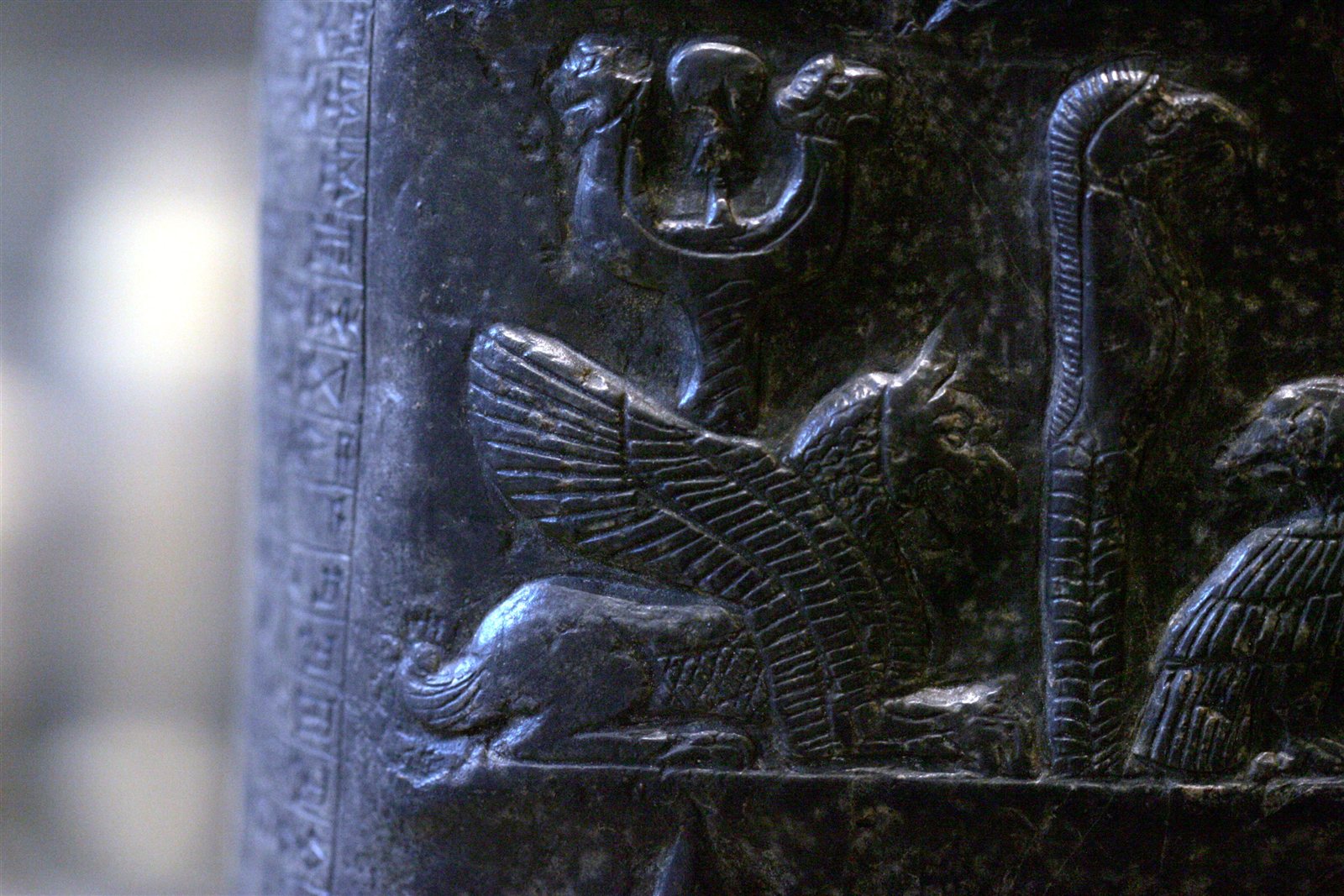
Photograph by Rama, via Wikimedia Commons. Image resized. CC BY-SA 2.0 France.
Detail of Meli-Shipak’s land-grant monument, Louvre Sb 22, with a winged figure in relief beside the cuneiform inscription
License · Image sourceObject details
- Title
- Meli-Shipak’s Land Grant to Marduk-apla-iddina (Louvre Sb 22)
- Timeline
- From 1186 BCE to 1172 BCE
- Region
- Mesopotamia
- Rights
- CC BY-SA
Text
Introduction
The limestone monument catalogued as Louvre Sb 22 records a grant of farmland by the Kassite king Meli-Shipak to his son Marduk-apla-iddina, who succeeded him. Alongside the measurements and boundaries, the text sets out exemptions from public duties and calls on the gods to protect the grant. The carvings give visual form to part of that appeal. The object came from Babylonia, but excavators recovered it on the acropolis at SusaSusa, ancient ShushSusa is an archaeological city at Shush in southwestern present-day IranGlossary · Click to read the explanation. The two places belong to different chapters in the history of the stone. [1][2][3]
The stone and its journey
The Louvre catalogues the object as Sb 22, also AS 6068. It measures 65 cm high, 30 cm wide and 19 cm thick. The surface bears low relief and an AkkadianAkkadianAn ancient East Semitic language written in cuneiform from the third millennium BCE; its varieties include Babylonian and Assyrian, and it served in international diplomacy.Glossary · Click to read the explanation inscription in cuneiformCuneiformWriting with wedge-shaped signs, developed from Mesopotamian recording traditions and used for several languages from the third millennium BCE.Glossary · Click to read the explanation. The museum dates the grant to the reign of Meli-Shipak, about 1186–1172 BCE. The date refers to the reign. The surviving stone does not provide a more precise date for the grant in the catalogue or edition used here. [1][2]
The Louvre records the find in 1898, in trench 7α on the acropolis at Susa, during Jacques de Morgan’s excavations. The museum identifies it as an object brought from Babylonia to Susa as spoils of war in the 12th century BCE. The findspot documents where the monument ended up. The grant itself describes land in Babylonia, and the catalogue does not identify the place where the stone was first displayed. [1][2]
How the grant describes the land
The inscription begins with a measurement expressed as a quantity of seed. It gives a sowing ratio and specifies the measuring standard. It then lists land associated with named settlements and households. The first column describes the parcel with neighbouring places, cultivated land and watercourses. It also names officials whom the king sent to survey it. These details locate the grant within a working landscape of farms and canals. [2]
The second column protects the land against seizure or reduction and sets out exemptions from specific duties. Among them are work at the sluice of the Royal Canal, dredging and reed clearance. The text also restricts taking away people attached to the estate or requisitioning supplies and equipment such as barley, carts and draft teams. Possession of the land and relief from these obligations were both part of what the king granted. The list gives the reader a sense of the work normally required to maintain a canal and the resources an official might call upon. [2][3]
Keeping the grant in force
Part of the inscription speaks in the king’s own voice. He sets his treatment of his predecessors’ grants as an example for a future ruler and asks that the land and exemptions he has given be respected in turn. The closing columns anticipate acts against the document as well as against the estate. A later official might enclose the stone in a wall, erase the name or break it. The text calls down curses on anyone who interferes in these ways. [2][3]
Monuments of this type are commonly called kudurrus. The text itself uses the Akkadian term narû for the stele. Although scholars long called such objects boundary stones, the Metropolitan Museum describes the genre as monumental records of legal transactions, set up in temples. Susanne Paulus connects that setting with the appeal to divine sanction, especially when a future threat could come from a powerful official or a king. This explains the purpose of many such monuments without fixing the original location of Sb 22. [2][3][4]
Reading the images with the words
Among the figures in relief the Louvre identifies a star with IshtarInanna / IshtarA prominent Mesopotamian goddess whose Sumerian name Inanna became associated with Akkadian Ishtar across diverse traditions. She was associated with desire, war, royal authority and Venus, while local forms and genealogies varied among texts.Glossary · Click to read the explanation, a crescent with SinNanna / Su’en / SinMesopotamian moon god known as Nanna, Su’en and Sîn/Sin. Worshipped especially at Ur and Harran, he is associated with the crescent and lunar cycle; names and myths have different histories.Glossary · Click to read the explanation and a solar disk with ShamashShamashMesopotamian god of the sun and justice, shown before Hammurabi on an eighteenth-century BCE stele preserved in the Louvre.Glossary · Click to read the explanation. It also identifies a spear with MardukMardukBabylon’s leading god, worshipped at Esagil and elevated in the Akkadian Enūma eliš. His symbols include a spade and mušḫuššu dragon. His earliest origins remain obscure; Nibiru is no evidence of a planetary homeland.Glossary · Click to read the explanation, a dog with Gula and a lamp with Nusku. The photograph shows a reclining winged figure and other relief motifs beside the incised script. The same stone carries both the divine emblems and the words of the grant. [1]
The closing curses invoke gods named on the stele. The passage refers to visible weapons, drawn figures and what the edition identifies as altar bases. That passage gives a reason for reading the reliefs in relation to the text. It supplies no complete list pairing every carving with a name. The named fields and canals establish what the king gave, and the closing appeal shows how he sought to preserve it after his own reign. [1][2][3]
References and notes
- Musée du Louvre, “Kudurru de Meli-Shipak,” Sb 22, AS 6068 Inventory, description and inscription, dimensions, material, chronology and findspot, and the excavation history. Return to the text ↑
- Cuneiform Digital Library Initiative, “MDP 02, 099-111 & pl. 21-24” (P498859, Louvre Sb 22) Metadata and text in translation, columns 1–2 on the survey and exemptions, columns 4–6 on protection of the grant and the monument, especially col. 6, lines 26–40. Return to the text ↑
- Susanne Paulus, “Verschenkte Städte – Königliche Landschenkungen an Götter und Menschen,” in City Administration in the Ancient Near East, Babel und Bibel 5, 2010, 191–206 P. 192 n. 6 on the king’s first-person phrasing in Sb 22 and pp. 199–200 on exemptions, threats and the use of temple display. Return to the text ↑
- Elizabeth Knott, “The Middle Babylonian / Kassite Period (ca. 1595–1155 B.C.) in Mesopotamia,” Heilbrunn Timeline of Art History, The Metropolitan Museum of Art, 2016 The final section, on the purpose and setting of kudurrus, divine symbols and the continuation of the form after Kassite rule. Return to the text ↑
Archive records may be reviewed and refined as better evidence or sources become available. Suggest a correction
Suggest a correction · Suggest a source for this record
Cite this record
IL Archive, «Meli-Shipak’s Land Grant to Marduk-apla-iddina (Louvre Sb 22)», https://ilarchive.com/en/artifacts/meli-shipak-land-grant-sb22
Continue reading