Study
From Pictures to Letters: How the Alphabet Was Born
An extended study of a topic, with evidence and references.
- Timeline
- From 1850 BCE to 400 CE
- Region
- The Near East and the Mediterranean
Most of the world's alphabets descend from a Bronze Age idea: one simple sign for each consonant. The chain runs from Sinai and Phoenicia to Greek, Aramaic, Hebrew and Arabic. Some links are firm, others still debated.
Estimated reading time: 6 min Published Last reviewed:
Share article
Video
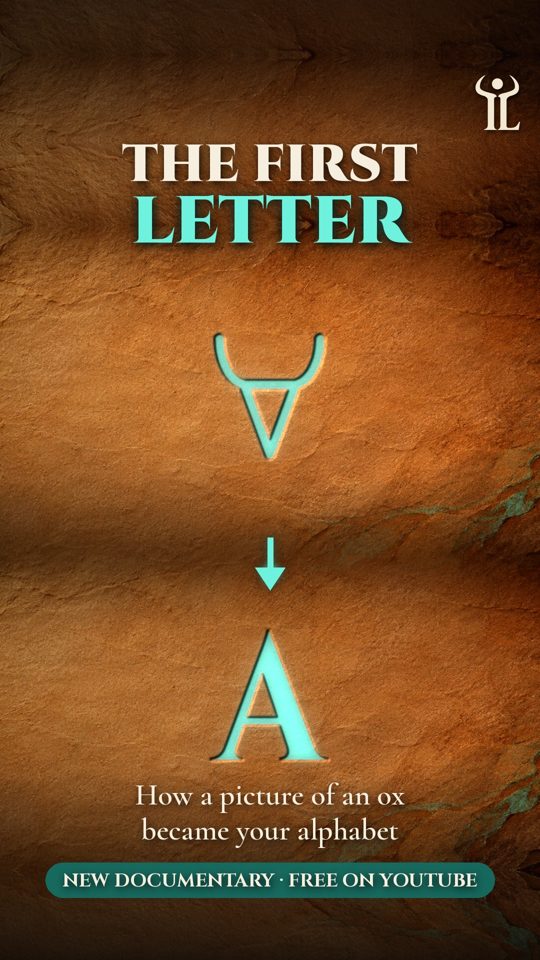
The First Letter: How a Picture of an Ox Became Your Alphabet
The letter A began as a picture: the head of an ox, scratched into the rock of the Sinai desert perhaps close to four thousand years ago. Along the way we say plainly which answers are firm and which are still argued: when the alphabet was born, and whether miners or scribes made it. Some scenes are AI-generated illustrations.
The YouTube player loads only when you press play. Watch on YouTube
Text
Introduction
The letters you are reading now have a long family tree. Its trunk is a surprisingly simple idea: instead of hundreds of signs for words or syllables, use a few dozen signs, one for each basic sound. This study follows that idea from a few scratched inscriptions of the second millennium BCE to the scripts used today. For each step it says what the evidence shows and where scholars still disagree, including the date of the very first step.
Why an alphabet was a new idea
Early writing systems, such as Mesopotamian cuneiformCuneiformWriting with wedge-shaped signs, developed from Mesopotamian recording traditions and used for several languages from the third millennium BCE.Glossary · Click to read the explanation and Egyptian hieroglyphs, needed hundreds of signs. A scribe trained for years. Egyptian writing did include signs for single consonants, but it never used them alone: they stayed one tool among many. Scholars think those single-consonant signs may have helped inspire the first alphabet, but the connection is an inference, not a proved fact. [1][2]
An alphabet in the broad sense is a script with one sign per sound. The earliest ones wrote only consonants. Readers supplied the vowels from their knowledge of the language, as English readers can read "bldg" as "building". Scripts of this kind are often called abjads. Some linguists doubt that abjads and "true" alphabets should be sharply separated. [2]
Step 1: the Sinai and Wadi el-Hol inscriptions
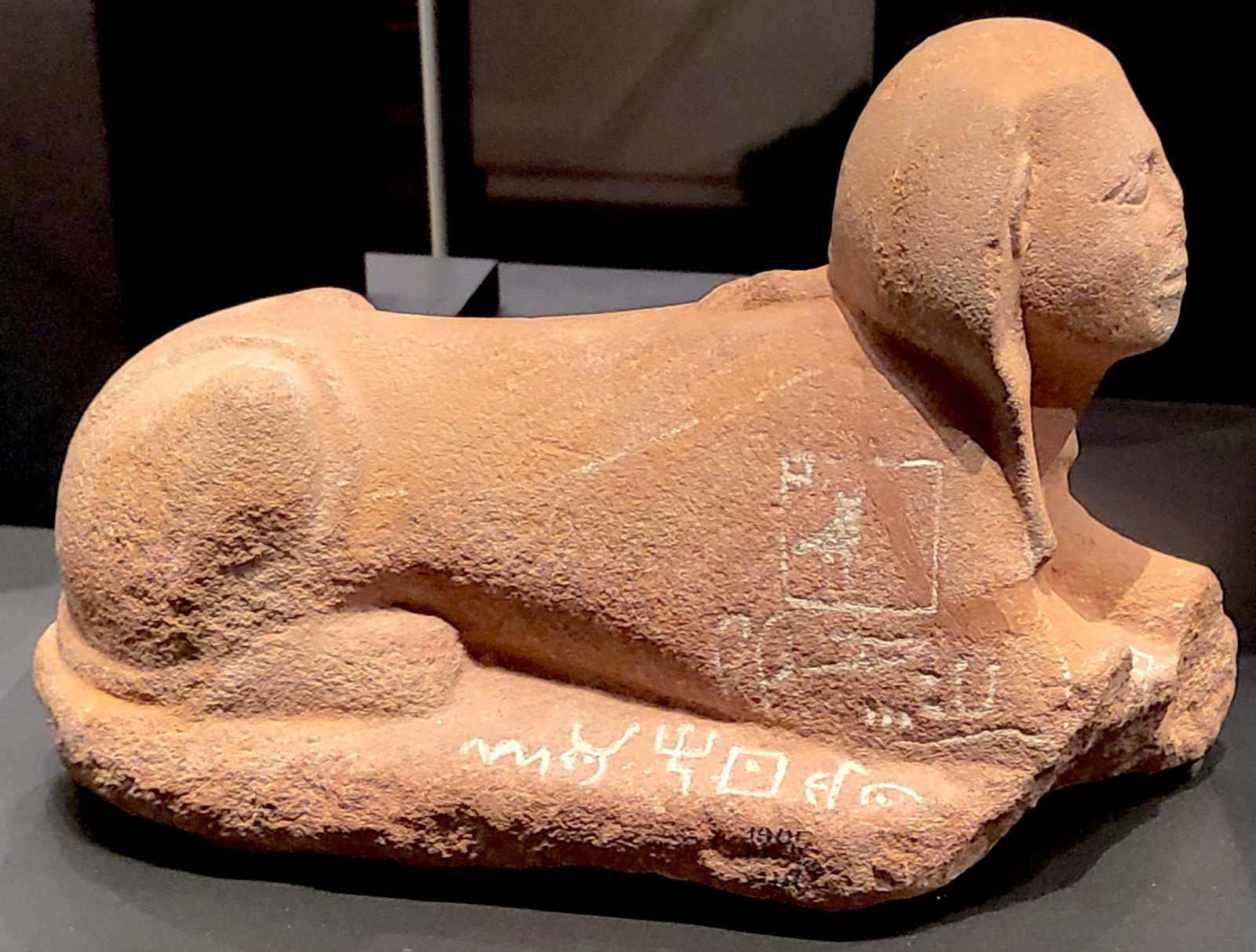
The oldest known traces are short inscriptions at Serabit el-Khadim in the SinaiSinai: peninsula and biblical mountainSinai is a peninsula in eastern Egypt; in the Torah the name also denotes the mountain of revelation to MosesGlossary · Click to read the explanation peninsula and at Wadi el-Hol in Egypt's desert west of Thebes. Their signs look like hieroglyphs but are used differently. They are read as consonants, and the language is probably West Semitic, the family of HebrewHebrewA Northwest Semitic language of the Canaanite group, encompassing Iron Age epigraphy, Biblical, Rabbinic, medieval and Modern Hebrew; its scripts and pronunciations changed over time.Glossary · Click to read the explanation, Phoenician and Aramaic. [1][2] A separate entry on this site, Serabit el-Khadim and Wadi el-Hol: The Earliest Alphabetic Inscriptions, describes the objects, including the small sphinx now in the British Museum.
How did the signs get their sound values? The usual explanation is acrophony, "first sound": a picture stands for the first sound of the word for the thing pictured. A house, in Semitic bayt, gives "b". An ox, ʾalp, gives a glottal stop. Water, mem, gives "m". This explanation is described as conjectured, because it is reconstructed from later letter names. [1][2]
The early inscriptions are difficult to date precisely. A date around the end of the nineteenth or the beginning of the eighteenth century BCE has been proposed for Wadi el-Hol, and specialists disagree on the dates of the Serabit el-Khadim texts. The labels Proto-Sinaitic and Proto-Canaanite are used for early alphabetic material. The findspots and the dates of surviving inscriptions leave the place of invention open. At Tel Lachish, an inscribed potsherd came from a deposit dated by associated barley grains to around the middle of the fifteenth century BCE. It anchors the evidence for early alphabetic writing in the southern LevantThe LevantThe Levant is a regional name for lands along the eastern MediterraneanGlossary · Click to read the explanation. [8]
A parallel experiment: Ugarit
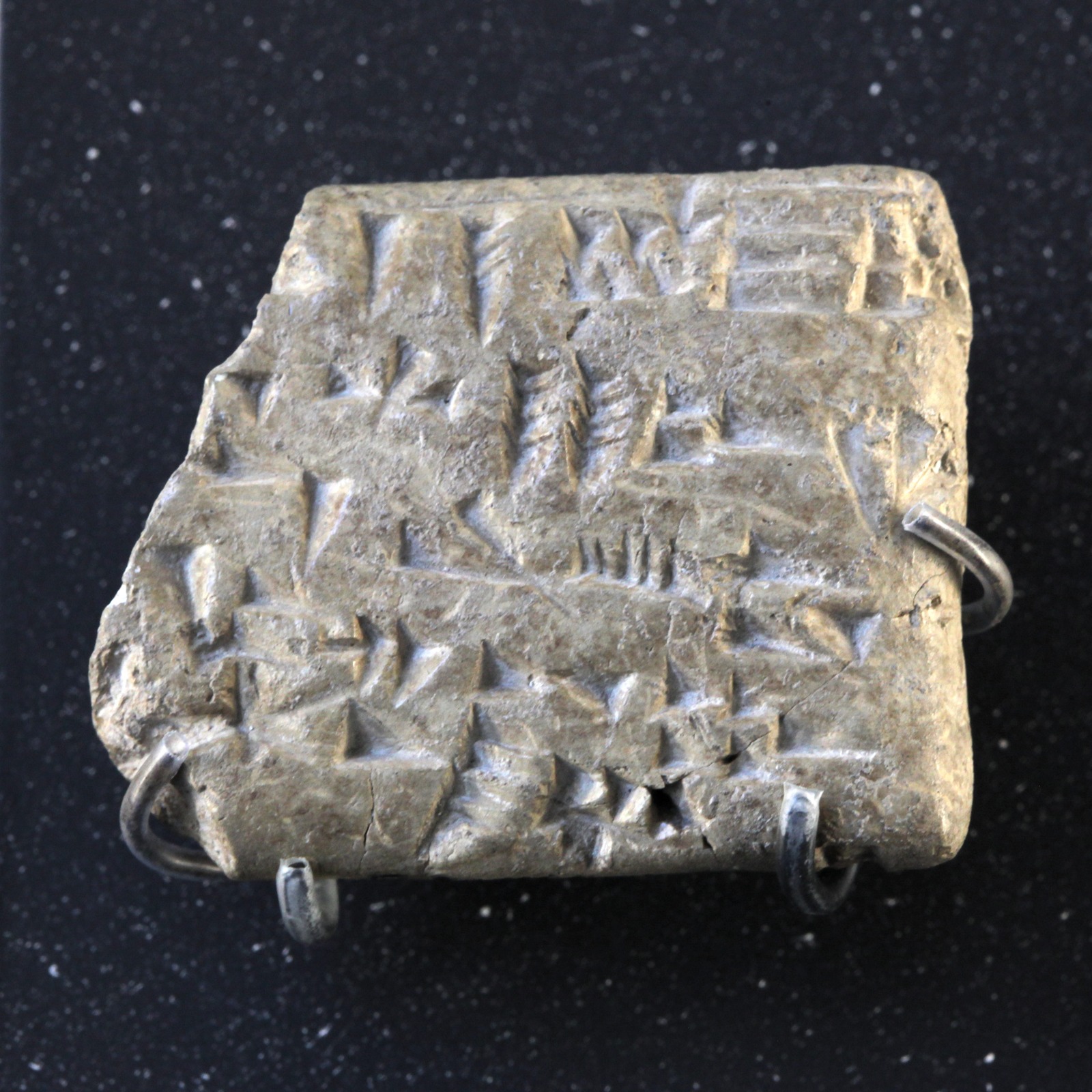
At UgaritUgaritAncient city and kingdom at Ras Shamra on the Syrian coast, flourishing between the fourteenth and early twelfth centuries BCE and preserving multilingual archives.Glossary · Click to read the explanation on the Syrian coast, scribes wrote the Ugaritic alphabetUgaritic alphabetAlphabetic cuneiform system of Late Bronze Age Ugarit, using thirty chiefly consonantal written signs, distinct from Akkadian syllabic cuneiform.Glossary · Click to read the explanation in wedge-shaped signs on clay in the fourteenth and thirteenth centuries BCE. The Ras Shamra tablet RS 12.033 presents the long alphabet in the order that begins with aleph, bet and gimel. Another tablet from the same site, RS 88.2215, follows a different order known as Halaḥam. Both orders are attested in alphabetic cuneiform at Ugarit. [9][10][11]
Step 2: the Phoenician alphabet
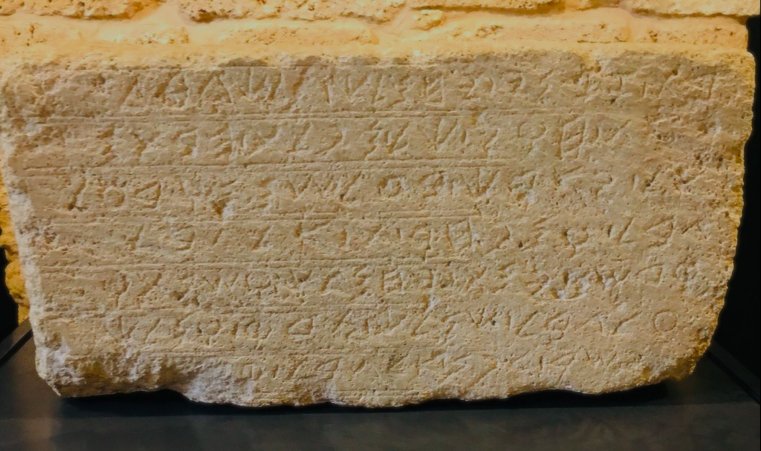
The PhoenicianPhoeniciansCommunities of Levantine coastal cities known for Mediterranean contact during the first millennium BCE.Glossary · Click to read the explanation alphabet was used in Byblos, TyreTyreTyre is a city on the coast of present-day southern Lebanon and an important ancient Phoenician centerGlossary · Click to read the explanation, Sidon and other coastal cities. It has 22 consonant letters and is written from right to left. [12] The names aleph and bet are related to words for ‘ox’ and ‘house’. [3]
The date of the earliest Phoenician writing depends on the inscriptions considered. The Mnamon catalogue includes short texts dated to the twelfth and eleventh centuries BCE. At Byblos, the Ahiram inscription provides an early example of the first millennium BCE. [12][13]
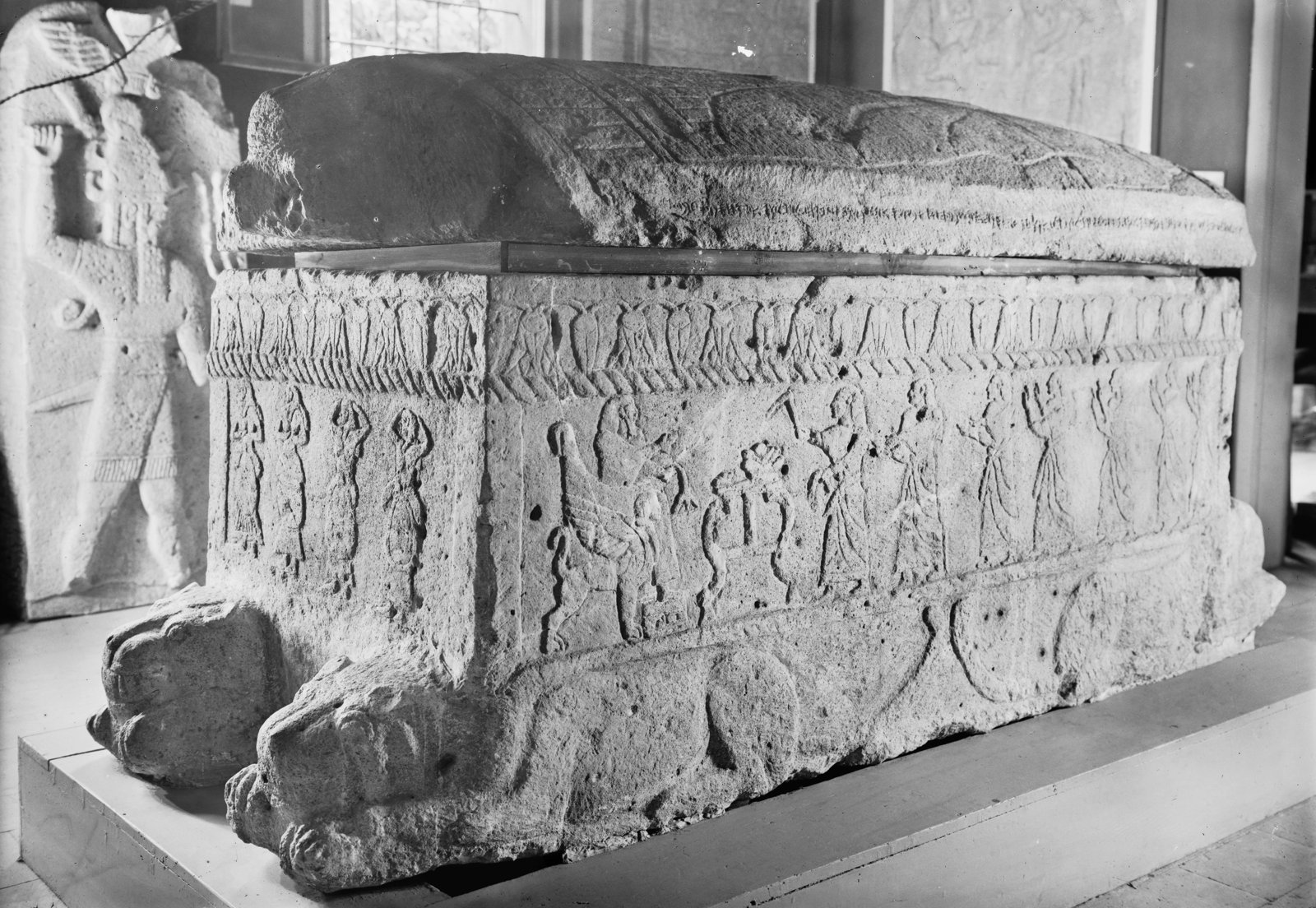
The Phoenician inscription on Ahiram’s sarcophagus was discovered at Byblos in 1923. It starts on the rim at a short end and continues around the corner along the edge of the lid. The inscription says that Ittobaal made the coffin for his father Ahiram. It warns that uncovering it will bring the loss of the offender’s sceptre and throne and the flight of peace from Byblos. [13]
The DEAPS edition dates the Phoenician lettering to about 1000–975 BCE on paleographic grounds. The archaeological context of the sarcophagus has also been dated to the thirteenth century BCE by John C. L. Gibson. Martin proposed that marks on the stone are traces of older pseudo-hieroglyphic writing. [13]
Step 3: Greek, and written vowels
The Greek alphabet was adapted from a Phoenician model. Trade brought Greek and Phoenician speakers into contact, and scholars debate where and when the adaptation took place. [9] Herodotus says that the Phoenicians who came with Cadmus brought writing to Greece, and that he saw inscriptions he called Cadmeian on tripods in the sanctuary of ApolloApolloGod of music and prophecy in Greek traditions, also participating in the Iliad’s events.Glossary · Click to read the explanation at Thebes. [14]
The Dipylon inscription and the cup of Nestor are among the early surviving Greek inscriptions from the eighth century BCE. They show that the alphabet was in use by then. Willemijn Waal argues that the adaptation may have taken place considerably earlier than the surviving finds indicate. [9]
Greek scribes adapted some Semitic consonant signs to write vowels. For example, the sign for the glottal stop became alpha, used for a. The Phoenician sign waw is traditionally linked to two Greek letters, digamma for the consonant w and upsilon for a vowel. The date and details of that development remain debated. [9][15]
Step 4: Aramaic, Hebrew and Arabic
Aramaic took the consonant script in another direction. It became an administrative script for several empires and the ancestor of many scripts of Asia. [2] An Aramaic writing tradition also gave rise to the square script used for Hebrew. [16]
The Nabataean kingdom was annexed to the Roman Empire in 106 CE. [17] Its Aramaic script continued to develop. Al-Jallad and Sidky describe intermediate Nabataeo-Arabic forms between the third and fifth centuries CE. They identify inscriptions from the late fifth century around Ḥimā, north of Najran, as the earliest dated examples with a full range of Arabic letter forms. [18]
Step 5: Latin
Greek settlers brought a western form of the Greek alphabet to Italy. The Etruscans adapted the form used at settlements such as Pithekoussai and Cumae. The Latin alphabet developed through this Etruscan stage. [19][20]
What we can and cannot say
- Most alphabets in use today, Latin, Greek, Hebrew, Arabic and Cyrillic among them, are related by descent from one West Semitic tradition. [2][3]
- The first step is a consonant script of the second millennium BCE, linked in some way to Egyptian writing. Its exact date and its inventors are debated. [1][2]
- The Phoenician stage is real, but its early dates rest on very few inscriptions. [3][4]
- The Greeks added vowels, and this is a documented change. [2][5]
- Letter-shape tables in books are idealised; real handwriting varied by place and period. [3]
References and notes
- Ben Haring, 'The Egyptian background of early alphabetic writing', in G. Kim & H. Kim (eds.), The Dawn of Writing Systems, National Museum of World Writing Systems, Incheon 2025, pp. 239-254 (CC BY 4.0) Read: whole chapter (Proto-Sinaitic, Wadi el-Hol, Theban Tomb 99 ostracon, Egyptian inspiration, references) Return to the text ↑
- Wikipedia, 'History of the alphabet' (secondary summary) Read first 100,000 of 114,533 characters: chain from hieroglyphs through Proto-Sinaitic and Phoenician to Greek, Aramaic, Hebrew, Arabic, Latin; Ugaritic; acrophony; vowels Return to the text ↑
- Wikipedia, 'Phoenician alphabet' (secondary summary) Read first 100,000 of 190,162 characters: 22 letters, direction, letter names, dating gap, al-Khader arrowheads, descendants Return to the text ↑
- Wikipedia, 'Ahiram sarcophagus' (secondary summary) Page read: discovery by Montet 1923, tomb V, inscription of 38 words, curse, dating debate (13th c. BCE to c. 850 BCE or later) Return to the text ↑
- Wikipedia, 'Greek alphabet' (secondary summary) Read first 100,000 of 225,594 characters: origin from Phoenician letters, date range, vowel reassignment, earliest inscriptions c. 740-730 BCE Return to the text ↑
- Wikipedia, 'Nabataean alphabet' (secondary summary) Page read: descent from Aramaic, dates, cursive form developing into Arabic from the 4th century CE Return to the text ↑
- Herodotus, Histories 5.58-59 (Rawlinson translation, Wikisource) Passage on Cadmus, the Phoenicians' letters and the Cadmeian characters at Thebes, read through a page summary of the translation, not the Greek text Return to the text ↑
- Felix Höflmayer, Haggai Misgav, Lyndelle Webster and Katharina Streit, “Early Alphabetic Writing in the Ancient Near East: The ‘Missing Link’ from Tel Lachish,” Antiquity 95, no. 381 (2021), 705–719. Introduction on Wadi el-Hol and Serabit el-Khadim, find context, radiocarbon model and figs. 5–6. Return to the text ↑
- Willemijn Waal, “On the ‘Phoenician Letters’: The Case for an Early Transmission of the Greek Alphabet from an Archaeological, Epigraphic and Linguistic Perspective,” Aegean Studies 1 (2018), 83–125. P. 85, the letter orders at Ugarit; pp. 98–99, Greek forms and note 31; early Greek inscriptions and the case for earlier transmission in the archaeological discussion and conclusion. Return to the text ↑
- French Ministry of Culture, Ougarit, “Un abécédaire : la tablette RS 12.033.” Description of the long alphabet on RS 12.033 and the alternative order on RS 88.2215. Return to the text ↑
- Pierre Bordreuil and Dennis Pardee, “Un abécédaire du type sud-sémitique découvert en 1988 dans les fouilles archéologiques françaises de Ras Shamra-Ougarit (information),” Comptes rendus des séances de l’Académie des Inscriptions et Belles-Lettres 139, no. 3 (1995), 855–860. Identification and edition of RS 88.2215, and comparison with the better attested long order. Return to the text ↑
- Mnamon, Scuola Normale Superiore, “Phoenician,” Writing. Description of the letter inventory, direction and the chronology of the earliest short texts. Return to the text ↑
- James D. Moore and Cody Beasley, “KAI 001,” Digital Editions of Aramaic and Phoenician Sources, Ohio State University. Object data, paleographic date, General Notes, and Gibson’s English translation. Return to the text ↑
- Herodotus, Histories, book 5, translated by A. D. Godley, Loeb Classical Library (1922), published online by LacusCurtius, University of Chicago. Chapters 58–59, Cadmus, the name of the letters and the tripods at the sanctuary of Ismenian Apollo. Return to the text ↑
- Fabrizio A. Pennacchietti, “An alternative hypothesis on the origin of the Greek alphabet,” Kervan 27 (2023). Discussion of the reassignment of signs to vowels and the usual explanation for Phoenician waw, digamma and upsilon under Thesis 3. Return to the text ↑
- Mnamon, Scuola Normale Superiore, “Hebrew,” Writing. Section on the use of Aramaic and the development of the square script. Return to the text ↑
- The Metropolitan Museum of Art, “Nabataean Kingdom and Petra.” Historical overview, the Roman annexation in 106 CE under Trajan. Return to the text ↑
- Ahmad Al-Jallad and Hythem Sidky, “A Paleo-Arabic Inscription on a Route North of Ṭāʾif,” Arabian Archaeology and Epigraphy 33, no. 1 (2022), 202–215. Introduction, development from Nabataean Aramaic, transitional forms, and dated examples from Ḥimā. Return to the text ↑
- Mnamon, Scuola Normale Superiore, “Etruscan,” Writing. The Euboean-Chalcidian alphabet in the Greek settlements of Campania and the Etruscan adoption. Return to the text ↑
- Mnamon, Scuola Normale Superiore, “Latin,” Writing. Origin of the Latin alphabet through Etruscan mediation. Return to the text ↑
Suggest a correction · Suggest a source for this record
Cite this record
IL Archive, «From Pictures to Letters: How the Alphabet Was Born», https://ilarchive.com/en/studies/origin-of-the-alphabet
Continue reading