Artifact
The Ras Shamra Abecedary: A Cuneiform Alphabet in Order (Louvre AO 19992)
An object record bringing together its image, metadata, rights, and context.
- Timeline
- From 1400 BCE to 1200 BCE
- Region
- The Levant
A small clay fragment from Ugarit lists the letters of the Ugaritic alphabet in a fixed order, the oldest kind of "ABC" we can hold in our hands. What the tablet is, how it was found, and what it can and cannot tell us.
Estimated reading time: 6 min Published Last reviewed:
Share article
Photograph
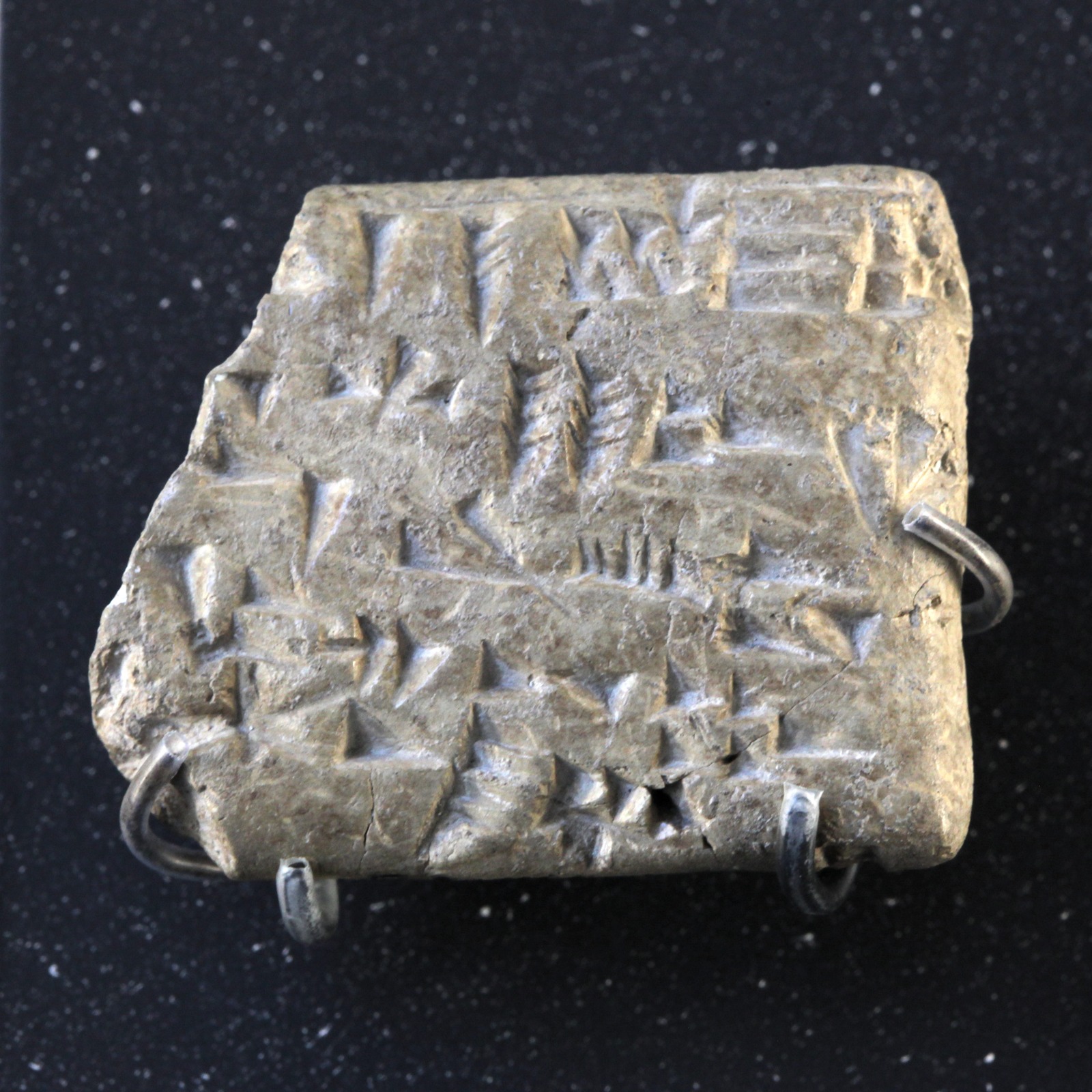
Photo: Rama, CC BY-SA 3.0 FR, via Wikimedia Commons; object: Musée du Louvre
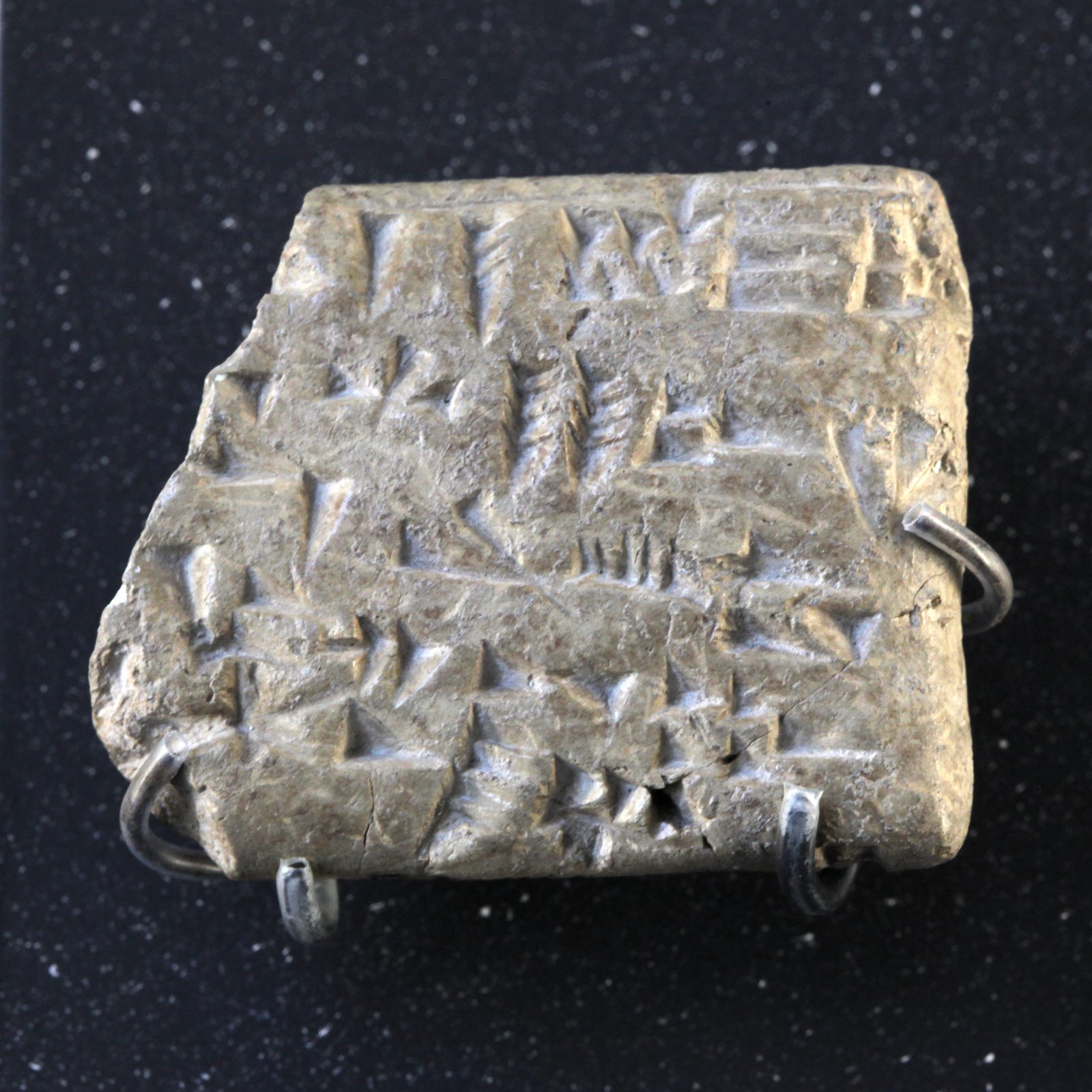
Fragment of a clay tablet with an incomplete cuneiform alphabet (abecedary) from Ras Shamra, ancient Ugarit (Louvre AO 19992 / RS 10.087): the Ugaritic letters in a fixed order, written with wedges
License · Image sourceVideo
The First Letter: How a Picture of an Ox Became Your Alphabet
The letter A began as a picture: the head of an ox, scratched into the rock of the Sinai desert perhaps close to four thousand years ago. Along the way we say plainly which answers are firm and which are still argued: when the alphabet was born, and whether miners or scribes made it. Some scenes are AI-generated illustrations.
The YouTube player loads only when you press play. Watch on YouTube
Object details
- Title
- The Ras Shamra Abecedary: A Cuneiform Alphabet in Order (Louvre AO 19992)
- Timeline
- From 1400 BCE to 1200 BCE
- Region
- The Levant
- Rights
- CC BY-SA
Text
Introduction
When a child learns the alphabet today, the letters come in a set order: A, B, C. In Arabic it is alif, ba, ta; in HebrewHebrewA Northwest Semitic language of the Canaanite group, encompassing Iron Age epigraphy, Biblical, Rabbinic, medieval and Modern Hebrew; its scripts and pronunciations changed over time.Glossary · Click to read the explanation, alef, bet, gimel. Someone once had to write that order down for the first time. At UgaritUgaritAncient city and kingdom at Ras Shamra on the Syrian coast, flourishing between the fourteenth and early twelfth centuries BCE and preserving multilingual archives.Glossary · Click to read the explanation, on the Syrian coast, scribes did exactly this on clay, and some of their lists survive. Such a list is called an abecedary.
This entry describes one of them, a fragment now in the Louvre. It keeps apart three things: what the object is, what the letter order shows, and the larger questions that scholars still argue about, such as where the alphabet came from.
The object
The fragment is kept in the Department of Near Eastern Antiquities of the Louvre under the number AO 19992. Its excavation number is RS 10.087, where RS stands for Ras Shamra, the modern name of the mound of Ugarit. It is a piece of baked clay, 6.7 cm high, 4.3 cm wide and 6 cm thick. The museum describes it as an incomplete cuneiformCuneiformWriting with wedge-shaped signs, developed from Mesopotamian recording traditions and used for several languages from the third millennium BCE.Glossary · Click to read the explanation alphabet that is missing seven letters. The language is Ugaritic and the nature of the text is "alphabet". [1]
A Wikimedia Commons description of the tablet gives its first line as the letters a, b, g, d, h, w, in that order, written from left to right. [3] The photograph on this page shows the fragment: a rough clay slab whose surface is covered in small wedge-shaped marks. At this size the wedges are hard to read, but the rows of signs can be seen.
Where and when it was found
According to the Louvre, the fragment was found in 1938 on the north-west part of the tell, the mound of Ras Shamra, by the excavation led by Claude Schaeffer. [1] It came to the Louvre through the usual division of finds between the excavators and the state, and the museum dates it to the Late Bronze AgeLate Bronze AgeAn archaeological period around 1600–1200 BCE in much of the Near East, with international diplomacy, exchange and religious diversity; its endpoints vary by region.Glossary · Click to read the explanation II, about 1400 to 1200 BCE. [1] The Commons record says the 13th century BCE. [3] Both are broad dates: the tablet itself carries no date, and the range follows the period in which the script was used. Scholars generally place the use of the Ugaritic script from about 1400 or 1300 BCE until about 1190 BCE, during the collapse at the end of the Late Bronze Age. [4]
The Louvre record lists nineteen publications, beginning with the first reports by Charles Virolleaud in 1948 and 1950. [1] The tablet is catalogued in the standard edition of the Ugaritic alphabetic texts as KTU 5.4. [1][3] Our entry on KTUKTU: Ugaritic Text ReferencesAbbreviation for a modern edition of alphabetic cuneiform texts. Its text references can be cross-identified with find numbers such as RS or RIH; they are not dates.Glossary · Click to read the explanation explains these references. In the Louvre, it is listed in the gallery on the LevantThe LevantThe Levant is a regional name for lands along the eastern MediterraneanGlossary · Click to read the explanation and Ugarit, in the case devoted to alphabetic inscriptions, although the museum warns that room information may be out of date. [1]
An alphabet written with wedges
The Ugaritic alphabetUgaritic alphabetAlphabetic cuneiform system of Late Bronze Age Ugarit, using thirty chiefly consonantal written signs, distinct from Akkadian syllabic cuneiform.Glossary · Click to read the explanation has 30 letters. It was written with a wedge-shaped stylus on clay, as cuneiformCuneiformWriting with wedge-shaped signs, developed from Mesopotamian recording traditions and used for several languages from the third millennium BCE.Glossary · Click to read the explanation was, but it works differently. Cuneiform of the Mesopotamian kind uses hundreds of signs, many of which stand for whole syllables or words. The Ugaritic script uses about thirty signs, each for a single sound, mostly consonants. [4][6] A familiar comparison is the difference between a keyboard with a key for every word and one with a key for every letter.
Three of the thirty signs stand for the glottal stop (the catch in the throat at the start of the English word "uh-oh") together with the vowels a, i and u. They were probably added at the end of the list. [4] The language written in this script is UgariticUgaritic languageAncient Semitic language preserved in Ugarit’s tablets on the Syrian coast, from the fourteenth–twelfth centuries BCE, written in a cuneiform alphabet.Glossary · Click to read the explanation, a Northwest Semitic language.
Two orders of the letters
Abecedaries matter because they preserve the order of the letters. At Ugarit two different orders are known. [4]
- The "abc" order (also written "abg"): it begins with a, b, g, d, h, w, and is the order closest to that of Phoenician, Hebrew and Arabic. It is also the ancestor, more distantly, of the order of the Greek and Latin alphabets. [4][5]
- The "hlḥm" order: named after its first four letters, h, l, ḥ, m. It is the same order known later in the south Arabian and Ethiopic scripts. [4][5]
The fragment AO 19992 begins with the first of these. [3] Its importance is that it shows, in the 14th or 13th century BCE, an order close to the one that later alphabets kept. Elsewhere in the Louvre another, smaller fragment (AO 19998 A, RS 5.274, found in 1933) is also described as bearing traces of an abecedary. [2]
An ostracon (a flake of limestone) from an Egyptian tomb near Luxor, written in hieratic, was published in 2015 by Ben Haring. It lists words in an order that matches the "hlḥm" sequence and is dated to the 15th century BCE. If the reading is right, the sequence is older than the Ugaritic tablets and was not invented at Ugarit. [5]
Why write the alphabet out?
The tablet does not say why it was made. Such lists are commonly treated as scribal exercises: students learned the signs and their order by copying them. Many royal scribes at Ugarit were trained in the script during the 14th and 13th centuries BCE. [6] This is an interpretation from where such texts are found, not a statement written on the clay.
What is debated
Two questions remain open. The first is where the Ugaritic alphabet came from. Some scholars see a model in AkkadianAkkadianAn ancient East Semitic language written in cuneiform from the third millennium BCE; its varieties include Babylonian and Assyrian, and it served in international diplomacy.Glossary · Click to read the explanation cuneiform; others argue for a link to the alphabetic writing of the SinaiSinai: peninsula and biblical mountainSinai is a peninsula in eastern Egypt; in the Torah the name also denotes the mountain of revelation to MosesGlossary · Click to read the explanation region and the Proto-Canaanite signs. [4][6] A popular article by Peter Craigie holds that the order of the Ugaritic signs follows the Proto-Canaanite order, and that the Ugaritic scribes "translated" an idea from outside into wedges. [6] That is one position, not a settled result.
The second is whether the letters had names. Direct evidence for the Ugaritic letter names is lacking; the only hints are a few partial lists that pair each letter with an Akkadian cuneiform sign. [4] Claims that the names derive from picture-signs should therefore be treated as a hypothesis.
Why it matters
A person who reads Arabic, Hebrew or Greek today uses a writing system whose basic idea, one sign for one sound in a fixed order, was already being taught on clay at Ugarit more than three thousand years ago. The Ras Shamra abecedary does not prove how the alphabet spread; it shows that the order was fixed and taught, and it keeps open, honestly, the questions that the evidence cannot yet answer.
Photograph
The image on this page is a photograph of the fragment AO 19992 in the Louvre, by Rama, published on Wikimedia Commons under the licence CC BY-SA 3.0 France. [3]
References and notes
- Musée du Louvre, Département des Antiquités orientales, collection record 'tablette (fragment)', AO 19992, RS 10.087 Whole record: numbers, size, material, findspot, discovery year 1938, date, description (incomplete abecedary missing 7 letters), bibliography (19 entries, KTU 5.4), exhibition history, location Return to the text ↑
- Musée du Louvre, collection record 'tablette (fragment)', AO 19998 A, RS 5.274 Whole record: numbers, size 30 x 40 mm, findspot, discovery 1933, 'traces of an abecedary', bibliography Return to the text ↑
- Wikimedia Commons, category 'Tablet with cuneiform abecedarium-AO 19992' and file 'Tablet with cuneiform abecedarium-AO 19992-IMG 6956.JPG' (Rama, CC BY-SA 3.0 FR) Category description (first line a b g d h w, KTU 5.4, Wikidata item) and whole file page: author, date, licence, size Return to the text ↑
- Wikipedia, 'Ugaritic alphabet' (secondary summary citing Bordreuil and Pardee 1995, Hawley 2008, Virolleaud, Cartwright and others) First 100,000 characters: 30 letters, direction, date range c. 1400/1300-1190 BCE, abc and hlhm orders, three aleph signs, letter names, origin theories; used as a pointer to scholarship Return to the text ↑
- Leiden University news, 'Earliest known alphabetic word list discovered' (2015), on the Egyptian hieratic ostracon published by Ben Haring in the Journal of Near Eastern Studies Whole news item: ostracon, 15th century BCE, hlhm order, remark on Ugarit tablets showing both orders Return to the text ↑
- Biblical Archaeology Society Library, sidebar 'A Cuneiform Alphabet at Ugarit' (after P. C. Craigie, Biblical Archaeology Review 9:5, 1983) Whole sidebar: scribal training in the 14th-13th centuries, abecedaries, order and sign names, the Serabit view Return to the text ↑
Archive records may be reviewed and refined as better evidence or sources become available. Suggest a correction
Suggest a correction · Suggest a source for this record
Cite this record
IL Archive, «The Ras Shamra Abecedary: A Cuneiform Alphabet in Order (Louvre AO 19992)», https://ilarchive.com/en/artifacts/ras-shamra-abecedary
Continue reading