Site
Karnak Temple Complex
- Names
- Ipet-isut · Ipet-sut · Karnak · Temple of Amun-Ra at Karnak
- Timeline
- 2112 BCE
- Region
- Egypt
The great temple complex of Amun at ancient Thebes, on the east bank of the Nile at modern Luxor. For some two thousand years, Egyptian kings and later rulers rebuilt and enlarged it.
Estimated reading time: 6 min Published Last reviewed:
Share article
Text
Introduction
Karnak is one of the largest religious complexes ever built. It stands on the east bank of the Nile at modern Luxor, in what was once ThebesThebes, EgyptThebes, Egyptian Waset, was an ancient Egyptian city in the area of modern Luxor, with monuments on both banks of the Nile.Glossary · Click to read the explanation. Its heart is the great temple of AmunAmunAmun is an Egyptian deity centered on Thebes and Karnak, the “hidden one,” also worshipped as Amun-Re. His names and images were targeted under Akhenaten before royal support resumed.Glossary · Click to read the explanation, often worshipped as Amun-Ra. The Egyptians called the place Ipet-sut, which the Egyptian Ministry of Tourism and Antiquities translates as "The Most Select of Places". [1][2][3]
Karnak was never built in one go. For some two thousand years, rulers added gates, halls, obelisks and chapels, and many pulled down what earlier kings had built and reused the stones. This entry follows how it grew, what it was for, and where the evidence is still debated. [1][2]
Four precincts and a road
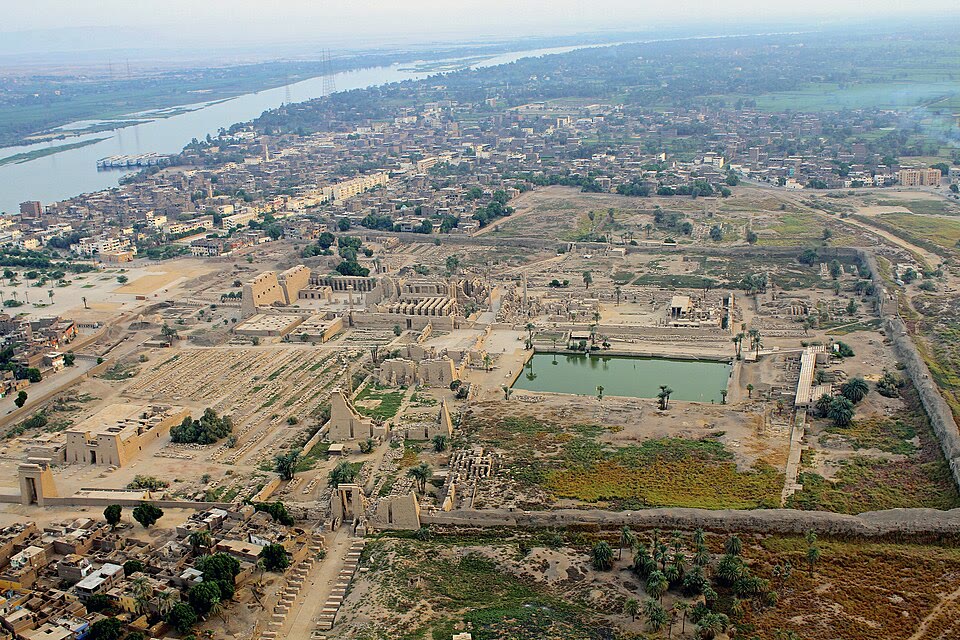
Karnak is not one temple but several walled areas, called precincts. The largest belongs to Amun. To the south lies the precinct of his wife, the goddess Mut; to the north, that of the god Montu; and to the east stood a temple of the sun disc, the Aten, built by AkhenatenAkhenatenEgyptian eighteenth-dynasty king, formerly Amenhotep IV, who reorganized royal religion around Aten and founded Akhetaten.Glossary · Click to read the explanation. Inside Amun's precinct are smaller temples for Khonsu, the son of Amun and Mut, for Opet, a hippopotamus goddess of childbirth, and for PtahPtahPtah is an Egyptian god associated with Memphis, craftsmanship and creationGlossary · Click to read the explanation. A large sacred lake, where priests purified themselves before the ritualsRitualAn organised or distinguished practice meaningful to a community; it may leave traces, but its form alone does not reveal an associated doctrine.Glossary · Click to read the explanation, still holds water. [1][2]
Most Egyptian temples run from east to west, following the path of the sun. Karnak also has a second axis that runs south, toward Luxor Temple, about two kilometres away. A road lined with sphinxes joined the two. [1][2]
How the temple grew
The first sure evidence of a temple of Amun here is a reused column dedicated by Intef II (about 2112–2063 BCE). An older temple from the age of the pyramids was once suspected, but excavators found no pottery of that age in the deep levels, so the start is now usually placed in Intef's time. Senusret I, a king of the Middle Kingdom, then built a larger limestone temple and a small shrine known today as the White Chapel. [1][2]
The great growth came in the New Kingdom (about 1550–1069 BCE), when Thebes was the religious capital of an empire. Kings now built pylons: huge gateways made of two sloping towers, like the gate of a castle. Thutmose I set up the first pair of obelisks at Karnak, tall pointed pillars cut from a single stone. Hatshepsut raised two more beyond his gate; one still stands, almost 30 metres tall and weighing over 300 tonnes. She also built the Red Chapel, a shrine for the god's sacred boat. [1][2][3]
Thutmose III added a festival temple at the eastern end, the Akh-menu, and had his "Annals", the record of his campaigns, carved near the sanctuary. Hatshepsut's name and figures were removed only late in his reign; Elaine Sullivan's survey of the temple notes that most of his rebuilding came earlier and was not driven by hostility to her. [1][2]
Amenhotep III built the third pylon and filled its foundations with older shrines he had taken down, among them the White Chapel and blocks of the Red Chapel. Like a time capsule, the fill kept them safe until modern excavators recovered them. [2]
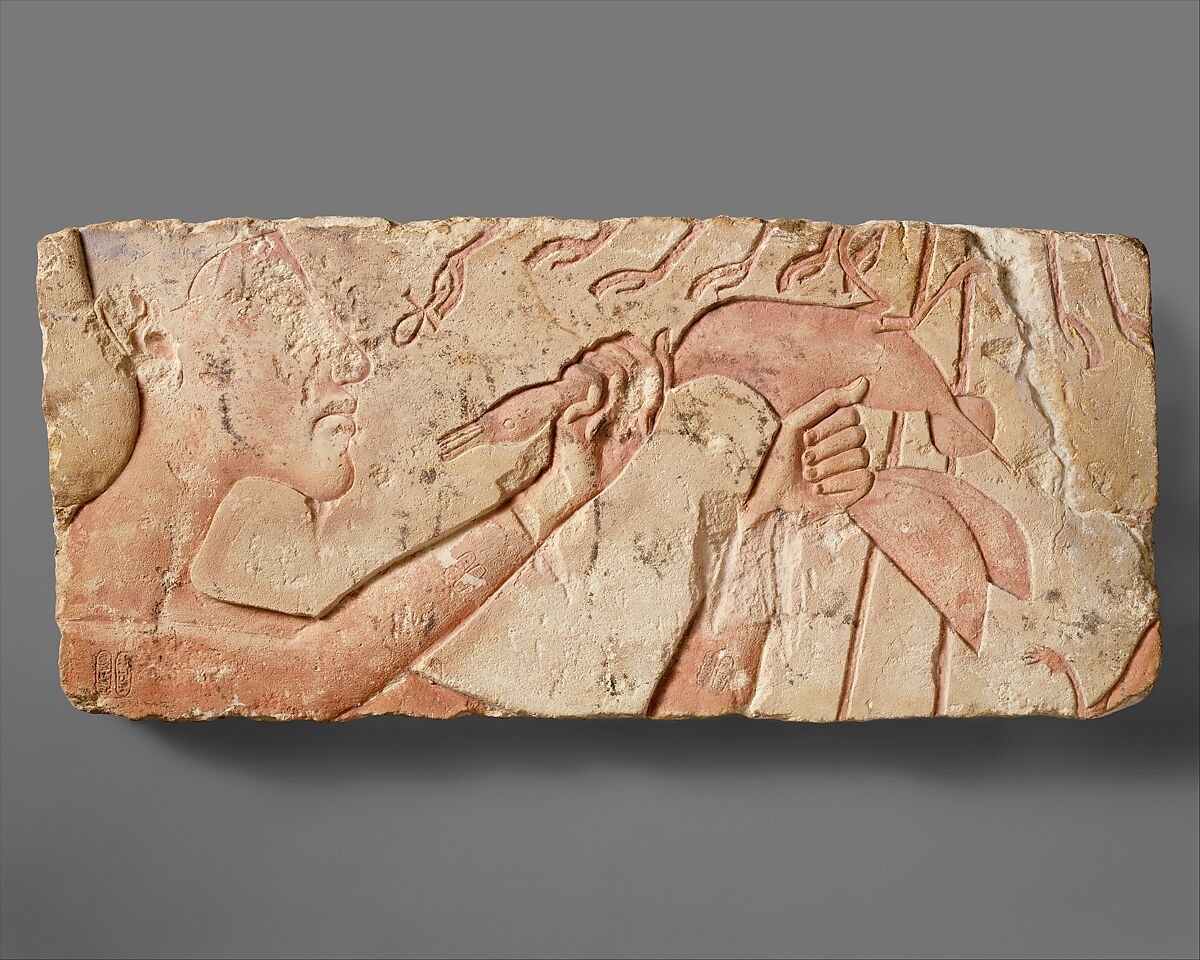
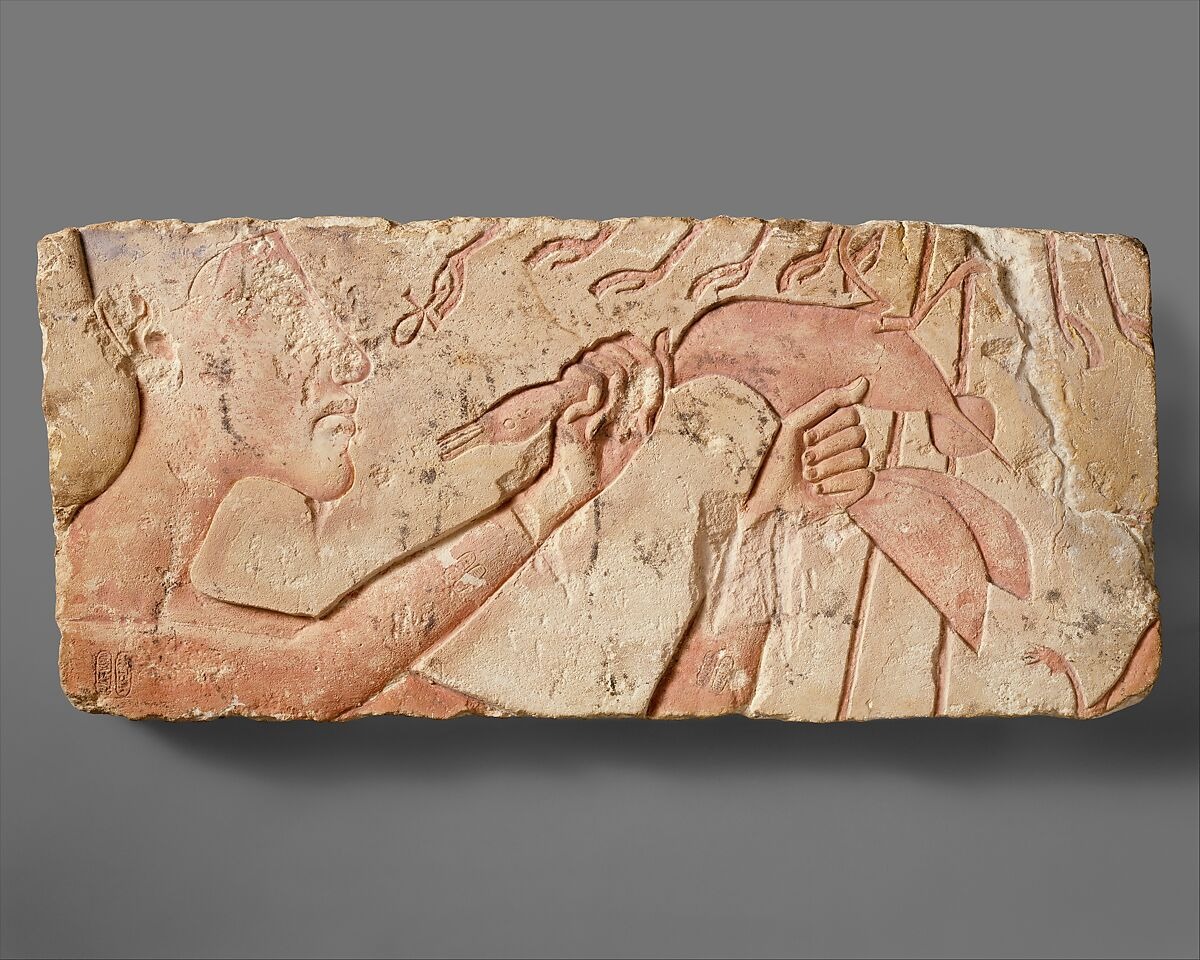
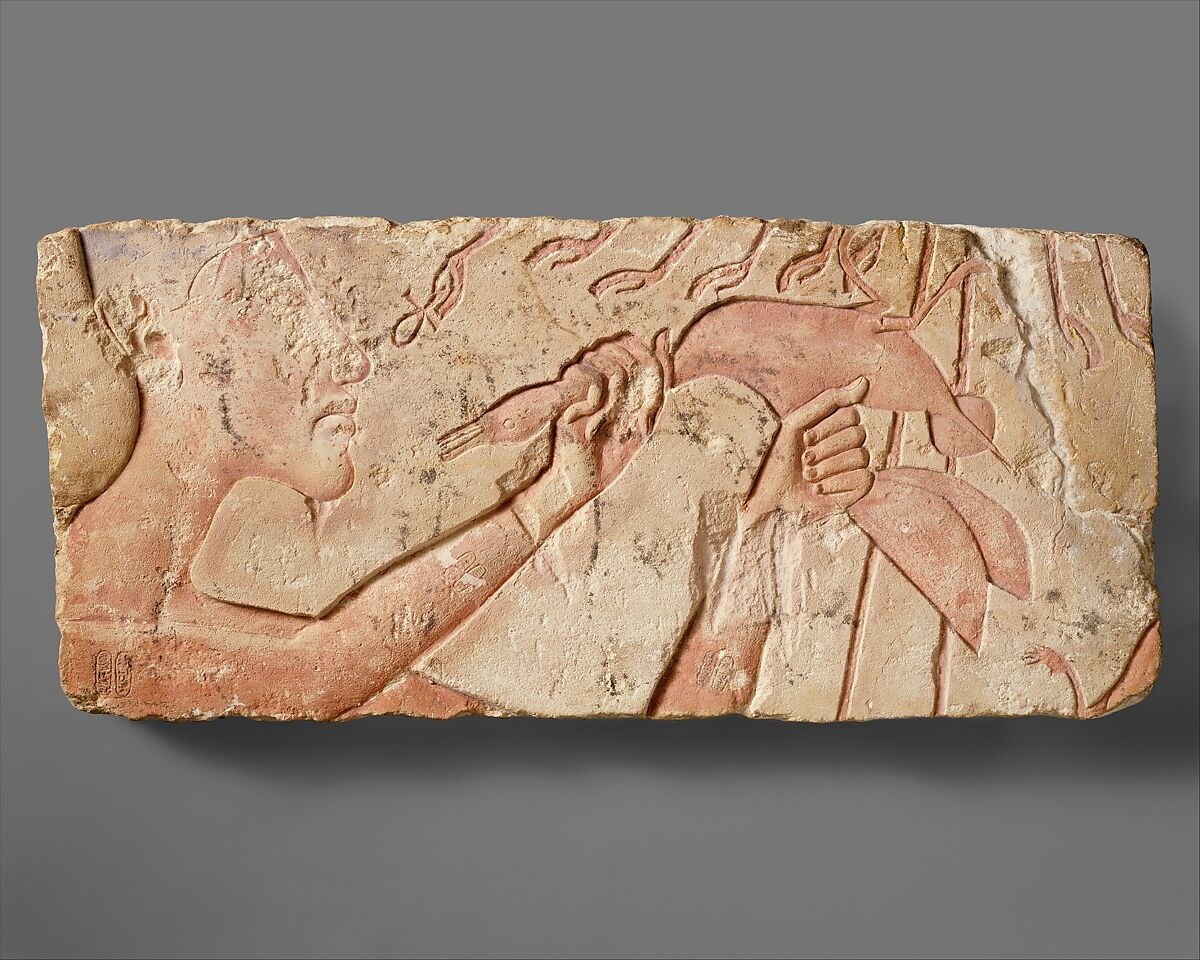
Akhenaten first built temples to the Aten east of Karnak, then had Amun's name and image hacked out across Egypt, and the temple was closed. TutankhamunTutankhamunLate Eighteenth-Dynasty Egyptian king, originally Tutankhaten, later Tutankhamun as official patronage of Amun resumed. Famous for tomb KV62; aspects of his parentage and death are debated.Glossary · Click to read the explanation reopened the temples, and Horemheb pulled down Akhenaten's buildings and used their blocks to fill his own pylons. [2]
The Great Hypostyle Hall
"Hypostyle" means a hall whose roof rests on columns. Karnak's hall has 134 of them. The twelve in the central aisle rise about 21 metres, and the rest about 15 metres. The hall covers some 5,000 square metres. [1][3]
Who began it is debated. The Ministry says Amenhotep III may have started it, with most of the building and all of the decoration under Seti I and his son Ramesses II. Peter Brand, studying the oldest inscriptions high in the hall, has argued that Seti I built it. [1][2]
On the outer north wall, Seti I's war reliefs show campaigns in Canaan, Lebanon and Syria, including an attack on Kadesh and a battle with the HittitesHittitesAncient people and kingdom of Anatolia, dominating much of Anatolia and northern Syria around 1650–1200 BCE.Glossary · Click to read the explanation, and a war against the Libyans. In every scene the king alone defeats the enemy; the Egyptian army is not shown. Ramesses II added his own battle scenes to the south wall. [2][4]
Festivals: the god leaves his house
Amun's statue was kept in the innermost sanctuary. At festivals it came out in a bark, a portable shrine shaped like a boat, carried on the shoulders of priests or placed on a river barge. [5]
The greatest of these feasts was the Festival of Opet, first recorded under Hatshepsut. Under Thutmose III it lasted 11 days; under Ramesses III, 24. Amun's bark travelled to Luxor Temple, under Hatshepsut by land, stopping at six small shrines, and back by river; later both journeys were made on the Nile, and the barks of Mut, Khonsu and the king joined Amun's. Ordinary people watched from the riverbanks. The victory stela of the Kushite king Piye records the festival's last day during his visit to Thebes. [5]
No ancient text explains the festival's meaning; most of what is known comes from wall scenes. John Darnell reads it as a sacred marriage that renewed Amun and confirmed the king's divine role, but other scholars are more cautious about the evidence. In a second great yearly feast, the Beautiful Festival of the Valley, Amun, Mut and Khonsu again left Karnak to visit nearby shrines. [4][5]
Later rulers and the cachette
Shoshenq I, a king of Libyan descent, built a huge court before the temple. On its gateway, the Bubastite Portal, he listed the towns of his campaign in Palestine. He is usually identified with "Shishak", who in the Books of KingsBooks of KingsBiblical books narrating the kingdoms' history, including the campaign against Mesha in 2 Kings 3.Glossary · Click to read the explanation comes against JerusalemJerusalemJerusalem is a city of religious importance in Judaism, Christianity and IslamGlossary · Click to read the explanation. [2]
The Kushite kings Shabaqo and Taharqo built colonnades and a giant kiosk, of which one column still stands. Nectanebo I enclosed the precincts of Amun, Mut and Montu in huge mud-brick walls, probably began the first pylon, the largest in Egypt, and lined the road to Luxor with perhaps 700 sphinxes. [2]
After Alexander the GreatAlexander the GreatMacedonian king who lived from 356 to 323 BCE and became a hero of stories in different languages and traditions after his death.Glossary · Click to read the explanation, his brother Philip Arrhidaeus and then the Ptolemaic dynastyPtolemaic dynasty in EgyptDynasty of Macedonian origin ruling Egypt as kings from 305 to 30 BCE, amid Greek and Egyptian traditions.Glossary · Click to read the explanation kept building, adding a granite shrine for Amun, a monumental gate and catacombs for OsirisOsirisOsiris was an ancient Egyptian deity associated with the dead, life after death, renewal, and kingship. His roles appear in changing funerary texts, rituals, and judgment scenes, notably the weighing of the heart.Glossary · Click to read the explanation. Near the end of Ptolemaic rule or early in Roman times, more than 17,000 statues, stelae and other objects were buried in a pit in one of the courts. Georges Legrain found this "cachette" in 1903; why it was dug is still unknown. By the fourth century CE, monuments were being taken apart, and two obelisks were shipped to Constantinople and Rome. [2]
What we know and what we don't
Karnak is part of the UNESCO World Heritage site of Ancient Thebes with its Necropolis, listed in 1979. [3]
Much of its history is rebuilt from reused blocks and foundations. Scholars still disagree about the shape of the Middle Kingdom temple, about which early New Kingdom ruler built the gates and halls at its core, about the route of the Opet procession, and about who began the hypostyle hall. [2][5]
References and notes (5)
- Egyptian Ministry of Tourism and Antiquities, “Karnak”, archaeological site page Whole page: the name Ipet-sut, “The Most Select of Places”, the east bank of Thebes, Intef II (c. 2112–2063 BC) to the Ptolemaic and Roman periods, the New Kingdom (c. 1550–1069 BC), the precincts of Amun, Mut and Montu and Akhenaten's Aten temple, the east–west and north–south axes and the sphinx road to Luxor, the Opet Festival, the Great Hypostyle Hall (134 columns, 15 and 21 m; Amenhotep III, Sety I, Ramesses II), Hatshepsut's obelisk, the Akh-menu, the temples of Khonsu and Opet, and the sacred lake. Return to the text ↑
- Elaine A. Sullivan, “Karnak: Development of the Temple of Amun-Ra,” in Willeke Wendrich (ed.), UCLA Encyclopedia of Egyptology (Los Angeles, 2010) Whole article, pp. 1–24: the four parts of Karnak; the Old Kingdom question and the Intef II column; Senusret I and the White Chapel; the work of Thutmose I, Hatshepsut (wadjet hall obelisks, Red Chapel, eighth pylon) and Thutmose III (Akh-menu, Annals, the proscription of Hatshepsut); the third pylon fill under Amenhotep III; Amenhotep IV/Akhenaten, Tutankhamun and Horemheb; Brand on Sety I and the hypostyle hall; Shoshenq I and the Bubastite Portal; Shabaqo and Taharqo; Nectanebo I's walls, first pylon and sphinx road; Philip Arrhidaeus, the Ptolemies and the Osiris catacombs; the cachette found by Legrain in 1903; the obelisks taken to Constantinople and Rome; Larché's alternative chronology. Return to the text ↑
- UNESCO World Heritage Centre, “Ancient Thebes with its Necropolis,” site record 87 Brief synthesis and criterion (i), with the inscription date (1979): Thebes as the city of Amun and capital in the Middle and New Kingdoms, the temples of Karnak and Luxor among the largest religious structures ever built, and the Hypostyle Hall begun by Seti I and completed by Ramesses II (102 × 53 m, about 5,000 m², 134 columns). Return to the text ↑
- Karnak Great Hypostyle Hall Project (University of Memphis and Université du Québec à Montréal, director Peter J. Brand), pages “War Scenes of Seti I” and “Festivals” “War Scenes of Seti I”: the north exterior wall, the Year 1 campaign in Sinai, Canaan and Lebanon, Kadesh in Amurru, the Hittite force, the Libyan war, the king alone in battle and the Mehy palimpsest. “Festivals”: the hall as a public space and “Mansion of Millions of Years”, and the Festivals of Opet and of the Valley, when Amun, Mut and Khonsu left Karnak. Return to the text ↑
- John Coleman Darnell, “Opet Festival,” in Jacco Dieleman and Willeke Wendrich (eds.), UCLA Encyclopedia of Egyptology (Los Angeles, 2010) Whole article, pp. 1–9: the first attestation under Hatshepsut, 11 days under Thutmose III and 24 under Ramesses III, the last day during Piye's visit to Thebes, the pictorial sources at Karnak and Luxor, the land route with six bark shrines and the river return, the barks of Mut, Khonsu and the king, the bark carried on priests' shoulders, the reading as a sacred marriage and renewal of the royal ka, the uncertain route, the onlookers on the riverbanks, and Waitkus's scepticism. Return to the text ↑
Suggest a correction · Suggest a source for this record
Cite this record
IL Archive, «Karnak Temple Complex», https://ilarchive.com/en/sites/karnak
Continue reading