Entity · deity
Aten
A reference page linking a name, group, or concept to the materials that discuss it.
Solar divine power central to Akhenaten’s program, depicted by disk and rays, with a history predating the king.
Text
Aten is associated with the solar disk; AkhenatenAkhenatenEgyptian eighteenth-dynasty king, formerly Amenhotep IV, who reorganized royal religion around Aten and founded Akhetaten.Glossary · Click to read the explanation gave older solar tradition intense official exclusivity. Names and imagery changed during the reign, so its early and final phases are not one fixed picture. [1][2]
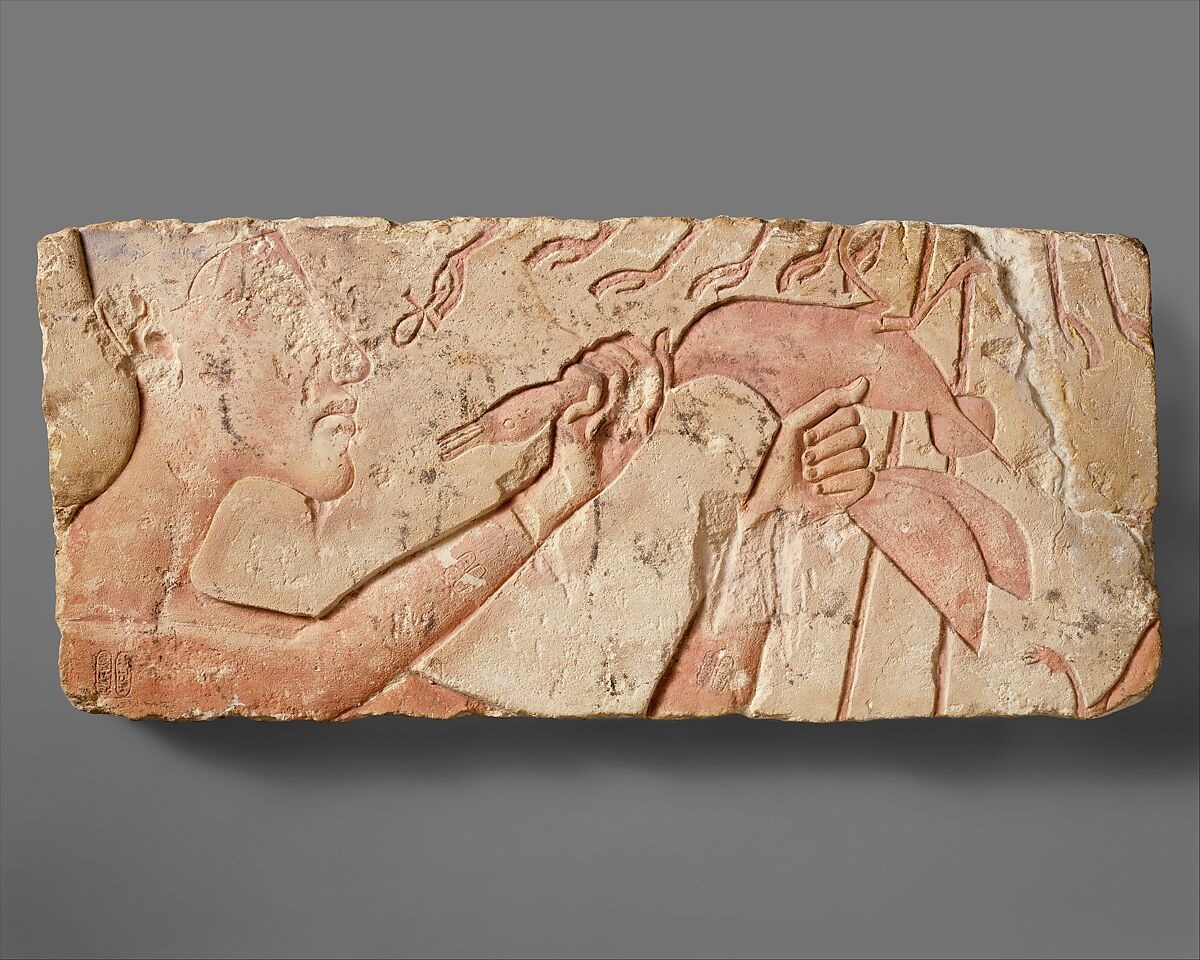
The photograph preserves rays and hands beside the king, not the entire disk. The hymn makes Aten life-giver of the world and royal knowledge particular; these different scopes do not prove equal ritualRitualAn organised or distinguished practice meaningful to a community; it may leave traces, but its form alone does not reveal an associated doctrine.Glossary · Click to read the explanation access for everyone. [3]
References and notes
- Marsha Hill (2014). “Art, Architecture, and the City in the Reign of Amenhotep IV / Akhenaten.” The Metropolitan Museum of Art. Early cult, Aten names, royal mediation and succession sections read. Older solar background and a later didactic name of disputed date. No claim to have read the essay’s entire bibliography. Return to the text ↑
- James K. Hoffmeier (2015). “Is Atenism Monotheism?” Akhenaten and the Origins of Monotheism, pp.193–210. Abstract argues for monotheism from exclusivity, rejection or denial of other deities, erasures and name/imagery changes. Scholarly position; full chapter not read. Return to the text ↑
- UCL Digital Egypt. “Belief and the Great Hymn to the Aten.” Ay’s tomb, 13 columns; creation, life, lands and the king’s special knowledge. Displayed text used, without claiming a royal autograph. Return to the text ↑
Research history
Substantive changes are retained here. Minor copy edits remain in the internal operational log.
-
Substantive record update
Suggest a correction · Suggest a source for this record
Cite this record
IL Archive, «Aten», Edition 2, https://ilarchive.com/en/entities/aten