Person · Literary figure
Kummaya in the Assyrian Underworld Vision
- Names
- Kummay · Kummaya · Kummâ · Kummāiu
- Timeline
- From 700 BCE to 600 BCE
- Region
- Mesopotamia
The Assyrian prince who, in a damaged tablet from Ashur, sees the court of the underworld and is sent back alive with a warning. Who he really was is still debated.
Estimated reading time: 6 min Published Last reviewed:
Share article
Text
Introduction
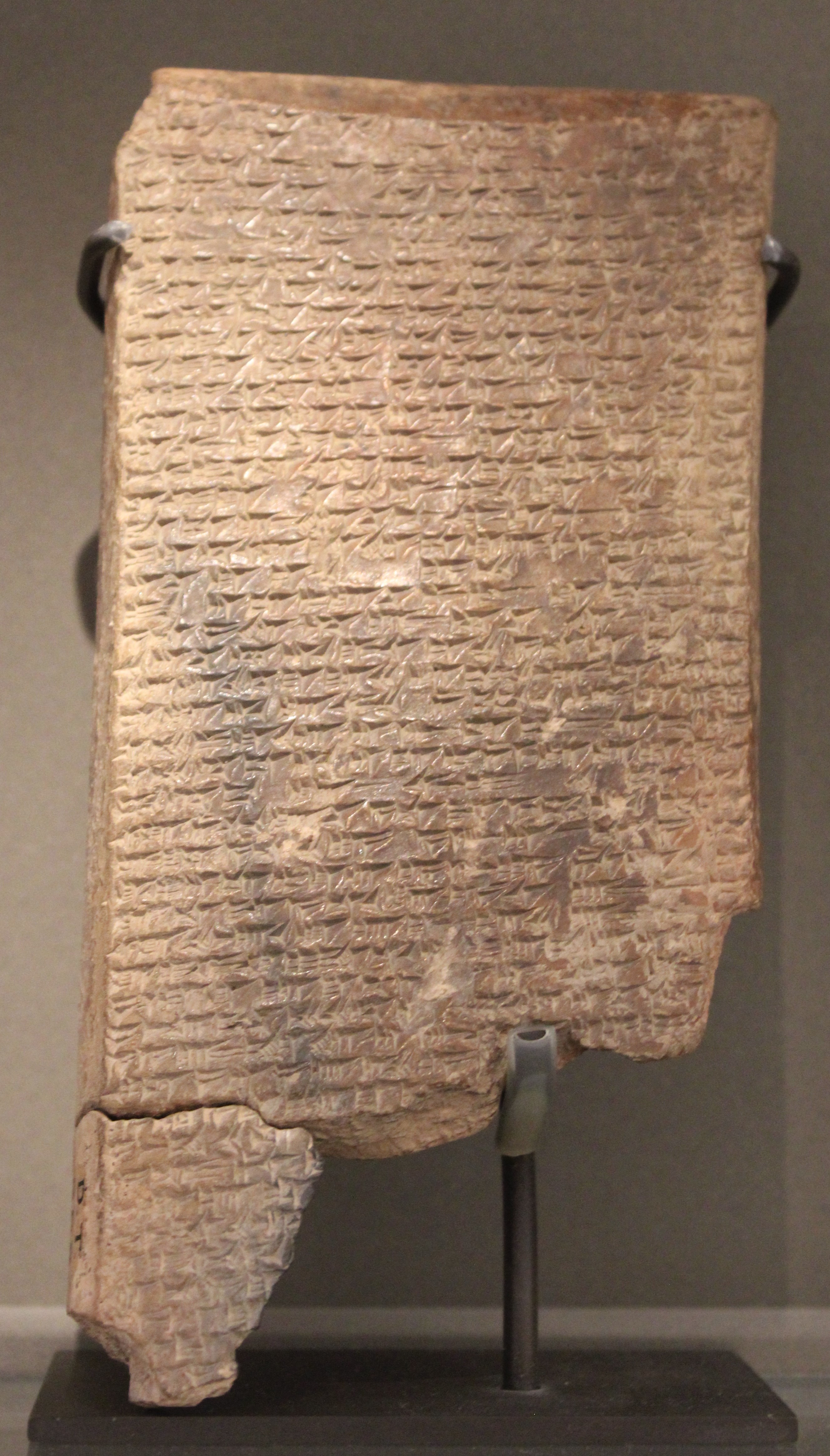
Kummaya is the main character of a unique AkkadianAkkadianAn ancient East Semitic language written in cuneiform from the third millennium BCE; its varieties include Babylonian and Assyrian, and it served in international diplomacy.Glossary · Click to read the explanation composition known as the Underworld Vision of an Assyrian Prince. It survives on a single clay tablet from AshurAshur, Qal’at SherqatAncient Tigris city in Iraq, an Assyrian political and religious centre.Glossary · Click to read the explanation, now in Berlin as VAT 10057. In it, a prince troubled by his own failings asks to see the world of the dead. He is dragged before Nergal, the king of the underworld, is nearly killed, and is sent back to the living with a warning he cannot forget. [1]
Almost everything we know about Kummaya comes from this one damaged tablet, and the text never says plainly which member of the royal family he was. Scholars have suggested that he stands for a real Assyrian prince, most often AshurbanipalAshurbanipalAshurbanipal was an Assyrian king of the seventh century BCE, reigning about 668–631 BCEGlossary · Click to read the explanation, but this remains a proposal. This entry sets out what the text says about him, how it has been read, and where the evidence stops. [2][4]
The name and the title
Alasdair Livingstone's standard English edition (1989) writes the name Kummâ. Other scholars write Kummay or Kummaya, and the main reference work on Assyrian personal names lists it as Kummāiu. These are simply different ways of writing the same Akkadian name. [1][3]
The text calls him "Kummâ, son of …", but the father's name is broken away. He is called "the crown prince" in the underworld and "the prince" at the end. Nergal also shows him a dead king and tells him: "He is your father". These lines are the main reason he is taken to be a member of the royal family. [1][3]
What the tablet tells about him
The front of the tablet is badly broken. Most readers take the man in its opening lines to be Kummaya. He seems to hold high office: he consults the experts who read omens in the organs of sacrificed animals and appoints governors and nobles. Then he grows careless, "forgot the divine splendour", piles up jewels in his treasuries, and wanders the streets alone, weeping at night. [1][3]
In a temple he burns juniper, a fragrant wood offered to the gods, and calls on Allatu, "lady of the wide underworld". EreshkigalEreshkigalMesopotamian goddess ruling the netherworld; Inanna’s sister in descent texts, with varying accounts of her relationship with Nergal.Glossary · Click to read the explanation, queen of the dead, appears to him in a dream and asks why he turned to her while ignoring ShamashShamashMesopotamian god of the sun and justice, shown before Hammurabi on an eighteenth-century BCE stele preserved in the Louvre.Glossary · Click to read the explanation, the sun god who judges what is right. He wakes, curses the dream, and prays again to Ereshkigal and her husband Nergal to "unveil the face of the secret". [1][3]
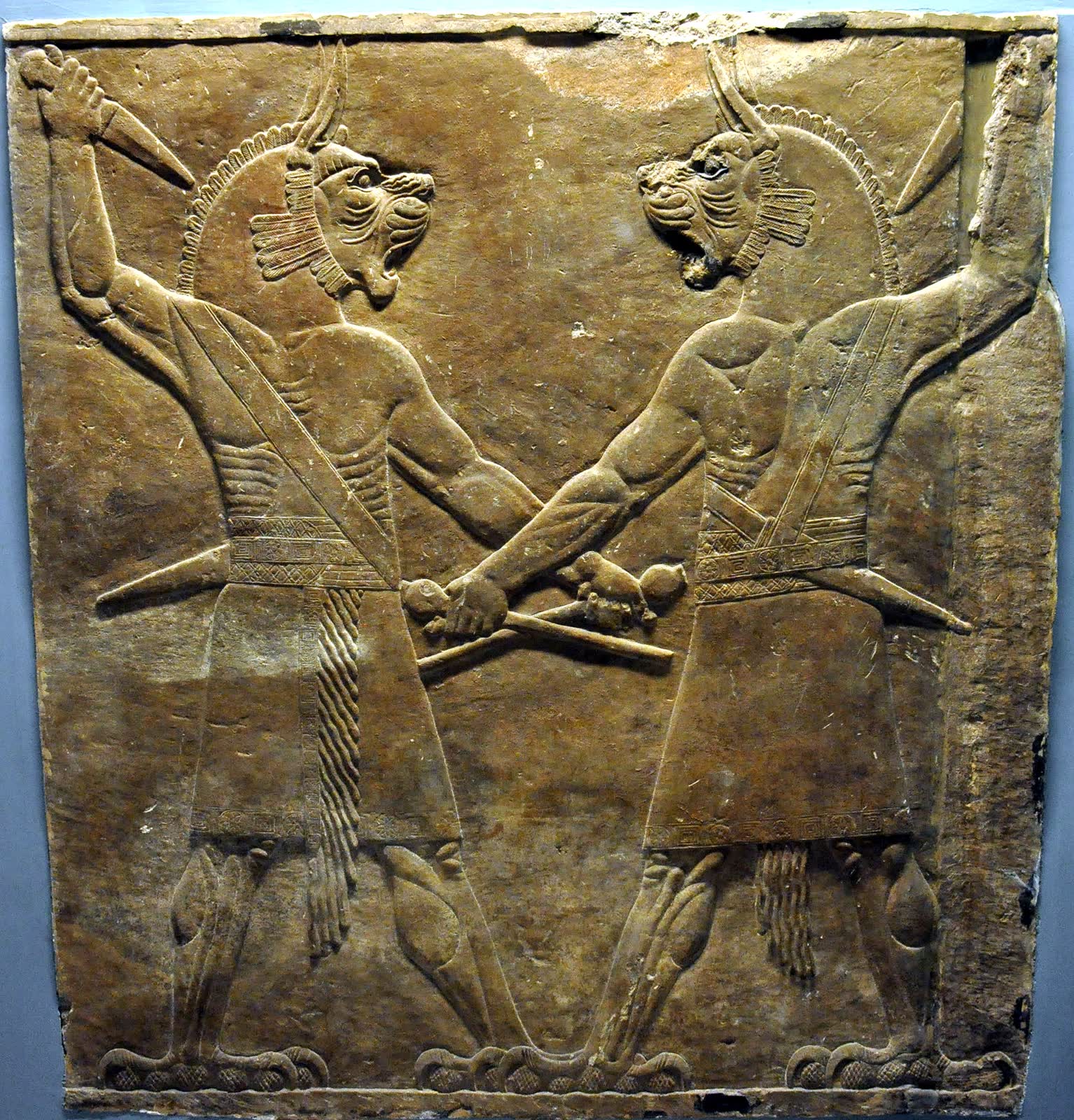
The back of the tablet is better preserved. Now the prince has a "night vision" and tells it in his own voice: "I saw". He describes fifteen gods and spirits one by one, by head, hands and feet. Death has the head of a dragon. Nedu, the gatekeeper of the underworld, has a lion's head, human hands and a bird's feet. A man "black as pitch", with the face of the Anzû bird, a monstrous eagle of myth, stands apart. [1][3]
Then he sees Nergal on a royal throne with two maces, while the AnunnakiAnunna / AnunnakiAnunna/Anunnaki is a collective designation for Mesopotamian gods whose scope varies by text and period; it is not a group with one fixed membership or number.Glossary · Click to read the explanation kneel around him. Nergal seizes him by the forelock and draws his sceptre to kill him. Ishum, Nergal's adviser, known also from the poem Erra and Ishum, pleads: "Do not kill the man, O king of the wide underworld!" Nergal relents, but asks why the prince insulted his beloved wife. He promises him sleepless nights of distress and orders him never to forget him. [1][3]
Nergal also points to a dead king lying in the underworld, a "proud shepherd" whom the god Ashur ordered to build the Akitu House, the temple of the New Year festival. Then he sends him back:
The line is from Livingstone's translation, reverse line 28. The prince wakes in terror, scoops dust from the street into his mouth, cries "Woe is me!", and praises Nergal and Ereshkigal before the people of Assyria. [1]
The scribe at the end
The last lines turn to a scribe who "previously had accepted bribes". He takes the prince's words to heart and, fearing the curses of the sworn treaty, promises to obey Nergal. He goes to the palace and says: "Let this be my expiation!" Johannes Bach reads this as the scribe turning the story into his own ritualRitualAn organised or distinguished practice meaningful to a community; it may leave traces, but its form alone does not reveal an associated doctrine.Glossary · Click to read the explanation of release. The text does not explain how the scribe is linked to Kummaya. [1][3][4]
Who was Kummaya?
Wolfram von Soden, who edited the tablet in 1936, took Kummaya to be a son of EsarhaddonEsarhaddon, king of AssyriaSennacherib’s son and successor, Assyrian king in 680–669 BCE, named in Ahiqar and Tobit.Glossary · Click to read the explanation, most likely Ashurbanipal. Livingstone kept this as "possible, though not certain". He saw veiled references to SennacheribSennacherib, king of AssyriaAssyrian king, 704–681 BCE; part of Ahiqar’s story is set at his court.Glossary · Click to read the explanation and to court politics, and grouped the text with royal propaganda. [2][4]
The main problem is the dead king. His description, above all the Akitu House, fits Sennacherib better than Esarhaddon. If the corpse is Sennacherib, he may be the prince's grandfather or ancestor, and "your father" may point to the living king, probably Esarhaddon. Others read the dead king as the prince's own father. [3][4]
The purpose of the work is just as open. Alexandre Loktionov notes that it could come from the king's supporters, showing his special bond with the gods, or from his opponents, showing that he had lost their favour. The scribe has also been tentatively matched with Urad-Gula, a scholar who lost his post at the Assyrian court. Loktionov concludes that such proposals "can neither be proved nor disproved". [4]
Bach also shows how much the story borrows from older writings. The list of spirits follows the style of a catalogue that describes divine statues from head to foot. The man black as pitch echoes a dream in Tablet VII of the Epic of GilgameshGilgameshA king of Uruk in Mesopotamian tradition and the hero of Sumerian poems and a multi-tablet Akkadian epic, with his companion Enkidu, the loss of a friend and the search for life. In standard Tablet XI, Utnapishtim tells him of the flood.Glossary · Click to read the explanation, and parts of the opening recall the suffering man of Ludlul bēl nēmeqiLudlul bēl nēmeqiBabylonian Akkadian poem about Šubši-mešrê-Šakkan, his suffering, recovery, and praise of Marduk, examined through its five tablets, manuscript witnesses, dating, and qualified comparison with Job.Glossary · Click to read the explanation. So the vision may be a literary creation, not a record of a real dream. [3]
The tablet and its setting
The tablet was found at Ashur in a private house that held a small library of about twenty tablets, very probably the books of an incantation priest. It names NinevehNineveh and KuyunjikNineveh is an ancient Assyrian city near Mosul in northern Iraq; Kuyunjik is one of its archaeological moundsGlossary · Click to read the explanation as the "lordly city" and alludes to Sennacherib's building work, so it dates from the late Neo-Assyrian empire, in the seventh century BCE. No other copy is known. [2][4]
Some scholars see the text as an early model for later visions of the beyond, such as those in the Book of DanielBook of DanielA book combining court tales of wisdom and deliverance with visions of kingdoms and the future, formed in stages.Glossary · Click to read the explanation. Loktionov argues that a few details may echo Egypt: the spirit standing on a crocodile recalls Egyptian images of HorusHorusEgyptian god associated with kingship and the sky, also appearing as the child protected by his mother Isis in marsh and nursing traditions.Glossary · Click to read the explanation on crocodiles. Both ideas remain debated. [3][4]
Quick answers
Who was Kummaya?
The Assyrian prince in the Underworld Vision of an Assyrian Prince, who sees Nergal's court in a dream and is sent back alive with a warning. [1]
Was he a real person?
Possibly. He is often linked with Ashurbanipal, son of Esarhaddon, but the text never names his father and no other record confirms it. [2][4]
References and notes (4)
- Alasdair Livingstone, “The Underworld Vision of an Assyrian Prince” (SAA 3 32, VAT 10057), Court Poetry and Literary Miscellanea, State Archives of Assyria 3 (Helsinki University Press, 1989); online edition, State Archives of Assyria Online (lemmatised by Mikko Luukko, 2019–20), CC BY-SA 3.0 Whole text in transliteration and English translation, obverse 1–40 and reverse 1–35; catalogue data (VAT 10057, Assur, Neo-Assyrian, ca. Ashurbanipal). Quotations from obv. 3, 6, 30, 35–40 and rev. 1–35 (rev. 28 for the quoted line). Return to the text ↑
- Alasdair Livingstone, Court Poetry and Literary Miscellanea, State Archives of Assyria 3 (Helsinki University Press, 1989), Introduction Pp. x (von Soden's new readings for no. 32), xix (find-spot: a private house at Assur with a library of about 20 tablets), xx (no. 32 listed under Ashurbanipal “if Kummâ is Assurbanipal”), xxviii (“Royal Propaganda”: veiled references to Sennacherib and court politics; Kummâ possibly, not certainly, Ashurbanipal). Return to the text ↑
- Johannes Bach, “A Transtextual View on the ‘Underworld Vision of an Assyrian Prince’,” in S. V. Panayotov and L. Vacín (eds.), Mesopotamian Medicine and Magic: Studies in Honor of Markham J. Geller (Leiden: Brill, 2018), pp. 69–92 Pp. 69–83: summary of the text (pp. 71–76, with notes 16 on the name and on the identity debate, 22–23 on the obverse line count and rev. 1, 29 on the dead king as Sennacherib), the borrowing from the catalogue of divine statues (pp. 76–79), from Gilgamesh VII, X and XII (pp. 79–83), and from Ludlul (n. 19); the scribe's namburbi (p. 76). Return to the text ↑
- Alexandre A. Loktionov, “An ‘Egyptianising’ Underworld Judging an Assyrian Prince? New Perspectives on VAT 10057,” Journal of Ancient Near Eastern History 3 (2016), accepted version, University of Cambridge repository Introduction (find-spot and library, publication history, date, summary, identifications by von Soden, Livingstone and Foster, the dead king as Sennacherib, supporters or opponents, the scribe and Urad-Gula, Kvanvig and Day on Daniel) and the section on the god upon a crocodile (kušû) and Horus on the crocodiles. Return to the text ↑
Suggest a correction · Suggest a source for this record
Cite this record
IL Archive, «Kummaya in the Assyrian Underworld Vision», https://ilarchive.com/en/people/kummaya
Continue reading
Related readings