Ancient text
Ludlul bēl nēmeqi
A text for line-by-line reading, with transliteration, translation, and resources.
Akkadian poem of a sufferer who praises Marduk after illness, lost standing and recovery; compared with Job, though its form and damaged guilt passage differ.
Metadata
These are descriptive fields, not conclusions.
- Edition
- 2
Text
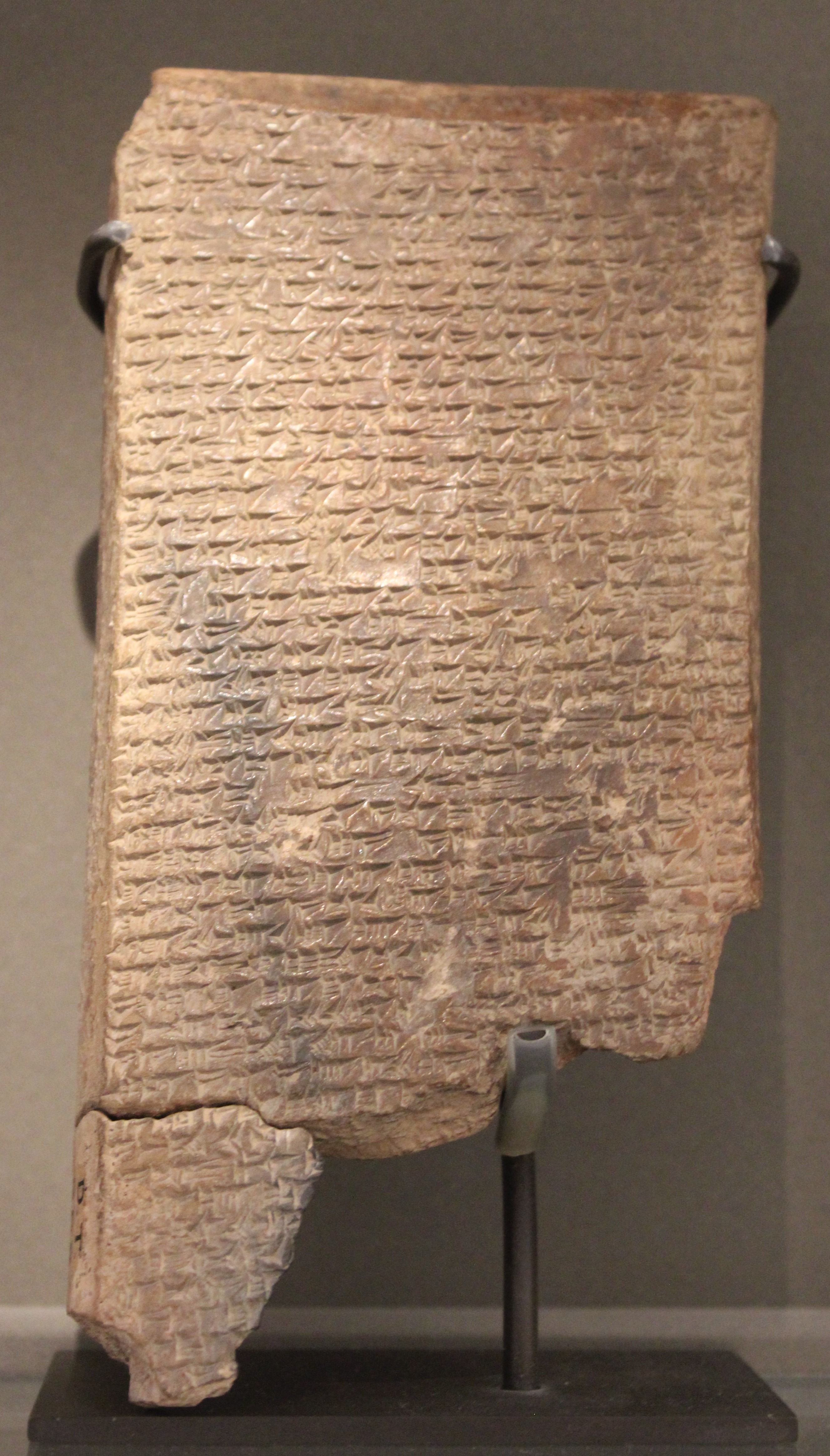
Ludlul bēl nēmeqi means “I will praise the LordRabbTitle of lordship, ownership or care by context; applied to God in Lord of worlds.Glossary · Click to read the explanation of Wisdom.” In this long AkkadianAkkadianAn ancient East Semitic language written in cuneiform in Mesopotamia.Glossary · Click to read the explanation poem, Šubši-mešrê-Šakkan recounts lost health and standing, relief through dreams and ritualRitualAn organised or distinguished practice meaningful to a community; it may leave traces, but its form alone does not reveal an associated doctrine.Glossary · Click to read the explanation specialists, and his praise of MardukMardukBabylon’s god, elevated with the city’s history. Enuma Elish celebrates his rise and cosmic ordering; sources associate him with Nibiru and Jupiter. Earliest origins and functions remain uncertain.Glossary · Click to read the explanation after recovery. Several manuscripts underlie the reconstructed text; photographed K.2518+DT.358 is a later NinevehNineveh and KuyunjikNineveh is an ancient Assyrian city near Mosul in northern Iraq; Kuyunjik is one of its archaeological moundsGlossary · Click to read the explanation witness to part of tablet II, not the whole work. A damaged tablet-III passage speaks of the removal of sin, another reason why “Babylonian Job” must not imply identical protagonists or plots. [1][7][8]
References and notes
- Akkadian transliteration and English translation inspected at I 1–45, II 1–30 and 114–120, III 25–44 and 53–74, IV 1–5 and 39–45, V 1–13, 42–60 and 111–120. Not all approximately 600 reconstructed lines independently collated. CDLI P491222, Ludlul composite, tablets I–V; selected lines Return to the text ↑
- The open publisher PDF’s introduction (printed pp. 1–8), table of contents, and printed pp. 232–234 and 326–328 read. The full 539-page book was not read. Selected later pages discuss the protagonist’s initial ignorance and the damaged Ludlul III 58–61 passage about sin being carried away. Alan Lenzi, Suffering in Babylon (2023), introduction pp. 1–8; selected pp. 232–234, 326–328 Return to the text ↑
- Abstract and printed pp. 311–319 examined, not every bibliography page. Confirms object K.2518+DT.358 as a Nineveh tablet-II witness on loan from British Museum to Louvre; discusses distinct manuscript sets. Aino Hätinen, “Ludlul bēl nēmeqi in Ashurbanipal’s Library” (2024), pp. 311–319 Return to the text ↑
Research history
Substantive changes are retained here. Minor copy edits remain in the internal operational log.
-
Substantive record update
Archive records may be reviewed and refined as better evidence or sources become available. Suggest a correction
Suggest a correction · Suggest a source for this record
Cite this record
IL Archive, «Ludlul bēl nēmeqi», Edition 2, https://ilarchive.com/en/texts/ludlul-bel-nemeqi