Site · Region
Naharin and Mitanni
- Names
- Hani-Rabbat · Hanigalbat · Maitani · Mitanni · Mittani · Naharin · Naharina · Nahrima
- Timeline
- From 1500 BCE to 1250 BCE
- Region
- Mesopotamia and the Levant
Egypt's name for the land beyond the Euphrates, ruled in the Late Bronze Age by the kingdom of Mitanni, which its neighbours also called Hurri or Hanigalbat.
Estimated reading time: 6 min Published Last reviewed:
Share article
Text
Introduction
Around 1500 BCE Egyptian armies reached a country far to the north that they called Naharin. It lay around the great bend of the Euphrates, in today's northern Syria and south-eastern TürkiyeTurkeyTurkey is a modern country including Anatolia and territory in southeastern EuropeGlossary · Click to read the explanation, and reached east into northern MesopotamiaMesopotamiaHistorical region associated with the Tigris and Euphrates: Uruk, Ur, Eridu, cuneiform, Sumer, Akkad, Babylon and Assyria, their languages and cults, and the limits of archaeological evidence.Glossary · Click to read the explanation. The power that ruled it was Mitanni, a kingdom led by kings of the HurriansHurriansAncient Near Eastern groups and language, prominent in northern Mesopotamia, the Levant and Anatolia in the second millennium BCE.Glossary · Click to read the explanation. For about two centuries Mitanni was one of the great powers of the Late Bronze AgeLate Bronze AgeAn archaeological period around 1600–1200 BCE in much of the Near East, with international diplomacy, exchange and religious diversity; its endpoints vary by region.Glossary · Click to read the explanation, a rival of Egypt and of the HittitesHittitesAncient people and kingdom of Anatolia, dominating much of Anatolia and northern Syria around 1650–1200 BCE.Glossary · Click to read the explanation. [1][2]
Each neighbour named this kingdom differently. Egyptians wrote Naharin, and sometimes Mitanni; Assyrians wrote Hanigalbat; Hittites often spoke of "the land of Hurri"; and its own kings called it Mitanni. The names overlap but are not exact equals, and the royal capital has never been found. [2][3][4]
One kingdom, many names
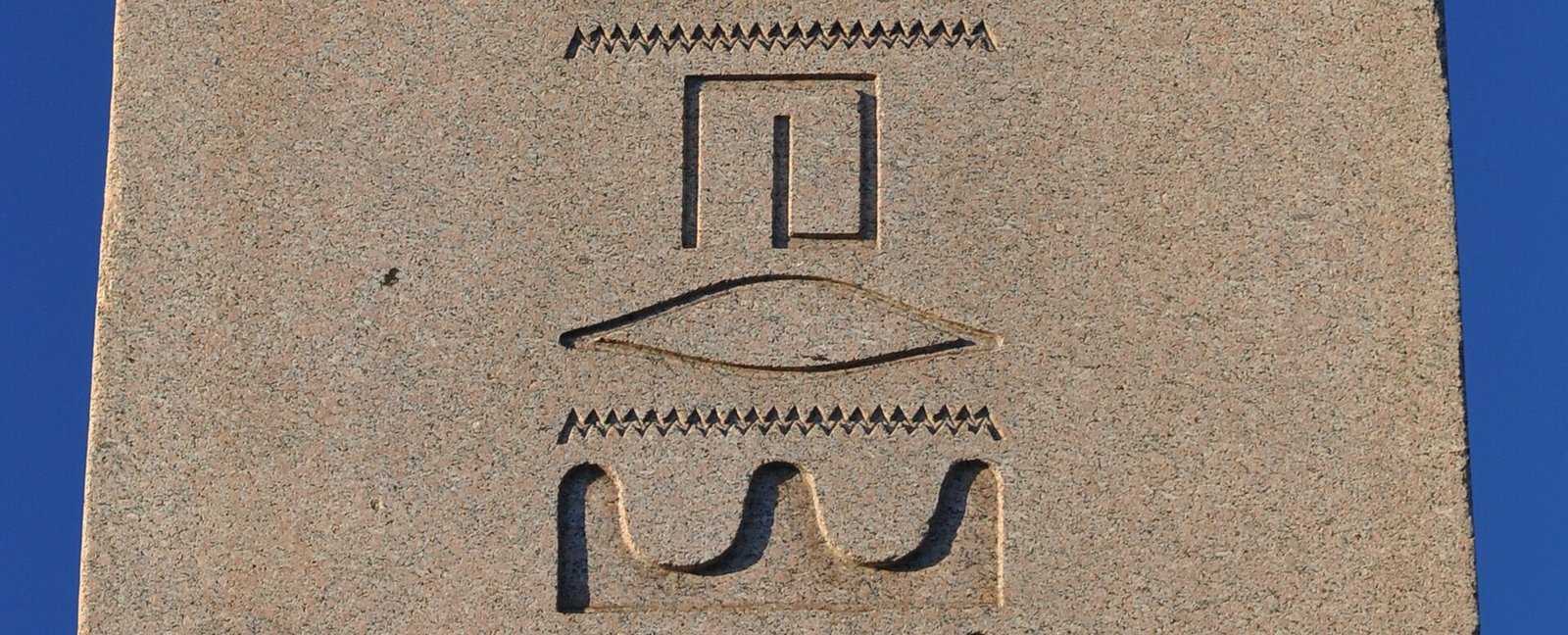
The Egyptian name is written n-h-r-n in hieroglyphs. Egyptian writing left out most vowels, so scholars read it Naharin or Naharina. It is usually explained as a Semitic word meaning "rivers", from the same root as HebrewHebrewA Northwest Semitic language of the Canaanite group, encompassing Iron Age epigraphy, Biblical, Rabbinic, medieval and Modern Hebrew; its scripts and pronunciations changed over time.Glossary · Click to read the explanation nahar, "river": the land of the rivers, much as "Mesopotamia" is Greek for "between the rivers". [5]
Mitanni (also Mittani, older Maitani) is the kings' own name: the seal of King Shaushtatar calls him "king of Maitani", and King Tushratta, writing to Egypt in the fourteenth century BCE, called himself "king of Mittani". [2][3]
Tushratta also used a second name, Hanigalbat, found too in the archives of Alalakh and Nuzi, in Hittite texts and in Assyrian inscriptions. Its meaning is unknown. One proposal reads it Hani-Rabbat, "Great Hani", after the Hana people of the middle Euphrates, but this remains a minority view. [3] Hittite texts also speak of "the land of Hurri", naming the country after its people. [6]
Naharin named a region; Mitanni and Hanigalbat named a state whose borders grew and shrank. After Mitanni fell, the Assyrians kept the name Hanigalbat for the region they had taken. [3][7]
Naharin in Egyptian records
The first Egyptian campaign there came under Thutmose I. Two soldiers from el-Kab, both named Ahmose, recorded it in their tomb biographies: the king "arrived at Naharin" and made a great slaughter, and one of them captured a chariot and a horse. The king set up a victory stele by the Euphrates. [1] A text of about the same time already speaks of "the foreign land called Mitanni", as if a new country had just come into view. [2]
About fifty years later, in his year 33, Thutmose III led the largest campaign of his reign. His annals at the temple of Karnak say that he set up a stele east of the Euphrates, beside that of Thutmose I, and marched against "that foe of wretched Naharin", meaning the king of Mitanni, whose troops fled "like a herd of mountain goats". [1] His granite obelisk, now in Istanbul, praises him as the one "who crossed the Great Bend of Naharin", the wide curve the Euphrates makes in northern Syria. [1] Other texts of his reign speak of "the army of Mitanni", so for Egyptians the two names were near-equivalents. [2]
War gave way to diplomacy. An inscribed scarab of Amenhotep III, dated to his year 10, announces the arrival of Kirgipa (Gilukhipa), "the daughter of the chief of Naharin, Satirna", with 317 women of her household. The letters found at AmarnaAmarna / AkhetatenAmarna is the archaeological site of Akhetaten, Akhenaten’s fourteenth-century BCE capital in Middle Egypt, preserving royal boundary stelae, temples, houses and cemeteries.Glossary · Click to read the explanation, written on clay in cuneiformCuneiformWriting with wedge-shaped signs, developed from Mesopotamian recording traditions and used for several languages from the third millennium BCE.Glossary · Click to read the explanation, show that she was the daughter of the Mitannian king Shuttarna and the sister of Tushratta. [1] In one of those letters the ruler of JerusalemJerusalemJerusalem is a city of religious importance in Judaism, Christianity and IslamGlossary · Click to read the explanation names the land Nahrima. [1][5]
Kings, vassals and the gods of an oath
Mitanni's heartland was the fertile plain of the upper Khabur River in north-eastern Syria. Its capital, Washukanni, is named in Hittite texts but has not been securely located. Tell Fekheriye, at the springs of the Khabur, is one candidate; its excavators still describe the capital as unidentified. [4][6]
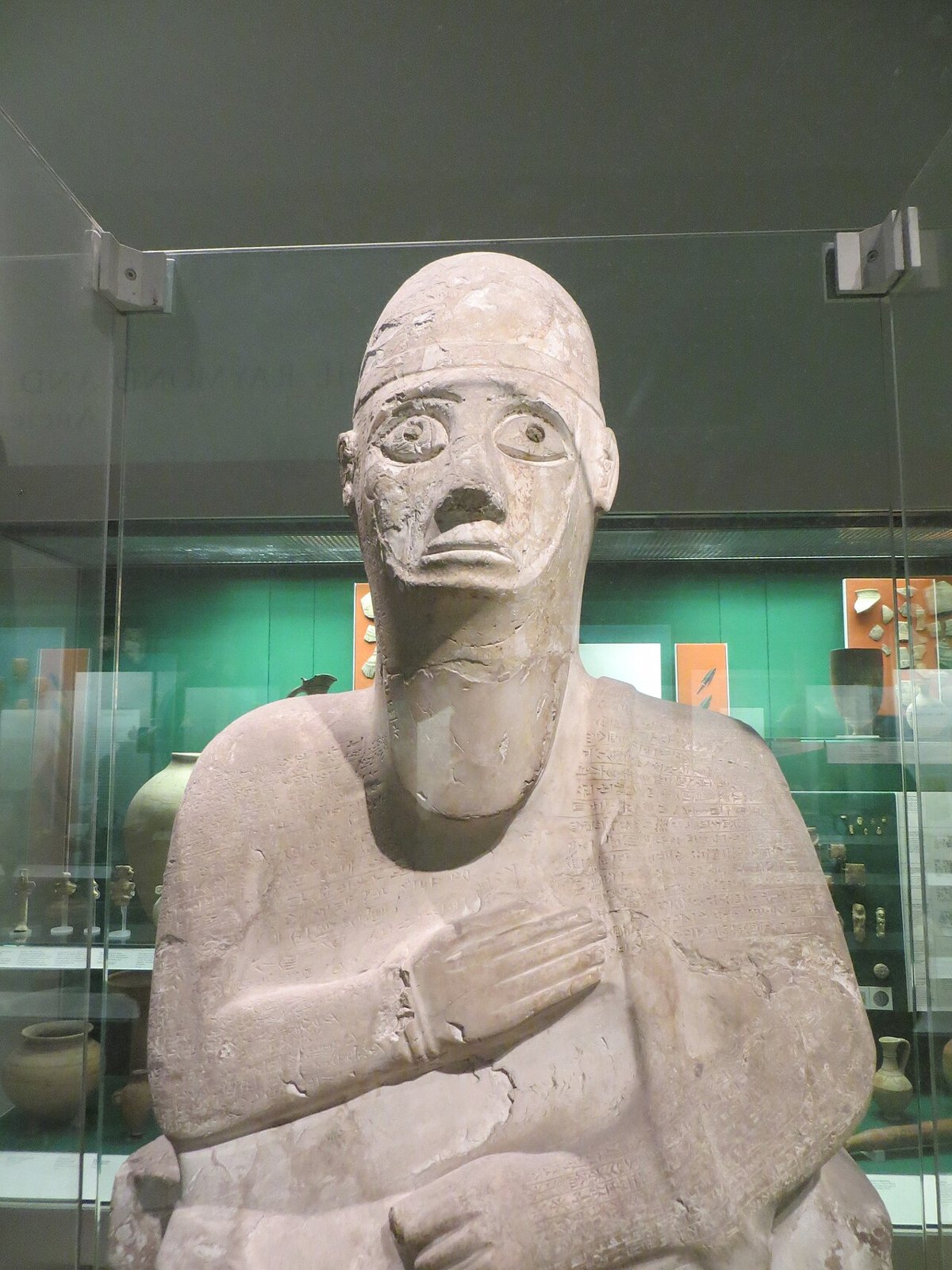
The first king of Mitanni known from documents of his own time is Parattarna, in the fifteenth century BCE. He is known mainly through his vassals: kings who kept their thrones but owed him loyalty and tribute, much as a tenant owes rent. One of them was Idrimi, king of Alalakh, whose statue tells of an oath sworn to Parattarna. There he is called "king of the Hurrian people", although the name Mitanni seems slightly older than his reign. [8] Mitanni's power reached from Alalakh, near the Mediterranean, to Arrapha, around modern Kirkuk, where a letter of King Shaushtatar was found in the archives of Nuzi. [2][8]
Most people of Mitanni spoke Hurrian, but several kings bore names from an Indo-Aryan language, a relative of the Sanskrit of ancient India: Artatama, Tushratta, Shattiwaza. Cuneiform texts also preserve Indo-Aryan words for horse training. [9] A treaty between the Hittite king and the Mitannian prince Shattiwaza calls on the gods of both sides as witnesses. Among them are "Mitrashshil", "Uruwanashshil", "Indar" and "Nashatianna", names that match Mitra, Varuna, Indra and the twin Nasatyas of the oldest Indian hymns. [6][9] Many scholars conclude that at least the ruling aristocracy had Indo-Aryan roots; how and when these names arrived is still debated. A Nuzi tablet once cited as proof, read as a royal cremation, turned out to be a misreading. [2][9]
The fall of Mitanni
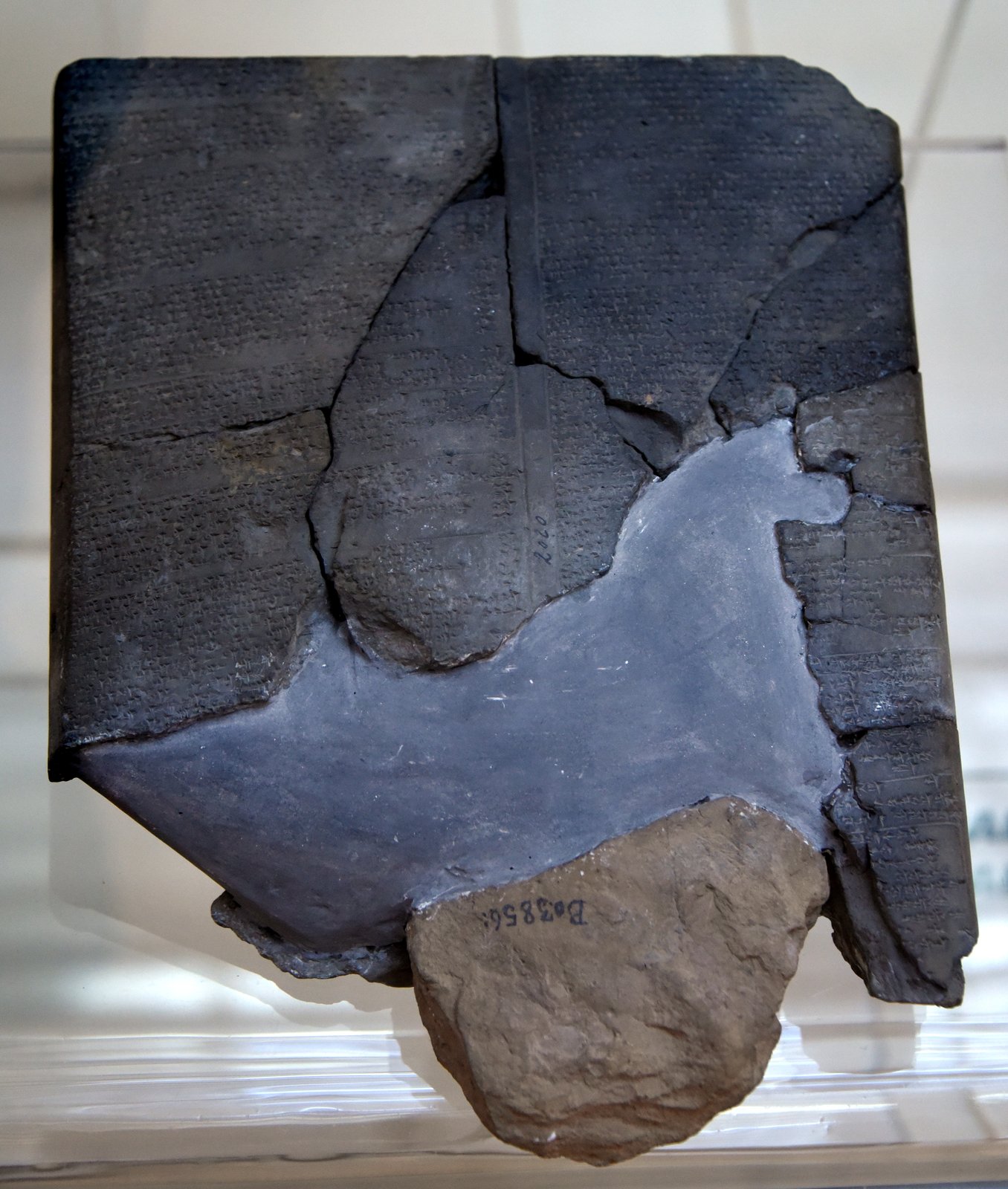
In the fourteenth century BCE the Hittite king Suppiluliuma I turned against Tushratta. In the treaty's own account, he raided Mitannian lands and brought booty into Washukanni, while Tushratta "marched out against me, but he did not get into the fight". Then one of Tushratta's sons killed him, and Mitanni "went to ruin": the Assyrians and the land of Alshe divided it. Suppiluliuma placed Tushratta's son Shattiwaza on the throne as his vassal and gave him his daughter in marriage. [6]
What remained became a weak buffer state, which the Assyrians called Hanigalbat. In the thirteenth century BCE the Assyrian king Shalmaneser I wrote that Shattuara, "king of Hanigalbat", had blocked his road with Hittite troops and Ahlamu nomads. Shalmaneser claims that he won, blinded and deported 14,400 captives, and took the land from Taidu to HarranHarranHistoric city in southeastern Türkiye, south of Şanlıurfa; Genesis places Abraham’s family there on its journey towards Canaan.Glossary · Click to read the explanation and Carchemish. Royal inscriptions boast, but after this the old heartland of Mitanni was under Assyrian rule. [7]
Naharin in stories
In the Egyptian tale The Doomed Prince (Papyrus Harris 500, British Museum), a prince fated to die by a crocodile, a snake or a dog travels north to "the chief of Naharaina". The chief has an only daughter, whose windows are seventy cubits above the ground, and he promises her to whoever climbs up to them. The prince, posing as the son of an Egyptian officer, reaches the window and marries her; the end of the papyrus is lost. [10] In 1895 Flinders Petrie argued that this setting dates the tale after the Egyptian wars in Naharin, perhaps to Amenhotep III; that is an inference from the story, not a written date. [10]
The Hebrew Bible speaks of Aram-naharaim, "Aram of the rivers". It is the country to which Abraham's servant travels to find a wife for IsaacIsaacSon of Abraham and Sarah in Genesis; named explicitly in Genesis 22's sacrifice episode, while named after the unnamed-son scene in Qur'an 37.Glossary · Click to read the explanation (Genesis 24:10), and the land of Pethor, home of BalaamBalaam son of BeorA figure in Numbers whose path is blocked by the angel of Yahweh acting as his “adversary”.Glossary · Click to read the explanation (Deuteronomy 23:4; 23:5 in the Hebrew numbering). Scholars have long linked this name with Egyptian Naharin and with Nahrima in the Amarna letters; how far the biblical name and the Late Bronze Age land coincide is still discussed. [5]
References and notes (10)
- James Henry Breasted, Ancient Records of Egypt, vol. II: The Eighteenth Dynasty (Chicago: University of Chicago Press, 1906) §§ 79–85, pp. 33–35 (Thutmose I's campaign to Naharin in the biographies of Ahmose son of Ebana and Ahmose-Pen-Nekhbet, the first boundary tablet); p. 200, note on § 473 (Abdi-Heba of Jerusalem naming Nahrima in an Amarna letter); §§ 476–482, pp. 201–203 (Annals, eighth campaign, year 33: tablets east of the Euphrates beside Thutmose I's, the foe of Naharin = the king of Mitanni, flight, arrival at Niy, tribute); §§ 629–631, pp. 252–253 (Constantinople obelisk: "who crossed the Great Bend of Naharin"); §§ 866–867, pp. 347–348 (marriage scarab of Amenhotep III, year 10: Kirgipa daughter of Satirna, chief of Naharin; her identification as Gilukhipa, daughter of Shuttarna and sister of Tushratta, from the Amarna letters). Return to the text ↑
- Gernot Wilhelm, “Parrattarna, Šauštatar und die absolute Datierung der Nuzi-Tafeln,” Acta Antiqua Academiae Scientiarum Hungaricae 24 (1976): 149–161 Pp. 149–150 with n. 2 (the forms Mittani and archaic Maitani; Tushratta's Hurrian letter; the oldest Egyptian mention of Mitanni in a biography of Thutmose I's time; K. A. Kitchen's note that Egyptians used Mitanni as a land name alongside the commoner Nhrn, e.g. the Gebel Barkal stela of Thutmose III; the HSS XIII 165 "cremation" misreading once tied to an Indo-European dynasty); pp. 157–158 with nn. 36–41 (the seal of Šauštatar "king of Maitani" and his letter to the king of Arrapha found at Nuzi; the speculative Thutmose III synchronisms). Return to the text ↑
- Miguel Valério, “Hani-Rabbat as the Semitic Name of Mitanni,” Journal of Language Relationship 6 (2011): 173–183 Whole article: Tušratta as "king of Mittani" (EA 19, 25) and his use of Hanigalbat (EA 20, 29); attestations of Hanigalbat at Amarna, Alalakh, Nuzi, in Hittite texts and Middle and Neo-Assyrian royal inscriptions; the unexplained element -galbat; the history of the readings Hanigalbat and Hani-Rabbat; the author's proposal "Great Hani" against the Hana of the middle Euphrates. Return to the text ↑
- Freie Universität Berlin, Institute of Near Eastern Archaeology, “Tell Fecheriye: Introduction” (project page of the German–Syrian excavations, directed by Dominik Bonatz, from 2005) Whole page: the site at the sources of the Khabur; the Mittani heartland in the Khabur Triangle known mainly from foreign or peripheral sources; the Mittani capital described as not yet identified; second-millennium (Mittani and Middle Assyrian) remains. Return to the text ↑
- Morris Jastrow Jr. and George A. Barton, “Aram-Naharaim,” in The Jewish Encyclopedia, vol. 2 (New York: Funk and Wagnalls, 1902) Whole entry: "Aram of the two rivers"; the dual possibly artificial and a plural matching Egyptian Naharin, "the land of the rivers"; Nahrima in three Amarna letters; Genesis 24:10 (the region of Haran) and Deuteronomy 23:5 (Pethor); the competing modern views of which rivers are meant. Return to the text ↑
- D. D. Luckenbill, “Hittite Treaties and Letters,” The American Journal of Semitic Languages and Literatures 37 (1921): 161–211 (JSTOR Early Journal Content, free to read) No. 1, the treaty of Shubbiluliuma (Suppiluliuma I) with Mattiuaza (Shattiwaza) of Mitanni, KBo I 1–2: pp. 162–166 (Artatama "king of Harri"; Tushratta's quarrel; the raid and booty brought into Washshukkani; Tushratta's murder; Mitanni divided by Assyria and Alshe; Mattiuaza enthroned and married to the Hittite king's daughter; n. 3 on p. 163 on the land and king of Harri) and pp. 170–171 with n. 1 (the divine witnesses Mitrashshil, Uruwanashshil, Indar, Nashatianna, and Teshub lord of Washshukkani). Return to the text ↑
- Shalmaneser I 01 (RIMA 1 A.0.77.1), Royal Inscriptions of Assyria online (RIAo), after A. K. Grayson, Assyrian Rulers of the Third and Second Millennia BC (to 1115 BC) (Toronto, 1987), adapted by Jamie Novotny and Nathan Morello (MOCCI), CC BY-SA 3.0 Lines 56–85: the march into Hanigalbat; Šattuara king of Hanigalbat with Hittite and Ahlamu troops seizing the passes and water; the battle; 14,400 blinded and deported; nine strongholds, the capital and 180 cities; the conquest from Taidu to Irridu, Kashiyari, Eluhat, Sudu, Harran and Carchemish. Return to the text ↑
- Jacob Lauinger, The Labors of Idrimi: Reading a Statue and Its Inscriptions (Ancient Near East Monographs 33; Atlanta: SBL Press, 2024), open access Introduction, pp. 13–14 (Idrimi's successors at Alalakh as a subject kingdom of the Mittani Empire; von Dassow 2022 cited for an overview); Appendix commentary on lines 43–44, pp. 221–222 (Parattarna I as the first historically attested king of Mittani; called only "king of the Hurrian people"; the earliest attestation of "Mittani" slightly older than him; ummānāt Hurri). Return to the text ↑
- Rüdiger Schmitt, “Aryans,” Encyclopædia Iranica, vol. II, fasc. 7 (1987), online edition updated 2013 Section on the earliest historical traces of the Indo-Aryans: the Mitanni empire in northern Mesopotamia in the mid-second millennium BCE; Indo-Aryan royal names (Artatama, Tušratta, Šattiwaza), names of gods and horse-training terms in cuneiform records; Indo-Aryans as at least the aristocratic dynasty. Return to the text ↑
- W. M. Flinders Petrie (ed.), Egyptian Tales, Translated from the Papyri, Second Series: XVIIIth to XIXth Dynasty (London: Methuen, 1895), “The Doomed Prince” and Petrie's “Remarks” "The Doomed Prince" (the journey north to the chief of Naharaina, the daughter's house with seventy windows seventy cubits from the ground, the sons of the chiefs of Khalu, the climb, the marriage, the break in the papyrus) and the "Remarks" (Harris Papyrus 500 in the British Museum; Naharaina as the frontier land dating the tale after the Thutmoside wars, perhaps under Amenhotep III). Return to the text ↑
Suggest a correction · Suggest a source for this record
Cite this record
IL Archive, «Naharin and Mitanni», https://ilarchive.com/en/sites/naharin
Continue reading
Related readings