Person · Figure
Djehuty and the Taking of Joppa
- Names
- Djehouty · Djehuty · General Djehuty · Tahutia · Thuti
- Timeline
- From 1479 BCE to 1425 BCE
- Region
- Egypt
An Egyptian general of Thutmose III, known from a gold bowl and other objects, and the hero of a later tale in which soldiers hidden in baskets capture the port of Joppa.
Estimated reading time: 6 min Published Last reviewed:
Share article
Text
Introduction
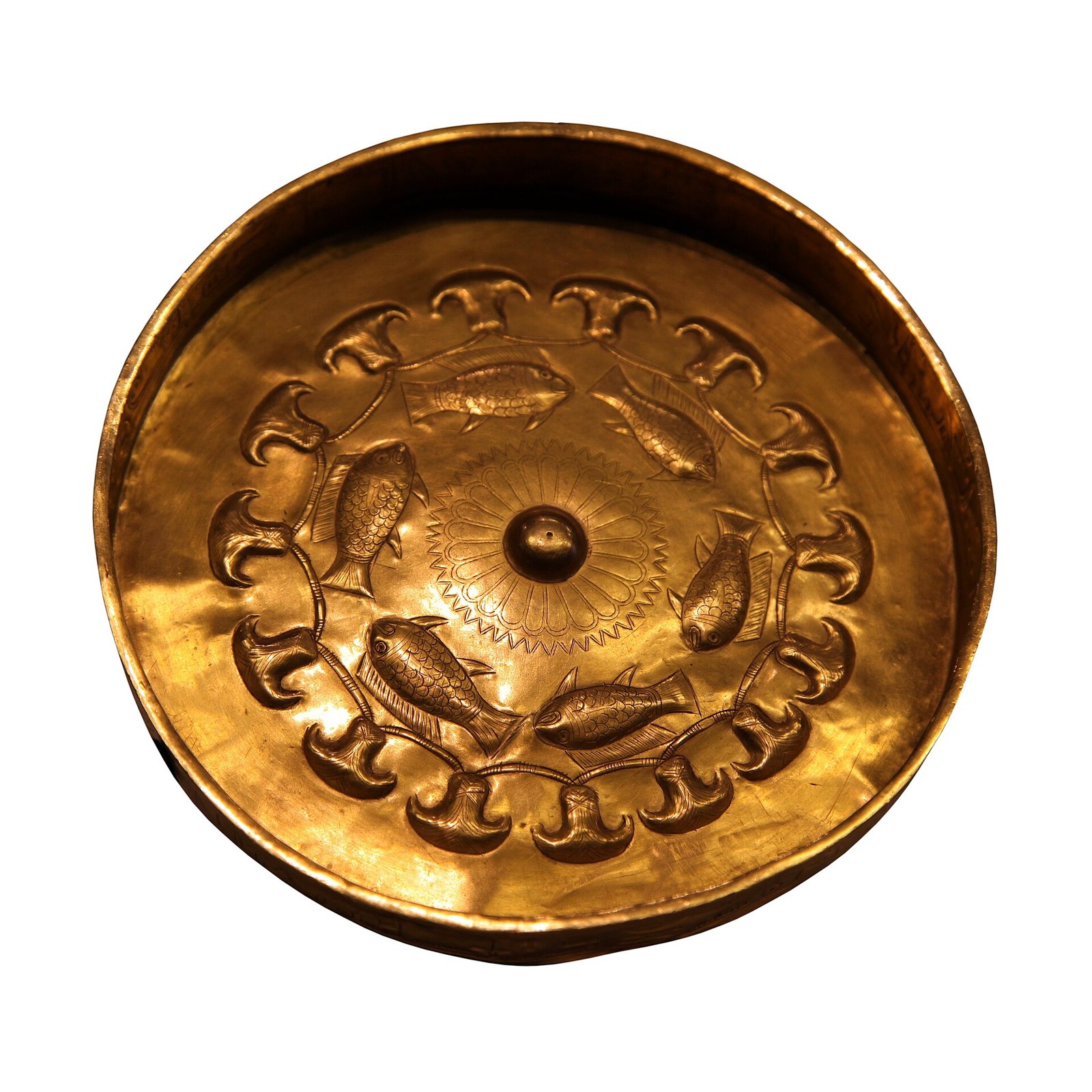
Djehuty was an Egyptian official and army commander in the reign of King Thutmose III (about 1479–1425 BCE). A small group of objects carries his name and titles, the most famous being a gold bowl in the LouvreLouvre MuseumMuseum in Paris holding the Mesha Stele as AO 5066 among its archaeological and art collections.Glossary · Click to read the explanation. A man with the same name is also the hero of an Egyptian story, the Taking of Joppa, in which his soldiers enter the port of JoppaJaffa / Joppa, historic portA Mediterranean coastal city and port from which Jonah begins his voyage toward Tarshish.Glossary · Click to read the explanation hidden in baskets. [1][3]
The two Djehutys need to be kept apart. One is a real officer, known from objects made in his lifetime. The other is a character in a tale copied about two centuries later. They may be the same man, but the evidence that links them is the name, the king and the region, and nothing more. This entry sets out each kind of evidence on its own. [3][4]
The official: what the objects say
Djehuty is the Egyptian name of ThothThothThoth is an Egyptian god of knowledge and writing, also associated with recording funerary judgment.Glossary · Click to read the explanation, the god of writing and wisdom, and many people were named after him. It was a very common name in the Eighteenth Dynasty. The king's own name, Thutmose, means "Thoth is born". So a name alone cannot tell us which Djehuty an object belonged to. [3]
The key object is a shallow gold bowl, about 18 cm across, now in the Louvre (N 713). It is hammered from the back, a technique called repoussé. In the centre is a rosette with fish swimming around it, then a ring of flowers. The inscription on the rim says that the king, under his throne name Menkheperre, gave the bowl to Djehuty as a sign of royal favour. It lists his titles. He was a "king's scribe", that is, a senior official who could read and write. He was a general (literally "overseer of troops"), an "overseer of foreign lands", and a man trusted by the king "in all the foreign lands and the islands in the midst of the sea". A fragment of a silver bowl, also in the Louvre, calls him "overseer of the northern foreign lands", the lands north-east of Egypt in what is now the LevantThe LevantThe Levant is a regional name for lands along the eastern MediterraneanGlossary · Click to read the explanation. [1][3]
Other objects with his name are a heart scarab and gold bracelets in the Rijksmuseum van Oudheden in Leiden, one bracelet bearing the name of Thutmose III. The Leiden museum's record says they probably come from his tomb at Saqqara, the great cemetery of Memphis, found in 1824. [2]
A tomb found too early
The tomb was opened in the early 1820s, before scientific excavation began. The gold bowl was bought from Bernardino Drovetti, a collector and diplomat in Egypt, and registered in the Louvre in 1827. The Louvre's record gives the find place as North Saqqara and the link with the general's tomb, but marks both with a question mark. No plan was made, its exact place is not known today, and the objects were sold to different collections. [1][2]
Every link is therefore uncertain. Christine Lilyquist's study of the gold bowl, published by the Metropolitan Museum of Art in 1988, remains the main work on the group. It treats Djehuty as a real general and "overseer of the northern foreign lands". David Davies, in a 2003 thesis, is more cautious. He quotes the Spanish Egyptologist José Galán: the style of the gold bowl's inscription raises doubts, although a fake text of this kind would have been very hard to compose in the 1820s, when hieroglyphs had only just been deciphered. Lilyquist herself raised suspicions about the dealer Giovanni Anastasi, who owned the silver bowl. Davies even doubts that the bowls came from the tomb at all. Davies also notes that a different Djehuty, a treasury official of the same period, has a tomb at ThebesThebes, EgyptThebes, Egyptian Waset, was an ancient Egyptian city in the area of modern Luxor, with monuments on both banks of the Nile.Glossary · Click to read the explanation (TT 11) with no military titles: he should not be confused with the general. [3][4]
The tale: soldiers in baskets
The Taking of Joppa survives on one papyrus, Papyrus Harris 500 in the British Museum (EAEnkiMesopotamian deity also known as Ea, linked with Eridu and the Abzu (deep fresh waters), wisdom, incantations, and narratives of creation and cosmic order. Later written attestations do not identify the deity of Eridu’s earliest layers.Glossary · Click to read the explanation 10060). It is written in hieratic, the joined-up handwriting form of Egyptian, on the back of a roll that also holds the story of the Doomed Prince and love songs. Its script and its language, Late Egyptian, date the copy to the Ramesside period, about two centuries after Thutmose III. [3]
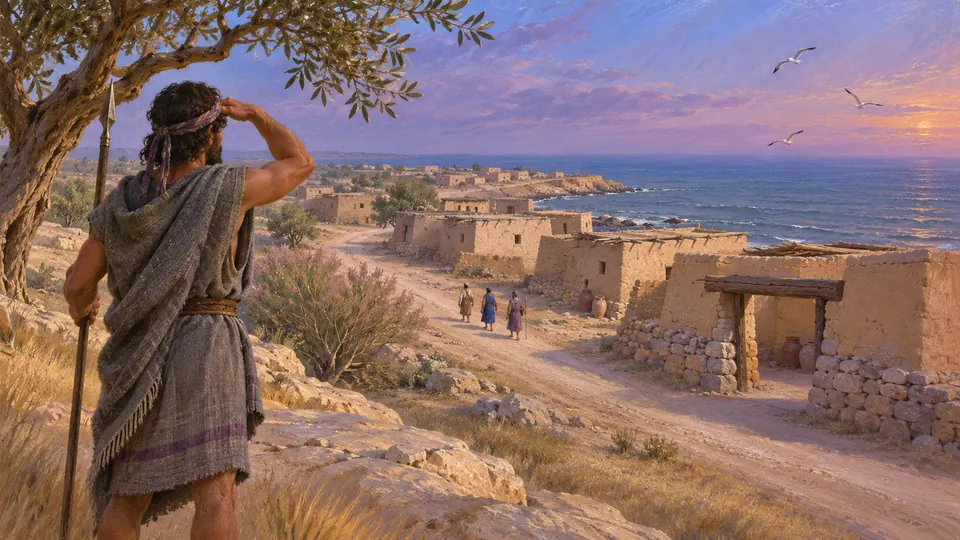
The beginning is lost. Where the text starts, Djehuty is already in talks with the ruler of Joppa outside the town. He pretends that he will surrender, invites the enemy's chariot fighters to drink, and has their horses secured. The ruler asks to see the great club, or staff, of King Menkheperre. Djehuty brings it and strikes him on the forehead with it, then binds him. Next, 200 soldiers climb into baskets, which are sealed and carried by unarmed men as if they were gifts. A messenger tells the ruler's wife, his "mistress", that the god Seth (Sutekh) has given them Djehuty. The gate opens, the hidden soldiers climb out, and the town's people are bound as captives. No one is killed in the story. [3][5]
The tale ends with Djehuty's report to the king. In Flinders Petrie's translation of 1895:
He asks for men to take the captives to Egypt for the house of AmunAmunAmun is an Egyptian deity centered on Thebes and Karnak, the “hidden one,” also worshipped as Amun-Re. His names and images were targeted under Akhenaten before royal support resumed.Glossary · Click to read the explanation. A closing line names a "scribe of the army", as if it were an eyewitness report. Petrie added an opening of his own to make the story readable. Popular retellings that begin with the king hiding his staff in Djehuty's baggage follow that modern addition, not the papyrus. [3][5]
History or story?
Readers have compared the tale with the wooden horse of TroyTroy / HisarlıkArchaeological site in northwestern Turkey associated with Troy in Greek tradition.Glossary · Click to read the explanation and with Ali Baba and the forty thieves. In 1925 T. Eric Peet called it "probably legendary". Davies reads it as a carefully made literary work, full of wordplay, in which the baskets are even used as a running joke in the spelling. [3][5]
Archaeology gives a context, not a proof. Joppa, Egyptian Yapu, appears in Thutmose III's list of towns taken in his first campaign, after the battle of MegiddoMegiddo, Tell el-MutesellimArchaeological mound in present-day northern Israel with Bronze and Iron Age cities, associated with a Gilgamesh fragment.Glossary · Click to read the explanation, but no destruction at Jaffa matches that conquest. Excavators of the Egyptian fortress at Jaffa found that its earliest garrison was destroyed late in the fifteenth century BCE. They suggest, carefully, that if the tale remembers a real event, it may be a retaking of the town after a local revolt. [4]
Quick answers
Was Djehuty a real person?
Yes. Objects made in his lifetime name a general Djehuty under Thutmose III. Whether this man is the hero of the tale is likely but not proven. [1][3][4]
Did the basket trick really happen?
No source outside the tale records it. It survives in one copy written about two centuries later. [3][4]
References and notes (5)
- Musée du Louvre, Département des Antiquités égyptiennes, “Coupe de Djéhouty,” N 713, collection record Whole record: date (reign of Thutmose III, 1479–1425 BCE), gold, repoussé, H. 2.2 cm, diam. 17.9 cm, friezes of fish and flowers, lotus and royal cartouche, hieroglyphic dedication, names and titles of Djehuty, find place “Saqqara-Nord ?” and “tombe du général Djéhouty ?”, discovery 1820–1822 (?), purchase from Bernardino Drovetti (Drovetti no. 260), inventory 1827; the related silver bowl E 4886 (Anastasi no. 956). Return to the text ↑
- Rijksmuseum van Oudheden, Leiden, bracelets AO 2a-1, AO 2a-2 and AO 2b, record in the Global Egyptian Museum Whole record: the bracelets as probable grave goods of General Djehuty, “overseer of the northern foreign lands” under Thutmose III, buried at Saqqara and found there in 1824 with his heart scarab (AO 1a); the throne name of Thutmose III on AO 2b; former Anastasi collection; bibliography (Leemans 1850, Lilyquist 1988, Reeves 1993). Return to the text ↑
- David Peter Davies, The Taking of Joppa (MA thesis, Durham University, 2003) Introduction, pp. 1–7 (Peet's “probably legendary”, Papyrus Harris 500: find, damage, layout, hieratic script, Late Egyptian, Ramesside date, review of scholarship); “The Narrative of Joppa”, pp. 8–14; “Djehuty”, pp. 46–50 (the name and Thoth, the objects naming Djehuty, the gold-bowl inscription quoted from Egypt's Golden Age, Boston 1982, the silver bowl, Galán's and Lilyquist's doubts, TT 11); Conclusions, pp. 132–133. Return to the text ↑
- Aaron A. Burke, Martin Peilstöcker et al., “Excavations of the New Kingdom Fortress in Jaffa, 2011–2014: Traces of Resistance to Egyptian Rule in Canaan,” American Journal of Archaeology 121.1 (2017): 85–133, open access Pp. 89–90 with n. 25–27 (Yapu in Thutmose III's list of the first campaign; no evidence of an Egyptian conquest destruction; Kaplan's reading of the tale rejected); pp. 123–125 with n. 147–150 (level VI late destruction, the Tale of the Capture of Jaffa as possible memory of a recapture, Djehuty as historical “overseer of northern foreign lands” after Lilyquist 1988 and Reeves 1993); p. 127 (resistance and the tale's Ramesside date). Return to the text ↑
- W. M. Flinders Petrie (ed.), Egyptian Tales, Translated from the Papyri, Second Series: XVIIIth to XIXth Dynasty (London: Methuen, 1895), “The Taking of Joppa” The full translation and Petrie's “Remarks” (his restored opening, the gold dish in the Louvre, later stories of soldiers hidden in packages); Project Gutenberg text no. 7413. Return to the text ↑
Suggest a correction · Suggest a source for this record
Cite this record
IL Archive, «Djehuty and the Taking of Joppa», https://ilarchive.com/en/people/djehuty-of-joppa
Continue reading