Person · Figure
Thutmose III
- Names
- Menkheperre · Thutmes III · Thutmose III · Thutmosis III · Tuthmosis III
- Timeline
- From 1479 BCE to 1425 BCE
- Region
- Egypt
An Egyptian king of the Eighteenth Dynasty, about 1479–1425 BCE. He shared the throne with Hatshepsut, then led some seventeen campaigns into the Levant, recorded in his Annals at Karnak.
Estimated reading time: 6 min Published Last reviewed:
Share article
Text
Introduction
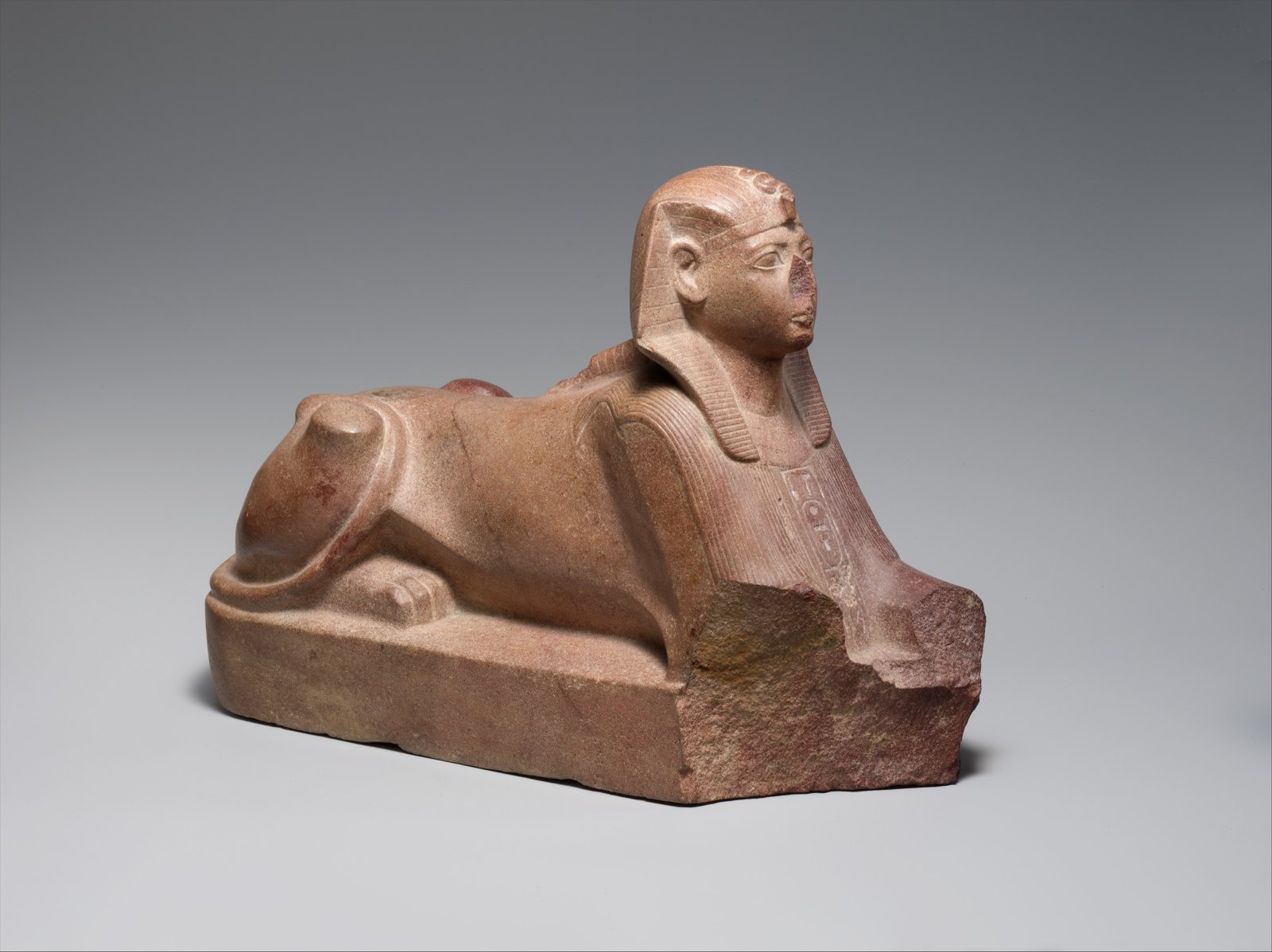
Thutmose III was a king of Egypt's Eighteenth Dynasty, in the period Egyptologists call the New Kingdom. The Metropolitan Museum of Art dates his reign to about 1479–1425 BCE, more than fifty years. His throne name was Menkheperre. Texts and later stories often use that name. [1]
He became king as a boy. For many years his stepmother and aunt, Hatshepsut, governed beside him, first for him and then as king herself. After her death he ruled alone, led army after army into the lands east of the Mediterranean, and built on a grand scale for the god AmunAmunAmun is an Egyptian deity centered on Thebes and Karnak, the “hidden one,” also worshipped as Amun-Re. His names and images were targeted under Akhenaten before royal support resumed.Glossary · Click to read the explanation. This entry sets out what the monuments and texts show about him, and where scholars still disagree. [1][2]
A young king and a senior partner
His father was King Thutmose II, and his mother was a woman named Isis. When his father died, Thutmose III was too young to rule alone, so Hatshepsut, his father's widow, acted as regent: she governed in his name. Within a few years she took the full titles of a king, and the two reigned together. The Met dates objects from their joint reign to about 1473–1458 BCE. [1][2]
The years were still counted in his reign. The famous voyage to Punt, a distant land reached by sea, is dated in the reliefs at Deir el-Bahari to "regnal year 9 of Thutmose III", as the Polish mission working at the temple notes. On the same portico he appears beside Hatshepsut, making offerings before the sacred boat of Amun. [3]
Megiddo and the Annals
Our main written source for his wars is a long inscription that modern scholars call the Annals. It is carved on the walls around the sanctuary of Amun's great temple at Karnak, in ThebesThebes, EgyptThebes, Egyptian Waset, was an ancient Egyptian city in the area of modern Luxor, with monuments on both banks of the Nile.Glossary · Click to read the explanation. The American Egyptologist James Henry Breasted, who translated it in 1906, called it the longest and most important historical inscription in Egypt. The text itself says that each day of the first campaign was written down on a roll of leather kept in Amun's temple. The wall gives only an extract, and, as Breasted noted, since the temple scribe cared more about booty for the temples than about the fighting, most later campaigns shrink to short lists. [4]
The first campaign set out in the king's 22nd regnal year. A league of local rulers, led by the ruler of Kadesh, a city on the upper Orontes river in Syria, had gathered at the town of MegiddoMegiddo, Tell el-MutesellimArchaeological mound in present-day northern Israel with Bronze and Iron Age cities, associated with a Gilgamesh fragment.Glossary · Click to read the explanation in CanaanCanaanRegional name in the Mediterranean Levant, associated with Canaanite cities and cultures in the second millennium BCE and with Abraham’s family’s destination in Genesis.Glossary · Click to read the explanation. At a council of war, his officers begged him not to take the narrow pass by Aruna, where horse would have to follow horse and man follow man. The king chose that road anyway and went ahead of his army. The troops came out of the hills safely, camped, and the next morning they broke the enemy line. [4]
Then they stopped to plunder the enemy camp. Meanwhile, the people of Megiddo pulled their fleeing leaders up over the walls by their clothes. The Egyptians had to besiege the town. They built a wall of timber around it and named it "Menkheperre-is-the-Surrounder-of-the-Asiatics". In Breasted's translation, the king tells his men why the town mattered:
The list of spoil names 340 living prisoners, 2,041 mares and 924 chariots. These are royal records, written to honour the king and Amun. They tell one side of the story. [4]
Seventeen campaigns
As Breasted reconstructs the Annals, the king spent sixteen of the next eighteen summers campaigning in Syria, seventeen campaigns in all. Around year 29 he secured the harbours of the Phoenician coast, and from then on the army travelled by ship. In year 33 he marched to the Euphrates, crossed it, and set up a boundary stone beside that of his grandfather, Thutmose I. Gifts came from the kings of BabylonBabylonBabylon is an ancient city in central present-day Iraq, south of BaghdadGlossary · Click to read the explanation and of the HittitesHittitesAncient people and kingdom of Anatolia, dominating much of Anatolia and northern Syria around 1650–1200 BCE.Glossary · Click to read the explanation. The last campaign, in year 42, ended with the capture of Kadesh. [4]
Breasted called him "unquestionably the greatest military leader of ancient Egypt". That is the judgment of a scholar writing in 1906. The Annals are the king's own account: the records of some years are lost, and in others it is hard to tell a real war from a royal tour of inspection. [4]
Building for Amun
In his 23rd year, the year of the battle of Megiddo, he began a new temple at the eastern end of Karnak, now called the Akhmenu. It was finished seven years later. The columns of its great hall imitate tent poles, and its texts call it a "mansion of millions of years". One room, often called the botanical garden, shows plants and animals that the king saw on his campaigns. A small room nearby showed him making offerings to sixty-one earlier kings, a list of royal ancestors. [5]
The cutting of Hatshepsut's images
Late in his reign, images of Hatshepsut as king were cut away, and her name was replaced with those of Thutmose I or Thutmose II. In the Punt portico, her figure and texts were hacked out by his order. [2][3]
The reason is debated. The older view was that he took revenge as soon as he ruled alone. The work of Charles Nims and Peter Dorman showed that the attacks came at least 20 years after her death, and that only images of her as king were changed. Dorman suggests two possible reasons, neither proven: the problems a female king posed for the idea of kingship, or a wish to remove a rival branch of the royal family. [2]
Tomb and mummy
His tomb, KV 34 in the Valley of the Kings, was found by Victor Loret in 1898. The burial chamber has rounded corners, like a cartouche, the oval ring that encloses a royal name. Its walls carry the first complete copy of the Amduat (also written Imydwat), a guide to the twelve hours of the night, written in a quick, cursive hand, like a papyrus. One unusual scene shows the king fed by a tree goddess labelled Isis, the same name as his mother. [6]
Robbers plundered the tomb in ancient times. The mummy was rewrapped and moved, and in 1881 it was found in its outer coffin in the royal cache at Deir el-Bahari. The anatomist Grafton Elliot Smith, quoting the French Egyptologist Gaston Maspero, describes how robbers broke the body into pieces and how ancient restorers held it together with four painted wooden slats. He measured the mummy at 1.615 metres. [6][7]
In later stories
A tale known as the Taking of Joppa opens "in the time of King Men-kheper-ra". In it his general, Djehuty, tricks the ruler of JoppaJaffa / Joppa, historic portA Mediterranean coastal city and port from which Jonah begins his voyage toward Tarshish.Glossary · Click to read the explanation, strikes him with the king's great staff and sends soldiers into the town hidden in sacks. It is a story from a later papyrus, not a war record. Its hero has his own page on this site, "Djehuty and the Taking of Joppa". [8]
Quick answers
Who was Thutmose III?
An Eighteenth Dynasty king of Egypt, about 1479–1425 BCE, who first shared the throne with Hatshepsut and then ruled alone. [1][2]
Did he erase Hatshepsut?
Images of her as king were cut away by his order, but late in his reign. Why he did it is still debated. [2][3]
References and notes (8)
- The Metropolitan Museum of Art, collection records “Sphinx of Thutmose III” (08.202.6) and “Seated Statue of Hatshepsut” (29.3.2) Object records read through the Met's Open Access collection API: 08.202.6, quartzite, l. 34.6 cm, h. 23.3 cm, New Kingdom, Dynasty 18, reign of Thutmose III, ca. 1479–1425 BCE, Rogers Fund 1908, public domain; 29.3.2, dated ca. 1473–1458 BCE, “Joint reign of Hatshepsut and Thutmose III”. Return to the text ↑
- Emily Teeter, “Hatshepsut and Her World,” review of the exhibition and catalogue Hatshepsut: From Queen to Pharaoh (ed. Catharine H. Roehrig, 2005), American Journal of Archaeology 110 (2006): 649–653 Pp. 649–650 (regency for her stepson and nephew Thutmose III, joint rule, the proscription and the work of Charles Nims and Peter Dorman: attacks at least 20 years after her death, only images of her as king, Dorman's two possible motives); p. 652 (the final gallery on Thutmose III, the altered statue of Ahmose, the foreign wives' tomb); p. 653 (catalogue essays). Return to the text ↑
- Filip Taterka, “Middle Portico South (Portico of Punt),” Polish-Egyptian Archaeological and Conservation Expedition to the Temple of Hatshepsut at Deir el-Bahari, Polish Centre of Mediterranean Archaeology, University of Warsaw Whole page: the expedition dated to regnal year 9 of Thutmose III; Hatshepsut and Thutmose III with Amun on the pillars; the west-wall offering before the sacred bark of Amun; figures and texts hacked out by order of Thutmose III. Return to the text ↑
- James Henry Breasted, Ancient Records of Egypt, vol. II: The Eighteenth Dynasty (Chicago: University of Chicago Press, 1906) The Annals, §§ 391–405 (pp. 163–171: location of the Annals at Karnak, the leather roll, the scribe Thaneni, Breasted's summary of the seventeen campaigns, years 29, 33 and 42); first campaign, §§ 415–437 (pp. 179–188: Tharu and Gaza, the council of war and the Aruna road, the battle, the siege enclosure, the spoil). Return to the text ↑
- Digital Karnak (University of California), “Akhmenu” Whole page: construction begun in year 23 and completed seven years later, the jubilee hall, “mansion of millions of years”, the columns imitating tent poles, the botanical room with flora and fauna seen on campaign, the hall of ancestors with sixty-one kings. Return to the text ↑
- Theban Mapping Project (American Research Center in Egypt), “KV 34: Thutmes III” About, Site History and Exploration tabs, and the burial-chamber description: location, plan, cartouche-shaped burial chamber, first complete Imydwat and earliest Litany of Ra, cursive figures, the king nursed by a tree goddess labelled Isis (also his mother's name), ancient plundering, the mummy rewrapped in Dynasty 21 and found in the Deir el-Bahari cache (TT 320) in 1881, discovery by Victor Loret in 1898. Return to the text ↑
- G. Elliot Smith, The Royal Mummies, Catalogue général des antiquités égyptiennes du Musée du Caire, nos 61051–61100 (Cairo: Institut français d'archéologie orientale, 1912) No. 61068, The Mummy of Thoutmosis III, pp. 32–36: unwrapping in 1881, Maspero's account of the robbery and reburial with four wooden slips, the broken body, the embalming wound, height 1.615 m. Return to the text ↑
- W. M. Flinders Petrie (ed.), Egyptian Tales, Translated from the Papyri, Second Series: XVIIIth to XIXth Dynasty (London: Methuen, 1895), “The Taking of Joppa” The full translation: “in the time of King Men-kheper-ra”, Tahutia (Djehuty), the great cane of Men-kheper-ra, the two hundred sacks, the message to the king; Project Gutenberg text no. 7413. Return to the text ↑
Suggest a correction · Suggest a source for this record
Cite this record
IL Archive, «Thutmose III», https://ilarchive.com/en/people/thutmose-iii
Continue reading
Related readings