Study
Debt Release and the Jubilee: Did the Torah Borrow Liberation from Babylonian Kings?
An extended study of a topic, with evidence and references.
- Timeline
- From 1700 BCE to 500 BCE
- Region
- Mesopotamia and the Levant
From Ammiṣaduqa’s edict to Exodus, Deuteronomy, Leviticus, Jeremiah and Qumran: how do service, debt and land release differ, and what historical link can be established?
Share article
Text
# Debt Release and the JubileeBiblical JubileeThe release and return to ancestral holding in Leviticus 25 after seven cycles of seven years.Glossary · Click to read the explanation: Did the TorahTorah / PentateuchGenesis, Exodus, Leviticus, Numbers and Deuteronomy: Mosaic corpus with a compositional history. Torah can also mean teaching or law beyond these five books.Glossary · Click to read the explanation Borrow Liberation from Babylonian Kings?
The resemblance can look striking: a Babylonian king proclaims “release,” cancels obligations, and returns people to their homes; a biblical text commands the remission of debts and a person's return to family and land. Yet “release” covers different rules, different timetables, and people to whom freedom did not extend. A historian cannot infer from resemblance alone that a writer copied a particular edict. Nor can we ignore an older legal tradition aware that accumulating debt could disperse a family and deprive it of land and labor.
The question here is specific. What did Mesopotamian edicts release? How does the debt remission of Deuteronomy 15 differ from six-year service in Exodus 21 and the Jubilee of Leviticus 25? And do we know that these laws were regularly enforced?
Our study of Hammurabi and the Covenant Code examines other parallels between Babylonian and biblical laws. Here we test the institution of release, its social limits, and its timing.
The edict of Ammiṣaduqa: a royal decision, not a universal amnesty
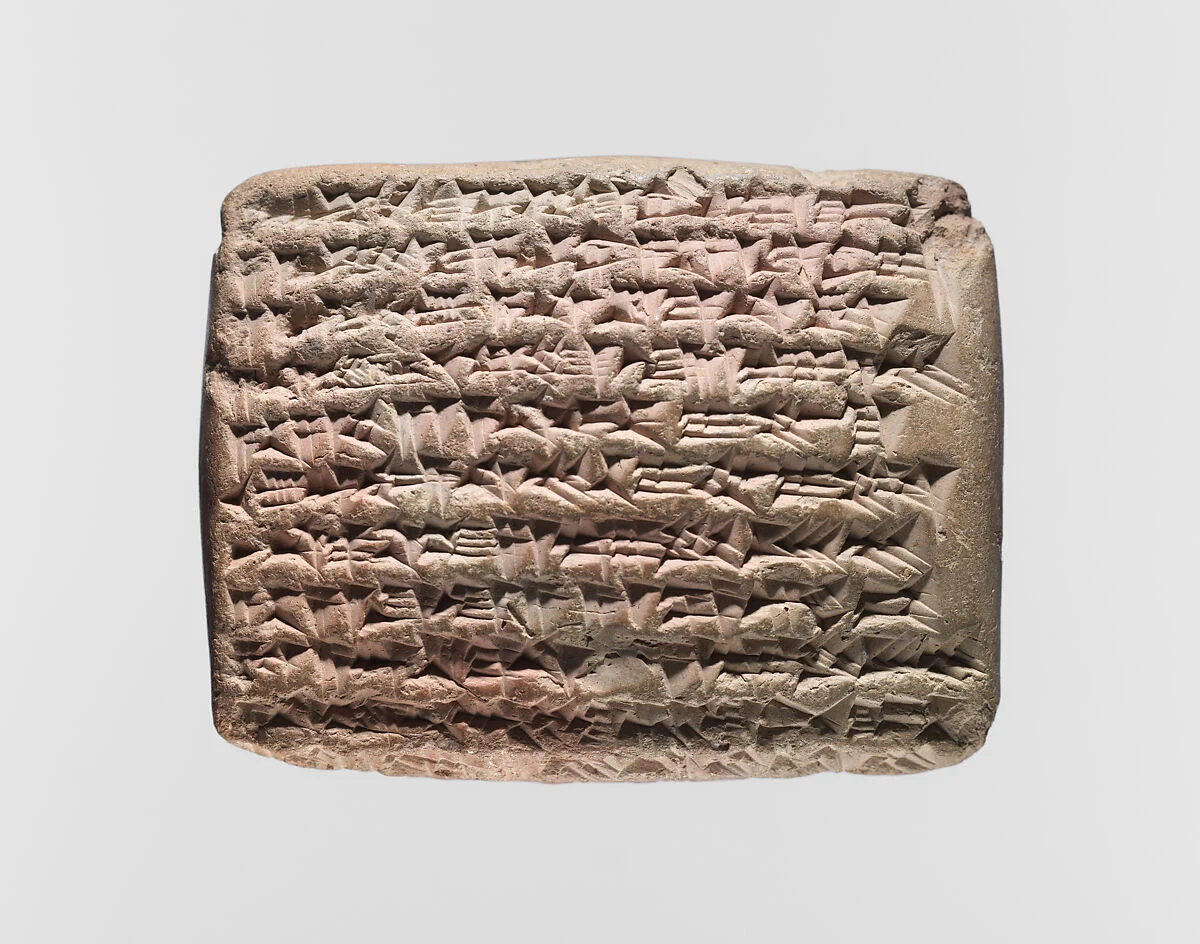
Old Babylonian texts preserve royal decrees often called *mīšarum* in scholarship, also associated with proclamations of *andurārum*, or release. Among the fullest is the edict of Ammiṣaduqa, a Babylonian king of approximately the seventeenth century BCE under one commonly used chronology. It is not merely an abstract ethical instruction: it specifies particular financial obligations, people, and cases. [1][2][3]
Some provisions cancel arrears and interest-bearing debts; another releases certain people who had entered a creditor's service because of debt. But a provision concerning finance for trade and profit exempts those transactions, according to the published translation. The text also distinguishes people held because of debt from others born in a master's household or belonging to categories this decree does not release. It therefore describes neither “cancellation of all debt” nor abolition of all slavery. Daniel Snell's study of the limits of ancient Near Eastern manumission supports this distinction. [1][2]
The order came from a king and was tied to circumstances of his rule. The edict does not say the land must repeat it automatically every seven or fifty years. Mesopotamian history knew more than one such proclamation, sometimes associated with a ruler's accession, but recurring royal edicts are not the same as a fixed calendar binding each generation. A written edict also establishes the order's wording, not the number of contracts actually voided or how every creditor complied. [1][3][11]
Three biblical timetables that must be kept distinct
The “seventh year” and “fiftieth year” are often placed in one basket, producing a modern law that is not present so simply in the text. First, there is a rule tied to a particular person's term of service. Second, there is a communal year of financial remission. Third, there is a Jubilee concerning land and certain service relationships. These laws may share a concern to limit lasting poverty, but they do not say the same thing. [4][5][6][10]
In Exodus 21:2, a HebrewHebrewA Northwest Semitic language in the Canaanite group, with ancient and modern forms.Glossary · Click to read the explanation male servant works for six years and goes free in the seventh. This is the seventh year since his own service began, not necessarily a seventh year shared by the whole population. The text carefully distinguishes whether he came alone or with a wife, and what happens to a wife and children given to him by his master. Nor are the following provisions for a girl sold into service simply identical to the man's. This passage cannot be presented as the automatic release of everyone in the household after six years. [6]
Deuteronomy 15:1–3 gives another rule: at the end of every seven years there is a *shemittah*, a release or remission of a claim. The lender must not press a neighbor or brother for payment, though the text permits collection from a foreigner. It urges lending to the poor even when the seventh year is near, since expected loss might make the wealthy close their hand. The provision thus addresses debt within a defined community. It does not say that every loan in every society was cancelled without exception. [4]
Later in the same chapter, Deuteronomy 15:12–18 returns to the six-year rule, but explicitly mentions Hebrew men and women and requires that a released servant receive provisions for a new beginning. A hurried reading might make their release occur at the very moment of communal debt remission. The service term, however, is counted as six years for that person, while the lending rule follows a general seven-year cycle. The woman's position here also differs from the details of Exodus 21. These are differences within the biblical legal collection itself, not mistakes a summary should erase. [4][6]
Leviticus 25: the fiftieth year is not simply a bigger debt year
Leviticus 25 commands the counting of seven cycles of seven years and then the proclamation of the Jubilee in the fiftieth year. The declaration is linked to the Day of AtonementYom Kippur / Day of AtonementJewish observance whose Leviticus 16 setting involves sanctuary purification and the sent-away goat; distinguish ancient instructions from later practice and interpretation.Glossary · Click to read the explanation and the term *deror*, release or liberty. Those covered by the law return to family and ancestral holding. But the chapter's center is not just a loan ledger. It is the family's ability to retain a claim to land across generations. The text says the land belongs to YHWHYahwehThe divine proper name written YHWH in the Hebrew Bible.Glossary · Click to read the explanation and the people reside with him upon it; it then regulates a transfer's price according to the harvest years remaining until the Jubilee. In this scheme, a buyer does not acquire ancestral land forever. [5][11]
The return has defined limits. A house in a walled city can become permanent property if it is not redeemed within a year; village houses follow the rule for fields. Levites have further exceptions. An impoverished Israelite who enters another's service is not to be treated in this chapter as an enslaved person without prospect of return, and at the Jubilee returns to family and ancestral holding. Yet the text also permits acquiring enslaved people from surrounding nations and passing them on to one's children. One cannot extract the phrase “proclaim liberty throughout the land to all its inhabitants” and describe the legislation as equal emancipation for every resident and enslaved person. The subsequent provisions define who can return and who cannot. [5]
The decisive distinction for our subject is that Leviticus 25 does not expressly order monetary loans cancelled in the fiftieth year. Deuteronomy 15 expressly addresses a lender's claim in the seventh. A later reader might regard remission as practically necessary for a family to regain its land. But that is an inference or a reading that joins two passages, not a sentence written into the Jubilee law itself. The biblical Jubilee should therefore not be described as literally a Babylonian edict cancelling every loan, repeated at fifty-year intervals. [4][5][8]
What did ancient readers do with this difference?
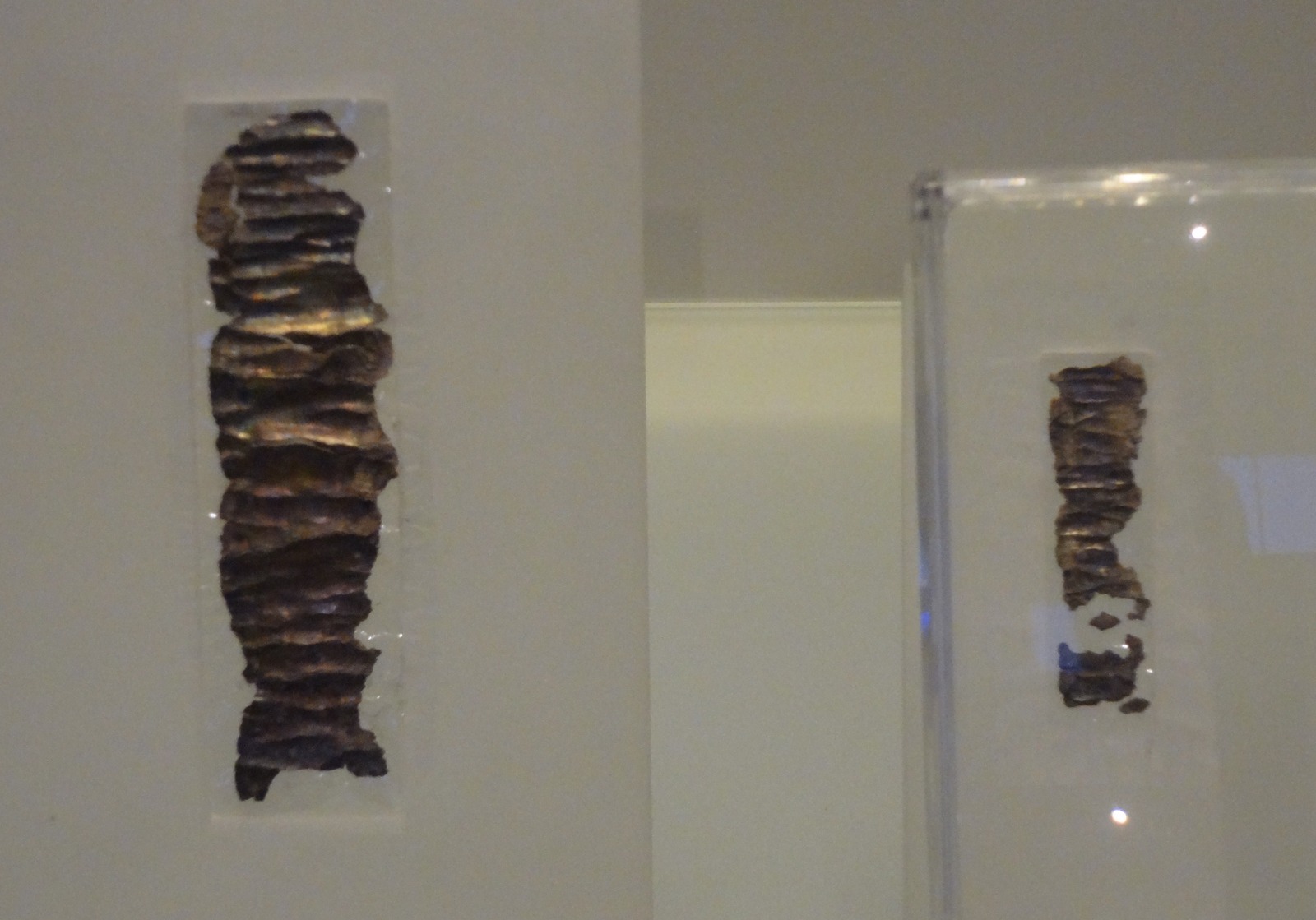
A QumranDead Sea ScrollsJudaean Desert manuscripts, especially Qumran cave finds. Biblical copies and other works reveal textual diversity; a copy’s age is not the work’s initial date.Glossary · Click to read the explanation interpretation known as 11QMelchizedek survives from the Second Temple periodSecond Temple JudaismDiverse Jewish traditions under Persian, Hellenistic and Roman rule, not one creed.Glossary · Click to read the explanation. Its passage joins the return of Leviticus 25 with the debt-remission formula of Deuteronomy 15, incorporating financial release into its vision of the final Jubilee. MichaelMichael / MīkālTheophoric name asking who is like God; borne by humans and a heavenly figure in Daniel. It establishes no former Canaanite deity.Glossary · Click to read the explanation Bartos and Bernard Levinson have analyzed how the quotations are placed together: the result is an act of interpretation linking distinct texts, not the direct quotation of a single law. [8]
By contrast, rabbinic interpretive works such as Sifre Deuteronomy and Sifra Leviticus keep the two functions apart: the seventh year remits loans; the Jubilee releases servants. This difference is no trivial late detail. It shows that the absence of an explicit monetary rule in Leviticus 25 allowed more than one reading in ancient Judaism. We should not select one interpretation and attribute it to every earlier period. Nor does the presence of a Qumran manuscript interpreting the Torah show how courts in the kingdom of JudahKingdom of JudahJudah was an ancient southern Levantine kingdom centered on Jerusalem in the Iron AgeGlossary · Click to read the explanation applied it centuries before. [8]
Can we see enforcement in Jeremiah 34?
Jeremiah 34 narrates King Zedekiah's covenant to release Hebrew male and female servants in JerusalemJerusalemJerusalem is a city of religious importance in Judaism, Christianity and IslamGlossary · Click to read the explanation, followed by their re-enslavement and a prophetic rebuke. It matters because it describes a release amid political events, rather than a legal formula alone. But it does not say the king was proclaiming the regular fiftieth-year Jubilee on its scheduled date. Some scholars take the episode as evidence of a Jubilee-like practice. Jonathan Kaplan cautions against taking it as proof of periodic implementation; it may have been an emergency measure during a siege. [7][11]
The absence of a surviving register of regular observance cannot prove that no one ever implemented a Jubilee; Zedekiah's story cannot prove that all generations did. Kaplan argues that the institution was plausible in an agrarian society organized around family landholding. He explicitly says plausibility does not establish actual enactment, for which affirmative evidence is presently lacking. The distinction between what a society could conceive as law and what we know happened in daily life remains open. [11]
*Deror* and *andurārum*: what can language establish?
The Hebrew *deror* in Leviticus 25 and Jeremiah 34 is related to AkkadianAkkadianAn ancient East Semitic language written in cuneiform in Mesopotamia.Glossary · Click to read the explanation *andurārum/durārum* in the domain of proclaimed release. Comparisons also exist among formulas of proclamation and release and among techniques for arranging land and rights in ancient Semitic texts. This goes beyond observing that two peoples cared about poverty: there are real connections within a regional legal vocabulary. [7][9][11]
The nature of the linguistic link remains debated. Did Hebrew borrow directly from Akkadian at a specific time? Did both languages preserve a related form from a broader Semitic stock? Or did borrowing happen earlier than some scholars suggest? Kaplan uses sound change to challenge a necessarily late borrowing date; other scholars propose borrowing. One word cannot date the composition of Leviticus 25 by itself, or prove that its author saw the Ammiṣaduqa tablet whose translation we read today. [9][11]
A historical connection without an easy copying story
There are three levels of evidence. Primary texts show that Babylonian kings issued selective releases from certain debts and service, and that the Torah contains different laws for the seventh year and the Jubilee. Comparison reveals related terms, goals, and proclamation formulas in a Near Eastern setting that knew debt and the danger of losing freedom and land. A specific chain of transmission, from a named Babylonian document to a named biblical editor, is not attested. The arrangements also differ: a royal decision linked to a reign on one side, a recurring divine rule tied to a calendar and ancestral land on the other. [1][4][5][11]
It is thus stronger than the evidence to say that “the Torah copied Ammiṣaduqa's edict.” It ignores real connections to say that the Jubilee arose in total isolation from older legal culture. The sounder conclusion is that biblical texts recast a familiar regional social problem in their own terms, linking land and liberty to Israel's God and the rhythm of time, without our being able to trace every idea from hand to hand. [8][11]
What we can now establish is that seventh-year remission of a loan is not release after six years of personal service or return of land at the fiftieth-year Jubilee. The extent of actual enforcement, the date and route of legal vocabulary, and the extent to which the rules were combined in different periods remain open. Leaving those questions open does not diminish the texts. It lets us see exactly what they did: they confronted the danger of debt becoming inherited poverty, but drew boundaries around release in ways that were neither uniform nor universal.
References and notes
- Selected Ammiṣaduqa edict clauses, Finkelstein-attributed translation Edict of Ammiṣaduqa §§1–8, 11–17, 20–21, English translations attributed in the rehost to J. J. Finkelstein Return to the text ↑
- Daniel Snell, publisher excerpt pp. 3–10, not the whole book Daniel C. Snell, 'Slavery in the Ancient Near East,' in Cambridge World History of Slavery, excerpt pp. 3–10, especially p. 10 Return to the text ↑
- Cristina Simonetti, university record and abstract only Cristina Simonetti, 'Gli editti di remissione dei debiti,' university repository abstract (2015) Return to the text ↑
- Deuteronomy 15:1–18, Hebrew text and JPS translation Deuteronomy 15:1–18, Hebrew and JPS 1917 Return to the text ↑
- Leviticus 25 in full, Hebrew text and JPS translation Leviticus 25:1–55, Hebrew and JPS 1917 Return to the text ↑
- Exodus 21:1–11, Hebrew text and JPS translation Exodus 21:1–11, Hebrew and JPS 1917 Return to the text ↑
- Jeremiah 34:8–22, Hebrew text and JPS translation Jeremiah 34:8–22, Hebrew and JPS 1917 Return to the text ↑
- Bartos and Levinson, JBL article, selected pp. 351–368 Michael Bartos and Bernard M. Levinson, JBL 132 (2013), pp. 351–371, embedded at PDF pp. about 148–169; especially print pp. 361–368 Return to the text ↑
- Yoo-ki Kim, article abstract and record only Yoo-ki Kim, 'The meaning of Děrôr in Jeremiah 34:17,' Korean Journal of Old Testament Studies 28.2 (2022), abstract Return to the text ↑
- Gregory Chirichigno, university thesis abstract only Gregory Conrad Chirichigno, 1989 PhD thesis, university repository abstract Return to the text ↑
- Jonathan Kaplan, selected pp. 183–190 and 201–203, not the entire article Jonathan Kaplan, The Credibility of Liberty, Catholic Biblical Quarterly 81 (2019), pp. 183–203 Return to the text ↑
Suggest a correction · Suggest a source for this record
Cite this record
IL Archive, «Debt Release and the Jubilee: Did the Torah Borrow Liberation from Babylonian Kings?», Edition 1, https://ilarchive.com/en/studies/debt-release-and-biblical-jubilee
Continue reading