Entity · Figure
Michael / Mīkāl
A reference page linking a name, group, or concept to the materials that discuss it.
A name meaning “Who is like God?”, borne by humans and an angel. The entry compares Daniel, Jude, Revelation and the Qurʾan, distinguishing the name’s meaning from roles and later reception.
Estimated reading time: 7 min Published Last reviewed:
Share article
Text
Introduction
Michael means “Who is like God?” and is borne by humans and a heavenly figure. The angel’s roles range from protecting Daniel’s community to advocacy and judgment in other Jewish traditions, disputation and warfare in Christian writings, and the Qurʾanic naming of Mīkāl followed by Islamic interpretations of his functions. These witnesses share a name, not an identical narrative.
One name, different bearers
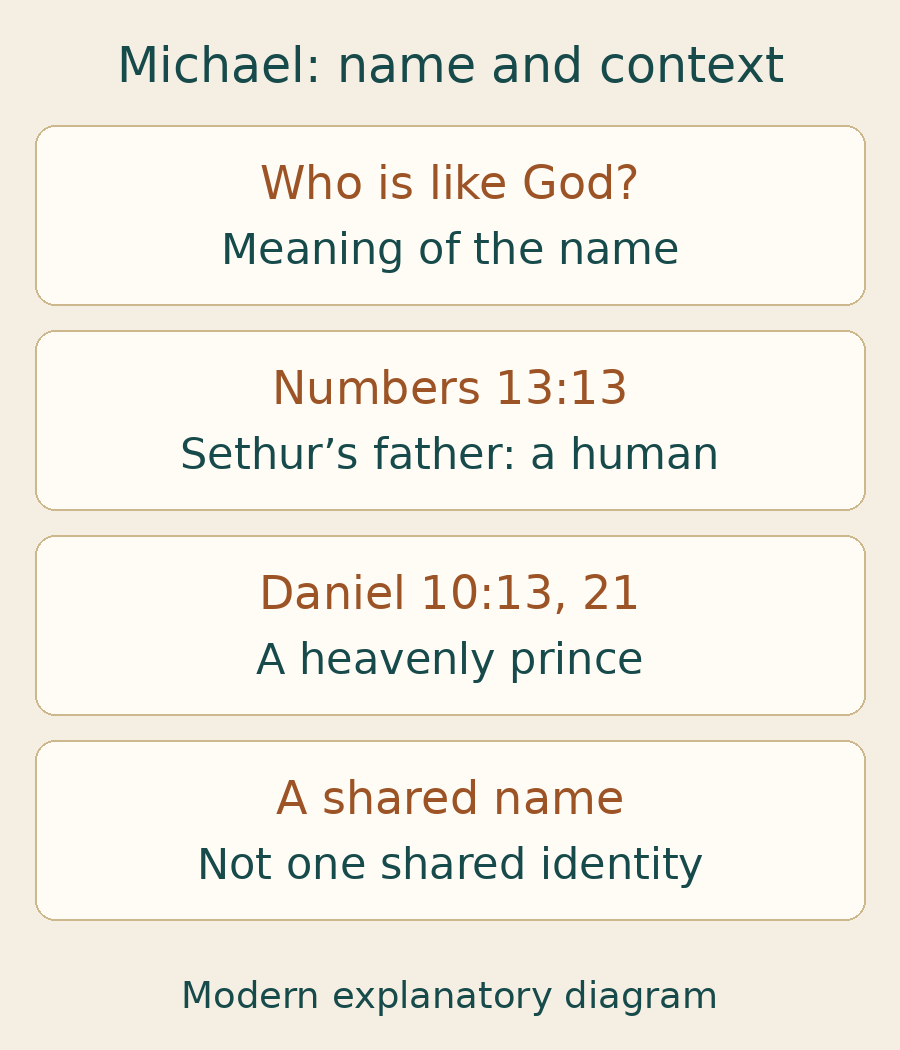
The HebrewHebrewA Northwest Semitic language of the Canaanite group, encompassing Iron Age epigraphy, Biblical, Rabbinic, medieval and Modern Hebrew; its scripts and pronunciations changed over time.Glossary · Click to read the explanation form מִיכָאֵל, transliterated here Mîkhāʾēl, is an interrogative name: “Who is like God?” It is a theophoric nameTheophoric nameA personal name including a deity’s name or another divine element, often as part of a short sentence or invocation, interpreted in its original language and context.Glossary · Click to read the explanation, a name containing a divine element; El belongs to its structure, rather than being a separate name for the angel.[1] Numbers, a book of the Torah, includes Sethur son of Michael among the men sent to scout Canaan. Here Michael is a human father in a genealogy, not the angel of Daniel.[2]
The order of biblical books and the setting of a story do not establish when the name originated. Nor does the element El alone show that Michael was a Canaanite god who became an angel. Such a connection requires evidence about the figure and its history, not merely analysis of the name.
A heavenly prince in Daniel
The Book of DanielBook of DanielA book combining court tales of wisdom and deliverance with visions of kingdoms and the future, formed in stages.Glossary · Click to read the explanation combines court talesCourt TaleAn analytical category for stories in which a sage or outsider faces tests of skill, loyalty, or survival at a royal court, through contest, accusation, or reversal; it does not establish one textual origin.Glossary · Click to read the explanation with visions of kingdoms and deliverance. In 10:13 a heavenly messenger describes Michael as מִיכָאֵל אַחַד הַשָּׂרִים הָרִאשֹׁנִים, “Michael, one of the foremost princes,” and says he came to help him against Persia’s prince; in 10:21 he calls him מִיכָאֵל שַׂרְכֶם, “Michael your prince.” Michael is the speaker’s ally, not the speaker himself. “One of” places him among several princes, while “your” connects him to Daniel’s community; the text neither calls him a god nor supplies a complete angelic hierarchy.[3] In 12:1 the great prince defending Daniel’s people arises during distress, before the following verse discusses resurrection.[5]
The story is set under Babylonian and Persian kings in the sixth century BCE. Critical dating, however, places the final visions in the context of King Antiochus IV’s persecution of Jews in the second century BCE. These distinguish the narrated setting from the likely time of writing; neither is an angel’s birth date.[6]
Enoch, Qumran and rabbinic advocacy
The Jewish evidence extends beyond Daniel. In 1 EnochFirst EnochA composite Second Temple Jewish apocalyptic collection on the Watchers, parables, celestial cycles, historical visions, and judgment, preserved complete in Geʽez.Glossary · Click to read the explanation 9:1–11 Michael joins other angels in presenting a complaint about violence on earth. In 10:11–16 he is ordered to bind ShemihazahShemihazah: leader of the WatchersShemihazah is a leader of the Watchers in 1 Enoch, associated with their collective oath and binding until judgment.Glossary · Click to read the explanation, leader of the rebellious angels called Watchers, and his companions until judgment, within a narrative culminating in the earth’s purification. He is an intercessor and an executor of divine judgment, not merely a military opponent of another nation’s prince. In 20:5 he is associated with the good or righteous among the people, but the critical translators warn that the witnesses are confused: was the reference to all Israel or its righteous members? Neither reading should be presented as certain.[12]
Nickelsburg and VanderKam date the present form of the Book of the WatchersBook of the WatchersOpening unit of 1 Enoch (chapters 1–36), concerning the Watchers’ descent, offspring and judgment, Enoch’s mission and cosmic journeys; a composite work with multiple textual witnesses.Glossary · Click to read the explanation, 1 Enoch 1–36, to the middle or late third century BCE. This concerns composition, not a surviving complete manuscript: Aramaic fragments remain from Qumran and portions survive in Greek, while the complete collection is preserved in the Ethiopic, or Geʿez, translation in later manuscripts. The modern critical translation compares these transmission lines; this entry relies on it without claiming a complete recoverable Aramaic wording for every passage.[12]
Qumran’s War ScrollWar ScrollDead Sea Scroll text portraying war between the sons of light and the hostile camp; its principal copy is designated 1QM.Glossary · Click to read the explanation, 1QM XVII 5–8, connects Michael’s authority with Israel’s deliverance. Matthew Walsh interprets this as the community claiming fellowship in angelic warfare; identifying every unnamed “Prince of Light” with Michael, however, remains an inference rather than an explicit name in each witness.[13]
In the Babylonian TalmudBabylonian TalmudA large rabbinic compilation in Hebrew and Aramaic, formed in Mesopotamia through stages; its final redaction remains debated.Glossary · Click to read the explanation, Yoma 77a, God addresses Michael about his nation’s sin, and Michael appeals to the good people within it. The passage does not accept this plea as sufficient to prevent punishment. This later rabbinic reading preserves the communal advocate, but his defense does not automatically guarantee deliverance; the story’s setting, connected with Ezekiel, is not the date when the Talmudic tradition was recorded.[14]
Two New Testament roles
Jude, a Christian letter in the New Testament, mentions in verse 9 Michael’s dispute with the devil over MosesMosesCentral figure in Exodus, Torah traditions and the Qur’an; childhood accounts differ in detail.Glossary · Click to read the explanation’s body and calls him Μιχαὴλ ὁ ἀρχάγγελος, “Michael the archangel.” This is an explicit title, not an automatic translation of Hebrew “prince.” Michael refuses to issue an abusive judgment, saying Ἐπιτιμήσαι σοι Κύριος, “May the Lord rebuke you,” and thereby assigns judgment to the Lord. The passage admonishes its audience against presumptuous speech; it does not narrate the heavenly war. These are clauses from a published Greek text, not a new manuscript collation.[7][11]
Revelation 12:7–9 instead depicts Michael and his angels fighting the dragon and its angels; the text identifies the dragon as the Devil and Satan. This Christian visionary scene differs from both the dispute over Moses and Daniel’s princes of nations.[8] Revelation is usually dated to the late first century CE; Jude’s date and authorship remain debated.[9]
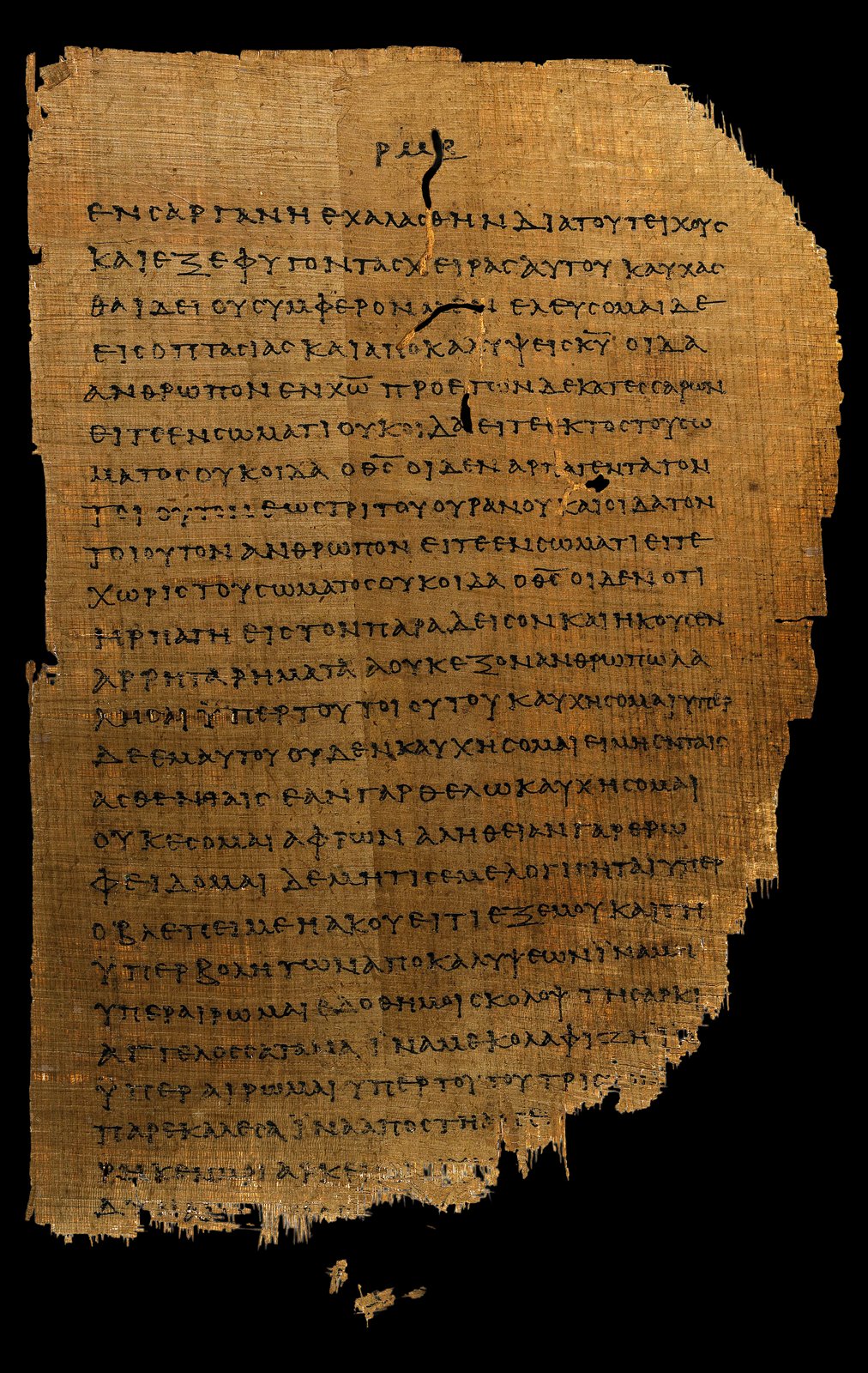
Composition and copy dates must also be separated. The Greek Codex Sinaiticus, institutionally dated to the middle of the fourth century CE, contains the complete New Testament but postdates the composition of Jude and Revelation. It illustrates the date of a material witness; this entry neither claims to have collated its quotations against that manuscript nor identifies it as the earliest witness to each verse.[17]
Mīkāl in the Qurʾan and Islamic reception
Qurʾan 2:98 names God, his angels and messengers, GabrielGabriel / JibrīlA Semitic theophoric name for an interpreter of visions in Daniel and a messenger in Luke; named Jibrīl in the Qurʾan. His functions depend on each textual context.Glossary · Click to read the explanation and Mīkāl in a warning against enmity towards them. Its wording includes وَمَلَائِكَتِهِ وَرُسُلِهِ وَجِبْرِيلَ وَمِيكَالَ, “and his angels, his messengers, Gabriel and Mīkāl.” The linguistic resource consulted gives the form Mīkāl. The verse explicitly names him but assigns no rain-making task and recounts neither Revelation’s battle nor the dispute over Moses’s body. Persistence of the Arabic name implies neither worship of its bearer nor an independent divine name El within this verse.[4]
Ibn KathīrIbn KathirSyrian Qur'anic exegete and historian (c. 1301–1373 CE) who favors Ishmael in his reading of the sacrifice account.Glossary · Click to read the explanation, commenting on this verse, writes ميكائيل موكل بالقطر والنبات, “Michael is charged with rain and vegetation.” This role belongs to the later commentary, not the verse’s wording.[4][15] In Ṣaḥīḥ Muslim 770, the opening night-prayer invocation reads اللَّهُمَّ رَبَّ جِبْرَائِيلَ وَمِيكَائِيلَ وَإِسْرَافِيلَ, “O God, Lord of Gabriel, Michael and Isrāfīl.” God is addressed as these angels’ Lord; Michael is not himself the recipient of prayer.[16]
How to read these dates
Narrated events, formation of a work, surviving copies and modern editions are four different things. Daniel’s visions are therefore not made contemporary with their narrated kings, nor are Nestle’s 1904 edition or the 2012 Enoch translation ancient material witnesses.
- Babylonian Talmud: Richard Kalmin describes its formation by rabbis active from the third to the sixth or seventh centuries CE, with successive layers and later comments. This dates a composite work, not the certain invention of Michael’s dialogue in Yoma.[18]
- Qurʾan: Michael Marx connects the text with Muhammad’s oral proclamations around 610–632 CE. This provides a historical framework for Qurʾanic discourse, not a particular manuscript’s date or an independently established date for 2:98.[19]
- Hadith and commentary: Ṣaḥīḥ Muslim was compiled during the lifetime of Muslim ibn al-Ḥajjāj, who died in 875 CE. Its prayer report is attributed to ʿĀʾisha concerning the Prophet’s prayer; compilation and narrated event are not simultaneous. Ibn Kathīr’s commentary is the work of an exegete who died in 1373 CE: it belongs to the fourteenth century, not the period of Qurʾanic proclamation. These are authorial and reception dates, not dates of the earliest surviving copy of each quoted phrase.[20][21]
The image and limits of comparison
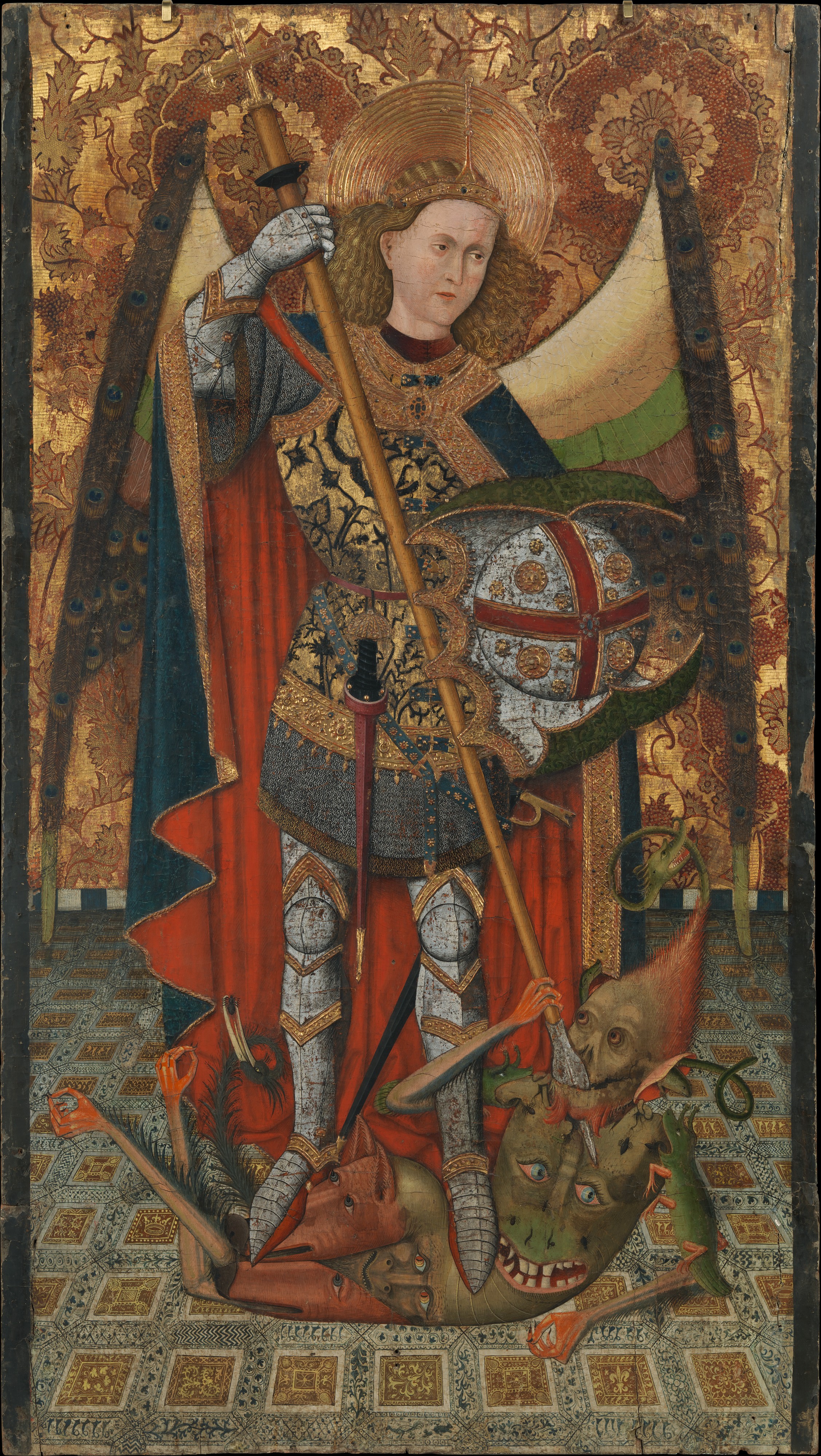
The cover painting, Saint Michael, from northern Spain in 1450–1500 CE, presents a winged warrior overcoming a demonic creature. It belongs to Christian artistic reception centuries after the texts, not to historical portraiture of an angel or a neutral representation of every tradition mentioning him.[10]
Protecting a community, presenting a complaint, executing judgment, fighting, and administering rain in later exegesis show different traditions adapting an inherited name. These actions provide stronger comparative evidence than etymology alone, but they establish neither direct borrowing between every pair of texts nor a linear progression from “ancient god” to “angel.”
References and notes (21)
- Joseph Jacobs, M. Seligsohn and Mary W. Montgomery, “Michael,” Jewish Encyclopedia (1901–1906). Opening of “Israel’s Advocate”: meaning of the name. Historical reference; Daniel passages checked against the text. Return to the text ↑
- Numbers, Hebrew text and Jewish Publication Society translation (1917), Mechon-Mamre. 13:1–16, especially verse 13: Sethur son of Michael. Return to the text ↑
- Daniel, Hebrew text and Jewish Publication Society translation (1917), Mechon-Mamre. 10:12–21, especially 13 and 21; Michael assists the speaker. Return to the text ↑
- Qurʾan 2:98; Quranic Arabic Corpus, translations and word-by-word analysis. 2:98; wamīkāla is word 2:98:8 on the morphology page. No particular task is described in this verse. Return to the text ↑
- Daniel 12, Mechon-Mamre, Hebrew text and 1917 translation. 12:1–3: Michael’s arising during distress, then resurrection. Return to the text ↑
- New American Bible, Revised Edition, introduction to Daniel, United States Conference of Catholic Bishops. Paragraphs on setting, composition and the distinction between tales in chapters 1–6 and visions in 7–12; the introduction dates the work to the persecution of 167–164 BCE. Return to the text ↑
- Jude, New American Bible, Revised Edition, United States Conference of Catholic Bishops. Verses 8–10 and note on 9, especially the moral contrast between Michael and the addressees. Return to the text ↑
- Revelation 12, New American Bible, Revised Edition, United States Conference of Catholic Bishops. 12:7–12, within 1–17; the dragon is explicitly identified in verse 9. Return to the text ↑
- Introductions to Revelation and Jude, New American Bible, Revised Edition, United States Conference of Catholic Bishops. Revelation’s dating paragraph; authorship and dating discussion at https://bible.usccb.org/bible/jude/0. No single certain date is assigned to Jude. Return to the text ↑
- The Metropolitan Museum of Art, Saint Michael, Master of Belmonte, 1450–1500, accession 55.120.2. Object record: artist attribution, date, medium, accession number and image’s public-domain designation. Return to the text ↑
- Jude, Nestle 1904 Greek text, displayed by Bible Hub. Verse 9: archangel title and formula of rebuke. Return to the text ↑
- George W. E. Nickelsburg and James C. VanderKam, 1 Enoch: The Hermeneia Translation, revised edition, 2012. Introduction, Book of the Watchers and Translation sections; 9:1–11, pp.26–27; 10:11–16, pp.29–30; 20:5 and note, p.40. Publisher introduction: https://ms.augsburgfortress.org/downloads/9780800699109Intro.pdf Return to the text ↑
- Matthew L. Walsh, “Claiming Israel’s Angels as their Own,” The Bible and Interpretation, 2019. Sectarian Texts section: 1QM XVII 5–8; explicit Michael versus inferred Prince of Light. Return to the text ↑
- Babylonian Talmud, Yoma, text and translation on Sefaria. 77a, dialogue beginning “The Holy One, Blessed be He, said to Michael”; appeal to the good and its rejection. Return to the text ↑
- Ibn Kathīr, Tafsīr al-Qurʾān al-ʿaẓīm, Arabic text, King Saud University Qurʾan project. Al-Baqara 2:98, paragraph beginning “( وجبريل وميكال ) وهذا من باب عطف الخاص على العام”; rain and vegetation within that paragraph. Return to the text ↑
- Ṣaḥīḥ Muslim, report of ʿĀʾisha on the opening of night prayer. 770; website in-book numbering Book 6, Hadith 239; opening invocation. Return to the text ↑
- Codex Sinaiticus project, “What is Codex Sinaiticus?” Opening paragraph: Greek, middle fourth century, complete New Testament. Return to the text ↑
- Richard Kalmin, “The formation and character of the Babylonian Talmud,” The Cambridge History of Judaism, 2006. Published chapter summary: composition paragraph and layers of statements; not a claim to reading the complete restricted chapter. Return to the text ↑
- Michael Marx, “The Quran – the First Arabic Book,” in Roads of Arabia, 2011; hosted by Corpus Coranicum. Pp.204–205, paragraph “The Quranic text…”: oral proclamations 610–632; only this framework used, not every thesis about textual standardization in the essay. Return to the text ↑
- M. Yaşar Kandemir, “Müslim b. Haccâc,” TDV İslâm Ansiklopedisi, 2006. Heading and opening biographical paragraphs: fifteen-year compilation of Ṣaḥīḥ and death in 875; not manuscript dating. Return to the text ↑
- Abdülkerim Özaydın, “İbn Kesîr, Ebü’l-Fidâ,” TDV İslâm Ansiklopedisi, 1999. Biographical heading and teaching/death paragraphs: fourteenth-century activity and death in 1373. Return to the text ↑
Suggest a correction · Suggest a source for this record
Cite this record
IL Archive, «Michael / Mīkāl», https://ilarchive.com/en/entities/michael
Continue reading