Entity · Name and heavenly figure
Gabriel / Jibrīl
A reference page linking a name, group, or concept to the materials that discuss it.
- Names
- Gabriel · Jibrīl · Γαβριήλ · גַּבְרִיאֵל
Gabriel/Jibrīl is a Semitic theophoric name. Daniel presents an interpreter of visions, 1 Enoch an angel among others, Luke a messenger of birth announcements, and the Qurʾan a figure linked to revelation and support. Text, exegesis, and art are distinguished.
Estimated reading time: 6 min Published Last reviewed:
Share article

Text
Introduction
Gabriel, called Jibrīl in the Qurʾan, is a named figure in religious writings produced in different periods and genres. What can the name itself tell us, and what do Daniel, 1 EnochFirst EnochA composite Second Temple Jewish apocalyptic collection on the Watchers, parables, celestial cycles, historical visions, and judgment, preserved complete in Geʽez.Glossary · Click to read the explanation, Luke, and the Qurʾan actually say about the figure’s roles? This entry compares particular passages with later interpretation and visual reception. It investigates the history of the evidence without passing judgment on the beliefs associated with it.
The name and its possible meanings
The HebrewHebrewA Northwest Semitic language of the Canaanite group, encompassing Iron Age epigraphy, Biblical, Rabbinic, medieval and Modern Hebrew; its scripts and pronunciations changed over time.Glossary · Click to read the explanation form is גַּבְרִיאֵל (approximately Gavriʾel), represented in Greek as Γαβριήλ; the QurʾanThe QuranThe central scripture of Islam, consisting of 114 Arabic surahs; its study distinguishes Quranic discourse from manuscript history, reading traditions, and historical inference.Glossary · Click to read the explanation uses the Arabic Jibrīl (جبريل). The Hebrew consonants g-b-r evoke a man or strength, while ʾēl can mean “god/God” and occurs in Semitic theophoric namesTheophoric nameA personal name including a deity’s name or another divine element, often as part of a short sentence or invocation, interpreted in its original language and context.Glossary · Click to read the explanation. Accordingly, interpretations such as “man of God/El” and “God is my strength” coexist. The exact morphological analysis is not settled simply by spelling the name. Neither the element El nor the etymology proves that Gabriel began as an independent Canaanite god or once lived as a human being.[1]
A name’s meaning and the bearer’s narrative function are different questions: even a name suggesting strength does not establish the figure’s role as messenger or interpreter. Those functions must be read from the passages where they occur.
Daniel: an interpreter of visions
In the Hebrew Book of DanielBook of DanielA book combining court tales of wisdom and deliverance with visions of kingdoms and the future, formed in stages.Glossary · Click to read the explanation 8:16, a human voice within the vision directs Gabriel to explain what DanielDaniel in the biblical bookDaniel is the Jewish sage and visionary in the biblical book bearing his name.Glossary · Click to read the explanation has seen. Verse 15 has described an appearance resembling a man; in 8:17–19 the interpreter approaches the seer and introduces the vision’s temporal horizon. The passage supplies neither Gabriel’s birth nor a genealogy. Its focus is intelligibility and mediation within an apocalyptic vision.[2]
Daniel 9:20–23 names him again. Verse 21 speaks of “the man Gabriel” during Daniel’s prayer and the interpretation of the “weeks.” Human appearance within a vision is not historical evidence for a former human life later transformed into an angel. Nor does either passage explicitly bestow the later familiar title “archangel” on him.[5]
The story’s setting and the composition of Daniel
Daniel’s tales are set at the Babylonian and Persian courts, evoking the sixth century BCE in their narrative world. The book’s known final composition, notably its visions concerning Seleucid persecution, is widely dated to the crisis under Antiochus IV in the second century BCE, around 167–164 BCE. The sixth-century setting of a scene must therefore not be presented automatically as the date when Gabriel’s name entered the preserved literary witness. The setting of a story and the date of its composition are distinct.[6]
1 Enoch: Gabriel among named angels
In the Jewish literary collection known as 1 EnochFirst EnochA composite Second Temple Jewish apocalyptic collection on the Watchers, parables, celestial cycles, historical visions, and judgment, preserved complete in Geʽez.Glossary · Click to read the explanation, Gabriel appears in 9:1 with Michael, Uriel, and Raphael looking upon earthly violence. Chapter 20:7 lists Gabriel among named holy angels and, in R. H. Charles’s translation, assigns him a sphere involving Paradise, serpents, and cherubim. These are two passages in a composite work, not a continuous biography. They also do not establish a fixed list of angels shared by every Jewish tradition.[7][8]
The Ethiopic wording of these passages was not collated for this review. The discussion rests on the two specified chapters in Charles’s older English translation; its phrasing must not be mistaken for a reading independently established from the original language.
Luke: two announcements
In the Gospel of LukeGospel of LukeNew Testament gospel where Satan asks to test the disciples in 22:31–32.Glossary · Click to read the explanation 1:11–20, an angel addresses Zechariah, father of JohnZechariah, father of John in LukeA priest and Elizabeth’s husband in Luke 1, who receives Gabriel’s announcement of John’s birth.Glossary · Click to read the explanation. At 1:19 he identifies himself as Gabriel, who stands before God and has been sent with news of John’s birth. In 1:26–38 Gabriel is sent to MaryMary, mother of JesusThe recipient of Gabriel’s announcement of Jesus’s birth in Luke 1.Glossary · Click to read the explanation in Nazareth to announce the birth of Jesus. In this narrative, Gabriel is chiefly the commissioned bearer of announcements. Luke does not provide a universal catalogue of his functions across all religions.[3]
His connection with birth announcements is a feature of Luke’s Christian narrative. A claim that identical duties persisted unchanged in all preceding and subsequent communities would require evidence beyond Luke alone.
The Qurʾan: Gabriel by name
Qurʾan 2:97 names Jibrīl as the one who brings revelation to the addressee’s heart by God’s leave. In 2:98 he is mentioned alongside Mīkāl/MichaelMichael / MīkālA name meaning “Who is like God?”, borne by humans and an angel. The angel protects Daniel’s people, is called archangel in Jude and fights the dragon in Revelation. The Qurʾan names Mīkāl without assigning a task; later traditions develop different roles.Glossary · Click to read the explanation among the angels and messengers; being named together does not make their tasks interchangeable. Qurʾan 66:4 also names Gabriel among those who support the Prophet. These are three conspicuous passages in which the name itself is explicit.[9][4][10]
Elsewhere one encounters descriptions such as the “trustworthy Spirit” (26:193) and the “Holy SpiritHoly SpiritName present in Christian texts and worship, whose relation to Father and Son was defined in Trinitarian formulations.Glossary · Click to read the explanation” (16:102). Muslim exegetes often identify their referent as Gabriel, but neither verse explicitly spells his name. Recognizing this distinction does not dismiss the exegetical identification; it distinguishes interpretation of a referent from a proper nameProper nameA name that identifies a particular person, place, group, or entity in context, unlike a common noun denoting a class. Spelling alone may not settle the distinction.Glossary · Click to read the explanation in the wording of the verse.[12]
Mary in the Qurʾan: verse and interpretation
At Qurʾan 19:17, a figure described as “Our Spirit” appears to Mary in human form, without the name Gabriel in the verse. Ibn Kathīr identifies this figure as Gabriel and reports earlier interpreters supporting that reading; he also recounts and rejects an alternative. Al-Qurṭubī records both Gabriel and a proposed interpretation involving the spirit of Jesus, preferring Gabriel. The Qurʾanic wording and the exegetical identification should be distinguished rather than silently conflated. Similarly, Qurʾanic “Holy Spirit” should not be equated without qualification with the distinct Christian theological doctrine of the Holy Spirit.[11][13][14]
The Hadith of Gabriel and later reception
A report in Ṣaḥīḥ Muslim, Book of Faith, hadith 8a, depicts a visitor asking about Islam, faith, and excellence (iḥsān). The visitor is identified at the end as Gabriel, sent to instruct those present. This is a hadith witness to a teaching role in Islamic tradition; the dialogue is not contained in the Qurʾanic verses naming Gabriel. Its narrative setting and its transmission as a hadith collection should not be confused with the Qurʾanic textual layer.[15]
Artistic images and comparative limits
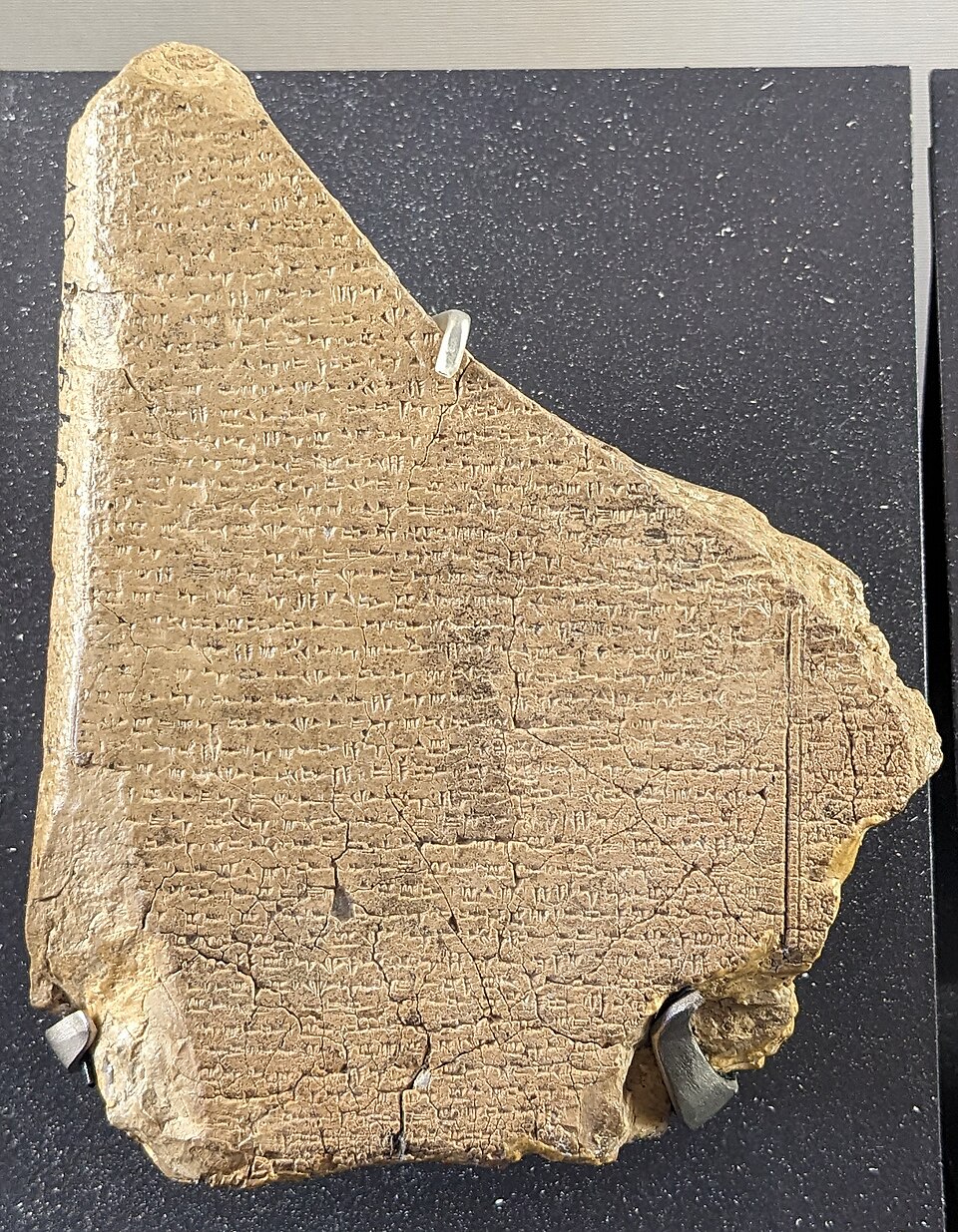
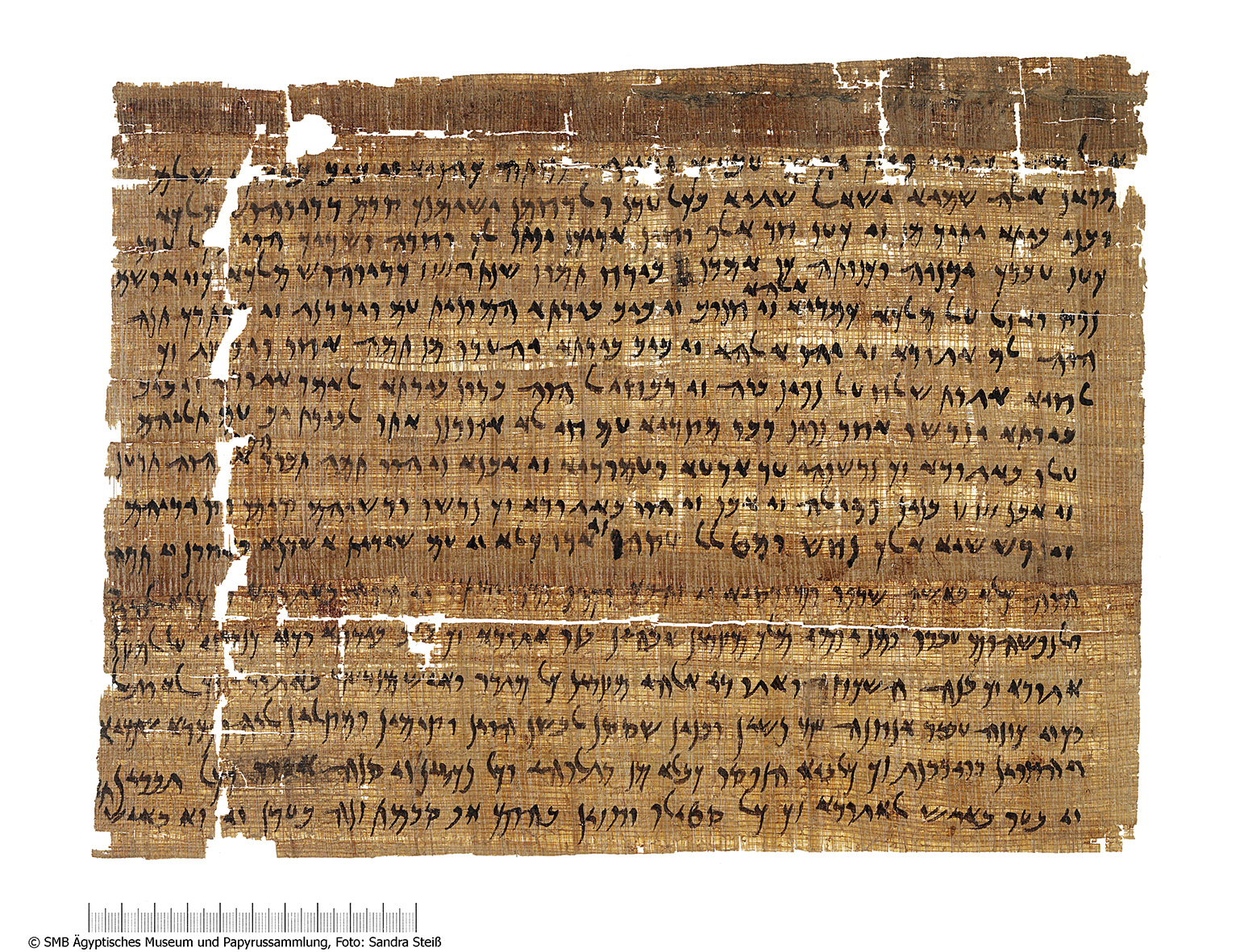
Western Christian artists have represented Gabriel with wings at the Annunciation. One documented example is Martin Schongauer’s engraving The Annunciation: The Angel Gabriel, dated about 1470–1480 and held by the Metropolitan Museum of Art. It attests to artistic reception, not the physical appearance of a heavenly being. This entry’s cover is instead an explicitly modern, AI-generated symbolic image: imagined books and a line of light stand for several textual witnesses and the act of conveying a message. They are not photographs of actual manuscripts or authenticated reconstructions.[16]
Across these witnesses the name is repeatedly associated with communicating or explaining, but Daniel, 1 Enoch, Luke, the Qurʾan, and the hadith differ in date, genre, and aims. Their roles can be compared without assuming that every title, description, or claim about transmission is identical. Etymology opens a historical question; it cannot substitute for the texts themselves.
References and notes (16)
- Bible & Archaeology, University of Iowa, “Hello, My Name Is: GABRIEL,” 24 February 2022; lexical entry cross-checked in note 2. Entire short article, especially the paragraphs on g-b-r, ʾēl, and the two name analyses. Return to the text ↑
- Hebrew Book of Daniel 8:15–19, Mechon-Mamre; Brown–Driver–Briggs, entry גַּבְרִיאֵל (lexical extract at BibleHub). Daniel 8 read in full in Hebrew alongside the displayed English rendering, focusing on vv. 15–19; BDB headword only at https://biblehub.com/hebrew/1403.htm; devotional commentary excluded. Return to the text ↑
- New Testament, Luke 1:11–38; New American Bible Revised Edition and notes, USCCB. Read Zechariah and Mary episodes, especially vv. 19 and 26 and USCCB note on 1:19; no critical Greek-text collation. Return to the text ↑
- Qurʾan 2:98; Quranic Arabic Corpus, University of Leeds / Quran.com team: parallel translations and the mention of Gabriel and Michael. Whole verse 2:98 in the parallel-translation page with contextual comparison to 2:97; translator brackets not treated as Qurʾanic wording. Return to the text ↑
- Book of Daniel 9:20–23, Hebrew and displayed English, Mechon-Mamre. Verses 20–23 in Hebrew and English, especially “the man Gabriel” in v. 21 and the context of prayer and interpretation. Return to the text ↑
- USCCB, “The Book of Daniel,” introduction to the New American Bible Revised Edition (institutional critical introduction). Introduction paragraphs on genre and composition during Antiochus IV’s persecution, 167–164 BCE; critical dating, not the story’s setting. Return to the text ↑
- 1 Enoch 9:1–11, R. H. Charles, English translation, The Book of Enoch (1917 version), Sacred Texts. Read Chapter IX in the available English translation, especially 9:1 naming Michael, Uriel, Raphael, and Gabriel; original Ethiopic not consulted. Return to the text ↑
- 1 Enoch 20:1–8, R. H. Charles, English translation, The Book of Enoch, Sacred Texts. Chapter XX read in full in Charles’s translation, especially 20:7; “Paradise, serpents, and Cherubim” are attributed to this translation. Return to the text ↑
- Qurʾan 2:97, Quranic Arabic Corpus, seven parallel translations (University of Leeds). Complete verse 2:97, particularly Gabriel’s name and revelation to the addressee’s heart by God’s leave. Return to the text ↑
- Qurʾan 66:4, Quranic Arabic Corpus, parallel translations. Entire 66:4, Gabriel named among supporters. Return to the text ↑
- Qurʾan 19:17, Quranic Arabic Corpus; Arabic wording also inspected at Quran.com. Verse 19:17, “Our Spirit” and human form, without Gabriel’s proper name; Arabic at https://quran.com/ar/19:17/tafsirs/ar-tafsir-ibn-kathir. Return to the text ↑
- Qurʾan 16:102 and 26:193, Quranic Arabic Corpus (two separate translation pages). Both verses read: “Holy Spirit” (16:102) and “trustworthy Spirit” (26:193), the latter at https://corpus.quran.com/translation.jsp?chapter=26&verse=193. Bracketed explanatory identifications are not direct Qurʾanic words. Return to the text ↑
- Ibn Kathīr, Tafsīr al-Qurʾān al-ʿAẓīm, commentary on Q 19:17, text hosted by Quran.com (edition and transmission not critically verified here). Read the complete displayed commentary paragraph: identification as Gabriel, earlier attributions, and the alternative rejected by the commentator. Return to the text ↑
- Al-Qurṭubī, Al-Jāmiʿ li-aḥkām al-Qurʾān, commentary on Q 19:17, paragraph on “We sent her Our Spirit,” Quran.com. Read the displayed paragraph presenting Jesus’s spirit and Gabriel and preferring Gabriel; no claim to have read the rest of al-Qurṭubī. Return to the text ↑
- Muslim ibn al-Ḥajjāj, Ṣaḥīḥ Muslim, Book of Faith, hadith 8a, Sunnah.com (isnād and displayed English translation). Read all of hadith 8a in the displayed English translation, especially the questions on Islam, faith, excellence, and the final identification as Gabriel; no critical Arabic edition collation. Return to the text ↑
- The Metropolitan Museum of Art, object 34.94.1: Martin Schongauer, The Annunciation: The Angel Gabriel, engraving, ca. 1470–1480, Public Domain. Read the entire object-page metadata, accession, artist, and rights; image preview viewed, but file download for ZIP failed, so it is not used as the cover. Return to the text ↑
Suggest a correction · Suggest a source for this record
Cite this record
IL Archive, «Gabriel / Jibrīl», https://ilarchive.com/en/entities/gabriel
Continue reading