Entity
Angelology
A reference page linking a name, group, or concept to the materials that discuss it.
Study and organization of angels and heavenly beings: names, ranks and roles within particular traditions, without assuming one fixed system.
Text
The term describes religious conceptions of angels as well as their historical study. One heavenly messenger does not establish an entire system of names and ranks; classifications vary with text, language and period. [1]
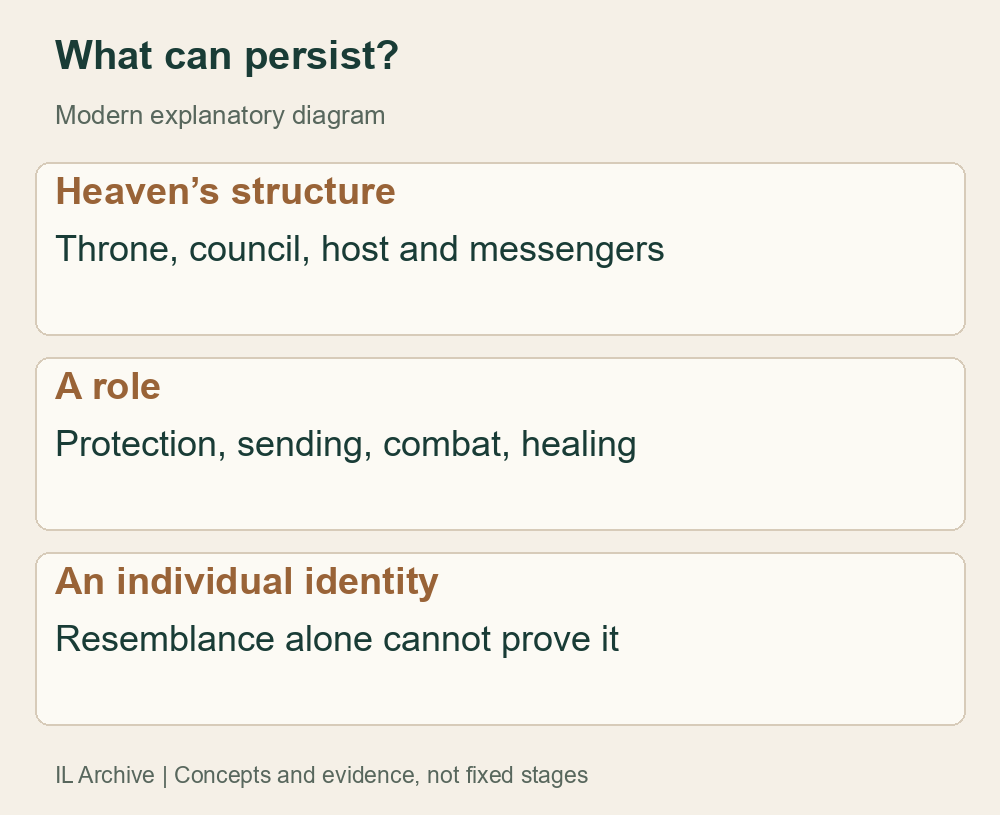
Reed identifies the third century BCE as important for written Jewish angelology, drawing on AramaicAramaicA group of Northwest Semitic language varieties with a long history across the Near East.Glossary · Click to read the explanation material. Angels were not thereby invented then, nor did all texts or communities adopt one list. The diagram separates structure, role and identity. [1][2]
References and notes
- Annette Yoshiko Reed (2020). Rethinking Scribalism and Change in Second Temple Judaism. Demons, Angels, and Writing in Ancient Judaism, pp. 87–131. doi:10.1017/9781139030847.004. Summary situates important written angelology/demonology in third century BCE, using Aramaic evidence; scholar’s thesis, not year of first angel’s invention. Full chapter not read. Return to the text ↑
- Mark S. Smith. The Origins of Biblical Monotheism. Author overview of the 2001 book, Bible Interp. Author’s council/family/messenger model and changed ranks read. Attributed reconstruction; not decisive dating of each text or separation of El/Yahweh in Deut 32. Full book not read. Return to the text ↑
Research history
Substantive changes are retained here. Minor copy edits remain in the internal operational log.
-
Substantive record update
Suggest a correction · Suggest a source for this record
Cite this record
IL Archive, «Angelology», Edition 2, https://ilarchive.com/en/entities/angelology