Study
Seven Heavens: What Ancient Texts Say about the Layers of the Sky
An extended study of a topic, with evidence and references.
- Region
- The Near East
Ancient texts picture the sky in layers, but not always seven: three heavens of stone in an Assyrian tablet, three to ten in Jewish and Christian writings, seven in the Talmud and the Qur'an.
Estimated reading time: 10 min Published Last reviewed:
Share article
Video
Why Is Seven Sacred? What the Clay Tablets of Ancient Iraq Reveal
Our fourth documentary follows the number seven through the clay tablets of ancient Iraq and its neighbours, then reads the scriptures in their own words and with respect. Some scenes are AI-generated illustrations.
The YouTube player loads only when you press play. Watch on YouTube
Text
Introduction
Is the sky one vault or many layers, and if many, how many? This study gathers what ancient texts actually say about the layers of heaven, from a cuneiformCuneiformWriting with wedge-shaped signs, developed from Mesopotamian recording traditions and used for several languages from the third millennium BCE.Glossary · Click to read the explanation tablet to the Qur'an and its classical commentators. Each witness is read in its own words and in its own setting, with its date and the limits of what it tells us.
The number seven appears in several of these traditions, and it is tempting to draw a single line through them. The evidence does not allow that: the counts differ, the purposes differ, and the same number can arise for different reasons.
The witnesses in time
The texts discussed here come from very different centuries. A short map helps:
- First millennium BCE (copies): Mesopotamian tablets such as KAR 307 and the bilingual incantation series Udug-hul.
- First millennium BCE, dates debated: the HebrewHebrewA Northwest Semitic language of the Canaanite group, encompassing Iron Age epigraphy, Biblical, Rabbinic, medieval and Modern Hebrew; its scripts and pronunciations changed over time.Glossary · Click to read the explanation Bible's "heaven of heavens".
- Around the turn of the era to the second century CE, dates debated: the Testament of Levi, 2 Enoch, the Ascension of Isaiah, 3 Baruch; Paul's letters in the first century CE.
- Late antiquity: the Babylonian Talmud; the Book of Mary's ReposeBook of Mary’s ReposeApocryphal “Palm” family account of Mary’s death and assumption, fully transmitted in Ethiopic with earlier fragments; distinct from the Six-Books Dormition.Glossary · Click to read the explanation, attested in fragments from the fifth and sixth centuries.
- Seventh century CE: the Qur'an; later, the hadith collections and the commentaries of al-Tabari (d. 923) and Ibn Kathir (d. 1373).
Mesopotamia: three heavens of stone
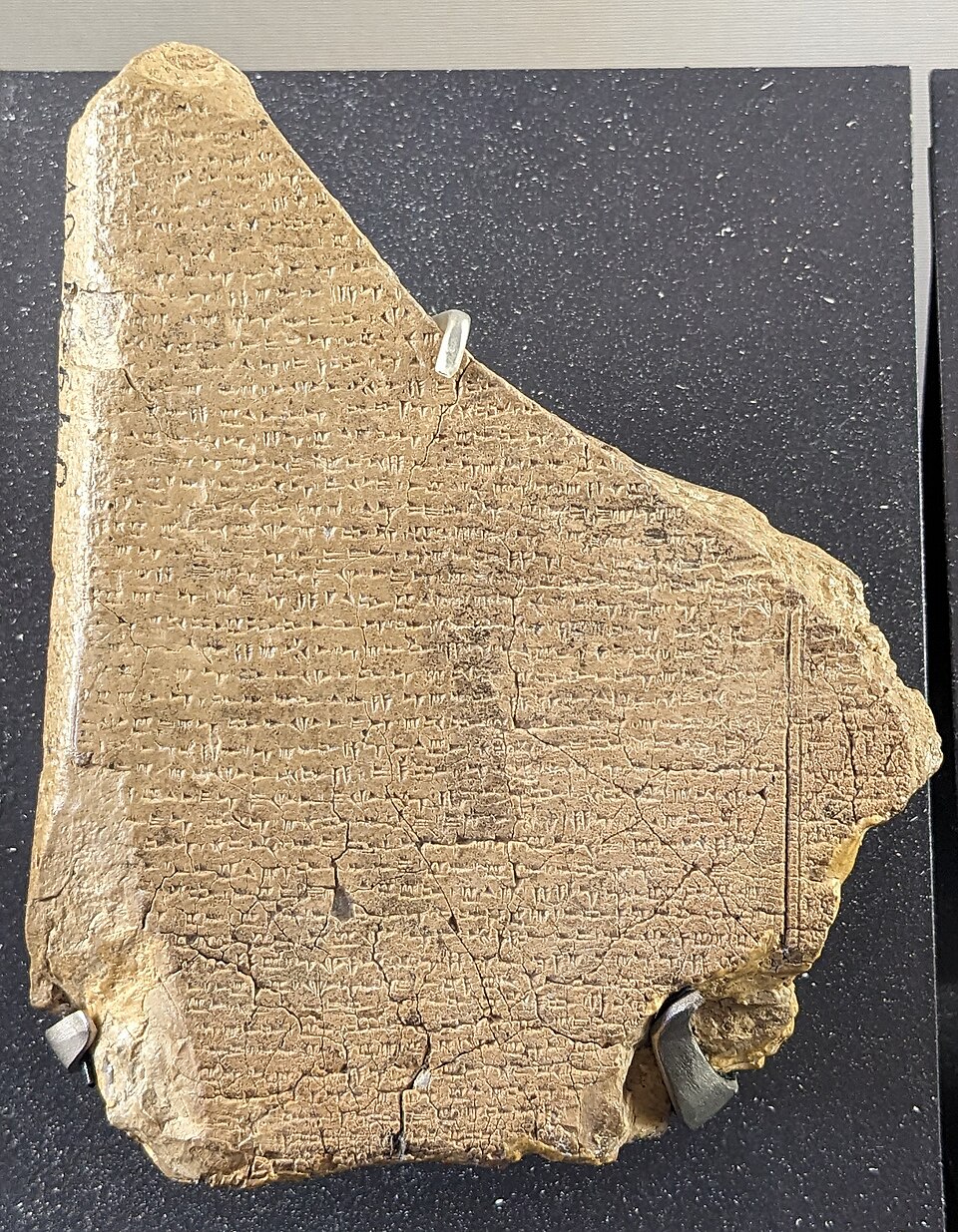
The clearest Mesopotamian description of layered heavens is a passage in an Assyrian tablet of mystical explanatory texts known as KAR 307. In the edition of Alasdair Livingstone it reads:
The source is KAR 307, obverse lines 30–33, in Livingstone's translation. [1] The same passage then describes three levels of earth: the upper earth for the spirits of mankind, the middle earth for the god EaEnkiMesopotamian deity also known as Ea, linked with Eridu and the Abzu (deep fresh waters), wisdom, incantations, and narratives of creation and cosmic order. Later written attestations do not identify the deity of Eridu’s earliest layers.Glossary · Click to read the explanation, and the lower earth where 600 AnunnakiAnunna / AnunnakiAnunna/Anunnaki is a collective designation for Mesopotamian gods whose scope varies by text and period; it is not a group with one fixed membership or number.Glossary · Click to read the explanation are shut up. Heaven here has three layers, each with its own material and inhabitants, from the sky god An (Anu)An / AnuAn is the Sumerian sky god, called Anu in Akkadian. The sign AN by itself does not identify him: it also denotes sky or divinity.Glossary · Click to read the explanation at the top to the painted stars at the bottom.
The Assyriologist Wayne HorowitzWayne HorowitzAssyriologist and cuneiform specialist who co-published the Hazor legal fragments and explained their regional significance.Glossary · Click to read the explanation placed this passage, together with a related tablet in the Louvre (AO 8196), at the head of his standard study Mesopotamian Cosmic Geography (1998), in a chapter on "the levels of the universe". [2] In KAR 307 the number of heavens is three, not seven.
Seven does appear in Mesopotamian incantations, and Horowitz gave a chapter to the phrase "seven heavens and seven earths". In the incantation series Udug-hul, demons are described as "the Seven gods of the broad heavens" and "the Seven gods of the broad Netherworld". Horowitz read such lines as an allusion to seven levels of heaven and earth. Markham Geller, in his 2016 edition of the series, doubts this: in his reading the lines describe the divine Seven, a group of seven gods and demons, rather than a count of cosmic layers. [3] Whether MesopotamiaMesopotamiaHistorical region associated with the Tigris and Euphrates: Uruk, Ur, Eridu, cuneiform, Sumer, Akkad, Babylon and Assyria, their languages and cults, and the limits of archaeological evidence.Glossary · Click to read the explanation knew a scheme of seven heavens is therefore debated, while three heavens are explicitly attested.
The seven gates of the underworld are a separate matter. In the Sumerian poem of InannaInanna / IshtarA prominent Mesopotamian goddess whose Sumerian name Inanna became associated with Akkadian Ishtar across diverse traditions. She was associated with desire, war, royal authority and Venus, while local forms and genealogies varied among texts.Glossary · Click to read the explanation's descent, the doorman Neti bolts "the seven gates of the underworld" before the goddess enters. [4] These gates mark the way down to the land of the dead; they are not layers of the sky.
The Hebrew Bible: "the heaven of heavens"
The Hebrew Bible speaks of heaven in the plural and of a heaven above heaven, but it never counts. In DeuteronomyBook of DeuteronomyTorah book presenting commandments in Moses’ discourse and grounding Sabbath rest in slavery and liberation from Egypt.Glossary · Click to read the explanation MosesMosesCentral figure in Exodus, Torah traditions and the Qur’an; childhood accounts differ in detail.Glossary · Click to read the explanation says: "to YahwehYahwehThe proper name of Israel’s deity, written יהוה (YHWH), the Tetragrammaton. Its exact ancient pronunciation is not directly preserved; texts and inscriptions witness its history.Glossary · Click to read the explanation your God belongs heaven and the heaven of heavens, the earth, with all that is therein" (Deut 10:14). At the dedication of the Temple, Solomon prays in the Books of KingsBooks of KingsBiblical books narrating the kingdoms' history, including the campaign against Mesha in 2 Kings 3.Glossary · Click to read the explanation: "heaven and the heaven of heavens can't contain you; how much less this house that I have built!" (1 Kgs 8:27). Nehemiah 9:6 uses the same phrase. [5]
In these verses the phrase expresses God's rule over all that is and his greatness beyond any house built for him. No number of layers is stated.
Jewish and Christian writings: three, five, seven, ten
Around the turn of the era, several Jewish and Christian works of apocalyptic literatureApocalyptic literatureLiterary works narrating the disclosure of transcendent knowledge about heaven, history and destiny to a human seer, often by an angel; not every end-time belief or catastrophe prophecy is an apocalypse.Glossary · Click to read the explanation, in which an angel shows a seer hidden things, described journeys through the heavens. Their counts differ, and sometimes their manuscripts differ too.
The Testament of Levi. In chapters 2–3 the patriarch Levi is taken up through the heavens. The manuscripts and ancient versions do not agree on how many. R. H. Charles judged that the original passage described three heavens and was later "worked up to include seven"; his edition shows one manuscript family giving three heavens and another expanding the count. [6] This is Charles's reconstruction of the manuscript evidence, and the history of the text remains debated.
2 Enoch. This book, preserved complete only in Slavonic, takes Enoch through seven heavens, with the throne of God in the seventh. One recension adds an eighth, ninth and tenth heaven; Charles regarded that passage as an addition, noting that "throughout the rest of the book only seven heavens are mentioned or implied". [7] Charles dated the work to the first century CE, but its date and origin are still discussed: a 2012 volume of the Enoch Seminar re-examined these questions in the light of recently identified Coptic fragments from Nubia. [8] It should not be confused with First EnochFirst EnochA composite Second Temple Jewish apocalyptic collection on the Watchers, parables, celestial cycles, historical visions, and judgment, preserved complete in Geʽez.Glossary · Click to read the explanation, a different and older book.
The Ascension of Isaiah. In this Christian work the prophet Isaiah is led by an angel through the firmament and then through seven heavens. In the first heavens he sees a throne in the midst and angels on the right and on the left, and their praise is sent up to the seventh heaven, which is the goal of the journey. Charles considered it a composite work whose parts circulated in the first century and whose present form may be as late as the second half of the second century. [9]
3 Baruch. The Greek Apocalypse of Baruch describes five heavens, though its ending seems incomplete. The church father OrigenOrigenChristian exegete and theologian from Alexandria (c. 185–253), known for biblical textual comparison, commentaries and On First Principles. His works survive in Greek and through later translations and quotations.Glossary · Click to read the explanation knew a Baruch book that spoke of "seven worlds or heavens". [10]
The Babylonian Talmud. In tractate Hagigah 12b, two views are set side by side. Rabbi Yehuda reads Deuteronomy 10:14 as showing that there are two firmaments. Reish Lakish says: "There are seven, and these are as follows: Vilon, Rakia, Sheḥakim, Zevul, Ma'on, Makhon, and Aravot", and the passage then assigns each its contents, such as the sun, moon and stars in Rakia. [11] The Babylonian TalmudBabylonian TalmudA large rabbinic compilation in Hebrew and Aramaic, formed in Mesopotamia through stages; its final redaction remains debated.Glossary · Click to read the explanation thus preserves both a smaller count and the named seven, without hiding the difference.
Paul and "the third heaven"
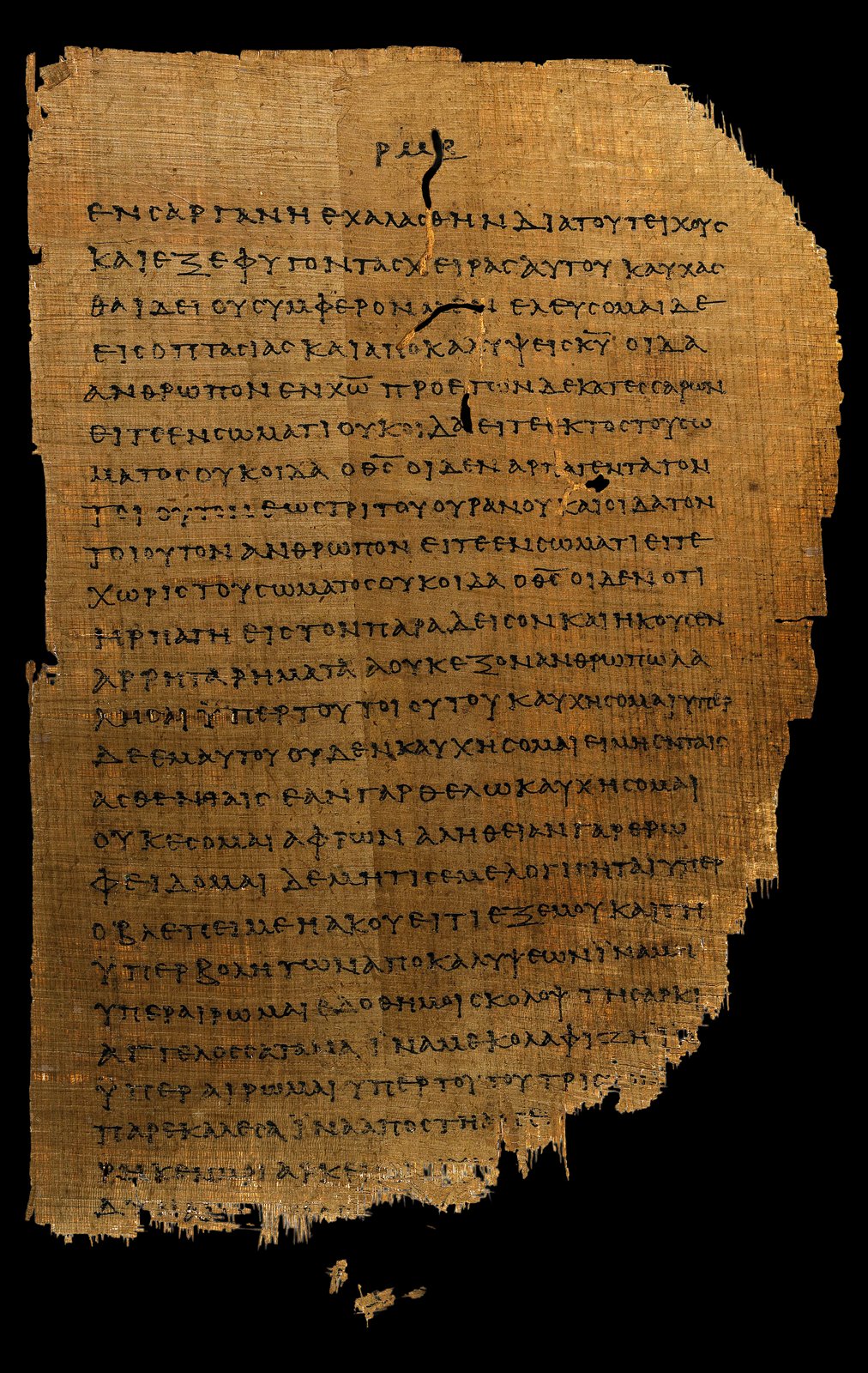
Paul the ApostlePaul the ApostlePaul was a first-century CE Christian letter writer whose letters preserve early Christian formulations.Glossary · Click to read the explanation, writing in the first century CE, describes a vision in the third person:
The source is 2 Corinthians 12:2–4, in the World English Bible. [5] Paul names a third heaven and Paradise but gives no total; whether he assumed three heavens or more, the letter does not say.
Mary's Repose: "the seventh heaven"
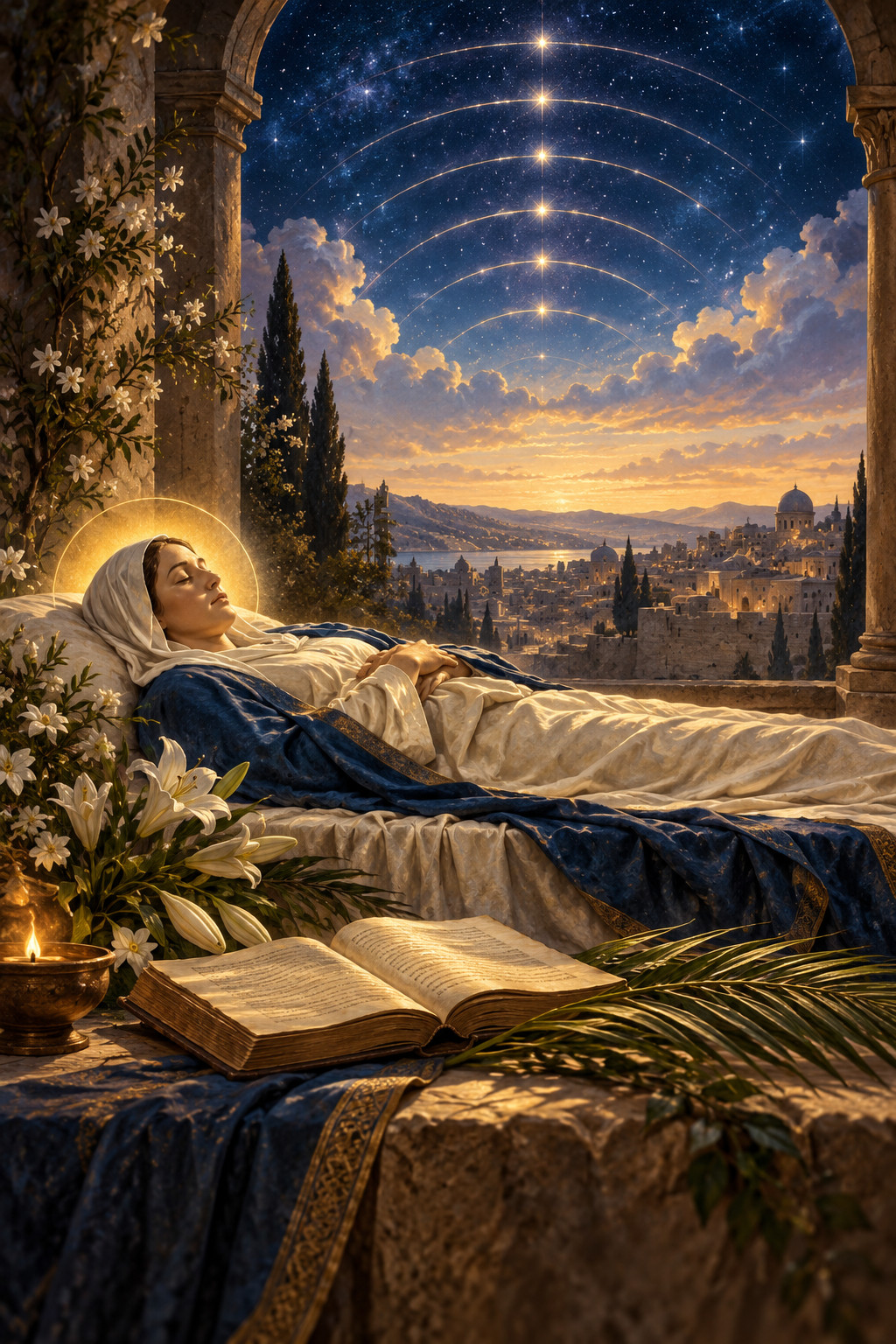
The Book of Mary's ReposeBook of Mary’s ReposeApocryphal “Palm” family account of Mary’s death and assumption, fully transmitted in Ethiopic with earlier fragments; distinct from the Six-Books Dormition.Glossary · Click to read the explanation is a Christian narrative of the death of Mary, preserved at length in Ethiopic and in earlier SyriacSyriacAn Aramaic literary language rooted in Edessa, first attested in non-Christian inscriptions and later prominent in Christian writing, scholarship, translation and liturgy.Glossary · Click to read the explanation and other fragments. Near its end, after a tour of the places of punishment and of Paradise, Mary and the apostles, in the words of the summary by Stephen Shoemaker and Sergey Kim, "ascend to the seventh heaven and stand before the presence of God"; the apostles then return to earth. [12] A seven-heaven picture was thus at home in this Christian setting.
The Qur'an: seven heavens in layers
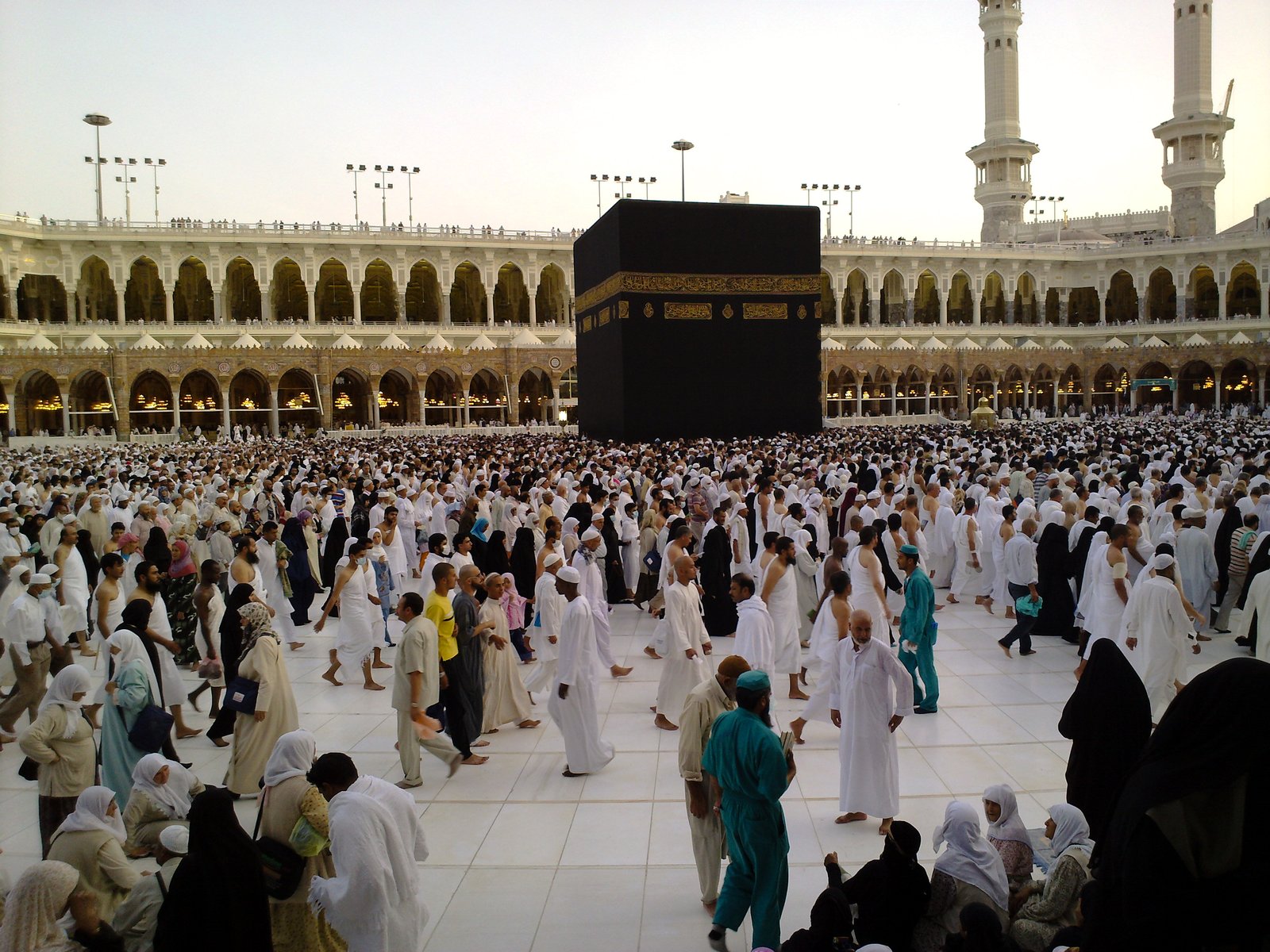
The QuranThe QuranThe central scripture of Islam, consisting of 114 Arabic surahs; its study distinguishes Quranic discourse from manuscript history, reading traditions, and historical inference.Glossary · Click to read the explanation mentions seven heavens in several passages. In the Sahih International translation, God "made them seven heavens" (2:29); "the seven heavens and the earth and whatever is in them exalt Him" (17:44); He "created above you seven layered heavens" (23:17), "inspired in each heaven its command" and adorned "the nearest heaven with lamps" (41:12), and "constructed above you seven strong [heavens]" (78:12). [13]
Two verses use the word ṭibāqan, "in layers":
The source is Qur'an 67:3, with Sahih International's translation; 71:15 uses the same phrase. [13] Another verse adds the earth: "It is Allah who has created seven heavens and of the earth, the like of them" (65:12). In their context these passages present the seven heavens as signs of the Creator's order, knowledge and power, and 67:3 invites the hearer to look again at the sky and find no flaw.
How classical commentators read the verses
Al-TabariAl-TabariAbbasid-era historian and Qur'anic exegete (c. 839–923 CE). His commentary records competing views on Abraham's son, then favors Isaac.Glossary · Click to read the explanation explains "made them seven heavens" (2:29) as meaning that God shaped, ordered and set them right. He reports, through al-Suddi from Ibn ʿAbbas, Ibn Masʿud and other Companions, that God brought forth smoke from the water, made it one heaven, and then split it into seven heavens. On 67:3 he glosses ṭibāqan as "layer above layer, some of them above others". On 65:12 he gathers several reports about the seven earths that differ in detail, including one in which Ibn ʿAbbas declines to explain the verse further. [14]
Ibn KathirIbn KathirSyrian Qur'anic exegete and historian (c. 1301–1373 CE) who favors Ishmael in his reading of the sacrifice account.Glossary · Click to read the explanation cites the early scholar Mujahid: "made them seven heavens" means "one above the other, while the 'seven earths' means, one below the other". On 67:3 he notes two views among scholars: whether the heavens touch one another, or are separate with space between them. He judges the second more correct, pointing to the hadith of the Night Journey. [15] Both commentators record differences of detail with care.
The Miʿraj in the hadith collections
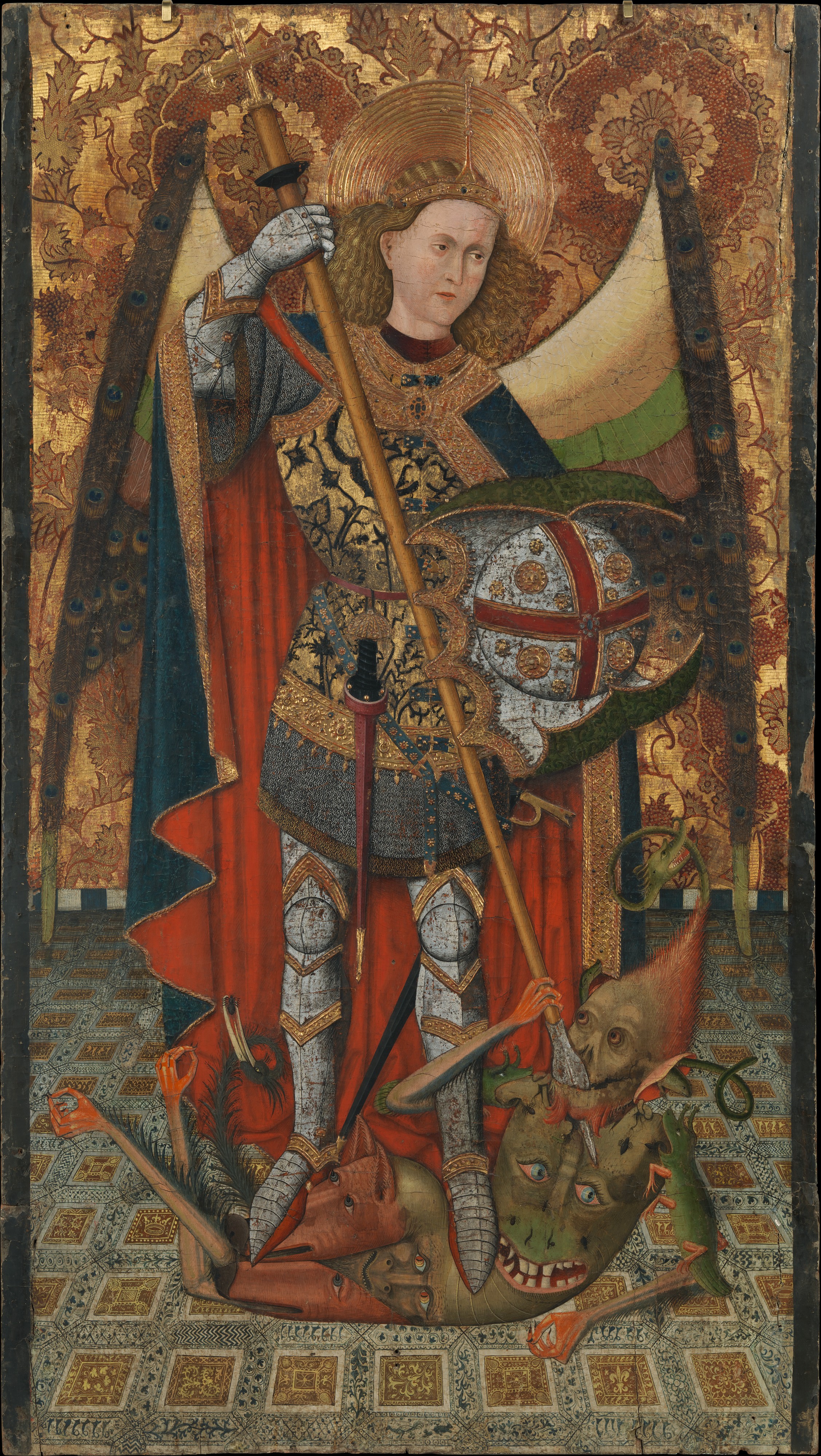
The ascent of the Prophet MuhammadMuhammad, prophet of IslamMuhammad is the prophet of Islam, living about 570–632 CE in the setting of Islam’s seventh-century emergenceGlossary · Click to read the explanation through the heavens is narrated in the canonical hadith collections. In Sahih Muslim 162a, narrated by Anas ibn Malik, GabrielGabriel / JibrīlA Semitic theophoric name for an interpreter of visions in Daniel and a messenger in Luke; named Jibrīl in the Qurʾan. His functions depend on each textual context.Glossary · Click to read the explanation asks at each heaven for the gate to be opened, and the Prophet meets Adam in the first heaven, Jesus and John in the second, Joseph in the third, Idris in the fourth, Aaron in the fifth, Moses in the sixth and Abraham in the seventh. Sahih al-Bukhari 349 records a version from Abu Dharr, which notes that he did not state on which heaven each prophet was, except Adam in the nearest and Abraham in the sixth. [16] The collections thus preserve the narrations together with their differences.
Side by side: what a shared number shows
Read together, the witnesses show variety more than uniformity: three heavens on the Assyrian tablet, an uncounted "heaven of heavens" in the Hebrew Bible, two and seven side by side in the Talmud, three, five, seven or ten in the apocalypses, a third heaven in Paul, seven in Mary's Repose and in the Qur'an. Even the Mesopotamian "seven" is debated.
Each tradition gives its heavens its own meaning. In KAR 307 the levels are a map of gods and stars. In the apocalypses they are stages of a seer's journey toward God's throne. In the Qur'an they are signs of God's creation and order, set in layers without flaw.
A shared number does not show that one tradition took its picture from another. Similar counts can arise independently, as the site's study Resemblance Does Not Establish Borrowing explains, and no surviving text traces a path from one of these pictures to another. The most faithful approach is to let each text speak in its own words, at its own date, and to state plainly where the evidence stops.
References and notes
- Alasdair Livingstone, Court Poetry and Literary Miscellanea, State Archives of Assyria 3 (Helsinki: Helsinki University Press, 1989), no. 39 'Mystical Miscellanea (KAR 307)', online edition SAAo/ORACC KAR 307 obverse lines 28-38 (transliteration and translation), heavens in lines 30-33, earths in lines 34-37 Return to the text ↑
- Wayne Horowitz, Mesopotamian Cosmic Geography, Mesopotamian Civilizations 8 (Winona Lake: Eisenbrauns, 1998; 2011 printing with addenda) Publisher's table of contents only (chapter 1 'The Levels of the Universe: KAR 307 30-38 and AO 8196 iv 20-22'; chapter 9 'Seven Heavens and Seven Earths'); the book itself was not read for this study Return to the text ↑
- Markham J. Geller, Healing Magic and Evil Demons: Canonical Udug-hul Incantations (Boston/Berlin: De Gruyter, 2016; open access via OAPEN) Udug-hul Tablet 5 lines 78-90 with commentary to lines 83-90, pp. 192-193; note to Tablet 1 line 31', p. 47 (on Horowitz 1998: 209-212) Return to the text ↑
- Inana's descent to the nether world (ETCSL 1.4.1), English translation, The Electronic Text Corpus of Sumerian Literature (Oxford) Lines 114-133 (Ereshkigal's instructions to Neti; the seven gates bolted) Return to the text ↑
- World English Bible (public domain), via bible-api.com Deuteronomy 10:14; 1 Kings 8:27; Nehemiah 9:6; 2 Corinthians 12:2-4 Return to the text ↑
- R. H. Charles (ed.), The Apocrypha and Pseudepigrapha of the Old Testament in English, vol. 2 (Oxford: Clarendon Press, 1913), Testament of Levi (translation and notes by R. H. Charles); with R. H. Charles, The Testaments of the Twelve Patriarchs (London: SPCK, 1917) APOT 2, p. 303, note on T. Levi 2:7-3:8 (manuscript families α and β, A, S; 'worked up to include seven'); Charles 1917, T. Levi 2:1-3:10, pp. 35-37 Return to the text ↑
- N. Forbes and R. H. Charles, '2 Enoch, or the Book of the Secrets of Enoch', in R. H. Charles (ed.), The Apocrypha and Pseudepigrapha of the Old Testament in English, vol. 2 (Oxford: Clarendon Press, 1913), pp. 425-469 Introduction §§ 1-2, pp. 425-426 (Slavonic witnesses and recensions); text and notes to 21:6-22:1, p. 441 (eighth to tenth heavens; 'only seven heavens are mentioned or implied'); § 5 'Date and authorship' (A.D. 1-50) Return to the text ↑
- Andrei A. Orlov and Gabriele Boccaccini (eds.), New Perspectives on 2 Enoch: No Longer Slavonic Only (Leiden: Brill, 2012), catalogue record at e-Publications@Marquette Publisher's description and list of chapters only (incl. J. L. Hagen, 'No Longer "Slavonic" Only: 2 Enoch Attested in Coptic from Nubia'; chapters by Orlov and Suter on the date) Return to the text ↑
- R. H. Charles, The Ascension of Isaiah, Translated from the Ethiopic Version (London: A. & C. Black, 1900) Introduction § 1, pp. xi-xii (composite work; date of parts and of present form); introduction on the seven heavens, p. xlix; text 7:13-19, pp. 48-50 Return to the text ↑
- H. Maldwyn Hughes, '3 Baruch, or the Greek Apocalypse of Baruch', in R. H. Charles (ed.), The Apocrypha and Pseudepigrapha of the Old Testament in English, vol. 2 (Oxford: Clarendon Press, 1913), pp. 527-541 § 1 'Short account of the book', p. 527 (five heavens in the Greek, incomplete ending; Origen, De principiis 2.3.6, on 'seven worlds or heavens') Return to the text ↑
- Babylonian Talmud, Chagigah 12b, William Davidson Edition (Koren Noé Talmud, commentary by Rabbi Adin Even-Israel Steinsaltz), via Sefaria Chagigah 12b: Rabbi Yehuda on two firmaments (Deut 10:14); Reish Lakish on the seven named firmaments and their contents Return to the text ↑
- Stephen J. Shoemaker and Sergey Kim, 'Book of Mary's Repose', e-Clavis: Christian Apocrypha, North American Society for the Study of Christian Apocryphal Literature (record created March 2025); see also IL Archive record 435 Summary of contents (ascent to the seventh heaven) and list of witnesses Return to the text ↑
- The Qur'an, Arabic text (Uthmani) and English translation by Saheeh International, via api.alquran.cloud Q 2:29; 17:44; 23:17; 23:86; 41:12; 65:12; 67:3; 71:15; 78:12 Return to the text ↑
- Abu Jaʿfar Muhammad ibn Jarir al-Tabari, Jamiʿ al-bayan ʿan taʾwil ay al-Qurʾan (Arabic text), King Saud University Electronic Mushaf project On Q 2:29 (reports 589-592: meaning of 'fa-sawwahunna'; al-Suddi's report from Ibn ʿAbbas, Ibn Masʿud and Companions); on Q 65:12 (reports on the seven earths, incl. Ibn ʿAbbas declining to explain); on Q 67:3 ('tibaqan') Return to the text ↑
- Ismaʿil ibn Kathir, Tafsir al-Qurʾan al-ʿazim: English abridgement (Darussalam), via quranx.com; Arabic text via King Saud University Electronic Mushaf project English on Q 2:29 (sections 'The Earth was created before Heaven', citing Mujahid); Arabic on Q 67:3 (two views on whether the heavens are contiguous or separated) Return to the text ↑
- Sahih Muslim 162a (Book of Faith) and Sahih al-Bukhari 349 (Book of Prayer), Arabic and English, via sunnah.com Muslim 162a (Anas ibn Malik: the seven heavens and the prophets met in each); Bukhari 349 (Abu Dharr's version, Adam in the nearest heaven and Abraham in the sixth) Return to the text ↑
Suggest a correction · Suggest a source for this record
Cite this record
IL Archive, «Seven Heavens: What Ancient Texts Say about the Layers of the Sky», https://ilarchive.com/en/studies/seven-heavens-in-ancient-cosmologies
Continue reading