Study
Seven in the Qur'an and in Islamic Worship: Heavens, the Fatiha, the Gates and the Rites of Hajj
An extended study of a topic, with evidence and references.
- Timeline
- From 610 CE to 1373 CE
Seven heavens, the seven oft-repeated verses, the seven gates and the seven circuits of the Hajj: where seven appears in the Qur'an and in Muslim worship, and how classical scholars explained it.
Estimated reading time: 10 min Published Last reviewed:
Share article
Video
Why Is Seven Sacred? What the Clay Tablets of Ancient Iraq Reveal
Our fourth documentary follows the number seven through the clay tablets of ancient Iraq and its neighbours, then reads the scriptures in their own words and with respect. Some scenes are AI-generated illustrations.
The YouTube player loads only when you press play. Watch on YouTube
Text
Introduction
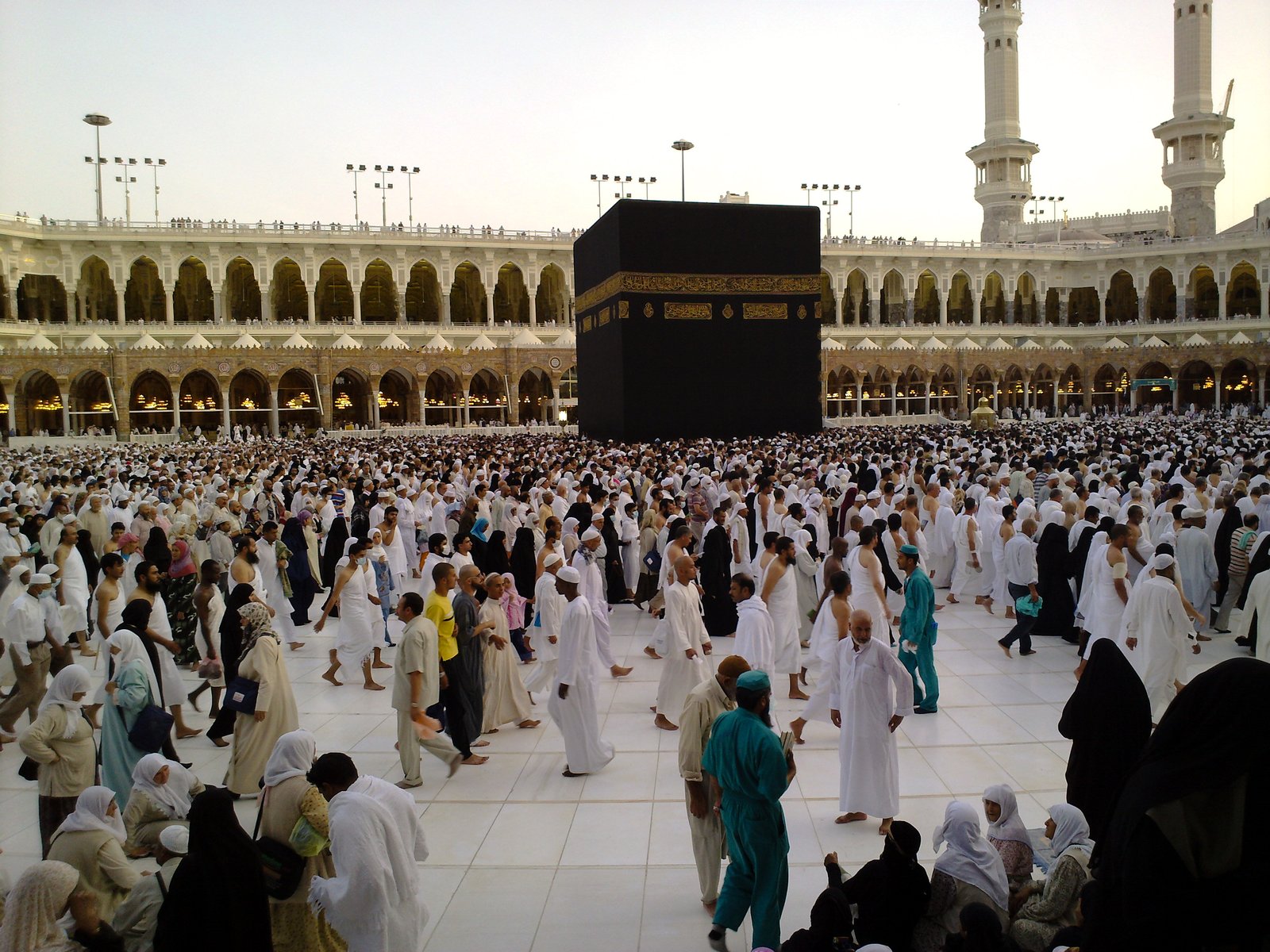
Seven appears in the Qur'an more often than most numbers: seven heavens, seven gates, seven cows in a king's dream, seven seas of ink. It also shapes Muslim worship. Pilgrims walk seven times around the Kaʿba and seven times between al-Safa and al-Marwa, and in every prostration seven parts of the body touch the ground. This study asks: what does each text actually say about seven, and how did the classical commentators read it?
The aim is descriptive. The Qur'anThe QuranThe central scripture of Islam, consisting of 114 Arabic surahs; its study distinguishes Quranic discourse from manuscript history, reading traditions, and historical inference.Glossary · Click to read the explanation never calls seven a holy number, and nothing here is offered as a numerical code. Verses are quoted in the Saheeh International English translation, where words in square brackets are the translator's additions. The commentaries of al-Tabari, al-Qurtubi and Ibn Kathir are reported as their authors wrote them. [1]
Seven heavens, and "of the earth the like of them"
The Qur'an speaks of seven heavens in several places. God "made them seven heavens" (2:29), and twice the heavens are called ṭibāq, "in layers" (67:3; 71:15). The comparison with other ancient pictures of the sky belongs to a separate study; here the focus is one unusual phrase:
Qur'an 65:12, Saheeh International translation.
The Arabic wa-mina l-arḍi mithlahunna (ومن الأرض مثلهن), "and of the earth the like of them", says that the earth has a likeness to the seven heavens, but not in what way. Al-TabariAl-TabariAbbasid-era historian and Qur'anic exegete (c. 839–923 CE). His commentary records competing views on Abraham's son, then favors Isaac.Glossary · Click to read the explanation (c. 839–923 CE), the Abbasid-era historian and exegete, explains that God created of the earth the like of the heavens, with creation in each. Among the early reports he gathers, one records that Ibn ʿAbbas was reluctant to explain the verse at all: if he told his hearers its interpretation, he said, they would deny it. On "the command descends among them", al-Tabari cites Mujahid: between the seventh earth and the seventh heaven. [2]
The Andalusian scholar al-Qurtubi (d. 1273 CE) wrote the large commentary al-Jāmiʿ li-aḥkām al-Qurʾān. He states that there is no disagreement that the heavens are seven, one above another, but that the earths were understood in two main ways. The majority (al-jumhūr) held that they are seven layers, one above another, with space between them as between the heavens. Al-Dahhak held that they are pressed together without gaps. Al-Qurtubi prefers the first view because of reports in al-Tirmidhi and al-Nasaʾi. He also records a third view, transmitted from Ibn ʿAbbas through al-Kalbi: seven flat earths side by side, separated by seas. [3]
Ibn KathirIbn KathirSyrian Qur'anic exegete and historian (c. 1301–1373 CE) who favors Ishmael in his reading of the sacrifice account.Glossary · Click to read the explanation (c. 1301–1373 CE) reads the phrase simply as "seven earths", and he rejects as unsupported the attempt to explain them as seven continents. [4] He cites a hadith also found in Sahih al-Bukhari: whoever unjustly takes even a hand-span of land will have it hung around his neck "from seven earths" on the Day of Resurrection. [5]
The commentators agree that the verse speaks of seven earths but differ over their arrangement, which the verse leaves open.
"Seven of the oft-repeated": al-sabʿ al-mathānī
In 15:87 God addresses the Prophet MuhammadMuhammad, prophet of IslamMuhammad is the prophet of Islam, living about 570–632 CE in the setting of Islam’s seventh-century emergenceGlossary · Click to read the explanation: "And We have certainly given you, [O Muhammad], seven of the often repeated [verses] and the great Qur'an". The Arabic is sabʿan mina l-mathānī (سبعا من المثاني). The word "verses" is in brackets: the verse says "seven", not seven of what.
Al-Tabari lists the main answers. Some said the seven long suras at the beginning of the Qur'an. Others said the seven verses of al-Fatiha, the opening sura, called mathānī because they are recited again in every unit (rakʿa) of the prayer. Others said the meanings of the Qur'an. Al-Tabari himself chooses the Fatiha because the report from the Prophet on this point is sound. [6]
Two such reports are in Sahih al-Bukhari, in the Book of Commentary on the Qur'an. In the first, the Prophet promises Abu Saʿid ibn al-Muʿalla to teach him the greatest sura of the Qur'an before he leaves the mosque, and then says: "Al-ḥamdu lillāhi rabbi l-ʿālamīn [Praise be to God, Lord of the worlds]: it is the seven oft-repeated and the great Qur'an that I have been given." In the second, Abu Hurayra reports: "The Mother of the Qur'an is the seven oft-repeated and the great Qur'an." [7]
Ibn Kathir records both views with the Companions and Successors who held them. After quoting the two hadiths, he concludes that the views need not contradict each other, since the Qur'an also calls the whole Book mathānī (39:23). In his commentary on the Fatiha he notes that there is no disagreement that it has seven verses. What differed was the counting: many, including most of the Kufan reciters, counted the basmala ("In the name of God, the Entirely Merciful, the Especially Merciful") as its first verse. [8]
Al-Qurtubi also calls the Fatiha view correct, because it rests on an explicit text from the Prophet. He records an objection to the long suras view: al-Hijr is a Meccan sura, revealed before those long suras. [9] The Fatiha reading is therefore the majority position, supported by hadith, while the other views remain part of the recorded tradition.
Seven gates
"And indeed, Hell is the promised place for them all. It has seven gates; for every gate is of them a portion designated" (15:43–44). The Arabic is lahā sabʿatu abwāb (لها سبعة أبواب). Ibn Kathir explains that each portion of those who follow Iblis is assigned to a gate, and that each person enters and settles according to his deeds. [10] As the archive's entry on JahannamGehenna and Jahannam: from the Hinnom Valley to the language of punishmentA name linked to Jerusalem’s Valley of Hinnom. Gehenna acquired meanings of judgment in Jewish and Christian texts and is linguistically related to Quranic Jahannam; the depictions are not identical.Glossary · Click to read the explanation explains, the verse states seven gates with a group for each. Lists of seven named levels belong to later commentary and narrative literature, and they vary.
Seven years in a king's dream
In the sura of Yusuf, the king of Egypt says: "Indeed, I have seen [in a dream] seven fat cows being eaten by seven [that were] lean, and seven green spikes [of grain] and others [that were] dry" (12:43). The nobles cannot explain it; the imprisoned YusufJoseph in Genesis and the Qur’anFigure whose story in Genesis and Sūrat Yūsuf combines enslavement, accusation, prison and advancement in Egypt.Glossary · Click to read the explanation can.
Yusuf's answer turns the dream into practical advice: "You will plant for seven years consecutively; and what you harvest leave in its spikes, except a little from which you will eat. Then will come after that seven difficult [years]..." (12:47–48). Then, he adds, will come "a year in which the people will be given rain" (12:49). Ibn Kathir explains that Yusuf read the cows as years, and he describes the final year of rain as good news that Yusuf gave them. [11] Genesis 41 also has seven fat and seven thin cattle and two sets of seven heads of grain in Pharaoh's dreams; the two accounts are best read side by side, each in its own words.
Seven as "many": ink, grain and wind
Some sevens describe abundance rather than a count. "And if whatever trees upon the earth were pens and the sea [was ink], replenished thereafter by seven [more] seas, the words of Allah would not be exhausted" (31:27). Ibn Kathir comments that seven here indicates a large amount. It is not to be taken literally, nor to be understood as the seven oceans of the world. [12]
The same sense of increase appears in a parable about charity: "The example of those who spend their wealth in the way of Allah is like a seed [of grain] which grows seven spikes; in each spike is a hundred grains" (2:261). Ibn Kathir notes that the image moves the heart more than simply saying "seven hundred". [13]
Elsewhere, the number marks a length of time. The people of ʿĀd were destroyed by a cold, violent wind that God "imposed upon them for seven nights and eight days in succession" (69:6–7). Al-Tabari reports that Ibn ʿAbbas, Ibn Masʿud, Mujahid and ʿIkrima explained the word ḥusūman as "in succession"; Qatada added "without a pause". Ibn Kathir notes that others read it as "ill-omened". [14] Here the numbers simply tell how long the wind lasted.
A number left to God
The sura of the Cave reports what people would say about the young men who slept in the cave: three with their dog as the fourth, five with the dog as the sixth, "guessing at the unseen", and "seven, and the eighth of them was their dog". The verse then says: "My Lord is most knowing of their number. None knows them except a few" (18:22).
Ibn Kathir notes that "guessing at the unseen" follows the first two claims but not the third. He reports, with chains he judges sound, that Ibn ʿAbbas said: "I am one of the few, and they were seven." He also stresses the verse's own lesson: such knowledge is referred to God, and argument without knowledge is to be avoided. [15] The archive's study of the Sleepers of the Cave shows that some SyriacSyriacAn Aramaic literary language rooted in Edessa, first attested in non-Christian inscriptions and later prominent in Christian writing, scholarship, translation and liturgy.Glossary · Click to read the explanation and Sogdian versions of the story count eight people.
Three days and seven: a fast in the Hajj
A pilgrim who combines ʿumra with Hajj but cannot find a sacrificial animal must fast "three days during Hajj and of seven when you have returned [home]. Those are ten complete [days]" (2:196). Here seven is simply part of a sum, and the verse itself gives the total.
Seven in the rites of Hajj and ʿumra
The Qur'an names al-Safa and al-Marwa as "among the symbols of Allah" (2:158), but it gives no count of rounds. The number seven in these rites comes from the practice of the Prophet, transmitted in hadith.
The fullest account is Jabir ibn ʿAbd Allah's description of the Prophet's Farewell Pilgrimage in Sahih Muslim. On reaching the Kaʿba, the Prophet touched its corner, then walked briskly for three circuits and at a normal pace for four: seven in all. He prayed at the Station of Ibrahim, went out to al-Safa, and walked between the two hills until "his last circuit at al-Marwa". On the day of sacrifice he threw seven small pebbles at the pillar near the tree, Jamrat al-ʿAqaba, saying Allāhu akbar with each one. [16]
In Sahih al-Bukhari, Ibn ʿUmar says that the Prophet circled the House seven times, prayed two units of prayer behind the Station of Ibrahim, and went seven times between al-Safa and al-Marwa. [17] Al-Bukhari also preserves Ibn ʿAbbas's account of HagarHagarFigure in Genesis: an Egyptian woman in Sarah and Abraham's household and Ishmael's mother; chapters 16 and 21 narrate her flight and later expulsion and survival.Glossary · Click to read the explanation, who searched for water for her infant son IshmaelIshmaelSon of Hagar and Abraham in Genesis; later Muslim interpretation identified him with the unnamed son in Qur'an 37's sacrifice scene.Glossary · Click to read the explanation in the empty valley. She went between al-Safa and al-Marwa seven times, and the Prophet said: "This is the source of the tradition of the walking of people between them." [17]
On the following days in Mina, according to reports in al-Bukhari, the Prophet threw seven pebbles at each of the three pillars, saying Allāhu akbar with every throw, and Ibn ʿUmar did the same. [18]
Seven in daily prayer
Ibn ʿAbbas reports that the Prophet said: "I have been ordered to prostrate on seven bones": the forehead, and he pointed to his nose, the two hands, the two knees and the ends of the two feet. [19] Here the number counts the parts of the body that touch the ground.
What these sevens share, and what they do not
These passages use seven in different ways: for the order of creation, a precious part of revelation, the gates of Jahannam, years in a dream, nights of a wind, days of a fast, and as an image of abundance, where Ibn Kathir says plainly that seven means "many". In worship, the sevens of the circuits, rounds and pebbles come from the Prophet's example as his Companions reported it.
No verse calls seven sacred or explains why seven was chosen. The classical commentators explained each verse in its own context and recorded their disagreements; they did not build a theory of numbers. Seven also appears in the texts of earlier peoples of the Near East, which the archive studies separately. That shared use of a number is a question for careful comparison, not evidence that one tradition took it from another.
References and notes
- The Qur'an, English translation by Saheeh International (edition en.sahih), with the Uthmani Arabic text (edition quran-uthmani), Al Quran Cloud API Verses 2:29, 2:158, 2:196, 2:261, 12:43-49, 15:43-44, 15:87, 18:22, 31:27, 65:12, 67:3, 69:6-7, 71:15, read in English and Arabic Return to the text ↑
- Muhammad ibn Jarir al-Tabari, Jamiʿ al-bayan ʿan taʾwil ay al-Qurʾan (Tafsir al-Tabari), Arabic text on Quran.com Commentary on Qur'an 65:12, whole entry (reports of Ibn ʿAbbas, Ibn Masʿud, Mujahid, Qatada) Return to the text ↑
- Abu ʿAbd Allah al-Qurtubi, al-Jamiʿ li-ahkam al-Qurʾan (Tafsir al-Qurtubi), Arabic text on Quran.com Commentary on Qur'an 65:12, whole entry (two views on the seven earths, the view of al-Dahhak, the third view via al-Kalbi) Return to the text ↑
- Ismaʿil ibn ʿUmar Ibn Kathir, Tafsir al-Qurʾan al-ʿazim, abridged English translation (Tafsir Ibn Kathir) on Quran.com Commentary on Qur'an 65:12, whole entry Return to the text ↑
- Sahih al-Bukhari, Book of Oppressions and Book of the Beginning of Creation, chapter "What has been said regarding the seven earths"; English translation by M. Muhsin Khan Hadith nos. 2452-2454 and 3195-3198 (Arabic and English) Return to the text ↑
- Muhammad ibn Jarir al-Tabari, Jamiʿ al-bayan ʿan taʾwil ay al-Qurʾan (Tafsir al-Tabari), Arabic text on Quran.com Commentary on Qur'an 15:87: the listed views and al-Tabari's own preference Return to the text ↑
- Sahih al-Bukhari, Book 65, Prophetic Commentary on the Qur'an (Kitab al-Tafsir); English translation by M. Muhsin Khan, quoted here in the archive's rendering from the Arabic Hadith no. 4474 (chapter on al-Fatiha, Abu Saʿid ibn al-Muʿalla) and no. 4704 (chapter on Qur'an 15:87, Abu Hurayra) Return to the text ↑
- Ismaʿil ibn ʿUmar Ibn Kathir, Tafsir al-Qurʾan al-ʿazim, abridged English translation (Tafsir Ibn Kathir) on Quran.com Commentary on Qur'an 15:87-88, and the introduction to al-Fatiha at 1:1 (section on the number of its verses) Return to the text ↑
- Abu ʿAbd Allah al-Qurtubi, al-Jamiʿ li-ahkam al-Qurʾan (Tafsir al-Qurtubi), Arabic text on Quran.com Commentary on Qur'an 15:87, whole entry Return to the text ↑
- Ismaʿil ibn ʿUmar Ibn Kathir, Tafsir al-Qurʾan al-ʿazim, abridged English translation (Tafsir Ibn Kathir) on Quran.com Commentary on Qur'an 15:39-44, section "The Gates of Hell are Seven" Return to the text ↑
- Ismaʿil ibn ʿUmar Ibn Kathir, Tafsir al-Qurʾan al-ʿazim, abridged English translation (Tafsir Ibn Kathir) on Quran.com Commentary on Qur'an 12:43-49, whole entry Return to the text ↑
- Ismaʿil ibn ʿUmar Ibn Kathir, Tafsir al-Qurʾan al-ʿazim, abridged English translation (Tafsir Ibn Kathir) on Quran.com Commentary on Qur'an 31:27-28, whole entry Return to the text ↑
- Ismaʿil ibn ʿUmar Ibn Kathir, Tafsir al-Qurʾan al-ʿazim, abridged English translation (Tafsir Ibn Kathir) on Quran.com Commentary on Qur'an 2:261, whole entry Return to the text ↑
- Muhammad ibn Jarir al-Tabari, Jamiʿ al-bayan (Arabic), and Ibn Kathir, Tafsir al-Qurʾan al-ʿazim (abridged English translation), on Quran.com Al-Tabari on Qur'an 69:7 (reports on husuman); Ibn Kathir on 69:1-12 (section on ʿAd) Return to the text ↑
- Ismaʿil ibn ʿUmar Ibn Kathir, Tafsir al-Qurʾan al-ʿazim, abridged English translation (Tafsir Ibn Kathir) on Quran.com Commentary on Qur'an 18:22, section "Their Number" Return to the text ↑
- Sahih Muslim, Book of Pilgrimage (Kitab al-Hajj), the hadith of Jabir ibn ʿAbd Allah on the Prophet's pilgrimage; English translation by ʿAbd al-Hamid Siddiqi, checked against the Arabic Hadith no. 1218a (in-book reference: Book 15, Hadith 159): the circuits of the Kaʿba, the walk between al-Safa and al-Marwa, the seven pebbles at Jamrat al-ʿAqaba Return to the text ↑
- Sahih al-Bukhari, Book of Pilgrimage and Book of Prophets; English translation by M. Muhsin Khan Hadith nos. 1645-1646 (Ibn ʿUmar: seven circuits and seven rounds between al-Safa and al-Marwa) and no. 3364 (Ibn ʿAbbas: Hagar between al-Safa and al-Marwa) Return to the text ↑
- Sahih al-Bukhari, Book of Pilgrimage, chapters on the stoning of the jamarat; English translation by M. Muhsin Khan Hadith nos. 1751-1753 (Arabic and English) Return to the text ↑
- Sahih al-Bukhari, Book of the Call to Prayer (Kitab al-Adhan), chapter "To prostrate on the nose"; English translation by M. Muhsin Khan Hadith no. 812 (Ibn ʿAbbas) Return to the text ↑
Suggest a correction · Suggest a source for this record
Cite this record
IL Archive, «Seven in the Qur'an and in Islamic Worship: Heavens, the Fatiha, the Gates and the Rites of Hajj», https://ilarchive.com/en/studies/seven-in-the-quran-and-islamic-practice
Continue reading