Entity
Akedah (binding of Isaac)
A reference page linking a name, group, or concept to the materials that discuss it.
Isaac’s binding and rescue by a ram in Genesis 22, and its interpretation in Jubilees, Qumran, the Mishnah, Christianity and the Qur’an, with sources kept distinct.
Estimated reading time: 9 min Published Last reviewed:
Share article

Text
Introduction
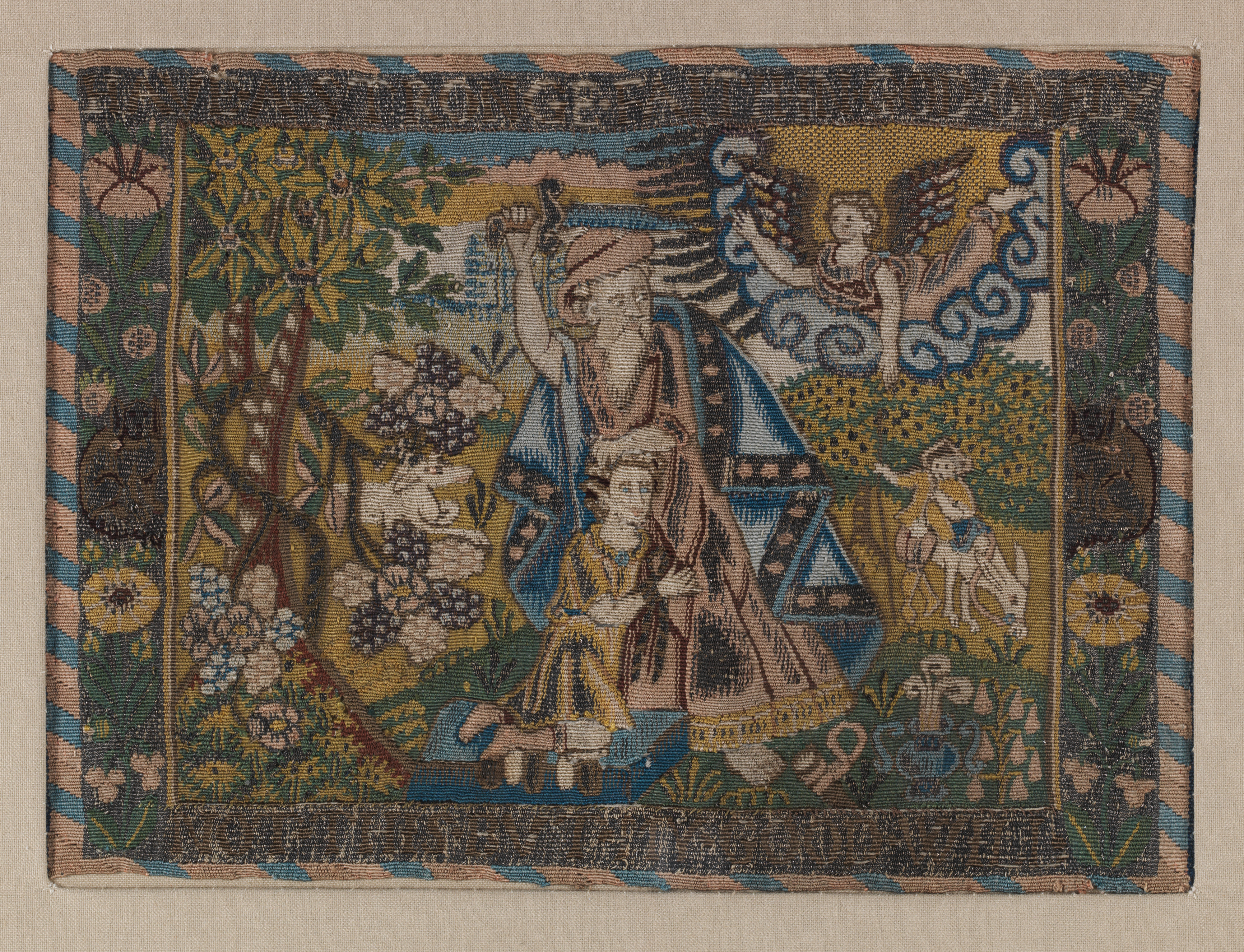
Akedah (HebrewHebrewA Northwest Semitic language of the Canaanite group, encompassing Iron Age epigraphy, Biblical, Rabbinic, medieval and Modern Hebrew; its scripts and pronunciations changed over time.Glossary · Click to read the explanation עֲקֵדָה, “binding”) is the traditional Jewish name for the account of AbrahamAbrahamCentral figure in Genesis, the Qur'an and Jewish, Christian and Islamic traditions; the sacrifice study compares what each text says about him.Glossary · Click to read the explanation and his son IsaacIsaacSon of Abraham and Sarah in Genesis; named explicitly in Genesis 22's sacrifice episode, while named after the unnamed-son scene in Qur'an 37.Glossary · Click to read the explanation in GenesisBook of GenesisHebrew book of the Torah containing Noah’s flood, survival offering and covenant with living creatures.Glossary · Click to read the explanation 22. Abraham prepares to offer his son as a burnt offering, but a heavenly call stops the killing and a ram is offered instead. This entry distinguishes the narrative in its surviving textual form from its later retellings and ritualRitualAn organised or distinguished practice meaningful to a community; it may leave traces, but its form alone does not reveal an associated doctrine.Glossary · Click to read the explanation remembrance in Judaism, Christian readings and the comparable Qur’anic scene. The time depicted by the story is not the date at which the sources were composed or copied. [1]
Genesis: the test, the binding, the substitute
The narrator immediately tells readers that God was “testing” Abraham; within the story Abraham instead hears the command to take Isaac, his beloved “only” son, to the “land of Moriah”MoriahThe land named in Genesis 22 as Abraham's destination; 2 Chronicles later associates Mount Moriah with the Jerusalem Temple site, not an independently located journey.Glossary · Click to read the explanation as a burnt offering. This description does not erase IshmaelIshmaelSon of Hagar and Abraham in Genesis; later Muslim interpretation identified him with the unnamed son in Qur'an 37's sacrifice scene.Glossary · Click to read the explanation from the larger narrative of Genesis: it emphasizes Isaac’s particular place in the line of promise. Isaac carries the wood, while Abraham carries the fire and knife; the son asks where the sheep is, and the father answers that God will see to it. The repeated statement that they walked “together” creates tension between the command and the outcome not yet known to the characters. [1][2]
The traditional name Akedah derives from the Hebrew verb וַיַּעֲקֹד (“he bound”); the technical noun is not the title given to the story by Genesis itself. Abraham builds the altar, arranges the wood, binds Isaac and places him on top. As he reaches for the knife, the angel of the LORD calls to him twice and prohibits harming the boy. The scene culminates in a declaration about Abraham’s fear of God and obedience, followed by a renewed promise of descendants and blessing. It describes neither Isaac’s actual death nor a resurrection, supplies no numerical age for him and contains no explicit declaration that he agrees to be killed. Genesis 22:19 names Abraham, but not Isaac, in the sentence about returning to the servants; that narrative silence alone cannot undo the preceding intervention and rescue. [1][2]
It is the ram, not the son, that is actually sacrificed. תַּחַת בְּנוֹ, “in place of his son,” makes the substitution explicit. Abraham’s answer about the sheep (22:8) and the place-name in 22:14 involve a Hebrew root that can mean “see” and, in context, “provide.” This wordplay by itself establishes neither a subsequent rite nor an independently identifiable archaeological location. [1]
A variant reading, a place and the age of the sources
The Masoretic Hebrew of Genesis 22:13 reads אַחַר, suggesting a ram “behind” Abraham in the thicket. In the textual evidence presented by Rivka Ulmer, the Samaritan PentateuchSamaritan PentateuchSamaritan Hebrew five-book tradition sharing an older textual history, with linguistic and theological variants, including readings involving Mount Gerizim.Glossary · Click to read the explanation and the Greek SeptuagintSeptuagintA name for the varied ancient Greek translations and writings associated with Jewish scripture; beginning with the Torah, the texts differ across books and manuscripts.Glossary · Click to read the explanation have a reading corresponding instead to אֶחָד, “one”: “one ram.” The smoother version might be a clarification of a difficult phrase, or the variation might reflect a scribal confusion between the similar Hebrew letters resh and dalet. The evidence discussed here does not conclusively establish which reading came first. This comparison follows a published scholarly examination; it is not a fresh inspection of Samaritan or Greek manuscript images. [3]
Genesis specifies the “land of Moriah” and an initially unnamed mountain. The later book of 2 Chronicles 3:1 names “Mount Moriah” as the site of Solomon’s temple in JerusalemJerusalemJerusalem is a city of religious importance in Judaism, Christianity and IslamGlossary · Click to read the explanation; later Jewish readings associate the locations. That association is not independent archaeological proof of the event, nor does it permit an unambiguous identification of Abraham’s altar. [1][4]
The story is set in the literary age of the ancestors, not in a securely dated year. The composition, compilation and editing of Genesis are matters of scholarly debate, generally involving stages during the first millennium BCE rather than a date derivable from this episode. Its wording is transmitted by later Hebrew textual witnesses and ancient translation traditions. The date of a surviving copy or translation is neither the historical date of the alleged test nor automatically the date of composition of the entire text. [1][2][3]
Early Jewish rewritings: Mastema and Isaac’s voice
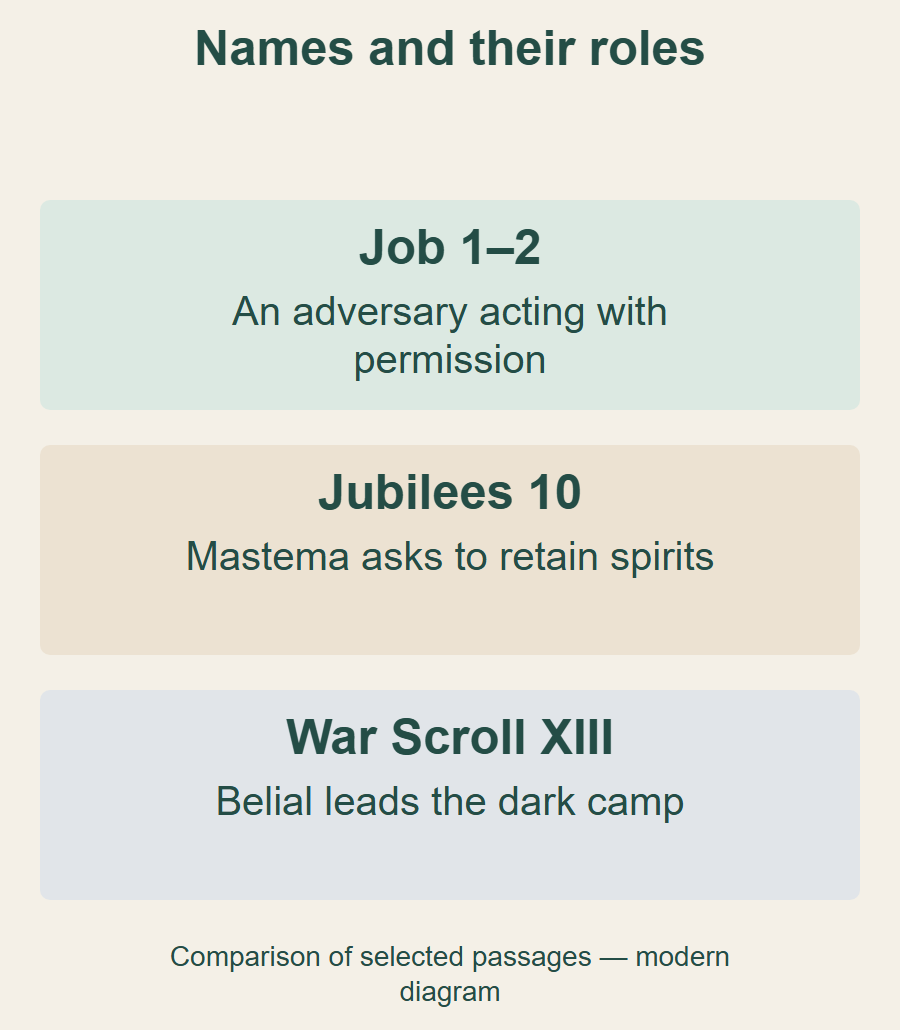
The Book of JubileesBook of JubileesJewish retelling of Genesis and Exodus framed as angelic teaching to Moses, adding chronology, narratives and interpretation.Glossary · Click to read the explanation, a Jewish composition commonly dated roughly to the second century BCE, retells the episode in 17:15–18:19 within a larger series of Abraham’s tests. MastemaMastemaFigure in Jubilees called Mastema or “prince of hostility”; leader of harmful spirits and proposer of trials under divine permission. Not automatically identical with every Satan or Belial tradition.Glossary · Click to read the explanation, an adversarial heavenly figure, proposes that Abraham be tested; angels are present at the decisive moment, Mastema is humiliated, the mountain is identified with Zion, and the account concludes with a seven-day festival. These are features of Jubilees, not statements made by Genesis 22. Scholars have proposed links between its calendrical cues and Passover, but that proposal alone cannot establish the actual historical date or location of the event. [5][6]
Todd Hanneken argues that Jubilees’ reference to “ten tests” does not yield one straightforward arithmetic list of ten incidents and may instead express completeness of testing. The MishnahMishnahThe Mishnah is a rabbinic compilation assembled around 200 CE, organizing teachings and discussions by topic.Glossary · Click to read the explanation, in Avot 5:3, also mentions ten tests; that shared motif does not by itself demonstrate that one source directly depends on the other. A later reading of the Genesis narrative must be distinguished from a conjectured ancient origin for each added feature. [8][18]
The fragmentary Dead SeaDead SeaThe Dead Sea is a salt lake in the Jordan Rift Valley, near sites where ancient manuscripts were foundGlossary · Click to read the explanation Scroll known as 4Q225, or “Pseudo-Jubilees,” preserves several related motifs: Mastema’s complaint, weeping holy angels contrasted with rejoicing adversarial angels, and a request ascribed to Isaac to be bound tightly. The request occurs in a damaged column with reconstructed words; it cannot responsibly be expanded into a complete preserved dialogue or an independent, unambiguous doctrine of Isaac’s death atoning for others. The discussion here was checked against Joseph Fitzmyer’s published rendering and assessment of the relevant columns, not against the manuscript itself or a separately examined critical Hebrew edition. Fitzmyer treats the fragment as important evidence for the antiquity of certain expansions, not for a single, fully developed system of Isaac’s blood, merit and substitutionary atonement. Similarity does not prove that all these features traveled together along one line of transmission. [9]
Literary and philosophical receptions under Rome
In Jewish Antiquities 1.222–236, the first-century Jewish historian Flavius JosephusFlavius JosephusFirst-century Jewish historian who retold older narratives, including Abraham’s test, in Jewish Antiquities.Glossary · Click to read the explanation gives Isaac the age of twenty-five and has him willingly assent once Abraham explains the command. These are Josephus’ narrative additions, not lost phrases that can simply be restored to Genesis. Philo of AlexandriaPhilo of AlexandriaGreek-writing Jewish interpreter in Roman Alexandria (roughly first century CE), who read the Torah philosophically while defending its practices; his works survive through Greek copying and Armenian translation.Glossary · Click to read the explanation, in On Abraham §§167–207, treats the father’s decision as an exemplary free act of devotion and argues against the objection that child sacrifice is itself morally abhorrent. The two authors’ rhetorical aims are distinct: their common emphasis on piety does not prove a shared source for every detail. [10][11]
Jewish prayer and ritual memory
Mishnah Ta’anit 2:4, in its account of blessings pronounced on public fast days, invokes the one who answered Abraham on Mount Moriah. That is direct textual evidence that the episode became a resource for communal prayer; it is not a prayer prescribed by Genesis. In Genesis RabbahGenesis RabbahJewish exegetical midrash on Genesis, mainly redacted around the fifth century CE in Roman Palestine. It assembles interpretations and narratives from different layers, including 38:13 on Abraham and the idols.Glossary · Click to read the explanation 56:8, a midrash compiled in a later period, Isaac asks to be bound tightly so that his movements will not spoil the offering. The son is given a voice not supplied in this form by Genesis 22. [7][12]
The Babylonian Talmud, Rosh Hashanah 16a, associates blowing the shofar—a horn used as a ritual instrument, especially a ram’s horn—with divine remembrance of Isaac’s binding. Here the ram becomes a symbol in later intercession and memory; the human sacrifice still does not take place in Genesis. Readings of merit, remembrance and expiation remain source-dependent and should not be merged into a single doctrine of Isaac’s death. [13][3]
Christian reading and the Qur’anic episode
Hebrews 11:17–19 recalls the testing of Abraham and Isaac, relating Abraham’s confidence to God’s ability to raise the dead and describing the recovery of his son as figurative. This is a Christian construal of the episode as an instance of faith, not an assertion that Genesis records an actual death and resurrection. Other Christian interpretations read the wood, the son and the intervention as prefiguring Jesus’ death; such typology belongs to reception, not to the explicit words of Genesis. [14]
The Qur’anThe QuranThe central scripture of Islam, consisting of 114 Arabic surahs; its study distinguishes Quranic discourse from manuscript history, reading traditions, and historical inference.Glossary · Click to read the explanation in al-Ṣāffāt 37:99–113 describes Abraham’s dream of slaughtering his son, the consultation and the son’s answer that his father should do as commanded, then ransom by a “great sacrifice.” The son is not named within the sacrificial scene; the announcement of Isaac by name follows in 37:112. Ibn KathirIbn KathirSyrian Qur'anic exegete and historian (c. 1301–1373 CE) who favors Ishmael in his reading of the sacrifice account.Glossary · Click to read the explanation favors Ishmael, appealing among other considerations to the order of announcements; al-TabariAl-TabariAbbasid-era historian and Qur'anic exegete (c. 839–923 CE). His commentary records competing views on Abraham's son, then favors Isaac.Glossary · Click to read the explanation favors Isaac, connecting the “forbearing boy” to other announcements of Isaac while recording reports on both sides. Neither commentator’s preferred identification should be presented as the verse’s own wording, nor should the son’s explicit consent in the Qur’an be silently transplanted into Genesis’ dialogue with Isaac. The Qur’anic ransom and the biblical ram connect as themes of rescue, but the two narratives must be interpreted on their own terms. [15][16][17]
Chronology and what the comparison establishes
- Story time: the ancestral period of Genesis as a narrative setting, without an independently established archaeological date for the episode.
- Composition and witnesses: debated stages of biblical writing and editing; later Hebrew copies and ancient versions must not be mistaken for dates of the event or the composition of every passage.
- Approximately second century BCE: Jubilees’ retelling; the incomplete 4Q225 is a physical witness from the Second Temple periodSecond Temple JudaismDiverse Jewish traditions between the rebuilding of Jerusalem’s temple around 515 BCE and its destruction in 70 CE: institutions, diaspora, groups and texts, with distinctions between events, composition, manuscripts and the limits of evidence.Glossary · Click to read the explanation, not a dated autograph of Genesis. [5][6][9]
- First century CE: Philo, Josephus and the use made of the story in Hebrews. [10][11][14]
- Around 200 CE and subsequently: the Mishnah, followed by layers of midrash and Talmud relating the Akedah to prayer and the ram’s horn. [7][12][13][18]
- Seventh century CE and later exegesis: the Qur’anic al-Ṣāffāt episode, then competing identifications in al-Tabari (ninth–tenth centuries) and Ibn Kathir (fourteenth century). [15][16][17]
The strongest conclusion is that Isaac’s rescue and the substitution of a ram belong to the Genesis narrative actually read. A numerical age, elaborated assent, heavenly bystanders, intercessory merit and the identity of the son in a different scripture need their own specified witnesses. These texts document a rich history of literary, ethical and ritual interpretation; they do not attest one uninterrupted and fully recoverable transmission chain for every detail. [1][3][9]
References and notes (18)
- Genesis was read in full in Hebrew alongside an online English rendering; brief translations in this entry are editorial. Genesis 22:1–24, especially 22:1–19, 22:9, 22:13 and 22:19; Mechon-Mamre Hebrew–English text. Return to the text ↑
- Gary A. Rendsburg (2020), on the binding root and literary structure; this is analysis rather than proved composition history. The Binding of Isaac and the Root ע.ק.ד; structural parallels with Genesis 12 and 22, HTML article. Return to the text ↑
- Rivka Ulmer (2026), a published comparison of Masoretic, Samaritan and Greek readings and later midrash; no direct manuscript collation. Genesis 22:13, MT/SP/LXX comparison and Aḥar/Eḥad and shofar sections; HTML, updated 3 October 2026. Return to the text ↑
- Second Chronicles locates the temple on Mount Moriah; the verse does not itself recount the binding. 2 Chronicles 3:1, King James Version. Return to the text ↑
- Book of Jubilees, R. H. Charles’s English translation in The Apocrypha and Pseudepigrapha of the Old Testament (Oxford, 1913); no Ethiopic manuscript comparison. Jubilees 17:15–18, Mastema and earlier tests, published transcription. Return to the text ↑
- Jubilees in R. H. Charles’s English translation (1913); its own expanded narrative, not Genesis. Jubilees 18:1–19, notably 18:8–19, English text online. Return to the text ↑
- Mishnah Ta’anit 2:4, fast-day blessing invoking the God who answered Abraham on Moriah; Hebrew online text and Sefaria English translation checked. Mishnah Ta’anit 2:4; Wikisource Hebrew and Sefaria English, no manuscript inspection. Return to the text ↑
- Todd R. Hanneken (2019), Ten-Times Tested Abraham in the Book of Jubilees; read substantive argument on the rhetorical number ten. Full online article, especially tests, rhetoric, and comparison with Avot 5:3. Return to the text ↑
- Joseph A. Fitzmyer, The Sacrifice of Isaac in Qumran Literature, online reprint hosted in 2012; studied his rendering, lacunae and critique, not the 4Q225 manuscript or the DJD edition itself. Sections I–IV; especially 4Q225 fragment 2, cols. i 7–14 and ii 1–14, and discussion of Vermes. Return to the text ↑
- Flavius Josephus, Jewish Antiquities, read in William Whiston’s English translation on Lexundria, not the original Greek. Jewish Antiquities 1.222–236, especially 1.227 and 1.232. Return to the text ↑
- Philo of Alexandria, On Abraham, C. D. Yonge’s nineteenth-century English translation; no consultation of the Greek. On Abraham §§167–207, especially §§169–177, 178–199 and 200–207. Return to the text ↑
- Genesis Rabbah 56:8, online passage and translated excerpt about Isaac asking to be tightly bound; no manuscript collation. Bereshit Rabbah 56:8, interpretation of Genesis 22:9. Return to the text ↑
- Babylonian Talmud, Rosh Hashanah 16a:16, ram’s horn and remembrance of Isaac; digital passage and scholarly discussion, not a Talmud manuscript. Rosh Hashanah 16a:16, Rabbi Abbahu’s statement. Return to the text ↑
- Epistle to the Hebrews, King James Version (1611); figurative recovery, no Greek manuscript inspection. Hebrews 11:17–19, KJV, BibleGateway. Return to the text ↑
- Qur’an, Arabic text of al-Ṣāffāt; the French and English renderings of the brief quoted verse are editorial. Al-Ṣāffāt 37:99–113, especially 37:102–107 and 37:112. Return to the text ↑
- Al-Tabari, Jami‘ al-bayan on Q 37:107; read the complete online passage, including reports on both sons and his preference for Isaac. Commentary on al-Ṣāffāt 37:107, especially «وأولى القولين بالصواب»; KSU digital text. Return to the text ↑
- Ibn Kathir, Tafsir on Q 37:107; read both lists of reports and the argument favoring Ishmael; no scanned critical edition used. Al-Ṣāffāt 37:107, reports identifying Isaac and Ishmael, KSU digital text. Return to the text ↑
- Mishnah Avot 5:3, the ten tests; online Hebrew/English excerpt and Hanneken’s analysis. Pirkei Avot 5:3, Sefaria, compared with Hanneken (2019). Return to the text ↑
Suggest a correction · Suggest a source for this record
Cite this record
IL Archive, «Akedah (binding of Isaac)», https://ilarchive.com/en/entities/akedah
Continue reading