Entity
Mastema
A reference page linking a name, group, or concept to the materials that discuss it.
- Names
- Mastêmâ
Mastema is a figure of Second Temple literature, prominent in Jubilees as leader of harmful spirits and an adversary who acts only within limits; his roles include the spoiling of crops and Abraham’s test.
Estimated reading time: 7 min Published Last reviewed:
Share article
Text
Introduction
Who is Mastema in ancient Jewish literature: an evil power independent of God, or an adversary operating within limits imposed upon him? The Book of JubileesBook of JubileesJewish retelling of Genesis and Exodus framed as angelic teaching to Moses, adding chronology, narratives and interpretation.Glossary · Click to read the explanation, a retelling of Genesis and the opening of Exodus, introduces a figure who leads harmful spirits and acts as an accuser and instigator of trials. His identity is best reconstructed from his actions in this text, rather than from a later, ready-made image of “the devil.” [1]
This entry follows Mastema’s request in NoahNoahNoah is the flood-story figure in Genesis and a prophet in the Qur’anGlossary · Click to read the explanation’s story, his role in Abraham’s test and his opposition to MosesMosesCentral figure in Exodus, Torah traditions and the Qur’an; childhood accounts differ in detail.Glossary · Click to read the explanation, before comparing related names and the Qumran manuscripts. Similarities between these traditions merit attention, but do not erase differences in their witnesses, vocabulary or chronology. [2]
Before it was a character’s designation
“Mastema” corresponds to HebrewHebrewA Northwest Semitic language of the Canaanite group, encompassing Iron Age epigraphy, Biblical, Rabbinic, medieval and Modern Hebrew; its scripts and pronunciations changed over time.Glossary · Click to read the explanation maśṭēmāh, “hostility” or “enmity.” In Hosea 9:7–8 the word refers to hostility in general, not to a named heavenly being. In Jubilees it functions as the designation of a character variously called Mastema or the “prince of Mastema/hostility.” A lexical recurrence need not be another appearance of that same character. Scholars discuss whether an originally functional title became a personal name, or whether both usages were available at an early stage. [3]
When was the book written, and how was it transmitted?
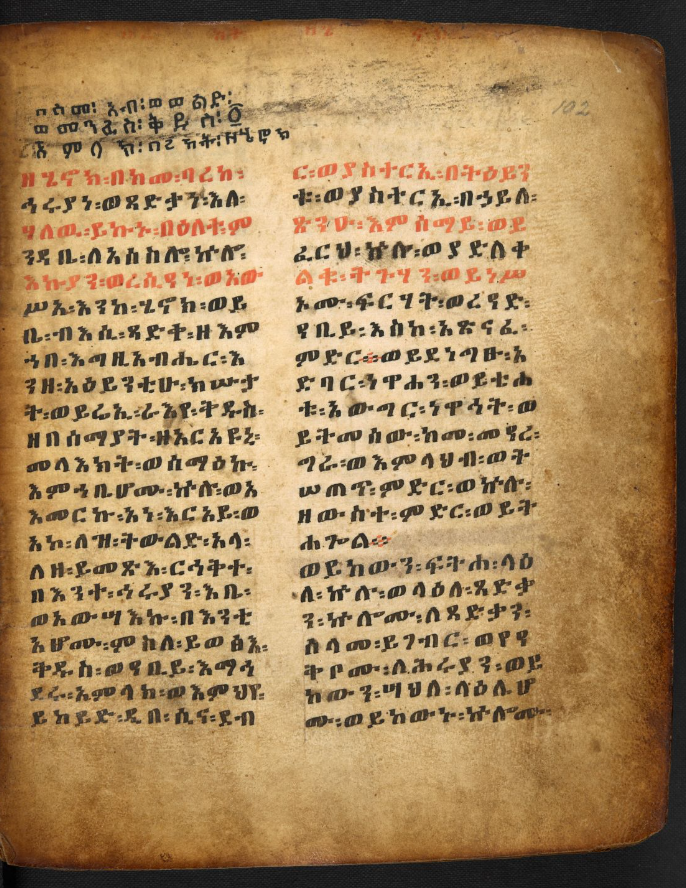
Jubilees sets its stories in the eras of the ancestors and Moses. Scholars, however, commonly place the composition of the book in broadly its surviving form around the middle of the second century BCE, not in the narrated era. It was written in Hebrew, fragments of which survive among the Dead Sea ScrollsDead Sea ScrollsManuscript collections from the Judaean Desert, best known through Qumran: diverse works, languages and textual forms, with copying distinguished from composition.Glossary · Click to read the explanation. Much of the continuous text used by modern translators survives instead in Ethiopic, or Geʽez, manuscripts following earlier stages of transmission and translation. R. H. Charles’s English editions are useful witnesses to his translation decisions, not a directly preserved Hebrew original. [4]
Nor does the presence of Qumran Hebrew copies guarantee that every word of the Ethiopic version occurs on an identifiable ancient fragment. Matthew Monger’s material study of 4Q216 questions assumptions that every item counted as a “copy of Jubilees” contained a complete, stable book. That is a scholarly proposal about transmission, not evidence here of a particular variant in Mastema’s passages. [5]
After the Flood: nine parts bound, one tenth left
In Jubilees 10:1–14, the descendants of NoahNoahNoah is the flood-story figure in Genesis and a prophet in the Qur’anGlossary · Click to read the explanation are harmed and misled by spirits. The narrative links these spirits to the offspring of the Watchers and the giants of the antediluvian tradition. God orders the angels to bind them; then Mastema, their leader, asks that some remain so he can exercise authority among human beings. The answer is that nine tenths are confined, while a tenth remains with him. This fraction describes neither a proportion of humanity nor a historical census of demons. It is a narrative device reconciling the continued presence of harm with the assertion that the spirits act by permission. [1]
Noah’s descendants are not left helpless. According to 10:10–14, angels teach Noah treatments using plants; he writes this knowledge down and entrusts it to Shem. Thus the story brings together seduction, the binding of spirits, and healing. Some scholarship sees the arrangement as a way of accounting for evil without attributing to Mastema independent creative power or sovereignty equal to God’s. [6]
“Satan” or “Mastema”? A significant translation variant
Charles’s English rendering of Jubilees 10:11 places the surviving tenth under “Satan.” James VanderKam’s rendering, reproduced by Todd Hanneken, instead has “Mastema” at the same point. Its note reports a medieval Hebrew witness reading “Mastema” where the Ethiopic tradition has “the satan.” The context therefore supports a functional overlap; it does not establish that the original Hebrew necessarily contained “Satan” in precisely the form printed by Charles, still less that all later occurrences of the two labels denote one fixed identity. [6]
Abraham, idolatry and the ravens
Jubilees 11:3–4 associates Prince Mastema with the spread of idolatry and other wrongdoing. In 11:10–12 he sends ravens and other birds to consume seeds in the fields. The young AbrahamAbrahamCentral figure in Genesis, the Qur'an and Jewish, Christian and Islamic traditions; the sacrifice study compares what each text says about him.Glossary · Click to read the explanation confronts them: the account describes his driving the birds away and later encouraging a method of sowing that covers the seed with earth. These are literary scenes making Abraham a defender of livelihood and cultivation; they do not document extraordinary birds in a securely dated historical episode. [7]
Isaac’s binding: a challenge ending in disgrace
In Jubilees 17:15–18, heaven praises Abraham’s faithfulness. Mastema then proposes that God order him to sacrifice IsaacIsaacSon of Abraham and Sarah in Genesis; named explicitly in Genesis 22's sacrifice episode, while named after the unnamed-son scene in Qur'an 37.Glossary · Click to read the explanation, to test his obedience. In 18:8–12, an angel stops Abraham’s outstretched hand and Mastema is shamed. This supplements Genesis 22, which presents the test without identifying such a heavenly instigator. Kristen Lindbeck points out the relationship between this literary expansion and the accuser in JobHa-satan in Job: Title, Role, and InterpretationHebrew “the adversary” in Job 1–2, who challenges Job’s motives with Yahweh’s permission. “Accuser” is a common functional interpretation, but “enforcer” has been argued; later Satan traditions cannot simply be read back into the passage.Glossary · Click to read the explanation: the challenge-and-test function is comparable, though the characters and narratives are not identical. [2]
The Jubilees narrator also specifies that God already knows Abraham’s faithfulness. Scholars accordingly read the introduction of an adversarial proposer as one way of addressing the ethical and interpretive difficulty posed by the command to sacrifice. This is an interpretation of the author’s literary strategy, not independently recoverable historical motivation. [8]
A Qumran witness that is not the Book of Jubilees itself
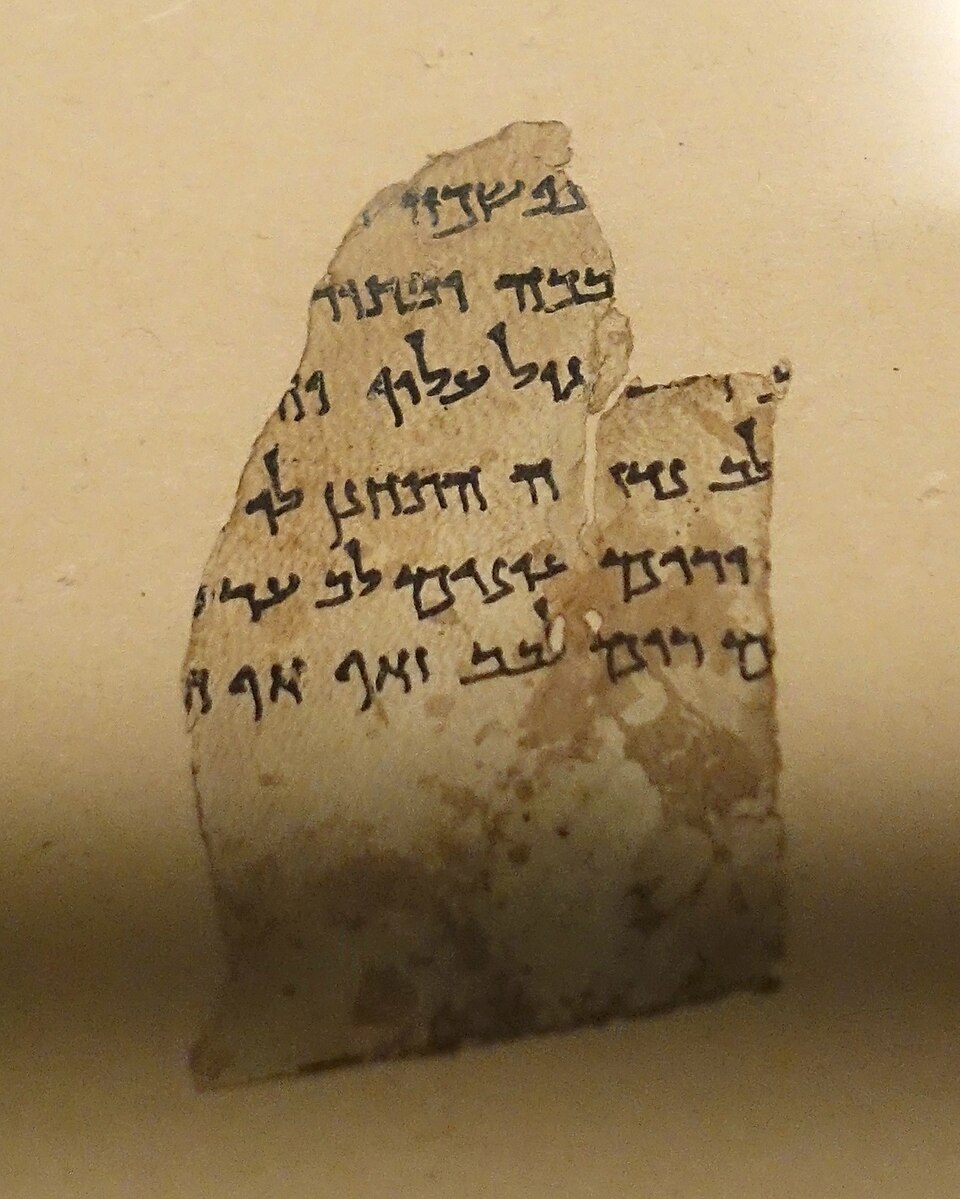
The Hebrew manuscript 4Q225, conventionally called Pseudo-Jubilees, contains a reworking of the binding of IsaacAkedah (binding of Isaac)Jewish name for Isaac’s binding in Genesis 22; his killing is stopped and a ram is offered instead. The story acquired varied interpretations and ritual uses.Glossary · Click to read the explanation close to this tradition. Its second fragment, first column, refers to the “prince of Mastema”; its second column describes some angels weeping and others rejoicing. It is nevertheless a distinct literary composition, not simply another copy of the Book of Jubilees. Brackets in modern transcriptions signify editorial restorations of damaged text; sentences reconstructed across gaps cannot be described as fully preserved on the physical fragment. [9]
Moses and the Exodus: enmity under constraint
As MosesMosesCentral figure in Exodus, Torah traditions and the Qur’an; childhood accounts differ in detail.Glossary · Click to read the explanation returns to Egypt, Jubilees 48:2–4 describes Mastema attempting to kill him. This differs from Exodus 4:24, whose wording attributes the confrontation to the Lord. Jubilees 48:9–11 then makes Mastema an ally of Pharaoh’s magicians: the text explicitly says they could perform only those harmful feats they were permitted, not comparable acts of healing. In 48:12–19 he incites the Egyptian pursuit, but is bound for part of the departure and released again before the defeat at the sea. He does not possess an unlimited independent will in this narrative. [10]
Chapter 49 adds a Passover dimension. Verses 2–4 say that the “powers of Mastema” were released to strike Egypt’s firstborn, but were to pass over Israelite houses marked with blood. Where Exodus describes the blow as part of God’s judgment, Jubilees distributes the work among subordinate executors. That remains a description of a narrative, not a licence to attribute historical epidemics or violence to Mastema. [11]
Related figures are not interchangeable
The Book of the WatchersBook of the WatchersOpening unit of 1 Enoch (chapters 1–36), concerning the Watchers’ descent, offspring and judgment, Enoch’s mission and cosmic journeys; a composite work with multiple textual witnesses.Glossary · Click to read the explanation, in 1 EnochFirst EnochA composite Second Temple Jewish apocalyptic collection on the Watchers, parables, celestial cycles, historical visions, and judgment, preserved complete in Geʽez.Glossary · Click to read the explanation 15:8–12, describes evil spirits issuing from dead giants, but its account of agency is not simply that of Jubilees. The Qumran War ScrollWar ScrollDead Sea Scroll text portraying war between the sons of light and the hostile camp; its principal copy is designated 1QM.Glossary · Click to read the explanation portrays a hostile camp led by BelialBelialA Hebrew term for wickedness and worthlessness, and the name of an opposing power in some Second Temple texts. This entry distinguishes ordinary usage, Qumran’s Belial, New Testament Beliar and later demonology.Glossary · Click to read the explanation; Asael/AzazelAsael / AzazelAsael is a punished angelic teacher in First Enoch; Azazel is a name whose referent in the wilderness rite of Leviticus 16 is disputed. Later traditions connect them, without establishing one unchanging identity across all witnesses.Glossary · Click to read the explanation has other functions in Enochic traditions. In the opening of Job, ha-satan is an accuser in a heavenly court. Shared functions and reworking of older traditions can be examined without constructing a single biography passing through all these names. [12] [13]
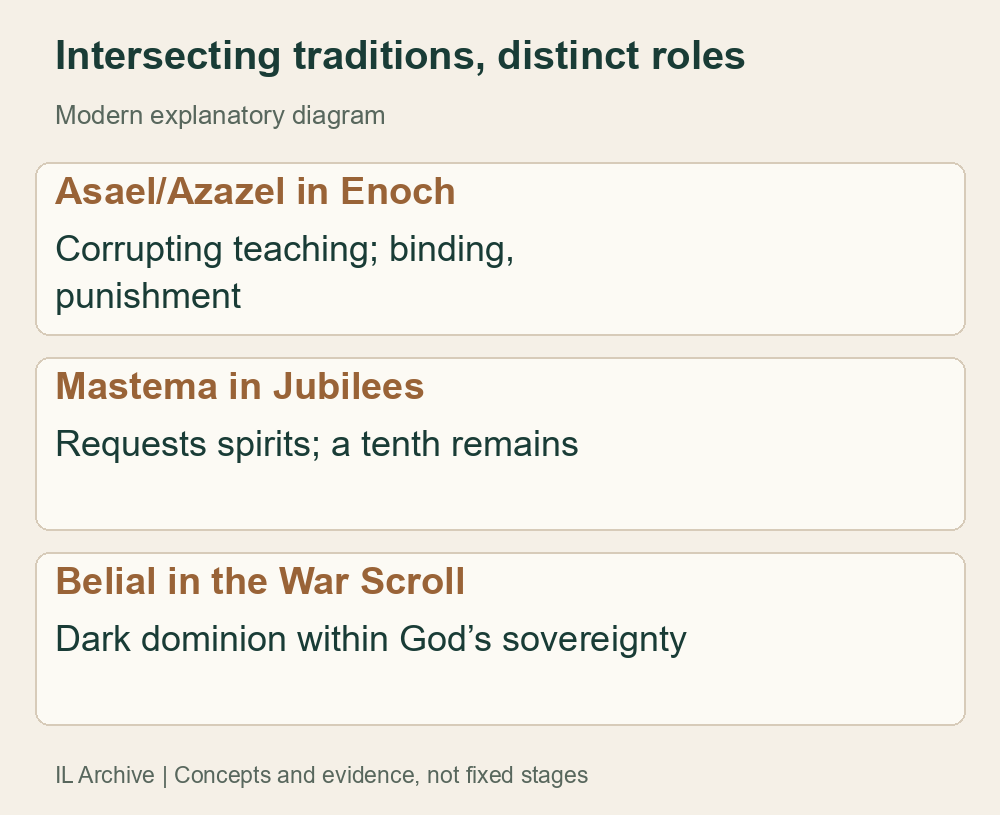
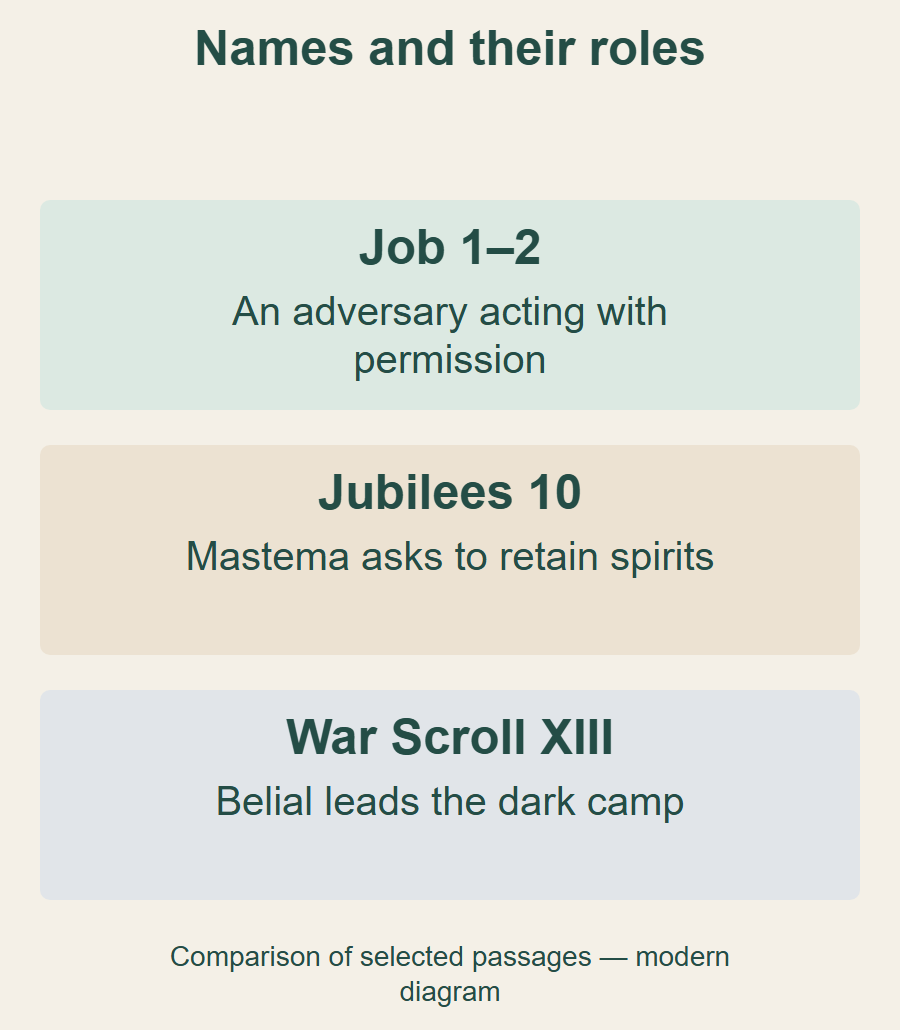
The original illustration above is a modern editorial comparison of three textual roles. It is neither an ancient manuscript nor a family tree of evil beings. It does not cover every Mastema passage treated here or rule out the local overlap of “Satan” and “Mastema” in some witnesses. [14]
What conclusion can the evidence sustain?
In the surviving Jubilees narrative, Mastema leads harmful spirits, seeks permission, can be restrained, suffers disgrace, and has agents involved in its stories. A recurring scholarly explanation is that the author reassigns troubling actions found in Genesis and Exodus while preserving God’s overriding authority. The designation “prince of hostility” may be more illuminating than treating the term as an unchanging personal name in every witness. The precise historical sequence linking Mastema, Satan and Belial remains beyond what the surviving evidence can securely establish. [14]
References and notes (14)
- The Book of Jubilees 10:1–14, R. H. Charles’s English translation in The Apocrypha and Pseudepigrapha of the Old Testament (Oxford, 1913). 10:1–14, especially 10:7–13: Mastema’s request, the retained tenth, and Noah’s healing instruction. Charles translation, not a collated Hebrew original. Return to the text ↑
- Kristen H. Lindbeck, “The Satan Provokes God into Testing Job and Abraham,” TheTorah.com (2025). Sections “Job Builds on the Akedah” and “Bringing Mastema into the Akedah,” including the quotation of Jubilees 17:15–16 and comparison with Job. Sections read, not the whole site. Return to the text ↑
- Hosea 9:7–8, Hebrew text and translation, Mechon Mamre. 9:7–8: מַשְׂטֵמָה denotes hostility; not a named character. Return to the text ↑
- Todd R. Hanneken, “The Book of Jubilees,” in Early Jewish Literature: An Introduction and Reader, ed. A. T. Wright et al. (Eerdmans, 2014), author-hosted PDF. PDF pp. 1–5: Introduction, “Date and Purpose,” “Text, Transmission, and Influence,” and “Mastema”; scholarly dating and transmission. Return to the text ↑
- Matthew Phillip Monger, “4Q216 and the State of Jubilees at Qumran,” Revue de Qumran 26/4 (2014), 595–612. Publisher’s abstract only; pp. 595–612 not accessed. Material-philology challenge to assumptions about complete stable copies. Return to the text ↑
- Hanneken, “The Book of Jubilees” (2014), with VanderKam’s translation and textual note on Jubilees 10:11. PDF pp. 25–26, “Noah and the demons” and note 41 about Mastema/the satan; not an independent collation of Hebrew manuscripts. Return to the text ↑
- Jubilees 11:3–23, translated by R. H. Charles (1913). 11:3–4 idolatry and spirits; 11:10–12 the birds; 11:15–23 Abraham and protection of sowing. Return to the text ↑
- Jubilees 18:8–13, Charles (1913); read with the challenge in chapter 17. 18:8–13, angelic intervention and Mastema’s shame; cf. 17:15–18 discussed in note 2. Return to the text ↑
- 4Q225, “Pseudo-Jubilees,” Hebrew transcription based on Martin Abegg, James Bowley, and Edward Cook, The Ancient Bible. Fragment 2, column i lines 9–13 and column ii lines 5–9, 13–14. Edited transcription, not direct inspection of the physical manuscript; brackets are reconstructions. Return to the text ↑
- Jubilees 48:2–19, R. H. Charles translation (1913). 48:2–4 threat to Moses; 48:9–11 magicians; 48:12–19 pursuit, binding, and release. Return to the text ↑
- Jubilees 49:1–4, R. H. Charles translation (1913). 49:2–4, Mastema’s forces, firstborn and blood mark; the translated narrative, not external history. Return to the text ↑
- 1 Enoch, Book of the Watchers 15:8–12, R. H. Charles translation reproduced by 4 Enoch. 15:8–12 only, evil spirits deriving from the giants; does not name Mastema as their ruler. Return to the text ↑
- War Scroll (1QM), column I lines 1–15, English transcription/translation at Qumran.org. Column I lines 1–15, Belial’s army and the sons of darkness; no demonstrated identification with Mastema. Return to the text ↑
- Antoni Tronina, “Prince Mastema and His Army in the Book of Jubilees,” The Biblical Annals 14/3 (2024), pp. 423–439, DOI:10.31743/ba.16214. Selected passages on printed pp. 423–432 (PDF pp. 1–10), on the designation and Jubilees 10, 17–18, 48–49, plus the abstract; not the entire article. Return to the text ↑
Suggest a correction · Suggest a source for this record
Cite this record
IL Archive, «Mastema», https://ilarchive.com/en/entities/mastema
Continue reading