Study
Where Did the Planetary Week Come From? From “Babel und Bibel” to a Pompeii Graffito
An extended study of a topic, with evidence and references.
- Timeline
- From 30 BCE to 321 CE
- Region
- The Near East and the Mediterranean
In 1902 Delitzsch traced the Sabbath to Babylon, and the tablets soon narrowed his claim. The story of the week of planetary names, from a graffito in Pompeii to Constantine's law of 321 CE.
Estimated reading time: 10 min Published Last reviewed:
Share article
Video
Why Is Seven Sacred? What the Clay Tablets of Ancient Iraq Reveal
Our fourth documentary follows the number seven through the clay tablets of ancient Iraq and its neighbours, then reads the scriptures in their own words and with respect. Some scenes are AI-generated illustrations.
The YouTube player loads only when you press play. Watch on YouTube
Text
Introduction
Why does the week have seven days, and why are its days named after the Sun, the Moon and the planets? A popular answer says that both come from BabylonBabylonBabylon is an ancient city in central present-day Iraq, south of BaghdadGlossary · Click to read the explanation. This study tests that answer. It returns first to the lecture that made the Babylonian theory famous, Friedrich Delitzsch’s “Babel und Bibel” of 1902, and to the evidence that soon limited it; then it follows the planetary names from a graffito at Pompeii to Roman astrologers, historians and laws.
A shared number is not a shared institution. The aim is to separate three things that are often merged: special days within a month in MesopotamiaMesopotamiaHistorical region associated with the Tigris and Euphrates: Uruk, Ur, Eridu, cuneiform, Sumer, Akkad, Babylon and Assyria, their languages and cults, and the limits of archaeological evidence.Glossary · Click to read the explanation, the Jewish seven-day cycle ending in the Sabbath, and the Roman habit of giving each day a planet. The site’s study Sabbath and Šapattu already compares the HebrewHebrewA Northwest Semitic language of the Canaanite group, encompassing Iron Age epigraphy, Biblical, Rabbinic, medieval and Modern Hebrew; its scripts and pronunciations changed over time.Glossary · Click to read the explanation Sabbath with the AkkadianAkkadianAn ancient East Semitic language written in cuneiform from the third millennium BCE; its varieties include Babylonian and Assyrian, and it served in international diplomacy.Glossary · Click to read the explanation term; here the focus is the planetary week and the 1902 controversy.
Berlin, 1902: a lecture that promised an origin
On 13 January 1902 Friedrich Delitzsch (1850–1922), professor of Assyriology at the University of Berlin, gave a lecture at the Berlin Singakademie in the presence of Kaiser Wilhelm II. He argued that much in the Old Testament could be traced back to Babylonian precursors, and he defended these views in two further lectures. [1]
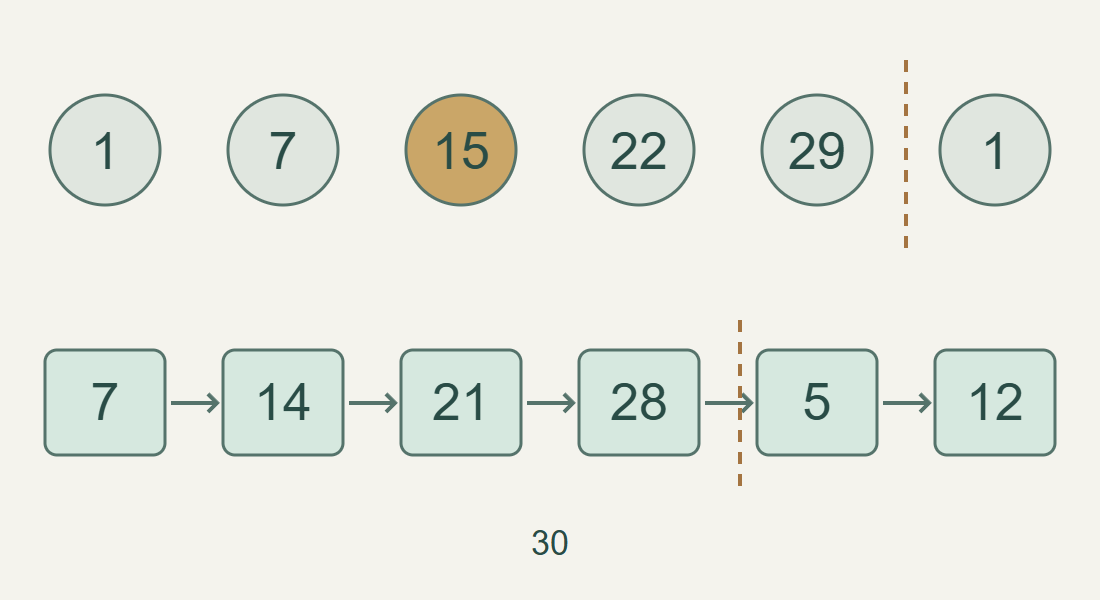
The Sabbath was one of his examples. In the English edition of 1903 he says that the Babylonians “also had their Sabbath day (shabattu)”, and that a calendar set apart the 7th, 14th, 21st and 28th days of every month, when the king was not to change his robes, mount his chariot or offer sacrifice. He concluded that there could “scarcely” be “the shadow of a doubt” that “we are indebted” to Babylon for “our day of Sabbath or Sunday rest”. In his second lecture he repeated that the Sabbath was now recognised as having its roots in the Babylonian sabattu, “the day par excellence”. [2]
Delitzsch was no idle provocateur. He worked from real cuneiformCuneiformWriting with wedge-shaped signs, developed from Mesopotamian recording traditions and used for several languages from the third millennium BCE.Glossary · Click to read the explanation texts that had only recently become available and wanted the public to share them. His mistake lay in how far he pushed a resemblance. In his own notes to the 1903 edition he narrowed the claim: the Hebrew Sabbath was “ultimately” rooted in a Babylonian institution, and “more than this was not claimed”. He also accepted that the Israelite Sabbath had its own consecration through its concern for servants and animals. [2]
What the critics and the tablets showed
The same 1903 volume printed his critics. The French orientalist Joseph Halévy noted that the abstentions fell on the 7th, 14th, 19th, 21st and 28th days of a second Elul, an exceptional intercalary month, and that the lecture had left out the nineteenth, which breaks the pattern of sevens. Carl Heinrich Cornill, an Old Testament scholar at Breslau, answered that these were days of fear tied to calendar dates, not a weekly rest. [3] Kaiser Wilhelm II also distanced himself in a letter of 15 February 1903, though his objection concerned the theology of the second lecture, not the calendar. [4]
In 1904 the British Assyriologist T. G. Pinches published a bilingual list of the days of the month (K. 6012 + K. 10684) in which the fifteenth day is equated with šapattu. Writing in 1914, Theophile Meek drew the consequences: the term was attested for the fifteenth day, the full moon, and for no other; and work did not stop on it, since contracts were dated on that day. [5] The site’s entry on Akkadian šapattuAkkadian ŠapattuŠapattu is an Akkadian term attested for the lunar mid-month day or a half-month in time reckoning. A historical derivation of the weekly Hebrew Sabbath from it remains contested.Glossary · Click to read the explanation treats the word as a mid-month day or a half-month period.
Days within a month are not a week
The calendar Delitzsch cited belongs to Mesopotamian hemerologyMesopotamian HemerologyMesopotamian hemerologies assess dates for ritual, food, marriage, travel and other activities. The entry studies their witnesses, courtly examples and reception, and explains why cautionary dates are neither a universal calendar nor weekly rest days.Glossary · Click to read the explanation, lists that judge days favourable or risky for particular acts. Its restrictions addressed the king and a few specialists on numbered days of a month. In 1911 C. H. W. Johns noted in the Encyclopaedia Britannica that no evidence showed the same days kept in every month; a Babylonian seven-day week was possible but unproven. [6]
The key difference is how the count runs. The days 7, 14, 21 and 28 begin again with each month of 29 or 30 days; a week runs on regardless of months. Ilaria Bultrighini and Sacha Stern, in the most detailed recent study of the ancient week, state that no seven-day cycle has been found in the rich literary and astronomical sources of ancient Egypt and Mesopotamia. They note one possible exception, the Old Assyrian merchants’ ḫamuštum, but they consider its reading as seven days problematic; other scholars accept it. Even if it was seven days long, it was a business period, not a week of named days. [7]
A Sunday that was a Wednesday: the Pompeii graffito
For the planetary week, the decisive evidence comes from Italy. On a column of the peristyle in a Pompeian house now called the House of the Silver Wedding, someone scratched a date. August Mau published it in 1909 as CIL IV 4182: [8]
Source: CIL IV 4182, edited by A. Mau (1909). Translation: “In the consulship of Nero Caesar Augustus and Cossus Lentulus, son of Cossus, eighth day before the Ides of February, day of the Sun, sixteenth day of the moon (a doubtful numeral), market at Cumae; fifth day before the Ides of February, market at Pompeii.”
The consuls fix the date as 6 February 60 CE, and the writer calls it dies Solis, the day of the Sun. Mau already saw the problem: by the continuous weekly count we use, that day was a day of Mercury, a Wednesday. Bultrighini and Stern find an older explanation, that the writer named days from a different starting hour, possible but speculative; more simply, this writer’s week was reckoned differently. The graffito shows that a planetary name was in everyday use in a Campanian town by 60 CE, and that the week was not yet standardised. [8][9]
Other Pompeian graffiti list the days of Saturn, the Sun, the Moon, Mars, Mercury, Jupiter and Venus in week order, or date events to “day of Saturn” and “day of the Sun”. They cannot be dated as precisely, but all are older than the eruption of 79 CE. [9]
Planetary hours and the so-called Chaldean order
Why does the week run Saturn, Sun, Moon, Mars, Mercury, Jupiter, Venus, an order that matches no arrangement of the sky? The historian Cassius Dio, in the early third century CE, gives the explanation that became standard. He introduces it after telling how Pompey took the Temple in JerusalemJerusalemJerusalem is a city of religious importance in Judaism, Christianity and IslamGlossary · Click to read the explanation on “the day of Saturn”, when the Jews did no serious work. [10]
Source: Cassius Dio, Roman History 37.19.1–2, translated by Earnest Cary (Loeb Classical Library, 1914).
The planet of a day’s first hour names the day. Dio says the custom was “instituted by the Egyptians”, yet admits that its adoption was “comparatively recent” and unknown to the ancient Greeks. He also offers a second, musical explanation: the origin was already uncertain in his time. [10]
The sequence behind the hours is usually called the “Chaldean order”, but the label is not a Babylonian signature. Bultrighini and Stern note that it is found in Roman-period sources, that earlier Hellenistic texts used a slightly different order, and that Cicero credits it to the Stoic philosopher Diogenes of Babylon (second century BCE). Dio calls it the Egyptians’ order. The name reflects Greek and Roman ideas about eastern learning, not a cuneiform source. The astrologer Vettius Valens describes the hour scheme in the mid-second century, but a fragmentary inscription from Potentia in central Italy, dated around 100 CE or earlier, already lists planetary hours marked good, harmful or indifferent. [11]
Rome, not Babylon? A new argument
The older consensus, as Bultrighini summarises it, held that the planetary week came from Babylonian, Egyptian or Hellenistic astrology. She and Stern reject this. In their words there is “no evidence of a planetary week” in Egypt, Mesopotamia or the Hellenistic East “before the second century CE”. [12]
Their case rests on dates. The earliest trace is a poem of Tibullus, written between about 30 and 19 BCE, in which the lover excuses himself by bad omens or by Saturni sacram … diem, “Saturn’s sacred day” (Tibullus 1.3.17–18). Augustan stone calendars from Italy add a column of seven letters beside the Roman eight-day market cycle, probably though not certainly for planetary days, and in the first century the planetary names appear at Pompeii. In the Greek East the first trace is a lost table-talk question of Plutarch in the early second century; Philo of AlexandriaPhilo of AlexandriaGreek-writing Jewish interpreter in Roman Alexandria (roughly first century CE), who read the Torah philosophically while defending its practices; his works survive through Greek copying and Armenian translation.Glossary · Click to read the explanation, who wrote at length on the number seven, never mentions planetary days. [13]
Some scholars read Tibullus’ “day of Saturn” as a Roman name for the Jewish Sabbath, which Romans knew from the growing Jewish community in their city. Bultrighini and Stern take up this reading as a hypothesis: the planetary week may have begun as an interpretatio romana, a Roman reinterpretation, of the Sabbath. [13]
Roland Färber, reviewing the volume in 2022, praises the chapter but notes that Egypt knew much earlier of gods ruling particular days of the lunar month, so one root of the scheme might still lead there. The Roman origin is a strong, recent argument, not a closed case. [14]
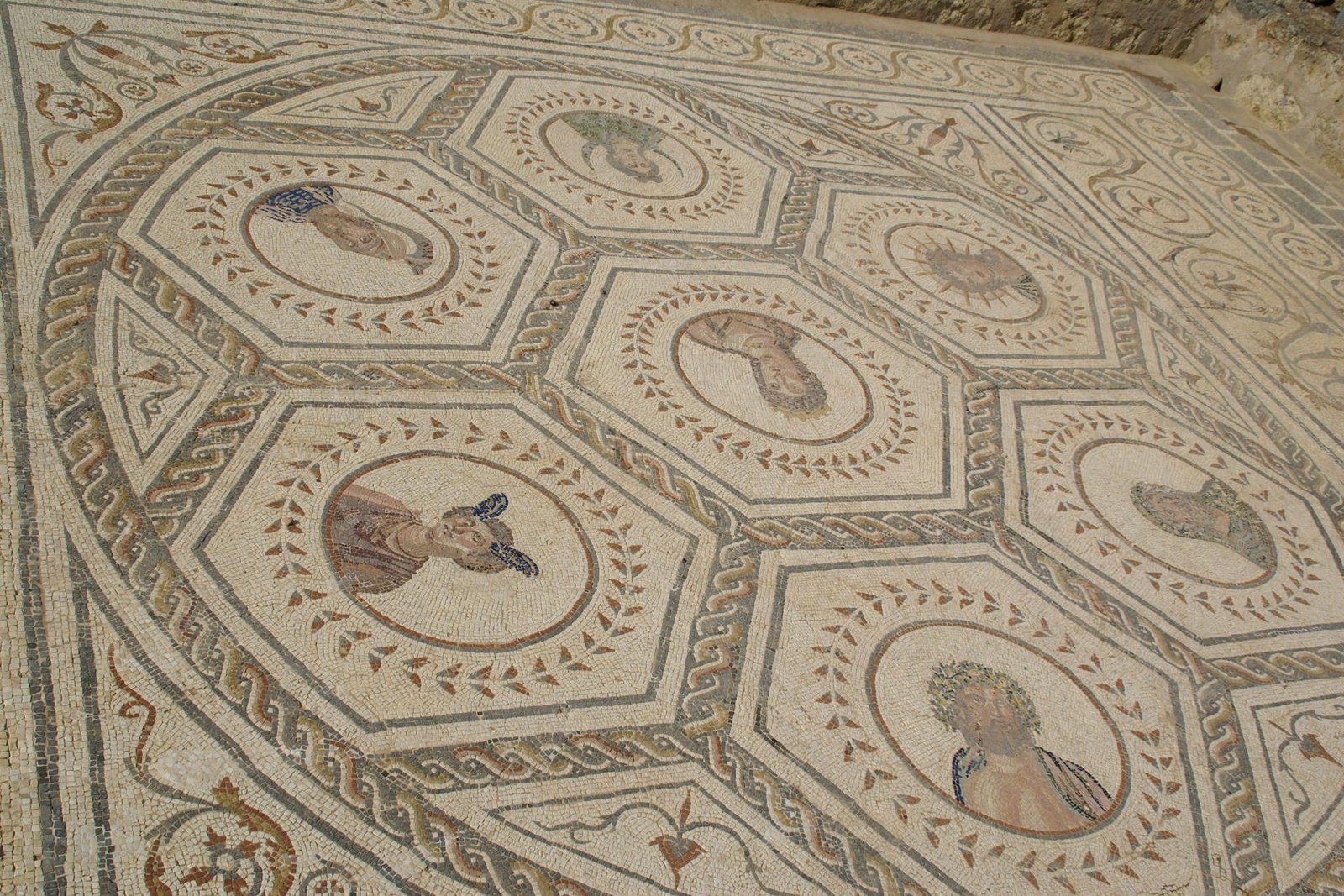
By the mid-second century CE the seven gods of the week could decorate a floor far to the west: a mosaic in the House of the Planetarium at Italica, in southern Spain, sets their busts in seven medallions around Venus. [15]
How two weeks became one
The week we use today joins two traditions. One is the Jewish seven-day cycle, which the Hebrew Bible presents as part of creation and which ends in the SabbathSabbath, the weekly rest daySacred seventh day in Jewish traditions, linked by commandments to household rest, creation and liberation.Glossary · Click to read the explanation. Bultrighini and Stern call the Hebrew Bible “the only early source” of the seven-day week. The other is the Roman cycle of planetary names. [7]
Roman writers equated the two early on. Frontinus in the late first century CE, and Tacitus soon after, call the Sabbath the day of Saturn. Around 150 CE Justin Martyr calls the first day of the week “the day of the Sun”, and around 197 CE TertullianTertullianLatin Christian writer in Carthage around 200 CE. His writings span apology, doctrinal controversy, and religious practice. This entry examines his language of soul, Christ’s flesh, Word, and spirit alongside the limits of biography, textual chronology, and disputed affiliations.Glossary · Click to read the explanation writes that Christians rejoice on the day of the Sun and the Jews on the day of Saturn. [16]
On 3 March 321 Constantine IConstantine IRoman emperor, reigning in 306–337 CE, who convened Nicaea in 325.Glossary · Click to read the explanation ordered that judges, city people and all crafts should rest venerabili die solis, “on the venerable day of the Sun”, while farmers could work their fields. A second law that July allowed slaves to be freed on that day. Bultrighini and Stern read these as the first imperial laws to make Sunday a legal holiday, extending to it the rules of traditional Roman festival days; they find no evidence that the planetary name points to a pagan sun cult. [17][18]
Church leaders were uneasy with the planetary names. AugustineAugustineFourth- and fifth-century Christian author describing his changing grasp of nonspatial divine presence.Glossary · Click to read the explanation urged Christians to say “the Lord’s Day”, “second day”, “third day”, regretting that many still said “day of Mercury”. Latin Christian usage developed numbered days (feria secunda, tertia and so on), yet the planetary names survived in many languages, especially the Romance languages. [18]
What the evidence allows us to say
Delitzsch was right that Mesopotamian scribes gave weight to certain days of the lunar month. The evidence does not support his larger claim. Šapattu was the fifteenth day, the restricted days restarted with each month, and no evidence of a planetary week has been found in Mesopotamia.
As far as present evidence shows, the planetary week first appears in Augustan Italy, spread through the Roman world and fused with the Jewish week of six days and a Sabbath. Its ultimate inspiration remains debated: a Roman invention, an echo of the Jewish Sabbath, or older Egyptian ideas of divine rulers of days. Our weekday names still carry that layered history.
References and notes
- Staatliche Museen zu Berlin, Vorderasiatisches Museum, exhibition page “The Babel/Bible Conflict” Introductory text on Delitzsch’s lecture of 13 January 1902 at the Berliner Singakademie in the Kaiser’s presence and the two further lectures Return to the text ↑
- Friedrich Delitzsch, Babel and Bible: Two Lectures, also Embodying the Most Important Criticisms and the Author’s Replies, trans. T. J. McCormack and W. H. Carruth (Chicago: Open Court, 1903) First lecture, pp. 37–38; second lecture, p. 101; author’s notes “The Sabbath”, pp. 155–156 Return to the text ↑
- Delitzsch, Babel and Bible (Open Court, 1903), appended opinions: “M. Halévy’s opinion” and “Cornill on ‘Babel and Bible’” pp. 130–133 Return to the text ↑
- Delitzsch, Babel and Bible (Open Court, 1903): “Emperor William on ‘Babel and Bible’”, letter of Wilhelm II to Admiral Hollmann, 15 February 1903 pp. 120–121 Return to the text ↑
- Theophile J. Meek, “The Sabbath in the Old Testament (Its Origin and Development)”, Journal of Biblical Literature 33 (1914), pp. 201–212, reporting T. G. Pinches, Proceedings of the Society of Biblical Archaeology 26 (1904) pp. 202–203 (tablet K. 6012 + K. 10684; the fifteenth day as šapattu; contracts dated on that day). Pinches’s own article was not read. Return to the text ↑
- C. H. W. Johns, “The Babylonian and Assyrian Sabbath”, section 6 of the article “Sabbath”, Encyclopaedia Britannica, 11th edition (1911) Section 6 (intercalary Elul list; no evidence that the same days were kept every month; the 19th day; a seven-day week possible but unproven) Return to the text ↑
- Ilaria Bultrighini and Sacha Stern, “The seven-day week in the Roman Empire: origins, standardization, and diffusion”, in S. Stern (ed.), Calendars in the Making (Leiden: Brill, 2021), pp. 10–79; read in the authors’ accepted manuscript on UCL Discovery Manuscript pp. 1–2: no seven-day cycle in Egyptian or Mesopotamian sources; ḫamuštum (n. 4); the Hebrew Bible as the only early source Return to the text ↑
- August Mau (ed.), Corpus Inscriptionum Latinarum IV, Supplementum pars 2 (Berlin, 1909), no. 4182 Entry 4182 with Mau’s commentary (6 February 60 CE was a day of Mercury); heading for nos. 4152–4220 (House of the Silver Wedding) and 4181–4197 (peristyle columns) Return to the text ↑
- Bultrighini and Stern, “The seven-day week in the Roman Empire” (Brill, 2021), authors’ accepted manuscript Manuscript pp. 14–16 (Pompeian graffiti CIL IV 6778–6779, 294, 6838, 8820) and pp. 25–26 (CIL IV 4182, the Wednesday problem, Brind’Amour’s explanation) Return to the text ↑
- Cassius Dio, Roman History, trans. Earnest Cary (Loeb Classical Library, 1914), on LacusCurtius Book 37.16–19 Return to the text ↑
- Bultrighini and Stern, “The seven-day week in the Roman Empire” (Brill, 2021), authors’ accepted manuscript Manuscript pp. 18–20 (cosmological order of the planets and n. 79 on the “Chaldean order”; Vettius Valens; the Potentia inscription, CIL IX 5808) Return to the text ↑
- Ilaria Bultrighini, “The origins of the planetary week”, ZODIAC blog, Freie Universität Berlin, 2 May 2022 Whole post Return to the text ↑
- Bultrighini and Stern, “The seven-day week in the Roman Empire” (Brill, 2021), authors’ accepted manuscript Manuscript pp. 10–14 and 16 (Roman origin; Tibullus 1.3.17–18; Augustan Fasti; the interpretatio romana hypothesis; Plutarch; Philo, n. 69) Return to the text ↑
- Roland Färber, review of S. Stern (ed.), Calendars in the Making, Plekos 24 (2022), pp. 255–267 pp. 256–258 (on chapter 1; Egyptian day-rulers as a possible root) Return to the text ↑
- M. Pilar San Nicolás Pedraz, “Representaciones de Selene/Luna en la musivaria romana”, Anejos a CuPAUAM 1 (2014), pp. 133–144 p. 134 and fig. 1 (Italica, House of the Planetarium, mid-second century; Venus surrounded by the divinities of the week) Return to the text ↑
- Bultrighini and Stern, “The seven-day week in the Roman Empire” (Brill, 2021), authors’ accepted manuscript Manuscript p. 21 (the equation of the Jewish and planetary weeks: Frontinus, Tacitus, Justin Martyr, Tertullian) Return to the text ↑
- Codex Justinianus 3.12.2 (Constantine to Helpidius, posted 3 March 321), Latin text in The Latin Library; English translation by Fred H. Blume, ed. T. Kearley, University of Wyoming, Book 3, title 12 CJ 3.12.2 with its subscription (pp. V non. Mart., Crispus II and Constantine II consuls) Return to the text ↑
- Bultrighini and Stern, “The seven-day week in the Roman Empire” (Brill, 2021), authors’ accepted manuscript Manuscript p. 10 (Romance languages), pp. 33 and 36 (Augustine, Enarrationes in Psalmos 93.3; the feria names) and pp. 40–41 (Constantine’s laws of 321 and their interpretation) Return to the text ↑
Suggest a correction · Suggest a source for this record
Cite this record
IL Archive, «Where Did the Planetary Week Come From? From “Babel und Bibel” to a Pompeii Graffito», https://ilarchive.com/en/studies/origins-of-the-planetary-week
Continue reading